
BuddhistCatholicContemplativeEvangelicalGeneral ChristianHinduJewishLatter-day SaintMuslimNew VisionsProgressive Christian
Beliefs
- Buddhist
- Catholic
- Contemplative
- Evangelical
- General Christian
- Hindu
- Jewish
- Latter-day Saint
- More Voices
- Muslim
- New Visions
- Pagan
- Progressive Christian
Topics
- Religion News
- Food and Religion
- Sports and Religion
- Religious Art
- Religious Music and Entertainment
- Religious Events
- History and Religion
- Style and Religion
- Politics and Religion
- Women in Religion
- Recreation Outdoors and Religion
- Business Finance and Religion
- Careers Workplace and Religion
- Education and Religion
- Family Parenting and Religion
- Health Fitness and Religion
- Home and Religion
- Relationships and Religion
- Technology and Religion
- Travel and Religion
Columnists
- Buddhist Columnists
- Business Finance and Religion Columnists
- Careers Workplace and Religion Columnists
- Catholic Columnists
- Contemplative Columnists
- Education and Religion Columnists
- Evangelists Columnists
- Family Parenting and Religion Columnists
- General Christian Columnists
- Health Fitness and Religion Columnists
- Hindu Columnists
- History and Religion Columnists
- Home and Religion Columnists
- Jewish Columnists
- More Voices Columnists
- Latter Day Columnists
- Muslim Columnists
- New Visions Columnists
- Nonreligious Columnists
- Pagan Columnists
- Politics and Religion Columnists
- Progressive Columnists
- Recreation Outdoors and Religion Columnists
- Relationships and Religion Columnists
- Religion News Columnists
- Religious Art Columnists
- Religious Events Columnists
- Religious Music and Entertainment Columnists
- Sports and Religion Columnists
- Style and Religion Columnists
- Technology and Religion Columnists
- Travel and Religion Columnists
- Women in Religion Columnists
Resource Library
- 2026 Calendar
- Library of World Religions
- The 100 Most Holy Places on Earth
- Patheos Answers
- Podcasts
- Videos
- Faith Leaders Database
- Anglican Episcopalian
- Bahai
- Baptist
- Buddhism
- Christianity
- Confucianism
- Eastern Orthodoxy
- Hinduism
- Holiness and Pentecostal
- ISKCON
- Islam
- Judaism
- Lutheran
- Methodist
- The Church of Jesus Christ of Latter-day Saints
- New Age
- Paganism
- Presbytarian and Reformed
- Protestantism
- Religion Behind the Scenes
- Roman Catholic
- Scientology
- Shia Islam
- Sikhism
- Sufism
- Sunni Islam
- Taoism
- Zen
- See all religions
Research Tools
 Ad-Free & Subscriber Log-In Subscription Support
Ad-Free & Subscriber Log-In Subscription Support
Follow Patheos 

- Trending:
- Forgiveness
- |
- Marriage
- |
- Consciousness
- |
- Death Penalty
- |
- Election
- |
- Halloween

- Home
- Buddhist
- True Sitting & the Fundamental Koan: A Discussion with Shin’ichi Hisamatsu
True Sitting & the Fundamental Koan: A Discussion with Shin’ichi Hisamatsu
Last updated on: August 23, 2018 at 4:31 pm by James Ford
True Sitting & the Fundamental Koan: A Discussion with Shin’ichi Hisamatsu 2018-08-23T16:31:07-07:00 James Ford
Patheos Explore the world's faith through different perspectives on religion and spirituality! Patheos has the views of the prevalent religions and spiritualities of the world.
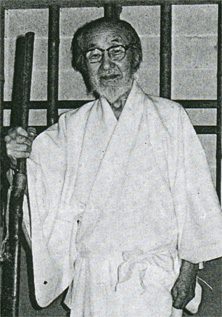
True Sitting & the Fundamental Koan:
A Discussion with Shin’ichi Hisamatsu[1]
translated by Jeff Shore in collaboration with Nobumichi Takahashi and Gishin Tokiwa[2]
Hisamatsu: During a sesshin-retreat, various doubts or problems are bound to arise. For your practice it is essential to raise them and have them resolved, so today I will speak in response to your questions. Anyone should feel free to speak up and, by discussing together, we’ll find a solution.
That said, I’m sure there are many questions you want to ask, but let’s begin with those regarding sitting in zazen.
Ishii: Sitting and trying to focus on what the formless self is, I find that even though I’m trying not to think, a kind of thinking remains nonetheless. Thus, a tremendous conflict occurs between concentrating on the koan and sitting in zazen. Doesn’t everyone more or less have this problem? I’d like to ask you about this.
Hisamatsu: The koan, after all, is to awaken to the formless self. That is why I say sitting and koan are one, different though the terms may be. There’s a tendency to think of sitting and koan as two separate and distinct methods of practice — after all, there is “just sitting” in Soutou Zen, and koan practice to attain satori in Rinzai Zen. At bottom, though, these are none other than awakening to the formless self.
Here’s a passage expressing the spirit of true sitting attributed to Bodhidharma, though it’s certainly not limited to him since many later Zen masters have expressed the same sentiment:
Outside all externals put to rest,
Inside let not your mind stir.
Make yourself as a wall,
And thus enter the Way.
“Outside all externals put to rest” means to be unconcerned with things outside, not to be caught by or drawn to externals. “Inside let not your mind stir” means not to be preoccupied with mental phenomena, or internals. In short, don’t let yourself be caught up by anything, internal or external. “Make yourself as a wall” is a metaphor for no-mind (mushin); be empty and free of discrimination like this, “And thus you enter the Way.” In other words, “Outside all externals put to rest, Inside let not your mind stir. Make yourself as a wall” is to “enter the Way.”
In Fukan-zazengi, [Dougen] says much the same thing when he speaks of sitting as “putting an end to all dualistic discrimination,” but it all comes down to this freeing yourself of all inner and outer entanglements. When you succeed in “Outside all externals put to rest, Inside let not your mind stir,” that is achieving no-mind, that is true sitting.
Sitting usually connotes physical sitting or mental composure; either way it’s assumed that the body or the mind is sitting. Such sitting, however, is not the sitting of [Dougen’s] “body-mind fallen away.” Sitting mind and body engaged, thinking, for instance, “Here I am sitting at Senbutsuji Temple,” cannot be called true sitting. And sitting with the intention to become no-mind only exposes a restlessness in yourself: It amounts to “Inside, letting your mind stir.” Of course without a mind intent on sitting you’ll not be able to sit at all; you have to be intent on sitting, yet being conscious of sitting is not it. Being physically engaged in sitting is not it either. This might be a difficult problem for everyone.
At the outset though, you must have the determination to sit through, no matter what: Even though your legs throb or your entire body is racked with pain. In the beginning, such great resolve is crucial. As it’s said, “Zen practice has three essentials”: The first is called great faith; you must have this great root of faith to give yourself over to truly sitting, a great conviction to sit through anything. The second is great determination; you must have great tenacity of purpose. The third essential is great doubt, which I’ll talk about later in connection with the koan, but you need great faith and great determination too.
When you sit through to the very end then you’ll know, but obstacles will assail you within and without. So you need unwavering determination to sit through it all, stolidly, like a rock. Throwing your whole self into it like this is extremely effective preparation to begin true sitting. Discouraged or distracted by little things, you won’t be able to go on. Interrupted, you’re unable to “Outside all externals put to rest, Inside let not your mind stir.” A mind constantly distracted cannot see out the practice to the very end.
I think this is true with our ordinary affairs as well.[3] We need great faith and great determination to do anything thoroughly. But how much more so with sitting! Throw yourself into sitting through those hindrances, and “Outside all externals put to rest, Inside let not your mind stir.”
In the beginning you try to push away external hindrances, strive to remain undisturbed by them, and try to suppress the waves of thought that arise within. Such attempts to suppress reveal a restlessness, that “Inside your mind still stirs.” Pursue further though, and you’ll come to where you won’t have to try and suppress anything: Externals are naturally put to rest, inside your mind naturally does not stir. Having realized this myself, for me it’s an actual fact; proceed in this way and I have no doubt that all of you will realize it as well. And with that, the formless self will be clearly awakened.
Then, sitting as formless self is no longer restricted to a specific time or place — there is no place to sit at, no time to sit in. Ordinarily one sits on a certain cushion in a certain place, but now one is no longer tied to such sitting. You awaken to the self that is utterly unrestricted. Thus, awakening doesn’t obtain only when sitting in full-lotus, or whatever; you come to be that way all the time.
For instance, when you rise from sitting, the standing itself becomes sitting at work. Sitting does not end when you rise to your feet; on the contrary, it’s ongoing. This sitting is the subject, and this subject stands, so it’s not that one rises from sitting to standing; rather the sitting itself stands.
[Dougen’s above-mentioned Fukan-]zazengi states that when one goes from the seated posture to stand, one should rise quietly and slowly. If that is so, it is like moving from sitting to standing: Sitting becomes a state separate from and prior to standing. I would say that is not true sitting. There’s no shift from sitting to standing; the sitting itself must stand. It is not a specific state. If it is, then there would be a shift from sitting to standing, and then to walking, and so on. True sitting is not like that: It’s the subject, the self, so it is this very sitting which stands. Otherwise it can’t be called true sitting.
When you’ve truly sat through, it will certainly be like this. Then it’s no longer necessary to rise quietly. Jump up or even leap out of your sitting and it’s still just the working of your sitting. If you must rise quietly so as not to lose it, that’s merely one particular state. Such sitting is not yet oneself, not the subject itself.
What we call formless self is thus precisely what is spoken of [in Yongjia’s Poem on Actualizing the Way] as:
Walking is Zen,
Sitting is Zen,
Talking or silent,
Working or at rest,
The subject is composed.
This true sitting is nothing but Zen. The word zazen (坐禅) consists of the characters for “seated” (坐) and “zen” (禅). But from the standpoint of true sitting, the sitting must itself be Zen, Zen must itself be sitting. If not, it’s not real zazen.
A particular posture or state of mind is not true sitting. When everything you do — walking, sitting, silence, speaking, thinking — is itself sitting, then for the first time your sitting will be authentic. If you sit thinking about this or trying to become like this, then you’re sitting with a goal in mind and that’s not it. Once again, true sitting is “Outside all externals put to rest, Inside let not your mind stir.” It’s not a matter of sitting trying to become like this; the way of sitting in which one is like this is crucial.
The koan also finally comes down to this “Outside all externals put to rest, Inside let not your mind stir.” For instance, with the koan “Your original face before your parents gave birth to you,” this original face refers to what we now call the true self. And that is “before your parents gave birth to you,” in other words, it’s the self of body-mind fallen away. And this self in which body-mind has fallen away is your original face before your parents gave birth to you.
Being born is, of course, a physical and psychological fact. So, to speak of something prior to that does not mean prior in the temporal sense; it’s what is actually present here and now. In other words, the self in which body-mind have fallen away is what is prior to the arising of body-mind. Again, “before birth” is not meant in the usual sense; rather it is prior to anything arising right here. There is no time, no before or after, for it is right here and now, prior to anything arising. This is where the true self is. It’s the original self in which body-mind have fallen away, prior to all physical and mental phenomena. Conceived temporally, one might think that this “falling away” occurs after we’ve acquired body and mind. But returning to what is prior to one’s birth means that the very body-mind born and alive at present falls away; thus, it truly is prior to anything arising.
Koans like this “[Your original face] before your parents gave birth to you” are the same as true sitting: They amount to “Outside all externals put to rest, Inside let not your mind stir.” This is the point of the koan as well, so any koan-samadhi that is not like this is not genuine. With any koan, whether it is “[Your original face] before your parents gave birth to you,” “Not thinking good, not thinking evil,” “Going beyond the four propositions [is, is not, both is and is not, neither is nor is not] and the hundred negations [of logic],” or “Neither speech nor silence, thinking nor not-thinking, standing nor sitting will do” — when you get free from all such relative states and penetrate the self that is free, then it’s a real, living koan. Otherwise the koan is turned into something relative, with a specific, delimited form. That is what usually happens with it. But the koans I just mentioned were devised to lead one from the relative and delimited to that which is unlimited.
Nevertheless, commonly-used koans such as Joushuu’s “Mu” [Zhaozhou’s “Wu”] or Hakuin’s “Sound of the single hand” have become things that practicers cling to, although such was not their original purpose. They have been reduced to particular Mu-samadhi or single hand-samadhi. At some places practicers are even made to yell “Mu! Mu! Mu!” in order to enter samadhi. Granted this is not “Mu” or ‘Nonbeing’ as the negation of ‘being,’ but Mu as the ‘Not-being-Nonbeing-either.’ Thus, everyone nowadays knows what Mu is, and thinks that simply yelling “Mu”–!” will do. That’s what it’s turned into.
The real standard by which to judge whether it is the ultimate Mu of body-mind fallen away is to examine whether it is the formless self or not. If Mu is really the formless self, then it must be free from the very voicing of “Mu, Mu, Mu.” Mu is nothing like a voiced samadhi. Being formless self, it is free from any limitation. In this way true sitting also must be free and unrestricted. Standing, sitting, whatever one’s doing, must be such sitting. And we call this sitting the formless self: The fundamental subject or root source of all, and it’s active without being delimited.
Here there is no such thing as body-mind, nor is there life-death, good-evil. This is complete emancipation: Genuine, root-source freedom and unhindered independence. No obstruction whatever — everything is unhindered!
The Heart Sutra says, “No hindrance, free from all fear.” Fear is only one small part of it though, so there really isn’t even such a thing as freedom from fear: Free even of freedom from fear. Simply not having fears will not do. “Free from all fear” is actually freedom from pleasure-pain, fear-fearlessness — being the self which is not limited or determined by any such thing. Even if there’s something good, if it’s determined, then fear cannot be avoided. “No hindrance, free from all fear” can only be realized when we are active without form. Be the formless self, and whatever you do is unhindered.
The same is true of koan practice: As long as it’s some kind of a special experience or specific problem-question, it’s not a real koan. For a koan to be genuine, it must be universal. Take Joushuu’s Mu: Shouting “Mu!” — with all of your might and becoming this Mu — is said to be it, but it’s not . Practicing like that, let me say, would never do. Nowadays real koan Zen is lost in such practice, which only adds more shackles and chains.
Genuine Mu must be without form. Only by being the formless self can one really break through the koan. Breaking through a particular problem-question, resolving a specific matter, even having a very unusual experience — for example, you weren’t able to become Mu, but now your self, your body, and the whole world have become Mu — these are all nothing but particular experiences. Whatever koan you’re working on at present — Mu, the single hand, the cypress tree in the garden, or whatever — if you merely fall into becoming one with that koan, you actually end up losing your freedom.
That’s why I insist that breaking through a koan actually be awakening to the formless self. Unless you’ve gotten there, you haven’t broken through. Once you have, though, you are truly without form and can express it independently.
Preparing to sit, it might be good to keep this in mind rather than sitting with some preposterous misconception. But if you remain preoccupied with such knowledge when sitting, then all for naught. Everyone, how is it when you’re sitting?
Ishii: That’s why I’d like to ask about the dualistic mental composure that I have — not the kind in which sitting itself stands, but the kind that gets disturbed when I rise….
Hisamatsu: There is a way. If you gain composure when you sit, but start to lose it when you rise then lose it completely when you run, that won’t do. Authentic composure is not lost even when you’re turned head over heels. That’s the way it is: Even in death you are composed. Not composure because you’re resigned to die, but composure even unto death. Otherwise, it’s not authentic.
People sometimes say things like they are free from life and death, or there is no living and dying. But right now if you were on the brink of death and you were able to remain undisturbed, that’s not freedom from life and death at all, though it’s often misconstrued that way. If you were terminally ill, yet able to remain calm and unshaken in your last moments, wouldn’t that be just a matter of your mental or psychological state?
On the contrary, death itself must be composed. It’s not to be calm though you face death[4]; death itself is “free from all fear” [as mentioned above]. Saying “I’m not afraid, I’m not afraid” — that’s not real freedom from all fear. Truly be the formless self, and you are totally free of fear.
Dougen stated that this very life and death is the true self; dying is also the self, living is also the self: “The coming and going of life and death is itself the true human body.” Unless you’ve penetrated to that depth, you can’t say you’ve really passed a koan or sat all the way through. That’s why I advocate the formless self rather than things like passing koans or so-called sitting. Now with the formless self as the koan, does someone have a question about that?
Abe: I think Mr. Ishii was asking if concentrating on a koan is a form of thought; so, when concentrating on the formless self as a koan, does that concentrating itself have some kind of form?
Hisamatsu: When you really concentrate on or struggle with a koan, it’s prior to anything arising, body-mind fallen away, returning to the source. That’s why in Zen one is often asked who or what is it that thinks, that feels, for there is a source prior to thought that does the thinking. That’s also why I speak of “collecting thoughts,” having them return to their source, prior to the arising of anything at all, before body and mind. It’s the same as “before your parents gave birth to you,” and, when it comes down to it, it’s none other than “Outside all externals put to rest, Inside let not your mind stir.”
Hikosaka: I can understand that working with a koan such as the sound of the single hand or Mu is not just becoming that particular koan. But do you first become that particular koan and then break through the form of the koan, or is there some other way? I’m asking because I don’t understand how to concentrate on the koan.
Hisamatsu: I have proposed the FAS Society’s fundamental koan to avoid those kinds of problems and abuses. In a word, it’s penetrating to the freedom of being nothing whatever; if you want to call it a koan, it’s the koan to realize that. It’s the basic and essential koan, it’s breaking through to what we now call the free and formless self. For example, in the formulation “neither speech nor silence will do,” what will not do tends to be limited to the words: speech-silence. The point, however, is the self that is nothing whatever. The way opens up when you are utterly trapped in a corner,at wit’s end with back against the wall: You can neither be this nor that — you are nothing whatever. Thereby there you penetrate … (striking the table), where it is “prior to anything arising; “not just prior to something like good and evil, but prior to the arising of anything at all.
As far as I’m concerned, good and evil, or not thinking good, not thinking evil — they’re still something particular. But if it’s genuinely “Without thinking good, without thinking evil, right now show me your original face,” everything is included in this formulation. It’s not just a matter of good and evil, it includes everything; nor is it merely a matter of thinking, but includes all our activities in their totality: Not using your hands, or feet, even your sense of touch. To formulate it: None of that will do; now what? That’s what we call the fundamental koan.
Hikosaka: I try to hold the koan, “Neither standing nor sitting will do: Now what do I do?” in mind during zazen, but it’s like I’m chasing after something.
Hisamatsu: If you’re chasing after something objectively, that won’t do. You must drive yourself to the ultimate dilemma in a fundamentally subjective manner. In short, you must be hopelessly cornered, driven to the last extremity, where you “Die the one great death, then you are revived.” This fundamentally subjective, absolute negation is also called the great doubt block, for it’s the ultimate, fundamentally subjective doubt.
Abe: About the koan of Joushuu’s “Mu,” it’s clear: Being made to repeat “Mu! Mu!” and concentrate on this voiced form or idea of Mu is not the true Mu koan. It’s not a voiced Mu, or any form, concept, or idea of it. It’s Mu itself. And because one can’t deal with this in any form whatever, we cannot but completely discard such a way of dealing with it. We can only be forced back to Mu as Mu, that is, to “prior to anything arising.” Thus, even when struggling with this Mu koan, if we just work that way, we will also return to the source….
Hisamatsu: After all, rather than use some specific form of mediation — in this case Mu — it’s better not to use any form at all. That’s the most appropriate way in this situation, isn’t it?: Drive yourself up against the wall without having anything to hold onto. As the method for penetrating the true body-mind fallen away, to the true self, isn’t this the most ingenious way?
As a matter of fact, such a way did appear early in the history of Zen, assuming particular forms such as “Going beyond the four propositions [is, is not, both is and is not, neither is nor is not] and the hundred negations [of logic], say what the meaning of the founding patriarch’s coming from the west is.” With “Go beyond the four propositions and the hundred negations,” it can’t be negated, it can’t be affirmed. If you say something it won’t do, if you don’t say anything it won’t do, either. Now, “What is the meaning of the founding patriarch’s coming from the west?” This refers to Bodhidharma’s crossing from India to China and has been used often in mondou [a question-answer] exchanges, which have come to be called koan. Put simply, it is the same thing as Zen, or the self for that matter.
As to “the meaning of the founding patriarch’s coming from the west,” once I wrote on the exchange Kanran had with his teacher Laoan, one of the disciples of the fifth patriarch. Kanran asked “the meaning of the founding patriarch’s coming from the west,” and was told, “Why don’t you ask the meaning of your self?” The meaning of your self, not the meaning of the founding patriarch’s coming! Why don’t you just ask directly about the meaning of your self?
At any rate, the meaning of the founding patriarch’s coming from the west is, in the words we use, nothing but the true self. When you can neither negate nor affirm, neither be silent nor speak, how do you answer about your true self? That is what is meant by asking the meaning of the founding patriarch’s coming. How do you answer when neither silence nor speech will do? When you come to this point, that is the meaning of the founding patriarch’s coming from the west. It won’t do just to addle your brains thinking what possible meaning his coming could have. Instead, right where you can neither keep silent nor talk, you find your way through and get free. That (striking the table) is the meaning of the founding patriarch’s coming from the west.
It’s not a matter of reflecting on the meaning of the founding patriarch’s coming from the west; it’s penetrating to where neither silence nor speech will do. Reach that point and you realize the meaning: Where neither silence nor speech will do you penetrate your self (striking the table). Then and there you grasp the meaning of the founding patriarch’s coming from the west. There is no other meaning than this!
Here I would like you all to ask of yourselves, in terms of a koan: “Whatever I am, whatever I do, will not do; now what do I do?” In terms of life and death, “Neither living nor dying will do; what do I do?” This “What do I do?” is extremely important, it demands action. If it’s just the self in which neither living nor dying will do, that’s only the negative side of its own way, and no activity will emerge.
“Whatever I do will not do; what do I do?” This “What do I do?” creates positive activity. I consider this the root, the source, of all koans. You can always ask this of yourself. When walking: Walking won’t do, what do I do? Bending over the toilet: Bending over won’t do, what do I do? We are always something, but if being something — anything — won’t do, what will we do? I say such things because the true self is what truly is, the genuinely formless self. Normally we abide only in what has already taken on form; but our true abode is at the source, at the root of it all.
Since small children don’t yet possess the discriminating mind, they are thought to be at the source. Sayings such as “Be like a child,” or, going further, “Be like wood and stone,” suggests our original abode. But we all come to abide in the world of discriminated forms, so even when we try to become one we cannot do so. Thus, everything must be absorbed into the source, returned to one. As long as you remain with what has already taken on form, however hard you try you can only go outside yourself but cannot return to one. Thinking is also a matter of going outside yourself. You’ll never become one that way, it’s impossible. Becoming one is found in returning to the origin. But this is not a matter of becoming a child again — it’s right here and now, wherever you are. Because it’s you yourself — that’s where the “one” is.
So it’s not just something to work on in zazen, it’s going on always and everywhere. That’s why it’s spoken of as “immediate.” Realizing that our sitting in zazen here and now like this won’t do, and that more than just sitting, everything is included, then our being one ceases to be anything particular. If it’s just a matter of your sitting won’t do, then you can just stand up. But you’ll never realize the source that way. If your sitting won’t do, immediately then and there nothing whatever will do. Though it would seem to assume some particular form, it’s not. It’s all one whole.
I often use the analogy of the water and the waves. Take one wave as an example. It’s a particular wave, but directly below it is connected with the whole sea. As a wave it assumes different shapes, but no matter what the shape, it’s water, and all water is one. Instead of going horizontally in the direction of the waves, if the individual wave — though not just an individual wave — goes vertically, straight down, it finds itself leading to the whole. We could say the particular or individual is that into which the whole is drawn; the particular penetrates the whole, the individual itself mediates the whole.
Likewise with koans such as Joushuu’s “Mu” or the single hand: They cannot be limited just to that particular form. Even if Mu is voiced, it’s not limited to that voiced Mu; it is the single hand and yet it’s not the single hand. If in becoming the single hand one gets stuck in that form so that everything is not included, well then that’s still something particular, isn’t it?
In terms of samadhi, there are particular samadhis and then there is the sovereign samadhi. Sovereign samadhi is total, hence its name. Thus, (striking the table) it’s completely one, universal and total; in a word, it’s what we’ve been referring to as formless. Sovereign samadhi is total, and yet if that totality isn’t the root source of the individual, then it’s no more than an abstract universal. Sovereign samadhi must be the root source of all particularity, the root source of all activity, a freely working root source. Body-mind fallen away refers to nothing other than this sovereign samadhi. Conversely, it becomes “fallen away body-mind” as positive-active time.
How do you respond to this?
[1] The discussion took place at an FAS meeting on January 25, 1964 at the Senbutsuji Temple in Kyoto. First made public in the journal FAS no. 57, issued in May 1965; then in Hisamatsu Shin’ichi Chosakushuu vol. 3, pp. 649~665. The three questioners’ names are: Masao ABE, Teiichi (Soukyuu) HIKOSAKA, and Seishi ISHII.
[2] First translation by Jeff Shore in collaboration with Fusako Nagasawa appeared in the FAS Society Journal, Autumn 1984; then in the Eastern Buddhist vol. 31, no. 1, 1998, translated by Jeff Shore in collaboration with Nobumichi Takahashi, Gishin Tokiwa, and Fusako Shore. A revised version was prepared by the translator through help from Takahashi and Tokiwa in spring 2000. What follows is this version with corrections offered by Tokiwa and accepted by the translator (November 2007).
[3] Two lines, 12th and 13th, in the upper column of the Japanese text, Chosakushuu p. 652, which precede this sentence, are left untranslated for the sake of consistency.
[4] This rendering follows the corrected Japanese expression: “shinu nowa osoroshikunai to iunja nashini,” corrected upon translation according to the context of the author’s utterance, where the Chosakushuu text (p. 659, the lower column line 9) goes: “shinu nowa osoroshii to iunja nashini” (“It’s not a matter of fearing death” ).
Previous Post

August 22, 2018
Once a Thief: A Zen Priest Tells a Story
Next Post
August 24, 2018 Thomas Merton's Quotations from Chuang Tzu
Browse Our Archives
Select a Category A Christmas Carol Abolitionist African-American Ahmadiyya Alan Watts Aldous Huxley Allen Ginsberg Amedkar Jayanti American politics American Zen Anaheim Zen Sangha Anglican Annie Besant April Fool Armageddon Art and Religion artificial intellegence Atheist Awakening B R Ambedkar Barlaam & Josaphat Beatnik Between Bhagavad Gita Bible biography birthday bodhisattva Bodhisattva Precepts Book burning Book of Common Prayer Book of Mormon Brahmo Samaj Buddha Buddhism Buddhist Buddhist Lord's Prayer Butterflies Calendars cartoons cat ChatGPT Chicken Tortilla Soup choices Christian atheism Christian mysticism Christian origins Christian Science Christian Zen Christianity Christianity and Buddhism christmas Christmas Truce Christopher Isherwood Church of Later Day Saints Cinco de Mayo circus covenant critical thinking culture D. T. Suzuki Dalit Buddhism Daniel Defoe Desert Fathers and Mothers dharma talk Dogen Donald Trump Dongshan's Five Ranks Dorothy Day dream Duty Easter ecology Edwin Arnold emptiness Empty Moon Zen Network Episcopal Church Eternal Now Ethics evolution existentialism Faith fantasy Fathers Day film film review fire Five Ranks Folk music food Form and emptiness Four Seals Francis of Assisi Francis Xavier Free thinker friendship George MacDonald Gerald Heard Glenn Taylor Webb God Good Friday Gospel of Gospel of Mark Gospel of Thomas grace Graduate Theological Unioin Graduate Theological Union Guanyin H R Blyth Hakuin Ekaku Hanamatsuri Hanukkah Harada Yasutani Zen Heart Sutra Henry David Thoreau Hermann Hesse Hinduism History and Religion history of religion Holy Spirit home Hospitality Icon Ides of March Isaac Newton Islam Islamic mysticism Jack Kerouac James Luther Adams Jiddu Krishnamurti Joan of Arc Johannes Gutenberg John Donne joke Judaism justice karma kensho King James Bible koan Koun Yamada Kyoto School Lewis Carrol Liberal Christianity Liberal Religion Life Plan Community Liminal literature Literature and Religion Liturgy Lord's Prayer Love Mahatma Gandhi Mahayana Martin Luther King Jr Mary Baker Eddy Mary Magdelene Mary Oliver Mayflower Compact Meditation memories memory metaphor money money and religioin Mormons Mother's Day movie review mysticism mythic Neighborhood Unitarian Universalist Church New Thought Nichiren Buddhism Nonduality not knowing Omar Khayyam Pacific School of Religion pagan Palm Sunday Passover peace Pentecost perennialism Phantastes Philip Kapleau philosophy Pilgrimage poetry Poetry and Religion politics Prayer Precepts Printing Press prophecy prophetic spirituality psychology Pure Land Queer religion queering religion Quietism Ram Mohan Roy rebirth recipe Relationships and religion religion religion and history Religious syncretism Resistance Retirement Retreat review Rissho Kosei Kai Ritual Robert Aitken Roshi Robert Ingersoll Rohatsu Romani religion Rosie the Riveter saints samadhi SanboZen Sangha Satyagraha science science and reigion science and religion science fiction seminary sermon Sesshin Sex and Religion Shinran Sikh Sikh tradition silence Social Justice Socially Engaged Buddhism Society and religion Soto Zen soul spiritual community spiritual practice Spirituality Sufism Suicide superstition Taoism Television Teresa of Avila Thanksgiving theological schools Theosophy Thomas Merton Time Transcendentalism Transcendentalist Trinitarian Trinity Uncategorized unitarian Unitarian Christianity Unitarian Universalist Universalism Vajrayana Vedanta Walking war Willa Cather William Ellery Channing wisdom women and religion women in religion World Teacher Writing zazen Zen Zen Center Zen inspired retriement zen meditation Zen Precepts Zen women
Select a Month September 2026 August 2026 July 2026 June 2026 May 2026 April 2026 March 2026 February 2026 January 2026 December 2025 November 2025 October 2025 September 2025 August 2025 July 2025 June 2025 May 2025 April 2025 March 2025 February 2025 January 2025 December 2024 November 2024 October 2024 September 2024 August 2024 July 2024 June 2024 May 2024 April 2024 March 2024 February 2024 January 2024 December 2023 November 2023 October 2023 September 2023 August 2023 July 2023 June 2023 May 2023 April 2023 March 2023 February 2023 January 2023 December 2022 November 2022 October 2022 September 2022 August 2022 July 2022 June 2022 May 2022 April 2022 March 2022 February 2022 January 2022 December 2021 November 2021 October 2021 September 2021 August 2021 July 2021 June 2021 May 2021 April 2021 March 2021 February 2021 January 2021 December 2020 November 2020 October 2020 September 2020 August 2020 July 2020 June 2020 May 2020 April 2020 March 2020 February 2020 January 2020 December 2019 November 2019 October 2019 September 2019 August 2019 July 2019 June 2019 May 2019 April 2019 March 2019 February 2019 January 2019 December 2018 November 2018 October 2018 September 2018 August 2018 July 2018 June 2018 May 2018 April 2018 March 2018 February 2018 January 2018 December 2017 November 2017 October 2017 September 2017 August 2017 July 2017 June 2017 May 2017 April 2017 March 2017 February 2017 January 2017 December 2016 November 2016 October 2016 September 2016 August 2016 July 2016 June 2016 May 2016 April 2016 March 2016 February 2016 January 2016 December 2015 November 2015 October 2015 September 2015 August 2015 July 2015 June 2015 May 2015 April 2015 March 2015 February 2015 January 2015 December 2014 November 2014 October 2014 September 2014 August 2014 July 2014 June 2014 May 2014 April 2014 March 2014 February 2014 January 2014 December 2013 November 2013 October 2013 September 2013 August 2013 July 2013 June 2013 May 2013 April 2013 March 2013 February 2013 January 2013 December 2012 November 2012 October 2012 September 2012 August 2012 July 2012 June 2012 May 2012 April 2012 March 2012 February 2012 January 2012 December 2011 November 2011 October 2011 September 2011 August 2011 July 2011 June 2011 May 2011 April 2011 March 2011 February 2011 January 2011 December 2010 November 2010 October 2010 September 2010 August 2010 July 2010 June 2010 May 2010 April 2010 March 2010 February 2010 January 2010 December 2009 November 2009 October 2009 September 2009 August 2009 July 2009 June 2009 May 2009 April 2009 March 2009 February 2009 January 2009 December 2008 November 2008 October 2008 September 2008 August 2008 July 2008 June 2008 May 2008 April 2008 March 2008 February 2008 January 2008 December 2007 November 2007 October 2007 September 2007 August 2007 July 2007 June 2007 May 2007 April 2007 March 2007 February 2007 January 2007 December 2006 November 2006 October 2006 September 2006
Follow Us!
TAKE THE
Religious Wisdom Quiz
How old was Jesus when He started His public ministry?
Select your answer to see how you score.
About 12 About 30 About 21 About 50
Related posts from Monkey Mind


A Zen Buddhist Response to this Moment


The Suchness of Crows: The Zen teachings of...
TRENDING AT PATHEOS Buddhist

Methodist Central Hall and Westminster Abbey
Situated on the same square is Methodist Central Hall and Westminster Abbey. ...

57th Dove Awards Honor Dolly Parton, Crown New...
On gospel music’s biggest night, the 57th annual GMA Dove Awards honored...

The First Eucharistic Controversy: Christ’s Real Presence
For Catholics, the Eucharist is the source and summit of the Christian...

What a Stop Sign Can Teach Us About...
How to Make a Decision When You Can't Hear God Main point:...

Archdiocese Hosts Military Marriage Retreat in Germany
RASTATT, Germany — The transient military lifestyle, with its frequent deployments and...

Nearly every morning, I make the drive to Detroit with my high-school-age...
view all Buddhist blogs
Ad-Free & Subscriber Log-In Subscription Support
- About Us
- 2026 Calendar
- Videos
- Podcasts
- Library of World Religions
- Faith In Media Tracker
- Advertise With Us
- Write for Us
- Privacy Policy
- Terms of Service
- Do Not Sell My Data
- Contact Us
- Radiant Digital
- Manage Newsletter Subscriptions
- Unsubscribe From Notifications
- Sitemap
Copyright 2008-2026, Patheos. All rights reserved.
Subscription Support Ad-Free & Subscriber Log-In
Follow Patheos