
BuddhistCatholicContemplativeEvangelicalGeneral ChristianHinduJewishLatter-day SaintMuslimNew VisionsProgressive Christian
Beliefs
- Buddhist
- Catholic
- Contemplative
- Evangelical
- General Christian
- Hindu
- Jewish
- Latter-day Saint
- More Voices
- Muslim
- New Visions
- Pagan
- Progressive Christian
Topics
- Religion News
- Food and Religion
- Sports and Religion
- Religious Art
- Religious Music and Entertainment
- Religious Events
- History and Religion
- Style and Religion
- Politics and Religion
- Women in Religion
- Recreation Outdoors and Religion
- Business Finance and Religion
- Careers Workplace and Religion
- Education and Religion
- Family Parenting and Religion
- Health Fitness and Religion
- Home and Religion
- Relationships and Religion
- Technology and Religion
- Travel and Religion
Columnists
- Buddhist Columnists
- Business Finance and Religion Columnists
- Careers Workplace and Religion Columnists
- Catholic Columnists
- Contemplative Columnists
- Education and Religion Columnists
- Evangelists Columnists
- Family Parenting and Religion Columnists
- General Christian Columnists
- Health Fitness and Religion Columnists
- Hindu Columnists
- History and Religion Columnists
- Home and Religion Columnists
- Jewish Columnists
- More Voices Columnists
- Latter Day Columnists
- Muslim Columnists
- New Visions Columnists
- Nonreligious Columnists
- Pagan Columnists
- Politics and Religion Columnists
- Progressive Columnists
- Recreation Outdoors and Religion Columnists
- Relationships and Religion Columnists
- Religion News Columnists
- Religious Art Columnists
- Religious Events Columnists
- Religious Music and Entertainment Columnists
- Sports and Religion Columnists
- Style and Religion Columnists
- Technology and Religion Columnists
- Travel and Religion Columnists
- Women in Religion Columnists
Resource Library
- 2026 Calendar
- Library of World Religions
- The 100 Most Holy Places on Earth
- Patheos Answers
- Podcasts
- Videos
- Faith Leaders Database
- Anglican Episcopalian
- Bahai
- Baptist
- Buddhism
- Christianity
- Confucianism
- Eastern Orthodoxy
- Hinduism
- Holiness and Pentecostal
- ISKCON
- Islam
- Judaism
- Lutheran
- Methodist
- The Church of Jesus Christ of Latter-day Saints
- New Age
- Paganism
- Presbytarian and Reformed
- Protestantism
- Religion Behind the Scenes
- Roman Catholic
- Scientology
- Shia Islam
- Sikhism
- Sufism
- Sunni Islam
- Taoism
- Zen
- See all religions
Research Tools
 Ad-Free & Subscriber Log-In Subscription Support
Ad-Free & Subscriber Log-In Subscription Support
Follow Patheos 

- Trending:
- Forgiveness
- |
- Marriage
- |
- Consciousness
- |
- Death Penalty
- |
- Election
- |
- Halloween

- Home
- Buddhist
- Thomas Merton’s Quotations from Chuang Tzu
Thomas Merton’s Quotations from Chuang Tzu
Last updated on: August 24, 2018 at 8:12 pm by James Ford
Thomas Merton’s Quotations from Chuang Tzu 2018-08-24T20:12:11-07:00 James Ford
Patheos Explore the world's faith through different perspectives on religion and spirituality! Patheos has the views of the prevalent religions and spiritualities of the world.
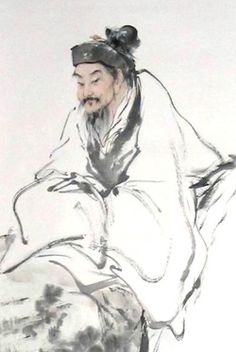
Quotations from Chuang Tzu
by Thomas Merton
(Shamelessly lifted from Terebess Asia Online)
Chuang Tzu was a Taoist sage, living sometime before 250 B.C. The book Chuang Tzu is believed to contain both his own writings and writings by others about him and his teachings. The quotations at this site were taken from The Way of Chuang Tzu, which was compiled by Thomas Merton (a Roman Catholic monk) after reading four different translations of Chuang Tzu. It is an abridged version of Chuang Tzu.
As Thomas Merton says in his introductory note, you enter upon the way of Chuang Tzu when you leave all ways and get lost.
Uncreated
To name Tao is to name no-thing.
Tao is not the name of (something created).
“Cause” and “chance” have no bearing on the Tao.
Tao is a name that indicates without defining.
Tao is beyond words and beyond things.
It is not expressed either in word or in silence.
Where there is no longer word or silence
Tao is apprehended.
(25:11, p. 226)
Beyond human knowledge and understanding
Great knowledge sees all in one. Small knowledge breaks down into the many.
(2:2, p. 55)
By ethical argument and moral principle the greatest crimes are eventually shown to have been necessary, and, in fact, a signal benefit to mankind.
(9:2, p. 101)
Distinguishing ego from true self
All that is limited by form, semblance, sound, color is called object.
Among them all, man alone is more than an object.
Though, like objects, he has form and semblance,
He is not limited to form.
He is more.
He can attain to formlessness.
When he is beyond form and semblance, beyond “this” and “that,”
where is the comparison with another object?
Where is the conflict?
What can stand in his way?
He will rest in his eternal place which is no-place.
He will be hidden in his own unfathomable secret.
His nature sinks to its root in the One.
His vitality, his power hide in secret Tao.
(19:2, pp 155-156)
Understanding the nature of desire
When he tries to extend his power over objects,
those objects gain control of him.
He who is controlled by objects loses possession of his inner self…
Prisoners in the world of object,
they have no choice but to submit to the demands of matter!
They are pressed down and crushed by external forces:
fashion, the market, events, public opinion.
Never in a whole lifetime do they recover their right mind!…
What a pity!
(23:8 and 24:4, p. 202, 211)
You train your eye and your vision lusts after color.
You train your ear, and you long for delightful sound.
You delight in doing good, and your natural kindness is blown out of shape.
You delight in righteousness, and you become righteous beyond all reason.
You overdo liturgy, and you turn into a ham actor.
Overdo your love of music, and you play corn.
Love of wisdom leads to wise contriving.
Love of knowledge leads to faultfinding.
If men would stay as they really are, taking or leaving these eight delights would make no difference.
But if they will not rest in their right state, the eight delights develop like malignant tumors.
The world falls into confusion.
Since men honour these delights, and lust after them, the world has gone stone-blind.
When the delight is over, they still will not let go of it…
(11:1-2, pp. 103-104)
Love of colors bewilders the eye and it fails to see right.
Love of harmonies bewitches the ear, and it loses its true hearing.
Love of perfumes fills the head with dizziness.
Love of flavors ruins the taste.
Desires unsettle the heart until the original nature runs amok.
These five are enemies of true life.
Yet these are what men of discernment claim to live for.
They are not what I live for.
If this is life, then pigeons in a cage have found happiness!
(12:15, p. 118)
Becoming unattached
Yen Hui:
What is fasting of the heart?
Confucius:
The goal of fasting is inner unity.
This means hearing, but not with the ear;
hearing, but not with the understanding;
hearing with the spirit, with your whole being…
The hearing of the spirit is not limited to any one faculty, to the ear, or to the mind.
Hence it demands the emptiness of all the faculties.
And when the faculties are empty, then the whole being listens.
There is then a direct grasp of what is right there before you
that can never be heard with the ear or understood with the mind.
Fasting of the heart empties the faculties, frees you from limitation and from preoccupation.
Fasting of the heart begets unity and freedom.
Yen Hui:
I see. What was standing in my way was my own self-awareness. If I can begin this fasting of the heart, self awareness will vanish.
(4:1, pp. 75-76)
Forgetting about preferences
Tao is obscured when men understand only one pair of opposites,
or concentrate only on a partial aspect of being.
Then clear expression also becomes muddled by mere wordplay,
affirming this one aspect and denying all the rest.
The pivot of Tao passes through the center where all affirmations and denials converge.
He who grasps the pivot is at the still-point
from which all movements and oppositions can be seen in their right relationship…
Abandoning all thought of imposing a limit or taking sides, he rests in direct intuition.
(2:3, p. 59, p.61)
When we look at things in the light of Tao, nothing is best, nothing is worst.
Each thing, seen in its own light stands out in its own way.
It can seem to be “better” than what is compared with it on its own terms.
But seen in terms of the whole, no one thing stands out as “better” …
All creatures have gifts of their own…
All things have varying capacities.
Consequently he who wants to have right without wrong, order without disorder,
does not understand the principles of heaven and earth.
He does not know how things hang together.
Can a man cling only to heaven and know nothing of earth?
They are correlative: to know one is to know the other.
To refuse one is to refuse both.
(17:4,5,8, pp. 131-133)
When the shoe fits, the foot is forgotten.
When the belt fits, the belly is forgotten.
When the heart is right, “for” and “against” are forgotten.
No drives, no compulsions, no needs, no attractions:
Then your affairs are under control.
You are a free man.
(19:12, pp. 166-167)
Paraphrased: When Chuang Tzu was about to die, his disciples began planning a splendid funeral. However some disciples expressed concern that given a particular arrangement, birds and kites would eat his remains. Chuang Tzu replied, “Well, above ground I shall be eaten by crows and kites, below it by ants and worms. What do you have against birds?”
(32:14, pp. 233-234)
Not working for personal gain
When an archer is shooting for nothing, he has all his skill.
If he shoots for a brass buckle, he is already nervous.
If he shoots for a prize of gold, he goes blind or sees two targets —
He is out of his mind!
His skill has not changed. But the prize divides him.
He cares. He thinks more of winning than of shooting–
And the need to win drains him of power.
(19:4, p. 158)
Action and Non-Action
The non-action of the wise man is not inaction.
It is not studied. It is not shaken by anything.
The sage is quiet because he is not moved,
Not because he wills to be quiet.
Still water is like glass.
You can look in it and see the bristles on your chin.
It is a perfect level;
A carpenter could use it.
If water is so clear, so level,
How much more the spirit of man?
The heart of the wise man is tranquil.
It is the mirror of heaven and earth
The glass of everything.
Emptiness, stillness, tranquillity, tastelessness,
Silence, non-action: this is the level of heaven and earth.
This is perfect Tao. Wise men find here
Their resting place.
Resting, they are empty.
From emptiness comes the unconditioned.
From this, the conditioned, the individual things.
So from the sage’s emptiness, stillness arises:
From stillness, action. From action, attainment.
From their stillness comes their non-action, which is also action
And is, therefore, their attainment.
For stillness is joy. Joy is free from care
Fruitful in long years.
Joy does all things without concern:
For emptiness, stillness, tranquillity, tastelessness,
Silence, and non-action
Are the root of all things.
(13:1, pp. 119-121)
Prince Wen Hui’s cook was cutting up an ox … The ox fell apart with a whisper. The bright cleaver murmured like a gentle wind. Rhythm! Timing! Like a sacred dance …
Prince Wen Hui:
Good work! Your method is faultless!
The cook:
Method? What I follow is Tao beyond all methods!
When I first began to cut up oxen I would see before me the whole ox all in one mass. After three years I no longer saw this mass. I saw the distinctions. But now I see nothing with the eye. My whole being apprehends. My senses are idle. The spirit free to work without plan follows its own instinct guided by natural line, by the secret opening, the hidden space, my cleaver finds its own way…
Then I withdraw the blade, I stand still and let the joy of the work sink in. I clean the blade and put it away.
Prince Wan Hui:
This is it! My cook has shown me how I ought to live my own life!
(3:2, pp. 64-67)
Letting go of thoughts
To exercise no-thought and rest in nothing is the first step toward resting in Tao.
To start from nowhere and follow no road is the first step toward attaining Tao.
(22:1, p. 176)
The mind remains undetermined in the great Void.
Here the highest knowledge is unbounded.
That which gives things their thusness cannot be delimited by things.
So when we speak of ‘limits’, we remain confined to limited things.
The limit of the unlimited is called ‘fullness.’
The limitlessness of the limited is called ’emptiness.’
Tao is the source of both.
But it is itself neither fullness nor emptiness.
(22:6, pp. 182-183)
Being humble
If a man is crossing a river and an empty boat collides with his own skiff,
even though he be a bad-tempered man he will not become very angry.
But if he sees a man in the boat, he will shout at him to steer clear.
If the shout is not heard, he will shout again, and yet again, and begin cursing.
And all because there is somebody in the boat.
Yet if the boat were empty, he would not be shouting, and not angry.
If you can empty your own boat crossing the river of the world,
no one will oppose you, no one will seek to harm you….
Who can free himself from achievement, and from fame, descend and be lost amid the masses of men?
He will flow like Tao, unseen, he will go about like Life itself with no name and no home.
Simple is he, without distinction. To all appearances he is a fool.
His steps leave no trace. He has no power. He achieves nothing, has no reputation.
Since he judges no one, no one judges him.
Such is the perfect man:
His boat is empty.
(20:2, 4, pp. 168-171)
The man who has some respect for his person keeps his carcass out of sight, hides himself as perfectly as he can.
(23:2, pp. 187)
Surrendering
If you persist in trying to attain what is never attained (It is Tao’s gift),
if you persist in making effort to obtain what effort cannot get,
if you persist in reasoning about what cannot be understood,
you will be destroyed by the very thing you seek.
To know when to stop,
to know when you can get no further by your own action,
this is the right beginning!
(23:3-7, p. 197)
… You never find happiness until you stop looking for it.
My greatest happiness consists precisely in doing nothing whatever that is calculated to obtain happiness:
and this, in the minds of most people, is the worst possible course…
If you ask “what ought to be done” and “what ought not to be done” on earth in order to produce happiness,
I answer that these questions do not have an answer.
There is no way of determining such things.
Yet at the same time, if I cease striving for happiness,
the “right’ and the “wrong” at once become apparent all by themselves.
Contentment and well-being at once become possible
the moment you cease to act with them in view,
and if you practice non-doing (wu wei), you will have both happiness and well-being.
(18:1, pp. 140-150)
Seeing the light
Look at this window: it is nothing but a hole in the wall, but because of it the whole room is full of light. So when the faculties are empty, the heart is full of light.
(4:1, pp. 77-78)
Experiencing freedom
The true men of old were not afraid when they stood alone in their views.
No great exploits. No plans.
If they failed, no sorrow.
No self-congratulation in success…
The true men of old knew no lust for life, no dread of death.
Their entrance was without gladness, their exit, yonder, without resistance.
Easy come, easy go.
They did not forget where from, nor ask where to, nor drive grimly forward fighting their way through life.
They took life as it came, gladly;
took death as it came, without care; and went away, yonder. Yonder!
They had no mind to fight Tao.
They did not try by their own contriving, to help Tao along.
These are the ones we call true men.
Minds free, thoughts gone. Brows clear, faces serene.
(6:1, pp. 89-90)
Goods and possessions are no gain in his eyes.
He stays far from wealth and honor.
Long life is no ground for joy, nor early death for sorrow.
Success is not for him to be pround of, failure is no shame.
Had he all the world’s power he would not hold it as his own.
If he conquered everything he would not take it to himself.
His glory is in knowing that all things come together in One and life and death are equal.
(12:2, pp. 106-107)
The man in whom Tao acts without impediment harms no other being by his actions
yet he does not know himself to be “kind”, to be “gentle”…
(He) does not bother with his own interests and does not despise others who do.
He does not struggle to make money and does not make a virtue of poverty.
He goes his way without relying on others and does not pride himself on walking alone.
While he does not follow the crowd he won’t complain of those who do.
Rank and reward make no appeal to him; disgrace and shame do not deter him.
He is not always looking for right and wrong, always deciding “Yes” or “No.”
The ancients said, therefore:
The man of Tao remains unknown.
Perfect virtue produces nothing.
“No-Self” is “True-Self”.
And the greatest man is Nobody.
(17:3, pp. 137-138)
Next Post

August 25, 2018 Thinking of T S Eliot & His Religions
Browse Our Archives
Select a Category A Christmas Carol Abolitionist African-American Ahmadiyya Alan Watts Aldous Huxley Allen Ginsberg Amedkar Jayanti American politics American Zen Anaheim Zen Sangha Anglican Annie Besant April Fool Armageddon Art and Religion artificial intellegence Atheist Awakening B R Ambedkar Barlaam & Josaphat Beatnik Between Bhagavad Gita Bible biography birthday bodhisattva Bodhisattva Precepts Book burning Book of Common Prayer Book of Mormon Brahmo Samaj Buddha Buddhism Buddhist Buddhist Lord's Prayer Butterflies Calendars cartoons cat ChatGPT Chicken Tortilla Soup choices Christian atheism Christian mysticism Christian origins Christian Science Christian Zen Christianity Christianity and Buddhism christmas Christmas Truce Christopher Isherwood Church of Later Day Saints Cinco de Mayo circus covenant critical thinking culture D. T. Suzuki Dalit Buddhism Daniel Defoe Desert Fathers and Mothers dharma talk Dogen Donald Trump Dongshan's Five Ranks Dorothy Day dream Duty Easter ecology Edwin Arnold emptiness Empty Moon Zen Network Episcopal Church Eternal Now Ethics evolution existentialism Faith fantasy Fathers Day film film review fire Five Ranks Folk music food Form and emptiness Four Seals Francis of Assisi Francis Xavier Free thinker friendship George MacDonald Gerald Heard Glenn Taylor Webb God Good Friday Gospel of Gospel of Mark Gospel of Thomas grace Graduate Theological Unioin Graduate Theological Union Guanyin H R Blyth Hakuin Ekaku Hanamatsuri Hanukkah Harada Yasutani Zen Heart Sutra Henry David Thoreau Hermann Hesse Hinduism History and Religion history of religion Holy Spirit home Hospitality Icon Ides of March Isaac Newton Islam Islamic mysticism Jack Kerouac James Luther Adams Jiddu Krishnamurti Joan of Arc Johannes Gutenberg John Donne joke Judaism justice karma kensho King James Bible koan Koun Yamada Kyoto School Lewis Carrol Liberal Christianity Liberal Religion Life Plan Community Liminal literature Literature and Religion Liturgy Lord's Prayer Love Mahatma Gandhi Mahayana Martin Luther King Jr Mary Baker Eddy Mary Magdelene Mary Oliver Mayflower Compact Meditation memories memory metaphor money money and religioin Mormons Mother's Day movie review mysticism mythic Neighborhood Unitarian Universalist Church New Thought Nichiren Buddhism Nonduality not knowing Omar Khayyam Pacific School of Religion pagan Palm Sunday Passover peace Pentecost perennialism Phantastes Philip Kapleau philosophy Pilgrimage poetry Poetry and Religion politics Prayer Precepts Printing Press prophecy prophetic spirituality psychology Pure Land Queer religion queering religion Quietism Ram Mohan Roy rebirth recipe Relationships and religion religion religion and history Religious syncretism Resistance Retirement Retreat review Rissho Kosei Kai Ritual Robert Aitken Roshi Robert Ingersoll Rohatsu Romani religion Rosie the Riveter saints samadhi SanboZen Sangha Satyagraha science science and reigion science and religion science fiction seminary sermon Sesshin Sex and Religion Shinran Sikh Sikh tradition silence Social Justice Socially Engaged Buddhism Society and religion Soto Zen soul spiritual community spiritual practice Spirituality Sufism Suicide superstition Taoism Television Teresa of Avila Thanksgiving theological schools Theosophy Thomas Merton Time Transcendentalism Transcendentalist Trinitarian Trinity Uncategorized unitarian Unitarian Christianity Unitarian Universalist Universalism Vajrayana Vedanta Walking war Willa Cather William Ellery Channing wisdom women and religion women in religion World Teacher Writing zazen Zen Zen Center Zen inspired retriement zen meditation Zen Precepts Zen women
Select a Month September 2026 August 2026 July 2026 June 2026 May 2026 April 2026 March 2026 February 2026 January 2026 December 2025 November 2025 October 2025 September 2025 August 2025 July 2025 June 2025 May 2025 April 2025 March 2025 February 2025 January 2025 December 2024 November 2024 October 2024 September 2024 August 2024 July 2024 June 2024 May 2024 April 2024 March 2024 February 2024 January 2024 December 2023 November 2023 October 2023 September 2023 August 2023 July 2023 June 2023 May 2023 April 2023 March 2023 February 2023 January 2023 December 2022 November 2022 October 2022 September 2022 August 2022 July 2022 June 2022 May 2022 April 2022 March 2022 February 2022 January 2022 December 2021 November 2021 October 2021 September 2021 August 2021 July 2021 June 2021 May 2021 April 2021 March 2021 February 2021 January 2021 December 2020 November 2020 October 2020 September 2020 August 2020 July 2020 June 2020 May 2020 April 2020 March 2020 February 2020 January 2020 December 2019 November 2019 October 2019 September 2019 August 2019 July 2019 June 2019 May 2019 April 2019 March 2019 February 2019 January 2019 December 2018 November 2018 October 2018 September 2018 August 2018 July 2018 June 2018 May 2018 April 2018 March 2018 February 2018 January 2018 December 2017 November 2017 October 2017 September 2017 August 2017 July 2017 June 2017 May 2017 April 2017 March 2017 February 2017 January 2017 December 2016 November 2016 October 2016 September 2016 August 2016 July 2016 June 2016 May 2016 April 2016 March 2016 February 2016 January 2016 December 2015 November 2015 October 2015 September 2015 August 2015 July 2015 June 2015 May 2015 April 2015 March 2015 February 2015 January 2015 December 2014 November 2014 October 2014 September 2014 August 2014 July 2014 June 2014 May 2014 April 2014 March 2014 February 2014 January 2014 December 2013 November 2013 October 2013 September 2013 August 2013 July 2013 June 2013 May 2013 April 2013 March 2013 February 2013 January 2013 December 2012 November 2012 October 2012 September 2012 August 2012 July 2012 June 2012 May 2012 April 2012 March 2012 February 2012 January 2012 December 2011 November 2011 October 2011 September 2011 August 2011 July 2011 June 2011 May 2011 April 2011 March 2011 February 2011 January 2011 December 2010 November 2010 October 2010 September 2010 August 2010 July 2010 June 2010 May 2010 April 2010 March 2010 February 2010 January 2010 December 2009 November 2009 October 2009 September 2009 August 2009 July 2009 June 2009 May 2009 April 2009 March 2009 February 2009 January 2009 December 2008 November 2008 October 2008 September 2008 August 2008 July 2008 June 2008 May 2008 April 2008 March 2008 February 2008 January 2008 December 2007 November 2007 October 2007 September 2007 August 2007 July 2007 June 2007 May 2007 April 2007 March 2007 February 2007 January 2007 December 2006 November 2006 October 2006 September 2006
Follow Us!
TAKE THE
Religious Wisdom Quiz
Who dreamed about the sun, moon, and stars bowing to him?
Select your answer to see how you score.
Daniel Elijah Adam Joseph
Related posts from Monkey Mind
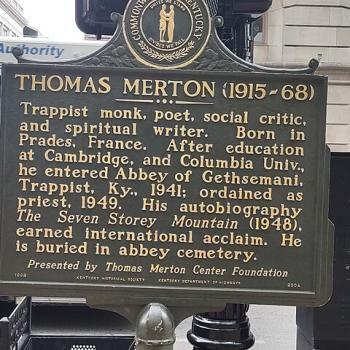
Thomas Merton, Interfaith saint
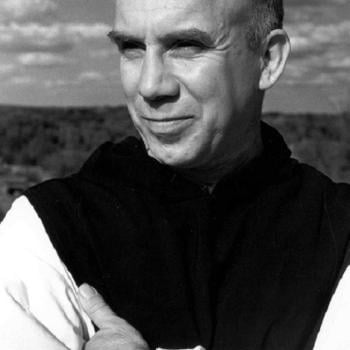
Recalling the Christian Bodhisattva, Thomas Merton
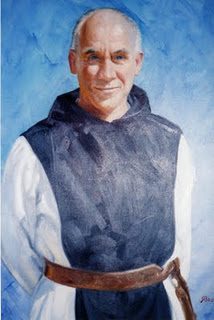
Marking the Birth of Thomas Merton
With A Little Help From My Friends: My...
TRENDING AT PATHEOS Buddhist

Janie Learns the Way of the Cross: A...
Teaching children about Jesus' Passion can be challenging. Many parents and educators...

Looking For Good Catholic Writing - October 2026
He alone extends the heavens, and he walks upon the waves of...

In "Irreplaceable," our book on vocation and technology, Trevor Sutton and I...

I was strolling through the top floor of the brand new Parthenon...

What Does Gêvâh Mean For Kimberley Guifoyle &...
This week, a lot of the news is focused on Kimberly Guilfoyle....

INNER CIRCLE: Profound Mystery (Of Christ In All...
Ephesians 5:31-32 “For this reason, a man will leave his father and...
view all Buddhist blogs
Ad-Free & Subscriber Log-In Subscription Support
- About Us
- 2026 Calendar
- Videos
- Podcasts
- Library of World Religions
- Faith In Media Tracker
- Advertise With Us
- Write for Us
- Privacy Policy
- Terms of Service
- Do Not Sell My Data
- Contact Us
- Radiant Digital
- Manage Newsletter Subscriptions
- Unsubscribe From Notifications
- Sitemap
Copyright 2008-2026, Patheos. All rights reserved.
Subscription Support Ad-Free & Subscriber Log-In
Follow Patheos