
BuddhistCatholicContemplativeEvangelicalGeneral ChristianHinduJewishLatter-day SaintMuslimNew VisionsProgressive Christian
Beliefs
- Buddhist
- Catholic
- Contemplative
- Evangelical
- General Christian
- Hindu
- Jewish
- Latter-day Saint
- More Voices
- Muslim
- New Visions
- Pagan
- Progressive Christian
Topics
- Religion News
- Food and Religion
- Sports and Religion
- Religious Art
- Religious Music and Entertainment
- Religious Events
- History and Religion
- Style and Religion
- Politics and Religion
- Women in Religion
- Recreation Outdoors and Religion
- Business Finance and Religion
- Careers Workplace and Religion
- Education and Religion
- Family Parenting and Religion
- Health Fitness and Religion
- Home and Religion
- Relationships and Religion
- Technology and Religion
- Travel and Religion
Columnists
- Buddhist Columnists
- Business Finance and Religion Columnists
- Careers Workplace and Religion Columnists
- Catholic Columnists
- Contemplative Columnists
- Education and Religion Columnists
- Evangelists Columnists
- Family Parenting and Religion Columnists
- General Christian Columnists
- Health Fitness and Religion Columnists
- Hindu Columnists
- History and Religion Columnists
- Home and Religion Columnists
- Jewish Columnists
- More Voices Columnists
- Latter Day Columnists
- Muslim Columnists
- New Visions Columnists
- Nonreligious Columnists
- Pagan Columnists
- Politics and Religion Columnists
- Progressive Columnists
- Recreation Outdoors and Religion Columnists
- Relationships and Religion Columnists
- Religion News Columnists
- Religious Art Columnists
- Religious Events Columnists
- Religious Music and Entertainment Columnists
- Sports and Religion Columnists
- Style and Religion Columnists
- Technology and Religion Columnists
- Travel and Religion Columnists
- Women in Religion Columnists
Resource Library
- 2026 Calendar
- Library of World Religions
- The 100 Most Holy Places on Earth
- Patheos Answers
- Podcasts
- Videos
- Faith Leaders Database
- Anglican Episcopalian
- Bahai
- Baptist
- Buddhism
- Christianity
- Confucianism
- Eastern Orthodoxy
- Hinduism
- Holiness and Pentecostal
- ISKCON
- Islam
- Judaism
- Lutheran
- Methodist
- The Church of Jesus Christ of Latter-day Saints
- New Age
- Paganism
- Presbytarian and Reformed
- Protestantism
- Religion Behind the Scenes
- Roman Catholic
- Scientology
- Shia Islam
- Sikhism
- Sufism
- Sunni Islam
- Taoism
- Zen
- See all religions
Research Tools
 Ad-Free & Subscriber Log-In Subscription Support
Ad-Free & Subscriber Log-In Subscription Support
Follow Patheos 

- Trending:
- Forgiveness
- |
- Marriage
- |
- Consciousness
- |
- Death Penalty
- |
- Election
- |
- Halloween

- Home
- Buddhist
- Telling Stories: A Zen Priest Reflects on a Fairy Tale by A. S. Byatt
Telling Stories: A Zen Priest Reflects on a Fairy Tale by A. S. Byatt
Last updated on: August 7, 2018 at 4:38 pm by James Ford
Telling Stories: A Zen Priest Reflects on a Fairy Tale by A. S. Byatt 2018-08-07T16:38:09-07:00 James Ford
Patheos Explore the world's faith through different perspectives on religion and spirituality! Patheos has the views of the prevalent religions and spiritualities of the world.
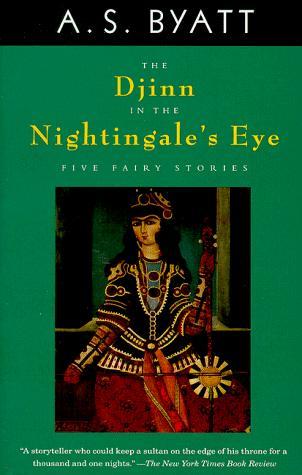
I begin with a story I adapted from the writer A. S. Byatt. Byatt’s original words are in regular type, while summaries by me are in italics. (I strongly encourage you to buy the book and read the real version of her story. It’s longer and much better…
That said, you might think of my little adaptation as the text for my reflection, which follows…
***
Once upon a time, in a kingdom between the sea and the mountains, between the forest and the desert, there lived a King and Queen with three daughters. Their eldest daughter was pale and quiet, the second daughter was brown and active, and the third was one of those Sabbath daughters who are bonny and bright and good and gay, of whom everything and nothing was expected.
Then one day the sky turned green.
The ministers said nothing could be done, though a contingency-fund might usefully be set up for when a course of action became clear. The priests counseled patience and self-denial, as a general sanative measure, abstention from lentils, and the consumption of more lettuce. The generals supposed it might help to attack their neighbor to the East, since it was useful to have someone else to blame… The witches and wizards on the whole favored a Quest.
After thinking about it the King and Queen decided for the quest, which the wizards and witches said should be for a single silver bird in a nest of ash-branches. By general assent the only appropriate person to go on this quest would be one of the princesses. Each agreed, but as this is a fairy tale the parents decided to send their eldest first.
They gave her a sword, and an inexhaustible water-bottle someone had brought back from another Quest, and a package of bread and quails’ eggs and lettuce and pomegranates, which did not last very long.
And off she went on the road which led to the silver bird’s nest.
However, she began to think. She was by nature a reading, not a traveling, princess. And she was well aware of stories about princes and princesses who set out on Quests. What they all had in common, she thought to herself, was a pattern in which the two elder sisters or brothers, set out very confidently, failed in one way or another, and were turned to stone, or imprisoned in vaults, or cast into magic sleep, until rescued by the third royal person…
She sat down by the side of the road to work things through. That’s when she heard a small stone beside her cry out for help. She lifted the stone. Pinned underneath it, in a hollow of the ground, was a very large and dusty scorpion, waving angry pincers, and somewhat crushed in the tail.
They had a long conversation. The scorpion knew of a wise old woman out in the forest who should be able to heal him. And, most important, they decided to leave the road, even though the rule for this kind of Fairy story dictated they should stay on that road. Instead they walked on into the forest. Well, the princess walked carrying the scorpion in her basket.
Turned out the scorpion knew what berries to eat or not. So that was a good thing. Then they came upon a big fat toad who had been attacked by a human and had a terrible gash on its head. They talked about the Quest, but mainly about the wise old woman who could heal the scorpion. They agreed she should be able to heal a toad, as well. The toad warned the princess it would not turn into a handsome prince, although it considered itself quite a handsome toad. They all agreed it was handsome, and that they were what they were and as they were, they would go on together.
This is a fairy tale And, we know the princess needs three magical helpers. And so, indeed, further out in the forest they stumbled upon a giant cockroachwhich had been snared in at hunter’s trap. As the princess freed it she saw its stomach had been torn in the trap. So, they all agreed they should go together to find the wise old woman who could heal. By this time they seemed to have forgotten about the Quest.
Then they came across a handsome young Woodsman cutting logs in a clearing. And the princess thought she would like to leave the shelter of the woods and talk to him. But the cockroach whispered a warning. He had five wives, all buried behind his hut. The other two agreed and added details. So, thanks to the companions she avoided occupying the sixth grave.
And so on and so forth, the four companions wandered through the forest, the elder princess and her three wounded friends. Then finally, it seemed out of nowhere they came to the old woman’s house. She healed the companions. Then the old woman and the elder princess sat down with a cup of tea and had a long talk.
She said There are young women who would never have listened to the creatures’ tales about the Woodsman… And maybe they would have been wise and maybe they would have been foolish: that is their story. But you listened to the Cockroach and stepped aside and came here, where we collect stories and spin stories and mend what we can and investigate what we can’t, and live quietly without striving…
We have no story of our own here, we are free, as old women are free, who don’t have to worry about princes or kingdoms, but dance alone and take an interest in the creatures.
The conversation went on long into the evening. And eventually the elder princess decided the Quest to return the sky to blue wasn’t her work; that belonged to her youngest sister. Rather she would stay here and investigate the great mystery of life and death and become, in time, a wise old woman. This was her Quest, the quest of the heart.
And so she did.
And for those who want to know about that other story, the one about the original Quest, and how it turned out. Well, after the middle Princess had her adventure, which was really interesting, the youngest Princess finally left, and indeed she was able to turn the sky back to blue and was hailed as a heroine and lived happily ever after. Although they didn’t say it, there were some in her kingdom who found they missed the green sky…
***
Jan and I often while away late evenings propped up in bed with books resting on our tummies. When I have my way, the television is also going, although Jan wants the volume really low. Me, I take comfort in the noise and pale dancing light, and sometimes with what is actually going on, on screen. Jan, not so much. But, the real magic of the evening for both of us, requires that book held or resting. And, for Jan, I should add, a sleeping cat stretched across her midriff.
These days Jan reads several ways. She loves paper and boards. But she doesn’t disdain the Kindle Santa brought her. And, when she wants hands free reading, such as when she’s knitting, she’ll just use her iPod.
Me, it’s always paper. And it takes two forms. During the day my reading is what I call alternatively “grad student reading” or, more simply, “mining;” looking to more deeply understand a particular aspect of a subject I’m writing about. In the evening I’m stuck nearly perpetually in the murder mystery universe, preferably those with the killing decently off stage and a clergy detective, or failing that, a well-drawn historical or regional backdrop.
Jan on the other hand, she is literarily omnivorous. As they say you only need one intellectual in the family. And for us that’s Jan’s job. That said, a quiet late evening supine in bed with our books is heavenly. Well, except for when the cat finds herself displaced for one reason or another. She can express resentment at her pillow moving, and it can involve teeth.
Among our small pleasures as we nest there in the bedroom is sharing with each other a line or two from our current book. For instance, having been tricked by a review on NPR I was reading a mystery by Philip Kerr where the detective is a Raymond Chandler type hard boiled but relentlessly honest private eye – in the first volume of this series trying to survive and do his job in Hitler’s Berlin.
More shadow and a lot more violence than I usually like in my mysteries. But, what language! With unlikely metaphors piled deliciously high one upon another. “Jan,” I said. “Listen to this: He ‘sat at his desk, smoking a cigar that belonged properly in a plumber’s tool-bag. He was dark, with bright blue eyes, just like our beloved Fuhrer, and was possessed of a stomach that stuck out like a cash register… He shook me by the hand as I introduced myself. It was like holding a cucumber.’” That’s the sort of thing I read to Jan.
Jan, well, the sort of thing she reads to me tends to go more along the lines of, “You had the sense to see you were caught in a story, and the sense to see that you could change it to another one. And the special wisdom to recognize that you are under a curse – which is also a blessing – which makes the story more interesting to you than the things that make it up.”
Okay, when she read that to me, it caught me cold. Wow, I thought, perhaps I should read more of that literary fiction stuff. “What’s that from?” I asked. “A. S. Byatt.” She replied, waving the book at me, a strategic finger guarding her place. “It’s in a collection titled The Djinn in the Nightengale’s Eye. The story is the ‘Eldest Princess.’”
I had to wait ‘till Jan had finished the book, then I read the whole story. And I thought, as I’m inclined to do at such moments of discovery, “Oh, there’s a really good illustration in here for something important.”
Now you’ve heard it. The story is about stories. The Eldest princess is sent off on a Quest, but being well-read, she knows this is actually a story about a youngest princess, and wanting her own story, she steps off the path.
She decided to color outside the lines.
And it sure seemed this is the time to share it. We’re exploring spirituality, spiritual practices, and the spiritual life. We are invited into a path to the reality of the world we encounter, and to the truths we need in order to not follow in the ruts that have been laid before. The good news I want to repeat all week: We can break free of the old patterns, those that may have once been useful, but are no longer so, and, truthfully never were anything but guidelines, and to see anew, and, then, with diligence and just a little luck, to find a better way.
We’re all invited to go off the path, into the woods, into our own hearts and imaginations. We are all of us invited toward the depths of life and death, to the mysteries of our existence.
We then get some advice along that way. Just look at her magical companions. Not doves and unicorns, not even scarecrows and cowardly lions; we might feel those all belong to people who stay on the path, who color inside the lines. Not always, but if its comfortable, you might be suspicious of how it can challenge you to break free.
To step out on your own is to step away from the comforts of the familiar. And it has costs. And it has rewards.
And. So. In that story the eldest princess’s companions are those found when one wanders away from the well-trodden path. In this story a scorpion with a crushed stinger, a toad with a hole gouged into its head, and a cockroach with a tear in its stomach. There’s a lot to be gleaned from these magical creatures. Each has wounds. I hope you noticed that. It’s not just that they’re unsightly. They’re wounded. The only point I’ll make out of that here is that if you look at the lives of the magical companions of our hearts, few turn out to be made of plaster and without blemish.
But nothing caught me so much as when the Eldest Princess finally made it to the point of her story, not the story of the youngest princess, or of the middle princess, but to the point of her story, found in an old woman’s hut in the middle of the forest. And that point echoes for all of us, for you, and for me. It is the real secret at the heart of all stories.
There’s little doubt in my mind we live and breathe and take our being within stories. I love stories. In one very true sense they’re how we think. We use metaphor to extract meaning. The catch is that stories often instead catch us like that cockroach in the hunter’s snare. I’m too small, I’m too weak, I’m not smart enough, I’m not strong enough, I’m not good enough. There are snares for everyone in the stories that are laid out for us, but only as long as we’re willing to go along.
But, if we’re willing to step off the path, if we’re willing to listen to anyone who can speak wisdom, no matter who they might be; then we make our way to that hut in the woods. And there we can find something so, so important.
This is the truth of taking on a spiritual discipline, learning some practices, and following the path.
The most important line in that story about stories and about how to be free, A. S. Byatt puts into the mouth of the old woman. “We have no story of our own here, we are free, as old women are free, who don’t have to worry about princes or kingdoms, but dance alone and take an interest in the creatures.”
Stories are woven out of our lives and are meant to be used. So. Listen to them. And. Remember them. Sing them. Dance them. But know, in your heart of hearts, the stories are also just stories.
Notice that, and magic follows like dawn follows the night.
Holding the stories lightly, we find a pearl of great price.
Previous Post

August 6, 2018
A Zen Teacher Suggests Three Points for an Authentic Spiritual Life
Browse Our Archives
Select a Category A Christmas Carol Abolitionist African-American Ahmadiyya Alan Watts Aldous Huxley Allen Ginsberg Amedkar Jayanti American politics American Zen Anaheim Zen Sangha Anglican Annie Besant April Fool Armageddon Art and Religion artificial intellegence Atheist Awakening B R Ambedkar Barlaam & Josaphat Beatnik Between Bhagavad Gita Bible biography birthday bodhisattva Bodhisattva Precepts Book burning Book of Common Prayer Book of Mormon Brahmo Samaj Buddha Buddhism Buddhist Buddhist Lord's Prayer Butterflies Calendars cartoons cat ChatGPT Chicken Tortilla Soup choices Christian atheism Christian mysticism Christian origins Christian Science Christian Zen Christianity Christianity and Buddhism christmas Christmas Truce Christopher Isherwood Church of Later Day Saints Cinco de Mayo circus covenant critical thinking culture D. T. Suzuki Dalit Buddhism Daniel Defoe Desert Fathers and Mothers dharma talk Dogen Donald Trump Dongshan's Five Ranks Dorothy Day dream Duty Easter ecology Edwin Arnold emptiness Empty Moon Zen Network Episcopal Church Eternal Now Ethics evolution existentialism Faith fantasy Fathers Day film film review fire Five Ranks Folk music food Form and emptiness Four Seals Francis of Assisi Francis Xavier Free thinker friendship George MacDonald Gerald Heard Glenn Taylor Webb God Good Friday Gospel of Gospel of Mark Gospel of Thomas grace Graduate Theological Unioin Graduate Theological Union Guanyin H R Blyth Hakuin Ekaku Hanamatsuri Hanukkah Harada Yasutani Zen Heart Sutra Henry David Thoreau Hermann Hesse Hinduism History and Religion history of religion Holy Spirit home Hospitality Icon Ides of March Isaac Newton Islam Islamic mysticism Jack Kerouac James Luther Adams Jiddu Krishnamurti Joan of Arc Johannes Gutenberg John Donne joke Judaism justice karma kensho King James Bible koan Koun Yamada Kyoto School Lewis Carrol Liberal Christianity Liberal Religion Life Plan Community Liminal literature Literature and Religion Liturgy Lord's Prayer Love Mahatma Gandhi Mahayana Martin Luther King Jr Mary Baker Eddy Mary Magdelene Mary Oliver Mayflower Compact Meditation memories memory metaphor money money and religioin Mormons Mother's Day movie review mysticism mythic Neighborhood Unitarian Universalist Church New Thought Nichiren Buddhism Nonduality not knowing Omar Khayyam Pacific School of Religion pagan Palm Sunday Passover peace Pentecost perennialism Phantastes Philip Kapleau philosophy Pilgrimage poetry Poetry and Religion politics Prayer Precepts Printing Press prophecy prophetic spirituality psychology Pure Land Queer religion queering religion Quietism Ram Mohan Roy rebirth recipe Relationships and religion religion religion and history Religious syncretism Resistance Retirement Retreat review Rissho Kosei Kai Ritual Robert Aitken Roshi Robert Ingersoll Rohatsu Romani religion Rosie the Riveter saints samadhi SanboZen Sangha Satyagraha science science and reigion science and religion science fiction seminary sermon Sesshin Sex and Religion Shinran Sikh Sikh tradition silence Social Justice Socially Engaged Buddhism Society and religion Soto Zen soul spiritual community spiritual practice Spirituality Sufism Suicide superstition Taoism Television Teresa of Avila Thanksgiving theological schools Theosophy Thomas Merton Time Transcendentalism Transcendentalist Trinitarian Trinity Uncategorized unitarian Unitarian Christianity Unitarian Universalist Universalism Vajrayana Vedanta Walking war Willa Cather William Ellery Channing wisdom women and religion women in religion World Teacher Writing zazen Zen Zen Center Zen inspired retriement zen meditation Zen Precepts Zen women
Select a Month September 2026 August 2026 July 2026 June 2026 May 2026 April 2026 March 2026 February 2026 January 2026 December 2025 November 2025 October 2025 September 2025 August 2025 July 2025 June 2025 May 2025 April 2025 March 2025 February 2025 January 2025 December 2024 November 2024 October 2024 September 2024 August 2024 July 2024 June 2024 May 2024 April 2024 March 2024 February 2024 January 2024 December 2023 November 2023 October 2023 September 2023 August 2023 July 2023 June 2023 May 2023 April 2023 March 2023 February 2023 January 2023 December 2022 November 2022 October 2022 September 2022 August 2022 July 2022 June 2022 May 2022 April 2022 March 2022 February 2022 January 2022 December 2021 November 2021 October 2021 September 2021 August 2021 July 2021 June 2021 May 2021 April 2021 March 2021 February 2021 January 2021 December 2020 November 2020 October 2020 September 2020 August 2020 July 2020 June 2020 May 2020 April 2020 March 2020 February 2020 January 2020 December 2019 November 2019 October 2019 September 2019 August 2019 July 2019 June 2019 May 2019 April 2019 March 2019 February 2019 January 2019 December 2018 November 2018 October 2018 September 2018 August 2018 July 2018 June 2018 May 2018 April 2018 March 2018 February 2018 January 2018 December 2017 November 2017 October 2017 September 2017 August 2017 July 2017 June 2017 May 2017 April 2017 March 2017 February 2017 January 2017 December 2016 November 2016 October 2016 September 2016 August 2016 July 2016 June 2016 May 2016 April 2016 March 2016 February 2016 January 2016 December 2015 November 2015 October 2015 September 2015 August 2015 July 2015 June 2015 May 2015 April 2015 March 2015 February 2015 January 2015 December 2014 November 2014 October 2014 September 2014 August 2014 July 2014 June 2014 May 2014 April 2014 March 2014 February 2014 January 2014 December 2013 November 2013 October 2013 September 2013 August 2013 July 2013 June 2013 May 2013 April 2013 March 2013 February 2013 January 2013 December 2012 November 2012 October 2012 September 2012 August 2012 July 2012 June 2012 May 2012 April 2012 March 2012 February 2012 January 2012 December 2011 November 2011 October 2011 September 2011 August 2011 July 2011 June 2011 May 2011 April 2011 March 2011 February 2011 January 2011 December 2010 November 2010 October 2010 September 2010 August 2010 July 2010 June 2010 May 2010 April 2010 March 2010 February 2010 January 2010 December 2009 November 2009 October 2009 September 2009 August 2009 July 2009 June 2009 May 2009 April 2009 March 2009 February 2009 January 2009 December 2008 November 2008 October 2008 September 2008 August 2008 July 2008 June 2008 May 2008 April 2008 March 2008 February 2008 January 2008 December 2007 November 2007 October 2007 September 2007 August 2007 July 2007 June 2007 May 2007 April 2007 March 2007 February 2007 January 2007 December 2006 November 2006 October 2006 September 2006
Follow Us!
TAKE THE
Religious Wisdom Quiz
Which book follows Proverbs in the Old Testament?
Select your answer to see how you score.
Ecclesiastes Song of Solomon Isaiah Psalms
Related posts from Monkey Mind

Keizan Jokin: The Zen Master Ancestor You Don't...

What Zen Practice Actually Does With Anger

Nanquan Cuts the Cat: A Jesuit commentary on...

On Taking Refuge in the Dharma
TRENDING AT PATHEOS Buddhist

Nearly every morning, I make the drive to Detroit with my high-school-age...

The Real AI Story Is Adoption Without Trust
Artificial intelligence has crossed a political threshold. It is no longer a...

A new article, written by Jeff Lindsay and Gale L. Pooley,...

Swimfan: Forgotten Aughts Pleasures
This is a recovery effort. In 2002, My Big Fat Greek Wedding...

Top Three Anti-Catholic Lies About Catholicism
This is my initial transcript for the video, "THE 3 WORST...

Pope Leo Celebrates Mass for Nurses & Docs...
I don't have any idea how he did it, but Pope Leo...
view all Buddhist blogs
Ad-Free & Subscriber Log-In Subscription Support
- About Us
- 2026 Calendar
- Videos
- Podcasts
- Library of World Religions
- Faith In Media Tracker
- Advertise With Us
- Write for Us
- Privacy Policy
- Terms of Service
- Do Not Sell My Data
- Contact Us
- Radiant Digital
- Manage Newsletter Subscriptions
- Unsubscribe From Notifications
- Sitemap
Copyright 2008-2026, Patheos. All rights reserved.
Subscription Support Ad-Free & Subscriber Log-In
Follow Patheos