
BuddhistCatholicContemplativeEvangelicalGeneral ChristianHinduJewishLatter-day SaintMuslimNew VisionsProgressive Christian
Beliefs
- Buddhist
- Catholic
- Contemplative
- Evangelical
- General Christian
- Hindu
- Jewish
- Latter-day Saint
- More Voices
- Muslim
- New Visions
- Pagan
- Progressive Christian
Topics
- Religion News
- Food and Religion
- Sports and Religion
- Religious Art
- Religious Music and Entertainment
- Religious Events
- History and Religion
- Style and Religion
- Politics and Religion
- Women in Religion
- Recreation Outdoors and Religion
- Business Finance and Religion
- Careers Workplace and Religion
- Education and Religion
- Family Parenting and Religion
- Health Fitness and Religion
- Home and Religion
- Relationships and Religion
- Technology and Religion
- Travel and Religion
Columnists
- Buddhist Columnists
- Business Finance and Religion Columnists
- Careers Workplace and Religion Columnists
- Catholic Columnists
- Contemplative Columnists
- Education and Religion Columnists
- Evangelists Columnists
- Family Parenting and Religion Columnists
- General Christian Columnists
- Health Fitness and Religion Columnists
- Hindu Columnists
- History and Religion Columnists
- Home and Religion Columnists
- Jewish Columnists
- More Voices Columnists
- Latter Day Columnists
- Muslim Columnists
- New Visions Columnists
- Nonreligious Columnists
- Pagan Columnists
- Politics and Religion Columnists
- Progressive Columnists
- Recreation Outdoors and Religion Columnists
- Relationships and Religion Columnists
- Religion News Columnists
- Religious Art Columnists
- Religious Events Columnists
- Religious Music and Entertainment Columnists
- Sports and Religion Columnists
- Style and Religion Columnists
- Technology and Religion Columnists
- Travel and Religion Columnists
- Women in Religion Columnists
Resource Library
- 2026 Calendar
- Library of World Religions
- The 100 Most Holy Places on Earth
- Patheos Answers
- Podcasts
- Videos
- Faith Leaders Database
- Anglican Episcopalian
- Bahai
- Baptist
- Buddhism
- Christianity
- Confucianism
- Eastern Orthodoxy
- Hinduism
- Holiness and Pentecostal
- ISKCON
- Islam
- Judaism
- Lutheran
- Methodist
- The Church of Jesus Christ of Latter-day Saints
- New Age
- Paganism
- Presbytarian and Reformed
- Protestantism
- Religion Behind the Scenes
- Roman Catholic
- Scientology
- Shia Islam
- Sikhism
- Sufism
- Sunni Islam
- Taoism
- Zen
- See all religions
Research Tools
 Ad-Free & Subscriber Log-In Subscription Support
Ad-Free & Subscriber Log-In Subscription Support
Follow Patheos 

- Trending:
- Forgiveness
- |
- Marriage
- |
- Consciousness
- |
- Death Penalty
- |
- Election
- |
- Halloween

- Home
- Buddhist
- A Zen Priest Talks to Some Unitarian Universalists About a Naturalistic Mysticism
A Zen Priest Talks to Some Unitarian Universalists About a Naturalistic Mysticism
Last updated on: August 10, 2018 at 11:38 am by James Ford
A Zen Priest Talks to Some Unitarian Universalists About a Naturalistic Mysticism 2018-08-10T11:38:53-07:00 James Ford
Patheos Explore the world's faith through different perspectives on religion and spirituality! Patheos has the views of the prevalent religions and spiritualities of the world.
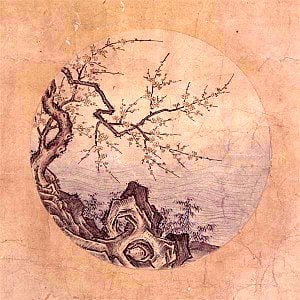
Lecture six of six delivered by the Reverend James Myoun Ford on the 10th of August at the Eliot Institute at Seabeck Conference Center, Seabeck, Washington.
The monk Fayan visited Master Dizang who asked the young student of the way, “Where have you come from?” Fayen replied, “I wander from here to there on my pilgrimage.” The master asked, “What is the point of your pilgrimage?” Fayan answered, “I don’t know.” Master Dizang replied, “Not knowing is most intimate.”
Case 20, The Book of Serenity
Here are the facts on the ground as I’ve come to understand them. I am here as this body as this life. And my life over these past seventy years has been filled with many experiences, so many joyful, too many sad, some just plain terrible. While often bittersweet, sometimes bitter, I find life is nonetheless, lovely. I am so grateful. And. And, I know that this all ends. I’m in no rush, but I know my death will come, eventually. No doubt.
This knowing of life and death is our common inheritance as human beings. The question is how do we react to these twin knowings?
Many find themselves wracked with anxiety and fear about death. And, in response, there are those offering all sorts of nostrums to address these questions. Some even claim we don’t die. The variations on this assertion include those who claim there are secret, or not so secret ways, and all one has to do is buy their product or service, and your body will live forever.
Others say our real selves are not our bodies, and should we buy their product or service our souls will disentangle from our corpses and live forever. Many variations on the theme out there, many. Some are cons, plain and simple. Others are sincere, indeed heart achingly sincere.
But the bottom line for me is I’ve never encountered a claim of individual human immortality of either the physical or spiritual sort that stood up to close examination. The facts on the ground as I encounter them seem profoundly otherwise than are presented by those who would live forever.
I look around and it is pretty obvious my body cannot live forever. Actually, nothing does. I mean even stars die. As to a soul-as-separate from my body, if there is some part of me that isn’t completely caught up with my physicality I can’t find it. (And, I promise, I’ve looked hard at this…) Everything I experience is best explained, and simply enough explained to be very hard to ignore, through natural means.
To be clear. Here, today, I’m simply confessing who I am and where I am. Although out of this, I hope I can also offer you all something of use on your own individual ways through life and death. I am asserting what you see is what you get. As it says in the Diamond Sutra, a Mahayana text closely associated with the Zen way, life is “a star at dawn, a bubble in a stream; a flash of lightening in a summer cloud, a flickering lamp, a phantom, and a dream.”
And, so, out of this bubbling knowing I find my whole body asks why and for what purpose do I have, as Mary Oliver calls it, “this one wild and precious life?”
If this is it, if this world in which we rise, live, and die, is it; how would a completely naturalistic view of the matters of life and death manifest as a spiritual perspective? And, I believe that is a fair question. For me constant touchstones that have led to a healing of my heart and a compass pointing true for my life are the teachings of the Buddha and the school of Buddhism that arose in early Medieval China and spread to Korea, Vietnam, and Japan, in Japan taking on the name Zen, and then coming West, together, and is important in my life, together with the naturalistic and rationalist perspectives that arose in the European Enlightenment and evolved into both modern evolutionary thought and Unitarian Universalism. East and West informing each other and allowing something wonderful to present itself. It is the life of the wise heart, and it speaks the language of dragons.
With that first a few words about engaging Buddhism, at least as I do, and with that suggesting what might be useful, and what may not be so helpful.
Near as I can tell we moderns have taken the fact that the Buddha himself wasn’t particularly concerned with questions of deity or cosmology as evidence he had a generally skeptical attitude about these matters. Me, I go along with that.
Although, some have also pointed to the Agganna Sutta, which uniquely among texts that claim to relate what the historic Buddha actually said, does have him making some cosmological assertions. In the Agganna if someone squints hard and tilts her head, it is just possible to see a form of Big Bang cosmology.
And if while continuing to squint, one stands on his head, it is just possible to discern a rough version of evolution. But you really, really have to want to find it, to do so. I don’t. I feel no need to. I’ve never felt that Buddhist thought anticipated anything especially relevant to contemporary science, in any particular given field. Well, except maybe psychology. No, let me restate that: except psychology. What I find within Buddhism, and particular Zen, are the perspectives that lead to a sense of meaning and direction. And that has been as important to me as my very life.
Here, throughout this week, and today, I have been suggesting a meeting of East and West, of Buddhism, particularly Zen Buddhism, together with rationalism, naturalism, and, most of all, the deepest longings of our human hearts. What has resulted, as I’ve said, helped to heal my heart and gave me that compass I so deeply need. And, maybe this can be useful for you. I’ve been exploring aspects of this all week. Today, I want to try to summarize it all. As best I can.
This leads us for a moment or two, at least, to consider Thomas Huxley, and the rise of what I’ve found so powerful within the Western traditions of naturalism and rationality. Huxley was central to the establishment of evolutionary theory in the minds of the public.
My own introduction to Huxley as anything more than a name associated closely with Charles Darwin or as Aldous Huxley’s grandfather, comes through the controversial contemporary Western Buddhist Stephen Batchelor, author of the seminal study Buddhism Without Beliefs. along with a host of other studies and reflections.
I consider this particular book within the entirety of Batchelor’s work of enormous importance for contemporary liberal spirituality. I personally embrace a considerable part of his perspective on my own spiritual way. Although not all of it. I hope to touch on that a little as we go forward.
Stephen today prefers that stronger term “atheist” to describe himself, although he rushes to assert his atheism shouldn’t be tied too closely with those for whom atheism is an emotional assertion, more anti-theism than simple disbelief. He isn’t angry, just doesn’t find deities or actually the whole supernatural realm likely enough to even consider possible. Most of us who hold similar views to his regarding the supernatural actually prefer the term “nontheist” to describe ourselves.
Whatever. More importantly to me Stephen also makes much of the term “agnostic,” which Thomas Huxley coined in the late nineteenth century. And, while he continues to be a really important thinker. Oh, here you can see him and me together at a conference.
In an essay titled “the Agnostic Buddhist” Stephen writes how Huxley coined agnostic “as something of a joke. Huxley belonged to a small philosophical circle in London in which he increasingly felt out of place. While everybody else in the group could readily identify themselves as a Christian or a Rationalist or a Schopenhaurian, or whatever, he felt perplexed that no such term seemed applicable to him. So he decided to call himself an ‘agnostic’ in order that he too could ‘have a tail like all the other foxes.’”
By combining the prefix “a” to gnostic, agnostic means without knowledge, or not knowing. However, not in the sense we commonly find today, “I don’t know and I don’t particularly care.” Modern agnosticism is often a rather tepid cup of tea. Huxley’s agnosticism had a lot of heart about it. “Huxley even described his view as ‘the agnostic faith,’ thus giving it the kind of seriousness that one might otherwise expect only amongst religious people.” And Huxley followed this way with great passion.
As Stephen explained, Huxley “saw agnosticism as demanding as any moral, philosophical, or religious creed.” Well, maybe not creed. Actually, he seemed to have much the same reservations about formal creeds contemporary Unitarian Universalists usually feel. Because, Huxley wasn’t seeking pat answers. For him agnosticism was first and foremost, a method. The method he had in mind is broadly the same as which underpins scientific inquiry. And for him this method led to a naturalistic, and what we might call today a humanistic spirituality. It is that generous skepticism of which I’ve spoken several times this week.
That generous skepticism, that “not knowing” allows us to see things in new light, to discern much about the human heart. And Huxley’s rigorous observations within the spirit of not knowing led to some basic principles. And these are principles that can inform us and takes us deep into the ways of wisdom.
Actually, whether God exists was not a primary concern for Huxley although he saw no particular reason to postulate a deity. And I find this terribly important. Huxley’s real challenge for most of us cut much closer to the bone. He challenged how we see ourselves. He was adamant that human beings did not exist outside the flow of events and their intimate interrelatedness.
Huxley wrote, “In the whole universe there is nothing permanent, no eternal substance either of mind or of matter.” He felt any idea of an abiding self, an eternal individual “personality is a metaphysical fancy; and in very truth not only we, but all things in the worlds without end of the cosmic phantasmagoria, are such stuff as dreams are made of.”
As we go forward I will suggest understanding this viscerally becomes a key to authentic wisdom.
As I repeat a lot, and cited on our first day together. Unitarian Universalist theologian and minister Forrest Church observed the genuine work of religion flows out of our knowledge we are alive and that we are going to die. I would add to that religion, spirituality addresses the hurt, fear and anxiety that seems to haunt the human condition.
I find much of that hurt and fear and anxiety in our lives arises out of a fundamental cognitive error. The error is that we are isolated beings. Certainly, as I look at myself honestly, relentlessly, in the spirit of a generous skepticism, a not knowing, frankly I find it impossible to discern any part of me that isn’t formed by conditions coalescing out of my genetic makeup and my ongoing encounters with events and people.
I am this because of that. And the “that” which makes “this,” is both multitudinous and changes in a heartbeat. Who I am as this skinbag changes sometimes slightly, sometimes dramatically with the very next addition of experience. Me, I find this an inescapable truth. I am as mutable as the events that occur all around me.
There are all sorts of reasons why we see ourselves as discrete and separate from each other. To me it seems obvious it is an unfortunate psychological side effect of our amazing ability to divide the universe, to find the information that allows us to survive. A way of seeing, thanks to Koko, we know we share with Gorillas, at the very least. And I believe that list is in fact quite long.
And there certainly is a truth that in any given moment, we are in fact separate. You are you and I am I, at least in the moment. And at the very same time there is a larger sense in which we are totally wrapped up together in a very real web of mutuality. The intuition of the spiritual enterprise is that we can reconcile these apparent contradictions, our separateness in the moment, and our essential connectedness. This is sometimes called the nondual perspective.
Through his commitment to not knowing, Huxley found the nondual perspective. While he was writing before the discovery of genes, like the Buddha, he got the principle that we are all moments in the great rush of time and space, verbs rather than nouns, notes in a symphony.
The spiritual enterprise as I see it, is to find how this is in fact our truth, yours and mine. And it is discovered when we open our hearts and minds, as we embrace a way of deep agnosticism, of truly not knowing.
Susan Blackmore in her delightful book Consciousness: An Introduction reflects on these assertions and asks.
“Have these people really seen nonduality, directly, in their own experience? If they have, could we all see it? Might the psychologists, philosophers and neuroscientists working on the problem of consciousness see nonduality directly for themselves? If so, it seems possible that they might bring together two apparently totally different disciplines: the third-person discipline of science and the first-person discipline of self-transformation. If they did so, might they then understand exactly what had happened in their own brains when all the illusions fell away and the distinction between first and third person was gone? This way the direct experience of nonduality might be integrated into a neuroscience that only knows, intellectually, that dualism must be false.”
Deep agnosticism, not turning away, remaining present, heals many wounds. As to what this really looks like there’s a story from Blackmore’s book. “John Wren-Lewis was a physics professor with decidedly anti-mystical views when in 1983, at the age of sixty, he was poisoned while traveling on a bus in Thailand. A would-be thief gave him some sweets laced with what was probably a mixture of morphine and cocaine, and the next thing he knew was waking up in a dilapidated and dirty hospital.
“At first he noticed nothing special, but gradually it dawned on him that it was as if he had emerged freshly made, completely with the memories that made up his personal self, from a radiant vast blackness beyond space and time. There was no sense at all of personal continuity. Moreover, the ‘dazzling darkness’ was still there. It seemed to be behind his head, continually re-creating his entire consciousness afresh, instant by instant, now! And now! And now! He even put his hand up to feel the back of his head only to find it perfectly normal. He felt only gratitude toward everything around him, all of which seemed perfectly right and as it should be.”
I’m very taken that Blackmore didn’t chose an example from the traditional spiritual literature. This wasn’t a thirty-year practitioner of an austere spiritual discipline. This was someone drugged and robbed. This experience is accessible to all of us because it is a natural part of how our brains naturally work. Meditation and other disciplines help, a lot.
But in the last analysis all we need do, is let go of our certainties. As the lady said, “It’s all in your head.” We, if you will, evolved to be able to do this. Why I don’t know. And, you know, we don’t need to know the answer that particular question. Within the scheme of the universe it is probably a nonsequitur. And, while questions of meaning are important to us as humans, we need to be careful as to what might actually be worth pursuing. And, how. In my experience the really big questions of meaning have been resolved in a full on turning into the moment. The answers are not words, but presence itself.
And as it happens, some sense of this experience never abandoned Wren-Lewis for the rest of his life. In his own words Wren-Lewis described the place of not knowing as a living experience. “I feel as if the back of my head has been sawn off so that it is no longer the sixty-year-old John who looks out at the world, but the shining dark infinite void that in some extraordinary way is also, ‘I.’” Just this moment. And. Only don’t know.
This is where not knowing takes us, each following our own trajectory, each with our own moments, and all joined. For me I found it sitting in a Buddhist monastery, eating a thin cabbage soup. For you, perhaps playing with a child. For another, perhaps listening to Mozart. Another, perhaps just noticing that it is possible for this moment only, to not have that drink. For another, well, who knows? The secret is only not knowing. As the master Dizang said, “Not knowing is most intimate.”
So, from here let me return to the personal. Here I open my heart to you. I have walked the way for a life time and what I share here is the best I can to present what I find, and along with it, what I find might be useful for others on their paths.
I suggest a deep agnosticism; truly engaging not knowing is the universal solvent. It will release us from our hurt and fears by showing us, not in some abstract cognitive therapy sort of way, but in the deepest, most visceral way, who we really are. This has been my experience. At the beginning of his Buddhism Without Beliefs Stephen Batchelor gives two quotations. I find they neatly summarize the issues.
The first is from the novelist Marcel Proust. “We do not receive wisdom, we must discover it for ourselves, after a journey through the wilderness, which no one else can make for us, which no one can spare us, for our wisdom is the point of view from which we come at last to regard the world.”
I’ve given religions some hard hits here and there this week. Mostly I have problems with crowd control and the perpetuation of various social norms, particularly what we call patriarchy. Frankly, I think they deserve the knocks. However, I believe the worst of religion, as with the rest of our lives, comes through what I have to call “reification,” a term with several meanings, but by which I mean taking that which is passing for that which is permanent.
This is a human inclination, it seems. But religions, at their worst, seem more than other institutions to enshrine what really seems to me to be the fundamental conceptual error of human consciousness.
Now I genuinely believe one can find what one needs through any of the world’s religions. To paraphrase one tradition, they contain everything necessary to salvation. But, they are also veritable magpie nests, with all the noxious stuff, sometimes, often leading with the unhelpful, and even poisonous. But, that said, and meant, dig deep enough, and there is much of value.
Still, historically, only one religion seems to address the fundamental problems in a way I find plain, straightforward, and helpful. In the Dhammapada, an ancient collection of sayings of the Buddha, he offers three pointers. They are, in my paraphrase:
All elements of conditioned things are without some special essence. When you fully understand this your heart will be liberated. All conditioned things are impermanent. When you fully understand this your heart will be liberated. Trying to hold tightly onto conditioned things as they pass is the source of the heart’s pain. When you fully understand this your heart will be liberated.
Two things. First, fully understand is an invitation into a body knowing, something a bit deeper than intellectual assent to a hypothesis, theory, or even prophetic pronouncement. And, second, these concepts themselves must, I find, must be engaged cautiously. Remember that generous skepticism. Although this time for a slightly different reason than is often the case. It appears the closer any concept is to what might be called “truth,” the greater the danger of reification. And, here I think we have a description of our human dis-ease in life and its cure that is as true as any statement can be.
Always hold truths lightly. They can liberate and they can add layers of entrapment.
This noticed, if we avoid the trap and don’t let the spirit become so many dead letters, don’t, if you , verbs), then the many spiritual traditions begin to sing of the way. Maybe, I suspect, all of them, if sometimes only through that glass, darkly, point to our possibility.
It really seems within all religions there are voices calling to a depth that I find my heart resonates with, and which engages my mind, and compels me forward on the quest.
Here I find that second quote at the beginning of Batchelor’s book particularly helpful. It is what is revealed as I’ve journeyed along this way.
It comes from the medieval Chinese koan anthology, the Blue Cliff Record. “Emperor Wu of Liang asked the great master Bodhidharma, “What is the highest meaning of the holy truth?” Bodhidharma siad, “Empty, without holiness.” The emperor said, “Who is facing me?” Bodhidharma replied, “I don’t know.”
For me this is the whole of the path. Our journey is to that cloud of unknowing. To what turns out to be god beyond god. This not knowing is a profound opening. It is not simply a call to humility, although it includes humility. Rather, it is a call to our true home. I believe. I’ve found. I confess. I offer.
And, here we are. Me, I’ve found for much of my life the context of liberal religion the best place to explore this way. For me. I genuinely cannot claim this is so for everyone. But I believe I’ve stumbled upon a pearl of great price. And, it turns out we each of us must find that pearl for ourselves, and it often turns out to be different.
Liberal religion embraces a broad tolerance, a provisional acceptance of many truth claims, and a belief that attention will sort it out. Actually, I’ve seen this spiritual liberalism, a heartful universalism, a belief that the deepest truths cannot be contained, occurs in just about every religion. At least within modernity. In the West I’ve certainly encountered it among Catholics, Protestants, Jews, and Muslims. Although, also, I find those individuals all near the edge of their traditions, each claiming varying degrees of unique authority. But also pretty much full on with members of the United Church of Christ, Episcopalians, Hicksite or Meeting Quakers, and Reconstructionist and Reformed Jews. Still, the principal and almost unvarnished expression of this spiritual liberalism, I feel, is found within Unitarian Universalism. (picture seven) At least within its more mature lived into expressions.
So, for me Liberal Religion is broad and tolerant, and it creates a context for deep inquiry. Although it puts the onus upon the individual to dig in and to find for themselves. As a spiritual community it becomes a warm and embracing place to raise a family, a healthful place we can gather together and make the world and ourselves a little better. I’ve been so grateful to be given a home and work among this crowd for so much of my life.
But agnostic, well, that’s a spiritual practice. More or less starting with its original use when coined by Thomas Huxley, as an engaged not knowing, is the method of wisdom. I believe this not knowing is the way itself. This is my heart. This is my path. I suggest it is the very language of dragons.
Only don’t know.
Which is found when one applies the principle: don’t believe anything you think. And start with yourself. Don’t trust your own ideas of what is and what is not just because you thought them up. Here is the deep agnosticism which I’ve been coming back to over and over of late.
That’s the deep agnosticism I find in at least aspects of contemporary spiritual writers like Stephen Batchelor, Ranier Maria Rilke, Don Cupitt, Mary Oliver, Shunryu Suzuki, John Tarrant, Susan Murphy, Ken Jones, Barry Magid, Diane Rizzetto, Ezra Bada, Elizabeth Hamilton, Susan Blackmore. Oh, and the songs of Leonard Cohen.
Perhaps this spiritual practice of generous skepticism, of not knowing is all best expressed through the Zen tradition. I know of all the spiritual disciplines it has been Zen that has most helped me. The practices, zazen and koan introspection, lots of zazen and koan introspection; and the literature that accompanies these disciplines have shown me the way.
As a final example for our time together, I want to return to one famous anecdote that particularly captures the heart of all this. For me. It is captured, well, as captured as any dragon can be, as case twenty in the great koan anthology, the Book of Serenity, recorded here with my own running commentary…
Fayen and some companions were caught in a snowstorm and took refuge at Dizang Monastery where the abbot, Luohan Guichen asked Fayen, “What is your journey?” In a Zen context always a dangerous question. How are you doing? Becomes the stuff of life and death. It becomes the meeting of dragons. Fayen replied, “Going around on pilgrimage.” Not a bad answer, but not sparkling, either. Is there actually a dragon present? Dizang, abbots are often known by the name of their temple and the mountain upon which it rests, pushed a bit further, inquiring, “What do you expect from pilgrimage?” Then Fayen gave the simplest of answers. “I don’t know.”
The time was ripe, what in Christian theology is sometimes called kairos, the time of fulfillment. Dizang didn’t even need to pluck the fruit, it was so ripe. Instead he simply blew on it, gently, saying “Not knowing is most intimate.”
And Fayen understood.
Next Post

August 11, 2018 Being Bodies: Reflecting on the Song of Mehitabel as a Zen Text
Browse Our Archives
Select a Category A Christmas Carol Abolitionist African-American Ahmadiyya Alan Watts Aldous Huxley Allen Ginsberg Amedkar Jayanti American politics American Zen Anaheim Zen Sangha Anglican Annie Besant April Fool Armageddon Art and Religion artificial intellegence Atheist Awakening B R Ambedkar Barlaam & Josaphat Beatnik Between Bhagavad Gita Bible biography birthday bodhisattva Bodhisattva Precepts Book burning Book of Common Prayer Book of Mormon Brahmo Samaj Buddha Buddhism Buddhist Buddhist Lord's Prayer Butterflies Calendars cartoons cat ChatGPT Chicken Tortilla Soup choices Christian atheism Christian mysticism Christian origins Christian Science Christian Zen Christianity Christianity and Buddhism christmas Christmas Truce Christopher Isherwood Church of Later Day Saints Cinco de Mayo circus covenant critical thinking culture D. T. Suzuki Dalit Buddhism Daniel Defoe Desert Fathers and Mothers dharma talk Dogen Donald Trump Dongshan's Five Ranks Dorothy Day dream Duty Easter ecology Edwin Arnold emptiness Empty Moon Zen Network Episcopal Church Eternal Now Ethics evolution existentialism Faith fantasy Fathers Day film film review fire Five Ranks Folk music food Form and emptiness Four Seals Francis of Assisi Francis Xavier Free thinker friendship George MacDonald Gerald Heard Glenn Taylor Webb God Good Friday Gospel of Gospel of Mark Gospel of Thomas grace Graduate Theological Unioin Graduate Theological Union Guanyin H R Blyth Hakuin Ekaku Hanamatsuri Hanukkah Harada Yasutani Zen Heart Sutra Henry David Thoreau Hermann Hesse Hinduism History and Religion history of religion Holy Spirit home Hospitality Icon Ides of March Isaac Newton Islam Islamic mysticism Jack Kerouac James Luther Adams Jiddu Krishnamurti Joan of Arc Johannes Gutenberg John Donne joke Judaism justice karma kensho King James Bible koan Koun Yamada Kyoto School Lewis Carrol Liberal Christianity Liberal Religion Life Plan Community Liminal literature Literature and Religion Liturgy Lord's Prayer Love Mahatma Gandhi Mahayana Martin Luther King Jr Mary Baker Eddy Mary Magdelene Mary Oliver Mayflower Compact Meditation memories memory metaphor money money and religioin Mormons Mother's Day movie review mysticism mythic Neighborhood Unitarian Universalist Church New Thought Nichiren Buddhism Nonduality not knowing Omar Khayyam Pacific School of Religion pagan Palm Sunday Passover peace Pentecost perennialism Phantastes Philip Kapleau philosophy Pilgrimage poetry Poetry and Religion politics Prayer Precepts Printing Press prophecy prophetic spirituality psychology Pure Land Queer religion queering religion Quietism Ram Mohan Roy rebirth recipe Relationships and religion religion religion and history Religious syncretism Resistance Retirement Retreat review Rissho Kosei Kai Ritual Robert Aitken Roshi Robert Ingersoll Rohatsu Romani religion Rosie the Riveter saints samadhi SanboZen Sangha Satyagraha science science and reigion science and religion science fiction seminary sermon Sesshin Sex and Religion Shinran Sikh Sikh tradition silence Social Justice Socially Engaged Buddhism Society and religion Soto Zen soul spiritual community spiritual practice Spirituality Sufism Suicide superstition Taoism Television Teresa of Avila Thanksgiving theological schools Theosophy Thomas Merton Time Transcendentalism Transcendentalist Trinitarian Trinity Uncategorized unitarian Unitarian Christianity Unitarian Universalist Universalism Vajrayana Vedanta Walking war Willa Cather William Ellery Channing wisdom women and religion women in religion World Teacher Writing zazen Zen Zen Center Zen inspired retriement zen meditation Zen Precepts Zen women
Select a Month September 2026 August 2026 July 2026 June 2026 May 2026 April 2026 March 2026 February 2026 January 2026 December 2025 November 2025 October 2025 September 2025 August 2025 July 2025 June 2025 May 2025 April 2025 March 2025 February 2025 January 2025 December 2024 November 2024 October 2024 September 2024 August 2024 July 2024 June 2024 May 2024 April 2024 March 2024 February 2024 January 2024 December 2023 November 2023 October 2023 September 2023 August 2023 July 2023 June 2023 May 2023 April 2023 March 2023 February 2023 January 2023 December 2022 November 2022 October 2022 September 2022 August 2022 July 2022 June 2022 May 2022 April 2022 March 2022 February 2022 January 2022 December 2021 November 2021 October 2021 September 2021 August 2021 July 2021 June 2021 May 2021 April 2021 March 2021 February 2021 January 2021 December 2020 November 2020 October 2020 September 2020 August 2020 July 2020 June 2020 May 2020 April 2020 March 2020 February 2020 January 2020 December 2019 November 2019 October 2019 September 2019 August 2019 July 2019 June 2019 May 2019 April 2019 March 2019 February 2019 January 2019 December 2018 November 2018 October 2018 September 2018 August 2018 July 2018 June 2018 May 2018 April 2018 March 2018 February 2018 January 2018 December 2017 November 2017 October 2017 September 2017 August 2017 July 2017 June 2017 May 2017 April 2017 March 2017 February 2017 January 2017 December 2016 November 2016 October 2016 September 2016 August 2016 July 2016 June 2016 May 2016 April 2016 March 2016 February 2016 January 2016 December 2015 November 2015 October 2015 September 2015 August 2015 July 2015 June 2015 May 2015 April 2015 March 2015 February 2015 January 2015 December 2014 November 2014 October 2014 September 2014 August 2014 July 2014 June 2014 May 2014 April 2014 March 2014 February 2014 January 2014 December 2013 November 2013 October 2013 September 2013 August 2013 July 2013 June 2013 May 2013 April 2013 March 2013 February 2013 January 2013 December 2012 November 2012 October 2012 September 2012 August 2012 July 2012 June 2012 May 2012 April 2012 March 2012 February 2012 January 2012 December 2011 November 2011 October 2011 September 2011 August 2011 July 2011 June 2011 May 2011 April 2011 March 2011 February 2011 January 2011 December 2010 November 2010 October 2010 September 2010 August 2010 July 2010 June 2010 May 2010 April 2010 March 2010 February 2010 January 2010 December 2009 November 2009 October 2009 September 2009 August 2009 July 2009 June 2009 May 2009 April 2009 March 2009 February 2009 January 2009 December 2008 November 2008 October 2008 September 2008 August 2008 July 2008 June 2008 May 2008 April 2008 March 2008 February 2008 January 2008 December 2007 November 2007 October 2007 September 2007 August 2007 July 2007 June 2007 May 2007 April 2007 March 2007 February 2007 January 2007 December 2006 November 2006 October 2006 September 2006
Follow Us!
TAKE THE
Religious Wisdom Quiz
What practice did Ezra enforce upon discovering intermarriage with pagans?
Select your answer to see how you score.
Ignore the issue Worship at home Fast for months Divorce foreign wives
Related posts from Monkey Mind

Keizan Jokin: The Zen Master Ancestor You Don't...

What Zen Practice Actually Does With Anger

Nanquan Cuts the Cat: A Jesuit commentary on...

On Taking Refuge in the Dharma
TRENDING AT PATHEOS Buddhist

Swimfan: Forgotten Aughts Pleasures
This is a recovery effort. In 2002, My Big Fat Greek Wedding...

Top Three Anti-Catholic Lies About Catholicism
This is my initial transcript for the video, "THE 3 WORST...

Pope Leo Celebrates Mass for Nurses & Docs...
I don't have any idea how he did it, but Pope Leo...

The Sermon on the Mount, Part I: Matthew...
The Sermon on the Mount, Part I (Matthew 4:12-5:12) St. Matthew moves...

What's up from Crossway: Reviewing some of their latest A few weeks...

Janie Learns the Way of the Cross: A...
Teaching children about Jesus' Passion can be challenging. Many parents and educators...
view all Buddhist blogs
Ad-Free & Subscriber Log-In Subscription Support
- About Us
- 2026 Calendar
- Videos
- Podcasts
- Library of World Religions
- Faith In Media Tracker
- Advertise With Us
- Write for Us
- Privacy Policy
- Terms of Service
- Do Not Sell My Data
- Contact Us
- Radiant Digital
- Manage Newsletter Subscriptions
- Unsubscribe From Notifications
- Sitemap
Copyright 2008-2026, Patheos. All rights reserved.
Subscription Support Ad-Free & Subscriber Log-In
Follow Patheos