
BuddhistCatholicContemplativeEvangelicalGeneral ChristianHinduJewishLatter-day SaintMuslimNew VisionsProgressive Christian
Beliefs
- Buddhist
- Catholic
- Contemplative
- Evangelical
- General Christian
- Hindu
- Jewish
- Latter-day Saint
- More Voices
- Muslim
- New Visions
- Pagan
- Progressive Christian
Topics
- Religion News
- Food and Religion
- Sports and Religion
- Religious Art
- Religious Music and Entertainment
- Religious Events
- History and Religion
- Style and Religion
- Politics and Religion
- Women in Religion
- Recreation Outdoors and Religion
- Business Finance and Religion
- Careers Workplace and Religion
- Education and Religion
- Family Parenting and Religion
- Health Fitness and Religion
- Home and Religion
- Relationships and Religion
- Technology and Religion
- Travel and Religion
Columnists
- Buddhist Columnists
- Business Finance and Religion Columnists
- Careers Workplace and Religion Columnists
- Catholic Columnists
- Contemplative Columnists
- Education and Religion Columnists
- Evangelists Columnists
- Family Parenting and Religion Columnists
- General Christian Columnists
- Health Fitness and Religion Columnists
- Hindu Columnists
- History and Religion Columnists
- Home and Religion Columnists
- Jewish Columnists
- More Voices Columnists
- Latter Day Columnists
- Muslim Columnists
- New Visions Columnists
- Nonreligious Columnists
- Pagan Columnists
- Politics and Religion Columnists
- Progressive Columnists
- Recreation Outdoors and Religion Columnists
- Relationships and Religion Columnists
- Religion News Columnists
- Religious Art Columnists
- Religious Events Columnists
- Religious Music and Entertainment Columnists
- Sports and Religion Columnists
- Style and Religion Columnists
- Technology and Religion Columnists
- Travel and Religion Columnists
- Women in Religion Columnists
Resource Library
- 2026 Calendar
- Library of World Religions
- The 100 Most Holy Places on Earth
- Patheos Answers
- Podcasts
- Videos
- Faith Leaders Database
- Anglican Episcopalian
- Bahai
- Baptist
- Buddhism
- Christianity
- Confucianism
- Eastern Orthodoxy
- Hinduism
- Holiness and Pentecostal
- ISKCON
- Islam
- Judaism
- Lutheran
- Methodist
- The Church of Jesus Christ of Latter-day Saints
- New Age
- Paganism
- Presbytarian and Reformed
- Protestantism
- Religion Behind the Scenes
- Roman Catholic
- Scientology
- Shia Islam
- Sikhism
- Sufism
- Sunni Islam
- Taoism
- Zen
- See all religions
Research Tools
 Ad-Free & Subscriber Log-In Subscription Support
Follow Patheos 

- Trending:
- Advent
- |
- Forgiveness
- |
- Thanksgiving
- |
- Election
- |
- Seasonal Holidays
- |
- Marriage

- Home
- Buddhist
- Metta: An Introduction to Loving Kindness
Metta: An Introduction to Loving Kindness
Last updated on: July 26, 2018 at 3:25 pm by James Ford
Metta: An Introduction to Loving Kindness 2018-07-26T15:25:36-07:00 James Ford
Patheos Explore the world's faith through different perspectives on religion and spirituality! Patheos has the views of the prevalent religions and spiritualities of the world.

I once had conversations with two different people, one right after the other, with both commenting that they tried to be kind in life.
What struck me was how as far as I could tell this wasn’t particularly true in either case. I came away with two thoughts. One had to do with our amazing human ability to think the best of ourselves despite all the contradictory evidence.
(There is, of course, also that corollary of those who can see nothing good about themselves, despite all the contradictory evidence.) The other was that we human beings genuinely do aspire to kindness.
Tenzin Gyatso, the fourteenth Dalai Lama famously declared, “my religion is kindness.” I feel kindness to be my religious aspiration, as well; at least a significant aspect to it. I suspect that impulse to kindness, whether achieved or not, is a deep intuition we share as human beings, constellated with love and compassion.
One wonderful thing is that it need not be merely an aspiration, or an example of self-deception. Kindness is is something that we can cultivate. Metta or loving-kindness is one of the three meditative disciplines that Gautama Siddhartha, the Buddha of history taught. With this Metta becomes the foundation, learning it we can open ourselves to karuna, which is usually translated as compassion, mudita, where we share in the joy of other’s successes, and upekkha, which is looking on all things as they rise and fall with equanimity. Taken together they’re called the four abodes, or four abidings. But the foundation for it all is metta.
The Lovingkindness Sutta sings out the heart of the practice.
Even as a mother protects with her life, her child, her only child, so with a boundless heart should one cherish all living beings; Radiating kindness over the entire world: Spreading upward to the skies, and downward to the depths; Outward and unbounded, Freed from hatred and ill-will. Whether standing or walking, seated or lying down, Free from drowsiness, one should sustain this recollection. This is said to be the sublime abiding.
In some ways it looks like a form of cognitive therapy, a reorienting of one’s attitude in life. It helps to set the troubled heart at rest, and creates a frame from which we can engage our lives in more healthy ways than perhaps we would do otherwise. And, it can have deeper consequences still.
The discipline is simplicity itself.
In most forms it is a self-guided meditation. There are five people who become the imaginative focus of the meditation. First, yourself. Then a benefactor. Think of someone you feel you owe a great deal. Then a friend or a family member. Someone for whom you have abiding affection. After that someone you can picture, but maybe not even name, for whom you have neutral feelings. Perhaps your mail carrier or a clerk in the grocery store you usually go to. And, finally, a difficult person, an adversary, perhaps an actual enemy. This is someone who has hurt you in word or deed.
Experienced teachers suggest not to make the objects for this meditation people of the opposite sex, or, if your affection goes toward your own gender, of that sex. As it proceeds the discipline can be quite powerful, and among the distractions of these practices, among the most seductive are what are called “near enemies.” A near enemy is a state that resembles but is not the one we are looking for. In this case, the whole thing turns on love. And a powerful near enemy of love is lust. And as the discipline progresses we can fall into erotic states if we are not careful.
And it is all about love. And, of course love is a notoriously elusive term. English is notoriously weak in collapsing so much into that single word. We’ve already mentioned lust as a “near enemy.” The Greeks had their famous four words for love, naming eros, and fraternal love, and familial love, as well as something “higher,” divine love. Love has to do with a constellation of feelings felt for another. Precisely what that means invites a multitude of definitions.
The American meditation teacher, Gil Fronsdal gives us a bit of a list focused on what it isn’t. “Because freedom is the guide, the measure, and the ultimate goal of all things Buddhist, Buddhist love includes those forms of love that are characterized by freedom. Love that involves clinging, lust, confusion, neediness, fear, or grasping to self would, in Buddhist terms, be seen as expressions of bondage and limitation.”
As to what it is, that’s a bit harder. For a classical definition, I’ve found the German born monk Nyanaponika Thera helpful. He tells us any Buddhist love is a “love that embraces all human beings, knowing well that we are all wayfarers through this round of existence and that we all experience the same laws of suffering.” I suggest love certainly any Buddhist love is found living into the heart of, as the Vietnamese monk Thich Nhat Hanh calls it, our Interbeing. Our response to this discovery of our true intimacy on this planet is an experience of love, sometimes in Buddhism called loving-kindness. I suggest love in Buddhism is the experience of our deepest intimacy with everything else in the world.
This experience arises naturally with our realization of who we are. Even when we don’t have a conscious understanding of this, it invades our dreams. We are surrounded by intimations of the deeper truths of our reality. But, we can also cultivate this, orient our consciousness in the directions of our great hope. Or, when we have achieved some insight, Metta can deepen and broaden its experience. So, metta can be very important for us.
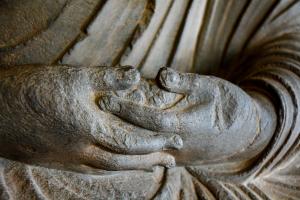
Metta is a practice that can and should extend through the whole of our day and night, whether we’re formally meditating or in any of the many actions of our lives. Still, it is usually best to introduce it as a sitting meditation practice. For that people are encouraged to find a clean and comfortable to sit. Sitting upright, with your hands resting in your lap or on your knees, breath quietly. Most people close their eyes. Then we marshal three elements, one or all. They are visualization, our imaginative engagement, or, contemplation on an object, in this case feels of good will, or, with our voice, either out loud, or sub-vocally, when we can reduce the focus to a word like “loving-kindess” or, even more simply, “love.”
This is all boiled down to some simple phases. Traditionally they include a wish to be free from danger. A wish to be free of suffering. A wish for happiness. A wish for healing. A wish for peace and for ease. Some lists are a little longer. Others are a bit shorter.
So, one way to phrase it, for that first part, for yourself, might be:
May I be free from danger. May I be free of suffering. May I be happy. May I be healed. May I find peace and ease in my life.
The invitation is for us to delve deeply into what this might mean. We can do this by visualizing ourselves in these various conditions. Slightly different, we can imaginatively experience that sense of good will and consciously direct itself to our being. And, we can reduce this down to those simple words holding implicitly all of it, “free” or “happy” or “peace.” Or, love…
This can be explored for an extended period of time. Half an hour. A day. A week.
At some point we move to the next person. Next on the traditional list is some individual who has been important to us, a teacher, a mentor, someone who has helped us in some significant way. “May (name) be free from danger. May (name) be free of suffering. May (name) be happy. May (name) be healed. May (name) find peace and ease in their life.”
Again, this can be explored for an extended time, half an hour, a day, a week. It should be the same amount of time you gave to yourself.
The next step is a friend, or, perhaps someone in your family. Again, devote the same amount of time you had for yourself and your mentor.
Then push it out to that person you can picture but perhaps not even name, who you know in some sense but for whom you have no strong feelings. Again, wish them well in the same way and for the same amount of time.
And, finally, extend it to that person for whom you hold ill-will. Wish them freedom from danger, freedom from suffering, happiness, healing, peace and ease. Again, for the same amount of time you have for everyone else.
And, then, repeat.
At first the practice can feel artificial, and resistance to persisting can arise in all sorts of ways. But we are encouraged to continue. And gradually the sense of artifice begins to be replaced with a naturally arising positive regard. And from there, we begin to experience the fruit of the practice.
The American meditation teacher Sharon Salzburg tells how she was studying with her teacher U Pandita, when he asked her a difficult question. She was told to imagine she was walking with those four people who are the traditional objects of metta meditation, a personal benefactor, a friend, someone for whom she had neutral feelings, and an enemy. When all of a sudden they are set upon by a band of bandits, who then tell her someone has to die, and she has to pick.
This was near the end of a six-week metta meditation retreat and Sharon says she had no idea who to pick. U Pandita helped her along, suggesting perhaps her enemy. She said no. Then he asked, well, who? She felt she was being modeled to offer herself. But, she realized that was just as wrong as picking anyone else, and refused to name someone. With that he ended the interview. Later she was reading the fifth century manual of Theravadin meditation practices and doctrine, Buddhaghosa’s Path of Purification, where she saw this question and learned the answer from the heart of Metta was that no one could be excluded from care and loving kindness, not that enemy, not yourself.
She goes on to tell us, “The goal of loving-kindness practice is to cultivate benevolence and friendliness in this fashion until it’s a mental state that arises effortlessly. At that point, you’ll find it increasingly natural to greet all living beings with kindness and friendliness.”
Here we are speaking of technologies of the spirit, what in classical Buddhism are the techniques that allow one to see through the delusions of our ordinary lives to something else. While metta by itself is not said to awaken us, we can see in its practice the proof of its pudding. Also, it both lays the ground for other disciplines, and clarifies what we can find in those disciplines.
***
Sometimes it is good to go to the source texts…
There are two texts titled the Metta Sutta in the Pali canon. One is also called the Mettānisamsa Sutta, and is collected in the Anguttara Nikaya. The other is also called the Karaṇīyamettā Sutta and is collected twice, in the Sutta Nipata and in the Khuddakapatha. The one that is given the most attention is the later, the Karaniyametta.
It is recited in the Theravada community and is also much revered within the Mahayana, particularly in the West.
Here are three translations of the text. I think it worth reading all three.
by the Amaravati Sangha
This is what should be done
By one who is skilled in goodness,
And who knows the path of peace:
Let them be able and upright,
Straightforward and gentle in speech.
Humble and not conceited,
Contented and easily satisfied.
Unburdened with duties and frugal in their ways.
Peaceful and calm, and wise and skillful,
Not proud and demanding in nature.
Let them not do the slightest thing
That the wise would later reprove.
Wishing: In gladness and in safety,
May all beings be at ease.
Whatever living beings there may be;
Whether they are weak or strong, omitting none,
The great or the mighty, medium, short or small,
The seen and the unseen,
Those living near and far away,
Those born and to-be-born,
May all beings be at ease!
Let none deceive another,
Or despise any being in any state.
Let none through anger or ill-will
Wish harm upon another.
Even as a mother protects with her life
Her child, her only child,
So with a boundless heart
Should one cherish all living beings:
Radiating kindness over the entire world
Spreading upwards to the skies,
And downwards to the depths;
Outwards and unbounded,
Freed from hatred and ill-will.
Whether standing or walking, seated or lying down
Free from drowsiness,
One should sustain this recollection.
This is said to be the sublime abiding.
By not holding to fixed views,
The pure-hearted one, having clarity of vision,
Being freed from all sense desires,
Is not born again into this world.
Translation by Thanissaro Bhikkhu
This is to be done by one skilled in aims
who wants to break through to the state of peace:
Be capable, upright, & straightforward,
easy to instruct, gentle, & not conceited,
content & easy to support,
with few duties, living lightly,
with peaceful faculties, masterful,
modest, & no greed for supporters.
Do not do the slightest thing
that the wise would later censure.
Think: Happy, at rest,
may all beings be happy at heart.
Whatever beings there may be,
weak or strong, without exception,
long, large, middling, short,
subtle, blatant, seen & unseen, near &
far, born & seeking birth:
May all beings be happy at heart.
Let no one deceive another
or despise anyone anywhere,
or through anger or irritation
wish for another to suffer.
As a mother would risk her life
to protect her child, her only child,
even so should one cultivate a limitless heart
with regard to all beings.
With good will for the entire cosmos,
cultivate a limitless heart:
Above, below, & all around,
unobstructed, without enmity or hate.
Whether standing, walking,
sitting, or lying down,
as long as one is alert,
one should be resolved on this mindfulness.
This is called a sublime abiding
here & now.
Not taken with views,
but virtuous & consummate in vision,
having subdued desire for sensual pleasures,
one never again
will lie in the womb.
Translation by Bhikkhu Bodhi
This is what should be done by one skilled in the good,
having made the breakthrough to that peaceful state:
he should be able, upright, and very upright,
amenable to advice and gentle, without arrogance.
He should be content and easily supported,
of few duties and a frugal way of living;
of peaceful faculties and judicious,
courteous, without greed when among families.
He should not do anything, however slight,
because of which other wise people might criticize him.
May all beings be happy and secure;
may they be inwardly happy!
Whatever living beings there are
whether frail or firm, without omission,
those that are long or those that are large, middling,
short, fine, or gross;
whether they are seen or unseen,
whether they dwell far or near,
whether they have come to be or will come to be,
may all beings be inwardly happy!
No one should deceive another,
nor despise anyone anywhere.
Because of anger and thoughts of aversion
no one should wish suffering for another.
Just as another would protect her son,
her only son, with her own life,
so one should develop toward all beings
a state of mind without boundaries.
And toward the whole world
one should develop loving-kindness,
a state of mind without boundaries –
above, below, and across –
unconfined, without enmity, without adversaries.
Whether standing, walking, sitting,
or lying down, as long as one is not drowsy,
one should resolve on this mindfulness:
they call this a divine dwelling here.
Not taking up any views,
possessing good behavior, endowed with vision,
having removed greed for sensual pleasures,
one never again comes back to the bed of a womb.
***
These and sixteen other translations may also be found here.
***
And, finally, and at no extra charge a talk on the practice by the wonderful Sharon Salzberg.
Next Post

July 27, 2018 A Zen Retreat With James Ishmael Ford
Browse Our Archives
Select a Category A Christmas Carol Abolitionist African-American Ahmadiyya Alan Watts Aldous Huxley Allen Ginsberg Amedkar Jayanti American politics American Zen Anaheim Zen Sangha Anglican Annie Besant April Fool Armageddon Art and Religion artificial intellegence Atheist Awakening B R Ambedkar Barlaam & Josaphat Beatnik Between Bhagavad Gita Bible biography birthday bodhisattva Bodhisattva Precepts Book burning Book of Common Prayer Book of Mormon Brahmo Samaj Buddha Buddhism Buddhist Buddhist Lord's Prayer Butterflies Calendars cartoons cat ChatGPT Chicken Tortilla Soup choices Christian atheism Christian mysticism Christian origins Christian Science Christian Zen Christianity Christianity and Buddhism christmas Christmas Truce Christopher Isherwood Church of Later Day Saints Cinco de Mayo circus covenant critical thinking culture D. T. Suzuki Dalit Buddhism Daniel Defoe Desert Fathers and Mothers dharma talk Dogen Donald Trump Dongshan's Five Ranks Dorothy Day dream Duty Easter ecology Edwin Arnold emptiness Empty Moon Zen Network Episcopal Church Eternal Now Ethics evolution existentialism Faith fantasy Fathers Day film film review fire Five Ranks Folk music food Form and emptiness Four Seals Francis of Assisi Francis Xavier Free thinker friendship George MacDonald Gerald Heard Glenn Taylor Webb God Good Friday Gospel of Gospel of Mark Gospel of Thomas grace Graduate Theological Unioin Graduate Theological Union Guanyin H R Blyth Hakuin Ekaku Hanamatsuri Hanukkah Harada Yasutani Zen Heart Sutra Henry David Thoreau Hermann Hesse Hinduism History and Religion history of religion Holy Spirit home Hospitality Icon Ides of March Isaac Newton Islam Islamic mysticism Jack Kerouac James Luther Adams Jiddu Krishnamurti Joan of Arc Johannes Gutenberg John Donne joke Judaism justice karma kensho King James Bible koan Koun Yamada Kyoto School Lewis Carrol Liberal Christianity Liberal Religion Life Plan Community Liminal literature Literature and Religion Liturgy Lord's Prayer Love Mahatma Gandhi Mahayana Martin Luther King Jr Mary Baker Eddy Mary Magdelene Mary Oliver Mayflower Compact Meditation memories memory metaphor money money and religioin Mormons Mother's Day movie review mysticism mythic Neighborhood Unitarian Universalist Church New Thought Nichiren Buddhism Nonduality not knowing Omar Khayyam Pacific School of Religion pagan Palm Sunday Passover peace Pentecost perennialism Phantastes Philip Kapleau philosophy Pilgrimage poetry Poetry and Religion politics Prayer Precepts Printing Press prophecy prophetic spirituality psychology Pure Land Queer religion queering religion Quietism Ram Mohan Roy rebirth recipe Relationships and religion religion religion and history Religious syncretism Resistance Retirement Retreat review Rissho Kosei Kai Ritual Robert Aitken Roshi Robert Ingersoll Rohatsu Romani religion Rosie the Riveter saints samadhi SanboZen Sangha Satyagraha science science and reigion science and religion science fiction seminary sermon Sesshin Sex and Religion Shinran Sikh Sikh tradition silence Social Justice Socially Engaged Buddhism Society and religion Soto Zen soul spiritual community spiritual practice Spirituality Sufism Suicide superstition Taoism Television Teresa of Avila Thanksgiving theological schools Theosophy Thomas Merton Time Transcendentalism Transcendentalist Trinitarian Trinity Uncategorized unitarian Unitarian Christianity Unitarian Universalist Universalism Vajrayana Vedanta Walking war Willa Cather William Ellery Channing wisdom women and religion women in religion World Teacher Writing zazen Zen Zen Center Zen inspired retriement zen meditation Zen Precepts Zen women
Select a Month November 2026 October 2026 September 2026 August 2026 July 2026 June 2026 May 2026 April 2026 March 2026 February 2026 January 2026 December 2025 November 2025 October 2025 September 2025 August 2025 July 2025 June 2025 May 2025 April 2025 March 2025 February 2025 January 2025 December 2024 November 2024 October 2024 September 2024 August 2024 July 2024 June 2024 May 2024 April 2024 March 2024 February 2024 January 2024 December 2023 November 2023 October 2023 September 2023 August 2023 July 2023 June 2023 May 2023 April 2023 March 2023 February 2023 January 2023 December 2022 November 2022 October 2022 September 2022 August 2022 July 2022 June 2022 May 2022 April 2022 March 2022 February 2022 January 2022 December 2021 November 2021 October 2021 September 2021 August 2021 July 2021 June 2021 May 2021 April 2021 March 2021 February 2021 January 2021 December 2020 November 2020 October 2020 September 2020 August 2020 July 2020 June 2020 May 2020 April 2020 March 2020 February 2020 January 2020 December 2019 November 2019 October 2019 September 2019 August 2019 July 2019 June 2019 May 2019 April 2019 March 2019 February 2019 January 2019 December 2018 November 2018 October 2018 September 2018 August 2018 July 2018 June 2018 May 2018 April 2018 March 2018 February 2018 January 2018 December 2017 November 2017 October 2017 September 2017 August 2017 July 2017 June 2017 May 2017 April 2017 March 2017 February 2017 January 2017 December 2016 November 2016 October 2016 September 2016 August 2016 July 2016 June 2016 May 2016 April 2016 March 2016 February 2016 January 2016 December 2015 November 2015 October 2015 September 2015 August 2015 July 2015 June 2015 May 2015 April 2015 March 2015 February 2015 January 2015 December 2014 November 2014 October 2014 September 2014 August 2014 July 2014 June 2014 May 2014 April 2014 March 2014 February 2014 January 2014 December 2013 November 2013 October 2013 September 2013 August 2013 July 2013 June 2013 May 2013 April 2013 March 2013 February 2013 January 2013 December 2012 November 2012 October 2012 September 2012 August 2012 July 2012 June 2012 May 2012 April 2012 March 2012 February 2012 January 2012 December 2011 November 2011 October 2011 September 2011 August 2011 July 2011 June 2011 May 2011 April 2011 March 2011 February 2011 January 2011 December 2010 November 2010 October 2010 September 2010 August 2010 July 2010 June 2010 May 2010 April 2010 March 2010 February 2010 January 2010 December 2009 November 2009 October 2009 September 2009 August 2009 July 2009 June 2009 May 2009 April 2009 March 2009 February 2009 January 2009 December 2008 November 2008 October 2008 September 2008 August 2008 July 2008 June 2008 May 2008 April 2008 March 2008 February 2008 January 2008 December 2007 November 2007 October 2007 September 2007 August 2007 July 2007 June 2007 May 2007 April 2007 March 2007 February 2007 January 2007 December 2006 November 2006 October 2006 September 2006
Follow Us!
TAKE THE
Religious Wisdom Quiz
What is the purpose for the Law?
Select your answer to see how you score.
To bring about adoption To save people To give hope To teach of sin
Related posts from Monkey Mind

MY RELIGION IS KINDNESS A Zen Meditation
Zen Meditation: Basic Instructions

Introducing Zen Buddhism: Some Brief Online Resources

In Quest of a Single Best Introduction to...
TRENDING AT PATHEOS Buddhist

A Modest Proposal for President Trump
Trump should just quit the loser Republicans who failed him so badly...

Jesus is Coming with Glory and Power
https://www.youtube.com/watch?v=_lt60EDHOQ4&list=RD_lt60EDHOQ4&start_radio=1

The Late Francis Frangipane & the Failure Too...
I learned today that another one of my heroes has gone to...

Thomas Paine, the Smiths, the apostles in England,...
I'm pleased to announce that the Becoming Brigham Black Friday Sale,...

CatholicTV Series: Six Black Catholics on Path to...
WATERTOWN, Mass., November 9, 2026 – In recognition of Black Catholic History...

New Advent Journal Invites Catholics to Be Pilgrims
Florissant, MO, November 16, 2026— What if Advent were more than a...
view all Buddhist blogs
Ad-Free & Subscriber Log-In Subscription Support
- About Us
- 2026 Calendar
- Videos
- Podcasts
- Library of World Religions
- Faith In Media Tracker
- Advertise With Us
- Write for Us
- Privacy Policy
- Terms of Service
- Do Not Sell My Data
- Contact Us
- Radiant Digital
- Manage Newsletter Subscriptions
- Unsubscribe From Notifications
- Sitemap
Copyright 2008-2026, Patheos, part of the Radiant Digital network of media brands. All rights reserved.
Subscription Support Ad-Free & Subscriber Log-In
Follow Patheos