
BuddhistCatholicContemplativeEvangelicalGeneral ChristianHinduJewishLatter-day SaintMuslimNew VisionsProgressive Christian
Beliefs
- Buddhist
- Catholic
- Contemplative
- Evangelical
- General Christian
- Hindu
- Jewish
- Latter-day Saint
- More Voices
- Muslim
- New Visions
- Pagan
- Progressive Christian
Topics
- Religion News
- Food and Religion
- Sports and Religion
- Religious Art
- Religious Music and Entertainment
- Religious Events
- History and Religion
- Style and Religion
- Politics and Religion
- Women in Religion
- Recreation Outdoors and Religion
- Business Finance and Religion
- Careers Workplace and Religion
- Education and Religion
- Family Parenting and Religion
- Health Fitness and Religion
- Home and Religion
- Relationships and Religion
- Technology and Religion
- Travel and Religion
Columnists
- Buddhist Columnists
- Business Finance and Religion Columnists
- Careers Workplace and Religion Columnists
- Catholic Columnists
- Contemplative Columnists
- Education and Religion Columnists
- Evangelists Columnists
- Family Parenting and Religion Columnists
- General Christian Columnists
- Health Fitness and Religion Columnists
- Hindu Columnists
- History and Religion Columnists
- Home and Religion Columnists
- Jewish Columnists
- More Voices Columnists
- Latter Day Columnists
- Muslim Columnists
- New Visions Columnists
- Nonreligious Columnists
- Pagan Columnists
- Politics and Religion Columnists
- Progressive Columnists
- Recreation Outdoors and Religion Columnists
- Relationships and Religion Columnists
- Religion News Columnists
- Religious Art Columnists
- Religious Events Columnists
- Religious Music and Entertainment Columnists
- Sports and Religion Columnists
- Style and Religion Columnists
- Technology and Religion Columnists
- Travel and Religion Columnists
- Women in Religion Columnists
Resource Library
- 2026 Calendar
- Library of World Religions
- The 100 Most Holy Places on Earth
- Patheos Answers
- Podcasts
- Videos
- Faith Leaders Database
- Anglican Episcopalian
- Bahai
- Baptist
- Buddhism
- Christianity
- Confucianism
- Eastern Orthodoxy
- Hinduism
- Holiness and Pentecostal
- ISKCON
- Islam
- Judaism
- Lutheran
- Methodist
- The Church of Jesus Christ of Latter-day Saints
- New Age
- Paganism
- Presbytarian and Reformed
- Protestantism
- Religion Behind the Scenes
- Roman Catholic
- Scientology
- Shia Islam
- Sikhism
- Sufism
- Sunni Islam
- Taoism
- Zen
- See all religions
Research Tools
 Ad-Free & Subscriber Log-In Subscription Support
Ad-Free & Subscriber Log-In Subscription Support
Follow Patheos 

- Trending:
- Forgiveness
- |
- Marriage
- |
- Consciousness
- |
- Death Penalty
- |
- Election
- |
- Halloween

- Home
- Buddhist
- Behold the Spirit: A Meditation on Alan Watts & His Brief Experiment With a Mystical Christianity
Behold the Spirit: A Meditation on Alan Watts & His Brief Experiment With a Mystical Christianity
Last updated on: May 20, 2018 at 7:02 am by James Ford
Behold the Spirit: A Meditation on Alan Watts & His Brief Experiment With a Mystical Christianity 2018-05-20T07:02:21-07:00 James Ford
Patheos Explore the world's faith through different perspectives on religion and spirituality! Patheos has the views of the prevalent religions and spiritualities of the world.
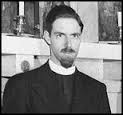
BEHOLD THE SPIRIT
A Meditation on Alan Watts & His Brief Experiment with a Mystical Christianity
James Ishmael Ford
(slightly polished up from a sermon written in 2013)
Text
It is all too clear that our age suffers from a vast hunger and impoverishment of the spirit which the organized Christian religion, as we know it, rarely satisfies. It would be easy to blame the modern world for ignoring Christianity… if Church religion showed any strong signs of spiritual life. The truth, however, is that with some very few and scattered exceptions Church religion is spiritually dead, and the best minds of the Church admit and deplore it openly. This is so obvious that there is no need to stress it except as a starting point for constructive discussion.
Alan Watts, in the Introduction to Behold the Spirit: A Study in the Necessity of Mystical Religion
To quote from myself, because, well, because I can, in my history of Zen Buddhism come west, “Zen Master Who?” I describe the first of the several times I met Alan Watts. It was sometime, I believe, in 1969.
“I was on the guest staff of the Zen monastery in Oakland led by Roshi Jiyu Kennett. I was enormously excited to actually meet this famous man, the great interpreter of the Zen way. Wearing my very best robes, I waited for him to show up; and waited and waited. Nearly an hour later, Watts arrived dressed in a kimono, accompanied by a fawning young woman and an equally fawning young man. It was hard not to notice his interest in the young woman who, as a monk, I was embarrassed to observe seemed not to be wearing any underwear. I was also awkwardly aware that Watts seemed intoxicated.”
Alan Watts was in fact the first person to write popular books about Zen in the West, beginning in 1937 with the “Spirit of Zen,” and more importantly in 1957 with his best selling “Way of Zen.” He drew mainly on the scholarly volumes just being written by D. T. Suzuki, the first person to write authentically about Zen in European languages, through Watts engaging style made enormously readable and genuinely compelling. As I summarized in my history, “An erstwhile Episcopal priest, engaging raconteur, and scandalous libertine, Alan Watts was also a prolific author whose books created an inviting sense of Zen-as-pure-experience and a do-what-you-want spirituality. These qualities both profoundly misrepresented Zen and led many people to it.”
On that last note, some years later I attended a talk by an American Zen priest. At the end, during the question and answer period, someone asked about Watts. The priest sighed, and then said, “I know there’s a lot of controversy about Alan Watts and what he really understood about Zen.” He paused. And then, added, “But, you know, without Alan Watts, I wouldn’t be standing here on this platform.” I have to say, in large part, that’s true for me as well. In the 1960s and 70s, Alan Watts opened some important doors for many of us looking for a new way.
Over these passing years I’ve come to feel the title of his biography “In My Own Way” and the title of the English edition of Monica Furlong’s biography of him, “Genuine Fake,” taken together points to the complexities of this intriguing Anglo-American Zen trickster/ancestor of our contemporary spiritual scene.
In a relentless critique of Alan Watts, Lou Nordstrom and Richard Pilgrim point out how an authentic spirituality must encompass “practice, discipline, and effort,” features completely lacking in Alan Watts’ “Zen.” In large part I agree, but not completely. There is absolutely a place of falling away of practice, discipline, and effort. As we open our hearts we find the way is in fact broad and forgiving. And it seems he tasted that freedom and joy. I really believe he did. But, the authentic spiritual is also in that delightful conundrum of a real life, totally bound up with practice, discipline, and effort. The way is also, without a doubt, harsh and demands everything. And here Watts seems completely clueless.
Now, in my opinion, Alan Watts was at his very best during a brief period when he tried at practice, discipline, and effort. Or, at least stood in their general neighborhood. Raised in England, his natal tradition was Anglicanism, although he formally abandoned it by sixteen for the eclectic Buddhism of the London Buddhist Society. In his late twenties, having come to America and desperate for an occupation that paid something, he decided to become an Episcopal priest. He had not attended college, but by providing a very long list of the books he had read and then showing a suspicious faculty he had not only read them, but profoundly absorbed them, he was admitted into the divinity program at Seabury-Western Theological Seminary in Evanston, Illinois.
Watts graduated with a masters degree in divinity and was ordained an Episcopal priest in 1945. He was immediately engaged as the Episcopal chaplain at Northwestern University. He was thirty years old. It appears to have been an amazing moment. He was wildly popular on campus, and his books were received in progressive religious circles as challenging and compelling. And then within five years Watts was out of the ministry, for many reasons not least of which was when his wife sued for an annulment on grounds of adultery. This part would become something of a pattern for his life.
For our time here I want to remain focused within that Christian moment. His divinity degree thesis was reworked and published as the book “Behold the Spirit: A Study in the Necessity of Mystical Religion,” first released in 1947. I can’t tell if it has ever been out of print. What I do know is you can buy a new copy today, there’s even a Kindle version.
It’s really interesting, an attempt at synthesizing eastern and western spirituality grounded in a broad and sympathetic expression of Anglicanism. I’ve seen the term “monistic” or “nondual Christianity” being used here and there lately. Monistic or nondual as in the reconciliation of the myriad things of the world within an interdependence so complete one can speak of it all taken together as one. Of course, variations on monism are at the heart of much of Eastern religions, certainly of Hinduism and Buddhism and Taoism. And, worth noting, we Unitarian Universalists are informed through our seventh principle by a sort of monism, as well. Continuing that aside, I think Unitarian Universalists concerned with church growth would find more profit in delving into the spiritual consequences of that seventh principal than in a denomination level focus these days on branding. But, again, I digress.
While one can argue there have been nondual currents in Christianity, particularly among some although not most early gnostic schools, this perspective has definitely not been a part of normative Christianity. In mainstream Christianity the world and God are seen as relentlessly separate, creator and created. A world of problems have followed this setting up of a hierarchy with the spirit above and good and the world below and condemned.
If the proposition that the world is completely separate from the divine were true, well, we would just have to live with it. But, and let me make a categorical statement rather than my general hedging: That’s not true. Rather, as I open my heart to the world, the world, the great mess that is you and me and all things, I find each thing is created by and creating the host of other things at the same time, in a dance or web of intimacy, where each of us is a moment in a shimmering play of reality. And, that play of reality is exactly where I find the divine, the holy, the sacred. Here. I don’t need to go to some other place to find it.
Me, I see no need of some extra bit. Perhaps why I am not a mainstream Christian, or anywhere near by. That said there are today a host of emergent Christians who don’t see the separation, either. Richard Rohr and Cynthia Bougeault are two contemporary and apparently popular writers that fit the bill. I would add in Bruno Barnhart, Bougeault’s mentor, as well as a variety of Hindu influenced Christians like the nun Sara Grant, the anonymous Cistercian monk who writes under the name “a Monk of the West,” as well as, well the list is increasingly long, but such folk as the medieval mystic Meister Eckhart and the moderns Thomas Keating, Bede Griffiths, and Martha Reeves, who write as “Maggie Ross” are a pretty good start for those who wish to pursue this further.
And, Alan Watts’ book kind of spells it all out in a way perhaps even best done by someone not actually immersed, as he was, standing more in the neighborhood of that “practice, discipline, and effort” than within it. Of course that distance also means he misses some things. I admit I find Watts a tad too comfortable with his own insight, unchecked by others who’ve walked the way before, a danger for the spiritually unaffiliated. But, once again, I digress.
The book was a revelation when he hit the scene some sixty-seven years ago. It was, I gather, and perhaps obviously, criticized for its “creeping pantheism.” I would say the Alan Watts of that book was in fact a through going panenthiest screed, probably the most compatible Christian variation on pantheism, the other word for nondual or monistic spirituality, where in panentheism the world is seen is divine, but that the divine, God, cannot be limited to the universe. Even with that accepting at some point an other of some sort, this panentheism is still a major step from the normative vision of the Christian church.
And with all this taken together a question bubbles up, and which, in a meditation he wrote a quarter of a century later, Watts’ asks on behalf of all those who would challenge his thesis. “Can Christianity abandon the monarchical image of God (a God separate from all that is in a great split between creator and created) and still be Christianity?” To which he responds with another question, a rather burning one, as I feel it in my heart, “(W)hich is more important – to be Christian or to be at one with God?” Or, for me: to follow some orthodoxy of separation, and cut myself off from what is calling to every molecule of my being, or commit whole-heartedly to the great play of the many as one found as I open myself to the world as it presents?
A worthy challenge, I believe, perhaps the great challenge. And, I think Watts in fact spells out a fair amount of what an affirmation of a nondual Christianity can look like in his thesis and book. The sad thing, as I see it, was that he couldn’t follow through for himself. His personality, what he liked to characterize as his “bohemian personality” just didn’t have a fit in the organized church. I’d have to add his lack of personal boundaries would have meant he would never had made it as a Unitarian Universalist minister, either. He was born to be an outsider. And after that five years stirring up the Anglican church he made sure he would forever be an outsider.
But he also pointed a way.
First he spells out a reality. The metaphors are straight out of the traditional church, which might be difficult for some of us, and to my ears even more difficult when he uses a relentless masculine by preference language, but, if we allow ourselves to listen, we find the underlying understanding he presents shakes the very foundations of the moral universe the conventional church preaches. He declares:
“God is the most obvious thing in the world. He is absolutely self-evident – the simplest, clearest and closest reality of life and consiousness. We are only unaware of him because we are too complicated, for our vision is darkened by the complexity of pride. We seek him beyond the horizon with our noses lifted high in the air, and fail to see that he lies at our vary feet. We flatter ourselves in premeditating the long, long journey we are going to take in order to find him, the giddy heights of spiritual progress we are going to scale, and all the time are unaware of the truth that ‘God is nearer to us than we are to ourselves.’ We are like birds flying in quest of the air, or men with lighted candles searching through the darkness for fire.”
Then he lays out the traditions of the Christian church as a manifestation of this truth of our radical interdependence, of our bottomless unity. The man who can only stand in the neighborhood of practice, discipline, and effort, shows where it can be found. I think in part because he really did taste the deeper truths, really did to some degree, and none of us are judge of how deep any other, or for that matter, even we ourselves have traveled, really did touch the great insight.
So, as the Episcopal priest, Martin Smith noted, Even “as a mirror reflects all colors and shapes without interference,” Alan Watts could call us to stand in the place of the wise heart. “(I)n the same way the mystical awareness of God does not contest place with other experiences and state(s) of mind. Mental states such as joy, sorrow, exaltation, dejection, pleasure, and pain are as a rule mutually exclusive. But the mystical stage is inclusive, just as God and His love include the whole universe. There is no conflict between experiencing the Now and things which happen in the Now.”
Smith touches the heart of wisdom as Alan Watts presented it. This is an extremely good pointing that even those of us with no affinity for the traditional language of the Christian church, can, none the less, recognize as an expression of what we all find as we open our hearts as wide as the human heart can be opened.
The field is found. And the dance of things within it is revealed.
In his little book and during those five years, Alan Watts showed those who love the Christian tradition how they can turn toward the real without abandoning their tradition.
Genuine fake. A teacher for those willing to follow the way he pointed, but could not himself go. A wonder. And a joy. And.
A hint of possibilities for us all.
Next Post

May 21, 2018 On Praying for the Dead: Zen and the Mysteries of Dedicating Merit
Browse Our Archives
Select a Category A Christmas Carol Abolitionist African-American Ahmadiyya Alan Watts Aldous Huxley Allen Ginsberg Amedkar Jayanti American politics American Zen Anaheim Zen Sangha Anglican Annie Besant April Fool Armageddon Art and Religion artificial intellegence Atheist Awakening B R Ambedkar Barlaam & Josaphat Beatnik Between Bhagavad Gita Bible biography birthday bodhisattva Bodhisattva Precepts Book burning Book of Common Prayer Book of Mormon Brahmo Samaj Buddha Buddhism Buddhist Buddhist Lord's Prayer Butterflies Calendars cartoons cat ChatGPT Chicken Tortilla Soup choices Christian atheism Christian mysticism Christian origins Christian Science Christian Zen Christianity Christianity and Buddhism christmas Christmas Truce Christopher Isherwood Church of Later Day Saints Cinco de Mayo circus covenant critical thinking culture D. T. Suzuki Dalit Buddhism Daniel Defoe Desert Fathers and Mothers dharma talk Dogen Donald Trump Dongshan's Five Ranks Dorothy Day dream Duty Easter ecology Edwin Arnold emptiness Empty Moon Zen Network Episcopal Church Eternal Now Ethics evolution existentialism Faith fantasy Fathers Day film film review fire Five Ranks Folk music food Form and emptiness Four Seals Francis of Assisi Francis Xavier Free thinker friendship George MacDonald Gerald Heard Glenn Taylor Webb God Good Friday Gospel of Gospel of Mark Gospel of Thomas grace Graduate Theological Unioin Graduate Theological Union Guanyin H R Blyth Hakuin Ekaku Hanamatsuri Hanukkah Harada Yasutani Zen Heart Sutra Henry David Thoreau Hermann Hesse Hinduism History and Religion history of religion Holy Spirit home Hospitality Icon Ides of March Isaac Newton Islam Islamic mysticism Jack Kerouac James Luther Adams Jiddu Krishnamurti Joan of Arc Johannes Gutenberg John Donne joke Judaism justice karma kensho King James Bible koan Koun Yamada Kyoto School Lewis Carrol Liberal Christianity Liberal Religion Life Plan Community Liminal literature Literature and Religion Liturgy Lord's Prayer Love Mahatma Gandhi Mahayana Martin Luther King Jr Mary Baker Eddy Mary Magdelene Mary Oliver Mayflower Compact Meditation memories memory metaphor money money and religioin Mormons Mother's Day movie review mysticism mythic Neighborhood Unitarian Universalist Church New Thought Nichiren Buddhism Nonduality not knowing Omar Khayyam Pacific School of Religion pagan Palm Sunday Passover peace Pentecost perennialism Phantastes Philip Kapleau philosophy Pilgrimage poetry Poetry and Religion politics Prayer Precepts Printing Press prophecy prophetic spirituality psychology Pure Land Queer religion queering religion Quietism Ram Mohan Roy rebirth recipe Relationships and religion religion religion and history Religious syncretism Resistance Retirement Retreat review Rissho Kosei Kai Ritual Robert Aitken Roshi Robert Ingersoll Rohatsu Romani religion Rosie the Riveter saints samadhi SanboZen Sangha Satyagraha science science and reigion science and religion science fiction seminary sermon Sesshin Sex and Religion Shinran Sikh Sikh tradition silence Social Justice Socially Engaged Buddhism Society and religion Soto Zen soul spiritual community spiritual practice Spirituality Sufism Suicide superstition Taoism Television Teresa of Avila Thanksgiving theological schools Theosophy Thomas Merton Time Transcendentalism Transcendentalist Trinitarian Trinity Uncategorized unitarian Unitarian Christianity Unitarian Universalist Universalism Vajrayana Vedanta Walking war Willa Cather William Ellery Channing wisdom women and religion women in religion World Teacher Writing zazen Zen Zen Center Zen inspired retriement zen meditation Zen Precepts Zen women
Select a Month September 2026 August 2026 July 2026 June 2026 May 2026 April 2026 March 2026 February 2026 January 2026 December 2025 November 2025 October 2025 September 2025 August 2025 July 2025 June 2025 May 2025 April 2025 March 2025 February 2025 January 2025 December 2024 November 2024 October 2024 September 2024 August 2024 July 2024 June 2024 May 2024 April 2024 March 2024 February 2024 January 2024 December 2023 November 2023 October 2023 September 2023 August 2023 July 2023 June 2023 May 2023 April 2023 March 2023 February 2023 January 2023 December 2022 November 2022 October 2022 September 2022 August 2022 July 2022 June 2022 May 2022 April 2022 March 2022 February 2022 January 2022 December 2021 November 2021 October 2021 September 2021 August 2021 July 2021 June 2021 May 2021 April 2021 March 2021 February 2021 January 2021 December 2020 November 2020 October 2020 September 2020 August 2020 July 2020 June 2020 May 2020 April 2020 March 2020 February 2020 January 2020 December 2019 November 2019 October 2019 September 2019 August 2019 July 2019 June 2019 May 2019 April 2019 March 2019 February 2019 January 2019 December 2018 November 2018 October 2018 September 2018 August 2018 July 2018 June 2018 May 2018 April 2018 March 2018 February 2018 January 2018 December 2017 November 2017 October 2017 September 2017 August 2017 July 2017 June 2017 May 2017 April 2017 March 2017 February 2017 January 2017 December 2016 November 2016 October 2016 September 2016 August 2016 July 2016 June 2016 May 2016 April 2016 March 2016 February 2016 January 2016 December 2015 November 2015 October 2015 September 2015 August 2015 July 2015 June 2015 May 2015 April 2015 March 2015 February 2015 January 2015 December 2014 November 2014 October 2014 September 2014 August 2014 July 2014 June 2014 May 2014 April 2014 March 2014 February 2014 January 2014 December 2013 November 2013 October 2013 September 2013 August 2013 July 2013 June 2013 May 2013 April 2013 March 2013 February 2013 January 2013 December 2012 November 2012 October 2012 September 2012 August 2012 July 2012 June 2012 May 2012 April 2012 March 2012 February 2012 January 2012 December 2011 November 2011 October 2011 September 2011 August 2011 July 2011 June 2011 May 2011 April 2011 March 2011 February 2011 January 2011 December 2010 November 2010 October 2010 September 2010 August 2010 July 2010 June 2010 May 2010 April 2010 March 2010 February 2010 January 2010 December 2009 November 2009 October 2009 September 2009 August 2009 July 2009 June 2009 May 2009 April 2009 March 2009 February 2009 January 2009 December 2008 November 2008 October 2008 September 2008 August 2008 July 2008 June 2008 May 2008 April 2008 March 2008 February 2008 January 2008 December 2007 November 2007 October 2007 September 2007 August 2007 July 2007 June 2007 May 2007 April 2007 March 2007 February 2007 January 2007 December 2006 November 2006 October 2006 September 2006
Follow Us!
TAKE THE
Religious Wisdom Quiz
Which book contains the "Song of Deborah"?
Select your answer to see how you score.
Ruth Judges Exodus 1 Samuel
Related posts from Monkey Mind
A Feast for Alan Watts: Spiritual Entertainer and...
Hildegard as a Pan-Spiritual Saint
The American Unitarian Association Marks Two Hundred Years
TRENDING AT PATHEOS Buddhist

Pope Leo Celebrates Mass for Nurses & Docs...
I don't have any idea how he did it, but Pope Leo...

The Sermon on the Mount, Part I: Matthew...
The Sermon on the Mount, Part I (Matthew 4:12-5:12) St. Matthew moves...

What's up from Crossway: Reviewing some of their latest A few weeks...

Janie Learns the Way of the Cross: A...
Teaching children about Jesus' Passion can be challenging. Many parents and educators...

Looking For Good Catholic Writing - October 2026
He alone extends the heavens, and he walks upon the waves of...

In "Irreplaceable," our book on vocation and technology, Trevor Sutton and I...
view all Buddhist blogs
Ad-Free & Subscriber Log-In Subscription Support
- About Us
- 2026 Calendar
- Videos
- Podcasts
- Library of World Religions
- Faith In Media Tracker
- Advertise With Us
- Write for Us
- Privacy Policy
- Terms of Service
- Do Not Sell My Data
- Contact Us
- Radiant Digital
- Manage Newsletter Subscriptions
- Unsubscribe From Notifications
- Sitemap
Copyright 2008-2026, Patheos. All rights reserved.
Subscription Support Ad-Free & Subscriber Log-In
Follow Patheos