
BuddhistCatholicContemplativeEvangelicalGeneral ChristianHinduJewishLatter-day SaintMuslimNew VisionsProgressive Christian
Beliefs
- Buddhist
- Catholic
- Contemplative
- Evangelical
- General Christian
- Hindu
- Jewish
- Latter-day Saint
- More Voices
- Muslim
- New Visions
- Pagan
- Progressive Christian
Topics
- Religion News
- Food and Religion
- Sports and Religion
- Religious Art
- Religious Music and Entertainment
- Religious Events
- History and Religion
- Style and Religion
- Politics and Religion
- Women in Religion
- Recreation Outdoors and Religion
- Business Finance and Religion
- Careers Workplace and Religion
- Education and Religion
- Family Parenting and Religion
- Health Fitness and Religion
- Home and Religion
- Relationships and Religion
- Technology and Religion
- Travel and Religion
Columnists
- Buddhist Columnists
- Business Finance and Religion Columnists
- Careers Workplace and Religion Columnists
- Catholic Columnists
- Contemplative Columnists
- Education and Religion Columnists
- Evangelists Columnists
- Family Parenting and Religion Columnists
- General Christian Columnists
- Health Fitness and Religion Columnists
- Hindu Columnists
- History and Religion Columnists
- Home and Religion Columnists
- Jewish Columnists
- More Voices Columnists
- Latter Day Columnists
- Muslim Columnists
- New Visions Columnists
- Nonreligious Columnists
- Pagan Columnists
- Politics and Religion Columnists
- Progressive Columnists
- Recreation Outdoors and Religion Columnists
- Relationships and Religion Columnists
- Religion News Columnists
- Religious Art Columnists
- Religious Events Columnists
- Religious Music and Entertainment Columnists
- Sports and Religion Columnists
- Style and Religion Columnists
- Technology and Religion Columnists
- Travel and Religion Columnists
- Women in Religion Columnists
Resource Library
- 2026 Calendar
- Library of World Religions
- The 100 Most Holy Places on Earth
- Patheos Answers
- Podcasts
- Videos
- Faith Leaders Database
- Anglican Episcopalian
- Bahai
- Baptist
- Buddhism
- Christianity
- Confucianism
- Eastern Orthodoxy
- Hinduism
- Holiness and Pentecostal
- ISKCON
- Islam
- Judaism
- Lutheran
- Methodist
- The Church of Jesus Christ of Latter-day Saints
- New Age
- Paganism
- Presbytarian and Reformed
- Protestantism
- Religion Behind the Scenes
- Roman Catholic
- Scientology
- Shia Islam
- Sikhism
- Sufism
- Sunni Islam
- Taoism
- Zen
- See all religions
Research Tools
 Ad-Free & Subscriber Log-In Subscription Support
Ad-Free & Subscriber Log-In Subscription Support
Follow Patheos 

- Trending:
- Forgiveness
- |
- Marriage
- |
- Consciousness
- |
- Death Penalty
- |
- Election
- |
- Halloween

- Home
- Buddhist
- Principles of Seated Meditation: Ch’ang-lu Tsung-tse’s Manual of Zen Meditation
Principles of Seated Meditation: Ch’ang-lu Tsung-tse’s Manual of Zen Meditation
Last updated on: March 19, 2018 at 9:11 am by James Ford
Principles of Seated Meditation: Ch’ang-lu Tsung-tse’s Manual of Zen Meditation 2018-03-19T09:11:02-07:00 James Ford
Patheos Explore the world's faith through different perspectives on religion and spirituality! Patheos has the views of the prevalent religions and spiritualities of the world.
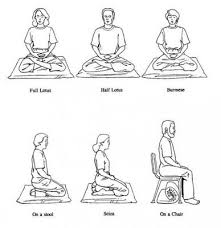
The Tso-chan-i is attributed to the eleventh century Chan monk Ch’ang-lu Tsung-tse. It may be the earliest of the “mature” Zen texts on seated meditation. And would be the bases for Eihei Dogen’s Fukenzazengi, which in part simply translates large segments of this earlier document. In my view this is a document with which every Zen student should become familiar. Here is the Zen practitioner & scholar Carl Bielefeldt’s translation…
The Principles of Seated Meditation
Translated by Carl Bielefeldt
From Traditions of Meditation in Chinese Buddhism
Edited by Peter Gregory
The following translation of the Tso-ch’an i is based on the Ch’an-yüan ch’ing-kuei text appearing in Kagamishima Genryū et al., Yakuchū Zen’en shingi (Tokyo: Sōtō-shū shūmuchō, 1972), pp. 279-284. Notes in the translation refer to variants in the Ta-tsang i-lan text (Shōwa hōbō sōmokuroku 3.1305a-b). A fully annotated Japanese translation is provided in Kajitani Sōnin et al., Shinjin mei Shōdō ka Jūgyō zu Zazen gi, Zen no goroku, vol. 16 (Tokyo: Chikuma shobō, 1971), pp. 145-164.
The bodhisattva who studies prajñā should first arouse the thought of great compassion, make the extensive vows, and vigorously cultivate samadhi. Vowing to save sentient beings, you should not seek liberation for yourself alone.
Now cast aside all involvements and discontinue the myriad affairs. Body and mind should be unified, with no division between action and rest. Regulate food and drink, so that you take neither too much nor too little; adjust sleep, so that you neither deprive nor indulge yourself.
When you sit in meditation, spread a thick mat in a quiet place. Loosen your robe and belt, and assume a proper posture. 1
Then sit in the cross-legged position : first place your right foot on your left thigh; then place your left foot on your right thigh.2 Or you may sit in the semi-cross-legged position: simply rest your left foot on your right foot. Next, place your right hand on your left foot, and3 your left hand on your right palm. Press the tips of your thumbs together. Slowly raise your torso and stretch it forward. Swing to the left and right; then straighten your body and sit erect. Do not lean to the left or right, forward or backward. Keep your hips, back, neck, and head in line, making your posture like a stūpa. But do not strain your body upward too far, lest it cause your breathing to be forced and unsettled.4 Your ears should be in line with your shoulders, and your nose in line with your navel. Press your tongue against your palate, and close your lips and teeth. T
he eyes should remain slightly open, in order to prevent drowsiness. If you attain samadhi [with the eyes open], it will be the most powerful. In ancient times, there were monks eminent in the practice of meditation who always sat with their eyes open. More recently, the Ch’an master Fa-yün Yüan-t’ung criticized those who sit in meditation with their eyes closed, likening [their practice] to the ghost cave of the Black Mountain. Surely this has a deep meaning, known to those who have mastered [meditation practice].’
Once you have settled your posture and regulated your breathing, you should relax your abdomen. Do not think of any good or evil whatsoever. Whenever a thought occurs, be aware of it; as soon as you are aware of it, it will vanish. If you remain for a long period forgetful of objects, you will naturally become unified. This is the essential art of seated meditation.6
Honestly speaking, seated meditation is the Dharma-gate of ease and joy; if, nevertheless, people often become ill [from its practice], it is because they do not take proper care. If you grasp the point of this [practice], the four elements [of the body] will naturally be light and at ease; the spirit will be fresh and sharp; thoughts will be correct and clear; the flavor of the Dharma will sustain the spirit; and you will be calm, pure, and joyful.7 One who has already developed clarity may be likened to the dragon gaining the water or the tiger taking to the mountains. Even one who has not yet developed it, by letting the wind fan the flame, will not have to make much effort: if you just assent to it, you will not be deceived.8
Nevertheless, as the path gets higher, demons flourish, and agreeable and disagreeable experiences are manifold. Yet, if you just keep right thought present, none of them can obstruct you. The Śūraṅgama-sūtra, T’ien-t’ai’s Chih‐ kuan, and Kuei-feng’s Hsiu-cheng i give detailed explications of these demonic occurrences, and those who would be prepared in advance for the unforeseen should be familiar with them.9
When you come out of samadhi, move slowly and arise calmly; do not be hasty or rough. After you have left samādhi,10 always employ appropriate means to protect and maintain the power of samādhi, as though you were protecting an infant; then your samadhi power will easily develop.
This one teaching of meditation is our most urgent business. If you do not settle [the mind] in meditation, or dhyāna, then, when it comes down to it, you will be completely at a loss.11 Therefore, [it is said,] “To seek a pearl, we should still the waves; if we disturb the water, it will be hard to get.”
When the water of meditation is clear, the pearl of the mind will appear of itself. Therefore, the Perfect Enlightenment Sūtra says, “Unimpeded, immaculate wisdom always arises dependent on meditation.” And the Lotus Sūtra says, “In a quiet place, he practices control of the mind, abiding motionless like Mt. Sumeru.”12 Thus, we know that transcending the profane and surpassing the holy are contingent on the condition of dhyāna; shedding [this body] while seated and fleeing [this life] while standing are dependent on the power of samādhi.
Even if one devotes oneself to the practice one’s entire life, one may still not be in time; how then could one who procrastinates possibly overcome karma? Therefore, an ancient has said, “Without the power of samādhi, you will meekly cower at death’s door.” Shutting your eyes, you will return [to the earth] in vain; just as you are, you will drift [in samsara]. Friends in Ch’an, go over this text again and again. Benefiting others as well as ourselves, let us together achieve perfect enlightenment.13
NOTES TO APPENDIX
1. “When you sit … proper posture”: lacking.
2. “Then sit … right thigh.”: “For the cross-legged position, first place your left foot on your right thigh; then place your right foot on your left thigh.”
3. “your right hand on your left foot, and”: lacking.
4. “But do not … unsettled.”: lacking.
5. “If you attain … [meditation practice].”: lacking.
6. “This is the essential art of seated meditation.”: lacking.
7. “Honestly speaking … calm, pure, and joyful.”: “If you grasp the point of this [practice], the four elements [of the body] will naturally be light and at ease: thus it is called the Dharma-gate of ease and joy.”
8. “by letting the wind fan the flame, will not have to make much effort.”: lacking.
9. “Nevertheless, … familiar with them.”: lacking.
10. “do not be … samādhi,”: lacking.
11. “This one teaching … at a loss.”: lacking.
12. “The Lotus Sūtra … Mt. Sumeru.”: lacking.
13. “Even if one … perfect enlightenment.”: “[Meditation] is our most urgent business.”

Browse Our Archives
Select a Category A Christmas Carol Abolitionist African-American Ahmadiyya Alan Watts Aldous Huxley Allen Ginsberg Amedkar Jayanti American politics American Zen Anaheim Zen Sangha Anglican Annie Besant April Fool Armageddon Art and Religion artificial intellegence Atheist Awakening B R Ambedkar Barlaam & Josaphat Beatnik Between Bhagavad Gita Bible biography birthday bodhisattva Bodhisattva Precepts Book burning Book of Common Prayer Book of Mormon Brahmo Samaj Buddha Buddhism Buddhist Buddhist Lord's Prayer Butterflies Calendars cartoons cat ChatGPT Chicken Tortilla Soup choices Christian atheism Christian mysticism Christian origins Christian Science Christian Zen Christianity Christianity and Buddhism christmas Christmas Truce Christopher Isherwood Church of Later Day Saints Cinco de Mayo circus covenant critical thinking culture D. T. Suzuki Dalit Buddhism Daniel Defoe Desert Fathers and Mothers dharma talk Dogen Donald Trump Dongshan's Five Ranks Dorothy Day dream Duty Easter ecology Edwin Arnold emptiness Empty Moon Zen Network Episcopal Church Eternal Now Ethics evolution existentialism Faith fantasy Fathers Day film film review fire Five Ranks Folk music food Form and emptiness Four Seals Francis of Assisi Francis Xavier Free thinker friendship George MacDonald Gerald Heard Glenn Taylor Webb God Good Friday Gospel of Gospel of Mark Gospel of Thomas grace Graduate Theological Unioin Graduate Theological Union Guanyin H R Blyth Hakuin Ekaku Hanamatsuri Hanukkah Harada Yasutani Zen Heart Sutra Henry David Thoreau Hermann Hesse Hinduism History and Religion history of religion Holy Spirit home Hospitality Icon Ides of March Isaac Newton Islam Islamic mysticism Jack Kerouac James Luther Adams Jiddu Krishnamurti Joan of Arc Johannes Gutenberg John Donne joke Judaism justice karma kensho King James Bible koan Koun Yamada Kyoto School Lewis Carrol Liberal Christianity Liberal Religion Life Plan Community Liminal literature Literature and Religion Liturgy Lord's Prayer Love Mahatma Gandhi Mahayana Martin Luther King Jr Mary Baker Eddy Mary Magdelene Mary Oliver Mayflower Compact Meditation memories memory metaphor money money and religioin Mormons Mother's Day movie review mysticism mythic Neighborhood Unitarian Universalist Church New Thought Nichiren Buddhism Nonduality not knowing Omar Khayyam Pacific School of Religion pagan Palm Sunday Passover peace Pentecost perennialism Phantastes Philip Kapleau philosophy Pilgrimage poetry Poetry and Religion politics Prayer Precepts Printing Press prophecy prophetic spirituality psychology Pure Land Queer religion queering religion Quietism Ram Mohan Roy rebirth recipe Relationships and religion religion religion and history Religious syncretism Resistance Retirement Retreat review Rissho Kosei Kai Ritual Robert Aitken Roshi Robert Ingersoll Rohatsu Romani religion Rosie the Riveter saints samadhi SanboZen Sangha Satyagraha science science and reigion science and religion science fiction seminary sermon Sesshin Sex and Religion Shinran Sikh Sikh tradition silence Social Justice Socially Engaged Buddhism Society and religion Soto Zen soul spiritual community spiritual practice Spirituality Sufism Suicide superstition Taoism Television Teresa of Avila Thanksgiving theological schools Theosophy Thomas Merton Time Transcendentalism Transcendentalist Trinitarian Trinity Uncategorized unitarian Unitarian Christianity Unitarian Universalist Universalism Vajrayana Vedanta Walking war Willa Cather William Ellery Channing wisdom women and religion women in religion World Teacher Writing zazen Zen Zen Center Zen inspired retriement zen meditation Zen Precepts Zen women
Select a Month September 2026 August 2026 July 2026 June 2026 May 2026 April 2026 March 2026 February 2026 January 2026 December 2025 November 2025 October 2025 September 2025 August 2025 July 2025 June 2025 May 2025 April 2025 March 2025 February 2025 January 2025 December 2024 November 2024 October 2024 September 2024 August 2024 July 2024 June 2024 May 2024 April 2024 March 2024 February 2024 January 2024 December 2023 November 2023 October 2023 September 2023 August 2023 July 2023 June 2023 May 2023 April 2023 March 2023 February 2023 January 2023 December 2022 November 2022 October 2022 September 2022 August 2022 July 2022 June 2022 May 2022 April 2022 March 2022 February 2022 January 2022 December 2021 November 2021 October 2021 September 2021 August 2021 July 2021 June 2021 May 2021 April 2021 March 2021 February 2021 January 2021 December 2020 November 2020 October 2020 September 2020 August 2020 July 2020 June 2020 May 2020 April 2020 March 2020 February 2020 January 2020 December 2019 November 2019 October 2019 September 2019 August 2019 July 2019 June 2019 May 2019 April 2019 March 2019 February 2019 January 2019 December 2018 November 2018 October 2018 September 2018 August 2018 July 2018 June 2018 May 2018 April 2018 March 2018 February 2018 January 2018 December 2017 November 2017 October 2017 September 2017 August 2017 July 2017 June 2017 May 2017 April 2017 March 2017 February 2017 January 2017 December 2016 November 2016 October 2016 September 2016 August 2016 July 2016 June 2016 May 2016 April 2016 March 2016 February 2016 January 2016 December 2015 November 2015 October 2015 September 2015 August 2015 July 2015 June 2015 May 2015 April 2015 March 2015 February 2015 January 2015 December 2014 November 2014 October 2014 September 2014 August 2014 July 2014 June 2014 May 2014 April 2014 March 2014 February 2014 January 2014 December 2013 November 2013 October 2013 September 2013 August 2013 July 2013 June 2013 May 2013 April 2013 March 2013 February 2013 January 2013 December 2012 November 2012 October 2012 September 2012 August 2012 July 2012 June 2012 May 2012 April 2012 March 2012 February 2012 January 2012 December 2011 November 2011 October 2011 September 2011 August 2011 July 2011 June 2011 May 2011 April 2011 March 2011 February 2011 January 2011 December 2010 November 2010 October 2010 September 2010 August 2010 July 2010 June 2010 May 2010 April 2010 March 2010 February 2010 January 2010 December 2009 November 2009 October 2009 September 2009 August 2009 July 2009 June 2009 May 2009 April 2009 March 2009 February 2009 January 2009 December 2008 November 2008 October 2008 September 2008 August 2008 July 2008 June 2008 May 2008 April 2008 March 2008 February 2008 January 2008 December 2007 November 2007 October 2007 September 2007 August 2007 July 2007 June 2007 May 2007 April 2007 March 2007 February 2007 January 2007 December 2006 November 2006 October 2006 September 2006
Follow Us!
TAKE THE
Religious Wisdom Quiz
Which harvest festival is also called the Feast of Booths?
Select your answer to see how you score.
Passover Sukkot Hanukkah Purim
Related posts from Monkey Mind

Keizan Jokin: The Zen Master Ancestor You Don't...

What Zen Practice Actually Does With Anger

Nanquan Cuts the Cat: A Jesuit commentary on...

On Taking Refuge in the Dharma
TRENDING AT PATHEOS Buddhist

The First Eucharistic Controversy: Christ’s Real Presence
For Catholics, the Eucharist is the source and summit of the Christian...

What a Stop Sign Can Teach Us About...
How to Make a Decision When You Can't Hear God Main point:...

Archdiocese Hosts Military Marriage Retreat in Germany
RASTATT, Germany — The transient military lifestyle, with its frequent deployments and...

Nearly every morning, I make the drive to Detroit with my high-school-age...

The Real AI Story Is Adoption Without Trust
Artificial intelligence has crossed a political threshold. It is no longer a...

A new article, written by Jeff Lindsay and Gale L. Pooley,...
view all Buddhist blogs
Ad-Free & Subscriber Log-In Subscription Support
- About Us
- 2026 Calendar
- Videos
- Podcasts
- Library of World Religions
- Faith In Media Tracker
- Advertise With Us
- Write for Us
- Privacy Policy
- Terms of Service
- Do Not Sell My Data
- Contact Us
- Radiant Digital
- Manage Newsletter Subscriptions
- Unsubscribe From Notifications
- Sitemap
Copyright 2008-2026, Patheos. All rights reserved.
Subscription Support Ad-Free & Subscriber Log-In
Follow Patheos