
BuddhistCatholicContemplativeEvangelicalGeneral ChristianHinduJewishLatter-day SaintMuslimNew VisionsProgressive Christian
Beliefs
- Buddhist
- Catholic
- Contemplative
- Evangelical
- General Christian
- Hindu
- Jewish
- Latter-day Saint
- More Voices
- Muslim
- New Visions
- Pagan
- Progressive Christian
Topics
- Religion News
- Food and Religion
- Sports and Religion
- Religious Art
- Religious Music and Entertainment
- Religious Events
- History and Religion
- Style and Religion
- Politics and Religion
- Women in Religion
- Recreation Outdoors and Religion
- Business Finance and Religion
- Careers Workplace and Religion
- Education and Religion
- Family Parenting and Religion
- Health Fitness and Religion
- Home and Religion
- Relationships and Religion
- Technology and Religion
- Travel and Religion
Columnists
- Buddhist Columnists
- Business Finance and Religion Columnists
- Careers Workplace and Religion Columnists
- Catholic Columnists
- Contemplative Columnists
- Education and Religion Columnists
- Evangelists Columnists
- Family Parenting and Religion Columnists
- General Christian Columnists
- Health Fitness and Religion Columnists
- Hindu Columnists
- History and Religion Columnists
- Home and Religion Columnists
- Jewish Columnists
- More Voices Columnists
- Latter Day Columnists
- Muslim Columnists
- New Visions Columnists
- Nonreligious Columnists
- Pagan Columnists
- Politics and Religion Columnists
- Progressive Columnists
- Recreation Outdoors and Religion Columnists
- Relationships and Religion Columnists
- Religion News Columnists
- Religious Art Columnists
- Religious Events Columnists
- Religious Music and Entertainment Columnists
- Sports and Religion Columnists
- Style and Religion Columnists
- Technology and Religion Columnists
- Travel and Religion Columnists
- Women in Religion Columnists
Resource Library
- 2026 Calendar
- Library of World Religions
- The 100 Most Holy Places on Earth
- Patheos Answers
- Podcasts
- Videos
- Faith Leaders Database
- Anglican Episcopalian
- Bahai
- Baptist
- Buddhism
- Christianity
- Confucianism
- Eastern Orthodoxy
- Hinduism
- Holiness and Pentecostal
- ISKCON
- Islam
- Judaism
- Lutheran
- Methodist
- The Church of Jesus Christ of Latter-day Saints
- New Age
- Paganism
- Presbytarian and Reformed
- Protestantism
- Religion Behind the Scenes
- Roman Catholic
- Scientology
- Shia Islam
- Sikhism
- Sufism
- Sunni Islam
- Taoism
- Zen
- See all religions
Research Tools
 Ad-Free & Subscriber Log-In Subscription Support
Ad-Free & Subscriber Log-In Subscription Support
Follow Patheos 

- Trending:
- Forgiveness
- |
- Marriage
- |
- Consciousness
- |
- Death Penalty
- |
- Election
- |
- Halloween

- Home
- Buddhist
- How Christmas Became Christmas: A Meditation on The Evolution of a Holy Day
How Christmas Became Christmas: A Meditation on The Evolution of a Holy Day
Last updated on: December 24, 2017 at 12:44 pm by James Ford
How Christmas Became Christmas: A Meditation on The Evolution of a Holy Day 2017-12-24T12:44:51-08:00 James Ford
Patheos Explore the world's faith through different perspectives on religion and spirituality! Patheos has the views of the prevalent religions and spiritualities of the world.
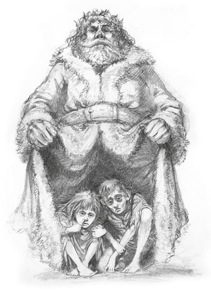
How Christmas Became Christmas: A Meditation on The Evolution of a Holy Day
James Ishmael Ford
24 December 2017
Unitarian Universalist Church
Long Beach, California
Text
“There are many things from which I might have derived good, by which I have not profited, I dare say,’ returned the nephew. ‘Christmas among the rest. But I am sure I have always thought of Christmas time, when it has come round—apart from the veneration due to its sacred name and origin, if anything belonging to it can be apart from that—as a good time; a kind, forgiving, charitable, pleasant time; the only time I know of, in the long calendar of the year, when men and women seem by one consent to open their shut-up hearts freely, and to think of people below them as if they really were fellow-passengers to the grave, and not another race of creatures bound on other journeys. And therefore, uncle, though it has never put a scrap of gold or silver in my pocket, I believe that it has done me good, and will do me good; and I say, God bless it!”
Charles Dickens, “A Christmas Carol”
I don’t recall exactly, but a couple of years ago on one of the list servs that I belong to, I wish otherwise, but I’m pretty sure it was for Unitarian Universalist ministers, someone raised the question as to whether UUs observing Christmas was cultural appropriation.
I will not get into my complicated feelings about the whole concept of cultural appropriation, but I will say this is a pretty good example of someone not having a clue. The thought that this query might have been, okay, almost certainly was said by a ministerial colleague, makes me want to go take a nap.
We UUs have many admirable qualities. We see ourselves as fully a part of nature. And as rational creatures given the miracle of an opposable thumb we have special responsibilities in this world. So, we’re very much concerned with how we treat each other as well as how we live on this planet. We UUs also used to be of a scholarly turn. That part seems not so important to us anymore. For instance an ordained minister unaware of our connections to Christmas is lamentable.
Let me start out by saying no one in this country can lay a stronger claim to the modern concept of Christmas than Unitarian Universalists. And while that is true, and I will explain how in due course, Christmas, or at least central parts of that celebration are also ancient, much older than us, or even of Christianity. With that let me tell you a couple of stories, stories I hope you’ll see running a thread from the shades of antiquity right through to Long Beach, California, at the very tail end of the year 2017.
First off, Christmas as a midwinter celebration is actually ancient. I mean really ancient. These midwinter observances find their origins when human beings first noticed seasons, and specifically that days get shorter and things get colder. Then as we figured out how to calculate that moment when everything seems to be falling apart, but then mysteriously turns, we decided to help make sure that turning actually happened. Or, just in case it didn’t, to have one big party. Being of a practical turn in most cultures we did some kind of blending of those two things.
And so with that near universal background, on to the immediate predecessors of our actual Christmas. In that era we call Roman antiquity in the Mediterranean basin there were two particular festivals that are important for our story.
First, there was Saturnalia, a Roman festival in honor of the deity Saturn. It ran from the 17th of December right through the 23rd, featuring gift-giving, expressions of practical concern for the poor, general all around good-will, and a week-long party. Over time among some circles these parties took on elements of, well, orgy. By turns people celebrated and condemned this holiday.
And then in the early Christian era a newer cult emerged, that of the Unconquered Sun. At the dawn of the fourth century, the general Constantine was a devotee of that deity. Later as Emperor he converted to Christianity. Although, there are those who suggest he somewhat less converted to Christianity than took over the now increasingly powerful and potentially useful Christian church, while remaining pretty much still a devotee of that Unconquered Sun. We have a number of reasons to believe this might be so. Sunday, for instance, is a name he invented marking a weekly acknowledgment of the Unconquered Sun. And, coincidence or not, you can argue it both ways, December 25th was also the day of the annual festival in celebration of that Unconquered Sun.
Now, those concerned with when Jesus was born should note the Biblical evidence, scant as it is, in fact hints at his being born in the Spring. But, there’s nothing that confirms any actual date. The earliest record of a December 25th celebration of Jesus’ birth dates to 354, something less than twenty years after the Emperor Constantine’s death. And if you’re confused, in the neighborhood of 331 years after Jesus died. For those who like to quibble the split, meaning between the Western and Eastern churches, notes there are two different dates for Christmas. In the West our December 25h, but in the East, it’s January 6th, avoiding at least a bit, that unfortunate coincidence with the Unconquered Sun.
The coincidence of dates has been an awkwardness for Christians ever since the beginning. Now, there are legitimate arguments for a rough nine months out from the ancient marking of Mary’s annunciation and with it her pregnancy, which by tradition is observed on the 25th of March. Of course, this date has no documentary support. It looks like somebody invented it long after the actual events. And as I mentioned the Scriptures seem to describe his birth happening in the Spring.
The rather more important point is that the trappings of Saturnalia and the feast of the Unconquered Sun have pretty obviously been part and parcel of Christmas celebrations from the beginning. In fact, when the Puritans and Pilgrims made their way to America in order to be free to persecute others, one of the first things they did was deal with Christmas as the pagan holiday they clearly saw it clearly was.
Here we get the actual war on Christmas. During the Reformation a minority of Protestants, including the Puritans, sought the abolition of Christmas as an egregious example of “popish idolatry.” They were clear the festival was a thinly Christianized celebration of the god Saturn. Or, maybe the Unconquered Sun. Same difference as far as they were concerned. And, so, come to New England, and finally in a position to impose their views on others, they did something about it. They made it illegal to observe Christmas. There were various bits of legislation. One was a 1659 law that made the observation of the holiday punishable by a fine of five shillings. I tried to figure out what that is in today’s dollars, but all I could confirm is that it was a stiff fine.
While these anti-Christmas laws were all repealed by the end of the Seventeenth century, Christmas was never in the years following a commonly celebrated holiday in New England. In fact it was considered weird. So, people like Anglicans when they arrived in the vicinity of Boston, were careful not to flaunt any vestiges of the holiday. Christmas was just an ordinary day.
Time passed, and then in the early decades of the Nineteenth century, a couple of things happened. Well lots of things happened. But, critically, the Unitarians emerged as a distinct spiritual perspective. They were open, curious, and profoundly humanistic in the same sense as we, their contemporary heirs do, of placing their primary concerns within this world, and within our lived lives.
Also, the center of intellectual exploration in the West at that time was Germany. And being of a scholarly turn, at least in those days, our early Nineteenth century Unitarian forbearers made frequent pilgrimages to Germany. Where they saw Christmas in full swing. And with all the vestiges of German antiquity and its dealing with deepest, darkest winter, including burning Yule logs and candle lit Christmas trees.
Then, as it happens, in the Christmas of 1832, the Unitarian minister Charles Follen is credited with erecting the first Christmas tree in New England. (Incidentally, also marked by a Puritan revolt, the Christmas tree appears to have not come to England until eight years later, in 1840, when Prince Albert put one up in Windsor Palace.) Back here Unitarians threw themselves into celebrating a holiday that seemed to perfectly suit that liberal and humanistic faith. In fact, in many ways early Unitarianism, still unequivocal in its Christianity, shifted the focus from Easter and the idea of a divine-other interceding in history through that mysterious and difficult and frankly unclear story of incarnation, death, and resurrection, and moved instead to a story of the birth of a child as the embodiment of our human hope in the face of gathering darkness.
But, that’s not the end of the story. Christmas in the English-speaking world has always been mixed up like that. And, the tilt has always been toward extravagance. In England, for instance, the Christmas season was marked as much by drunkenness and a hint of violence as anything else. And it wasn’t all that much better here. Then the next thing happened.
There’s a movie out right now, called the “Man Who Invented Christmas.” I had hoped to see it in anticipation of writing this sermon, but unfortunately, I was not able to. Doesn’t really matter, because I know the basics of the real story upon which the movie, good, bad, or indifferent might be, presents. That inventor is Charles Dickens. And the invention was through his novella “A Christmas Carol.”
It’s quite the story. It certainly pulls out all the stops. It’s sentimental, it’s schmaltzy, and it drives right to the heart of a reason for Christmas that makes all the sense in the world. It birthed into an English-speaking world that the author gave his name to. “Dickensian,” a time of horrendous social inequity, of extreme wealth resting upon a world poverty and social injustice larding through everything. Like, well, like a lot things we might recognize. The story challenged people. And it actually shifted how people in the English-speaking world approached Christmas. And, for many, their own spirituality, and out of that how they saw themselves engaging the world.
Dickens was a child of poverty, and he never forgot it. His writings and actions in life show his abiding concern for the fate of those lacking privilege. And this is critical for us. His thinking had a profoundly spiritual underpinning. While he was born Anglican and died within the warm embrace of that comprehensive faith, he also had more than a slight Unitarian connection.
One of his closest friends was the Unitarian divine Edward Tagart. During Reverend Tagart’s tenure at Little Portland Street Chapel, Dickens was a member. A real member, even purchasing a pew. It was only after Tagart’s death that he drifted slowly back to Canterbury, although always remaining, it is pretty obvious, a religious liberal.
What is most intriguing for me as, frankly, as a Unitarian Universalist (okay, a Zen Buddhist Unitarian Universalist) is that Dickens wrote “A Christmas Carol” while attending the Little Portland Street’s Unitarian chapel. And I suggest Dickens’ “A Christmas Carol” is run right through with the core sentiments of liberal faith.
This is the Christmas we’re invited to recall. All of it. It includes the ancient things. The fear, and the hope, and of course, the parties. But also, there’s Mr Dicken’s coalescing of it all. Christmas past, present, and, you bet, future. So, think of those messages of Christmas past. Those bonfires to recall the disappearing light. Christmas green. Saturn. The Unconquered Sun. Where are they for you? Which parts call to your heart? Where do you find warnings? There are many threads in this cloth.
Then, what about today, that here and now thing, the Christmas present thing? You know the gift of this moment. As Dickens reminded us, we’re invited into the doing. And there is so much to do. So much need, so much. Our task, each of us, is to find that one thing, or that small number of things, which we can do; and then to do it, to do them.
From the wisdom of your heart, to what does your heart call you to do with your hands? Christmas as a call to see the connections, and to act.
And, finally, we come to Christmas future, and for that to Christmas day, like Mary birthing hope into the world. And with that story of a miraculous birthing the question for each of us, pregnant as we are with many possibilities: Which future are you going to let birth into the world?
This is the message of our way. You do get to choose, or, at least you get to choose your part. So, out of all these lessons, which one is it going to be?
A question waiting. Like a dream. Like a child.
Like a revolution. Like Christmas itself.
Amen.
Previous Post

December 23, 2017
Eight Brief But Essential Zen Texts
Next Post
December 25, 2017 My Heart Breaks For Joy: a Small Zen Meditation on Christmas Day
Browse Our Archives
Select a Category A Christmas Carol Abolitionist African-American Ahmadiyya Alan Watts Aldous Huxley Allen Ginsberg Amedkar Jayanti American politics American Zen Anaheim Zen Sangha Anglican Annie Besant April Fool Armageddon Art and Religion artificial intellegence Atheist Awakening B R Ambedkar Barlaam & Josaphat Beatnik Between Bhagavad Gita Bible biography birthday bodhisattva Bodhisattva Precepts Book burning Book of Common Prayer Book of Mormon Brahmo Samaj Buddha Buddhism Buddhist Buddhist Lord's Prayer Butterflies Calendars cartoons cat ChatGPT Chicken Tortilla Soup choices Christian atheism Christian mysticism Christian origins Christian Science Christian Zen Christianity Christianity and Buddhism christmas Christmas Truce Christopher Isherwood Church of Later Day Saints Cinco de Mayo circus covenant critical thinking culture D. T. Suzuki Dalit Buddhism Daniel Defoe Desert Fathers and Mothers dharma talk Dogen Donald Trump Dongshan's Five Ranks Dorothy Day dream Duty Easter ecology Edwin Arnold emptiness Empty Moon Zen Network Episcopal Church Eternal Now Ethics evolution existentialism Faith fantasy Fathers Day film film review fire Five Ranks Folk music food Form and emptiness Four Seals Francis of Assisi Francis Xavier Free thinker friendship George MacDonald Gerald Heard Glenn Taylor Webb God Good Friday Gospel of Gospel of Mark Gospel of Thomas grace Graduate Theological Unioin Graduate Theological Union Guanyin H R Blyth Hakuin Ekaku Hanamatsuri Hanukkah Harada Yasutani Zen Heart Sutra Henry David Thoreau Hermann Hesse Hinduism History and Religion history of religion Holy Spirit home Hospitality Icon Ides of March Isaac Newton Islam Islamic mysticism Jack Kerouac James Luther Adams Jiddu Krishnamurti Joan of Arc Johannes Gutenberg John Donne joke Judaism justice karma kensho King James Bible koan Koun Yamada Kyoto School Lewis Carrol Liberal Christianity Liberal Religion Life Plan Community Liminal literature Literature and Religion Liturgy Lord's Prayer Love Mahatma Gandhi Mahayana Martin Luther King Jr Mary Baker Eddy Mary Magdelene Mary Oliver Mayflower Compact Meditation memories memory metaphor money money and religioin Mormons Mother's Day movie review mysticism mythic Neighborhood Unitarian Universalist Church New Thought Nichiren Buddhism Nonduality not knowing Omar Khayyam Pacific School of Religion pagan Palm Sunday Passover peace Pentecost perennialism Phantastes Philip Kapleau philosophy Pilgrimage poetry Poetry and Religion politics Prayer Precepts Printing Press prophecy prophetic spirituality psychology Pure Land Queer religion queering religion Quietism Ram Mohan Roy rebirth recipe Relationships and religion religion religion and history Religious syncretism Resistance Retirement Retreat review Rissho Kosei Kai Ritual Robert Aitken Roshi Robert Ingersoll Rohatsu Romani religion Rosie the Riveter saints samadhi SanboZen Sangha Satyagraha science science and reigion science and religion science fiction seminary sermon Sesshin Sex and Religion Shinran Sikh Sikh tradition silence Social Justice Socially Engaged Buddhism Society and religion Soto Zen soul spiritual community spiritual practice Spirituality Sufism Suicide superstition Taoism Television Teresa of Avila Thanksgiving theological schools Theosophy Thomas Merton Time Transcendentalism Transcendentalist Trinitarian Trinity Uncategorized unitarian Unitarian Christianity Unitarian Universalist Universalism Vajrayana Vedanta Walking war Willa Cather William Ellery Channing wisdom women and religion women in religion World Teacher Writing zazen Zen Zen Center Zen inspired retriement zen meditation Zen Precepts Zen women
Select a Month September 2026 August 2026 July 2026 June 2026 May 2026 April 2026 March 2026 February 2026 January 2026 December 2025 November 2025 October 2025 September 2025 August 2025 July 2025 June 2025 May 2025 April 2025 March 2025 February 2025 January 2025 December 2024 November 2024 October 2024 September 2024 August 2024 July 2024 June 2024 May 2024 April 2024 March 2024 February 2024 January 2024 December 2023 November 2023 October 2023 September 2023 August 2023 July 2023 June 2023 May 2023 April 2023 March 2023 February 2023 January 2023 December 2022 November 2022 October 2022 September 2022 August 2022 July 2022 June 2022 May 2022 April 2022 March 2022 February 2022 January 2022 December 2021 November 2021 October 2021 September 2021 August 2021 July 2021 June 2021 May 2021 April 2021 March 2021 February 2021 January 2021 December 2020 November 2020 October 2020 September 2020 August 2020 July 2020 June 2020 May 2020 April 2020 March 2020 February 2020 January 2020 December 2019 November 2019 October 2019 September 2019 August 2019 July 2019 June 2019 May 2019 April 2019 March 2019 February 2019 January 2019 December 2018 November 2018 October 2018 September 2018 August 2018 July 2018 June 2018 May 2018 April 2018 March 2018 February 2018 January 2018 December 2017 November 2017 October 2017 September 2017 August 2017 July 2017 June 2017 May 2017 April 2017 March 2017 February 2017 January 2017 December 2016 November 2016 October 2016 September 2016 August 2016 July 2016 June 2016 May 2016 April 2016 March 2016 February 2016 January 2016 December 2015 November 2015 October 2015 September 2015 August 2015 July 2015 June 2015 May 2015 April 2015 March 2015 February 2015 January 2015 December 2014 November 2014 October 2014 September 2014 August 2014 July 2014 June 2014 May 2014 April 2014 March 2014 February 2014 January 2014 December 2013 November 2013 October 2013 September 2013 August 2013 July 2013 June 2013 May 2013 April 2013 March 2013 February 2013 January 2013 December 2012 November 2012 October 2012 September 2012 August 2012 July 2012 June 2012 May 2012 April 2012 March 2012 February 2012 January 2012 December 2011 November 2011 October 2011 September 2011 August 2011 July 2011 June 2011 May 2011 April 2011 March 2011 February 2011 January 2011 December 2010 November 2010 October 2010 September 2010 August 2010 July 2010 June 2010 May 2010 April 2010 March 2010 February 2010 January 2010 December 2009 November 2009 October 2009 September 2009 August 2009 July 2009 June 2009 May 2009 April 2009 March 2009 February 2009 January 2009 December 2008 November 2008 October 2008 September 2008 August 2008 July 2008 June 2008 May 2008 April 2008 March 2008 February 2008 January 2008 December 2007 November 2007 October 2007 September 2007 August 2007 July 2007 June 2007 May 2007 April 2007 March 2007 February 2007 January 2007 December 2006 November 2006 October 2006 September 2006
Follow Us!
TAKE THE
Religious Wisdom Quiz
Who was known for interpreting dreams in Babylon?
Select your answer to see how you score.
Moses Daniel Joseph David
Related posts from Monkey Mind
Hildegard as a Pan-Spiritual Saint
Zen, Unitarian Universalism, and a Writer's Life
The American Unitarian Association Marks Two Hundred Years
TRENDING AT PATHEOS Buddhist

The Real AI Story Is Adoption Without Trust
Artificial intelligence has crossed a political threshold. It is no longer a...

A new article, written by Jeff Lindsay and Gale L. Pooley,...

Swimfan: Forgotten Aughts Pleasures
This is a recovery effort. In 2002, My Big Fat Greek Wedding...

Top Three Anti-Catholic Lies About Catholicism
This is my initial transcript for the video, "THE 3 WORST...

Pope Leo Celebrates Mass for Nurses & Docs...
I don't have any idea how he did it, but Pope Leo...

The Sermon on the Mount, Part I: Matthew...
The Sermon on the Mount, Part I (Matthew 4:12-5:12) St. Matthew moves...
view all Buddhist blogs
Ad-Free & Subscriber Log-In Subscription Support
- About Us
- 2026 Calendar
- Videos
- Podcasts
- Library of World Religions
- Faith In Media Tracker
- Advertise With Us
- Write for Us
- Privacy Policy
- Terms of Service
- Do Not Sell My Data
- Contact Us
- Radiant Digital
- Manage Newsletter Subscriptions
- Unsubscribe From Notifications
- Sitemap
Copyright 2008-2026, Patheos. All rights reserved.
Subscription Support Ad-Free & Subscriber Log-In
Follow Patheos