
BuddhistCatholicContemplativeEvangelicalGeneral ChristianHinduJewishLatter-day SaintMuslimNew VisionsProgressive Christian
Beliefs
- Buddhist
- Catholic
- Contemplative
- Evangelical
- General Christian
- Hindu
- Jewish
- Latter-day Saint
- More Voices
- Muslim
- New Visions
- Pagan
- Progressive Christian
Topics
- Religion News
- Food and Religion
- Sports and Religion
- Religious Art
- Religious Music and Entertainment
- Religious Events
- History and Religion
- Style and Religion
- Politics and Religion
- Women in Religion
- Recreation Outdoors and Religion
- Business Finance and Religion
- Careers Workplace and Religion
- Education and Religion
- Family Parenting and Religion
- Health Fitness and Religion
- Home and Religion
- Relationships and Religion
- Technology and Religion
- Travel and Religion
Columnists
- Buddhist Columnists
- Business Finance and Religion Columnists
- Careers Workplace and Religion Columnists
- Catholic Columnists
- Contemplative Columnists
- Education and Religion Columnists
- Evangelists Columnists
- Family Parenting and Religion Columnists
- General Christian Columnists
- Health Fitness and Religion Columnists
- Hindu Columnists
- History and Religion Columnists
- Home and Religion Columnists
- Jewish Columnists
- More Voices Columnists
- Latter Day Columnists
- Muslim Columnists
- New Visions Columnists
- Nonreligious Columnists
- Pagan Columnists
- Politics and Religion Columnists
- Progressive Columnists
- Recreation Outdoors and Religion Columnists
- Relationships and Religion Columnists
- Religion News Columnists
- Religious Art Columnists
- Religious Events Columnists
- Religious Music and Entertainment Columnists
- Sports and Religion Columnists
- Style and Religion Columnists
- Technology and Religion Columnists
- Travel and Religion Columnists
- Women in Religion Columnists
Resource Library
- 2026 Calendar
- Library of World Religions
- The 100 Most Holy Places on Earth
- Patheos Answers
- Podcasts
- Videos
- Faith Leaders Database
- Anglican Episcopalian
- Bahai
- Baptist
- Buddhism
- Christianity
- Confucianism
- Eastern Orthodoxy
- Hinduism
- Holiness and Pentecostal
- ISKCON
- Islam
- Judaism
- Lutheran
- Methodist
- The Church of Jesus Christ of Latter-day Saints
- New Age
- Paganism
- Presbytarian and Reformed
- Protestantism
- Religion Behind the Scenes
- Roman Catholic
- Scientology
- Shia Islam
- Sikhism
- Sufism
- Sunni Islam
- Taoism
- Zen
- See all religions
Research Tools
 Ad-Free & Subscriber Log-In Subscription Support
Ad-Free & Subscriber Log-In Subscription Support
Follow Patheos 

- Trending:
- Forgiveness
- |
- Marriage
- |
- Consciousness
- |
- Death Penalty
- |
- Election
- |
- Halloween

- Home
- Buddhist
- My Three Years on the Soto Zen Buddhist Association Board: a Brief Reflection
My Three Years on the Soto Zen Buddhist Association Board: a Brief Reflection
Last updated on: November 7, 2017 at 12:50 pm by James Ford
My Three Years on the Soto Zen Buddhist Association Board: a Brief Reflection 2017-11-07T12:50:02-08:00 James Ford
Patheos Explore the world's faith through different perspectives on religion and spirituality! Patheos has the views of the prevalent religions and spiritualities of the world.

Here I am at the Oakland airport waiting on my flight home to Long Beach. Yesterday I completed a three-year term on the board of the Soto Zen Buddhist Association. Now, I’m jumbling through my thoughts and feelings about the experience.
I’ve devoted the majority of my life to the Zen project. My heart aligns most closely with Soto Zen Buddhism informed by the koan curriculum adapted from the Hakuin line Takujo system by the great Soto master Daiun Sogaku Harada at the turn of the last century. I was first ordained unsui close to fifty years ago and later received dharma transmission from the late English Soto priest Houn Jiyu Kennett. My practice continued under the lay koan master John Tarrant, and later as a collaborator in the formation of Boundless Way Zen.
This ranging experience has meant while I am deeply on the inside of the Soto Zen ordained way, I viscerally resist clericalism and advocate for unambiguous acknowledgment of lay practice and that lay practitioners can be full masters of our way. Today, I am working with other Soto Zen priests and lay leaders in forming a Soto sangha in Long Beach and Orange County.
And, most of all, I’m concerned about the possibilities of Zen for a fulfilled life. I see it as one of the true ways. It is powerful. It is lovely. And it is a most human enterprise. So, it is also dreadfully frustrating. And, always, it appears, always totters at the edge of collapse.
And it is from this perspective that I find myself thinking about the SZBA.
It is only twenty-two years old. In 1995 representatives of the Sotoshu suggested to some senior American priests that it was time for Westerners to organize their own Soto alliance. The following year the Soto Zen Buddhist Association was formally incorporated. Sojun Mel Weitsman was the SZBA’s first president. However, it wasn’t until 2001 that the organization began to take shape. In 2004 Jisho Caroline Warner became the third president and the SZBA held its first conference.
It was at this conference that a Dharma Heritage ceremony was initiated to replace the Japanese Soto zuise ceremony for North American practitioners. Twelve American priests who had completed the zuise ceremony officiated at the ceremony, initiating thirty senior American priests. I was honored to be among that number. And doubly so when invited to be Doshi, principal celebrant at the fifth Dharma Heritage ceremony in 2012.
Since then the SZBA has offered a variety of services to the practicing community. This has included a webpage, list serve, intensive workshops, and training periods. In 2008 the SZBA formally adopted a critical document, “Guidelines for the Formation of Soto Zen Priests in the West.” In 2010 the SZBA approved a new document honoring women ancestors. In 2011 an SZBA Ethics Statement was issued. In the same year the SZBA reincorporated with new bylaws. It has continued to be the only organization with which the Japanese Sotoshu maintains connections, even if largely informally.
Today there are approximately two hundred full members and another hundred, plus, associates. We represent lineages derived through Tozen Akiyama, Kobun Chino, Betsugen Joshin, Dainin Katagiri, Jiyu Kennett, Taizan Maezumi, Daito Noda, Tesumei Niho, Guido Nishijima, Seido Suzuki, and Shunryu Suzuki. And more. We keep growing.
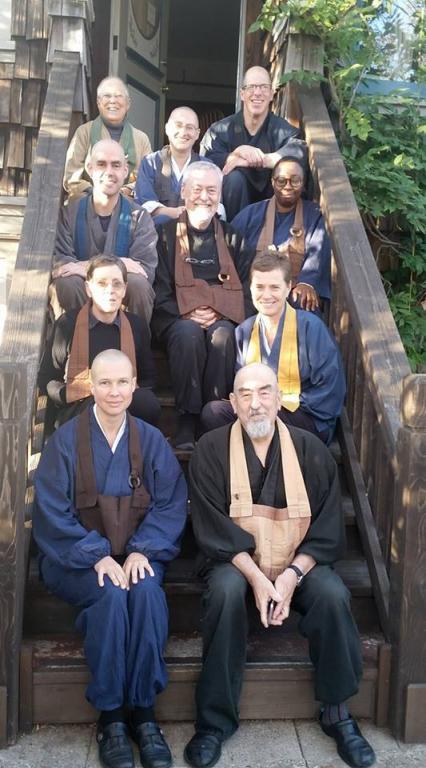
One of the early leaders of the SZBA the late Kyogen Carlson envisioned the SZBA as a proto-denomination, an organization that might bind the various individual lineages that have come to North America and the West. And with that to create expectations of preparation as well as ethical guidelines and networking.
The need for some commonly understood training standards has become increasingly important over the years. Unlike in Japan with long established forms, here we are literally the wild west. And something unusual has happened here. Because of the romance of Zen’s dharma transmission there are a growing number of people who have been given Zen titles, but who have had little and on occasion no training.
This has happened before. In Japan. And in China. In Medieval Europe this phenomenon occurred around Christian ordination and such people were called hedge-priests. Some of these Zen priests also show characteristics in common with the Christian Episcopi Vagantes movement.
As with Episcopus Vagans, a few of these people are amazing practitioners and teachers. And, I like that there is the possibility of creativity at the edges of a tradition. But, mostly, this is simply a problem. Inadequately prepared and often inappropriate people are using titles, and frankly, misleading people about what Zen is and can be.
For the sake of our emerging Western Soto Zen those of us who are seriously committed, finding common ground among practitioners and teachers is critical. And that includes finding standards of preparation. It means the difference between an authentic spiritual tradition taking root here and a beautiful discipline dissolving into a playground for egoists seeking approval without doing the work. So, while Kyogen Roshi’s hope for a denomination is not on the immediate horizon, seeking commonly accepted objective standards to underline what dharma transmission should mean is critical.
And during my tenure our principal struggle focused on one thing. This was finding accord on a standards component to the formation document. The sticking point was intensive monastic training. In Soto Zen this is usually experienced in the form of ango, ninety-day cloistered practice. The Japanese Sotoshu ordinarily requires two ango as part of priestly formation. This question and how it should apply to the SZBA has taken up nearly a decade of discussion.
Part of the problem is coming to agreement as to what precisely Soto Zen ordination is. Normative ordination throughout Buddhism’s history has been vinaya monasticism. So normative in fact that the word sangha, which today in the West is understood in much the same way as “church,” to mean both the local gathering of Buddhists and the larger Buddhist community, was originally meant only the vinaya ordained community.
However in Japan starting in the ninth century a reformed ordination system based in the Bramajala Bodhisattva precepts was introduced through the Tendai school. While initially simply meant as an alternative form of full monastic ordination, through those mysterious accidents of history, something new emerged in Japan. Today Soto Zen clerics ordained through the Sixteen Bodhisattva precepts are not expected to be celibate, be vegetarian, or shave their heads.
The great Shin founder Shinran Shonin spoke of this new ordained way that has evolved in Japan as being “neither monk nor lay.” Instead of monks, but also not lay people, Japanese Buddhist clergy are sometimes called “married monks,” but probably are best called “priests.”
In a recent article on this blog I used that term “married monk,” attempting to capture the unique quality of Soto ordination, how it has monastic components but is not celibate. The intensity of the negative reactions on the inter webs, while magnified by being on the inter webs, shows that the term is probably not adaptable into normative English.
The word “priest” is associated with leading ceremonial functions, and that certainly is an aspect of the work and discipline of a Soto priest. But, also it can mean a “technologist of the spirit.” And within the Zen tradition, this would suggest a certain mastery of one or more of the Zen arts of contemplation. And that works. Finally, if we consider how the word priest literally means “elder,” from the Latin presbyter, a Zen priest would be both a trained technologist of the spirit and an elder with the community.
And when it comes to a Zen priest, a Soto Zen priest, there are a number of things one should be able to expect. In my view the number one thing is that person should be a competent meditation teacher. This person should have had extensive experience and have been assessed by others to be able to guide people on the path of zazen. Less important to me, but historically very important, and critical to many, and I believe important to the establishment of Zen here, the Soto priest should also be competent in the leading of Soto Zen’s various rituals. A Soto Zen priest in the west to have teaching, counseling, and spiritual direction skills. And, increasingly there is need for traditional Western ministerial skillsets.
But most of all this person should be a dedicated practitioner of Zen. Without this the rest cannot follow. But, how to establish this? Fortunately in more serious Zen circles fewer and fewer are tangled in the myth of dharma transmission and see it as sufficient. Some want to acknowledge the need for preparation but resist any institutional markers. Others see the need to continue that monastic formation found in extensive monastic residency, or, at the very least in the form of an ango or two or three or four.
The problem included the fact many people who are Soto Zen priests have not had this experience. Also there is a legitimate concern that as many people as possible who feel the “call” of ordained life be given the opportunity to do it. In an era where people who ordain cannot expect to be professionals, that is be paid as priests and teachers, what training demands are reasonable? Especially when monastic formation removes one from the opportunity to earn money and to save for one’s old age. And depending on when that monastic experience is taken on, this can have dire consequences for people’s future lives. There are also questions about people with minor children or other obligations.
I came on the board having served for ten years on the membership of the only other substantial group of Zen teachers in the West, the American Zen Teachers Association. While it has no aspirations beyond being a forum for mutual support among Zen teachers it did run up against the question, “Who is a Zen teacher?”
What we found was that whatever else might be true about the formation of a Zen teacher, whether a layperson, a priest, or a monk, or a nun, whatever other experiences or training led to their obtaining a title what everyone who “felt” one of the group to the others had extensive Zen meditation experience. Trying to put a number to that the membership committee established one year of intensive meditation experience. What in Japanese Zen we would call “sesshin” days, days with between eight and eleven hours of meditation. And, so my strongly held position was that we should forgo the ango requirement in favor of sesshin days.
We struggled mightily with this.
And in the end like Horace sings to us:
And don’t start like the old writer of epic cycles:
‘Of Priam’s fate I’ll sing, and the greatest of Wars.’
What could he produce to match his opening promise?
Mountains will labour: what’s born? A ridiculous mouse!
Basically we agreed that normative formation for a Soto Zen Buddhist priest should include as a minimum one ango. As a compromise with the circumstances of our times this ango expectation can be met with four three week residential intensives.
It was hard for me to vote for this, but I did. I felt, and actually, still feel that a single ango is both too much and not enough, in that that residency requirement means a lot of people will simply not be able to meet the expectation, and at the same time a single ango is no where near enough to make a priest. As to that second part, this isn’t meant to be sufficient, merely necessary.
As to the first part, that’s where I struggled. I looked at my own life, and while I completed approximately four ango (I no longer can count precisely. It was nearly fifty years ago), the truth is that I would not be teaching if it weren’t for the twenty years I spent doing koan introspection with a number of teachers.
But, there is something about Soto Zen ordination that is more than preparing a minister, or even a Zen teacher. And here that difficult term “married monk” keeps returning. As unsatisfactory as it is. Maybe better “neither monk nor lay.” But it is something. We who walk this path are joined together within what I guess I would have to call an order, a community of practitioners with some few things in common. And, that monastic element, I reluctantly acknowledge, is authentically part of the package.
It was also important for me to clarify in my own mind that ordination as a Soto priest is not the only way to acknowledge mastery of our way, and not the essential parts. I can easily give full authorization as a teacher to a lay person. Well, not easily, that person must walk the way for many years, have sat at least that year of sesshin, and probably have completed the Harada reformed koan curriculum. I can only hope this truth of lay mastery will be accepted within our Western Soto in time. It certainly happens here and there now. One of the largest streams of Soto Zen in the West the White Plum acknowledge lay masters. More will follow.
And for me knowing that allows me to open more fully to what it means to be a priest.
That said, embracing the Soto Zen priest way means we do need to find ways to foster the whole of it, and that does mean including monastic formation. Precisely how, I suspect is still open. But, the obvious way is through ango.
And that’s that. Three years. A mouse. But, who knows what this mouse might become?
Its not long before my flight home.
I am tired. A little disappointed I couldn’t have done more. And grateful for the opportunity to share in this amazing work that is planting Soto Zen here on Turtle Island.
May all beings be well…
Previous Post
November 5, 2017
I Will Never Abandon You: The Zen Priest Hozan Senauke Sings
Browse Our Archives
Select a Category A Christmas Carol Abolitionist African-American Ahmadiyya Alan Watts Aldous Huxley Allen Ginsberg Amedkar Jayanti American politics American Zen Anaheim Zen Sangha Anglican Annie Besant April Fool Armageddon Art and Religion artificial intellegence Atheist Awakening B R Ambedkar Barlaam & Josaphat Beatnik Between Bhagavad Gita Bible biography birthday bodhisattva Bodhisattva Precepts Book burning Book of Common Prayer Book of Mormon Brahmo Samaj Buddha Buddhism Buddhist Buddhist Lord's Prayer Butterflies Calendars cartoons cat ChatGPT Chicken Tortilla Soup choices Christian atheism Christian mysticism Christian origins Christian Science Christian Zen Christianity Christianity and Buddhism christmas Christmas Truce Christopher Isherwood Church of Later Day Saints Cinco de Mayo circus covenant critical thinking culture D. T. Suzuki Dalit Buddhism Daniel Defoe Desert Fathers and Mothers dharma talk Dogen Donald Trump Dongshan's Five Ranks Dorothy Day dream Duty Easter ecology Edwin Arnold emptiness Empty Moon Zen Network Episcopal Church Eternal Now Ethics evolution existentialism Faith fantasy Fathers Day film film review fire Five Ranks Folk music food Form and emptiness Four Seals Francis of Assisi Francis Xavier Free thinker friendship George MacDonald Gerald Heard Glenn Taylor Webb God Good Friday Gospel of Gospel of Mark Gospel of Thomas grace Graduate Theological Unioin Graduate Theological Union Guanyin H R Blyth Hakuin Ekaku Hanamatsuri Hanukkah Harada Yasutani Zen Heart Sutra Henry David Thoreau Hermann Hesse Hinduism History and Religion history of religion Holy Spirit home Hospitality Icon Ides of March Isaac Newton Islam Islamic mysticism Jack Kerouac James Luther Adams Jiddu Krishnamurti Joan of Arc Johannes Gutenberg John Donne joke Judaism justice karma kensho King James Bible koan Koun Yamada Kyoto School Lewis Carrol Liberal Christianity Liberal Religion Life Plan Community Liminal literature Literature and Religion Liturgy Lord's Prayer Love Mahatma Gandhi Mahayana Martin Luther King Jr Mary Baker Eddy Mary Magdelene Mary Oliver Mayflower Compact Meditation memories memory metaphor money money and religioin Mormons Mother's Day movie review mysticism mythic Neighborhood Unitarian Universalist Church New Thought Nichiren Buddhism Nonduality not knowing Omar Khayyam Pacific School of Religion pagan Palm Sunday Passover peace Pentecost perennialism Phantastes Philip Kapleau philosophy Pilgrimage poetry Poetry and Religion politics Prayer Precepts Printing Press prophecy prophetic spirituality psychology Pure Land Queer religion queering religion Quietism Ram Mohan Roy rebirth recipe Relationships and religion religion religion and history Religious syncretism Resistance Retirement Retreat review Rissho Kosei Kai Ritual Robert Aitken Roshi Robert Ingersoll Rohatsu Romani religion Rosie the Riveter saints samadhi SanboZen Sangha Satyagraha science science and reigion science and religion science fiction seminary sermon Sesshin Sex and Religion Shinran Sikh Sikh tradition silence Social Justice Socially Engaged Buddhism Society and religion Soto Zen soul spiritual community spiritual practice Spirituality Sufism Suicide superstition Taoism Television Teresa of Avila Thanksgiving theological schools Theosophy Thomas Merton Time Transcendentalism Transcendentalist Trinitarian Trinity Uncategorized unitarian Unitarian Christianity Unitarian Universalist Universalism Vajrayana Vedanta Walking war Willa Cather William Ellery Channing wisdom women and religion women in religion World Teacher Writing zazen Zen Zen Center Zen inspired retriement zen meditation Zen Precepts Zen women
Select a Month September 2026 August 2026 July 2026 June 2026 May 2026 April 2026 March 2026 February 2026 January 2026 December 2025 November 2025 October 2025 September 2025 August 2025 July 2025 June 2025 May 2025 April 2025 March 2025 February 2025 January 2025 December 2024 November 2024 October 2024 September 2024 August 2024 July 2024 June 2024 May 2024 April 2024 March 2024 February 2024 January 2024 December 2023 November 2023 October 2023 September 2023 August 2023 July 2023 June 2023 May 2023 April 2023 March 2023 February 2023 January 2023 December 2022 November 2022 October 2022 September 2022 August 2022 July 2022 June 2022 May 2022 April 2022 March 2022 February 2022 January 2022 December 2021 November 2021 October 2021 September 2021 August 2021 July 2021 June 2021 May 2021 April 2021 March 2021 February 2021 January 2021 December 2020 November 2020 October 2020 September 2020 August 2020 July 2020 June 2020 May 2020 April 2020 March 2020 February 2020 January 2020 December 2019 November 2019 October 2019 September 2019 August 2019 July 2019 June 2019 May 2019 April 2019 March 2019 February 2019 January 2019 December 2018 November 2018 October 2018 September 2018 August 2018 July 2018 June 2018 May 2018 April 2018 March 2018 February 2018 January 2018 December 2017 November 2017 October 2017 September 2017 August 2017 July 2017 June 2017 May 2017 April 2017 March 2017 February 2017 January 2017 December 2016 November 2016 October 2016 September 2016 August 2016 July 2016 June 2016 May 2016 April 2016 March 2016 February 2016 January 2016 December 2015 November 2015 October 2015 September 2015 August 2015 July 2015 June 2015 May 2015 April 2015 March 2015 February 2015 January 2015 December 2014 November 2014 October 2014 September 2014 August 2014 July 2014 June 2014 May 2014 April 2014 March 2014 February 2014 January 2014 December 2013 November 2013 October 2013 September 2013 August 2013 July 2013 June 2013 May 2013 April 2013 March 2013 February 2013 January 2013 December 2012 November 2012 October 2012 September 2012 August 2012 July 2012 June 2012 May 2012 April 2012 March 2012 February 2012 January 2012 December 2011 November 2011 October 2011 September 2011 August 2011 July 2011 June 2011 May 2011 April 2011 March 2011 February 2011 January 2011 December 2010 November 2010 October 2010 September 2010 August 2010 July 2010 June 2010 May 2010 April 2010 March 2010 February 2010 January 2010 December 2009 November 2009 October 2009 September 2009 August 2009 July 2009 June 2009 May 2009 April 2009 March 2009 February 2009 January 2009 December 2008 November 2008 October 2008 September 2008 August 2008 July 2008 June 2008 May 2008 April 2008 March 2008 February 2008 January 2008 December 2007 November 2007 October 2007 September 2007 August 2007 July 2007 June 2007 May 2007 April 2007 March 2007 February 2007 January 2007 December 2006 November 2006 October 2006 September 2006
Follow Us!
TAKE THE
Religious Wisdom Quiz
Thrown into a muddy cistern for prophesying doom, I sank into the mire until rescued. What was my crime?
Select your answer to see how you score.
False prophecy Treason Blasphemy Prophesying Jerusalem's fall
Related posts from Monkey Mind

The Suchness of Crows: The Zen teachings of...
Yogi Chen & Chinese Vajrayana: A Personal Account
Our Divided Hearts: A Zen Meditatioin
Zen and the Dance of Not Knowing
TRENDING AT PATHEOS Buddhist

Nearly every morning, I make the drive to Detroit with my high-school-age...

The Real AI Story Is Adoption Without Trust
Artificial intelligence has crossed a political threshold. It is no longer a...

A new article, written by Jeff Lindsay and Gale L. Pooley,...

Swimfan: Forgotten Aughts Pleasures
This is a recovery effort. In 2002, My Big Fat Greek Wedding...

Top Three Anti-Catholic Lies About Catholicism
This is my initial transcript for the video, "THE 3 WORST...

Pope Leo Celebrates Mass for Nurses & Docs...
I don't have any idea how he did it, but Pope Leo...
view all Buddhist blogs
Ad-Free & Subscriber Log-In Subscription Support
- About Us
- 2026 Calendar
- Videos
- Podcasts
- Library of World Religions
- Faith In Media Tracker
- Advertise With Us
- Write for Us
- Privacy Policy
- Terms of Service
- Do Not Sell My Data
- Contact Us
- Radiant Digital
- Manage Newsletter Subscriptions
- Unsubscribe From Notifications
- Sitemap
Copyright 2008-2026, Patheos. All rights reserved.
Subscription Support Ad-Free & Subscriber Log-In
Follow Patheos