
BuddhistCatholicContemplativeEvangelicalGeneral ChristianHinduJewishLatter-day SaintMuslimNew VisionsProgressive Christian
Beliefs
- Buddhist
- Catholic
- Contemplative
- Evangelical
- General Christian
- Hindu
- Jewish
- Latter-day Saint
- More Voices
- Muslim
- New Visions
- Pagan
- Progressive Christian
Topics
- Religion News
- Food and Religion
- Sports and Religion
- Religious Art
- Religious Music and Entertainment
- Religious Events
- History and Religion
- Style and Religion
- Politics and Religion
- Women in Religion
- Recreation Outdoors and Religion
- Business Finance and Religion
- Careers Workplace and Religion
- Education and Religion
- Family Parenting and Religion
- Health Fitness and Religion
- Home and Religion
- Relationships and Religion
- Technology and Religion
- Travel and Religion
Columnists
- Buddhist Columnists
- Business Finance and Religion Columnists
- Careers Workplace and Religion Columnists
- Catholic Columnists
- Contemplative Columnists
- Education and Religion Columnists
- Evangelists Columnists
- Family Parenting and Religion Columnists
- General Christian Columnists
- Health Fitness and Religion Columnists
- Hindu Columnists
- History and Religion Columnists
- Home and Religion Columnists
- Jewish Columnists
- More Voices Columnists
- Latter Day Columnists
- Muslim Columnists
- New Visions Columnists
- Nonreligious Columnists
- Pagan Columnists
- Politics and Religion Columnists
- Progressive Columnists
- Recreation Outdoors and Religion Columnists
- Relationships and Religion Columnists
- Religion News Columnists
- Religious Art Columnists
- Religious Events Columnists
- Religious Music and Entertainment Columnists
- Sports and Religion Columnists
- Style and Religion Columnists
- Technology and Religion Columnists
- Travel and Religion Columnists
- Women in Religion Columnists
Resource Library
- 2026 Calendar
- Library of World Religions
- The 100 Most Holy Places on Earth
- Patheos Answers
- Podcasts
- Videos
- Faith Leaders Database
- Anglican Episcopalian
- Bahai
- Baptist
- Buddhism
- Christianity
- Confucianism
- Eastern Orthodoxy
- Hinduism
- Holiness and Pentecostal
- ISKCON
- Islam
- Judaism
- Lutheran
- Methodist
- The Church of Jesus Christ of Latter-day Saints
- New Age
- Paganism
- Presbytarian and Reformed
- Protestantism
- Religion Behind the Scenes
- Roman Catholic
- Scientology
- Shia Islam
- Sikhism
- Sufism
- Sunni Islam
- Taoism
- Zen
- See all religions
Research Tools
 Ad-Free & Subscriber Log-In Subscription Support
Ad-Free & Subscriber Log-In Subscription Support
Follow Patheos 

- Trending:
- Forgiveness
- |
- Marriage
- |
- Consciousness
- |
- Death Penalty
- |
- Election
- |
- Halloween

- Home
- Buddhist
- Eleven Talks by Zen Teachers on the Heart Sutra, Four Translations of the Text, and some Videos
Eleven Talks by Zen Teachers on the Heart Sutra, Four Translations of the Text, and some Videos
Last updated on: November 19, 2017 at 12:08 pm by James Ford
Eleven Talks by Zen Teachers on the Heart Sutra, Four Translations of the Text, and some Videos 2017-11-19T12:08:42-08:00 James Ford
Patheos Explore the world's faith through different perspectives on religion and spirituality! Patheos has the views of the prevalent religions and spiritualities of the world.
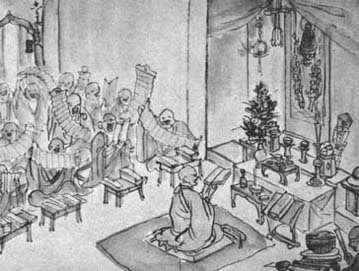
I was at a meeting with practitioners of several spiritual traditions where a Muslim asked me what was my text? He assumed there must be something comparable to the Koran or the Bible in either its traditional Jewish form or its expanded Christian version.
As a Buddhist of a rational turn I was at a loss as to what to say. In the moment I replied that while there is a voluminous sacred literature within Buddhism and while texts are important to us, we within the Zen traditions have nothing comparable to the Koran or Bible in either version.
Then with those gigantic caveats named two, the Platform Sutra of the Sixth Ancestor, and the Heart Sutra. There are many others, of course. But, those were the two that were the closest I could come to in that moment for some primary spiritual text thing. At least for me.
And of all the possibilities within that question, it is the Heart Sutra that most touches my heart and serves as a textual touchstone for my spiritual life. It is in fact the text that if there were to be only one for me as a Zen Buddhist that fits the bill. I believe it isn’t possible to understand the Zen way without some reference to the Prajnaparamita cycle, and in particular to the Heart Sutra.
Its full title is Prajnaparamitahrdaya, or The Heart of the Perfection of Wisdom. It is one of about forty books in the cycle, and together with the Diamond Sutra has had a considerable influence on the Mahayana, and in particular on Zen Buddhism. The writing of the cycle begins about a hundred years before the common era and concludes as late as the sixth century. The Heart Sutra itself is difficult to date. Edward Conze puts it’s composition at approximately 350 CE, although this is disputed and arguments are made for it being as early as the first century of the common era.
There are two versions, a shorter and a longer one. The consensus view is that the shorter is the older of the two, and is the text mostly commonly referenced. The versions reproduced below are all of that shorter version.
Here are some reflections on that primary text…
Eleven Talks by Zen Teachers on the Heart Sutra
Domyo Burk on the Heart Sutra, Part one and Part two
James Ford & Josh Bartok on the Heart Sutra
James Ford on the Heart Sutra
Joan Halifax on the Heart Sutra
Enkyo Pat O’Hara Ten Talks on the Heart Sutra
Seung Sahn on the Heart Sutra
Sheng Yen on the Heart Sutra
Jisho Warner on the Heart Sutra
Glenn Taylor Webb on the Heart Sutra
Sojun Mel Weitsman on the Heart Sutra
Michael Mugaku Zimmerman on the Heart Sutra, Part one and Part two
A Selection of Translations & Paraphrases of the Heart Sutra
Heart of Great Perfect Wisdom Sutra
Soto School Scriptures for Daily Service & Practice
Avalokiteshvara Bodhisattva, when deeply practicing prajna paramita, clearly saw that all five aggregates are empty and thus relieved all suffering.
Shariptutra, form does not differ from emptiness, emptiness does not differ form form. Form itself is emptiness, emptiness itself form. Sensations, perceptions, formations, and consciousness are also like this.
Shariputra, all dharma are marked by emptiness; they neither arise nor cease, are neither defiled nor pure, neither increase nor decrease. Therefore, given emptiness, there is no form, no sensation, no perception, no formation, no consciousness; no eyes, no ears, no nose, no tongue, no body, no mind; no sight, no sound, no no smell, no tase, no touch, no object of mind; no realm of sight… no realm of mind consciousness.
There is neither ignorance nor extinction of ignorance… neither old age and death, nor extinction of old age and death; no suffering, no cause, no cessation, no path no knowledge and no attainment.
With nothing to attain a bodhisattva relies on prajna paramita, and thus the mind is without hindrance. Without hindrance, there is no fear.
Far beyond al inverted views, one realizes nirvana. All buddhas of past, present, and future rely on prajna paramita and thereby attain unsurpassed, complete, perfect enlightenment.
Therefore, know the prajna paramita as the great miraculous mantra, the great bright mantra, the supreme mantra, the incomparable mantra, which removes all suffering and is true, not false. Thereore we proclaim the prajna paramita mantra, the mantra that says:
Gate Gate Paragate Parasamgate Bodhis Svaha
The Compassionate Heart of Wisdom
(a rendering of the Heart Sutra, by James Ishmael Ford With Josh Bartok)
When the Heart of Compassion walked through the gate of Wisdom, she looked into the body of the world and each of us, seeing that each of us and the world itself is boundless.
And with this all suffering vanished.
Dear ones, all things are boundless; and the boundless is nothing other than all things. Everything in itself is boundlessness; boundlessness is all things. This is true of our bodies, feelings, experiences, perceptions, and of consciousness itself.
Dear ones, the stuff of the universe is boundless. It is not born and it does not die. It is not impure or impure. It neither increases nor diminishes.
Within boundlessness there are no sense organs, no objects to sense, and no field of experience; no ignorance and thus no ending of ignorance; no old age and death and thus no ending of old age and death. There is no suffering and thus no causes of suffering; there is no path to follow and no wisdom to attain.
Understanding this boundlessness, the pure-hearted one is free. Without entanglements, the true person of the Way is not afraid.
This is the pure and unexcelled Way. All the sages of past, present, and future attain to this truth and find freedom.
This truth becomes the great mantra, supreme and unexcelled;
and this truth removes all suffering.
Gone, gone, gone beyond!
Completely gone beyond!
Blessings and blessings!
The Maha Prajna Paramita Hrdaya Sutra
Kwan Um School of Zen
Avalokitesvara Bodhisattva
when practicing deeply the Prajna Paramita
perceives that all five skandhas are empty
and is saved from all suffering and distress.
Shariputra,
form does not differ from emptiness,
emptiness does not differ from form.
That which is form is emptiness,
that which is emptiness form.
The same is true of feelings,
perceptions, impulses, consciousness.
Shariputra,
all dharmas are marked with emptiness;
they do not appear or disappear,
are not tainted or pure,
do not increase or decrease.
Therefore, in emptiness no form, no feelings,
perceptions, impulses, consciousness.
No eyes, no ears, no nose, no tongue, no body, no mind;
no color, no sound, no smell, no taste, no touch,
no object of mind;
no realm of eyes
and so forth until no realm of mind consciousness.
No ignorance and also no extinction of it,
and so forth until no old age and death
and also no extinction of them.
No suffering, no origination,
no stopping, no path, no cognition,
also no attainment with nothing to attain.
The Bodhisattva depends on Prajna Paramita
and the mind is no hindrance;
without any hindrance no fears exist.
Far apart from every perverted view one dwells in Nirvana. In the three worlds
all Buddhas depend on Prajna Paramita
and attain Anuttara Samyak Sambodhi.
Therefore know that Prajna Paramita
is the great transcendent mantra,
is the great bright mantra,
is the utmost mantra,
is the supreme mantra
which is able to relieve all suffering
and is true, not false.
So proclaim the Prajna Paramita mantra,
proclaim the mantra which says:
gate gate paragate parasamgate bodhi svaha
gate gate paragate parasamgate bodhi svaha
gate gate paragate parasamgate bodhi svaha.
The Insight that Brings Us to the Other Shore
Thich Nhat Hanh
Avalokiteshvara
while practicing deeply with
the Insight that Brings Us to the Other Shore,
suddenly discovered that
all of the five Skandhas are equally empty,
and with this realisation
he overcame all Ill-being.
“Listen Sariputra,
this Body itself is Emptiness
and Emptiness itself is this Body.
This Body is not other than Emptiness
and Emptiness is not other than this Body.
The same is true of Feelings,
Perceptions, Mental Formations,
and Consciousness.
“Listen Sariputra,
all phenomena bear the mark of Emptiness;
their true nature is the nature of
no Birth no Death,
no Being no Non-being,
no Defilement no Purity,
no Increasing no Decreasing.
“That is why in Emptiness,
Body, Feelings, Perceptions,
Mental Formations and Consciousness
are not separate self entities.
The Eighteen Realms of Phenomena
which are the six Sense Organs,
the six Sense Objects,
and the six Consciousnesses
are also not separate self entities.
The Twelve Links of Interdependent Arising
and their Extinction
are also not separate self entities.
Ill-being, the Causes of Ill-being,
the End of Ill-being, the Path,
insight and attainment,
are also not separate self entities.
Whoever can see this
no longer needs anything to attain.
Bodhisattvas who practice
the Insight that Brings Us to the Other Shore
see no more obstacles in their mind,
and because there
are no more obstacles in their mind,
they can overcome all fear,
destroy all wrong perceptions
and realize Perfect Nirvana.
“All Buddhas in the past, present and future
by practicing
the Insight that Brings Us to the Other Shore
are all capable of attaining
Authentic and Perfect Enlightenment.
“Therefore Sariputra,
it should be known that
the Insight that Brings Us to the Other Shore
is a Great Mantra,
the most illuminating mantra,
the highest mantra,
a mantra beyond compare,
the True Wisdom that has the power
to put an end to all kinds of suffering.
Therefore let us proclaim
a mantra to praise
the Insight that Brings Us to the Other Shore.
Gate, Gate, Paragate, Parasamgate, Bodhi Svaha!
Gate, Gate, Paragate, Parasamgate, Bodhi Svaha!
Gate, Gate, Paragate, Parasamgate, Bodhi Svaha!”
And finally that last mantra…
Next Post

November 20, 2017 Joe Turns Seventy-Five
Browse Our Archives
Select a Category A Christmas Carol Abolitionist African-American Ahmadiyya Alan Watts Aldous Huxley Allen Ginsberg Amedkar Jayanti American politics American Zen Anaheim Zen Sangha Anglican Annie Besant April Fool Armageddon Art and Religion artificial intellegence Atheist Awakening B R Ambedkar Barlaam & Josaphat Beatnik Between Bhagavad Gita Bible biography birthday bodhisattva Bodhisattva Precepts Book burning Book of Common Prayer Book of Mormon Brahmo Samaj Buddha Buddhism Buddhist Buddhist Lord's Prayer Butterflies Calendars cartoons cat ChatGPT Chicken Tortilla Soup choices Christian atheism Christian mysticism Christian origins Christian Science Christian Zen Christianity Christianity and Buddhism christmas Christmas Truce Christopher Isherwood Church of Later Day Saints Cinco de Mayo circus covenant critical thinking culture D. T. Suzuki Dalit Buddhism Daniel Defoe Desert Fathers and Mothers dharma talk Dogen Donald Trump Dongshan's Five Ranks Dorothy Day dream Duty Easter ecology Edwin Arnold emptiness Empty Moon Zen Network Episcopal Church Eternal Now Ethics evolution existentialism Faith fantasy Fathers Day film film review fire Five Ranks Folk music food Form and emptiness Four Seals Francis of Assisi Francis Xavier Free thinker friendship George MacDonald Gerald Heard Glenn Taylor Webb God Good Friday Gospel of Gospel of Mark Gospel of Thomas grace Graduate Theological Unioin Graduate Theological Union Guanyin H R Blyth Hakuin Ekaku Hanamatsuri Hanukkah Harada Yasutani Zen Heart Sutra Henry David Thoreau Hermann Hesse Hinduism History and Religion history of religion Holy Spirit home Hospitality Icon Ides of March Isaac Newton Islam Islamic mysticism Jack Kerouac James Luther Adams Jiddu Krishnamurti Joan of Arc Johannes Gutenberg John Donne joke Judaism justice karma kensho King James Bible koan Koun Yamada Kyoto School Lewis Carrol Liberal Christianity Liberal Religion Life Plan Community Liminal literature Literature and Religion Liturgy Lord's Prayer Love Mahatma Gandhi Mahayana Martin Luther King Jr Mary Baker Eddy Mary Magdelene Mary Oliver Mayflower Compact Meditation memories memory metaphor money money and religioin Mormons Mother's Day movie review mysticism mythic Neighborhood Unitarian Universalist Church New Thought Nichiren Buddhism Nonduality not knowing Omar Khayyam Pacific School of Religion pagan Palm Sunday Passover peace Pentecost perennialism Phantastes Philip Kapleau philosophy Pilgrimage poetry Poetry and Religion politics Prayer Precepts Printing Press prophecy prophetic spirituality psychology Pure Land Queer religion queering religion Quietism Ram Mohan Roy rebirth recipe Relationships and religion religion religion and history Religious syncretism Resistance Retirement Retreat review Rissho Kosei Kai Ritual Robert Aitken Roshi Robert Ingersoll Rohatsu Romani religion Rosie the Riveter saints samadhi SanboZen Sangha Satyagraha science science and reigion science and religion science fiction seminary sermon Sesshin Sex and Religion Shinran Sikh Sikh tradition silence Social Justice Socially Engaged Buddhism Society and religion Soto Zen soul spiritual community spiritual practice Spirituality Sufism Suicide superstition Taoism Television Teresa of Avila Thanksgiving theological schools Theosophy Thomas Merton Time Transcendentalism Transcendentalist Trinitarian Trinity Uncategorized unitarian Unitarian Christianity Unitarian Universalist Universalism Vajrayana Vedanta Walking war Willa Cather William Ellery Channing wisdom women and religion women in religion World Teacher Writing zazen Zen Zen Center Zen inspired retriement zen meditation Zen Precepts Zen women
Select a Month September 2026 August 2026 July 2026 June 2026 May 2026 April 2026 March 2026 February 2026 January 2026 December 2025 November 2025 October 2025 September 2025 August 2025 July 2025 June 2025 May 2025 April 2025 March 2025 February 2025 January 2025 December 2024 November 2024 October 2024 September 2024 August 2024 July 2024 June 2024 May 2024 April 2024 March 2024 February 2024 January 2024 December 2023 November 2023 October 2023 September 2023 August 2023 July 2023 June 2023 May 2023 April 2023 March 2023 February 2023 January 2023 December 2022 November 2022 October 2022 September 2022 August 2022 July 2022 June 2022 May 2022 April 2022 March 2022 February 2022 January 2022 December 2021 November 2021 October 2021 September 2021 August 2021 July 2021 June 2021 May 2021 April 2021 March 2021 February 2021 January 2021 December 2020 November 2020 October 2020 September 2020 August 2020 July 2020 June 2020 May 2020 April 2020 March 2020 February 2020 January 2020 December 2019 November 2019 October 2019 September 2019 August 2019 July 2019 June 2019 May 2019 April 2019 March 2019 February 2019 January 2019 December 2018 November 2018 October 2018 September 2018 August 2018 July 2018 June 2018 May 2018 April 2018 March 2018 February 2018 January 2018 December 2017 November 2017 October 2017 September 2017 August 2017 July 2017 June 2017 May 2017 April 2017 March 2017 February 2017 January 2017 December 2016 November 2016 October 2016 September 2016 August 2016 July 2016 June 2016 May 2016 April 2016 March 2016 February 2016 January 2016 December 2015 November 2015 October 2015 September 2015 August 2015 July 2015 June 2015 May 2015 April 2015 March 2015 February 2015 January 2015 December 2014 November 2014 October 2014 September 2014 August 2014 July 2014 June 2014 May 2014 April 2014 March 2014 February 2014 January 2014 December 2013 November 2013 October 2013 September 2013 August 2013 July 2013 June 2013 May 2013 April 2013 March 2013 February 2013 January 2013 December 2012 November 2012 October 2012 September 2012 August 2012 July 2012 June 2012 May 2012 April 2012 March 2012 February 2012 January 2012 December 2011 November 2011 October 2011 September 2011 August 2011 July 2011 June 2011 May 2011 April 2011 March 2011 February 2011 January 2011 December 2010 November 2010 October 2010 September 2010 August 2010 July 2010 June 2010 May 2010 April 2010 March 2010 February 2010 January 2010 December 2009 November 2009 October 2009 September 2009 August 2009 July 2009 June 2009 May 2009 April 2009 March 2009 February 2009 January 2009 December 2008 November 2008 October 2008 September 2008 August 2008 July 2008 June 2008 May 2008 April 2008 March 2008 February 2008 January 2008 December 2007 November 2007 October 2007 September 2007 August 2007 July 2007 June 2007 May 2007 April 2007 March 2007 February 2007 January 2007 December 2006 November 2006 October 2006 September 2006
Follow Us!
TAKE THE
Religious Wisdom Quiz
What does the name "Moses" mean?
Select your answer to see how you score.
Delivered Saved Drawn out (of water) Judge
Related posts from Monkey Mind


A Zen Buddhist Response to this Moment


The Suchness of Crows: The Zen teachings of...
TRENDING AT PATHEOS Buddhist

Pope Leo Celebrates Mass for Nurses & Docs...
I don't have any idea how he did it, but Pope Leo...

The Sermon on the Mount, Part I: Matthew...
The Sermon on the Mount, Part I (Matthew 4:12-5:12) St. Matthew moves...

What's up from Crossway: Reviewing some of their latest A few weeks...

Janie Learns the Way of the Cross: A...
Teaching children about Jesus' Passion can be challenging. Many parents and educators...

Looking For Good Catholic Writing - October 2026
He alone extends the heavens, and he walks upon the waves of...

In "Irreplaceable," our book on vocation and technology, Trevor Sutton and I...
view all Buddhist blogs
Ad-Free & Subscriber Log-In Subscription Support
- About Us
- 2026 Calendar
- Videos
- Podcasts
- Library of World Religions
- Faith In Media Tracker
- Advertise With Us
- Write for Us
- Privacy Policy
- Terms of Service
- Do Not Sell My Data
- Contact Us
- Radiant Digital
- Manage Newsletter Subscriptions
- Unsubscribe From Notifications
- Sitemap
Copyright 2008-2026, Patheos. All rights reserved.
Subscription Support Ad-Free & Subscriber Log-In
Follow Patheos