
BuddhistCatholicContemplativeEvangelicalGeneral ChristianHinduJewishLatter-day SaintMuslimNew VisionsProgressive Christian
Beliefs
- Buddhist
- Catholic
- Contemplative
- Evangelical
- General Christian
- Hindu
- Jewish
- Latter-day Saint
- More Voices
- Muslim
- New Visions
- Pagan
- Progressive Christian
Topics
- Religion News
- Food and Religion
- Sports and Religion
- Religious Art
- Religious Music and Entertainment
- Religious Events
- History and Religion
- Style and Religion
- Politics and Religion
- Women in Religion
- Recreation Outdoors and Religion
- Business Finance and Religion
- Careers Workplace and Religion
- Education and Religion
- Family Parenting and Religion
- Health Fitness and Religion
- Home and Religion
- Relationships and Religion
- Technology and Religion
- Travel and Religion
Columnists
- Buddhist Columnists
- Business Finance and Religion Columnists
- Careers Workplace and Religion Columnists
- Catholic Columnists
- Contemplative Columnists
- Education and Religion Columnists
- Evangelists Columnists
- Family Parenting and Religion Columnists
- General Christian Columnists
- Health Fitness and Religion Columnists
- Hindu Columnists
- History and Religion Columnists
- Home and Religion Columnists
- Jewish Columnists
- More Voices Columnists
- Latter Day Columnists
- Muslim Columnists
- New Visions Columnists
- Nonreligious Columnists
- Pagan Columnists
- Politics and Religion Columnists
- Progressive Columnists
- Recreation Outdoors and Religion Columnists
- Relationships and Religion Columnists
- Religion News Columnists
- Religious Art Columnists
- Religious Events Columnists
- Religious Music and Entertainment Columnists
- Sports and Religion Columnists
- Style and Religion Columnists
- Technology and Religion Columnists
- Travel and Religion Columnists
- Women in Religion Columnists
Resource Library
- 2026 Calendar
- Library of World Religions
- The 100 Most Holy Places on Earth
- Patheos Answers
- Podcasts
- Videos
- Faith Leaders Database
- Anglican Episcopalian
- Bahai
- Baptist
- Buddhism
- Christianity
- Confucianism
- Eastern Orthodoxy
- Hinduism
- Holiness and Pentecostal
- ISKCON
- Islam
- Judaism
- Lutheran
- Methodist
- The Church of Jesus Christ of Latter-day Saints
- New Age
- Paganism
- Presbytarian and Reformed
- Protestantism
- Religion Behind the Scenes
- Roman Catholic
- Scientology
- Shia Islam
- Sikhism
- Sufism
- Sunni Islam
- Taoism
- Zen
- See all religions
Research Tools
 Ad-Free & Subscriber Log-In Subscription Support
Ad-Free & Subscriber Log-In Subscription Support
Follow Patheos 

- Trending:
- Forgiveness
- |
- Marriage
- |
- Consciousness
- |
- Death Penalty
- |
- Election
- |
- Halloween

- Home
- Buddhist
- Liberal Religion & Buddhist Modernism: Or, We Can Blame the Whole Mess on Descartes
Liberal Religion & Buddhist Modernism: Or, We Can Blame the Whole Mess on Descartes
Last updated on: September 24, 2017 at 10:27 am by James Ford
Liberal Religion & Buddhist Modernism: Or, We Can Blame the Whole Mess on Descartes 2017-09-24T10:27:15-07:00 James Ford
Patheos Explore the world's faith through different perspectives on religion and spirituality! Patheos has the views of the prevalent religions and spiritualities of the world.
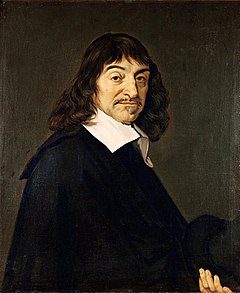
Some years ago I wrote something and in it referenced the term “liberal religion.” One reader, a theologically trained person, in fact a Roman Catholic priest, wrote to me that he was concerned that a political term like “liberal” would be attached to that word “religion.” He thought it an unfortunate pairing of terms.
I was surprised that he was unaware that the term liberal religion is a long established descriptor for a style of spirituality and a marker for several strands of Western religion. And, in fact, today this is also an appropriate descriptor for some religions from the East, and not exclusively for their Western manifestations.
Specifically, in the light of the rise of Buddhist Modernism, I think having some sense of that term “liberal religion,” how it came about, and what it means, might be helpful to those engaged in that conversation, sometimes debate. And it might be interesting to others, as well. So, here you go.
Liberal religion has several distinctive marks: it has a naturalistic bias and engages the truth claims of the tradition, whatever that tradition might be, critically. An early alternative term was “rational religion.” This spiritual approach brings an emphasis on rationality, naturalism, and, a broad humanism. While it originates within the Christian tradition there are currents of liberal religion in perhaps all established religious traditions. As I’ve already noted, including Buddhism.
While there are antecedents to liberal religion throughout history, it emerges as a coherent approach in Europe and the Americas in the middle of the Eighteenth century. The Encyclopedia Britannica article on Theological Liberalism (a highly recommended read) suggests it basically starts with Rene Descartes in the Seventeenth century.
“In designating the thinking self as the primary substance from which the existence of other realities was to be deduced (except that of God), Descartes initiated a mode of thinking that remained in force through the 19th century and laid the ground for the presuppositions of this modern consciousness: (1) confidence in human reason, (2) primacy of the person, (3) immanence of God, and (4) meliorism (the belief that human nature is improvable and is improving).”
Other significant figures in this forming period would include Gottfried Leibniz, John Locke, Samuel Clarke, and my personal favorite of the lot, Baruch Spinoza. However, it doesn’t end there. Liberal religion would continue to evolve from the late Eighteenth century and well into the Nineteenth, in this period influenced by the rise of Romanticism. As the Encyclopedia Britannica article tells us, through an assertion of “the uniqueness of the individual and the consequent significance of individual experience as a distinctive source of infinite meaning, this premium upon personality and upon individual creativity exceeded every other value.”
In the Americas this would result in the rise of Unitarianism, Universalism, and particularly with the rise of the Romantic influence within Unitarianism, Transcendentalism. But the influences of this rising liberal religion could be seen throughout American Protestantism, as well as among some Catholics.
And there is a third evolutionary phase to liberal religion. Starting in the middle of the Nineteenth century two things happened. First, the rapid advances in science and particularly the work of Charles Darwin and others who upended generations of assumptions about natural history as presented in the Bible. Second, Modernism, a term first associated with a critical and humanist approach within the Catholic Church, also began to inform liberal religion. As that article in the Britannica notes, this led to a revolutionary approach. “A determined course emerged among Modernists to bring religious thought into accord with modern knowledge and to solve issues raised by modern culture.” In short, humanism.
So, this approach to religion derived from the European Enlightenment, washed through the Romantics, and then modern scientific and humanistic approaches to life writ broadly, after marking Christianity gradually began to influence other religions. For instance, when Reform Judaism emerged at the end of the Nineteenth century many of the founders called their community “liberal Judaism.” One liberal religious tradition with roots in Christianity, Unitarian Universalism has moved sufficiently beyond the truth claims, and maybe more importantly, the symbols of normative Christianity that many, both observers and from within, argue it is no longer a Christian religion. Others, both observers, and from within, disagree.
The incursions of modernity across the globe has included with it the seeds of liberal religion. And so, as the Wikipedia article on “religious liberalism” tells us today some “Examples of liberal movements within Islam are Progressive British Muslims (formed following the 2005 London terrorist attacks, defunct by 2012), British Muslims for Secular Democracy (formed 2006), or Muslims for Progressive Values (formed 2007).”
And most critically, while “Eastern religions were not immediately affected by liberalism and Enlightenment thought…” Nonetheless, in the wake of contact with Western philosophical positions, particularly in the Eighteenth and Nineteenth centuries, those same spiritual dynamics birthing Christian liberal religion have birthed a number of liberal religious expressions. Including a range of “Hindu reform movements (that) emerged in British India in the 19th century.”
Additionally, the article tells us “Buddhist modernism (or “New Buddhism”) arose in its Japanese form as a reaction to the Meiji Restoration, and was again transformed in the United States of America from the 1930s, notably giving rise to modern Zen Buddhism.”
While I’m sure a number of contemporary Zen Buddhists would disagree with that last characterization, I think it is arguable. And I can go a bit farther. I do believe that Zen Buddhism, possibly together with the emerging Western Vipassana movement, are the most modernist influenced Buddhist traditions. The Wikipedia article on Modernist Buddhism tells us:
“Buddhist modernism (also referred to as Modern Buddhism, modernist Buddhism and Neo-Buddhism) are new movements based on modern era reinterpretations of Buddhism. David McMahan states that modernism in Buddhism is similar to those found in other religions. The sources of influences have variously been an engagement of Buddhist communities and teachers with the new cultures and methodologies such as “western monotheism; rationalism and scientific naturalism; and Romantic expressivism”. The influence of monotheism has been the internalization of Buddhist gods to make it acceptable in modern West, while scientific naturalism and romanticism has influenced the emphasis on current life, empirical defense, reason, psychological and health benefits.”
While I would argue with the article’s list of what consists of modernist Buddhists, I think the article makes a compelling argument in its “overview” section.
“Buddhist modernism emerged during the late 19th-century and early 20th-century colonial era, as a co-creation of Western Orientalists and reform-minded Buddhists. It appropriated elements of Western philosophy, psychological insights as well as themes increasingly felt to be secular and proper. It de-emphasized or denied ritual elements, cosmology, gods, icons, rebirth, karma, monasticism, clerical hierarchy and other Buddhist concepts. Instead, modernistic Buddhism has emphasized interior exploration, satisfaction in the current life, and themes such as cosmic interdependence. Some advocates of Buddhist modernism claim their new interpretations to be original teachings of the Buddha, and state that the core doctrines and traditional practices found in Theravada, Mahayana and Vajrayana Buddhism are extraneous accretions that were interpolated and introduced after Buddha died. According to McMahan, Buddhism of the form found in the West today has been deeply influenced by this modernism.”
For me a critical point in that paragraph is that word “co-creation.” Could Buddhism evolve a modernist approach without Western influences? Of course. A point that Justin Whitaker’s insightful review of David McMahan’s magisterial The Making of Buddhist Modernism underscores. And, rightly so. That said, in order to have a comprehensive grasp of the subject, this book is a must read. Although I would add to Justin’s cautions my own caveat that Professor McMahan does not address the question of liberal religion, which I believe is critical to the questions of how the assumptions of modernity in fact become Buddhist assumptions.
In studying the emerging of modernist Buddhism I think it critical to avoid two excesses. The one is “Orientalism,” a belief that reforms within Buddhism had to come from the West due to some deficiency in the tradition. The other is creating a firewall and denying any sort of connection across traditions. Me, I believe the fact on the ground is that there were in the nineteenth century some significant encounters. And, it is hard to believe there wasn’t some kind of feedback loop happening. In fact that seems pretty obvious, particularly if we don’t try to find an exact one to one meeting, like a Theravada monk reading Descartes in the middle of the Nineteenth century, but rather where the atmosphere that births liberal religion also influences the Buddhisms arising in the West and the feedback loops to the original source communities. This all noted, the article continues.
“Buddhist Modernist traditions are reconstructions and a reformulation with emphasis on rationality, meditation, compatibility with modern science about body and mind. In the modernistic presentations, Theravada, Mahayana and Vajrayana Buddhist practices are “detraditionalized“, in that they are often presented in such a way that occludes their historical construction. Instead, Buddhist Modernists often employ an essentialized description of their tradition, where key tenets are reformulated in universal terms, and the modernistic practices significantly differ from Asian Buddhist communities with centuries-old traditions.”
So, the bottom line here. If we want to understand Buddhist modernism, there is little doubt we need to be familiar with the currents of liberal religion. How they tangle is not clear. That they do, is.
What is emerging I find exciting. Healing possibilities for the whole of humanity.
Previous Post

September 23, 2017
Enter Victoria Woodhull
Next Post
September 25, 2017 Pausing to Recall Lancelot Andrewes and His Amazing Bible
Browse Our Archives
Select a Category A Christmas Carol Abolitionist African-American Ahmadiyya Alan Watts Aldous Huxley Allen Ginsberg Amedkar Jayanti American politics American Zen Anaheim Zen Sangha Anglican Annie Besant April Fool Armageddon Art and Religion artificial intellegence Atheist Awakening B R Ambedkar Barlaam & Josaphat Beatnik Between Bhagavad Gita Bible biography birthday bodhisattva Bodhisattva Precepts Book burning Book of Common Prayer Book of Mormon Brahmo Samaj Buddha Buddhism Buddhist Buddhist Lord's Prayer Butterflies Calendars cartoons cat ChatGPT Chicken Tortilla Soup choices Christian atheism Christian mysticism Christian origins Christian Science Christian Zen Christianity Christianity and Buddhism christmas Christmas Truce Christopher Isherwood Church of Later Day Saints Cinco de Mayo circus covenant critical thinking culture D. T. Suzuki Dalit Buddhism Daniel Defoe Desert Fathers and Mothers dharma talk Dogen Donald Trump Dongshan's Five Ranks Dorothy Day dream Duty Easter ecology Edwin Arnold emptiness Empty Moon Zen Network Episcopal Church Eternal Now Ethics evolution existentialism Faith fantasy Fathers Day film film review fire Five Ranks Folk music food Form and emptiness Four Seals Francis of Assisi Francis Xavier Free thinker friendship George MacDonald Gerald Heard Glenn Taylor Webb God Good Friday Gospel of Gospel of Mark Gospel of Thomas grace Graduate Theological Unioin Graduate Theological Union Guanyin H R Blyth Hakuin Ekaku Hanamatsuri Hanukkah Harada Yasutani Zen Heart Sutra Henry David Thoreau Hermann Hesse Hinduism History and Religion history of religion Holy Spirit home Hospitality Icon Ides of March Isaac Newton Islam Islamic mysticism Jack Kerouac James Luther Adams Jiddu Krishnamurti Joan of Arc Johannes Gutenberg John Donne joke Judaism justice karma kensho King James Bible koan Koun Yamada Kyoto School Lewis Carrol Liberal Christianity Liberal Religion Life Plan Community Liminal literature Literature and Religion Liturgy Lord's Prayer Love Mahatma Gandhi Mahayana Martin Luther King Jr Mary Baker Eddy Mary Magdelene Mary Oliver Mayflower Compact Meditation memories memory metaphor money money and religioin Mormons Mother's Day movie review mysticism mythic Neighborhood Unitarian Universalist Church New Thought Nichiren Buddhism Nonduality not knowing Omar Khayyam Pacific School of Religion pagan Palm Sunday Passover peace Pentecost perennialism Phantastes Philip Kapleau philosophy Pilgrimage poetry Poetry and Religion politics Prayer Precepts Printing Press prophecy prophetic spirituality psychology Pure Land Queer religion queering religion Quietism Ram Mohan Roy rebirth recipe Relationships and religion religion religion and history Religious syncretism Resistance Retirement Retreat review Rissho Kosei Kai Ritual Robert Aitken Roshi Robert Ingersoll Rohatsu Romani religion Rosie the Riveter saints samadhi SanboZen Sangha Satyagraha science science and reigion science and religion science fiction seminary sermon Sesshin Sex and Religion Shinran Sikh Sikh tradition silence Social Justice Socially Engaged Buddhism Society and religion Soto Zen soul spiritual community spiritual practice Spirituality Sufism Suicide superstition Taoism Television Teresa of Avila Thanksgiving theological schools Theosophy Thomas Merton Time Transcendentalism Transcendentalist Trinitarian Trinity Uncategorized unitarian Unitarian Christianity Unitarian Universalist Universalism Vajrayana Vedanta Walking war Willa Cather William Ellery Channing wisdom women and religion women in religion World Teacher Writing zazen Zen Zen Center Zen inspired retriement zen meditation Zen Precepts Zen women
Select a Month September 2026 August 2026 July 2026 June 2026 May 2026 April 2026 March 2026 February 2026 January 2026 December 2025 November 2025 October 2025 September 2025 August 2025 July 2025 June 2025 May 2025 April 2025 March 2025 February 2025 January 2025 December 2024 November 2024 October 2024 September 2024 August 2024 July 2024 June 2024 May 2024 April 2024 March 2024 February 2024 January 2024 December 2023 November 2023 October 2023 September 2023 August 2023 July 2023 June 2023 May 2023 April 2023 March 2023 February 2023 January 2023 December 2022 November 2022 October 2022 September 2022 August 2022 July 2022 June 2022 May 2022 April 2022 March 2022 February 2022 January 2022 December 2021 November 2021 October 2021 September 2021 August 2021 July 2021 June 2021 May 2021 April 2021 March 2021 February 2021 January 2021 December 2020 November 2020 October 2020 September 2020 August 2020 July 2020 June 2020 May 2020 April 2020 March 2020 February 2020 January 2020 December 2019 November 2019 October 2019 September 2019 August 2019 July 2019 June 2019 May 2019 April 2019 March 2019 February 2019 January 2019 December 2018 November 2018 October 2018 September 2018 August 2018 July 2018 June 2018 May 2018 April 2018 March 2018 February 2018 January 2018 December 2017 November 2017 October 2017 September 2017 August 2017 July 2017 June 2017 May 2017 April 2017 March 2017 February 2017 January 2017 December 2016 November 2016 October 2016 September 2016 August 2016 July 2016 June 2016 May 2016 April 2016 March 2016 February 2016 January 2016 December 2015 November 2015 October 2015 September 2015 August 2015 July 2015 June 2015 May 2015 April 2015 March 2015 February 2015 January 2015 December 2014 November 2014 October 2014 September 2014 August 2014 July 2014 June 2014 May 2014 April 2014 March 2014 February 2014 January 2014 December 2013 November 2013 October 2013 September 2013 August 2013 July 2013 June 2013 May 2013 April 2013 March 2013 February 2013 January 2013 December 2012 November 2012 October 2012 September 2012 August 2012 July 2012 June 2012 May 2012 April 2012 March 2012 February 2012 January 2012 December 2011 November 2011 October 2011 September 2011 August 2011 July 2011 June 2011 May 2011 April 2011 March 2011 February 2011 January 2011 December 2010 November 2010 October 2010 September 2010 August 2010 July 2010 June 2010 May 2010 April 2010 March 2010 February 2010 January 2010 December 2009 November 2009 October 2009 September 2009 August 2009 July 2009 June 2009 May 2009 April 2009 March 2009 February 2009 January 2009 December 2008 November 2008 October 2008 September 2008 August 2008 July 2008 June 2008 May 2008 April 2008 March 2008 February 2008 January 2008 December 2007 November 2007 October 2007 September 2007 August 2007 July 2007 June 2007 May 2007 April 2007 March 2007 February 2007 January 2007 December 2006 November 2006 October 2006 September 2006
Follow Us!
TAKE THE
Religious Wisdom Quiz
What is the main theme of the Parable of the Two Sons?
Select your answer to see how you score.
Obedience is proved by actions Firstborns are favored Repentance is easy Honesty is best
Related posts from Monkey Mind

Keizan Jokin: The Zen Master Ancestor You Don't...

What Zen Practice Actually Does With Anger

Nanquan Cuts the Cat: A Jesuit commentary on...

On Taking Refuge in the Dharma
TRENDING AT PATHEOS Buddhist

Nearly every morning, I make the drive to Detroit with my high-school-age...

The Real AI Story Is Adoption Without Trust
Artificial intelligence has crossed a political threshold. It is no longer a...

A new article, written by Jeff Lindsay and Gale L. Pooley,...

Swimfan: Forgotten Aughts Pleasures
This is a recovery effort. In 2002, My Big Fat Greek Wedding...

Top Three Anti-Catholic Lies About Catholicism
This is my initial transcript for the video, "THE 3 WORST...

Pope Leo Celebrates Mass for Nurses & Docs...
I don't have any idea how he did it, but Pope Leo...
view all Buddhist blogs
Ad-Free & Subscriber Log-In Subscription Support
- About Us
- 2026 Calendar
- Videos
- Podcasts
- Library of World Religions
- Faith In Media Tracker
- Advertise With Us
- Write for Us
- Privacy Policy
- Terms of Service
- Do Not Sell My Data
- Contact Us
- Radiant Digital
- Manage Newsletter Subscriptions
- Unsubscribe From Notifications
- Sitemap
Copyright 2008-2026, Patheos. All rights reserved.
Subscription Support Ad-Free & Subscriber Log-In
Follow Patheos