
BuddhistCatholicContemplativeEvangelicalGeneral ChristianHinduJewishLatter-day SaintMuslimNew VisionsProgressive Christian
Beliefs
- Buddhist
- Catholic
- Contemplative
- Evangelical
- General Christian
- Hindu
- Jewish
- Latter-day Saint
- More Voices
- Muslim
- New Visions
- Pagan
- Progressive Christian
Topics
- Religion News
- Food and Religion
- Sports and Religion
- Religious Art
- Religious Music and Entertainment
- Religious Events
- History and Religion
- Style and Religion
- Politics and Religion
- Women in Religion
- Recreation Outdoors and Religion
- Business Finance and Religion
- Careers Workplace and Religion
- Education and Religion
- Family Parenting and Religion
- Health Fitness and Religion
- Home and Religion
- Relationships and Religion
- Technology and Religion
- Travel and Religion
Columnists
- Buddhist Columnists
- Business Finance and Religion Columnists
- Careers Workplace and Religion Columnists
- Catholic Columnists
- Contemplative Columnists
- Education and Religion Columnists
- Evangelists Columnists
- Family Parenting and Religion Columnists
- General Christian Columnists
- Health Fitness and Religion Columnists
- Hindu Columnists
- History and Religion Columnists
- Home and Religion Columnists
- Jewish Columnists
- More Voices Columnists
- Latter Day Columnists
- Muslim Columnists
- New Visions Columnists
- Nonreligious Columnists
- Pagan Columnists
- Politics and Religion Columnists
- Progressive Columnists
- Recreation Outdoors and Religion Columnists
- Relationships and Religion Columnists
- Religion News Columnists
- Religious Art Columnists
- Religious Events Columnists
- Religious Music and Entertainment Columnists
- Sports and Religion Columnists
- Style and Religion Columnists
- Technology and Religion Columnists
- Travel and Religion Columnists
- Women in Religion Columnists
Resource Library
- 2026 Calendar
- Library of World Religions
- The 100 Most Holy Places on Earth
- Patheos Answers
- Podcasts
- Videos
- Faith Leaders Database
- Anglican Episcopalian
- Bahai
- Baptist
- Buddhism
- Christianity
- Confucianism
- Eastern Orthodoxy
- Hinduism
- Holiness and Pentecostal
- ISKCON
- Islam
- Judaism
- Lutheran
- Methodist
- The Church of Jesus Christ of Latter-day Saints
- New Age
- Paganism
- Presbytarian and Reformed
- Protestantism
- Religion Behind the Scenes
- Roman Catholic
- Scientology
- Shia Islam
- Sikhism
- Sufism
- Sunni Islam
- Taoism
- Zen
- See all religions
Research Tools
 Ad-Free & Subscriber Log-In Subscription Support
Ad-Free & Subscriber Log-In Subscription Support
Follow Patheos 

- Trending:
- Forgiveness
- |
- Marriage
- |
- Consciousness
- |
- Death Penalty
- |
- Election
- |
- Halloween

- Home
- Buddhist
- Noting the Birth of the Universalist Sufi Saint Hazrat Inayat Khan
Noting the Birth of the Universalist Sufi Saint Hazrat Inayat Khan
Last updated on: February 5, 2018 at 4:24 pm by James Ford
Noting the Birth of the Universalist Sufi Saint Hazrat Inayat Khan 2018-02-05T16:24:53-08:00 James Ford
Patheos Explore the world's faith through different perspectives on religion and spirituality! Patheos has the views of the prevalent religions and spiritualities of the world.
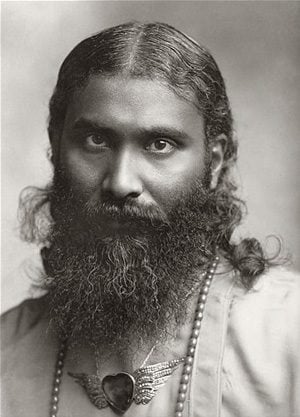
One hundred and thirty five years ago on this day, the 5th of July, 1882, Inayat Khan Rehmat Khan Pathan was born in Vadodara Gujarat. He is more commonly known as Hazrat Inayat Khan, Hazrat being an honorific. And sometimes by the title Pir-O-Murshid, which could be understood as senior teacher and head of a Sufi order.
Inayat Khan came from a family of poets and musicians. And, critically, he was an initiate within three Sufi orders. Principally he was a teacher within the Nizamiyya sub-branch of the Chisti Order.
In 1910 Inayat Khan came West, touring as master musician. But, he quickly shifted his focus to teaching Sufism. He married an American, and had four children. The most famous outside of his community is probably his daughter Noor-un-Nisa, who was executed by the Nazis as an Allied Special Operations agent during the Second World War.
Hazrat Inayat Khan’s order was one of several emergent spiritualities blending Eastern and Western wisdom to burst on the scene in the early decades of the twentieth century. As an eclectic he developed a universalist Sufism. A significant feature was not requiring people to convert to Islam to study with him or to receive his initiations. This approach, while historically defensible, there was a long tradition in India of non Muslims being accepted into Sufi orders, this practice is, however, not accepted within the mainstream of Islamic Sufism. Reading into the subject one will find some strong denunciations of the movement because of this.
And in looking at the ten principals of this universal Sufism, one can see both why orthodox Muslims might object to it, and at the same time how compelling the message itself is.
1) There is one God; the Eternal, the Only Being; None exists save He.
2) There is one master; the guiding spirit of all souls that constantly leads all followers toward the light.
3) There is one holy book; the sacred manuscript of nature, the only Scripture that can enlighten the reader.
4) There is one religion; unswerving progress in the right direction toward the Ideal, which fulfills every soul’s life purpose.
5) There is one law; the law of reciprocity, which can be observed by a selfless conscience, together with a sense of awakened justice.
6) There is one brotherhood; the human brotherhood which unites the children of earth indiscriminately in the fatherhood of God. This was later adapted by followers to; “There is one Family, the Human Family, which unites the Children of Earth indiscriminately in the Parenthood of God.”
7) There is one moral; the love which springs forth from self-denial and blooms in deeds of beneficence. … (later alternative; “which springs forth from a willing heart, surrendered in service to God and Humanity, and which blooms in deeds of beneficence”).
8) There is one object of praise; the beauty which uplifts the heart of its worshipper through all aspects from the seen to the unseen.
9) There is one truth; true knowledge of our being, within and without, which is the essence of Wisdom.
10) There is one path; annihilation of the false ego in the real (later alternative; “the effacement of the limited self in the Unlimited”), which raises the mortal to immortality, in which resides all perfection.
While, as I noted, highly controversial within the orthodox Muslim community, his message of love, harmony, and beauty has continued to find resonances ever since. Here’s a delightful account of his meeting with the Zen priest Nyogen Senzaki told by the old priest. I find it an interesting expression of the non dual perspective which I personally consider the living current that informs all mystical traditions.
In 1927, on his first visit back to India in nearly twenty years, he unexpectedly died of influenza. Inayat Khan was only forty-five years old. His principal heir shifted her affiliation to the Zoroastrian born Hindu sage Meher Baba, leaving the remanent of Inayat Khan’s organization in disarray. Eventually Inayat Khan’s sons Vilayat Inayat Khan, and Hidayat Inayat Khan, and the American Samuel Lewis emerged as the principal leaders of Hazrat Inayat Khan’s inheritance.
I spent a fruitful period between my Zen monastic experience and my in-depth study of koan introspection investigating among other things Inayat Khan’s Sufism. While it did not prove to be my life path, it marked me significantly, and I remain grateful for its teachers and teachings. Of these I would hold up in particular Samuel Lewis’ heirs Murshids Wali Ali Meyer and Moineddin Jablonski. Also, while staying at the Inayat Khan Sufi khankah in San Francisco, I met Jan Seymour. As it happens Sufism wasn’t going to prove to be her path either. But, our personal paths did intertwine. We’ve now been married thirty-five years. So, my debt to this school is complex as well as profound.
Today a new generation of practitioners and leaders has come to the fore, allowing Inayat Khan’s Universalist Sufi Message to flourish in several organizations. There are several widely respected teachers of Inayat Khan’s universalist Sufism. Of these probably the best known is Zia Inayat Khan, Vilayat Khan’s eldest son, and the grandson of the master Hazrat Inayat Khan.
Through these teachers and organizations I feel confident saying this movement started by Hazrat Inayat Khan is flourishing, and will continue for some time yet to come, a healing balm for broken hearts…
Previous Post

July 4, 2017
A Thought on First Thoughts
Next Post
July 6, 2017 I Ordained as a Soto Zen Buddhist Priest
Browse Our Archives
Select a Category A Christmas Carol Abolitionist African-American Ahmadiyya Alan Watts Aldous Huxley Allen Ginsberg Amedkar Jayanti American politics American Zen Anaheim Zen Sangha Anglican Annie Besant April Fool Armageddon Art and Religion artificial intellegence Atheist Awakening B R Ambedkar Barlaam & Josaphat Beatnik Between Bhagavad Gita Bible biography birthday bodhisattva Bodhisattva Precepts Book burning Book of Common Prayer Book of Mormon Brahmo Samaj Buddha Buddhism Buddhist Buddhist Lord's Prayer Butterflies Calendars cartoons cat ChatGPT Chicken Tortilla Soup choices Christian atheism Christian mysticism Christian origins Christian Science Christian Zen Christianity Christianity and Buddhism christmas Christmas Truce Christopher Isherwood Church of Later Day Saints Cinco de Mayo circus covenant critical thinking culture D. T. Suzuki Dalit Buddhism Daniel Defoe Desert Fathers and Mothers dharma talk Dogen Donald Trump Dongshan's Five Ranks Dorothy Day dream Duty Easter ecology Edwin Arnold emptiness Empty Moon Zen Network Episcopal Church Eternal Now Ethics evolution existentialism Faith fantasy Fathers Day film film review fire Five Ranks Folk music food Form and emptiness Four Seals Francis of Assisi Francis Xavier Free thinker friendship George MacDonald Gerald Heard Glenn Taylor Webb God Good Friday Gospel of Gospel of Mark Gospel of Thomas grace Graduate Theological Unioin Graduate Theological Union Guanyin H R Blyth Hakuin Ekaku Hanamatsuri Hanukkah Harada Yasutani Zen Heart Sutra Henry David Thoreau Hermann Hesse Hinduism History and Religion history of religion Holy Spirit home Hospitality Icon Ides of March Isaac Newton Islam Islamic mysticism Jack Kerouac James Luther Adams Jiddu Krishnamurti Joan of Arc Johannes Gutenberg John Donne joke Judaism justice karma kensho King James Bible koan Koun Yamada Kyoto School Lewis Carrol Liberal Christianity Liberal Religion Life Plan Community Liminal literature Literature and Religion Liturgy Lord's Prayer Love Mahatma Gandhi Mahayana Martin Luther King Jr Mary Baker Eddy Mary Magdelene Mary Oliver Mayflower Compact Meditation memories memory metaphor money money and religioin Mormons Mother's Day movie review mysticism mythic Neighborhood Unitarian Universalist Church New Thought Nichiren Buddhism Nonduality not knowing Omar Khayyam Pacific School of Religion pagan Palm Sunday Passover peace Pentecost perennialism Phantastes Philip Kapleau philosophy Pilgrimage poetry Poetry and Religion politics Prayer Precepts Printing Press prophecy prophetic spirituality psychology Pure Land Queer religion queering religion Quietism Ram Mohan Roy rebirth recipe Relationships and religion religion religion and history Religious syncretism Resistance Retirement Retreat review Rissho Kosei Kai Ritual Robert Aitken Roshi Robert Ingersoll Rohatsu Romani religion Rosie the Riveter saints samadhi SanboZen Sangha Satyagraha science science and reigion science and religion science fiction seminary sermon Sesshin Sex and Religion Shinran Sikh Sikh tradition silence Social Justice Socially Engaged Buddhism Society and religion Soto Zen soul spiritual community spiritual practice Spirituality Sufism Suicide superstition Taoism Television Teresa of Avila Thanksgiving theological schools Theosophy Thomas Merton Time Transcendentalism Transcendentalist Trinitarian Trinity Uncategorized unitarian Unitarian Christianity Unitarian Universalist Universalism Vajrayana Vedanta Walking war Willa Cather William Ellery Channing wisdom women and religion women in religion World Teacher Writing zazen Zen Zen Center Zen inspired retriement zen meditation Zen Precepts Zen women
Select a Month September 2026 August 2026 July 2026 June 2026 May 2026 April 2026 March 2026 February 2026 January 2026 December 2025 November 2025 October 2025 September 2025 August 2025 July 2025 June 2025 May 2025 April 2025 March 2025 February 2025 January 2025 December 2024 November 2024 October 2024 September 2024 August 2024 July 2024 June 2024 May 2024 April 2024 March 2024 February 2024 January 2024 December 2023 November 2023 October 2023 September 2023 August 2023 July 2023 June 2023 May 2023 April 2023 March 2023 February 2023 January 2023 December 2022 November 2022 October 2022 September 2022 August 2022 July 2022 June 2022 May 2022 April 2022 March 2022 February 2022 January 2022 December 2021 November 2021 October 2021 September 2021 August 2021 July 2021 June 2021 May 2021 April 2021 March 2021 February 2021 January 2021 December 2020 November 2020 October 2020 September 2020 August 2020 July 2020 June 2020 May 2020 April 2020 March 2020 February 2020 January 2020 December 2019 November 2019 October 2019 September 2019 August 2019 July 2019 June 2019 May 2019 April 2019 March 2019 February 2019 January 2019 December 2018 November 2018 October 2018 September 2018 August 2018 July 2018 June 2018 May 2018 April 2018 March 2018 February 2018 January 2018 December 2017 November 2017 October 2017 September 2017 August 2017 July 2017 June 2017 May 2017 April 2017 March 2017 February 2017 January 2017 December 2016 November 2016 October 2016 September 2016 August 2016 July 2016 June 2016 May 2016 April 2016 March 2016 February 2016 January 2016 December 2015 November 2015 October 2015 September 2015 August 2015 July 2015 June 2015 May 2015 April 2015 March 2015 February 2015 January 2015 December 2014 November 2014 October 2014 September 2014 August 2014 July 2014 June 2014 May 2014 April 2014 March 2014 February 2014 January 2014 December 2013 November 2013 October 2013 September 2013 August 2013 July 2013 June 2013 May 2013 April 2013 March 2013 February 2013 January 2013 December 2012 November 2012 October 2012 September 2012 August 2012 July 2012 June 2012 May 2012 April 2012 March 2012 February 2012 January 2012 December 2011 November 2011 October 2011 September 2011 August 2011 July 2011 June 2011 May 2011 April 2011 March 2011 February 2011 January 2011 December 2010 November 2010 October 2010 September 2010 August 2010 July 2010 June 2010 May 2010 April 2010 March 2010 February 2010 January 2010 December 2009 November 2009 October 2009 September 2009 August 2009 July 2009 June 2009 May 2009 April 2009 March 2009 February 2009 January 2009 December 2008 November 2008 October 2008 September 2008 August 2008 July 2008 June 2008 May 2008 April 2008 March 2008 February 2008 January 2008 December 2007 November 2007 October 2007 September 2007 August 2007 July 2007 June 2007 May 2007 April 2007 March 2007 February 2007 January 2007 December 2006 November 2006 October 2006 September 2006
Follow Us!
TAKE THE
Religious Wisdom Quiz
"For all have sinned, and all have fallen short of the ______ of God."
Select your answer to see how you score.
Standards Expectations Sight Glory
Related posts from Monkey Mind

The American Unitarian Association Marks Two Hundred Years

Evelyn Underhill's Practical Guide to Prayer

Alan Watts for Good and for Ill
Thomas and the Canonical Gospels: Shared Sayings
TRENDING AT PATHEOS Buddhist

Letters on Living the Faith by C.S. Lewis
Most of us met C.S. Lewis as a public intellectual. Mere Christianity....

When Halloween Unmasks Married Hearts
Written by Dr. David K. Ewen from Eternal Truth Bible College Behind...

Aristotle. He’s been called the father of logic, the father of the...

Methodist Central Hall and Westminster Abbey
Situated on the same square is Methodist Central Hall and Westminster Abbey. ...

57th Dove Awards Honor Dolly Parton, Crown New...
On gospel music’s biggest night, the 57th annual GMA Dove Awards honored...

The First Eucharistic Controversy: Christ’s Real Presence
For Catholics, the Eucharist is the source and summit of the Christian...
view all Buddhist blogs
Ad-Free & Subscriber Log-In Subscription Support
- About Us
- 2026 Calendar
- Videos
- Podcasts
- Library of World Religions
- Faith In Media Tracker
- Advertise With Us
- Write for Us
- Privacy Policy
- Terms of Service
- Do Not Sell My Data
- Contact Us
- Radiant Digital
- Manage Newsletter Subscriptions
- Unsubscribe From Notifications
- Sitemap
Copyright 2008-2026, Patheos. All rights reserved.
Subscription Support Ad-Free & Subscriber Log-In
Follow Patheos