
BuddhistCatholicContemplativeEvangelicalGeneral ChristianHinduJewishLatter-day SaintMuslimNew VisionsProgressive Christian
Beliefs
- Buddhist
- Catholic
- Contemplative
- Evangelical
- General Christian
- Hindu
- Jewish
- Latter-day Saint
- More Voices
- Muslim
- New Visions
- Pagan
- Progressive Christian
Topics
- Religion News
- Food and Religion
- Sports and Religion
- Religious Art
- Religious Music and Entertainment
- Religious Events
- History and Religion
- Style and Religion
- Politics and Religion
- Women in Religion
- Recreation Outdoors and Religion
- Business Finance and Religion
- Careers Workplace and Religion
- Education and Religion
- Family Parenting and Religion
- Health Fitness and Religion
- Home and Religion
- Relationships and Religion
- Technology and Religion
- Travel and Religion
Columnists
- Buddhist Columnists
- Business Finance and Religion Columnists
- Careers Workplace and Religion Columnists
- Catholic Columnists
- Contemplative Columnists
- Education and Religion Columnists
- Evangelists Columnists
- Family Parenting and Religion Columnists
- General Christian Columnists
- Health Fitness and Religion Columnists
- Hindu Columnists
- History and Religion Columnists
- Home and Religion Columnists
- Jewish Columnists
- More Voices Columnists
- Latter Day Columnists
- Muslim Columnists
- New Visions Columnists
- Nonreligious Columnists
- Pagan Columnists
- Politics and Religion Columnists
- Progressive Columnists
- Recreation Outdoors and Religion Columnists
- Relationships and Religion Columnists
- Religion News Columnists
- Religious Art Columnists
- Religious Events Columnists
- Religious Music and Entertainment Columnists
- Sports and Religion Columnists
- Style and Religion Columnists
- Technology and Religion Columnists
- Travel and Religion Columnists
- Women in Religion Columnists
Resource Library
- 2026 Calendar
- Library of World Religions
- The 100 Most Holy Places on Earth
- Patheos Answers
- Podcasts
- Videos
- Faith Leaders Database
- Anglican Episcopalian
- Bahai
- Baptist
- Buddhism
- Christianity
- Confucianism
- Eastern Orthodoxy
- Hinduism
- Holiness and Pentecostal
- ISKCON
- Islam
- Judaism
- Lutheran
- Methodist
- The Church of Jesus Christ of Latter-day Saints
- New Age
- Paganism
- Presbytarian and Reformed
- Protestantism
- Religion Behind the Scenes
- Roman Catholic
- Scientology
- Shia Islam
- Sikhism
- Sufism
- Sunni Islam
- Taoism
- Zen
- See all religions
Research Tools
 Ad-Free & Subscriber Log-In Subscription Support
Ad-Free & Subscriber Log-In Subscription Support
Follow Patheos 

- Trending:
- Forgiveness
- |
- Marriage
- |
- Consciousness
- |
- Death Penalty
- |
- Election
- |
- Halloween

- Home
- Buddhist
- Saving Ghosts: A Zen Tale
Saving Ghosts: A Zen Tale
Last updated on: May 13, 2017 at 1:00 am by James Ford
Saving Ghosts: A Zen Tale 2017-05-12T18:40:04-07:00 James Ford
Patheos Explore the world's faith through different perspectives on religion and spirituality! Patheos has the views of the prevalent religions and spiritualities of the world.
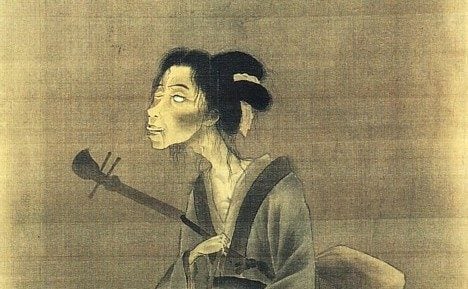
Master Wuzu asked one of his students, “The woman Chien and her spirit had separated. Tell me, which is the true Chien?”
Wumenguan, The Gateless Gate, Case 35.
The Zen teacher Wuzu loved to formulate spiritual questions out of folklore. This koan is based in a much loved tale from old China. Like the best of ghost stories, no one knows from where it originally comes. I gather there are at least three traditional versions floating around. Here’s a fourth as I’ve heard it.
Once upon a time, in a distant province of the great Middle Kingdom, there was a kindly man, a widower, named Changkien. He lived in a lovely village on the shores of a small river that fed into the great Yellow. He had been a hard worker and was lucky and had become a merchant of some repute. Changkien had a single daughter, her mother having died in childbirth. Her name was Chien.
Changkien adored his daughter and assured that she was given every best he could, even teaching her to read at a time when that was not done. Also, he had taken into his household an orphaned boy, a distant relative. His name was Wangchou. Changkien raised the boy as his nephew, which in that time and place meant a great deal.
The children were both bright and lively and quickly became inseparable. One day, observing their intent play together, Changkien joked that they were a perfect couple and would have to marry some day. Now, in this place and time, childhood betrothals were the norm. So, the two children believed they were committed to marry someday.
Well, the years passed, and Changkien decided it was time to find a good marriage for his daughter. He had no memory of what had been meant to be a small joke long before. He went to the village marriage broker and found another successful merchant whose wife had died the year before, and was now looking for a spouse. He knew the man was a bit of a sharp trader and nearly his own age, but if his daughter married this man, a comfortable life would be assured for her. So, he entered into negotiations. As a kindly man, as soon as he came to a satisfactory arrangement with the merchant, he told his daughter. His nephew was there as well.
Chien and Wangchou were stunned. Changkien took their silence as we often do, as a canvas on which to paint whatever message we want, and he felt they were both pleased with his good work on behalf of his daughter. He also realized he had not yet thought about his young charge and began to think about another family in the village who had a daughter that might make a good match. He wasn’t too worried about Wangchou’s future because early on the boy had shown an amazing talent with woodworking. In fact, the boy had made nearly half the household furniture.
That night Wangchou packed up his meager belongings, threw them into a canoe and was about to launch into the night, but before he could push off he heard his name called. It was Chien. She ran up to him and they kissed, kissed as lovers for the first time. Silently she threw her own small bundle into the canoe and they slipped away downstream.
Years passed, they had married, Wangchou had become a successful furniture maker, and they had three children of their own. But Chien never forgot her father and her love for him. The truth be told, Wangchou also missed the old man who was the closest he would ever have to a father. Finally they decided it was time to return up stream to their home village and, if at all possible, to make peace with Changkien.
They left the children in the care of a local family, packed the old canoe with some presents, and made their way back to the village. It was evening when they arrived near the family house. Wangchou asked his wife to wait and to allow him to go up to the house and make sure that Changkien would receive them.
He walked through the quickly darkening evening, each tree and the path itself sparking memories. Even the smells were familiar and somehow comforting. Finally he came to the door and for the first time in his life instead of just walking in he knocked. It took a while before Changkien came to the door. He was clearly older, a little more bent over, but his eye had the same sparkle Wangchou remembered from his childhood.
The old man took a moment to recognize his former ward, let out a great laugh, and against all the protocols of their culture, embraced Wangchou, holding him tightly. “Boy, boy, I’m so glad you’re home. I’ve never stopped thinking about you since you disappeared that night all those years ago.”
“So, you’ve forgiven us?” asked Wangchou, hesitantly.
“All is forgiven! I’m just so glad you’re back.” Then a pause. “What do you mean, us?”
Wangchou felt a shiver run down his back. “Why Chien and me.”
There was a horrible silence. “I don’t know what you mean, Wangchou.” Another pause. “The night you left Chien took to her bed, fainted away, and has been in a coma ever since.” He took the young man by the hand and they walked up the stairs to Chien’s old room. And sure enough lying asleep in the middle of the bed was a deathly pale Chien.
More silence. Who knows what stories the two men were telling themselves within that silence, but finally Wangchaou said, “Dear uncle, I have to show you something.” And with that they walked downstairs and out of the house, down the path toward the river. They were about halfway there when Chien appeared, dressed in the clothing she had worn from that morning, but wild eyed and running. However, as she came to them she didn’t pause but instead continued on past them toward the house.
As the men turned they saw the other Chien, dressed in a white nightgown also running toward them. They quickly realized she was not in fact running toward them. Instead the two Chien’s ran right up to each other, grabbed each other, hugged each other, and gradually each melted into the other.
That’s the story. And out of it the Zen teacher Wuzu asks us, “Who is the true Chien?”
Now there’s another koan, question, riddle, invitation to encounter who we are at the deepest levels that has no backstory at all. It goes, “Save a ghost.” So, for all of us, how do we save a ghost? And who is that ghost that needs saving? Within that question we are asked who is the true Chien? And what has Chien got to do with our lives?—and I mean that as intimately as possible, your life and my life.
It doesn’t matter if there are ghosts in some objective sense. At least it doesn’t matter for the question we’re being asked here. What are the ghosts of your life? What has torn you apart? What longing? What angry moment? What idea do you hold onto no matter what contradictory information you get? What fragment of your heart is following its own current into the graveyard, plucking at the shirtsleeves of passersby, whispering not quite fully formed sentences of longing or anger?
It’s not “save a ghost.” It’s “save this ghost.” Bring that fragment of your heart, whatever it is, this ghost, to wholeness. So, of course another question is buried within this statement. What is wholeness? Is it some smooth unity that admits no disruption? Or is it a fullness of many fragments brought together within the skin bag that is our sense of self? Let’s just say for the moment we’re woven out of many things, some good, some not so good, but it is all of them taken together that makes us. If that is true, what would the whole look like? Like home?
Where are the various parts of the Chien that are you and me? And what brings them together into a wholeness that does not deny our fullness? Home? Is this our true home? Think about that and then how it is possible to not call out to all those hungry spirits wandering the world. Call them home.
Previous Post

May 12, 2017
Reclaiming Enlightenment in Zen: A Small Meditation
Next Post
May 14, 2017 The Last Witchcraft Trial in America. Well, Sort of...
Browse Our Archives
Select a Category A Christmas Carol Abolitionist African-American Ahmadiyya Alan Watts Aldous Huxley Allen Ginsberg Amedkar Jayanti American politics American Zen Anaheim Zen Sangha Anglican Annie Besant April Fool Armageddon Art and Religion artificial intellegence Atheist Awakening B R Ambedkar Barlaam & Josaphat Beatnik Between Bhagavad Gita Bible biography birthday bodhisattva Bodhisattva Precepts Book burning Book of Common Prayer Book of Mormon Brahmo Samaj Buddha Buddhism Buddhist Buddhist Lord's Prayer Butterflies Calendars cartoons cat ChatGPT Chicken Tortilla Soup choices Christian atheism Christian mysticism Christian origins Christian Science Christian Zen Christianity Christianity and Buddhism christmas Christmas Truce Christopher Isherwood Church of Later Day Saints Cinco de Mayo circus covenant critical thinking culture D. T. Suzuki Dalit Buddhism Daniel Defoe Desert Fathers and Mothers dharma talk Dogen Donald Trump Dongshan's Five Ranks Dorothy Day dream Duty Easter ecology Edwin Arnold emptiness Empty Moon Zen Network Episcopal Church Eternal Now Ethics evolution existentialism Faith fantasy Fathers Day film film review fire Five Ranks Folk music food Form and emptiness Four Seals Francis of Assisi Francis Xavier Free thinker friendship George MacDonald Gerald Heard Glenn Taylor Webb God Good Friday Gospel of Gospel of Mark Gospel of Thomas grace Graduate Theological Unioin Graduate Theological Union Guanyin H R Blyth Hakuin Ekaku Hanamatsuri Hanukkah Harada Yasutani Zen Heart Sutra Henry David Thoreau Hermann Hesse Hinduism History and Religion history of religion Holy Spirit home Hospitality Icon Ides of March Isaac Newton Islam Islamic mysticism Jack Kerouac James Luther Adams Jiddu Krishnamurti Joan of Arc Johannes Gutenberg John Donne joke Judaism justice karma kensho King James Bible koan Koun Yamada Kyoto School Lewis Carrol Liberal Christianity Liberal Religion Life Plan Community Liminal literature Literature and Religion Liturgy Lord's Prayer Love Mahatma Gandhi Mahayana Martin Luther King Jr Mary Baker Eddy Mary Magdelene Mary Oliver Mayflower Compact Meditation memories memory metaphor money money and religioin Mormons Mother's Day movie review mysticism mythic Neighborhood Unitarian Universalist Church New Thought Nichiren Buddhism Nonduality not knowing Omar Khayyam Pacific School of Religion pagan Palm Sunday Passover peace Pentecost perennialism Phantastes Philip Kapleau philosophy Pilgrimage poetry Poetry and Religion politics Prayer Precepts Printing Press prophecy prophetic spirituality psychology Pure Land Queer religion queering religion Quietism Ram Mohan Roy rebirth recipe Relationships and religion religion religion and history Religious syncretism Resistance Retirement Retreat review Rissho Kosei Kai Ritual Robert Aitken Roshi Robert Ingersoll Rohatsu Romani religion Rosie the Riveter saints samadhi SanboZen Sangha Satyagraha science science and reigion science and religion science fiction seminary sermon Sesshin Sex and Religion Shinran Sikh Sikh tradition silence Social Justice Socially Engaged Buddhism Society and religion Soto Zen soul spiritual community spiritual practice Spirituality Sufism Suicide superstition Taoism Television Teresa of Avila Thanksgiving theological schools Theosophy Thomas Merton Time Transcendentalism Transcendentalist Trinitarian Trinity Uncategorized unitarian Unitarian Christianity Unitarian Universalist Universalism Vajrayana Vedanta Walking war Willa Cather William Ellery Channing wisdom women and religion women in religion World Teacher Writing zazen Zen Zen Center Zen inspired retriement zen meditation Zen Precepts Zen women
Select a Month September 2026 August 2026 July 2026 June 2026 May 2026 April 2026 March 2026 February 2026 January 2026 December 2025 November 2025 October 2025 September 2025 August 2025 July 2025 June 2025 May 2025 April 2025 March 2025 February 2025 January 2025 December 2024 November 2024 October 2024 September 2024 August 2024 July 2024 June 2024 May 2024 April 2024 March 2024 February 2024 January 2024 December 2023 November 2023 October 2023 September 2023 August 2023 July 2023 June 2023 May 2023 April 2023 March 2023 February 2023 January 2023 December 2022 November 2022 October 2022 September 2022 August 2022 July 2022 June 2022 May 2022 April 2022 March 2022 February 2022 January 2022 December 2021 November 2021 October 2021 September 2021 August 2021 July 2021 June 2021 May 2021 April 2021 March 2021 February 2021 January 2021 December 2020 November 2020 October 2020 September 2020 August 2020 July 2020 June 2020 May 2020 April 2020 March 2020 February 2020 January 2020 December 2019 November 2019 October 2019 September 2019 August 2019 July 2019 June 2019 May 2019 April 2019 March 2019 February 2019 January 2019 December 2018 November 2018 October 2018 September 2018 August 2018 July 2018 June 2018 May 2018 April 2018 March 2018 February 2018 January 2018 December 2017 November 2017 October 2017 September 2017 August 2017 July 2017 June 2017 May 2017 April 2017 March 2017 February 2017 January 2017 December 2016 November 2016 October 2016 September 2016 August 2016 July 2016 June 2016 May 2016 April 2016 March 2016 February 2016 January 2016 December 2015 November 2015 October 2015 September 2015 August 2015 July 2015 June 2015 May 2015 April 2015 March 2015 February 2015 January 2015 December 2014 November 2014 October 2014 September 2014 August 2014 July 2014 June 2014 May 2014 April 2014 March 2014 February 2014 January 2014 December 2013 November 2013 October 2013 September 2013 August 2013 July 2013 June 2013 May 2013 April 2013 March 2013 February 2013 January 2013 December 2012 November 2012 October 2012 September 2012 August 2012 July 2012 June 2012 May 2012 April 2012 March 2012 February 2012 January 2012 December 2011 November 2011 October 2011 September 2011 August 2011 July 2011 June 2011 May 2011 April 2011 March 2011 February 2011 January 2011 December 2010 November 2010 October 2010 September 2010 August 2010 July 2010 June 2010 May 2010 April 2010 March 2010 February 2010 January 2010 December 2009 November 2009 October 2009 September 2009 August 2009 July 2009 June 2009 May 2009 April 2009 March 2009 February 2009 January 2009 December 2008 November 2008 October 2008 September 2008 August 2008 July 2008 June 2008 May 2008 April 2008 March 2008 February 2008 January 2008 December 2007 November 2007 October 2007 September 2007 August 2007 July 2007 June 2007 May 2007 April 2007 March 2007 February 2007 January 2007 December 2006 November 2006 October 2006 September 2006
Follow Us!
TAKE THE
Religious Wisdom Quiz
Which book comes before Amos in the Old Testament?
Select your answer to see how you score.
Obadiah Hosea Joel Micah
Related posts from Monkey Mind

Keizan Jokin: The Zen Master Ancestor You Don't...

What Zen Practice Actually Does With Anger

Nanquan Cuts the Cat: A Jesuit commentary on...

On Taking Refuge in the Dharma
TRENDING AT PATHEOS Buddhist

Methodist Central Hall and Westminster Abbey
Situated on the same square is Methodist Central Hall and Westminster Abbey. ...

57th Dove Awards Honor Dolly Parton, Crown New...
On gospel music’s biggest night, the 57th annual GMA Dove Awards honored...

The First Eucharistic Controversy: Christ’s Real Presence
For Catholics, the Eucharist is the source and summit of the Christian...

What a Stop Sign Can Teach Us About...
How to Make a Decision When You Can't Hear God Main point:...

Archdiocese Hosts Military Marriage Retreat in Germany
RASTATT, Germany — The transient military lifestyle, with its frequent deployments and...

Nearly every morning, I make the drive to Detroit with my high-school-age...
view all Buddhist blogs
Ad-Free & Subscriber Log-In Subscription Support
- About Us
- 2026 Calendar
- Videos
- Podcasts
- Library of World Religions
- Faith In Media Tracker
- Advertise With Us
- Write for Us
- Privacy Policy
- Terms of Service
- Do Not Sell My Data
- Contact Us
- Radiant Digital
- Manage Newsletter Subscriptions
- Unsubscribe From Notifications
- Sitemap
Copyright 2008-2026, Patheos. All rights reserved.
Subscription Support Ad-Free & Subscriber Log-In
Follow Patheos