
BuddhistCatholicContemplativeEvangelicalGeneral ChristianHinduJewishLatter-day SaintMuslimNew VisionsProgressive Christian
Beliefs
- Buddhist
- Catholic
- Contemplative
- Evangelical
- General Christian
- Hindu
- Jewish
- Latter-day Saint
- More Voices
- Muslim
- New Visions
- Pagan
- Progressive Christian
Topics
- Religion News
- Food and Religion
- Sports and Religion
- Religious Art
- Religious Music and Entertainment
- Religious Events
- History and Religion
- Style and Religion
- Politics and Religion
- Women in Religion
- Recreation Outdoors and Religion
- Business Finance and Religion
- Careers Workplace and Religion
- Education and Religion
- Family Parenting and Religion
- Health Fitness and Religion
- Home and Religion
- Relationships and Religion
- Technology and Religion
- Travel and Religion
Columnists
- Buddhist Columnists
- Business Finance and Religion Columnists
- Careers Workplace and Religion Columnists
- Catholic Columnists
- Contemplative Columnists
- Education and Religion Columnists
- Evangelists Columnists
- Family Parenting and Religion Columnists
- General Christian Columnists
- Health Fitness and Religion Columnists
- Hindu Columnists
- History and Religion Columnists
- Home and Religion Columnists
- Jewish Columnists
- More Voices Columnists
- Latter Day Columnists
- Muslim Columnists
- New Visions Columnists
- Nonreligious Columnists
- Pagan Columnists
- Politics and Religion Columnists
- Progressive Columnists
- Recreation Outdoors and Religion Columnists
- Relationships and Religion Columnists
- Religion News Columnists
- Religious Art Columnists
- Religious Events Columnists
- Religious Music and Entertainment Columnists
- Sports and Religion Columnists
- Style and Religion Columnists
- Technology and Religion Columnists
- Travel and Religion Columnists
- Women in Religion Columnists
Resource Library
- 2026 Calendar
- Library of World Religions
- The 100 Most Holy Places on Earth
- Patheos Answers
- Podcasts
- Videos
- Faith Leaders Database
- Anglican Episcopalian
- Bahai
- Baptist
- Buddhism
- Christianity
- Confucianism
- Eastern Orthodoxy
- Hinduism
- Holiness and Pentecostal
- ISKCON
- Islam
- Judaism
- Lutheran
- Methodist
- The Church of Jesus Christ of Latter-day Saints
- New Age
- Paganism
- Presbytarian and Reformed
- Protestantism
- Religion Behind the Scenes
- Roman Catholic
- Scientology
- Shia Islam
- Sikhism
- Sufism
- Sunni Islam
- Taoism
- Zen
- See all religions
Research Tools
 Ad-Free & Subscriber Log-In Subscription Support
Ad-Free & Subscriber Log-In Subscription Support
Follow Patheos 

- Trending:
- Forgiveness
- |
- Marriage
- |
- Consciousness
- |
- Death Penalty
- |
- Election
- |
- Halloween

- Home
- Buddhist
- My Heart Sutra: A Zen Teacher Reflects on the Spiritual Life
My Heart Sutra: A Zen Teacher Reflects on the Spiritual Life
Last updated on: June 3, 2017 at 5:02 pm by James Ford
My Heart Sutra: A Zen Teacher Reflects on the Spiritual Life 2017-06-03T17:02:46-07:00 James Ford
Patheos Explore the world's faith through different perspectives on religion and spirituality! Patheos has the views of the prevalent religions and spiritualities of the world.
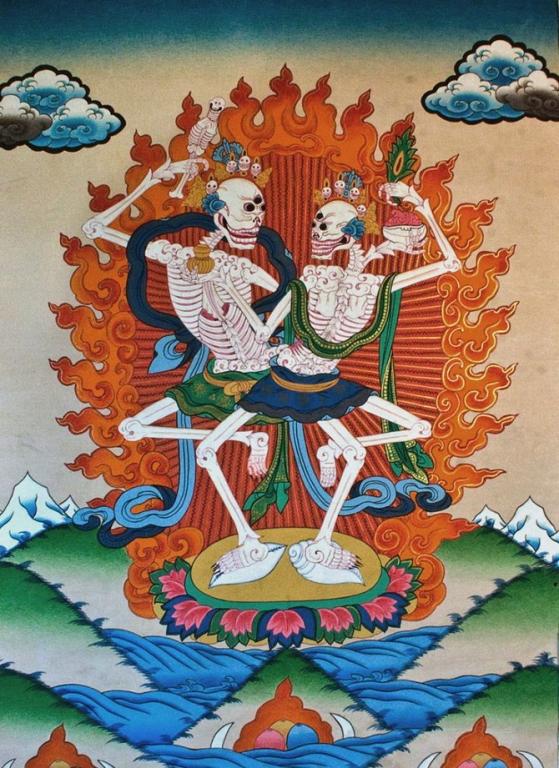
My Heart Sutra
When the heart of compassion walked through the gate of wisdom, she looked into the body of the world and each of us, seeing each of us and the world itself is boundless. And with this all suffering vanished.
Dear one, all things are boundless; the boundless is nothing other than all things. Everything in itself is boundless; Boundlessness is all things. This is true of us and our feelings, experiences, and consciousness itself.
Dear one, the stuff of the world is boundless. It is not born, it does not die. It is not impure, nor is it pure. It neither increases nor diminishes. And so within boundlessness there is no eye, no ear, no nose, no tongue, no body, no mind; no sight, sound, smell, taste, objects of touch; no field of existence; no ignorance and no ending of ignorance; no old age and death and no ending of old age and death. There is no suffering, no gain, no loss, no path, and no wisdom or attaining of wisdom.
Understanding this boundlessness, the pure hearted one is free. Without entanglements the true person of the way is not afraid.
The pure and unexcelled way.
All the sages of past and present and future attain to this truth and find freedom.
And so this becomes the great mantra, supreme and unexcelled, it removes all suffering.
Gate gate paragate parasamgate Bodhi svaha!
Going, going, always going on beyond. Always going on beyond. Blessings!
Gone, gone, gone beyond. Completely gone beyond. Blessing and blessing!
Heart Sutra (my paraphrase)
I’m of the opinion that those who get angry about belief in God as the gateway to pretty much all the ills of the world, are looking in the wrong direction. I suggest it’s the belief in a soul that occupies the body but does not belong to the world that is a regular cornucopia of human hurt.
People trying to defend the belief that they, and their loved ones, are not destined to death, will often do the cruelest of things to those who challenge that, frankly, perhaps brutally, but this is what it is: vain hope. Belief in a god isn’t the real problem. The problem is believing the soul is something just passing through the hurt and the wonder, but not part of it.
Now there is no way to say this without annoying someone. I raised this issue on Facebook and friends made a number of comments. One friend opined, “Think of a soul as kin to the bacteria which live in your gut, and without which we would not survive.” Then an old friend from Arizona, offered, interestingly, “A soul is something you build over the course of your life through your love, your learnings, and your service. Some call it character, I prefer to call it your soul because that is what lasts forever in the fabric of the universe.”
The UU minister Mark Hoelter offers, “I don’t believe people have souls. But I know from experience we can have soul! And when we have soul and cultivate soul, there is something more in our presence to each other, and something more which lasts beyond death.” Finally, Stephen Slottow, an old Zen hand from Texas mentioned, how a teacher we shared in esteem, “Aitken Roshi wrote somewhere that everything is the unique avatar of the mystery. Fancy words, but true nonetheless.”
This pushed me a bit. While I’m sure there are no essences unique to a person, or any other thing under the sun, or for the sun, for that matter; nonetheless there is something precious and beautiful about us, each and every one of us. As someone once said the universe is infinite and every point is its center. We are all of us woven out of the stuff of the cosmos, and each of us, is the center, or, perhaps slightly better – a center.
How we think about this strange truth that we’re unique and precious and completely bound up together, woven out of each other, is what brings me to a consideration of souls as something more than just an escape hatch from life. And I suspect the consideration of souls has always been more complicated than that passenger in the bus of life conceit can ever satisfy.
In our human languages we’ve come up with a million words for this mystery. Phil Cousineau lists a lot of them. “Psyche, anima, atman, savira, semangat, nephesh, otachuk, loakal, tunzi, prana, duk, and geist… sacred words used by primal peoples the world over for the surge of life itself, linguistic cousins of what was called sawol in Old English, sawal by the Anglo-Saxons, sala by the Icelandic folk, and eventually, as if stone-polished by the ages, what we now call soul.” Charles Nodier observed of this storm of words, “The different names for the soul, among nearly all peoples are just so many breath variations, and onomatopoeic expressions for breathing.”
Soul is breath. Soul is life.
So, one may ask, “And what’s in it for me to focus on this breath of life? Particularly, if the truth is, that there is no physical immortality in the deal, no my ego survives the disruption of the body?” I suggest within a reflection on what soul can be there’s a way through the hurt and confusion of our lives, to something more healthful and beautiful and healing.
The psychologist James Hillman suggested this represents a reductionism in our current culture leading to a simple Cartesian divide “between outer tangible reality and inner states of mind, or between body and a fuzzy conglomerate of mind, psyche, and spirit.”
And here’s my third point, the main point. Hillman thought, “We have lost the third, middle position which earlier in our tradition, and in others too, was the place of soul: a world of imagination, passion, fantasy, reflection that is neither physical and material on the one hand, nor spiritual and abstract on the other, yet bound to them both.” I can’t say how important I think this is for those of us who want to live authentic lives.
Hillman goes on to suggest our more natural “threefold division has collapsed into two, because soul has become identified with spirit. This happens because we are materialists, so that everything that is not physical and bodily is one undifferentiated cloud…” Okay, after saying I don’t believe in souls, at least in souls as something separate from us and untouched by our human condition, I’m going to offer we should consider embracing not only souls, but also spirit. Our beloved ancestor Ralph Waldo Emerson did suggest, “A foolish consistency is the hobgoblin of little minds, adored by little statesmen, and philosophers, and divines.”
For Hillman spirit is “arrow straight, knife sharp, powder dry…” For him it is yang to the yin of the soul, which is found in “natural urges, memories, fantasies, and fears.” Soul is about “the realm of experience and (of) reflections within experience.” I find this is a key to another tradition important to me, and it’s teaching of the “three bodies of the Buddha,” which are the world of form, the world of unity, and a third. Let’s run through them, quickly.
The first body is that of form, of history. We usually get this part. It’s what we live with all our lives, with all its aches and pains. Think of this ordinary sense of the way things are with everything separate and unique, as the part of the iceberg above the water. Another part of what we are, the second body, floating in the depths beneath the surface, is that place where all things collapse into one. In many ways that place is the realm of spirit. Here spirit is the great intuition of our ultimate unity.
But, we can’t leave it there. This binary view of separate bodies and one body isn’t quite right. Traditionally the third body is the place of rule breaking, of magic and related mysteries. I suggest we can encounter this place of imagination run wild, of fantasy, of dream, as the realm of soul. It is dark and rich and fertile, it is the seedbed of possibilities.
I’ve seen the consequences of being too tightly tied to one or another of these bodies, any of them. Lost in the realm of phenomena, we think we end at our skins and become isolated from our true destiny. Caught up too much in the realm of spirit, of the one, we become pure and forget our bodies and our friends and our neighbors. Lost in the realm of soul, of dream, is to tumble into lunacy disconnected from either our uniqueness or our radical interrelatedness, wandering lost in some moonscape.
We need ‘em all. Elsewhere I’ve addressed our separateness and our unity. Here, I hold up that third place. I’ve found that attending to the matters of soul, or, perhaps slightly better, attending to soulfulness, opens a life for us that is full, pregnant with constantly unfolding possibilities.
So, here’s a suggestion. You want to be of use in the world? Well, start by loving the world and not turning from it, not hoping to escape it. Second, notice how we are all of us related, every precious one of us part of the same family. And, third, pay attention to your dreams that place where the imagination runs amok.
Now this may not be as easy as it sounds. My first experience of how to pay attention to my dreams came about in one of those classes with Gordon Tappan, another of those seminars this time with a dozen graduate students and me. The seminar was simple enough. We would keep notes on dreams and then discuss them in our small group.
One afternoon a member of the group described her most recent dream. She was ethereal, tall and thin, with long golden hair that frizzed just enough to create a halo effect around her head. She described how in her dream a woman walked toward her holding a golden ball. As she watched transfixed the ball started glowing, the brightness growing, and growing until there was nothing but light. Nothing but light.
When she finished the group was silent. That pause extended a minute or so, almost achingly long. Then out of that silence Gordon asked, quietly, simply, kindly, “What do you think all that light was hiding?”
So, what happens when we bring our attention to the interior landscape of our lives, to the mysteries of soulfulness, to what might lie hidden at the heart of it all? My old teacher John Tarrant in his lovely, dense and compelling book The Light Inside the Dark, brings some suggestions. “Much of the journey is about the ways we work with our attention…” John says. “It expands the register, bringing us to notice more of the vividness and consolation of our dark lives, so that we can exist in our true range, and not go around missing things, as if we knew countries only from their airports and hotels.”
And then John tells the secret, my fourth and final point. “Attention is the most basic form of love: through it we bless and are blessed… What was matter and merely inanimate becomes family, and we, the children walking, walking, walking home… (I)t is this inner connection that resolves the problem of who we are and makes us at home in the world. For the interior life sweetens the humblest thing. It opens for us the magic in ordinary life.”
It’s as simple as breathing. It is the soulful way. And we’re all welcome to it.
It’s my Heart Sutra.
It’s our Heart Sutra…
Previous Post

May 24, 2017
Recalling A. Durwood Foster
Next Post
May 26, 2017 William Flees the Pope & the Razor is Sharpened
Browse Our Archives
Select a Category A Christmas Carol Abolitionist African-American Ahmadiyya Alan Watts Aldous Huxley Allen Ginsberg Amedkar Jayanti American politics American Zen Anaheim Zen Sangha Anglican Annie Besant April Fool Armageddon Art and Religion artificial intellegence Atheist Awakening B R Ambedkar Barlaam & Josaphat Beatnik Between Bhagavad Gita Bible biography birthday bodhisattva Bodhisattva Precepts Book burning Book of Common Prayer Book of Mormon Brahmo Samaj Buddha Buddhism Buddhist Buddhist Lord's Prayer Butterflies Calendars cartoons cat ChatGPT Chicken Tortilla Soup choices Christian atheism Christian mysticism Christian origins Christian Science Christian Zen Christianity Christianity and Buddhism christmas Christmas Truce Christopher Isherwood Church of Later Day Saints Cinco de Mayo circus covenant critical thinking culture D. T. Suzuki Dalit Buddhism Daniel Defoe Desert Fathers and Mothers dharma talk Dogen Donald Trump Dongshan's Five Ranks Dorothy Day dream Duty Easter ecology Edwin Arnold emptiness Empty Moon Zen Network Episcopal Church Eternal Now Ethics evolution existentialism Faith fantasy Fathers Day film film review fire Five Ranks Folk music food Form and emptiness Four Seals Francis of Assisi Francis Xavier Free thinker friendship George MacDonald Gerald Heard Glenn Taylor Webb God Good Friday Gospel of Gospel of Mark Gospel of Thomas grace Graduate Theological Unioin Graduate Theological Union Guanyin H R Blyth Hakuin Ekaku Hanamatsuri Hanukkah Harada Yasutani Zen Heart Sutra Henry David Thoreau Hermann Hesse Hinduism History and Religion history of religion Holy Spirit home Hospitality Icon Ides of March Isaac Newton Islam Islamic mysticism Jack Kerouac James Luther Adams Jiddu Krishnamurti Joan of Arc Johannes Gutenberg John Donne joke Judaism justice karma kensho King James Bible koan Koun Yamada Kyoto School Lewis Carrol Liberal Christianity Liberal Religion Life Plan Community Liminal literature Literature and Religion Liturgy Lord's Prayer Love Mahatma Gandhi Mahayana Martin Luther King Jr Mary Baker Eddy Mary Magdelene Mary Oliver Mayflower Compact Meditation memories memory metaphor money money and religioin Mormons Mother's Day movie review mysticism mythic Neighborhood Unitarian Universalist Church New Thought Nichiren Buddhism Nonduality not knowing Omar Khayyam Pacific School of Religion pagan Palm Sunday Passover peace Pentecost perennialism Phantastes Philip Kapleau philosophy Pilgrimage poetry Poetry and Religion politics Prayer Precepts Printing Press prophecy prophetic spirituality psychology Pure Land Queer religion queering religion Quietism Ram Mohan Roy rebirth recipe Relationships and religion religion religion and history Religious syncretism Resistance Retirement Retreat review Rissho Kosei Kai Ritual Robert Aitken Roshi Robert Ingersoll Rohatsu Romani religion Rosie the Riveter saints samadhi SanboZen Sangha Satyagraha science science and reigion science and religion science fiction seminary sermon Sesshin Sex and Religion Shinran Sikh Sikh tradition silence Social Justice Socially Engaged Buddhism Society and religion Soto Zen soul spiritual community spiritual practice Spirituality Sufism Suicide superstition Taoism Television Teresa of Avila Thanksgiving theological schools Theosophy Thomas Merton Time Transcendentalism Transcendentalist Trinitarian Trinity Uncategorized unitarian Unitarian Christianity Unitarian Universalist Universalism Vajrayana Vedanta Walking war Willa Cather William Ellery Channing wisdom women and religion women in religion World Teacher Writing zazen Zen Zen Center Zen inspired retriement zen meditation Zen Precepts Zen women
Select a Month September 2026 August 2026 July 2026 June 2026 May 2026 April 2026 March 2026 February 2026 January 2026 December 2025 November 2025 October 2025 September 2025 August 2025 July 2025 June 2025 May 2025 April 2025 March 2025 February 2025 January 2025 December 2024 November 2024 October 2024 September 2024 August 2024 July 2024 June 2024 May 2024 April 2024 March 2024 February 2024 January 2024 December 2023 November 2023 October 2023 September 2023 August 2023 July 2023 June 2023 May 2023 April 2023 March 2023 February 2023 January 2023 December 2022 November 2022 October 2022 September 2022 August 2022 July 2022 June 2022 May 2022 April 2022 March 2022 February 2022 January 2022 December 2021 November 2021 October 2021 September 2021 August 2021 July 2021 June 2021 May 2021 April 2021 March 2021 February 2021 January 2021 December 2020 November 2020 October 2020 September 2020 August 2020 July 2020 June 2020 May 2020 April 2020 March 2020 February 2020 January 2020 December 2019 November 2019 October 2019 September 2019 August 2019 July 2019 June 2019 May 2019 April 2019 March 2019 February 2019 January 2019 December 2018 November 2018 October 2018 September 2018 August 2018 July 2018 June 2018 May 2018 April 2018 March 2018 February 2018 January 2018 December 2017 November 2017 October 2017 September 2017 August 2017 July 2017 June 2017 May 2017 April 2017 March 2017 February 2017 January 2017 December 2016 November 2016 October 2016 September 2016 August 2016 July 2016 June 2016 May 2016 April 2016 March 2016 February 2016 January 2016 December 2015 November 2015 October 2015 September 2015 August 2015 July 2015 June 2015 May 2015 April 2015 March 2015 February 2015 January 2015 December 2014 November 2014 October 2014 September 2014 August 2014 July 2014 June 2014 May 2014 April 2014 March 2014 February 2014 January 2014 December 2013 November 2013 October 2013 September 2013 August 2013 July 2013 June 2013 May 2013 April 2013 March 2013 February 2013 January 2013 December 2012 November 2012 October 2012 September 2012 August 2012 July 2012 June 2012 May 2012 April 2012 March 2012 February 2012 January 2012 December 2011 November 2011 October 2011 September 2011 August 2011 July 2011 June 2011 May 2011 April 2011 March 2011 February 2011 January 2011 December 2010 November 2010 October 2010 September 2010 August 2010 July 2010 June 2010 May 2010 April 2010 March 2010 February 2010 January 2010 December 2009 November 2009 October 2009 September 2009 August 2009 July 2009 June 2009 May 2009 April 2009 March 2009 February 2009 January 2009 December 2008 November 2008 October 2008 September 2008 August 2008 July 2008 June 2008 May 2008 April 2008 March 2008 February 2008 January 2008 December 2007 November 2007 October 2007 September 2007 August 2007 July 2007 June 2007 May 2007 April 2007 March 2007 February 2007 January 2007 December 2006 November 2006 October 2006 September 2006
Follow Us!
TAKE THE
Religious Wisdom Quiz
In 2 Peter, what did God not spare when he judged the people of Noah's Time?
Select your answer to see how you score.
Sodom and Gomorrah The wicked Angels who sinned The ancient world
Related posts from Monkey Mind

Keizan Jokin: The Zen Master Ancestor You Don't...

What Zen Practice Actually Does With Anger

Nanquan Cuts the Cat: A Jesuit commentary on...

On Taking Refuge in the Dharma
TRENDING AT PATHEOS Buddhist

The First Eucharistic Controversy: Christ’s Real Presence
For Catholics, the Eucharist is the source and summit of the Christian...

What a Stop Sign Can Teach Us About...
How to Make a Decision When You Can't Hear God Main point:...

Archdiocese Hosts Military Marriage Retreat in Germany
RASTATT, Germany — The transient military lifestyle, with its frequent deployments and...

Nearly every morning, I make the drive to Detroit with my high-school-age...

The Real AI Story Is Adoption Without Trust
Artificial intelligence has crossed a political threshold. It is no longer a...

A new article, written by Jeff Lindsay and Gale L. Pooley,...
view all Buddhist blogs
Ad-Free & Subscriber Log-In Subscription Support
- About Us
- 2026 Calendar
- Videos
- Podcasts
- Library of World Religions
- Faith In Media Tracker
- Advertise With Us
- Write for Us
- Privacy Policy
- Terms of Service
- Do Not Sell My Data
- Contact Us
- Radiant Digital
- Manage Newsletter Subscriptions
- Unsubscribe From Notifications
- Sitemap
Copyright 2008-2026, Patheos. All rights reserved.
Subscription Support Ad-Free & Subscriber Log-In
Follow Patheos