
BuddhistCatholicContemplativeEvangelicalGeneral ChristianHinduJewishLatter-day SaintMuslimNew VisionsProgressive Christian
Beliefs
- Buddhist
- Catholic
- Contemplative
- Evangelical
- General Christian
- Hindu
- Jewish
- Latter-day Saint
- More Voices
- Muslim
- New Visions
- Pagan
- Progressive Christian
Topics
- Religion News
- Food and Religion
- Sports and Religion
- Religious Art
- Religious Music and Entertainment
- Religious Events
- History and Religion
- Style and Religion
- Politics and Religion
- Women in Religion
- Recreation Outdoors and Religion
- Business Finance and Religion
- Careers Workplace and Religion
- Education and Religion
- Family Parenting and Religion
- Health Fitness and Religion
- Home and Religion
- Relationships and Religion
- Technology and Religion
- Travel and Religion
Columnists
- Buddhist Columnists
- Business Finance and Religion Columnists
- Careers Workplace and Religion Columnists
- Catholic Columnists
- Contemplative Columnists
- Education and Religion Columnists
- Evangelists Columnists
- Family Parenting and Religion Columnists
- General Christian Columnists
- Health Fitness and Religion Columnists
- Hindu Columnists
- History and Religion Columnists
- Home and Religion Columnists
- Jewish Columnists
- More Voices Columnists
- Latter Day Columnists
- Muslim Columnists
- New Visions Columnists
- Nonreligious Columnists
- Pagan Columnists
- Politics and Religion Columnists
- Progressive Columnists
- Recreation Outdoors and Religion Columnists
- Relationships and Religion Columnists
- Religion News Columnists
- Religious Art Columnists
- Religious Events Columnists
- Religious Music and Entertainment Columnists
- Sports and Religion Columnists
- Style and Religion Columnists
- Technology and Religion Columnists
- Travel and Religion Columnists
- Women in Religion Columnists
Resource Library
- 2026 Calendar
- Library of World Religions
- The 100 Most Holy Places on Earth
- Patheos Answers
- Podcasts
- Videos
- Faith Leaders Database
- Anglican Episcopalian
- Bahai
- Baptist
- Buddhism
- Christianity
- Confucianism
- Eastern Orthodoxy
- Hinduism
- Holiness and Pentecostal
- ISKCON
- Islam
- Judaism
- Lutheran
- Methodist
- The Church of Jesus Christ of Latter-day Saints
- New Age
- Paganism
- Presbytarian and Reformed
- Protestantism
- Religion Behind the Scenes
- Roman Catholic
- Scientology
- Shia Islam
- Sikhism
- Sufism
- Sunni Islam
- Taoism
- Zen
- See all religions
Research Tools
 Ad-Free & Subscriber Log-In Subscription Support
Ad-Free & Subscriber Log-In Subscription Support
Follow Patheos 

- Trending:
- Forgiveness
- |
- Marriage
- |
- Consciousness
- |
- Death Penalty
- |
- Election
- |
- Halloween

- Home
- Buddhist
- B. R. Ambedkar and His Wonderful Vision for a New Buddhism
B. R. Ambedkar and His Wonderful Vision for a New Buddhism
Last updated on: April 14, 2017 at 11:54 am by James Ford
B. R. Ambedkar and His Wonderful Vision for a New Buddhism 2017-04-14T11:54:44-07:00 James Ford
Patheos Explore the world's faith through different perspectives on religion and spirituality! Patheos has the views of the prevalent religions and spiritualities of the world.
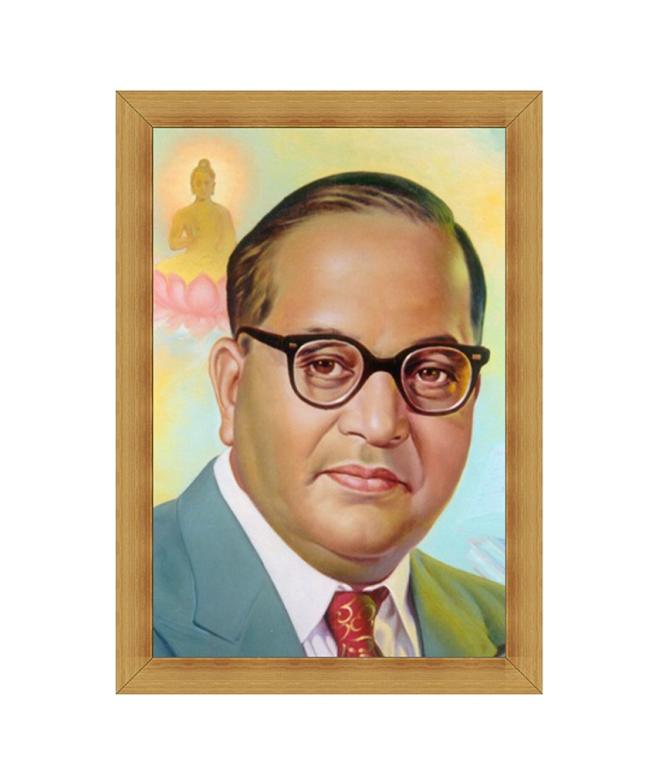
Bhimrao Ramji Ambedkar was born on this day in 1891. He is better known as B. R. Ambedkar, sometimes Dr Ambedkar, and to the many whom he served throughout his life, as Babasheb. Dr Ambedkar is one of the singular figures of the Indian revolution. And, significantly, in the years that followed, as a religious reformer.
I wrote an appreciation of Babasheb last year. He is someone who should be known better than he is, and recalled by those of us who do know him. I slightly expand that reflection here, correcting a couple of small things, adding some more details, and introducing a couple of pointers.
While an untouchable (the term in general use has shifted to “dalit,” largely led by Ambedkar himself) his father, like his grandfather before, served in the British Army, and because of that he had access to an education. Nonetheless, the indignities he suffered ranging from not being allowed to sit inside the classroom, to having to sit on a gunny sack he brought with him to and from school so as not to contaminate the ground, to only having access to water at school if a paid servant was there to pour the water that the boy would otherwise not be allowed to touch again because his touch would contaminate it for everyone else, marked his understanding of many things.
The boy was brilliant. He graduated from Bombay University, and then won a scholarship to Columbia, where he earned his first doctorate. From there he went on to earn a law degree and a second doctorate at the London School of Economics before turning his attention to what would become his life work. In 1924 he established the Bahishkrit Hitkaraini Sabha, the Outcastes Welfare Association. Three years later he led a mass march at the Chowder Tank in Colaba, outside Bombay, demanding that untouchables have the right to draw water.
As civil rights leaders Dr Ambedkar and Mohandas Gandhi worked in an uneasy alliance. While Ambedkar was committed to independence, he had little trust of the dominant culture, and continued to press hard on behalf of the Dalit communities. When Gandhi and others introduced the term “harijans,” meaning “people of God,” for the untouchables, rather than their own preferred term “dalit,” Ambedkar opposed having the term foisted upon them as one more example of being marginalized. He did quip that if his people were the children of God, then the upper casts would all be the children of monsters.
When India achieved independence, Dr Ambedkar was appointed India’s first law minister, basically India’s first attorney general. But, facing endless frustrations at his attempts to advance civil rights on behalf of all marginalized people, as a last straw, when his attempt to enshrine gender equality in laws concerning marriage and inheritance were frustrated, he resigned his office.
Instead Dr Ambedkar turned his attention to a new project. For decades, feeling there was no place for him or the Dalit community within Hinduism, he had been on a spiritual quest. He explored the Sikh faith in depth, but eventually settled on Buddhism as the best way for himself and his people. He embarked on serious study and out of that wrote several books outlining what he thought was the great contribution of Buddhism both to modernity, and for oppressed peoples. In 1956 Dr Ambedkar formally converted to Buddhism at a public ceremony, and immediately after his formal conversion, he led half a million Dalits present at that ceremony in their conversions.
The movement was based in twenty-two vows, giving the emergent tradition its distinctive flavor. It also, I feel, reveals the historic frame of the moment his movement began, and, probably implies why it succeeded where it did, and at the same time why it has not spread as a movement beyond India’s borders.
I shall have no faith in Brahma, Vishnu and Maheshwara nor shall I worship them.
I shall have no faith in Rama and Krishna who are believed to be incarnation of God nor shall I worship them.
I shall have no faith in Gauri, Ganapati and other gods and goddesses of Hindus nor shall I worship them.
I do not believe in the incarnation of God.
I do not and shall not believe that Lord Buddha was the incarnation of Vishnu. I believe this to be sheer madness and false propaganda.
I shall not perform Shraddha nor shall I give pind-dan.
I shall not act in a manner violating the principles and teachings of the Buddha.
I shall not allow any ceremonies to be performed by Brahmins.
I shall believe in the equality of man.
I shall endeavor to establish equality.
I shall follow the noble eightfold path of the Buddha.
I shall follow the ten paramitas prescribed by the Buddha.
I shall have compassion and loving-kindness for all living beings and protect them.
I shall not steal.
I shall not tell lies.
I shall not commit carnal sins.
I shall not take intoxicants like liquor, drugs etc.
(The previous four proscriptive vows [#14-17] are from the Five Precepts.)
I shall endeavor to follow the noble eightfold path and practice compassion and loving-kindness in every day life.
I renounce Hinduism, which is harmful for humanity and impedes the advancement and development of humanity because it is based on inequality, and adopt Buddhism as my religion.
I firmly believe the Dhamma of the Buddha is the only true religion.
I believe that I am having a re-birth.
I solemnly declare and affirm that I shall hereafter lead my life according to the principles and teachings of the Buddha and his Dhamma.
While his several books outlined his hope for a new Buddhism, he died later in the same year of his formal conversion, and so the implementation fell to others. The most important of Babasheb’s works is The Buddha and His Dhamma, which was first published posthumously in 1957. You can read the full text here.
He called this vision for a reformed Buddhism Navayana, meaning simply enough the “new” vehicle. (Interestingly this term is sometimes applied to the emerging convert Buddhisms in the West.) Sometimes it is also called “Dalit Buddhism” for its solid base among the Dalit communities of India. And in fact the Wikipedia article on this emergent Buddhism calls it Dalit Buddhism. Me, I think his approach has applications well beyond that base, even with what I find to be the built in limitations of the twenty-two vows, and so I prefer using Navayana.
Dr Ambedkar’s Navayana has some distinctive features. As it says in that Wikipedia article, “Most Dalit Indian Buddhists espouse an eclectic version of Buddhism, primarily based on Theravada, but with additional influences from Mahayana and Vajrayana. On many subjects, they give Buddhism a distinctive interpretation. Of particular note is their emphasis on Shakyamuni Buddha as a political and social reformer, rather than simply a spiritual leader.”
The article drills into this point describing how Babasheb emphasized “the Buddha required his monastic followers to ignore caste distinctions, and that he criticized the social inequality that existed in his own time. According to Ambedkar, a person’s unfortunate conditions are not only the result of karma or ignorance and craving, but do also result from ‘social exploitation and material poverty – the cruelty of others.’”
The article then cites the scholar Gail Omvedt who summarized the unique perspective of Dr Ambedkar’s Dalit Buddhism, and how it “seemingly differs from that of those who accepted by faith, who ‘go for refuge’ and accept the canon. This much is clear from its basis: it does not accept in totality the scriptures of the Theravada, the Mahayana, or the Vajrayana.” Dr Omvedt then asks the question, “Is a fourth yana, a Navayana, a kind of modernistic Enlightenment version of the Dhamma really possible within the framework of Buddhism?”
Given the simple fact of the existence of the movement, not to mention the many other variations of modernist or rational Buddhisms in the twentieth and twenty-first centuries, whether some other Buddhists might not like it, the answer obviously becomes yes. In fact one real question is why is it that this new Buddhism has not been as attractive to people beyond the Dalit communities of India? Daniel Clarkson Fisher offers a devastating analysis of this question, which I think is worth reading. Also, inspired by Daniel’s analysis, Justin Whitaker offers some reflections and very helpful pointers worth exploring.
Among other things Daniel points out and Justin underscores, that there appears to be some deeper issues that have limited Western interest in Dr Ambedkar’s project, not all of them issues we might want to look at. I do think there are built in problems as I’ve noted, found within the prescriptions of the twenty-two vows. But, I don’t think those vows are actually the problem. The fact that this is a people’s moment, and specifically a poor people’s movement is something that may indeed be part of why it has been largely ignored in the West. And, as Daniel points out, maybe now is the time to open our hearts a bit, to notice our own classist issues, and to see the wisdom that is being presented as something we need to hear.
One thing is true: Dr Ambedkar led a significant modern Buddhist movement. And maybe, just maybe it provides a touchstone for all of us touched by modernist and naturalistic interpretations of the Buddha way. In fact today the movement exists across India, although concentrated in Maharashtra and Uttar Pradesh, and counts the majority of Indian Buddhists, totaling about five million people. It is definitely a people’s Buddhism, and it is a force we would be wise to engage. At least those of us who see something of genuine value in the Dharma while also sensing there are genuine needs for reformation in several areas. Dr Ambedkar addresses several of these in compelling ways.
So, today, Dr Ambedkar’s one hundred, and twenty-sixth birthday is a moment we might pause and consider him, his movement, and maybe how some variation of these reformed Buddhisms might prove a healing balm for a troubled world.
Many bows Babasheb!
Many bows!
Many bows…
Previous Post

April 13, 2017
Thomas Jefferson, America's Second Unitarian President. Sort of...
Browse Our Archives
Select a Category A Christmas Carol Abolitionist African-American Ahmadiyya Alan Watts Aldous Huxley Allen Ginsberg Amedkar Jayanti American politics American Zen Anaheim Zen Sangha Anglican Annie Besant April Fool Armageddon Art and Religion artificial intellegence Atheist Awakening B R Ambedkar Barlaam & Josaphat Beatnik Between Bhagavad Gita Bible biography birthday bodhisattva Bodhisattva Precepts Book burning Book of Common Prayer Book of Mormon Brahmo Samaj Buddha Buddhism Buddhist Buddhist Lord's Prayer Butterflies Calendars cartoons cat ChatGPT Chicken Tortilla Soup choices Christian atheism Christian mysticism Christian origins Christian Science Christian Zen Christianity Christianity and Buddhism christmas Christmas Truce Christopher Isherwood Church of Later Day Saints Cinco de Mayo circus covenant critical thinking culture D. T. Suzuki Dalit Buddhism Daniel Defoe Desert Fathers and Mothers dharma talk Dogen Donald Trump Dongshan's Five Ranks Dorothy Day dream Duty Easter ecology Edwin Arnold emptiness Empty Moon Zen Network Episcopal Church Eternal Now Ethics evolution existentialism Faith fantasy Fathers Day film film review fire Five Ranks Folk music food Form and emptiness Four Seals Francis of Assisi Francis Xavier Free thinker friendship George MacDonald Gerald Heard Glenn Taylor Webb God Good Friday Gospel of Gospel of Mark Gospel of Thomas grace Graduate Theological Unioin Graduate Theological Union Guanyin H R Blyth Hakuin Ekaku Hanamatsuri Hanukkah Harada Yasutani Zen Heart Sutra Henry David Thoreau Hermann Hesse Hinduism History and Religion history of religion Holy Spirit home Hospitality Icon Ides of March Isaac Newton Islam Islamic mysticism Jack Kerouac James Luther Adams Jiddu Krishnamurti Joan of Arc Johannes Gutenberg John Donne joke Judaism justice karma kensho King James Bible koan Koun Yamada Kyoto School Lewis Carrol Liberal Christianity Liberal Religion Life Plan Community Liminal literature Literature and Religion Liturgy Lord's Prayer Love Mahatma Gandhi Mahayana Martin Luther King Jr Mary Baker Eddy Mary Magdelene Mary Oliver Mayflower Compact Meditation memories memory metaphor money money and religioin Mormons Mother's Day movie review mysticism mythic Neighborhood Unitarian Universalist Church New Thought Nichiren Buddhism Nonduality not knowing Omar Khayyam Pacific School of Religion pagan Palm Sunday Passover peace Pentecost perennialism Phantastes Philip Kapleau philosophy Pilgrimage poetry Poetry and Religion politics Prayer Precepts Printing Press prophecy prophetic spirituality psychology Pure Land Queer religion queering religion Quietism Ram Mohan Roy rebirth recipe Relationships and religion religion religion and history Religious syncretism Resistance Retirement Retreat review Rissho Kosei Kai Ritual Robert Aitken Roshi Robert Ingersoll Rohatsu Romani religion Rosie the Riveter saints samadhi SanboZen Sangha Satyagraha science science and reigion science and religion science fiction seminary sermon Sesshin Sex and Religion Shinran Sikh Sikh tradition silence Social Justice Socially Engaged Buddhism Society and religion Soto Zen soul spiritual community spiritual practice Spirituality Sufism Suicide superstition Taoism Television Teresa of Avila Thanksgiving theological schools Theosophy Thomas Merton Time Transcendentalism Transcendentalist Trinitarian Trinity Uncategorized unitarian Unitarian Christianity Unitarian Universalist Universalism Vajrayana Vedanta Walking war Willa Cather William Ellery Channing wisdom women and religion women in religion World Teacher Writing zazen Zen Zen Center Zen inspired retriement zen meditation Zen Precepts Zen women
Select a Month September 2026 August 2026 July 2026 June 2026 May 2026 April 2026 March 2026 February 2026 January 2026 December 2025 November 2025 October 2025 September 2025 August 2025 July 2025 June 2025 May 2025 April 2025 March 2025 February 2025 January 2025 December 2024 November 2024 October 2024 September 2024 August 2024 July 2024 June 2024 May 2024 April 2024 March 2024 February 2024 January 2024 December 2023 November 2023 October 2023 September 2023 August 2023 July 2023 June 2023 May 2023 April 2023 March 2023 February 2023 January 2023 December 2022 November 2022 October 2022 September 2022 August 2022 July 2022 June 2022 May 2022 April 2022 March 2022 February 2022 January 2022 December 2021 November 2021 October 2021 September 2021 August 2021 July 2021 June 2021 May 2021 April 2021 March 2021 February 2021 January 2021 December 2020 November 2020 October 2020 September 2020 August 2020 July 2020 June 2020 May 2020 April 2020 March 2020 February 2020 January 2020 December 2019 November 2019 October 2019 September 2019 August 2019 July 2019 June 2019 May 2019 April 2019 March 2019 February 2019 January 2019 December 2018 November 2018 October 2018 September 2018 August 2018 July 2018 June 2018 May 2018 April 2018 March 2018 February 2018 January 2018 December 2017 November 2017 October 2017 September 2017 August 2017 July 2017 June 2017 May 2017 April 2017 March 2017 February 2017 January 2017 December 2016 November 2016 October 2016 September 2016 August 2016 July 2016 June 2016 May 2016 April 2016 March 2016 February 2016 January 2016 December 2015 November 2015 October 2015 September 2015 August 2015 July 2015 June 2015 May 2015 April 2015 March 2015 February 2015 January 2015 December 2014 November 2014 October 2014 September 2014 August 2014 July 2014 June 2014 May 2014 April 2014 March 2014 February 2014 January 2014 December 2013 November 2013 October 2013 September 2013 August 2013 July 2013 June 2013 May 2013 April 2013 March 2013 February 2013 January 2013 December 2012 November 2012 October 2012 September 2012 August 2012 July 2012 June 2012 May 2012 April 2012 March 2012 February 2012 January 2012 December 2011 November 2011 October 2011 September 2011 August 2011 July 2011 June 2011 May 2011 April 2011 March 2011 February 2011 January 2011 December 2010 November 2010 October 2010 September 2010 August 2010 July 2010 June 2010 May 2010 April 2010 March 2010 February 2010 January 2010 December 2009 November 2009 October 2009 September 2009 August 2009 July 2009 June 2009 May 2009 April 2009 March 2009 February 2009 January 2009 December 2008 November 2008 October 2008 September 2008 August 2008 July 2008 June 2008 May 2008 April 2008 March 2008 February 2008 January 2008 December 2007 November 2007 October 2007 September 2007 August 2007 July 2007 June 2007 May 2007 April 2007 March 2007 February 2007 January 2007 December 2006 November 2006 October 2006 September 2006
Follow Us!
TAKE THE
Religious Wisdom Quiz
Which city was destroyed by fire and brimstone along with Gomorrah?
Select your answer to see how you score.
Babylon Nineveh Sodom Jericho
Related posts from Monkey Mind


A Zen Buddhist Response to this Moment


The Suchness of Crows: The Zen teachings of...
TRENDING AT PATHEOS Buddhist

Methodist Central Hall and Westminster Abbey
Situated on the same square is Methodist Central Hall and Westminster Abbey. ...

57th Dove Awards Honor Dolly Parton, Crown New...
On gospel music’s biggest night, the 57th annual GMA Dove Awards honored...

The First Eucharistic Controversy: Christ’s Real Presence
For Catholics, the Eucharist is the source and summit of the Christian...

What a Stop Sign Can Teach Us About...
How to Make a Decision When You Can't Hear God Main point:...

Archdiocese Hosts Military Marriage Retreat in Germany
RASTATT, Germany — The transient military lifestyle, with its frequent deployments and...

Nearly every morning, I make the drive to Detroit with my high-school-age...
view all Buddhist blogs
Ad-Free & Subscriber Log-In Subscription Support
- About Us
- 2026 Calendar
- Videos
- Podcasts
- Library of World Religions
- Faith In Media Tracker
- Advertise With Us
- Write for Us
- Privacy Policy
- Terms of Service
- Do Not Sell My Data
- Contact Us
- Radiant Digital
- Manage Newsletter Subscriptions
- Unsubscribe From Notifications
- Sitemap
Copyright 2008-2026, Patheos. All rights reserved.
Subscription Support Ad-Free & Subscriber Log-In
Follow Patheos