
BuddhistCatholicContemplativeEvangelicalGeneral ChristianHinduJewishLatter-day SaintMuslimNew VisionsProgressive Christian
Beliefs
- Buddhist
- Catholic
- Contemplative
- Evangelical
- General Christian
- Hindu
- Jewish
- Latter-day Saint
- More Voices
- Muslim
- New Visions
- Pagan
- Progressive Christian
Topics
- Religion News
- Food and Religion
- Sports and Religion
- Religious Art
- Religious Music and Entertainment
- Religious Events
- History and Religion
- Style and Religion
- Politics and Religion
- Women in Religion
- Recreation Outdoors and Religion
- Business Finance and Religion
- Careers Workplace and Religion
- Education and Religion
- Family Parenting and Religion
- Health Fitness and Religion
- Home and Religion
- Relationships and Religion
- Technology and Religion
- Travel and Religion
Columnists
- Buddhist Columnists
- Business Finance and Religion Columnists
- Careers Workplace and Religion Columnists
- Catholic Columnists
- Contemplative Columnists
- Education and Religion Columnists
- Evangelists Columnists
- Family Parenting and Religion Columnists
- General Christian Columnists
- Health Fitness and Religion Columnists
- Hindu Columnists
- History and Religion Columnists
- Home and Religion Columnists
- Jewish Columnists
- More Voices Columnists
- Latter Day Columnists
- Muslim Columnists
- New Visions Columnists
- Nonreligious Columnists
- Pagan Columnists
- Politics and Religion Columnists
- Progressive Columnists
- Recreation Outdoors and Religion Columnists
- Relationships and Religion Columnists
- Religion News Columnists
- Religious Art Columnists
- Religious Events Columnists
- Religious Music and Entertainment Columnists
- Sports and Religion Columnists
- Style and Religion Columnists
- Technology and Religion Columnists
- Travel and Religion Columnists
- Women in Religion Columnists
Resource Library
- 2026 Calendar
- Library of World Religions
- The 100 Most Holy Places on Earth
- Patheos Answers
- Podcasts
- Videos
- Faith Leaders Database
- Anglican Episcopalian
- Bahai
- Baptist
- Buddhism
- Christianity
- Confucianism
- Eastern Orthodoxy
- Hinduism
- Holiness and Pentecostal
- ISKCON
- Islam
- Judaism
- Lutheran
- Methodist
- The Church of Jesus Christ of Latter-day Saints
- New Age
- Paganism
- Presbytarian and Reformed
- Protestantism
- Religion Behind the Scenes
- Roman Catholic
- Scientology
- Shia Islam
- Sikhism
- Sufism
- Sunni Islam
- Taoism
- Zen
- See all religions
Research Tools
 Ad-Free & Subscriber Log-In Subscription Support
Ad-Free & Subscriber Log-In Subscription Support
Follow Patheos 

- Trending:
- Forgiveness
- |
- Marriage
- |
- Consciousness
- |
- Death Penalty
- |
- Election
- |
- Halloween

- Home
- Buddhist
- A SMALL MEDITATION ON SPIRITUALITY AFTER RELIGIONS Or, Mark Twain’s Large Dream
A SMALL MEDITATION ON SPIRITUALITY AFTER RELIGIONS Or, Mark Twain’s Large Dream
Last updated on: April 24, 2018 at 2:50 pm by James Ford
A SMALL MEDITATION ON SPIRITUALITY AFTER RELIGIONS Or, Mark Twain’s Large Dream 2018-04-24T14:50:35-07:00 James Ford
Patheos Explore the world's faith through different perspectives on religion and spirituality! Patheos has the views of the prevalent religions and spiritualities of the world.
A MEDITATION ON SPIRITUALITY AFTER RELIGIONS
Or, Mark Twain’s Large Dream
19 March 2017
James Ishmael Ford
Unitarian Universalist Church
Long Beach, California
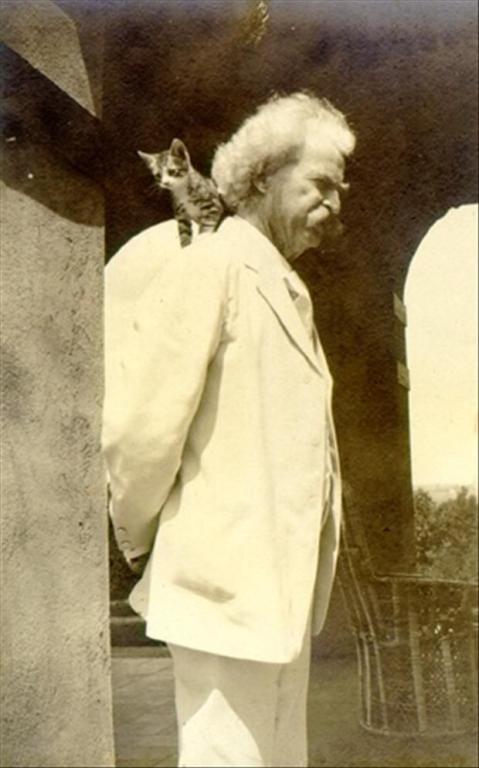
I love Mark Twain. I just love Mark Twain. In fact Jan and I have made Mark Twain pilgrimages twice in our lives. The first time was a tad more than twenty years ago when we lived in Wisconsin, and I served a suburban Milwaukee congregation. During the summer hiatus in our regular services, we took US 90 to La Crosse, and then turned south onto the Great River Road, which traces along the length of the Mississippi. We followed it as far as we had time, which turned out to be to Cairo, about the southern most part of Illinois. However, our main reason for the trip was to stop about two thirds of the way down the river at Hannibal, Samuel Clemens’ boyhood home.
It was resoundingly disappointing. All these years later what I recall most there is the statue of Huck and Tom that stands at the foot of Cardiff Hill. It shows the two boys walking along. We were told it represents Huck trying to slow Tom’s progression forward toward adulthood. I found that a past strange perspective, considering, well, everything about Samuel Clemens and what he thought and what he wrote about. In fact I have to admit the whole experience struck me as being slightly off. As Clemens didn’t really have a lot of good things to say about the town in his lifetime, it occurred to me that maybe it’s only reasonable that down the years the good citizens of Hannibal came to be mostly about smiling at the tourists and taking their money.
The more interesting pilgrimage location for me was the Mark Twain house and museum in Hartford, which Jan, auntie, and I finally got to see about five years ago. Clemens lived there between 1874 and 1891, and wrote many of his most famous books there, including both the Adventures of Tom Sawyer and the Adventures of Huckleberry Finn.
Unlike with our visit to Hannibal, with its air of naked tourist attraction not particularly mitigated by anything else, this was a horse of another color. Walking through the house, and standing in his study, looking down at the same grounds, more or less that he would have viewed over and over again, and then looking at his writing desk where his imagination roiled into some of the great tales to be spun from our American culture that I felt some electric charge, which seemed to me a connection between the man who was the great writer, his insights into the human condition, all of them, and, well, anyone willing to be open to the experience. And I was. I was.
There is so much one could address about him. What I want to reflect on here is Samuel Clemens’ spirituality. To start here is a little bouquet of Mark Twain observations about religion and its practitioners, starting with perhaps his most widely quoted, “Faith is believing what you know ain’t so.” Or, how about his observation about the Bible? He tells us it “has noble poetry in it… and some good morals and a wealth of obscenity, and upwards a thousand lies.” Finally, as to practitioners of my trade he rather dryly noted, “I’ve never heard a sermon in which I could not find some good, though there have been some near misses.”
In some ways this followed his general view of humanity. Here are two examples, again, first the most widely quoted. “Man is the only animal that blushes. Or needs to.” And, a personal favorite, “A clear conscience is the sure sign of a bad memory.” It is this, how shall we call it, perhaps jaundiced view about our human condition that I think most important to notice at the beginning of this reflection.
On the face of it, we have someone who has rejected religion. But, there’s quite a lot more to it than the face of it. In fact, I think he represents the best of that category we now hear so much about, the spiritual but not religious, or, as I’m coming to prefer to call it spirituality after religions.
One could say that while Clemens left his childhood Calvinism pretty early in his adult life, Calvinism never really left him. As a good Calvinist he judged the world, and maybe most of all, judged himself and found the whole thing wanting. But, we also might reasonably ask, he judged the world and himself against what? Buried within that I believe we can find the spiritual that continued to haunt him even as he walked away as best he could from organized religions.
Now, I found it fascinating, at least in the sense of the old joke that if you want to lose your faith make friends with a priest, that throughout his life, Sam Clemens had quite a surprising number of clergy friends. Apparently they were mostly liberal Congregtionalists. For instance there was Joseph Twitchell, one of his closest friends and a friendship for more than forty years.
Another very interesting minister friend was Moncure Conway. Originally a Methodist, he became a Unitarian minister, as well as a leading abolitionist in his day, before leaving for England where he moved ever more independent until becoming minister for a non-aligned non-traditionally theist ethical-humanist congregation. And don’t forget, this is the mid late nineteenth century we’re talking about. It was in fact during those later years that Twain met this remarkable clergyman. They became friends and then life-long correspondents. In fact Clemens trusted him so much that Conway would become Clemens’ literary agent in Great Britain.
A few years ago Independent scholar Dwayne Eutsey delivered a wonderful sermon on Twain and Hinduism, at the UU Fellowship in Easton, Maryland, where he tells us how through Conway, Twain was introduced to Eastern and particularly Hindu thought. In fact two of Conway’s books both with sections on Hinduism were in Twain’s personal library. Between this and Twain’s own experience meeting yogis and other Eastern spiritual guides on his travels around the world, inspires Eutsey to suggest a deeper spirituality influencing Twain than has previously been noticed.
For me this is utterly fascinating. Having broken the strictures of a creedal faith, but in some genuine ways remaining a seeker after truth Sam Clemens was actually able to see hints of something profound in whatever tradition he encountered. And as a world traveler, he had a lot of opportunity.
So, perhaps Mr Eutsey is right suggesting that Twain’s spirituality was influenced by Hinduism in his later years. He certainly makes a good argument. But, more importantly, for me, in his sermon Eutsey also points to Clemens having a deep personal insight that may well have been informed by reading and conversations, but, more importantly which erupted out of Clemens’ heart as something more than an idea, however, good; but rather as an actual, physical experience. Think of a conversion, metanoia, kensho, think of an enlightenment experience.
And, this is the real point. Mark Twain was no doubt informed, if also repulsed by his childhood religion. Then cut loose from the formal affiliations, he was able to wander widely in the fields of the Lord, having deep friendships with several spiritual types, mostly liberal Christians and at least one Unitarian. But, also letting him encounter as equals practitioners of other traditions ranging from Judaism, to Islam, to Buddhism, to Hinduism as well as to see into the hearts of people who claimed no faith in particular.
And, what I find that did, was prime the pump. In this case that pump is the heart. He certainly saw the foibles and hypocrisies in organized religion and its practitioners, and even in those without any particular religion. He also caught hints of things of value along with those failures. Those things, if you will, against which he measured the failures. Along the way of his life filled as it was with joy and sorrow, success and failure, like all of ours, I would add, he found himself ready when life gifted him with something wondrous.
In his 1897 book “Following the Equator,” Clemens writes, “In Sydney I had a large dream, and in the course of talking I told it to a missionary from India who was on his way to visit some relatives in New Zealand. I dreamed that the visible universe is the physical person of God; that the vast worlds that we see twinkling millions of miles apart in the fields of space are the blood corpuscles in His veins; and that we and the other creatures are the microbes that charge with multitudinous life the corpuscles.” In short Twain is saying he dreamt, he felt from somewhere deep within that the universe is God and we are the life force of God. And notice not merely a dream, he called it his “large dream.”
Now the missionary then goes on to a discussion of comparative miracles, and, frankly, I lost interest in pursuing wherever the missionary hoped to go to, or Twain hoped to show us he went. The important point is the dream, the “large dream.” I’ve had a version of it, myself. I bet you have, as well. Or, at the very least have had an intimation of it here and there. I’m sure because it is the song the universe is constantly singing to us into our individual hearts. If we take this large dream together with Twain’s various allusions to a “real” God behind it all we find something. Think of the original spiritual but not religious. Think of Spinoza and Blake and all those who saw the divine in the ordinary suchness of life.
To see a World in a Grain of Sand
And a Heaven in a Wild Flower,
Hold Infinity in the palm of your hand
And Eternity in an hour.
All of a sudden instead of a neo-Calvinist certain of his sin but not sure about what he’s sinning against, we have someone who sees us all as connected within the body of God, the primary experience of which all mystics have testified is love, and with that, of course, of course, comes a deep sense of responsibility to each other. That’s the “large dream.”
I think of Mark Twain’s large dream. It seems to me some feeling of love for all the parts was true in him, and seeped into everything he wrote, ironically, maybe, particularly within the harder words that came later. Seeing clear isn’t, of course, seeing all is nice. Clemens saw the shortcomings, and the sins, his own, as well as others. Sin being those actions that deny the preciousness of the individual or our total reliance upon each other.
Here is what I think is the best of spirituality after religions. What Sam Clemens, what Mark Twain calls us to is a relentless facing into the world, to a deep authenticity. Did he come to have a neo-Hindu sensibility? Perhaps. I like to think maybe so. But that doesn’t really matter. What he did come to that we can be sure of, is that we are all of us connected. And, with that for him, most important, that our actions count. This is the secret truth that makes religions true, and which informs any authentic spirituality.
What I believe is from that insight, from that large dream, of that real God and of ourselves as part of it, Sam Clemens called us all to an authentic life. There is no deeper calling for us as human beings. It is the way of authenticity in the face of so much that is false and self-serving. It is the song of hope in the face of hopelessness.
It is about the healing of our own hearts, and the healing of this world. And Mark Twain, of all people, like a prophet of love calls us into that mystery and joy. Something kind of wonderful.
Spirituality after religion.
Amen.
Previous Post

March 17, 2017
And the Irish Became White: A Small Meditation for St Patrick's Day
Next Post
March 20, 2017 The Zen of You & Me: A Review
Browse Our Archives
Select a Category A Christmas Carol Abolitionist African-American Ahmadiyya Alan Watts Aldous Huxley Allen Ginsberg Amedkar Jayanti American politics American Zen Anaheim Zen Sangha Anglican Annie Besant April Fool Armageddon Art and Religion artificial intellegence Atheist Awakening B R Ambedkar Barlaam & Josaphat Beatnik Between Bhagavad Gita Bible biography birthday bodhisattva Bodhisattva Precepts Book burning Book of Common Prayer Book of Mormon Brahmo Samaj Buddha Buddhism Buddhist Buddhist Lord's Prayer Butterflies Calendars cartoons cat ChatGPT Chicken Tortilla Soup choices Christian atheism Christian mysticism Christian origins Christian Science Christian Zen Christianity Christianity and Buddhism christmas Christmas Truce Christopher Isherwood Church of Later Day Saints Cinco de Mayo circus covenant critical thinking culture D. T. Suzuki Dalit Buddhism Daniel Defoe Desert Fathers and Mothers dharma talk Dogen Donald Trump Dongshan's Five Ranks Dorothy Day dream Duty Easter ecology Edwin Arnold emptiness Empty Moon Zen Network Episcopal Church Eternal Now Ethics evolution existentialism Faith fantasy Fathers Day film film review fire Five Ranks Folk music food Form and emptiness Four Seals Francis of Assisi Francis Xavier Free thinker friendship George MacDonald Gerald Heard Glenn Taylor Webb God Good Friday Gospel of Gospel of Mark Gospel of Thomas grace Graduate Theological Unioin Graduate Theological Union Guanyin H R Blyth Hakuin Ekaku Hanamatsuri Hanukkah Harada Yasutani Zen Heart Sutra Henry David Thoreau Hermann Hesse Hinduism History and Religion history of religion Holy Spirit home Hospitality Icon Ides of March Isaac Newton Islam Islamic mysticism Jack Kerouac James Luther Adams Jiddu Krishnamurti Joan of Arc Johannes Gutenberg John Donne joke Judaism justice karma kensho King James Bible koan Koun Yamada Kyoto School Lewis Carrol Liberal Christianity Liberal Religion Life Plan Community Liminal literature Literature and Religion Liturgy Lord's Prayer Love Mahatma Gandhi Mahayana Martin Luther King Jr Mary Baker Eddy Mary Magdelene Mary Oliver Mayflower Compact Meditation memories memory metaphor money money and religioin Mormons Mother's Day movie review mysticism mythic Neighborhood Unitarian Universalist Church New Thought Nichiren Buddhism Nonduality not knowing Omar Khayyam Pacific School of Religion pagan Palm Sunday Passover peace Pentecost perennialism Phantastes Philip Kapleau philosophy Pilgrimage poetry Poetry and Religion politics Prayer Precepts Printing Press prophecy prophetic spirituality psychology Pure Land Queer religion queering religion Quietism Ram Mohan Roy rebirth recipe Relationships and religion religion religion and history Religious syncretism Resistance Retirement Retreat review Rissho Kosei Kai Ritual Robert Aitken Roshi Robert Ingersoll Rohatsu Romani religion Rosie the Riveter saints samadhi SanboZen Sangha Satyagraha science science and reigion science and religion science fiction seminary sermon Sesshin Sex and Religion Shinran Sikh Sikh tradition silence Social Justice Socially Engaged Buddhism Society and religion Soto Zen soul spiritual community spiritual practice Spirituality Sufism Suicide superstition Taoism Television Teresa of Avila Thanksgiving theological schools Theosophy Thomas Merton Time Transcendentalism Transcendentalist Trinitarian Trinity Uncategorized unitarian Unitarian Christianity Unitarian Universalist Universalism Vajrayana Vedanta Walking war Willa Cather William Ellery Channing wisdom women and religion women in religion World Teacher Writing zazen Zen Zen Center Zen inspired retriement zen meditation Zen Precepts Zen women
Select a Month September 2026 August 2026 July 2026 June 2026 May 2026 April 2026 March 2026 February 2026 January 2026 December 2025 November 2025 October 2025 September 2025 August 2025 July 2025 June 2025 May 2025 April 2025 March 2025 February 2025 January 2025 December 2024 November 2024 October 2024 September 2024 August 2024 July 2024 June 2024 May 2024 April 2024 March 2024 February 2024 January 2024 December 2023 November 2023 October 2023 September 2023 August 2023 July 2023 June 2023 May 2023 April 2023 March 2023 February 2023 January 2023 December 2022 November 2022 October 2022 September 2022 August 2022 July 2022 June 2022 May 2022 April 2022 March 2022 February 2022 January 2022 December 2021 November 2021 October 2021 September 2021 August 2021 July 2021 June 2021 May 2021 April 2021 March 2021 February 2021 January 2021 December 2020 November 2020 October 2020 September 2020 August 2020 July 2020 June 2020 May 2020 April 2020 March 2020 February 2020 January 2020 December 2019 November 2019 October 2019 September 2019 August 2019 July 2019 June 2019 May 2019 April 2019 March 2019 February 2019 January 2019 December 2018 November 2018 October 2018 September 2018 August 2018 July 2018 June 2018 May 2018 April 2018 March 2018 February 2018 January 2018 December 2017 November 2017 October 2017 September 2017 August 2017 July 2017 June 2017 May 2017 April 2017 March 2017 February 2017 January 2017 December 2016 November 2016 October 2016 September 2016 August 2016 July 2016 June 2016 May 2016 April 2016 March 2016 February 2016 January 2016 December 2015 November 2015 October 2015 September 2015 August 2015 July 2015 June 2015 May 2015 April 2015 March 2015 February 2015 January 2015 December 2014 November 2014 October 2014 September 2014 August 2014 July 2014 June 2014 May 2014 April 2014 March 2014 February 2014 January 2014 December 2013 November 2013 October 2013 September 2013 August 2013 July 2013 June 2013 May 2013 April 2013 March 2013 February 2013 January 2013 December 2012 November 2012 October 2012 September 2012 August 2012 July 2012 June 2012 May 2012 April 2012 March 2012 February 2012 January 2012 December 2011 November 2011 October 2011 September 2011 August 2011 July 2011 June 2011 May 2011 April 2011 March 2011 February 2011 January 2011 December 2010 November 2010 October 2010 September 2010 August 2010 July 2010 June 2010 May 2010 April 2010 March 2010 February 2010 January 2010 December 2009 November 2009 October 2009 September 2009 August 2009 July 2009 June 2009 May 2009 April 2009 March 2009 February 2009 January 2009 December 2008 November 2008 October 2008 September 2008 August 2008 July 2008 June 2008 May 2008 April 2008 March 2008 February 2008 January 2008 December 2007 November 2007 October 2007 September 2007 August 2007 July 2007 June 2007 May 2007 April 2007 March 2007 February 2007 January 2007 December 2006 November 2006 October 2006 September 2006
Follow Us!
TAKE THE
Religious Wisdom Quiz
Who built the Tower of Babel?
Select your answer to see how you score.
The people of Shinar The Philistines The Babylonians The Canaanites
Related posts from Monkey Mind

The American Unitarian Association Marks Two Hundred Years
Alan Watts for Good and for Ill
My Three body Problem: Zen, Jesus, and a...
ALL THE CENTERS OF THE UNIVERSE: A Zen...
TRENDING AT PATHEOS Buddhist

Nearly every morning, I make the drive to Detroit with my high-school-age...

The Real AI Story Is Adoption Without Trust
Artificial intelligence has crossed a political threshold. It is no longer a...

A new article, written by Jeff Lindsay and Gale L. Pooley,...

Swimfan: Forgotten Aughts Pleasures
This is a recovery effort. In 2002, My Big Fat Greek Wedding...

Top Three Anti-Catholic Lies About Catholicism
This is my initial transcript for the video, "THE 3 WORST...

Pope Leo Celebrates Mass for Nurses & Docs...
I don't have any idea how he did it, but Pope Leo...
view all Buddhist blogs
Ad-Free & Subscriber Log-In Subscription Support
- About Us
- 2026 Calendar
- Videos
- Podcasts
- Library of World Religions
- Faith In Media Tracker
- Advertise With Us
- Write for Us
- Privacy Policy
- Terms of Service
- Do Not Sell My Data
- Contact Us
- Radiant Digital
- Manage Newsletter Subscriptions
- Unsubscribe From Notifications
- Sitemap
Copyright 2008-2026, Patheos. All rights reserved.
Subscription Support Ad-Free & Subscriber Log-In
Follow Patheos