
BuddhistCatholicContemplativeEvangelicalGeneral ChristianHinduJewishLatter-day SaintMuslimNew VisionsProgressive Christian
Beliefs
- Buddhist
- Catholic
- Contemplative
- Evangelical
- General Christian
- Hindu
- Jewish
- Latter-day Saint
- More Voices
- Muslim
- New Visions
- Pagan
- Progressive Christian
Topics
- Religion News
- Food and Religion
- Sports and Religion
- Religious Art
- Religious Music and Entertainment
- Religious Events
- History and Religion
- Style and Religion
- Politics and Religion
- Women in Religion
- Recreation Outdoors and Religion
- Business Finance and Religion
- Careers Workplace and Religion
- Education and Religion
- Family Parenting and Religion
- Health Fitness and Religion
- Home and Religion
- Relationships and Religion
- Technology and Religion
- Travel and Religion
Columnists
- Buddhist Columnists
- Business Finance and Religion Columnists
- Careers Workplace and Religion Columnists
- Catholic Columnists
- Contemplative Columnists
- Education and Religion Columnists
- Evangelists Columnists
- Family Parenting and Religion Columnists
- General Christian Columnists
- Health Fitness and Religion Columnists
- Hindu Columnists
- History and Religion Columnists
- Home and Religion Columnists
- Jewish Columnists
- More Voices Columnists
- Latter Day Columnists
- Muslim Columnists
- New Visions Columnists
- Nonreligious Columnists
- Pagan Columnists
- Politics and Religion Columnists
- Progressive Columnists
- Recreation Outdoors and Religion Columnists
- Relationships and Religion Columnists
- Religion News Columnists
- Religious Art Columnists
- Religious Events Columnists
- Religious Music and Entertainment Columnists
- Sports and Religion Columnists
- Style and Religion Columnists
- Technology and Religion Columnists
- Travel and Religion Columnists
- Women in Religion Columnists
Resource Library
- 2026 Calendar
- Library of World Religions
- The 100 Most Holy Places on Earth
- Patheos Answers
- Podcasts
- Videos
- Faith Leaders Database
- Anglican Episcopalian
- Bahai
- Baptist
- Buddhism
- Christianity
- Confucianism
- Eastern Orthodoxy
- Hinduism
- Holiness and Pentecostal
- ISKCON
- Islam
- Judaism
- Lutheran
- Methodist
- The Church of Jesus Christ of Latter-day Saints
- New Age
- Paganism
- Presbytarian and Reformed
- Protestantism
- Religion Behind the Scenes
- Roman Catholic
- Scientology
- Shia Islam
- Sikhism
- Sufism
- Sunni Islam
- Taoism
- Zen
- See all religions
Research Tools
 Ad-Free & Subscriber Log-In Subscription Support
Ad-Free & Subscriber Log-In Subscription Support
Follow Patheos 

- Trending:
- Forgiveness
- |
- Marriage
- |
- Consciousness
- |
- Death Penalty
- |
- Election
- |
- Halloween

- Home
- Buddhist
- Mary as Quanyin. Quanyin as Mary. Liberation Theology and Engaged Buddhism.
Mary as Quanyin. Quanyin as Mary. Liberation Theology and Engaged Buddhism.
Last updated on: February 10, 2017 at 8:54 am by James Ford
Mary as Quanyin. Quanyin as Mary. Liberation Theology and Engaged Buddhism. 2017-02-10T08:54:40-08:00 James Ford
Patheos Explore the world's faith through different perspectives on religion and spirituality! Patheos has the views of the prevalent religions and spiritualities of the world.
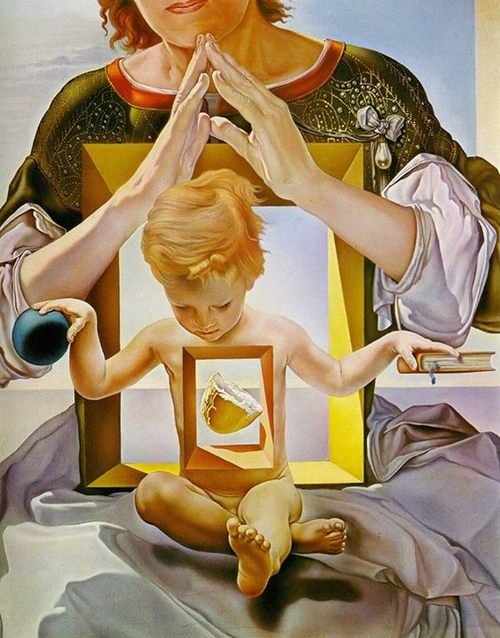
Helder Pessoa Camara was born in Fortaleza, Ceara, Brazil, on this day in 1909. Today he is remembered as Dom Helder Camera, the late Roman Catholic archbishop of Olinda and Recife in that country, a fierce opponent of the military dictatorship, and an advocate of Liberation Theology.
There is in fact a move within some circles of the Catholic church to canonize him. I find it about as likely as Dorothy Day or that other troublesome priest Thomas Merton getting the nod from the official church. But, of course, one never knows, and that spirit does indeed rest where it will.
Should that unlikely event ever happen, his feast would most likely be the day of his death, August the 27th. Me, as I’ve opined elsewhere, while I have no brief against commemorating someone’s life on the anniversary of their death, after all it marks the end of a life, and one can take into account the fullness of their life that way. But, I like birthdays. They mark out all the possibilities, the potentials, and in some ways, that becomes something we all share in the natal moment, or, at least, most of us: hope.
Dom Camera is most famous for a sentence. “Quando dou comida aos pobres, chamam-me de santo. Quando pergunto por que eles são pobres, chamam-me de comunista.” It is usually translated into English as “When I give food to the poor, they call me a saint. When I ask why they are poor, they call me a communist.” Within that sentence is the birthing of another hope, liberation theology.
Liberation theology arose in Central America when Catholic theologians began to question why such concentration of wealth among so few, and why so many suffered so terribly. Just that question. They began to search their own tradition for answers and for direction. And they saw that the person they think of as God on earth, came not as a king but as a peasant, as a carpenter. They found particular wisdom in what is called the Sermon on the Mount. And, most of all, they found in Mary, another peasant who would be Jesus’ mother, an exemplar of the lowly being raised on high by God, and as God’s calling as the work of this world.
In particular they looked at her song, which in that story, came unbidden from her lips at the moment she learned she was to be the mother of God. It is called Mary’s song, or the Magnificat, and is captured for us in the Gospel according to Luke. In the King James version it sings to us:
And Mary said, My soul doth magnify the Lord,
And my spirit hath rejoiced in God my Saviour.
For he hath regarded the low estate of his handmaiden: for, behold, from henceforth all generations shall call me blessed.
For he that is mighty hath done to me great things; and holy is his name.
And his mercy is on them that fear him from generation to generation.
He hath shewed strength with his arm; he hath scattered the proud in the imagination of their hearts.
He hath put down the mighty from their seats, and exalted them of low degree.
He hath filled the hungry with good things; and the rich he hath sent empty away.
He hath holpen his servant Israel, in remembrance of his mercy;
As he spake to our fathers, to Abraham, and to his seed for ever.
I don’t think it that hard for any of us, whatever our faith, to listen to these words with open hearts, and not see the roadmap to the true revolution, to the realm of God, the Pure Land, to the true home for the family to which we all belong.
Now, Dom Helder was a complicated person. And certainly not all peaches and cream. In his youth I gather he flirted with Brazilian neo-fascists. And, later he supported contraception until he didn’t. But, there was a trajectory, a constant self-evaluation, as well as a hard, hard look at the world in which he lived, that makes him, for me, at least, an attractive figure. I can see myself in him.
He admired the Marxist analysis of capitalism, although he had no taste for its conclusions. The celebrity journalist Oriana Fallaci quoted him from an interview calling himself a socialist. He then unpacked how he meant the word. “My socialism is special, its a socialism that respects the human person and goes back to the Gospels. My socialism it is justice.” Here the word socialism becomes a shorthand for our care for the world, and particularly a focus on the poor, the downtrodden, the left behind.
As someone deeply concerned with Engaged Buddhism, I am aware of commonalities, challenges, and possible cross fertilization of these two currents, Liberation Theology and Engaged Buddhism. I’m hardly alone in this. And there’s a lot to be found within that conversation. Each brings a deep intuition of interconnection, each brings compelling images and, and each has shortcomings and drawbacks.
Professor and Lama John Makransky writes as a Buddhist observing Christians, “In terms of Christian liberation epistemology, even taking into account the historical situation that liberation theologians speak from, one weakness is a tendency to construct and reify a duality between those who are preferred by God and those who are not, a duality that makes it difficult, practically speaking, actually to love each person unconditionally in the way that Jesus taught.” This dualism is a problem I find that cuts right through Christianity. And is obvious as a problem within liberation theology.
And, of course, this is true latently, for Buddhists, and all human beings. We naturally slice and dice and in the process create dualisms that are useful – until they’re reified. Resisting the impulse to other others is a constant struggle, as it is a natural part of our consciousness.
Of course, there’s a lot to criticize for Buddhism, as well. And so the lama continues “On the other hand, Buddhist epistemology lacks the concept of a God who chose to incarnate uniquely among the most marginalized and rejected, and the related Christian concept of social sin.” And that’s the other problem within spiritualities, getting lost in the great empty, in the non incarnated. Buddhists can be so caught up in the non dual that it forgets the separations and distinctions, and the consequences of actions, except as some bloodless abstraction leading to a chain of births.
Buddhism can help Christians expand, and, if you will, reframe their identity with the poor to include the entire world, the cosmos itself. And, Professor Makransky suggests, “Christian liberation theology (can help to) reframe Buddhist understandings of compassion and its cultivation, and stimulates new insights into current social implications of ancient Buddhist teachings of karma, interdependence, and bodhisattva practice.”
Each of the traditions Liberation Theology and Engaged Buddhism has a growing literature as well as a history of engagement. And, increasingly each is informing the other in dialogue. And, importantly, each is growing deeper, more true, more hopeful.
For me the nexus point is Guanyin. As she seems always to be.
I’ve written about when we first arrived in Long Beach, California, one Sunday evening as Jan and I were driving along Ocean Boulevard we noticed the Mary shrine attached to a Buddhist Monastery was particularly lovely, with flowers and candles already lit and maybe half a dozen people there offering prayers. It was all quite wonderful. I recall the first time we drove by that corner of Ocean and Redondo and saw what appeared to be a couple who were either East Asian or both of East Asian descent dressed formally in suit and a very nice dress giving a Buddhist style standing bow in front of the image. It left me wondering what was what.
It was hard to say if the building to which it was attached had originally been a mansion, like most of the buildings on that stretch of Ocean Boulevard, which looks unobscured across the street and over the bluff to the harbor. This is beautiful. Startlingly beautiful. Or, I wondered, whether it had been a religious institution originally, put up before this was quite the upscale real estate it has become. I kept meaning to look it up, and finally did. Turns out the building originally served a Carmelite convent, a cloistered community of nuns informed by the mystical tradition of St Theresa of Avila and St John of the Cross. When the nuns decided to relocate to a less public area it was purchased by the City of Ten Thousand Buddhas, a very traditional Chinese Buddhist monastery.
Apparently the nuns requested that the shrine be kept intact. And from the official notice at the monastery’s website, they agreed without hesitation, stating they saw Mary as the Western version of Quanyin. As good as their word, the monastery has kept the shrine in beautiful condition. And, today Christians and Buddhists both pay homage at the shrine. As I was digging around the web one commentator added in how as the image is Mary Star of the Sea, it includes a gigantic clamshell as a background, introducing a hint of another sacred feminine image, Aphrodite. It is enough to make a Jungian swoon…
More importantly it is Guyanyin as Mary, or, perhaps it is Mary as Quanyin that points to our liberation.
There’s a koan. It’s collected in the Blue Cliff Record as case 89.
Yunyan asked Daowu, ‘How does the Bodhisattva Guanyin use those many hands and eyes?’ Daowu answered, ‘It is like someone in the middle of the night reaching behind her head for the pillow.’ Yunyan said, ‘I understand.’ Daowu asked, ‘How do you understand it?’ Yunyan said, ‘All over the body are hands and eyes.’ Daowu said, ‘That is very well expressed, but it is only eight-tenths of the answer.’ Yunyan said, ‘How would you say it, Elder Brother?’ Daowu said, ‘Throughout the body are hands and eyes.’
Both Yunyan and Daowu were students of the same teacher and would themselves each become famous teachers. According to some traditions they were actually brothers, but for various reasons this seems unlikely. More interesting to me is how Zen is organized in lineages; that is my teacher had a teacher who had a teacher, in a line that historically goes to early medieval China and mythically all the way back to the Buddha. For me a really interesting thing is how Yunyan is my teacher’s teacher’s teacher in an unbroken line running from my life back to the beginning of the ninth century.
But the really important thing for us is that both these monks had their ideas of self and other collapse and saw deeply into authentic interconnectedness. At the time this story takes place Daowu perhaps sees a bit deeper than his dharma brother. Although perhaps not. In the great way we play a lot, each of us taking different parts in turn, and play is in fact one of the primary spiritual disciplines. That noted, in this conversation we get a sense of what it means to move from the interdependent web as a really good idea, to where it describes who we actually are.
Now Guanyin is the archetype of compassion. Sometimes portrayed as a man, sometimes as a woman, occasionally in an androgynous form: but always as the deeply, profoundly felt impulse to reach out. This reaching out is the body of awakening. And Daowu says of this need to act, that it comes not through an interpretation of the image of the interdependent web, not through reading the Wealth of Nations, not through solid Marxist analysis, not actually through an investigation of Mary’s hymn in the Gospel According to Luke (although, yes, I do believe Mary is Guanyin and that Guanyin is Mary), not through righteousness of any sort, certainly not righteous anger, a dreadful seducer beckoning us to a confusion of ends and means: but rather like someone turning in her sleep and reaching a hand behind her head to adjust her pillow.
Just this. Ends and means, one thing; our interdependence and you and I, one thing.
Engaged Buddhism. Liberation theology.
Now an old Zen saying has it that even the Buddha is continuing to practice. And understanding the relationship between our separate identities and the web itself is complex. So, Yunyan’s eighty percent is that this realization is like having eyes and hands all over our bodies. True, true, says his brother. But one hundred percent is that those eyes and hands are our body. No separation, however slight and the universal comes to be known the only place it can be known, in each particular instance, in each particular person.
Engaged. Buddhism. Liberation. Theology.
Like Mary confronted with the great mystery singing her canticle. Like a dreamer reaching behind her head in her sleep and adjusting her pillow.
And so, this practice of refinement continues, and continues. And the path becomes one of ever greater intimacy. Each of us coming to know the other as we all walk the great way together constantly transformed and transforming.
Just this…
Just this.
Just
This

Browse Our Archives
Select a Category A Christmas Carol Abolitionist African-American Ahmadiyya Alan Watts Aldous Huxley Allen Ginsberg Amedkar Jayanti American politics American Zen Anaheim Zen Sangha Anglican Annie Besant April Fool Armageddon Art and Religion artificial intellegence Atheist Awakening B R Ambedkar Barlaam & Josaphat Beatnik Between Bhagavad Gita Bible biography birthday bodhisattva Bodhisattva Precepts Book burning Book of Common Prayer Book of Mormon Brahmo Samaj Buddha Buddhism Buddhist Buddhist Lord's Prayer Butterflies Calendars cartoons cat ChatGPT Chicken Tortilla Soup choices Christian atheism Christian mysticism Christian origins Christian Science Christian Zen Christianity Christianity and Buddhism christmas Christmas Truce Christopher Isherwood Church of Later Day Saints Cinco de Mayo circus covenant critical thinking culture D. T. Suzuki Dalit Buddhism Daniel Defoe Desert Fathers and Mothers dharma talk Dogen Donald Trump Dongshan's Five Ranks Dorothy Day dream Duty Easter ecology Edwin Arnold emptiness Empty Moon Zen Network Episcopal Church Eternal Now Ethics evolution existentialism Faith fantasy Fathers Day film film review fire Five Ranks Folk music food Form and emptiness Four Seals Francis of Assisi Francis Xavier Free thinker friendship George MacDonald Gerald Heard Glenn Taylor Webb God Good Friday Gospel of Gospel of Mark Gospel of Thomas grace Graduate Theological Unioin Graduate Theological Union Guanyin H R Blyth Hakuin Ekaku Hanamatsuri Hanukkah Harada Yasutani Zen Heart Sutra Henry David Thoreau Hermann Hesse Hinduism History and Religion history of religion Holy Spirit home Hospitality Icon Ides of March Isaac Newton Islam Islamic mysticism Jack Kerouac James Luther Adams Jiddu Krishnamurti Joan of Arc Johannes Gutenberg John Donne joke Judaism justice karma kensho King James Bible koan Koun Yamada Kyoto School Lewis Carrol Liberal Christianity Liberal Religion Life Plan Community Liminal literature Literature and Religion Liturgy Lord's Prayer Love Mahatma Gandhi Mahayana Martin Luther King Jr Mary Baker Eddy Mary Magdelene Mary Oliver Mayflower Compact Meditation memories memory metaphor money money and religioin Mormons Mother's Day movie review mysticism mythic Neighborhood Unitarian Universalist Church New Thought Nichiren Buddhism Nonduality not knowing Omar Khayyam Pacific School of Religion pagan Palm Sunday Passover peace Pentecost perennialism Phantastes Philip Kapleau philosophy Pilgrimage poetry Poetry and Religion politics Prayer Precepts Printing Press prophecy prophetic spirituality psychology Pure Land Queer religion queering religion Quietism Ram Mohan Roy rebirth recipe Relationships and religion religion religion and history Religious syncretism Resistance Retirement Retreat review Rissho Kosei Kai Ritual Robert Aitken Roshi Robert Ingersoll Rohatsu Romani religion Rosie the Riveter saints samadhi SanboZen Sangha Satyagraha science science and reigion science and religion science fiction seminary sermon Sesshin Sex and Religion Shinran Sikh Sikh tradition silence Social Justice Socially Engaged Buddhism Society and religion Soto Zen soul spiritual community spiritual practice Spirituality Sufism Suicide superstition Taoism Television Teresa of Avila Thanksgiving theological schools Theosophy Thomas Merton Time Transcendentalism Transcendentalist Trinitarian Trinity Uncategorized unitarian Unitarian Christianity Unitarian Universalist Universalism Vajrayana Vedanta Walking war Willa Cather William Ellery Channing wisdom women and religion women in religion World Teacher Writing zazen Zen Zen Center Zen inspired retriement zen meditation Zen Precepts Zen women
Select a Month September 2026 August 2026 July 2026 June 2026 May 2026 April 2026 March 2026 February 2026 January 2026 December 2025 November 2025 October 2025 September 2025 August 2025 July 2025 June 2025 May 2025 April 2025 March 2025 February 2025 January 2025 December 2024 November 2024 October 2024 September 2024 August 2024 July 2024 June 2024 May 2024 April 2024 March 2024 February 2024 January 2024 December 2023 November 2023 October 2023 September 2023 August 2023 July 2023 June 2023 May 2023 April 2023 March 2023 February 2023 January 2023 December 2022 November 2022 October 2022 September 2022 August 2022 July 2022 June 2022 May 2022 April 2022 March 2022 February 2022 January 2022 December 2021 November 2021 October 2021 September 2021 August 2021 July 2021 June 2021 May 2021 April 2021 March 2021 February 2021 January 2021 December 2020 November 2020 October 2020 September 2020 August 2020 July 2020 June 2020 May 2020 April 2020 March 2020 February 2020 January 2020 December 2019 November 2019 October 2019 September 2019 August 2019 July 2019 June 2019 May 2019 April 2019 March 2019 February 2019 January 2019 December 2018 November 2018 October 2018 September 2018 August 2018 July 2018 June 2018 May 2018 April 2018 March 2018 February 2018 January 2018 December 2017 November 2017 October 2017 September 2017 August 2017 July 2017 June 2017 May 2017 April 2017 March 2017 February 2017 January 2017 December 2016 November 2016 October 2016 September 2016 August 2016 July 2016 June 2016 May 2016 April 2016 March 2016 February 2016 January 2016 December 2015 November 2015 October 2015 September 2015 August 2015 July 2015 June 2015 May 2015 April 2015 March 2015 February 2015 January 2015 December 2014 November 2014 October 2014 September 2014 August 2014 July 2014 June 2014 May 2014 April 2014 March 2014 February 2014 January 2014 December 2013 November 2013 October 2013 September 2013 August 2013 July 2013 June 2013 May 2013 April 2013 March 2013 February 2013 January 2013 December 2012 November 2012 October 2012 September 2012 August 2012 July 2012 June 2012 May 2012 April 2012 March 2012 February 2012 January 2012 December 2011 November 2011 October 2011 September 2011 August 2011 July 2011 June 2011 May 2011 April 2011 March 2011 February 2011 January 2011 December 2010 November 2010 October 2010 September 2010 August 2010 July 2010 June 2010 May 2010 April 2010 March 2010 February 2010 January 2010 December 2009 November 2009 October 2009 September 2009 August 2009 July 2009 June 2009 May 2009 April 2009 March 2009 February 2009 January 2009 December 2008 November 2008 October 2008 September 2008 August 2008 July 2008 June 2008 May 2008 April 2008 March 2008 February 2008 January 2008 December 2007 November 2007 October 2007 September 2007 August 2007 July 2007 June 2007 May 2007 April 2007 March 2007 February 2007 January 2007 December 2006 November 2006 October 2006 September 2006
Follow Us!
TAKE THE
Religious Wisdom Quiz
What does the name "Moses" mean?
Select your answer to see how you score.
Delivered Saved Drawn out (of water) Judge
Related posts from Monkey Mind


A Zen Buddhist Response to this Moment


The Suchness of Crows: The Zen teachings of...
TRENDING AT PATHEOS Buddhist

Pope Leo Celebrates Mass for Nurses & Docs...
I don't have any idea how he did it, but Pope Leo...

The Sermon on the Mount, Part I: Matthew...
The Sermon on the Mount, Part I (Matthew 4:12-5:12) St. Matthew moves...

What's up from Crossway: Reviewing some of their latest A few weeks...

Janie Learns the Way of the Cross: A...
Teaching children about Jesus' Passion can be challenging. Many parents and educators...

Looking For Good Catholic Writing - October 2026
He alone extends the heavens, and he walks upon the waves of...

In "Irreplaceable," our book on vocation and technology, Trevor Sutton and I...
view all Buddhist blogs
Ad-Free & Subscriber Log-In Subscription Support
- About Us
- 2026 Calendar
- Videos
- Podcasts
- Library of World Religions
- Faith In Media Tracker
- Advertise With Us
- Write for Us
- Privacy Policy
- Terms of Service
- Do Not Sell My Data
- Contact Us
- Radiant Digital
- Manage Newsletter Subscriptions
- Unsubscribe From Notifications
- Sitemap
Copyright 2008-2026, Patheos. All rights reserved.
Subscription Support Ad-Free & Subscriber Log-In
Follow Patheos