
BuddhistCatholicContemplativeEvangelicalGeneral ChristianHinduJewishLatter-day SaintMuslimNew VisionsProgressive Christian
Beliefs
- Buddhist
- Catholic
- Contemplative
- Evangelical
- General Christian
- Hindu
- Jewish
- Latter-day Saint
- More Voices
- Muslim
- New Visions
- Pagan
- Progressive Christian
Topics
- Religion News
- Food and Religion
- Sports and Religion
- Religious Art
- Religious Music and Entertainment
- Religious Events
- History and Religion
- Style and Religion
- Politics and Religion
- Women in Religion
- Recreation Outdoors and Religion
- Business Finance and Religion
- Careers Workplace and Religion
- Education and Religion
- Family Parenting and Religion
- Health Fitness and Religion
- Home and Religion
- Relationships and Religion
- Technology and Religion
- Travel and Religion
Columnists
- Buddhist Columnists
- Business Finance and Religion Columnists
- Careers Workplace and Religion Columnists
- Catholic Columnists
- Contemplative Columnists
- Education and Religion Columnists
- Evangelists Columnists
- Family Parenting and Religion Columnists
- General Christian Columnists
- Health Fitness and Religion Columnists
- Hindu Columnists
- History and Religion Columnists
- Home and Religion Columnists
- Jewish Columnists
- More Voices Columnists
- Latter Day Columnists
- Muslim Columnists
- New Visions Columnists
- Nonreligious Columnists
- Pagan Columnists
- Politics and Religion Columnists
- Progressive Columnists
- Recreation Outdoors and Religion Columnists
- Relationships and Religion Columnists
- Religion News Columnists
- Religious Art Columnists
- Religious Events Columnists
- Religious Music and Entertainment Columnists
- Sports and Religion Columnists
- Style and Religion Columnists
- Technology and Religion Columnists
- Travel and Religion Columnists
- Women in Religion Columnists
Resource Library
- 2026 Calendar
- Library of World Religions
- The 100 Most Holy Places on Earth
- Patheos Answers
- Podcasts
- Videos
- Faith Leaders Database
- Anglican Episcopalian
- Bahai
- Baptist
- Buddhism
- Christianity
- Confucianism
- Eastern Orthodoxy
- Hinduism
- Holiness and Pentecostal
- ISKCON
- Islam
- Judaism
- Lutheran
- Methodist
- The Church of Jesus Christ of Latter-day Saints
- New Age
- Paganism
- Presbytarian and Reformed
- Protestantism
- Religion Behind the Scenes
- Roman Catholic
- Scientology
- Shia Islam
- Sikhism
- Sufism
- Sunni Islam
- Taoism
- Zen
- See all religions
Research Tools
 Ad-Free & Subscriber Log-In Subscription Support
Ad-Free & Subscriber Log-In Subscription Support
Follow Patheos 

- Trending:
- Forgiveness
- |
- Marriage
- |
- Consciousness
- |
- Death Penalty
- |
- Election
- |
- Halloween

- Home
- Buddhist
- BENDING TOWARD JUSTICE Theodore Parker’s Religion, and Ours
BENDING TOWARD JUSTICE Theodore Parker’s Religion, and Ours
Last updated on: February 5, 2017 at 2:00 pm by James Ford
BENDING TOWARD JUSTICE Theodore Parker’s Religion, and Ours 2017-02-05T14:00:30-08:00 James Ford
Patheos Explore the world's faith through different perspectives on religion and spirituality! Patheos has the views of the prevalent religions and spiritualities of the world.
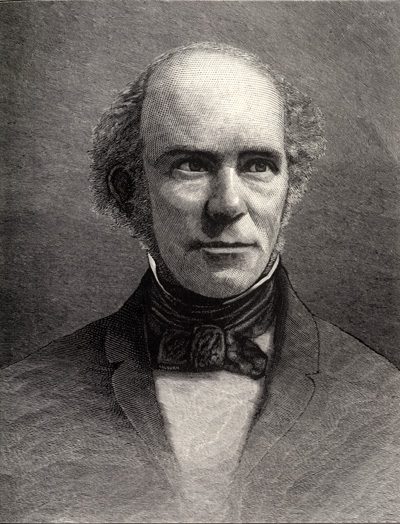
BENDING TOWARD JUSTICE
Theodore Parker’s Religion, and Ours
James Ishmael Ford
A Sermon
5 February 2017
Unitarian Universalist Church
Long Beach, California
Theodore Parker was born on the family farm in Lexington, Massachusetts, on August the 24th, 1810. His paternal grandfather, John, was in command of the Minutemen on that day thirty-five years earlier. When the Minutemen confronted the British regulars, he declared, “If they mean to have war, let it begin here.” And there it began.
So, Theodore was born to American aristocracy, if you will – although, it wasn’t a family that actually profited out of their place in our history. In fact farming in that rocky New England soil was pretty hardscrabble. Theodore was the ninth child in the family, of which only five survived to adulthood. His mother died when he was eleven, and his father struggled to keep the family going.
Everyone quickly noticed Theodore was brilliant. He quickly moved beyond what was offered at local schools, teaching himself advanced math, Latin, Hebrew, and whatever else caught his interest. At sixteen he began teaching school, and between what he earned and what little the family could raise, at nineteen Theodore went off to Harvard, if only as a day student, which meant not eligible for a degree.
He quickly found himself moving in very interesting circles. Among his friends and mentors were Ralph Waldo Emerson, Bronson Alcott, and Maria Lydia Child. Pretty much all his friends encouraged him to enter the ministry. Around the same time he met Lydia Dodge Cabot of, yes, those Cabots, of whom it was later said, “the Lowells talk only to Cabots, and the Cabots talk only to God.” They fell in love, and promised themselves to each other. But, he had to have a profession to support his family. And, everyone knew what that profession should be.
Theodore’s parish minister Convers Francis found most of the necessary money, although the Cabot family appears to have helped, as well, to send him to Harvard’s divinity school. In 1837, having graduated he and Lydia married and he was called to his first church, a tiny congregation of some sixty souls. The congregation was, as was he, Unitarian.
Now, the first wave of Unitarianism that had emerged a generation earlier was highly rationalist, sparking a current that continues a central part of who we are right to this day and this place. However, only a generation from its differentiation out of orthodox Christian congregationalism, there was a sense the emerging tradition wasn’t complete. There was a sense that as valuable as it was, reason wasn’t fully enough.
Seeking a fuller view, a more comprehensive spirituality, American Unitarianism would birth the Transcendentalist movement. Now, Transcendentalism was a literary phenomenon for America writ large, and critical to establishing our American intellectual culture. But at heart it was a burning theological concern among our direct spiritual ancestors. Not unlike, I notice, how the spirituality of Zen Buddhism would also help shape Japanese culture.
Ralph Waldo Emerson was the leading light of that movement. But, Parker, widely read, multi-lingual, and by common ascent usually the smartest person in the room, was quickly seen as Emerson’s equal among the principal Transcendentalists. His place as a signal figure in our movement was secured with one sermon, which he preached in 1841 for the ordination of Charles Shackford at the Hawes Place Church, in Boston. It was titled “A Discourse on the Transient and Permanent in Christianity.” And with it we can say the second wave of Unitarianism was full upon us, a spiritual tidal wave.
Parker preached an “absolute religion,” where “God was immanent in matter and man,” totally accessible to each of us as our natural right directly through what was called both “reason” and now “intuition.” The discovery through this faculty with both those names was itself a turning of the heart, revealing God was in everything. Including, of course, you and me. The consequences of this assertion are many. In the same sermon, following Emerson’s even more famous “Divinity School Address,” as a central theme Parker dismissed biblical miracles, indeed any miraculous authority ascribed to the Bible or Jesus. Instead authority was seated in the human mind, or, for the Transcendentalists, equally good language, the human heart.
Again, I find a fascinating parallel in the Chinese word Xin (in Pinyin, Hsin in the Wade Giles transliteration), a term critical in properly understanding Zen, which means both mind and heart. Asserting mind and heart as one thing opens wide the doors of possibility. Each angle on this amazing human faculty becomes a corrective for the excesses of the other. And together, we find a dynamic engagement with this world.
I cannot overstate the importance of that sermon. Or, the controversy it sparked. On the one hand Parker was denounced by both the orthodox and many of first wave Unitarians, even to the point of being denied pulpit exchanges with colleagues for many years. While on the other hand, his congregation, as I mentioned when he arrived counted sixty souls grew to several thousand, and swelled up to seven thousand when he preached on particularly controversial subjects.
While Parker’s Transcendentalism, like Emerson’s owed much to Platonism, with a constant call to some ideal beyond the body, there were at the same time other Transcendentalist currents, such as Thoreau’s attention to the “thing in itself,” an even more naturalistic view, with which I personally find more affinity. That comprehensiveness, that willingness for a level of ambiguity is also critical to our emerging spirituality. And, something that continues to this day.
But, whether it was Emerson and Parker’s Platonic idealism or Thoreau’s more naturalistic mysticism, Transcendentalism called us to examine our own hearts and the world through that faculty, which in our inheritance can be called either “reason” or “intuition.” I find it really important how for them there was no particular difference between the two, reason from this angle, intuition from that. This is a much richer understanding of how we actually come to know things than many of us tend to notice. Perhaps we can unpack that further at some other time.
Here let’s explore just a little what this meant for Parker. In that sermon sorting the transient from the permanent, he proclaimed, “Christianity is not a system of doctrines, but rather a method of attaining oneness with God. (And a quick pause. Take that word as an invitation to whatever ultimate values you hold, be it higher power, intimate love, or, as I personally prefer, the totality of the world. That oneness with what we find divine) demands, therefore, a good life of piety within, of purity without, and gives the promise that whoso does God’s will, shall know of God’s doctrine.” With this Parker articulated a radical doctrine, declaring we are our true selves when we have nothing between God and us, between the ultimate and me, between the world writ large and you.
If his life stopped there, Theodore Parker would be assured a place in our liberal spiritual pantheon.
But there was also that man who hid runaway slaves in his home and who wrote his sermons with a loaded pistol resting on his desk, knowing his house could at any tie be assaulted by slave catchers. He was a member of the Secret Six, who if you’re unaware of them, were prominent New Englanders who underwrote John Brown’s abortive attempt to arm a slave rebellion. In fact in the wake of the attack on Harper’s Ferry and its failure, several of the six fled to Canada. Parker, as circumstances had it, had developed tuberculosis which had previously claimed many members of his family, and was in Europe, at the time, and where he died. Otherwise, who knows, he could have been arrested and charged with treason, today, perhaps abetting terrorism. I think of that old line about freedom fighter and terrorist and the eye of the beholder, and I very much find myself thinking about our ancestor Theodore Parker.
Parker’s sense was that his direct encounter with the divine also called him into a life of action, to see the divine everywhere, to perceive a divine harmony with one’s self, and then to act in its service. One biographer noted his advocacy for “temperance, education, the condition of women, penal legislation, prison discipline, the moral and mental destitution of the rich, (and) the physical destitution of the poor.” He also called for universal suffrage for both women and African Americans. Now, his views on race were in fact complicated, and evolved throughout his life. No one rises completely out of their time and place. But, oh my, we’re talking about someone living in the first half of the Nineteenth century, advocating for things we mostly assume as natural human rights, but then, were not. Absolutely were not.
My own path is more wary of weapons than Theodore Parker’s, although I don’t and honestly can’t claim to be a pacifist. I think pacifism can be an ethical, moral, and spiritual discipline that one can consciously embrace. And I think the unintended consequences of violence are too many, and too ugly to argue for arms in any but the most extreme circumstances. But those circumstances exist. And the horrors of chattel slavery are a really good example from that time and place. And that pistol on that writing desk made a lot of sense. So, complicated. Our spiritual way calls for moderation in all things, including as the old saw goes, moderation itself. But. And. The conundrums of life lived. Life is complicated.
And Theodore Parker was a complex person. He did not, I gather, play well with others. And this caused a lot of unnecessary hurt. But, he also pushed our association of congregations toward an ever-larger faith, one that would allow in good time, us, who we are today in all our wild glory. When he died in Florence, he was not quite fifty years old. On occasion I wonder, what if? Beyond the possible trial for sedition or treason, what if that fertile mind continued for another decade or two or three?
I find him enormously attractive, and so important. And he certainly challenges us, even today. For instance, in 1853, Theodore Parker had preached another sermon, “Justice and the Conscience.” There he proclaimed, “I do not pretend to understand the moral universe; the arc is a long one, my eye reaches but little ways; I cannot calculate the curve and complete the figure by the experience of sight; (but) I can divine it by conscience. And from what I see I am sure it bends towards justice.”
A century and almost a decade later, Dr Martin Luther King, Jr, another admirer of Parker, who often cited the old Transcendentalist in his sermons, called out to us, “I come to say to you this afternoon, however difficult the moment, however frustrating the hour, it will not be long, because truth crushed to earth will rise again. How long? Not long, because no lie can live forever. How long? Not long, because you shall reap what you sow…. How long? Not long, because the arc of the moral universe is long, but it bends toward justice.”
And Parker’s influence continues, modified, corrected, expanded. Four decades and three years after Dr King’s words, our former, and as far as I’m concerned at least in my heart still president Barack Obama, speaking on the anniversary of King’s assassination, proclaimed, “Dr. King once said that the arc of the moral universe is long but it bends towards justice. It bends towards justice, but here is the thing: it does not bend on its own. It bends because each of us in our own ways put our hand on that arc and we bend it in the direction of justice….”
Here I think we find what Theodore Parker called us to: To see the connections, to reflect on those connections, and then to act in the world inspired by those connections, each of us, in our own way.
I think about how we still live with the unfolding consequences of slavery and how we drew short at the moral repair called for in reconstruction. With terrible consequences, so that even today a rite of adolescence for a black adolescent male is for his parents to have what they call “the talk,” about how to survive when going out in public in their, in our nation. Here in this country where slights and prejudice and a vastly greater likelihood of poverty follow being black like night follows day. And, with all of this, I find myself thinking of those young hotheads who put it all on the line in that loose alliance we call Black Lives Matter. And I think of what Reverend Parker would likely have said, and done. And I think about me, and I think about us.
And now a great tragedy has overtaken the Republic. We have someone with no moral compass as our president. We have someone who ran a campaign disparaging all who might be perceived as “others.” His propensity for scapegoating the powerless and now apparently implementing that as policy runs cold in my heart. And, I think about me, and I think about us.
So, what does it mean to be a Unitarian Universalist in this time, and in this place? What does it mean to be a spiritual heir to Theodore Parker?
Well, you know, if you look through the dust flying around it’s pretty straight-forward. We commit to looking at ourselves and the world, as deeply as possible. We commit to seeing the connections. And we commit to putting our hand on that arc. Of course we will make mistakes. I look at the young people who are loudly and sometimes unpleasantly pushing us to look at the sins of our time and place, and calling us to correct this based in their knowledge, their body knowledge of mutuality, of interdependence, of our accountability to each other, and I know they are going in the right direction.
This is the very same direction that informed Theodore Parker, and which informs our spiritual way. If you have the moral compass, if you see our essential connection with each other is nothing less than the divine itself, then with false steps and mistakes along the way, of course with false steps, we will nonetheless go in the right direction. We will bend that arc.
Our way is about paying attention, acting, correcting, reflecting, and acting again. And, here’s some good news: so far as our human lives are concerned, we do this, and on balance, on balance, mysterious, wondrous, joyful things will emerge. Our hands will join together on that arc, and bend it toward justice.
We do this, and not only will our own hearts find healing, but, our world itself, and the arc of history might indeed, be bent in that divine direction.
This was Theodore Parker’s faith. And, dear ones, no doubt, it is ours.
Amen.
Previous Post

February 4, 2017
Recalling the Mother of the Freedom Movement
Browse Our Archives
Select a Category A Christmas Carol Abolitionist African-American Ahmadiyya Alan Watts Aldous Huxley Allen Ginsberg Amedkar Jayanti American politics American Zen Anaheim Zen Sangha Anglican Annie Besant April Fool Armageddon Art and Religion artificial intellegence Atheist Awakening B R Ambedkar Barlaam & Josaphat Beatnik Between Bhagavad Gita Bible biography birthday bodhisattva Bodhisattva Precepts Book burning Book of Common Prayer Book of Mormon Brahmo Samaj Buddha Buddhism Buddhist Buddhist Lord's Prayer Butterflies Calendars cartoons cat ChatGPT Chicken Tortilla Soup choices Christian atheism Christian mysticism Christian origins Christian Science Christian Zen Christianity Christianity and Buddhism christmas Christmas Truce Christopher Isherwood Church of Later Day Saints Cinco de Mayo circus covenant critical thinking culture D. T. Suzuki Dalit Buddhism Daniel Defoe Desert Fathers and Mothers dharma talk Dogen Donald Trump Dongshan's Five Ranks Dorothy Day dream Duty Easter ecology Edwin Arnold emptiness Empty Moon Zen Network Episcopal Church Eternal Now Ethics evolution existentialism Faith fantasy Fathers Day film film review fire Five Ranks Folk music food Form and emptiness Four Seals Francis of Assisi Francis Xavier Free thinker friendship George MacDonald Gerald Heard Glenn Taylor Webb God Good Friday Gospel of Gospel of Mark Gospel of Thomas grace Graduate Theological Unioin Graduate Theological Union Guanyin H R Blyth Hakuin Ekaku Hanamatsuri Hanukkah Harada Yasutani Zen Heart Sutra Henry David Thoreau Hermann Hesse Hinduism History and Religion history of religion Holy Spirit home Hospitality Icon Ides of March Isaac Newton Islam Islamic mysticism Jack Kerouac James Luther Adams Jiddu Krishnamurti Joan of Arc Johannes Gutenberg John Donne joke Judaism justice karma kensho King James Bible koan Koun Yamada Kyoto School Lewis Carrol Liberal Christianity Liberal Religion Life Plan Community Liminal literature Literature and Religion Liturgy Lord's Prayer Love Mahatma Gandhi Mahayana Martin Luther King Jr Mary Baker Eddy Mary Magdelene Mary Oliver Mayflower Compact Meditation memories memory metaphor money money and religioin Mormons Mother's Day movie review mysticism mythic Neighborhood Unitarian Universalist Church New Thought Nichiren Buddhism Nonduality not knowing Omar Khayyam Pacific School of Religion pagan Palm Sunday Passover peace Pentecost perennialism Phantastes Philip Kapleau philosophy Pilgrimage poetry Poetry and Religion politics Prayer Precepts Printing Press prophecy prophetic spirituality psychology Pure Land Queer religion queering religion Quietism Ram Mohan Roy rebirth recipe Relationships and religion religion religion and history Religious syncretism Resistance Retirement Retreat review Rissho Kosei Kai Ritual Robert Aitken Roshi Robert Ingersoll Rohatsu Romani religion Rosie the Riveter saints samadhi SanboZen Sangha Satyagraha science science and reigion science and religion science fiction seminary sermon Sesshin Sex and Religion Shinran Sikh Sikh tradition silence Social Justice Socially Engaged Buddhism Society and religion Soto Zen soul spiritual community spiritual practice Spirituality Sufism Suicide superstition Taoism Television Teresa of Avila Thanksgiving theological schools Theosophy Thomas Merton Time Transcendentalism Transcendentalist Trinitarian Trinity Uncategorized unitarian Unitarian Christianity Unitarian Universalist Universalism Vajrayana Vedanta Walking war Willa Cather William Ellery Channing wisdom women and religion women in religion World Teacher Writing zazen Zen Zen Center Zen inspired retriement zen meditation Zen Precepts Zen women
Select a Month September 2026 August 2026 July 2026 June 2026 May 2026 April 2026 March 2026 February 2026 January 2026 December 2025 November 2025 October 2025 September 2025 August 2025 July 2025 June 2025 May 2025 April 2025 March 2025 February 2025 January 2025 December 2024 November 2024 October 2024 September 2024 August 2024 July 2024 June 2024 May 2024 April 2024 March 2024 February 2024 January 2024 December 2023 November 2023 October 2023 September 2023 August 2023 July 2023 June 2023 May 2023 April 2023 March 2023 February 2023 January 2023 December 2022 November 2022 October 2022 September 2022 August 2022 July 2022 June 2022 May 2022 April 2022 March 2022 February 2022 January 2022 December 2021 November 2021 October 2021 September 2021 August 2021 July 2021 June 2021 May 2021 April 2021 March 2021 February 2021 January 2021 December 2020 November 2020 October 2020 September 2020 August 2020 July 2020 June 2020 May 2020 April 2020 March 2020 February 2020 January 2020 December 2019 November 2019 October 2019 September 2019 August 2019 July 2019 June 2019 May 2019 April 2019 March 2019 February 2019 January 2019 December 2018 November 2018 October 2018 September 2018 August 2018 July 2018 June 2018 May 2018 April 2018 March 2018 February 2018 January 2018 December 2017 November 2017 October 2017 September 2017 August 2017 July 2017 June 2017 May 2017 April 2017 March 2017 February 2017 January 2017 December 2016 November 2016 October 2016 September 2016 August 2016 July 2016 June 2016 May 2016 April 2016 March 2016 February 2016 January 2016 December 2015 November 2015 October 2015 September 2015 August 2015 July 2015 June 2015 May 2015 April 2015 March 2015 February 2015 January 2015 December 2014 November 2014 October 2014 September 2014 August 2014 July 2014 June 2014 May 2014 April 2014 March 2014 February 2014 January 2014 December 2013 November 2013 October 2013 September 2013 August 2013 July 2013 June 2013 May 2013 April 2013 March 2013 February 2013 January 2013 December 2012 November 2012 October 2012 September 2012 August 2012 July 2012 June 2012 May 2012 April 2012 March 2012 February 2012 January 2012 December 2011 November 2011 October 2011 September 2011 August 2011 July 2011 June 2011 May 2011 April 2011 March 2011 February 2011 January 2011 December 2010 November 2010 October 2010 September 2010 August 2010 July 2010 June 2010 May 2010 April 2010 March 2010 February 2010 January 2010 December 2009 November 2009 October 2009 September 2009 August 2009 July 2009 June 2009 May 2009 April 2009 March 2009 February 2009 January 2009 December 2008 November 2008 October 2008 September 2008 August 2008 July 2008 June 2008 May 2008 April 2008 March 2008 February 2008 January 2008 December 2007 November 2007 October 2007 September 2007 August 2007 July 2007 June 2007 May 2007 April 2007 March 2007 February 2007 January 2007 December 2006 November 2006 October 2006 September 2006
Follow Us!
TAKE THE
Religious Wisdom Quiz
True or False: Matthew records that magi from the east brought three gifts to Jesus.
Select your answer to see how you score.
TRUE FALSE
Related posts from Monkey Mind


A Zen Buddhist Response to this Moment

Hildegard as a Pan-Spiritual Saint
TRENDING AT PATHEOS Buddhist

The First Eucharistic Controversy: Christ’s Real Presence
For Catholics, the Eucharist is the source and summit of the Christian...

What a Stop Sign Can Teach Us About...
How to Make a Decision When You Can't Hear God Main point:...

Archdiocese Hosts Military Marriage Retreat in Germany
RASTATT, Germany — The transient military lifestyle, with its frequent deployments and...

Nearly every morning, I make the drive to Detroit with my high-school-age...

The Real AI Story Is Adoption Without Trust
Artificial intelligence has crossed a political threshold. It is no longer a...

A new article, written by Jeff Lindsay and Gale L. Pooley,...
view all Buddhist blogs
Ad-Free & Subscriber Log-In Subscription Support
- About Us
- 2026 Calendar
- Videos
- Podcasts
- Library of World Religions
- Faith In Media Tracker
- Advertise With Us
- Write for Us
- Privacy Policy
- Terms of Service
- Do Not Sell My Data
- Contact Us
- Radiant Digital
- Manage Newsletter Subscriptions
- Unsubscribe From Notifications
- Sitemap
Copyright 2008-2026, Patheos. All rights reserved.
Subscription Support Ad-Free & Subscriber Log-In
Follow Patheos