
BuddhistCatholicContemplativeEvangelicalGeneral ChristianHinduJewishLatter-day SaintMuslimNew VisionsProgressive Christian
Beliefs
- Buddhist
- Catholic
- Contemplative
- Evangelical
- General Christian
- Hindu
- Jewish
- Latter-day Saint
- More Voices
- Muslim
- New Visions
- Pagan
- Progressive Christian
Topics
- Religion News
- Food and Religion
- Sports and Religion
- Religious Art
- Religious Music and Entertainment
- Religious Events
- History and Religion
- Style and Religion
- Politics and Religion
- Women in Religion
- Recreation Outdoors and Religion
- Business Finance and Religion
- Careers Workplace and Religion
- Education and Religion
- Family Parenting and Religion
- Health Fitness and Religion
- Home and Religion
- Relationships and Religion
- Technology and Religion
- Travel and Religion
Columnists
- Buddhist Columnists
- Business Finance and Religion Columnists
- Careers Workplace and Religion Columnists
- Catholic Columnists
- Contemplative Columnists
- Education and Religion Columnists
- Evangelists Columnists
- Family Parenting and Religion Columnists
- General Christian Columnists
- Health Fitness and Religion Columnists
- Hindu Columnists
- History and Religion Columnists
- Home and Religion Columnists
- Jewish Columnists
- More Voices Columnists
- Latter Day Columnists
- Muslim Columnists
- New Visions Columnists
- Nonreligious Columnists
- Pagan Columnists
- Politics and Religion Columnists
- Progressive Columnists
- Recreation Outdoors and Religion Columnists
- Relationships and Religion Columnists
- Religion News Columnists
- Religious Art Columnists
- Religious Events Columnists
- Religious Music and Entertainment Columnists
- Sports and Religion Columnists
- Style and Religion Columnists
- Technology and Religion Columnists
- Travel and Religion Columnists
- Women in Religion Columnists
Resource Library
- 2026 Calendar
- Library of World Religions
- The 100 Most Holy Places on Earth
- Patheos Answers
- Podcasts
- Videos
- Faith Leaders Database
- Anglican Episcopalian
- Bahai
- Baptist
- Buddhism
- Christianity
- Confucianism
- Eastern Orthodoxy
- Hinduism
- Holiness and Pentecostal
- ISKCON
- Islam
- Judaism
- Lutheran
- Methodist
- The Church of Jesus Christ of Latter-day Saints
- New Age
- Paganism
- Presbytarian and Reformed
- Protestantism
- Religion Behind the Scenes
- Roman Catholic
- Scientology
- Shia Islam
- Sikhism
- Sufism
- Sunni Islam
- Taoism
- Zen
- See all religions
Research Tools
 Ad-Free & Subscriber Log-In Subscription Support
Ad-Free & Subscriber Log-In Subscription Support
Follow Patheos 

- Trending:
- Forgiveness
- |
- Marriage
- |
- Consciousness
- |
- Death Penalty
- |
- Election
- |
- Halloween

- Home
- Buddhist
- A SONG OF JONAH: Or, What Happens When the Prophet is a Jerk
A SONG OF JONAH: Or, What Happens When the Prophet is a Jerk
Last updated on: January 30, 2017 at 9:25 am by James Ford
A SONG OF JONAH: Or, What Happens When the Prophet is a Jerk 2017-01-30T09:25:22-08:00 James Ford
Patheos Explore the world's faith through different perspectives on religion and spirituality! Patheos has the views of the prevalent religions and spiritualities of the world.
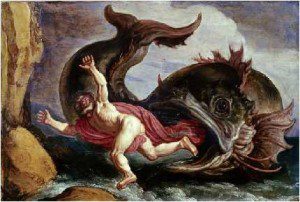
A SONG OF JONAH
Or, What Happens When the Prophet is a Jerk
James Ishmael Ford
A Sermon Delivered at
Emerson Unitarian Universalist Church
Canoga Park, California
29 January 2017
A Story
Now God said to Jonah, “Arise, go to Los Angeles, that great city, and cry against their wickedness.” But instead Jonah rose up to flee to Seattle and went and found a ship. God sent out a great wind into the sea, and there was a mighty tempest, so that the ship was about to be broken up off the coast of Santa Barbara.
The mariners were afraid, and cried every one unto their god, and cast forth the wares that were in the ship into the sea, to lighten it. But Jonah was down into the sides of the ship; and he lay, and was fast asleep. The shipmaster came to him, and said, “O sleeper, arise, call upon thy God that we perish not.”
When he saw what was happening Jonah admitted that he was the cause of the storm. So they took up Jonah, and cast him forth into the sea: and the sea ceased from her raging. Then God prepared a great fish to swallow up Jonah. And Jonah was in the belly of the fish three days and three nights. Then Jonah finally prayed from within the fish’s belly, repenting his sins and his flight from his task. And so God caused the fish to vomit Jonah upon the dry land in Ventura.
And for the second time God said, “Arise, go unto Los Angeles, that great city, and preach unto it the preaching that I bid thee. So Jonah arose, and went unto Los Angeles. And Jonah entered the city and he cried, and said to them, “Yet forty days, and Los Angeles shall be overthrown unless you repent your wickedness.” And the people of Los Angeles thought, well, it could be so, and proclaimed a fast, and put on sackcloth, from the mayor right down to the residents of Skid Row.” And God saw their work and that they had turned from their evil ways; and God forgave them.
But this displeased Jonah exceedingly, and he was very angry. And he prayed to God, and said, “I beseech thee, take my life from me; for it is better for me to die than to live.” So Jonah went out of the city and up to the Hollywood Hills, not far from the sign, and sat in the dust.
And God prepared a vine, and made it to come up over Jonah, that it might shelter his old bald head from the heat.
The Book of Jonah (abridged and slightly adapted from the King James Version)
A psychic once said I’d been a rabbi in a recent life. However, my Jewish friends have to a person said the psychic was obviously a fraud. I am, they all seem to think, about the most goyish of their friends, pretty much pure white bread and mayonnaise. And I have to acknowledge while as a grown up I have come to like rye and mustard, still, yes, I do consider white bread and mayonnaise part of my pantheon of comfort foods.
I certainly didn’t know a lot of Jewish people as I grew up among poor white fundamentalist Christians. My first encounters with real Jewish folk were actually “JuBus,” Buddhist-identified Jews. Which is also why pretty much all the Yiddish in my vocabulary was learned as a young adult living in a Buddhist monastery.
Now, and for many years, I’ve been a Unitarian Universalist. And, well, you’ve heard the old joke, I presume. How the guys were sitting in the coffee shop reading the morning paper when Joe looked up from the obituary page and said “Oh, my. Fred died. He was just buried from the Unitarian church. To which Sam replied, “I had no idea Fred was Jewish.” It’s a small joke with a real point. Just as with the Western Buddhist community we UUs count an outsized number of members who come from Jewish backgrounds. In most cases without feeling they’ve ceased being Jewish. Our modern religious scene and particularly our liberal religious scene, is, no doubt, complex and interesting.
And, I think even more interesting is how this influence goes in any number of directions. Judaism has been an important current in the development of our contemporary liberal spirituality. None so important as our UU sense of covenant taking precedent over creed, a central marker of our spiritual identity, and which is derived through the Puritan tradition, but fully rooted within Judaism. And I think for us in our times, these most dangerous and difficult times, we Unitarian Universalists could profit considerably from examining the traditions of Judaism. This tradition is not only a root ancestor for us; it provides insights into our human condition that we can profitably, if critically, of necessity critically, engage.
As I said, these times we live in, are troubled and dangerous. I am aghast at yesterday’s events where the president issued what is beginning to look like a litany of noxious executive orders, this one closing the border to refugees from Muslim majority countries that incidentally he doesn’t have business interests in. And maybe even more disturbing he has just restructured his national security council giving Stephen Bannon, whom I can fully aware of the contours of that term only call a neo-fascist, a significant place at that table.
Religion has many functions. But, one, and one we’ve inherited specifically from Judaism, is speaking truth to power. There are many directions we can go, but today, but I feel a need to address the great mess of those who are called to speak out in harsh and dangerous times. You know, you, and me.
So, with that, what about the fact that those speaking in the stories of old seem pretty much to all be imperfect spokespersons? I think of our modern prophets calling us to our better angels such as Mohandas Gandhi and Martin Luther King, Jr. Both were amazing voices pointing true. And, both flawed vessels, people with significant shortcomings. Some can and do point to those shortcomings as evidence their message is false. I think that’s misdirection. There is something vastly more important in that fact. It is important to consider as you and I look to our place at this time, and what it is, we can do, as the people we actually are.
In fact if we look back to that story of Jonah, we can see the problem of flawed vessels bringing important messages is ancient. Most scholars date the story from somewhere after the Babylonian captivity, as Judaism had evolved its universalist ethic, so sometime after the sixth century before our common era. That’s a long time ago. And, I suggest, it is a problem as current as today.
Now, let’s talk first a little about how we need to engage this story. When I was a child, my father who was an Robert Ingersoll Atheist was particularly focused on the story of the great fish that supposedly swallowed the prophet, as proof the whole of scriptures were a mass of nonsense. And, I certainly would agree this little story has nothing of history about it. What it does is point to some directions of our human hearts, written by people living through hard times, and seeing that even within the clouded heart wisdom and direction can arise. Think of Jonah as perhaps the most humanistic of metaphors for those willing to listen to the points of the story.
I’ve long known that fiction can contain the deepest truths. And so that great fish is not my problem. Jonah is a wonderful story. I really like how it starts with that rushing off for Seattle, in the original version, Tarshish. To the writer, that meant Jonah got his divine commission, and takes off in the exact opposite direction. He was heading for the very ends of the earth. So, we have a first class shirker being picked by God for his important task. What’s not to love here? Sounds like my story, an awful lot of my story. And, maybe, yours, as well? What task you know deep in your heart you should be attending to that you are not living up to? What calling from the depth of your being are you avoiding? What word are you called to share, but are afraid to do so?
Another bit of wisdom known for a very long time. This avoiding those tasks we know deep in our hearts we should be doing, invariably leads to some hard time in the belly of some beast. By the bye, this belly of the fish thing, as I mentioned was a favorite point for mocking by my father; who counted the fish story along with pillars and four corners to the earth as evidence these stories were myths. And for my dad “myth” meant lie.
I, I hope you have picked up, have a different take on myth, on the value of story as a way into our human hearts that can be found if we don’t cling to these ancient accounts as literal truth. I don’t try to take this old story as history, it isn’t. But rather as our spiritual ancestors attempting to address something really important about human lives, which it is. I suspect the rabbis who chose to reflect on this story often had a similar desire. So, back to that belly of the fish in which we land as we try to avoid what our hearts call us to. Most of us can describe our personal version. What consequences have you found in your life out of avoiding your deeper responsibilities? That’s the question this part of the story is pointing us toward.
When Jonah finally, finally gets up and goes and does the prophesying, and the people in their turn repent, I love that he’s royally annoyed that they did what they were called to, and didn’t get their divine punishment. After all that he had gone through, he wanted fire and brimstone. But he got repentance, changed hearts. In fact he’s so angry that things went well for the people, he wishes he were dead. So, Jonah starts as a jerk and ends as a jerk. And along the way he does a couple of good things. This is important to notice. He is a complete jerk. And, he does some good things. And in those good things, despite everything else, he redeems himself. That gives me some hope. Maybe it can for you, as well.
What captures me here is the theme of second chances. Here the divine strews second chances before Jonah like a child throwing fistfuls of rose peddles during a wedding processional. Great globs of second chances picked up in a chubby hand and thrown indiscriminately in our path. I believe the greatest gift of our humanity is that we get these second chances. And, with that here’s another important point. We don’t all get them. A child born into a decade long drought in the third world doesn’t even get a first chance. And, frankly, there are people here in Canoga Park who aren’t getting anything like a fair shake, much less a fair chance. So, if we got them, first or second or whatever; we’re lucky. We are, to use a term popular in some circles right now, privileged.
And, here’s the deal with that: privileged is only an epithet when we don’t take advantage of it to help out someone else. So, those of us who have been given those second and third and often fourth chances, we have an enormous responsibility to take these chances, and to allow the changes in our lives they hold out. And then pass them on. In reality the hope of those children from that destitute place at the edge of our consciousness to the hidden corners of our own community may depend on us living into our possibility of largeness of heart and from that of doing the right thing, from taking the gifts given to us, allowing them to do what they need to do, and then passing them on to others.
It’s that interdependent web thing. It’s that “single garment of destiny” thing. Here we find the secret heart of connection. So, the question of second chances, of turning hearts, and moving in new directions is really important. We do not know where our taking these second chances will lead. But, what I do know, is that they open possibilities where there were few before.
On this way our intentions are critical. We need to notice and intend to change. That’s the gate. We may not succeed the first time, or the second. Frankly it strikes me Jonah never completely comes to terms with the gift of his life. But along the way at heart he intends to do the right thing, as complex and confused as his intention is. And that’s very important. But, that said, our intentions are not quite enough. It’s a gate into the garden, but not the garden. Hence, that notion of the road to hell being paved with good intentions. You can’t just intend good things. We need one more thing that can inform our actions in healthy ways.
Frankly, what that more is, is a small distinction, easily missed. But, it makes all the difference. And, that’s where I think about the vine. Jonah does the job, people repent, and he, filled with anger that they did and didn’t get fire and brimstone, he goes out of the city and sits in the dust, sulking. As I noted, a world class jerk. Then in that lovely coda to the story God causes a vine to grow up and shade, as I imagine it, his old balding head that had been burning red in the harsh Near Eastern sun.
Now in the fuller version of this story the vine is created and destroyed and a relatively obvious moral is drawn out of the event. But I’ve found the most value for me in just contemplating that vine and that shade provided even for foolish, shirking, vindictive Jonah. What that suggests to me, what that sings to me is that I’m not doing this alone. Never have been.
Once again the interdependent web thing, the single garment of destiny thing. The problems come when I think I’m responsible all by myself and must make it happen, must, as one wise person described it, push the river. Can’t be done. The intention that fails us is the one that tries to control things. The intention that leads to the good is surrender to our better angels, and specifically to our willingness to work together. However flawed, however flawed.
That’s all.
Our task laid out for us by the ancestors.
If we are willing. The message is clear. We are all related. We are all responsible. If we’ll turn toward the city, and go as we are, just as we are, and proclaim this good news, to turn from selfishness to companionship, to see how we are all of us connected, all of us bound in that single garment, hope opens for all of us.
And then we can find a way.
Just a word from a friend passing through.
Amen.
Previous Post

January 28, 2017
Zen & the Bodhisattva Way: A Meditation on the Three Pure Precepts
Next Post
January 30, 2017 Building Fences, Tearing Down Fences: A Review of the Movie Fences
Browse Our Archives
Select a Category A Christmas Carol Abolitionist African-American Ahmadiyya Alan Watts Aldous Huxley Allen Ginsberg Amedkar Jayanti American politics American Zen Anaheim Zen Sangha Anglican Annie Besant April Fool Armageddon Art and Religion artificial intellegence Atheist Awakening B R Ambedkar Barlaam & Josaphat Beatnik Between Bhagavad Gita Bible biography birthday bodhisattva Bodhisattva Precepts Book burning Book of Common Prayer Book of Mormon Brahmo Samaj Buddha Buddhism Buddhist Buddhist Lord's Prayer Butterflies Calendars cartoons cat ChatGPT Chicken Tortilla Soup choices Christian atheism Christian mysticism Christian origins Christian Science Christian Zen Christianity Christianity and Buddhism christmas Christmas Truce Christopher Isherwood Church of Later Day Saints Cinco de Mayo circus covenant critical thinking culture D. T. Suzuki Dalit Buddhism Daniel Defoe Desert Fathers and Mothers dharma talk Dogen Donald Trump Dongshan's Five Ranks Dorothy Day dream Duty Easter ecology Edwin Arnold emptiness Empty Moon Zen Network Episcopal Church Eternal Now Ethics evolution existentialism Faith fantasy Fathers Day film film review fire Five Ranks Folk music food Form and emptiness Four Seals Francis of Assisi Francis Xavier Free thinker friendship George MacDonald Gerald Heard Glenn Taylor Webb God Good Friday Gospel of Gospel of Mark Gospel of Thomas grace Graduate Theological Unioin Graduate Theological Union Guanyin H R Blyth Hakuin Ekaku Hanamatsuri Hanukkah Harada Yasutani Zen Heart Sutra Henry David Thoreau Hermann Hesse Hinduism History and Religion history of religion Holy Spirit home Hospitality Icon Ides of March Isaac Newton Islam Islamic mysticism Jack Kerouac James Luther Adams Jiddu Krishnamurti Joan of Arc Johannes Gutenberg John Donne joke Judaism justice karma kensho King James Bible koan Koun Yamada Kyoto School Lewis Carrol Liberal Christianity Liberal Religion Life Plan Community Liminal literature Literature and Religion Liturgy Lord's Prayer Love Mahatma Gandhi Mahayana Martin Luther King Jr Mary Baker Eddy Mary Magdelene Mary Oliver Mayflower Compact Meditation memories memory metaphor money money and religioin Mormons Mother's Day movie review mysticism mythic Neighborhood Unitarian Universalist Church New Thought Nichiren Buddhism Nonduality not knowing Omar Khayyam Pacific School of Religion pagan Palm Sunday Passover peace Pentecost perennialism Phantastes Philip Kapleau philosophy Pilgrimage poetry Poetry and Religion politics Prayer Precepts Printing Press prophecy prophetic spirituality psychology Pure Land Queer religion queering religion Quietism Ram Mohan Roy rebirth recipe Relationships and religion religion religion and history Religious syncretism Resistance Retirement Retreat review Rissho Kosei Kai Ritual Robert Aitken Roshi Robert Ingersoll Rohatsu Romani religion Rosie the Riveter saints samadhi SanboZen Sangha Satyagraha science science and reigion science and religion science fiction seminary sermon Sesshin Sex and Religion Shinran Sikh Sikh tradition silence Social Justice Socially Engaged Buddhism Society and religion Soto Zen soul spiritual community spiritual practice Spirituality Sufism Suicide superstition Taoism Television Teresa of Avila Thanksgiving theological schools Theosophy Thomas Merton Time Transcendentalism Transcendentalist Trinitarian Trinity Uncategorized unitarian Unitarian Christianity Unitarian Universalist Universalism Vajrayana Vedanta Walking war Willa Cather William Ellery Channing wisdom women and religion women in religion World Teacher Writing zazen Zen Zen Center Zen inspired retriement zen meditation Zen Precepts Zen women
Select a Month September 2026 August 2026 July 2026 June 2026 May 2026 April 2026 March 2026 February 2026 January 2026 December 2025 November 2025 October 2025 September 2025 August 2025 July 2025 June 2025 May 2025 April 2025 March 2025 February 2025 January 2025 December 2024 November 2024 October 2024 September 2024 August 2024 July 2024 June 2024 May 2024 April 2024 March 2024 February 2024 January 2024 December 2023 November 2023 October 2023 September 2023 August 2023 July 2023 June 2023 May 2023 April 2023 March 2023 February 2023 January 2023 December 2022 November 2022 October 2022 September 2022 August 2022 July 2022 June 2022 May 2022 April 2022 March 2022 February 2022 January 2022 December 2021 November 2021 October 2021 September 2021 August 2021 July 2021 June 2021 May 2021 April 2021 March 2021 February 2021 January 2021 December 2020 November 2020 October 2020 September 2020 August 2020 July 2020 June 2020 May 2020 April 2020 March 2020 February 2020 January 2020 December 2019 November 2019 October 2019 September 2019 August 2019 July 2019 June 2019 May 2019 April 2019 March 2019 February 2019 January 2019 December 2018 November 2018 October 2018 September 2018 August 2018 July 2018 June 2018 May 2018 April 2018 March 2018 February 2018 January 2018 December 2017 November 2017 October 2017 September 2017 August 2017 July 2017 June 2017 May 2017 April 2017 March 2017 February 2017 January 2017 December 2016 November 2016 October 2016 September 2016 August 2016 July 2016 June 2016 May 2016 April 2016 March 2016 February 2016 January 2016 December 2015 November 2015 October 2015 September 2015 August 2015 July 2015 June 2015 May 2015 April 2015 March 2015 February 2015 January 2015 December 2014 November 2014 October 2014 September 2014 August 2014 July 2014 June 2014 May 2014 April 2014 March 2014 February 2014 January 2014 December 2013 November 2013 October 2013 September 2013 August 2013 July 2013 June 2013 May 2013 April 2013 March 2013 February 2013 January 2013 December 2012 November 2012 October 2012 September 2012 August 2012 July 2012 June 2012 May 2012 April 2012 March 2012 February 2012 January 2012 December 2011 November 2011 October 2011 September 2011 August 2011 July 2011 June 2011 May 2011 April 2011 March 2011 February 2011 January 2011 December 2010 November 2010 October 2010 September 2010 August 2010 July 2010 June 2010 May 2010 April 2010 March 2010 February 2010 January 2010 December 2009 November 2009 October 2009 September 2009 August 2009 July 2009 June 2009 May 2009 April 2009 March 2009 February 2009 January 2009 December 2008 November 2008 October 2008 September 2008 August 2008 July 2008 June 2008 May 2008 April 2008 March 2008 February 2008 January 2008 December 2007 November 2007 October 2007 September 2007 August 2007 July 2007 June 2007 May 2007 April 2007 March 2007 February 2007 January 2007 December 2006 November 2006 October 2006 September 2006
Follow Us!
TAKE THE
Religious Wisdom Quiz
Which Psalm begins with the words, "My God, my God, why have you forsaken me?", later quoted by Jesus?
Select your answer to see how you score.
Psalm 1 Psalm 22 Psalm 46 Psalm 110
Related posts from Monkey Mind


A Zen Buddhist Response to this Moment

Zen and the Dance of Not Knowing
TRENDING AT PATHEOS Buddhist

57th Dove Awards Honor Dolly Parton, Crown New...
On gospel music’s biggest night, the 57th annual GMA Dove Awards honored...

The First Eucharistic Controversy: Christ’s Real Presence
For Catholics, the Eucharist is the source and summit of the Christian...

What a Stop Sign Can Teach Us About...
How to Make a Decision When You Can't Hear God Main point:...

Archdiocese Hosts Military Marriage Retreat in Germany
RASTATT, Germany — The transient military lifestyle, with its frequent deployments and...

Nearly every morning, I make the drive to Detroit with my high-school-age...

The Real AI Story Is Adoption Without Trust
Artificial intelligence has crossed a political threshold. It is no longer a...
view all Buddhist blogs
Ad-Free & Subscriber Log-In Subscription Support
- About Us
- 2026 Calendar
- Videos
- Podcasts
- Library of World Religions
- Faith In Media Tracker
- Advertise With Us
- Write for Us
- Privacy Policy
- Terms of Service
- Do Not Sell My Data
- Contact Us
- Radiant Digital
- Manage Newsletter Subscriptions
- Unsubscribe From Notifications
- Sitemap
Copyright 2008-2026, Patheos. All rights reserved.
Subscription Support Ad-Free & Subscriber Log-In
Follow Patheos