
BuddhistCatholicContemplativeEvangelicalGeneral ChristianHinduJewishLatter-day SaintMuslimNew VisionsProgressive Christian
Beliefs
- Buddhist
- Catholic
- Contemplative
- Evangelical
- General Christian
- Hindu
- Jewish
- Latter-day Saint
- More Voices
- Muslim
- New Visions
- Pagan
- Progressive Christian
Topics
- Religion News
- Food and Religion
- Sports and Religion
- Religious Art
- Religious Music and Entertainment
- Religious Events
- History and Religion
- Style and Religion
- Politics and Religion
- Women in Religion
- Recreation Outdoors and Religion
- Business Finance and Religion
- Careers Workplace and Religion
- Education and Religion
- Family Parenting and Religion
- Health Fitness and Religion
- Home and Religion
- Relationships and Religion
- Technology and Religion
- Travel and Religion
Columnists
- Buddhist Columnists
- Business Finance and Religion Columnists
- Careers Workplace and Religion Columnists
- Catholic Columnists
- Contemplative Columnists
- Education and Religion Columnists
- Evangelists Columnists
- Family Parenting and Religion Columnists
- General Christian Columnists
- Health Fitness and Religion Columnists
- Hindu Columnists
- History and Religion Columnists
- Home and Religion Columnists
- Jewish Columnists
- More Voices Columnists
- Latter Day Columnists
- Muslim Columnists
- New Visions Columnists
- Nonreligious Columnists
- Pagan Columnists
- Politics and Religion Columnists
- Progressive Columnists
- Recreation Outdoors and Religion Columnists
- Relationships and Religion Columnists
- Religion News Columnists
- Religious Art Columnists
- Religious Events Columnists
- Religious Music and Entertainment Columnists
- Sports and Religion Columnists
- Style and Religion Columnists
- Technology and Religion Columnists
- Travel and Religion Columnists
- Women in Religion Columnists
Resource Library
- 2026 Calendar
- Library of World Religions
- The 100 Most Holy Places on Earth
- Patheos Answers
- Podcasts
- Videos
- Faith Leaders Database
- Anglican Episcopalian
- Bahai
- Baptist
- Buddhism
- Christianity
- Confucianism
- Eastern Orthodoxy
- Hinduism
- Holiness and Pentecostal
- ISKCON
- Islam
- Judaism
- Lutheran
- Methodist
- The Church of Jesus Christ of Latter-day Saints
- New Age
- Paganism
- Presbytarian and Reformed
- Protestantism
- Religion Behind the Scenes
- Roman Catholic
- Scientology
- Shia Islam
- Sikhism
- Sufism
- Sunni Islam
- Taoism
- Zen
- See all religions
Research Tools
 Ad-Free & Subscriber Log-In Subscription Support
Ad-Free & Subscriber Log-In Subscription Support
Follow Patheos 

- Trending:
- Forgiveness
- |
- Marriage
- |
- Consciousness
- |
- Death Penalty
- |
- Election
- |
- Halloween

- Home
- Buddhist
- The Zen Project in North America: A Small Progress Report
The Zen Project in North America: A Small Progress Report
Last updated on: October 8, 2016 at 4:11 pm by James Ford
The Zen Project in North America: A Small Progress Report 2016-10-08T16:11:31-07:00 James Ford
Patheos Explore the world's faith through different perspectives on religion and spirituality! Patheos has the views of the prevalent religions and spiritualities of the world.
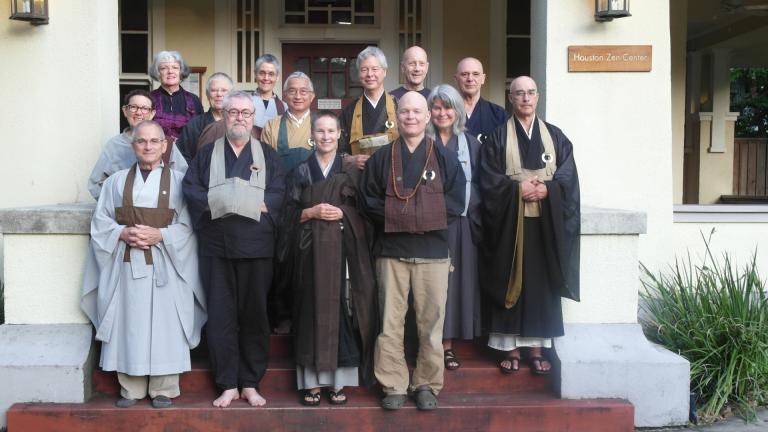
The Zen Project in North America: A Small Progress Report
James Ishmael Ford
I started practicing Zen in 1969. I had a troubled heart, and I was on a quest for meaning and purpose.
I had a deep sense something was wrong. The world around me was chaotic, the terrible realities of our racially divided country were being held up to the world’s attention, we were embroiled in a war that seemed to have no real purpose, women were demanding to be treated like human beings, and clearly were not going to be silenced despite many people’s best efforts, there were real and painful divides between those with and those without, and, all this time the human population of the world was pushing beyond anyone’s idea of what the planet could sustain. And, really, all that revealed beyond any way I could ignore it, that there was something deeply wrong in the human world. For me digging deeper, I saw the religion of my youth as little more than a way of social control, for the most part only serving the status quo. And dipping into the political options, they all seemed either ineffective or crazy.
And that was simply the world around me. I knew as I tried to honestly look at myself that I was no exception to the vagaries of the human condition. My own heart was just as deeply troubled as the world I saw outside. And, this was the horrific part; I saw no obvious fixes. The god of my childhood looked simply like a projection of the human mind into the sky, creating a deity that I would not want to encounter in a dark alley. So, that seemed no route to a fix.
And at the same time I had some visceral sense there could be a way through. I realize this was not a rational thought. Possibly, probably it was just the deep human desire to survive, a drowning person’s fight to find air. But, whatever it is that drove me, I was driven, as driven as that drowning person. And intuitively it seemed the way through would be found in some way within religion, if not the religion of my childhood.
So, I tried a lot of things. And in the San Francisco Bay Area of the late 1960s, let me tell you, there were a lot of things to try. Fairly quickly on I discovered the Zen Center in San Francisco and began sitting at its branch in Berkeley. From there, well there was no turning back for me. People who want to know more about my particular path all you need do is google my name and “Zen.” More than I care to share is out there in the inter webs.
What is important here is that I have become a participant observer as Zen has been taking root in our Western soil. Here’s what I found.
Some two and a half millennia ago a man living on the boundaries of what today we call India and Nepal, born into privilege, but burning with many of the same questions that drove me, launched on a spiritual quest. He studied with the masters of his era, and finally gave himself over to a practice of presence. Out of that he had a life changing insight, not just for him, but for the world itself.
His personal concern was based in a belief that the human condition, that one I saw in my own life repeats in a literal way from one life to another. This has become an issue for many of us within modern world, mostly, although not exclusively in the West. But, the fascinating thing is that one need not believe in some post mortem reanimation for pretty much all of his observations about the human condition and the path out of the mesh of suffering to remain useful. That has proven a north star for me.
And then there’s Zen. When Buddhism arrived in China variations on the original teachings and path the Buddha outlined emerged. And of those one was Zen. (Okay, in China the word would be Chan – but, because of the way it unfolded in the West, we usually call it Zen) The word itself, Zen, Chan, Thien, Son, ultimately means meditation. And, that’s what was at the core of the Zen way, a meditation discipline, or, more correctly, a small basket of meditation disciplines. All of them in service to that insight which the Buddha proclaimed, and which is most succinctly presented in the line the Zen tradition says the wandering mendicant proclaimed upon his awakening, “the world and I wake up together.” That insight can also be called awakening. Sometimes it is called enlightenment.
There was one other critical element in the emergence of Zen. And that was a cadre of guardians of the insight and the disciplines. Traditionally the ownership of the way was the monastic order established by the Buddha. But in China something else emerged out of a response to a number of conditions unique to that culture. It was the myth of Dharma transmission, of a lineage of enlightened masters who extended right back to Gautama himself. What is important is that by sometime in the Eighth century that myth became a historical fact. And from that time on it has been impossible to extricate the Zen way from the transmitted teachers who stand in those lineages.
That said until very recently and almost exclusively in the West Zen’s lineage holders were also ordained clerics. In China and Korea and Vietnam they remained Vinaya monastics. In Japan with its own great shifts starting in the ninth century a new ordination model emerged based in the Bodhisattva precepts of the Chinese apocryphon the Bramajala Sutra, which eventually abandoned celibate and life long monasticism, although within the Zen school maintained a monastic experience, and for the teachers an extensive monastic experience.
Now, here in the West a number of things have come together to, first, make Zen appealing to many of us, and then for it to take root in a wild number of ways. The first most of us in North America heard of Zen was through the writings of Alan Watts. Watts was an enormously right person for the tumultuous 1960s. He was a long time student of Buddhism, and particularly of the scholar practitioner D. T. Suzuki. He took Suzuki’s interest in the Buddha’s insight understood through Zen, but for him as completely a-historical and not bound by any cultural expressions, and ran with it.
This was something just perfect for many of us. Me, included.
And then out of that some people traveled to Japan and other East Asian countries, and missionaries came from those countries. Significantly, most of those teachers were themselves eccentrics in their own countries, people who for different reasons were ready for something new. And, so, new we got.
The Vietnamese monk Thich Nhat Hanh offered his own social justice infused modifications of the Vietnamese Zen way. The Korean monk Seung Sahn offered a modification of his monastic training, including with it a blending of the huatou practice he had inherited in his Korean training modified through some years in Japan and an extensive exposure to the Japanese Rinzai koan tradition. The Chinese missionaries offered the fewest modifications of their way. The monk Hsuan Hua remained within the Chinese immigrant community, but through an aggressive publications program attracted a handful of Westerners, while the monk Sheng Yen actively embraced Western students coming to him.
But, it was the Japanese who captured the imagination and the largest numbers of Westerners interested in Zen and its ways. The Soto priests Soyu Matsuoka and most importantly Shunryu Suzuki both came West to serve Japanese and Japanese descent communities, actively embraced these new and mostly very young Western seekers. Critically Suzuki Roshi developed the idea of a “Zen center.” And modified the Japanese monastic training model in significant ways. Two other priests who came over to work with him and eventually began teaching independently Dainin Katagiri and Kobun Chino Otagawa each offered their own modifications of the Soto way. The British priest Houn Jiyu Kennett would add one more variation on the Soto way.
Rinzai had two principal expressions, one on the East coast led by Eido Shimano and in the West by Joshu Sasaki. Shimano offered a fairly close modification of the Japanese Rinzai model, but still a modification including an adapted version of the Rinzai koan curriculum. Sasaki also offered a modified but arguably even more intense monastic training model, although he largely abandoned koan introspection in its traditional Japanese style. Other Rinzai teachers had smaller impacts, Genki Takabyashi and Glenn Taylor Webb in Seattle, and other masters visited without settling in this country.
Taizan Maezumi, who came West in the same way as Matsuoka and Suzuki roshis, to serve Japanese communities settled in Los Angeles. He is wildly important for introducing a koan curriculum developed as a modification of the traditional Rinzai system by the turn of the last century Soto priest Daiun Harada. Also, Harada Roshi had authorized a teacher, Hakuun Yasutani who authorized lay teachers. And through Yasutani, who visited the West a number of times and attracted a number of people, the Americans Philip Kapleau and Robert Aitken would become the source of even more non-traditional Zen training.
Then came a wave of scandals. First it was revealed that Philip Kapleau did not have full authorization as a teacher. Then there were a series of sex scandals involving a long list of teachers, including most of the original teachers. And it didn’t stop. Many other teachers have since been implicated in scandals of varying degree. But, the net result was a shaking of the foundations. On the one hand Kapleau rosh was obviously a very good Zen teacher. And, what did it mean for the other teachers, the ones involved in sex scandals? What exactly was that insight is supposed to be if its guardians are often such sorry human beings?
Well, now, as I write these words in October of 2016, the dust seems to be settling, and we can cast eyes on what we see left.
Zen here is now a somewhat more modest offering. That great insight remains, but it is ever more understood as completely bound up with the stuff of this world and in no way separate from it. The need for an ethical component to the training has never been more obvious. And out of that some sense that systems of accountability are essential to the continuance of the project. At least some of us feel this. That the words “accountability” are said out loud also worry many, particularly as we have from Alan Watts forward had a significant part of us who are spiritual anarchists. Some hold on to the transmission itself as the sole qualifier for teaching, and others even deny that offering a Zenless Zen. But, the majority of those who have given their lives to the project do seem to feel a need for some kinds of accountability.
Exactly what and how remains unclear. Although the most obvious way is through the ordination model,the major way teachers emerge. For those for whom this is a central part of the corrections necessary to carry the Zen way forward there is little commonality within the details. Elsewhere I’ve identified five different models for the Soto school, the largest of the West’s Zen communities, that seem to be contending here.
In that reflection I didn’t even go into what may be the juiciest of the emergent and uniquely, or near uniquely Western expressions, and that is the lay Zen movements. The Harada Yasutani koan way opened the door. But, also among many of the Soto communities, particularly the lineages derived from Maezumi, fully independent lay teachers are guiding communities of practice. Other Soto lines have been more reluctant to let go of the priestly control, but through the obvious quality of many of their lay students have felt compelled to create forms of authorization that are less than full transmission. Whether these partial authorizations can hold these teachers back from eventually authorizing their own students is something of an open question.
Of course they face the same issues of “quality control,” and proper preparation for guiding others, but how they will do this is simply not established. Although there are some things we can see. Our teachers are more modest about who they are, and in general are more open to accountability. Critically, I think most of us who look honestly see that the training we get produces “journeymen” rather than masters, basically our teachers are practitioners who have at least some minimum preparation to guide others. The titles themselves are vastly inflated. Although, and this is important, I believe they are in the East, as well. Mastery, well, that’s an elusive thing. Some who might deserve such titles do appear to be emerging. But, only time shows. No titles do. This is a challenge, but also, I hope, a comfort. And hints at our way through.
Styles of training continue to be wildly over the map. They range from extremely harsh disciplines, to no disciplines at all. One group, the Soto Zen Buddhist Association, is trying to create expectations for its members, but at this time is deeply divided over what they should be. The other large organization, the American Zen Teachers Association, does everything it can to not be an arbiter of quality, and wishes only to be a support group. A third group, the Lay Zen Teachers Association, has recently emerged to serve the lay teachers only, and it seems to be following the pattern of the support group. And a significant number of teachers with various claims to standing within the traditional lineages would have nothing to do with any organization.
And, also, we are at the edge of what I am fond of calling “the great die-off.” The boomer generation dominates the Western Zen scene. Twenty years ago I even began to fear Zen was merely a boomer thing. But, I’ve been heartened to see that Gen X and especially the Millennials have begun to take an interest in the Zen dharma. But, within twenty or so years, there will be a considerable contraction, possibly by as much as eighty percent. And, what will be left, well, that’s a wildly open question.
And that’s us, in the moment.
We are the inheritors of great gifts. We have modified the containers for those gifts. We are still doing so. Hopefully we have not, and are not throwing out the baby.
Me, I don’t think so. I have a sense that something of value will continue. It may not be the shape I want, but that doesn’t matter. What we know for sure is that somewhere in the country it is possible to find people offering instruction and guidance in Zen meditation, along with forms of monastic training, intensive retreats, and koan introspection. At some places all of these. All around the country there are people who have given their lives to the disciplines, and who have been authorized in that ancient lineage to continue it. And, yes, there are those who haven’t a clue regarding what they’re about including both many who have trained, and, some who once walked in the general direction of a training community and caught a title the way some people catch a cold. And just because the universe enjoys a good joke, one or two of those who have a title without much else by way of training, are actually quite good Zen teachers. In my view. We are in a time of a hundred flowers. And, as always, caveat emptor.
What I am confident of is that the great way continues. The saddnesses of life, its essential tragic nature is still with us. The divide of rich and poor, very much right here, but even more so that divide between our all devouring Western cultures and the striving majority of the world threatens the heart of humanity. War and rumors of war are joined by the eternally arising poisons that manifest as racism, sexism, fear of any other, of which it turns out there are many. The human population of the globe expanded past what anyone believed was sustainable quite a while ago. And, we may even have passed a tipping point for poisoning the world.
And those are just the external problems. The world is filled with a great sorrow.
And. And, the great sorrow is being addressed. Whatever the precise shape, the wonderful ways of healing that Zen presents, perhaps even better for the battering it has taken as a way, and in its more modest forms will continue to be offered. Right through to the end. Whether hospital or hospice, this way is the great gift of the cosmos to our human family. And it continues.
Of that, I am sure.
Many bows.
Previous Post

October 7, 2016
An Artist is Born: Recalling Archibald Motley
Next Post
October 9, 2016 A Feast for Dionysius, Bard of the Great Mystery
Browse Our Archives
Select a Category A Christmas Carol Abolitionist African-American Ahmadiyya Alan Watts Aldous Huxley Allen Ginsberg Amedkar Jayanti American politics American Zen Anaheim Zen Sangha Anglican Annie Besant April Fool Armageddon Art and Religion artificial intellegence Atheist Awakening B R Ambedkar Barlaam & Josaphat Beatnik Between Bhagavad Gita Bible biography birthday bodhisattva Bodhisattva Precepts Book burning Book of Common Prayer Book of Mormon Brahmo Samaj Buddha Buddhism Buddhist Buddhist Lord's Prayer Butterflies Calendars cartoons cat ChatGPT Chicken Tortilla Soup choices Christian atheism Christian mysticism Christian origins Christian Science Christian Zen Christianity Christianity and Buddhism christmas Christmas Truce Christopher Isherwood Church of Later Day Saints Cinco de Mayo circus covenant critical thinking culture D. T. Suzuki Dalit Buddhism Daniel Defoe Desert Fathers and Mothers dharma talk Dogen Donald Trump Dongshan's Five Ranks Dorothy Day dream Duty Easter ecology Edwin Arnold emptiness Empty Moon Zen Network Episcopal Church Eternal Now Ethics evolution existentialism Faith fantasy Fathers Day film film review fire Five Ranks Folk music food Form and emptiness Four Seals Francis of Assisi Francis Xavier Free thinker friendship George MacDonald Gerald Heard Glenn Taylor Webb God Good Friday Gospel of Gospel of Mark Gospel of Thomas grace Graduate Theological Unioin Graduate Theological Union Guanyin H R Blyth Hakuin Ekaku Hanamatsuri Hanukkah Harada Yasutani Zen Heart Sutra Henry David Thoreau Hermann Hesse Hinduism History and Religion history of religion Holy Spirit home Hospitality Icon Ides of March Isaac Newton Islam Islamic mysticism Jack Kerouac James Luther Adams Jiddu Krishnamurti Joan of Arc Johannes Gutenberg John Donne joke Judaism justice karma kensho King James Bible koan Koun Yamada Kyoto School Lewis Carrol Liberal Christianity Liberal Religion Life Plan Community Liminal literature Literature and Religion Liturgy Lord's Prayer Love Mahatma Gandhi Mahayana Martin Luther King Jr Mary Baker Eddy Mary Magdelene Mary Oliver Mayflower Compact Meditation memories memory metaphor money money and religioin Mormons Mother's Day movie review mysticism mythic Neighborhood Unitarian Universalist Church New Thought Nichiren Buddhism Nonduality not knowing Omar Khayyam Pacific School of Religion pagan Palm Sunday Passover peace Pentecost perennialism Phantastes Philip Kapleau philosophy Pilgrimage poetry Poetry and Religion politics Prayer Precepts Printing Press prophecy prophetic spirituality psychology Pure Land Queer religion queering religion Quietism Ram Mohan Roy rebirth recipe Relationships and religion religion religion and history Religious syncretism Resistance Retirement Retreat review Rissho Kosei Kai Ritual Robert Aitken Roshi Robert Ingersoll Rohatsu Romani religion Rosie the Riveter saints samadhi SanboZen Sangha Satyagraha science science and reigion science and religion science fiction seminary sermon Sesshin Sex and Religion Shinran Sikh Sikh tradition silence Social Justice Socially Engaged Buddhism Society and religion Soto Zen soul spiritual community spiritual practice Spirituality Sufism Suicide superstition Taoism Television Teresa of Avila Thanksgiving theological schools Theosophy Thomas Merton Time Transcendentalism Transcendentalist Trinitarian Trinity Uncategorized unitarian Unitarian Christianity Unitarian Universalist Universalism Vajrayana Vedanta Walking war Willa Cather William Ellery Channing wisdom women and religion women in religion World Teacher Writing zazen Zen Zen Center Zen inspired retriement zen meditation Zen Precepts Zen women
Select a Month September 2026 August 2026 July 2026 June 2026 May 2026 April 2026 March 2026 February 2026 January 2026 December 2025 November 2025 October 2025 September 2025 August 2025 July 2025 June 2025 May 2025 April 2025 March 2025 February 2025 January 2025 December 2024 November 2024 October 2024 September 2024 August 2024 July 2024 June 2024 May 2024 April 2024 March 2024 February 2024 January 2024 December 2023 November 2023 October 2023 September 2023 August 2023 July 2023 June 2023 May 2023 April 2023 March 2023 February 2023 January 2023 December 2022 November 2022 October 2022 September 2022 August 2022 July 2022 June 2022 May 2022 April 2022 March 2022 February 2022 January 2022 December 2021 November 2021 October 2021 September 2021 August 2021 July 2021 June 2021 May 2021 April 2021 March 2021 February 2021 January 2021 December 2020 November 2020 October 2020 September 2020 August 2020 July 2020 June 2020 May 2020 April 2020 March 2020 February 2020 January 2020 December 2019 November 2019 October 2019 September 2019 August 2019 July 2019 June 2019 May 2019 April 2019 March 2019 February 2019 January 2019 December 2018 November 2018 October 2018 September 2018 August 2018 July 2018 June 2018 May 2018 April 2018 March 2018 February 2018 January 2018 December 2017 November 2017 October 2017 September 2017 August 2017 July 2017 June 2017 May 2017 April 2017 March 2017 February 2017 January 2017 December 2016 November 2016 October 2016 September 2016 August 2016 July 2016 June 2016 May 2016 April 2016 March 2016 February 2016 January 2016 December 2015 November 2015 October 2015 September 2015 August 2015 July 2015 June 2015 May 2015 April 2015 March 2015 February 2015 January 2015 December 2014 November 2014 October 2014 September 2014 August 2014 July 2014 June 2014 May 2014 April 2014 March 2014 February 2014 January 2014 December 2013 November 2013 October 2013 September 2013 August 2013 July 2013 June 2013 May 2013 April 2013 March 2013 February 2013 January 2013 December 2012 November 2012 October 2012 September 2012 August 2012 July 2012 June 2012 May 2012 April 2012 March 2012 February 2012 January 2012 December 2011 November 2011 October 2011 September 2011 August 2011 July 2011 June 2011 May 2011 April 2011 March 2011 February 2011 January 2011 December 2010 November 2010 October 2010 September 2010 August 2010 July 2010 June 2010 May 2010 April 2010 March 2010 February 2010 January 2010 December 2009 November 2009 October 2009 September 2009 August 2009 July 2009 June 2009 May 2009 April 2009 March 2009 February 2009 January 2009 December 2008 November 2008 October 2008 September 2008 August 2008 July 2008 June 2008 May 2008 April 2008 March 2008 February 2008 January 2008 December 2007 November 2007 October 2007 September 2007 August 2007 July 2007 June 2007 May 2007 April 2007 March 2007 February 2007 January 2007 December 2006 November 2006 October 2006 September 2006
Follow Us!
TAKE THE
Religious Wisdom Quiz
Who said: "The Lord knows how to rescue the godly from trials and to hold the unrighteous for punishment"?
Select your answer to see how you score.
Paul Peter Jude James
Related posts from Monkey Mind


Which Is the True Qian? A Koan About...


TRENDING AT PATHEOS Buddhist

The Problem with False Prophets
Miller’s Station UMC| 10/18/26| Anchor Verse: Jeremiah 23: 1, 9-23 I...

Emotion in Early Christianity by Andrew Crislip
Andrew Crislip’s Emotion in Early Christianity examines an often overlooked dimension of...

16 Spiritual Touchstones for a More Grounded Life
After decades of spiritual study, here are 16 principles I try...

Catholic Evangelization: Sharing Your Faith Every Day
Welcome back to the Graceful Awakening mini-series called, “From Faith to Mission.” ...

The Pillar of the Boatmen: the Ancient Monument...
The Pillar of the Boatmen is a Romano-Gaulish sculpture that dates from...

In one sense walking into Westminster Abbey is like walking down the...
view all Buddhist blogs
Ad-Free & Subscriber Log-In Subscription Support
- About Us
- 2026 Calendar
- Videos
- Podcasts
- Library of World Religions
- Faith In Media Tracker
- Advertise With Us
- Write for Us
- Privacy Policy
- Terms of Service
- Do Not Sell My Data
- Contact Us
- Radiant Digital
- Manage Newsletter Subscriptions
- Unsubscribe From Notifications
- Sitemap
Copyright 2008-2026, Patheos. All rights reserved.
Subscription Support Ad-Free & Subscriber Log-In
Follow Patheos