
BuddhistCatholicContemplativeEvangelicalGeneral ChristianHinduJewishLatter-day SaintMuslimNew VisionsProgressive Christian
Beliefs
- Buddhist
- Catholic
- Contemplative
- Evangelical
- General Christian
- Hindu
- Jewish
- Latter-day Saint
- More Voices
- Muslim
- New Visions
- Pagan
- Progressive Christian
Topics
- Religion News
- Food and Religion
- Sports and Religion
- Religious Art
- Religious Music and Entertainment
- Religious Events
- History and Religion
- Style and Religion
- Politics and Religion
- Women in Religion
- Recreation Outdoors and Religion
- Business Finance and Religion
- Careers Workplace and Religion
- Education and Religion
- Family Parenting and Religion
- Health Fitness and Religion
- Home and Religion
- Relationships and Religion
- Technology and Religion
- Travel and Religion
Columnists
- Buddhist Columnists
- Business Finance and Religion Columnists
- Careers Workplace and Religion Columnists
- Catholic Columnists
- Contemplative Columnists
- Education and Religion Columnists
- Evangelists Columnists
- Family Parenting and Religion Columnists
- General Christian Columnists
- Health Fitness and Religion Columnists
- Hindu Columnists
- History and Religion Columnists
- Home and Religion Columnists
- Jewish Columnists
- More Voices Columnists
- Latter Day Columnists
- Muslim Columnists
- New Visions Columnists
- Nonreligious Columnists
- Pagan Columnists
- Politics and Religion Columnists
- Progressive Columnists
- Recreation Outdoors and Religion Columnists
- Relationships and Religion Columnists
- Religion News Columnists
- Religious Art Columnists
- Religious Events Columnists
- Religious Music and Entertainment Columnists
- Sports and Religion Columnists
- Style and Religion Columnists
- Technology and Religion Columnists
- Travel and Religion Columnists
- Women in Religion Columnists
Resource Library
- 2026 Calendar
- Library of World Religions
- The 100 Most Holy Places on Earth
- Patheos Answers
- Podcasts
- Videos
- Faith Leaders Database
- Anglican Episcopalian
- Bahai
- Baptist
- Buddhism
- Christianity
- Confucianism
- Eastern Orthodoxy
- Hinduism
- Holiness and Pentecostal
- ISKCON
- Islam
- Judaism
- Lutheran
- Methodist
- The Church of Jesus Christ of Latter-day Saints
- New Age
- Paganism
- Presbytarian and Reformed
- Protestantism
- Religion Behind the Scenes
- Roman Catholic
- Scientology
- Shia Islam
- Sikhism
- Sufism
- Sunni Islam
- Taoism
- Zen
- See all religions
Research Tools
 Ad-Free & Subscriber Log-In Subscription Support
Ad-Free & Subscriber Log-In Subscription Support
Follow Patheos 

- Trending:
- Forgiveness
- |
- Marriage
- |
- Consciousness
- |
- Death Penalty
- |
- Election
- |
- Halloween

- Home
- Buddhist
- ISHMAEL’S CHILDREN IN AMERICA: A SONG OF ISLAM
ISHMAEL’S CHILDREN IN AMERICA: A SONG OF ISLAM
Last updated on: January 3, 2016 at 12:00 pm by James Ford
ISHMAEL’S CHILDREN IN AMERICA: A SONG OF ISLAM 2016-01-03T11:40:48-08:00 James Ford
Patheos Explore the world's faith through different perspectives on religion and spirituality! Patheos has the views of the prevalent religions and spiritualities of the world.
ISHMAEL’S CHILDREN IN AMERICA: A SONG OF ISLAM
James Ishmael Ford
3 January 2016
Pacific Unitarian Church
Rancho Palos Verdes, California
When I was a young Zen monk living in a monastery in Oakland, we were informed that we were getting a VIP visitor. His name was Samuel Lewis, and while he was mostly known as a Sufi master, he had also been acknowledged for his insight by spiritual teachers in a number of traditions, one of which was Zen. Ours was a bit more mainstream Zen Buddhist community and so most of us were expecting for us something on the rather exotic side, sort of a Zen zebra.
We weren’t disappointed. When he arrived I was on the hospitality team, and answered the door. Standing on the front step was an elderly man only a few inches more than five feet tall. He had shoulder length grey hair, a full beard, and oversized black plastic framed glasses. He was wearing the robes of a Korean Zen priest, I later learned put on special for the occasion. Before I could say anything, actually before I could take a full breath he brushed past me and looked around. His first words were, “Wali Ali, take a letter.” A young somewhat pudgy man followed along after him trying to write in a stenographer’s notebook. As the Zen and Sufi master’s entourage of four or five followed he proceeded to examine the large old building that had been converted into a Zen monastery dictating his observations along the way, mostly, although not a hundred percent positive.
After his inspection the murshid, a Sufi title meaning “guide” or “teacher,” finally went to the roshi’s private rooms, and spent an hour or so with her. His students and we Zen monastics went into the kitchen, drank tea and talked about the spiritual scene in the San Francisco Bay Area at the end of the nineteen sixties. We had a lot to discuss. When Murshid Sam, as he was best known, and his students left and we returned to our accustomed silence, I was acutely aware how he had left a physical impression on the space that took days to fully dissipate.
Fast forward a lot of years. I was living in San Diego, working in a bookstore. I’d long left the monastery, and at the time I’d thought I’d left Zen, as well. My marriage had collapsed, I felt pretty lost. And while Murshid Sam had died, almost on a whim I decided I would go back up to the Bay Area to San Francisco and study with one of his principal successors, the formerly pudgy young man called Wali Ali. Spent a couple of years in that Sufi kankhah, their residential center, and while my own spirituality eventually took me in other directions I’ve always had a soft spot in my heart for them. The Ishmael in my name was presented to me in those days by one of their sheikhs, or teachers. And I’ve proudly kept it as a token not only of those days, but, of the importance those days continue to occupy in my heart.
Now, to be clear, this was a school of Sufism that no longer saw itself as exclusively Muslim, and many orthodox Muslims wouldn’t consider them part of the faith at all. But in fact a number of the residents and associated practitioners were practicing Muslims. And, it was knowing and watching them that I came to have a sense of a vastly different Islam emerging here in the West than we hear about on the news. And that opens what I would like to reflect on with you today.
We are up to our eyeball’s engaged in the Middle East’s struggles sometimes with justification, and even for good and noble reasons, and sometimes, truthfully, it’s hard to find any good reason why we do what we do there. Frankly, it would be foolish to miss how in our military presence we have fanned and continue to fan the flames of fundamentalism as a form of resistance to the foreigners that pretty much everyone in that region see as invaders, even when wanted we’re seen as a necessary evil. So, I suggest we can profitably do a little soul searching about all that. But, also, Islam is very much on our collective minds. And it should be.
We need to understand it. And in particular we need to understand Islam in this country. I suggest what we’re seeing in the popular media and particularly what we’re hearing from politicians is for the most part not accurate. The biggest problem is reducing Islam to its fundamentalist versions. For instance the religion of Al-Qaeda or the Islamic State is Sunni Wahhabi fundamentalism. Understanding that fundamentalist form of Islam is important, just as we need to see the agenda of fundamentalist movements in Christianity like Dominionist theology. But, and this is so important, like with Dominionist Christianity, as dangerous and frightening as that is, there’s vastly more to either faith than that twisted distillation of fear of the other with a quest for the purity of true belief, which is fundamentalism in whatever flavor you prefer.
In fact the vast majority of Muslims in the world are not fundamentalists, quite likely not much larger a percentage than within world Judaism or Christianity. And specifically, the face of American Islam is in fact, largely, the face of a religion that is about as moderate as Christian Methodists or American Baptists, or, at “worst,” if you will, most like Southern Baptists. They take their faith seriously, but they are also many other things, genuinely part of the fabric of our larger culture. All in all American Muslims are much more about their faith’s many attractive features than any of the scary things we hear associated with Wahhabism or other Islamic fundamentalisms.
I’m not going to spend our time today exploring the basic principles of Islam, such as the five pillars. A simple google search will give you that. Rather, I want to address a more important point too often missed. What I want to hold our focus to here today, is how a rather rich, a startlingly beautiful, and a genuinely interesting Islam is emerging here within the great multicultural experiment that is America.
Now the lists of our sins in this country are numerous. But, despite the fact the majority of us are Christian thanks to the founders who wrote it into our Constitution, we have been able to resist any attempts to create theocratic control in any lasting way. At least so far, so good. And as a result both moderate and liberal forms of Islam have been able to flourish here without significant hindrance. So far. Now as you look at the range of Muslims here, some are indeed fundamentalists. And I have big concerns about Saudi money trying to purchase influence here, particularly underwriting mosques. That noted, most American Muslims are moderates. And the rising influence of organizations like the American Islamic Forum for Democracy and the Center for Islamic Pluralism speak to that moderate voice finding its place here in America. Also, I notice how even those who take Saudi money seem as often as not happy to get the cash, but continue on a much more moderate course than their benefactors might have thought they were buying.
But, truthfully, the ones I really find fascinating are the liberals and progressives. There has been a current of liberal and progressive Islam for, well, pretty much as long as there has been an Islam. But, in authoritarian and theocratic regimes, and these days in states that feel under assault by the West, liberals and progressives of all sorts have suffered considerable persecution. But here in America, a place with an unparalleled freedom of religious expression that liberal impulse is beginning to be explored to the full.
Another major factor in this are our black American Muslims. They’re worth an entire field of study. In the early twentieth century Americans of African decent were first evangelized by the only nominally Muslim Nation of Islam. But the vast majority who found Islam something important quickly moved on to more normative forms. However, here we have both American converts and now several generations who bring are both genuinely Muslim and completely American culturally. And, the degree of their influence on the immigrant Muslim communities that have been following is hard to overstate.
Thanks to these conditions what is emerging is fascinating. This liberal, this progressive Islam is beginning to take shape. Number one among their principals has been holding up the right of the individual to interpret the texts, both the Quran, and the commentarial Hadith. And, actually, with a trend among the most progressive among them, to reject that authority of the Hadith, at all. Like with Judaism, these progressive Muslims believe the ability to discern right and wrong comes with being human and is independent of any particular prophet’s revelations, opening them to full dialogue with any other tradition. Also, right up there with the right of conscience these liberal Muslims fiercely advocate the complete equality of women and men. This is rich stuff. I suggest those who call for a Muslim Reformation, well, this is it, happening now, happening here.
Here everything is on the table, even the institutions are open to challenge. Actually, according to a Pew study Gen X and Millennial Muslims in ever-increasing numbers flatly reject mosque cultures and those questionable influences from those willing to build the buildings and pay the clerics. Instead they look for new and creative ways to live and to engage with each other and their faith. We see something similar happening with the Emerging Christian movement, not institutionally dependent, built around small groups of friends. Open. Questioning. Deeply fertile.
And, here’s another thing worth noticing. Despite the fact that over three quarters of Republicans and too many others agree with the statement that Islam is “incompatible with the American way of life,” American Muslims have in fact been wildly successful integrating into our culture. This is backed by statistics. They tend to be better educated than most, about forty percent as opposed to the shy of thirty percent of the general population having at least an undergraduate degree. And, I think this a terribly important number, according to a Gallup poll taken in 2009, fully seventy percent of American Muslims consider themselves politically liberal, at least by the definitions we use in this country. Of course, knowing those other currents among American Muslims, this should hardly be a surprise.
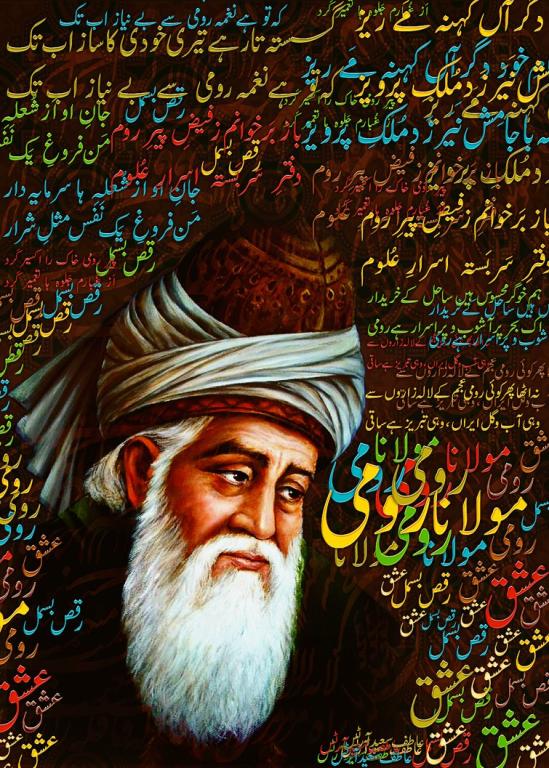
And, of course, then there are the Sufis. Totalitarians don’t like them. Fundamentalists hate them. And here in this country they’re flourishing in all sorts of varieties. For me this is the most interesting of all the forms of Islam. There’s a reason I cherish what has become my middle name. And it is the Sufis. Our own popular culture, and for many of us, our very spirituality, wide and inviting as it is, is being enriched most directly by Sufi poets, and of those most deeply and pervasively Jalaluddin Rumi. As many here know the most popular poet in America today is this thirteenth century liberal Muslim Sufi. There’s a reason he fits into our Unitarian Universalist hymnal.
You want to find the wisdom that emerges in a multi cultural nation where all religions and those with none claim a right to be at the table? You want someone who from such wild openness proclaims our deepest possibility, what is happening here, now, just because of our genuine welcoming? I suggest you need look no farther than that Muslim Jalalluddin Rumi, who some eight hundred years ago sang to us of what he called the one song. Here in Coleman Barks’ translation.
Every war and every conflict between human beings
has happened because of some disagreement about names.
It is such an unnecessary foolishness,
because just beyond the arguing
there is a long table of companionship
set and waiting for us to sit down.
What is praised is one, so the praise is one too,
many jugs being poured into a huge basin.
All religions, all this singing, one song.
The differences are just illusion and vanity.
Sunlight looks a little different on this wall
than it does on that wall
and a lot different on this other one,
but it is still one light.
We have borrowed these clothes,
these time-and-space personalities,
from a light, and when we praise,
we are pouring them back in.
Okay. We may yet be a ways from when it is common for a Sufi murshid to also be acknowledged as a Zen master, but I am sure that one song is being sung even today, and without a doubt, it is being sung here. Here, in this strange, troubled, conflicted, and wondrous country. This is what gives me hope.
What I am sure of is that the table has been set. And the conversations have begun. Christians and Jews, Muslims, and Hindus, Buddhists and humanists, and more, many, many more; were all at the table. And now we just need to look into each other’s hearts. I have no doubt as we do, we will see our place. And, with that we can find our hope. Hope. Hope.
So be it. Blessed be. And, amen.
Previous Post

January 3, 2016
Martin Gets the Boot
Next Post
January 4, 2016 J'accuse: Or, Why the Big Short is a Very Important Movie
Browse Our Archives
Select a Category A Christmas Carol Abolitionist African-American Ahmadiyya Alan Watts Aldous Huxley Allen Ginsberg Amedkar Jayanti American politics American Zen Anaheim Zen Sangha Anglican Annie Besant April Fool Armageddon Art and Religion artificial intellegence Atheist Awakening B R Ambedkar Barlaam & Josaphat Beatnik Between Bhagavad Gita Bible biography birthday bodhisattva Bodhisattva Precepts Book burning Book of Common Prayer Book of Mormon Brahmo Samaj Buddha Buddhism Buddhist Buddhist Lord's Prayer Butterflies Calendars cartoons cat ChatGPT Chicken Tortilla Soup choices Christian atheism Christian mysticism Christian origins Christian Science Christian Zen Christianity Christianity and Buddhism christmas Christmas Truce Christopher Isherwood Church of Later Day Saints Cinco de Mayo circus covenant critical thinking culture D. T. Suzuki Dalit Buddhism Daniel Defoe Desert Fathers and Mothers dharma talk Dogen Donald Trump Dongshan's Five Ranks Dorothy Day dream Duty Easter ecology Edwin Arnold emptiness Empty Moon Zen Network Episcopal Church Eternal Now Ethics evolution existentialism Faith fantasy Fathers Day film film review fire Five Ranks Folk music food Form and emptiness Four Seals Francis of Assisi Francis Xavier Free thinker friendship George MacDonald Gerald Heard Glenn Taylor Webb God Good Friday Gospel of Gospel of Mark Gospel of Thomas grace Graduate Theological Unioin Graduate Theological Union Guanyin H R Blyth Hakuin Ekaku Hanamatsuri Hanukkah Harada Yasutani Zen Heart Sutra Henry David Thoreau Hermann Hesse Hinduism History and Religion history of religion Holy Spirit home Hospitality Icon Ides of March Isaac Newton Islam Islamic mysticism Jack Kerouac James Luther Adams Jiddu Krishnamurti Joan of Arc Johannes Gutenberg John Donne joke Judaism justice karma kensho King James Bible koan Koun Yamada Kyoto School Lewis Carrol Liberal Christianity Liberal Religion Life Plan Community Liminal literature Literature and Religion Liturgy Lord's Prayer Love Mahatma Gandhi Mahayana Martin Luther King Jr Mary Baker Eddy Mary Magdelene Mary Oliver Mayflower Compact Meditation memories memory metaphor money money and religioin Mormons Mother's Day movie review mysticism mythic Neighborhood Unitarian Universalist Church New Thought Nichiren Buddhism Nonduality not knowing Omar Khayyam Pacific School of Religion pagan Palm Sunday Passover peace Pentecost perennialism Phantastes Philip Kapleau philosophy Pilgrimage poetry Poetry and Religion politics Prayer Precepts Printing Press prophecy prophetic spirituality psychology Pure Land Queer religion queering religion Quietism Ram Mohan Roy rebirth recipe Relationships and religion religion religion and history Religious syncretism Resistance Retirement Retreat review Rissho Kosei Kai Ritual Robert Aitken Roshi Robert Ingersoll Rohatsu Romani religion Rosie the Riveter saints samadhi SanboZen Sangha Satyagraha science science and reigion science and religion science fiction seminary sermon Sesshin Sex and Religion Shinran Sikh Sikh tradition silence Social Justice Socially Engaged Buddhism Society and religion Soto Zen soul spiritual community spiritual practice Spirituality Sufism Suicide superstition Taoism Television Teresa of Avila Thanksgiving theological schools Theosophy Thomas Merton Time Transcendentalism Transcendentalist Trinitarian Trinity Uncategorized unitarian Unitarian Christianity Unitarian Universalist Universalism Vajrayana Vedanta Walking war Willa Cather William Ellery Channing wisdom women and religion women in religion World Teacher Writing zazen Zen Zen Center Zen inspired retriement zen meditation Zen Precepts Zen women
Select a Month September 2026 August 2026 July 2026 June 2026 May 2026 April 2026 March 2026 February 2026 January 2026 December 2025 November 2025 October 2025 September 2025 August 2025 July 2025 June 2025 May 2025 April 2025 March 2025 February 2025 January 2025 December 2024 November 2024 October 2024 September 2024 August 2024 July 2024 June 2024 May 2024 April 2024 March 2024 February 2024 January 2024 December 2023 November 2023 October 2023 September 2023 August 2023 July 2023 June 2023 May 2023 April 2023 March 2023 February 2023 January 2023 December 2022 November 2022 October 2022 September 2022 August 2022 July 2022 June 2022 May 2022 April 2022 March 2022 February 2022 January 2022 December 2021 November 2021 October 2021 September 2021 August 2021 July 2021 June 2021 May 2021 April 2021 March 2021 February 2021 January 2021 December 2020 November 2020 October 2020 September 2020 August 2020 July 2020 June 2020 May 2020 April 2020 March 2020 February 2020 January 2020 December 2019 November 2019 October 2019 September 2019 August 2019 July 2019 June 2019 May 2019 April 2019 March 2019 February 2019 January 2019 December 2018 November 2018 October 2018 September 2018 August 2018 July 2018 June 2018 May 2018 April 2018 March 2018 February 2018 January 2018 December 2017 November 2017 October 2017 September 2017 August 2017 July 2017 June 2017 May 2017 April 2017 March 2017 February 2017 January 2017 December 2016 November 2016 October 2016 September 2016 August 2016 July 2016 June 2016 May 2016 April 2016 March 2016 February 2016 January 2016 December 2015 November 2015 October 2015 September 2015 August 2015 July 2015 June 2015 May 2015 April 2015 March 2015 February 2015 January 2015 December 2014 November 2014 October 2014 September 2014 August 2014 July 2014 June 2014 May 2014 April 2014 March 2014 February 2014 January 2014 December 2013 November 2013 October 2013 September 2013 August 2013 July 2013 June 2013 May 2013 April 2013 March 2013 February 2013 January 2013 December 2012 November 2012 October 2012 September 2012 August 2012 July 2012 June 2012 May 2012 April 2012 March 2012 February 2012 January 2012 December 2011 November 2011 October 2011 September 2011 August 2011 July 2011 June 2011 May 2011 April 2011 March 2011 February 2011 January 2011 December 2010 November 2010 October 2010 September 2010 August 2010 July 2010 June 2010 May 2010 April 2010 March 2010 February 2010 January 2010 December 2009 November 2009 October 2009 September 2009 August 2009 July 2009 June 2009 May 2009 April 2009 March 2009 February 2009 January 2009 December 2008 November 2008 October 2008 September 2008 August 2008 July 2008 June 2008 May 2008 April 2008 March 2008 February 2008 January 2008 December 2007 November 2007 October 2007 September 2007 August 2007 July 2007 June 2007 May 2007 April 2007 March 2007 February 2007 January 2007 December 2006 November 2006 October 2006 September 2006
Follow Us!
TAKE THE
Religious Wisdom Quiz
Who did Jesus call the "greatest among those born of women"?
Select your answer to see how you score.
John the Baptist Moses Elijah Peter
Related posts from Monkey Mind


Which Is the True Qian? A Koan About...


TRENDING AT PATHEOS Buddhist

In one sense walking into Westminster Abbey is like walking down the...

'Super Scam Me' Exposes AI Jon Bon Jovi...
Leslie Pickett believed she was in a relationship with Jon Bon Jovi....

The Brazilian Remake of Kendricks' 'Flywheel' Opens in...
“Flywheel,” the story that launched the Kendrick Brothers’ filmmaking career is getting...

The Dangers of Gradual Accommodation (Winking at Sin)
Recently, the “law of gradualness” resurfaced during the opening of a weeklong,...

The Iron Gates and the Lion of the...
Yesterday, I didn't finish my report about, well, yesterday. So I'll...

The Image: On the Horror of Capitalism and...
The Image Then went the Pharisees, and took counsel how they might...
view all Buddhist blogs
Ad-Free & Subscriber Log-In Subscription Support
- About Us
- 2026 Calendar
- Videos
- Podcasts
- Library of World Religions
- Faith In Media Tracker
- Advertise With Us
- Write for Us
- Privacy Policy
- Terms of Service
- Do Not Sell My Data
- Contact Us
- Radiant Digital
- Manage Newsletter Subscriptions
- Unsubscribe From Notifications
- Sitemap
Copyright 2008-2026, Patheos. All rights reserved.
Subscription Support Ad-Free & Subscriber Log-In
Follow Patheos