
BuddhistCatholicContemplativeEvangelicalGeneral ChristianHinduJewishLatter-day SaintMuslimNew VisionsProgressive Christian
Beliefs
- Buddhist
- Catholic
- Contemplative
- Evangelical
- General Christian
- Hindu
- Jewish
- Latter-day Saint
- More Voices
- Muslim
- New Visions
- Pagan
- Progressive Christian
Topics
- Religion News
- Food and Religion
- Sports and Religion
- Religious Art
- Religious Music and Entertainment
- Religious Events
- History and Religion
- Style and Religion
- Politics and Religion
- Women in Religion
- Recreation Outdoors and Religion
- Business Finance and Religion
- Careers Workplace and Religion
- Education and Religion
- Family Parenting and Religion
- Health Fitness and Religion
- Home and Religion
- Relationships and Religion
- Technology and Religion
- Travel and Religion
Columnists
- Buddhist Columnists
- Business Finance and Religion Columnists
- Careers Workplace and Religion Columnists
- Catholic Columnists
- Contemplative Columnists
- Education and Religion Columnists
- Evangelists Columnists
- Family Parenting and Religion Columnists
- General Christian Columnists
- Health Fitness and Religion Columnists
- Hindu Columnists
- History and Religion Columnists
- Home and Religion Columnists
- Jewish Columnists
- More Voices Columnists
- Latter Day Columnists
- Muslim Columnists
- New Visions Columnists
- Nonreligious Columnists
- Pagan Columnists
- Politics and Religion Columnists
- Progressive Columnists
- Recreation Outdoors and Religion Columnists
- Relationships and Religion Columnists
- Religion News Columnists
- Religious Art Columnists
- Religious Events Columnists
- Religious Music and Entertainment Columnists
- Sports and Religion Columnists
- Style and Religion Columnists
- Technology and Religion Columnists
- Travel and Religion Columnists
- Women in Religion Columnists
Resource Library
- 2026 Calendar
- Library of World Religions
- The 100 Most Holy Places on Earth
- Patheos Answers
- Podcasts
- Videos
- Faith Leaders Database
- Anglican Episcopalian
- Bahai
- Baptist
- Buddhism
- Christianity
- Confucianism
- Eastern Orthodoxy
- Hinduism
- Holiness and Pentecostal
- ISKCON
- Islam
- Judaism
- Lutheran
- Methodist
- The Church of Jesus Christ of Latter-day Saints
- New Age
- Paganism
- Presbytarian and Reformed
- Protestantism
- Religion Behind the Scenes
- Roman Catholic
- Scientology
- Shia Islam
- Sikhism
- Sufism
- Sunni Islam
- Taoism
- Zen
- See all religions
Research Tools
 Ad-Free & Subscriber Log-In Subscription Support
Ad-Free & Subscriber Log-In Subscription Support
Follow Patheos 

- Trending:
- Forgiveness
- |
- Marriage
- |
- Consciousness
- |
- Death Penalty
- |
- Election
- |
- Halloween

- Home
- Buddhist
- A SONG OF THANKSGIVING
A SONG OF THANKSGIVING
Last updated on: November 23, 2015 at 9:51 am by James Ford
A SONG OF THANKSGIVING 2015-11-23T09:51:32-08:00 James Ford
Patheos Explore the world's faith through different perspectives on religion and spirituality! Patheos has the views of the prevalent religions and spiritualities of the world.
A SONG OF THANKSGIVING
James Ishmael Ford
22 November 2015
Pacific Unitarian Church
Rancho Palos Verdes, California
I really love Thanksgiving. I mean I love the whole thing, soup to nuts. Well, that speaks to it, doesn’t it? Most of all I love the fact that the major focus is getting together with the family and eating. I just love the fact that Thanksgiving is about nothing so much as pleasure in the moments of our lives, respite in the rush and worry of existence. It is a celebration of joy.
Of course as a holiday it is also profoundly shadowed. We should not, we cannot, forget how for some among us by hanging our autumnal celebration of gratitude on a story that has some ugly subtexts is past unfortunate. Here in the United States for some this day marks out being conquered and how one’s own cultures and traditions have been laid to waste. Also, there are those who are alone for the many reasons that can happen. And this is a hard time to be alone. So, this can be a very hard holiday.
However, in some ways because of that complexity this holiday might be particularly useful to us in this difficult season we currently inhabit, or maybe more correctly in this moment where so many contradictory things inhabit our hearts. Those horrific murders in Baghdad, Beirut, and Paris loom so large. As are the frightening responses to those horrors voiced by candidates for national office in this country, some disturbingly reminiscent of other dealings with minorities in years past. A subject I feel we will need to return to before long, although not today. And, and, today is the fifty-second anniversary of the murder of President John F. Kennedy, for many in this room a life marker. It can all feel too much, just too much.
But. And. Then there is Thanksgiving itself, some deep calling of the heart to remember in the midst of all those sorrows the beauty of life. And so for us, with our hours of sadness and moments of joy, I suggest a reflection on Thanksgiving. And particularly, for us to consider that central emotion of thanksgiving in the face of everything taken together. I want to explore gratitude, and how that sense of gratitude can guide us toward something precious and even holy.
Now, there are many directions we can go in such a reflection. But, in our brief time together I want to hold us to two. First, there are those simple and pragmatic considerations we should take up in a time like this. Things have been hard. Things are hard. So, how do we actually engage all this so that it is useful for us, and for those whom we love and care about?
In this first, pragmatic context, I think of that old rabbinic story of the poor man who goes to his rabbi. He tells the rabbi how hard it has been as his family of eight must make do in a tiny one-room house. “The six children,” cries the man. “They roll like the sea. They are in constant motion. My wife and I never have a moment alone. I can’t stand it anymore.”
The rabbi says if the man will do exactly as he guides him, he can fix this problem. The man agrees. So the rabbi asks how many animals does he own, and is told of the conventional livestock to be found in old Middle Europe. This includes chickens, rabbits, a goat, a cow and a horse. The rabbi says, “Move all your livestock into the house.”
The man is aghast, but he’s agreed. So, he goes home and does as he’d been instructed. The next day he returns and says, “It is like living in Babel! I can’t imagine it worse. The chicken droppings alone are enough to make you want to throw up” The rabbi says, “Fine. Why don’t you move the chickens back out of the house?” Gratefully the man goes home and does it.
The next day the man returns and says, “Well, the chickens are gone. But the goat! Oh, the goat is horrible. It’s eaten half the only table cloth we own, and it jumps up on top of the chairs and onto our bed, wrecking havoc everywhere.” “Well,” the rabbi suggests. “Why don’t you go home and remove the goat?” Which, the man does.
The next day he returns and tells the rabbi, “Have you ever lived in a room with a cow? It is too disgusting to describe.” “Well,” the rabbi says. “Why don’t you remove the cow?” And it goes on, next the rabbits, then the horse. And finally, only the family remains.
With that the man goes to his rabbi and says, “I don’t understand. But, we are filled with joy and gratitude. Our children are happy and calm. My wife and I are at peace. Thank you.”
The old lesson of shoes and feet, perspective is important. Can be amazingly important. We should never forget the power of perspective. However, this season can reveal even deeper places we can go than that realizing how good we have it in the face of the many other possibilities. So, let me share my second point for this day. Drawing again upon the Jewish tradition, I find myself returning to the lessons to be mined from that ancient spiritual classic the Book of Job.
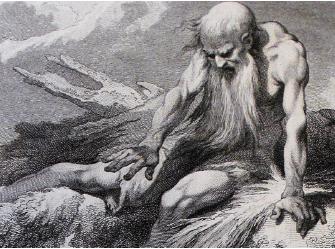
There are all these horrors in his life. It is very hard to find the shoes and feet thing here. He is actually the one without feet. In the face of that harsh truth in this lovely story collected in the Hebrew Bible, Job cries out to the divine his anguish and fear. Job bitterly laments that the divine “murders both the pure and the wicked. When the plague brings sudden death, he laughs at the anguish of the innocent. He hands the earth to the wicked and blindfolds its judges’ eyes.” I’m sure everyone in this room knows this rebuke, and I’m sure many of us have cried it out to the heavens, ourselves.
That old rabbi’s wisdom for the man and his family is practical. We should count our blessings as we can. And this is a season to do so. But, here, I suggest, as we don’t turn away from any of it, from the great mess, from the worst things of our lives, from those dreadful events that do not bare comparison; something might happen.
It starts with vulnerability. With seeing how while we can adjust our attitudes and that can be valuable, in the last analysis, however, we are not in charge. And, with that admission, with that opening to the vulnerable places, we are also opening ourselves up to possibilities. Kelly Murphy Mason is a Unitarian Universalist minister living in New York City. She writes of 9/11, where she was in the area of the Twin Towers when they fell, and she had not control, was just caught. And, how on that day unbidden “an angel in a business suit grabbed my hand and ran me through the smoke and ash overtaking Wall Street.” “An angel in a business suit.” What an image. How wonderful, how mysterious, and this is most important, how true. We never know where the hand of God will appear, or in what form. Even in the darkest moments something can appear. Although we almost certainly will not find in a direction we are expecting.
Job, when he raises his anguish straight to the divine, in that amazing story, apparently ancient on ancient, doesn’t even appear to have a Hebrew origin, but the compilers of the Bible saw how true it spoke to how our prayer of anguish is answered. Not answered with an essay, not answered with a list of reasons. But answered as we all may be in our own dark moments, when our hearts turn, and we give ourselves whole. Like a hand extended by an angel in a business suit.
Now we have a part in this, it isn’t deus ex machina, where some god descends when the plot becomes totally confused and fixes everything. There is a small act of will necessary. We need to be open, open to what is presenting, and to not project too quickly any sense of meaning or meaninglessness for that matter. We need to attend carefully to that line in the story where God declares:
“Where were you when I planned the earth?/Tell me, if you are so wise./Do you know who took its dimensions,/measuring its length with a cord?/What were its pillars built on?/Who laid down its cornerstone,/while the morning stars burst out singing/and the angels shouted for joy?”
Certainly a superficial reading of this statement and Job’s response is one of a person groveling in the dirt and mud, fearful of the great bully in the sky. But it isn’t. It really isn’t. This mysterious passage is our gateway into joy, the joy of the angels witnessing something astonishing. And, here’s the real miracle: it is a witnessing we all can experience.
My favorite commentator on the Book of Job is Stephen Mitchell. He says of this moment where Job makes his plea, and its response; that “God will not hear Job, but Job will see God.” Here we move beyond the simple frame of comparison and even of good and evil. At such a moment our best reflections, our purest analysis all fall away. Here we move to the deep waters of existence, where every idea is shattered.
And it is at this place where the divine lurks, a monster of our dreams. Here, when we shut up and just notice, we are gifted by a tumble into the divine’s presence, and our deep longing is answered. It is here we find angels in business suits, as well as dragons and faerie, and all sorts of mysterious creatures that normally only occupy our dreams, are now revealed whole and true. The world becomes unveiled at such a moment of raw confrontation. And it is big. And it is scary. And we are totally consumed, you and I, in the face of it, like a moth before a flame.
So, what response do we have for such moments? e.e. Cummings, son of a Unitarian minister, sings of it all. “I thank You God for most this amazing/day: for the leaping greenly spirits of trees/and a blue true dream of sky; and for everything/which is natural which is infinite which is yes//(I who have died am alive again today,/and this is the sun’s birthday; this is the birth/day of life and of love and wings: and of the gay/great happening illimitably earth)//how should tasting touching hearing seeing/breathing any—lifted from the no/of all nothing—human merely being/doubt unimaginable You?/(now the ears of my ears awake and/now the eyes of my eyes are opened)”
At these moments of great sadness, of broken hearts; if we are lucky, we step back, away, mysteriously refreshed, as we could never have dreamed. Out of that experience, out of that full confrontation, we can return to the world of the relative, of good and ill, of choices that count, with some new understanding. It is, I suggest, an understanding that allows us to celebrate Thanksgiving for both its joy in family and food, and its sorrow in lost nations.
And, I suggest, it is the perfect holiday for these difficult times, come at just the right moment.
A song of thanksgiving.
In the face of it all.
So be it. Blessed be. And, amen.
Previous Post

November 22, 2015
November 22nd. Pausing. Remembering.
Next Post
November 24, 2015 And a Blessed Evolution Day to You!
Browse Our Archives
Select a Category A Christmas Carol Abolitionist African-American Ahmadiyya Alan Watts Aldous Huxley Allen Ginsberg Amedkar Jayanti American politics American Zen Anaheim Zen Sangha Anglican Annie Besant April Fool Armageddon Art and Religion artificial intellegence Atheist Awakening B R Ambedkar Barlaam & Josaphat Beatnik Between Bhagavad Gita Bible biography birthday bodhisattva Bodhisattva Precepts Book burning Book of Common Prayer Book of Mormon Brahmo Samaj Buddha Buddhism Buddhist Buddhist Lord's Prayer Butterflies Calendars cartoons cat ChatGPT Chicken Tortilla Soup choices Christian atheism Christian mysticism Christian origins Christian Science Christian Zen Christianity Christianity and Buddhism christmas Christmas Truce Christopher Isherwood Church of Later Day Saints Cinco de Mayo circus covenant critical thinking culture D. T. Suzuki Dalit Buddhism Daniel Defoe Desert Fathers and Mothers dharma talk Dogen Donald Trump Dongshan's Five Ranks Dorothy Day dream Duty Easter ecology Edwin Arnold emptiness Empty Moon Zen Network Episcopal Church Eternal Now Ethics evolution existentialism Faith fantasy Fathers Day film film review fire Five Ranks Folk music food Form and emptiness Four Seals Francis of Assisi Francis Xavier Free thinker friendship George MacDonald Gerald Heard Glenn Taylor Webb God Good Friday Gospel of Gospel of Mark Gospel of Thomas grace Graduate Theological Unioin Graduate Theological Union Guanyin H R Blyth Hakuin Ekaku Hanamatsuri Hanukkah Harada Yasutani Zen Heart Sutra Henry David Thoreau Hermann Hesse Hinduism History and Religion history of religion Holy Spirit home Hospitality Icon Ides of March Isaac Newton Islam Islamic mysticism Jack Kerouac James Luther Adams Jiddu Krishnamurti Joan of Arc Johannes Gutenberg John Donne joke Judaism justice karma kensho King James Bible koan Koun Yamada Kyoto School Lewis Carrol Liberal Christianity Liberal Religion Life Plan Community Liminal literature Literature and Religion Liturgy Lord's Prayer Love Mahatma Gandhi Mahayana Martin Luther King Jr Mary Baker Eddy Mary Magdelene Mary Oliver Mayflower Compact Meditation memories memory metaphor money money and religioin Mormons Mother's Day movie review mysticism mythic Neighborhood Unitarian Universalist Church New Thought Nichiren Buddhism Nonduality not knowing Omar Khayyam Pacific School of Religion pagan Palm Sunday Passover peace Pentecost perennialism Phantastes Philip Kapleau philosophy Pilgrimage poetry Poetry and Religion politics Prayer Precepts Printing Press prophecy prophetic spirituality psychology Pure Land Queer religion queering religion Quietism Ram Mohan Roy rebirth recipe Relationships and religion religion religion and history Religious syncretism Resistance Retirement Retreat review Rissho Kosei Kai Ritual Robert Aitken Roshi Robert Ingersoll Rohatsu Romani religion Rosie the Riveter saints samadhi SanboZen Sangha Satyagraha science science and reigion science and religion science fiction seminary sermon Sesshin Sex and Religion Shinran Sikh Sikh tradition silence Social Justice Socially Engaged Buddhism Society and religion Soto Zen soul spiritual community spiritual practice Spirituality Sufism Suicide superstition Taoism Television Teresa of Avila Thanksgiving theological schools Theosophy Thomas Merton Time Transcendentalism Transcendentalist Trinitarian Trinity Uncategorized unitarian Unitarian Christianity Unitarian Universalist Universalism Vajrayana Vedanta Walking war Willa Cather William Ellery Channing wisdom women and religion women in religion World Teacher Writing zazen Zen Zen Center Zen inspired retriement zen meditation Zen Precepts Zen women
Select a Month September 2026 August 2026 July 2026 June 2026 May 2026 April 2026 March 2026 February 2026 January 2026 December 2025 November 2025 October 2025 September 2025 August 2025 July 2025 June 2025 May 2025 April 2025 March 2025 February 2025 January 2025 December 2024 November 2024 October 2024 September 2024 August 2024 July 2024 June 2024 May 2024 April 2024 March 2024 February 2024 January 2024 December 2023 November 2023 October 2023 September 2023 August 2023 July 2023 June 2023 May 2023 April 2023 March 2023 February 2023 January 2023 December 2022 November 2022 October 2022 September 2022 August 2022 July 2022 June 2022 May 2022 April 2022 March 2022 February 2022 January 2022 December 2021 November 2021 October 2021 September 2021 August 2021 July 2021 June 2021 May 2021 April 2021 March 2021 February 2021 January 2021 December 2020 November 2020 October 2020 September 2020 August 2020 July 2020 June 2020 May 2020 April 2020 March 2020 February 2020 January 2020 December 2019 November 2019 October 2019 September 2019 August 2019 July 2019 June 2019 May 2019 April 2019 March 2019 February 2019 January 2019 December 2018 November 2018 October 2018 September 2018 August 2018 July 2018 June 2018 May 2018 April 2018 March 2018 February 2018 January 2018 December 2017 November 2017 October 2017 September 2017 August 2017 July 2017 June 2017 May 2017 April 2017 March 2017 February 2017 January 2017 December 2016 November 2016 October 2016 September 2016 August 2016 July 2016 June 2016 May 2016 April 2016 March 2016 February 2016 January 2016 December 2015 November 2015 October 2015 September 2015 August 2015 July 2015 June 2015 May 2015 April 2015 March 2015 February 2015 January 2015 December 2014 November 2014 October 2014 September 2014 August 2014 July 2014 June 2014 May 2014 April 2014 March 2014 February 2014 January 2014 December 2013 November 2013 October 2013 September 2013 August 2013 July 2013 June 2013 May 2013 April 2013 March 2013 February 2013 January 2013 December 2012 November 2012 October 2012 September 2012 August 2012 July 2012 June 2012 May 2012 April 2012 March 2012 February 2012 January 2012 December 2011 November 2011 October 2011 September 2011 August 2011 July 2011 June 2011 May 2011 April 2011 March 2011 February 2011 January 2011 December 2010 November 2010 October 2010 September 2010 August 2010 July 2010 June 2010 May 2010 April 2010 March 2010 February 2010 January 2010 December 2009 November 2009 October 2009 September 2009 August 2009 July 2009 June 2009 May 2009 April 2009 March 2009 February 2009 January 2009 December 2008 November 2008 October 2008 September 2008 August 2008 July 2008 June 2008 May 2008 April 2008 March 2008 February 2008 January 2008 December 2007 November 2007 October 2007 September 2007 August 2007 July 2007 June 2007 May 2007 April 2007 March 2007 February 2007 January 2007 December 2006 November 2006 October 2006 September 2006
Follow Us!
TAKE THE
Religious Wisdom Quiz
What Christian group believes in the doctrine of transubstantiation?
Select your answer to see how you score.
Protestants Catholics Pentecostals Baptists
Related posts from Monkey Mind


Which Is the True Qian? A Koan About...


TRENDING AT PATHEOS Buddhist

The Brazilian Remake of Kendricks' 'Flywheel' Opens in...
“Flywheel,” the story that launched the Kendrick Brothers’ filmmaking career is getting...

The Dangers of Gradual Accommodation (Winking at Sin)
Recently, the “law of gradualness” resurfaced during the opening of a weeklong,...

The Iron Gates and the Lion of the...
Yesterday, I didn't finish my report about, well, yesterday. So I'll...

Dolly Parton’s Last Song Wins Dove Award with...
Bluegrass band The Grascals, speaking on the red carpet at the 57th...

The Image: On the Horror of Capitalism and...
The Image Then went the Pharisees, and took counsel how they might...

We are approaching the date of our new American national holiday: October...
view all Buddhist blogs
Ad-Free & Subscriber Log-In Subscription Support
- About Us
- 2026 Calendar
- Videos
- Podcasts
- Library of World Religions
- Faith In Media Tracker
- Advertise With Us
- Write for Us
- Privacy Policy
- Terms of Service
- Do Not Sell My Data
- Contact Us
- Radiant Digital
- Manage Newsletter Subscriptions
- Unsubscribe From Notifications
- Sitemap
Copyright 2008-2026, Patheos. All rights reserved.
Subscription Support Ad-Free & Subscriber Log-In
Follow Patheos