
BuddhistCatholicContemplativeEvangelicalGeneral ChristianHinduJewishLatter-day SaintMuslimNew VisionsProgressive Christian
Beliefs
- Buddhist
- Catholic
- Contemplative
- Evangelical
- General Christian
- Hindu
- Jewish
- Latter-day Saint
- More Voices
- Muslim
- New Visions
- Pagan
- Progressive Christian
Topics
- Religion News
- Food and Religion
- Sports and Religion
- Religious Art
- Religious Music and Entertainment
- Religious Events
- History and Religion
- Style and Religion
- Politics and Religion
- Women in Religion
- Recreation Outdoors and Religion
- Business Finance and Religion
- Careers Workplace and Religion
- Education and Religion
- Family Parenting and Religion
- Health Fitness and Religion
- Home and Religion
- Relationships and Religion
- Technology and Religion
- Travel and Religion
Columnists
- Buddhist Columnists
- Business Finance and Religion Columnists
- Careers Workplace and Religion Columnists
- Catholic Columnists
- Contemplative Columnists
- Education and Religion Columnists
- Evangelists Columnists
- Family Parenting and Religion Columnists
- General Christian Columnists
- Health Fitness and Religion Columnists
- Hindu Columnists
- History and Religion Columnists
- Home and Religion Columnists
- Jewish Columnists
- More Voices Columnists
- Latter Day Columnists
- Muslim Columnists
- New Visions Columnists
- Nonreligious Columnists
- Pagan Columnists
- Politics and Religion Columnists
- Progressive Columnists
- Recreation Outdoors and Religion Columnists
- Relationships and Religion Columnists
- Religion News Columnists
- Religious Art Columnists
- Religious Events Columnists
- Religious Music and Entertainment Columnists
- Sports and Religion Columnists
- Style and Religion Columnists
- Technology and Religion Columnists
- Travel and Religion Columnists
- Women in Religion Columnists
Resource Library
- 2026 Calendar
- Library of World Religions
- The 100 Most Holy Places on Earth
- Patheos Answers
- Podcasts
- Videos
- Faith Leaders Database
- Anglican Episcopalian
- Bahai
- Baptist
- Buddhism
- Christianity
- Confucianism
- Eastern Orthodoxy
- Hinduism
- Holiness and Pentecostal
- ISKCON
- Islam
- Judaism
- Lutheran
- Methodist
- The Church of Jesus Christ of Latter-day Saints
- New Age
- Paganism
- Presbytarian and Reformed
- Protestantism
- Religion Behind the Scenes
- Roman Catholic
- Scientology
- Shia Islam
- Sikhism
- Sufism
- Sunni Islam
- Taoism
- Zen
- See all religions
Research Tools
 Ad-Free & Subscriber Log-In Subscription Support
Ad-Free & Subscriber Log-In Subscription Support
Follow Patheos 

- Trending:
- Forgiveness
- |
- Marriage
- |
- Consciousness
- |
- Death Penalty
- |
- Election
- |
- Halloween

- Home
- Buddhist
- Henry Thoreau & His Disobedience Sutra
Henry Thoreau & His Disobedience Sutra
Last updated on: July 12, 2015 at 12:12 pm by James Ford
Henry Thoreau & His Disobedience Sutra 2015-07-12T12:12:47-07:00 James Ford
Patheos Explore the world's faith through different perspectives on religion and spirituality! Patheos has the views of the prevalent religions and spiritualities of the world.
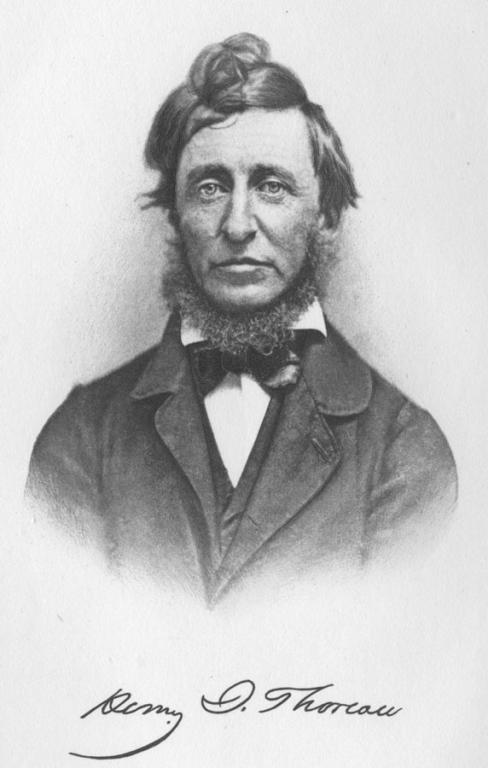
(Some of what follows has appeared in somewhat different form elsewhere before, including in my most recent book If You’re Lucky, Your Heart Will Break. But, it felt appropriate, considering the day….)
Henry David Thoreau was born on this day in 1817.
I was maybe fifteen, possibly sixteen when I first read Henry David Thoreau’s Civil Disobedience. I thrilled at the opening paragraph with its pure disdain for external authorities of any sort. In retrospect I realize this is the principal example people cite who want Thoreau to be an anarchist.
Whatever the merits of that analysis, as I continued into the essay I found my own abhorrence of the war our country was then embroiled in was a passion shared with someone a hundred years earlier. If anything his hatred of slavery and as a close second for his vilification, the Mexican war burned even hotter than the rage in my heart.
With each page I slowly came to realize there was something more to this essay than a fantasy of autonomy. His was the lover’s quarrel with the world that many years later I found inscribed on Robert Frost’s gravestone. Thoreau was, by my best read at the time in fact pointing to some deeper truth about individuality and responsibility. Certainly, by the time I’d finished the essay I found myself being invited into some sort of relationship with the world. Precisely what, I wasn’t sure. But, this essay became a touchstone for me, almost a sacred text.
It posited a question that drove me forward. If an individual’s conscience is more important than the will of a prince or in a republic, the majority, what, then, is that conscience? I found the great matter of how we should live in this world, let me be a bit clearer, the great question of how I should live in this world turned, and continues to turn on what exactly the conscience might be.
I suggest if Civil Disobedience is a sacred text it is a sutra. Sutra is the term for spiritual texts across the Indian subcontinent, used by Hindus and Jains and Buddhists. Why we should think of Thoreau’s essay, as a sutra is that the word itself, “sutra” shares the same Indo-European roots with sew and suture. Sutra is most commonly translated as thread. I think the deeper meanings of conscience are going to be found by following a thread that is introduced with this essay.
In particular for us, you and me, by following the thread of conscience, of that sense which is more important than external rules, which drives us, guides us, goads us along our way, we may discover something enormously important. What it all is is not immediately obvious. The conscience is a complex thing. As they say, a clear conscience is a sure sign of a bad memory. No doubt it is ambiguous, a mix of what we’ve been taught and other things of mysterious origins. We see that ambiguity on full display in Civil Disobedience.
It becomes clearer only as we follow the thread. First back a bit, and then forward. I feel for us within this spiritual community, the place to begin, the first stich, is with our Transcendentalist ancestors. As those here regularly know, while Transcendentalism was a great literary flowering in New England culture, it was actually primarily a theological controversy within New England Unitarianism, following the shifting of the locus of authority from sacred texts and received wisdom to the direct apprehension of the individual heart and mind. The debates of Transcendentalism were the foundational principles of our liberal religion, applied.
There were pretty much from the beginning in fact two great strands of Transcendentalism that will twist and bind and become our thread. They had to do with differing focus on self and society, in practice the tension was between Ralph Waldo Emerson’s self-culture and Theodore Parker’s social activism. By the end of the 1840s these seemed almost mutually exclusive, looking to the individual heart or mind on the one hand, and living fully engaged with the world on the other. The tension was sufficient that some feared the fracturing of the movement.
In the heat of the Transcendentalist debates, Elizabeth Palmer Peabody felt the need to draw the two strands together. In many ways she really is the mother of Unitarian Universalism. As part of this project she proposed a journal, the Aesthetic Papers, to allow the dialogue to proceed along more healthy lines than they were trending, to pull people together rather than allow them to continue to grow apart. In 1849 the single issue of the journal published what would become a critical examination of how the conscience might be informed by both Transcendentalist visions, knowing both the value of the one, and the value of the many. That essay was Resistance to Civil Government, which with slight editing would be republished generally ever after as Civil Disobedience.
Thoreau opens his essay with that romantic vision of an anarchic utopia, something that rings well with our contemporary libertarians. After tipping his hat to that world without government, he quickly moves to a world that is. He turns to a call for “better government,” government more truly healthy and supportive of the individual. Specifically he warns against majoritarianism and calls for the primacy of individual conscience against the weight of majorities. As such, he challenged the duty of submission to civil government when it offends the moral sense, asserting instead if submission to the rule of law means “…you to be the agent of injustice to another, then, I say, break the law.” As I’ve suggested he held up slavery and the Mexican war as examples of an evil which any one with a conscience needed to object to, and to refuse to support such things even tacitly, even if that meant prison.
Toward the end of the essay Thoreau points to the source of conscience, when he wrote, “They who know of no purer source of truth, who have traced up its stream no higher, stand, and wisely stand, by the Bible and the Constitution, and drink at it there with reverence and humility; but they who behold where it comes trickling into this lake or that pool, gird up their loins once more, and continue their pilgrimage toward its fountain-head.” These are on their way to the source of conscience. This has been part and parcel of the liberal religious way, to bring the forces of reason and intuition and to go past any revelation, any book, any vote, to see what is. And from that place to take a stand.
From my perspective I think Thoreau went a fair bit up that stream, or, if you will, followed that thread quite a ways. As much an advocate for the individual as he was, as Elizabeth Peabody knew, he also understood we are not alone, we are our brother’s keeper, our sister’s keeper. And ultimately that essay is a call to know our conscience, to grow into it, and to act from it.
Still, it would be two others who would continue on up the stream, up the thread, inspired in part by his call and his pointing, but now bringing us to something also marked with personal sorrow as well as a deeper knowing of the woundedness of our human condition, bringing with that a certain sympathy for us all. And from that place of broken hearts, calling out how we are all bound up together, wounded together by that thread, and healed together by that thread.
First, Mohandas Gandhi, known as the Great Heart. Gandhi had already well embarked on his path of non-violent resistance when he first read Civil Disobedience. It struck him immediately for its power and its urgency, although he was perhaps most taken with the term civil disobedience, from the posthumous title of the essay, which Thoreau may or may not actually have used.
I think there’s no doubt Gandhi’s developed philosophy of satyagraha, soul force, or truth force, is informed by Thoreau’s meditation, if not quite as much as we religious liberals might want. What is certain is that today we can’t look at Thoreau’s essay without thinking of Gandhi, and Thoreau’s conscience without thinking of truth force. Soul force, truth force, here we’re beginning to understand what conscience is, what deeply offended Thoreau about slavery and the Mexican war, and me the Vietnam war, and you, today?
Following the thread from that first call to disobedience articulated by Thoreau becomes, in Gandhi’s hands, richer, and deeper. It is not walking away, wishing just to be left alone. Nor, interestingly, does it call for violence as the solution.
Gandhi schools us, you and me. As he puts it, the purpose in civil disobedience informed by truth force, by our conscience at its clearest isn’t “to defeat or humiliate your opponents, but to win their friendship and understanding.” Here what we are and what we do, are simply one thing. Our actions are our witness. We’ve followed the stream and we can hear the headwaters, we traced up that thread, and this is what we find. It is the way of the wise heart.
There is still more following of that thread. Influenced directly by both Thoreau and Gandhi, and again through Gandhi, Martin Luther King, Jr., tells us “there is within human nature something that can respond to goodness.” It is the same intuition articulated in Thoreau’s essay, enriched by the wisdom of India’s peaceful revolution, by seeing conscience as truth force.
I believe Martin Luther King gets us very close to the headwaters. He takes us up the thread very close to the knot. And he brings home to us the power of Civil Disobedience, the Disobedience Sutra. King refocuses on the power of the truth force within us, of our intimate knowing of the preciousness of the individual. And, a little of why. There’s that lovely image of a cloak of mutuality, which covers us all, that binds us all together as one. King, somehow it feels better to say Martin, Martin sings to us of love and conscience as the manifestation of love, of our deepest intimacy with ourselves, each other, and the whole blessed mess. Out of that great insight he articulated three principles “We must meet hate with love. We must meet physical force with soul force (And, throughout the struggle for justice)…we must follow nonviolence and love….” as one thing. This is the way of the wise heart.
From Birmingham, Martin sang to us of our conscience, and what it truly means. “Injustice anywhere is a threat to justice everywhere.” Martin calls out from the heart of the universe, from the truths of love. “We are caught in an inescapable network of mutuality, tied in a single garment of destiny. Whatever affects one directly, affects all indirectly.”
Words to live by. Now, even Martin doesn’t take us to the source. He points, or, rather from his own finding he beckons, he invites. We, each of us, must follow our own path those last steps up the stream, those last inches of the thread to the great knot. Thoreau and Gandhi and King call out to us, it can be done. We, you and I, can find our way.
They point to our conscience, your conscience, my conscience, knowing the intimate reality, we are one family, we are one. This knowing, actually it is more intimate than knowing, is the beating heart of our humanity at its best.
And, it is why when we see injustice, we must act.
The wise heart cannot do otherwise.
Previous Post

July 11, 2015
The Spread of Religions: A Video Clip
Next Post
July 13, 2015 Happy Birthday, Captain Picard!
Browse Our Archives
Select a Category A Christmas Carol Abolitionist African-American Ahmadiyya Alan Watts Aldous Huxley Allen Ginsberg Amedkar Jayanti American politics American Zen Anaheim Zen Sangha Anglican Annie Besant April Fool Armageddon Art and Religion artificial intellegence Atheist Awakening B R Ambedkar Barlaam & Josaphat Beatnik Between Bhagavad Gita Bible biography birthday bodhisattva Bodhisattva Precepts Book burning Book of Common Prayer Book of Mormon Brahmo Samaj Buddha Buddhism Buddhist Buddhist Lord's Prayer Butterflies Calendars cartoons cat ChatGPT Chicken Tortilla Soup choices Christian atheism Christian mysticism Christian origins Christian Science Christian Zen Christianity Christianity and Buddhism christmas Christmas Truce Christopher Isherwood Church of Later Day Saints Cinco de Mayo circus covenant critical thinking culture D. T. Suzuki Dalit Buddhism Daniel Defoe Desert Fathers and Mothers dharma talk Dogen Donald Trump Dongshan's Five Ranks Dorothy Day dream Duty Easter ecology Edwin Arnold emptiness Empty Moon Zen Network Episcopal Church Eternal Now Ethics evolution existentialism Faith fantasy Fathers Day film film review fire Five Ranks Folk music food Form and emptiness Four Seals Francis of Assisi Francis Xavier Free thinker friendship George MacDonald Gerald Heard Glenn Taylor Webb God Good Friday Gospel of Gospel of Mark Gospel of Thomas grace Graduate Theological Unioin Graduate Theological Union Guanyin H R Blyth Hakuin Ekaku Hanamatsuri Hanukkah Harada Yasutani Zen Heart Sutra Henry David Thoreau Hermann Hesse Hinduism History and Religion history of religion Holy Spirit home Hospitality Icon Ides of March Isaac Newton Islam Islamic mysticism Jack Kerouac James Luther Adams Jiddu Krishnamurti Joan of Arc Johannes Gutenberg John Donne joke Judaism justice karma kensho King James Bible koan Koun Yamada Kyoto School Lewis Carrol Liberal Christianity Liberal Religion Life Plan Community Liminal literature Literature and Religion Liturgy Lord's Prayer Love Mahatma Gandhi Mahayana Martin Luther King Jr Mary Baker Eddy Mary Magdelene Mary Oliver Mayflower Compact Meditation memories memory metaphor money money and religioin Mormons Mother's Day movie review mysticism mythic Neighborhood Unitarian Universalist Church New Thought Nichiren Buddhism Nonduality not knowing Omar Khayyam Pacific School of Religion pagan Palm Sunday Passover peace Pentecost perennialism Phantastes Philip Kapleau philosophy Pilgrimage poetry Poetry and Religion politics Prayer Precepts Printing Press prophecy prophetic spirituality psychology Pure Land Queer religion queering religion Quietism Ram Mohan Roy rebirth recipe Relationships and religion religion religion and history Religious syncretism Resistance Retirement Retreat review Rissho Kosei Kai Ritual Robert Aitken Roshi Robert Ingersoll Rohatsu Romani religion Rosie the Riveter saints samadhi SanboZen Sangha Satyagraha science science and reigion science and religion science fiction seminary sermon Sesshin Sex and Religion Shinran Sikh Sikh tradition silence Social Justice Socially Engaged Buddhism Society and religion Soto Zen soul spiritual community spiritual practice Spirituality Sufism Suicide superstition Taoism Television Teresa of Avila Thanksgiving theological schools Theosophy Thomas Merton Time Transcendentalism Transcendentalist Trinitarian Trinity Uncategorized unitarian Unitarian Christianity Unitarian Universalist Universalism Vajrayana Vedanta Walking war Willa Cather William Ellery Channing wisdom women and religion women in religion World Teacher Writing zazen Zen Zen Center Zen inspired retriement zen meditation Zen Precepts Zen women
Select a Month September 2026 August 2026 July 2026 June 2026 May 2026 April 2026 March 2026 February 2026 January 2026 December 2025 November 2025 October 2025 September 2025 August 2025 July 2025 June 2025 May 2025 April 2025 March 2025 February 2025 January 2025 December 2024 November 2024 October 2024 September 2024 August 2024 July 2024 June 2024 May 2024 April 2024 March 2024 February 2024 January 2024 December 2023 November 2023 October 2023 September 2023 August 2023 July 2023 June 2023 May 2023 April 2023 March 2023 February 2023 January 2023 December 2022 November 2022 October 2022 September 2022 August 2022 July 2022 June 2022 May 2022 April 2022 March 2022 February 2022 January 2022 December 2021 November 2021 October 2021 September 2021 August 2021 July 2021 June 2021 May 2021 April 2021 March 2021 February 2021 January 2021 December 2020 November 2020 October 2020 September 2020 August 2020 July 2020 June 2020 May 2020 April 2020 March 2020 February 2020 January 2020 December 2019 November 2019 October 2019 September 2019 August 2019 July 2019 June 2019 May 2019 April 2019 March 2019 February 2019 January 2019 December 2018 November 2018 October 2018 September 2018 August 2018 July 2018 June 2018 May 2018 April 2018 March 2018 February 2018 January 2018 December 2017 November 2017 October 2017 September 2017 August 2017 July 2017 June 2017 May 2017 April 2017 March 2017 February 2017 January 2017 December 2016 November 2016 October 2016 September 2016 August 2016 July 2016 June 2016 May 2016 April 2016 March 2016 February 2016 January 2016 December 2015 November 2015 October 2015 September 2015 August 2015 July 2015 June 2015 May 2015 April 2015 March 2015 February 2015 January 2015 December 2014 November 2014 October 2014 September 2014 August 2014 July 2014 June 2014 May 2014 April 2014 March 2014 February 2014 January 2014 December 2013 November 2013 October 2013 September 2013 August 2013 July 2013 June 2013 May 2013 April 2013 March 2013 February 2013 January 2013 December 2012 November 2012 October 2012 September 2012 August 2012 July 2012 June 2012 May 2012 April 2012 March 2012 February 2012 January 2012 December 2011 November 2011 October 2011 September 2011 August 2011 July 2011 June 2011 May 2011 April 2011 March 2011 February 2011 January 2011 December 2010 November 2010 October 2010 September 2010 August 2010 July 2010 June 2010 May 2010 April 2010 March 2010 February 2010 January 2010 December 2009 November 2009 October 2009 September 2009 August 2009 July 2009 June 2009 May 2009 April 2009 March 2009 February 2009 January 2009 December 2008 November 2008 October 2008 September 2008 August 2008 July 2008 June 2008 May 2008 April 2008 March 2008 February 2008 January 2008 December 2007 November 2007 October 2007 September 2007 August 2007 July 2007 June 2007 May 2007 April 2007 March 2007 February 2007 January 2007 December 2006 November 2006 October 2006 September 2006
Follow Us!
TAKE THE
Religious Wisdom Quiz
What is the Hebrew name for the book of Genesis?
Select your answer to see how you score.
Elohim Shema Torah Bereshit
Related posts from Monkey Mind


Which Is the True Qian? A Koan About...


TRENDING AT PATHEOS Buddhist

We are approaching the date of our new American national holiday: October...

Letters on Living the Faith by C.S. Lewis
Most of us met C.S. Lewis as a public intellectual. Mere Christianity....

When Halloween Unmasks Married Hearts
Written by Dr. David K. Ewen from Eternal Truth Bible College Behind...

Aristotle. He’s been called the father of logic, the father of the...

Methodist Central Hall and Westminster Abbey
Situated on the same square is Methodist Central Hall and Westminster Abbey. ...

57th Dove Awards Honor Dolly Parton, Crown New...
On gospel music’s biggest night, the 57th annual GMA Dove Awards honored...
view all Buddhist blogs
Ad-Free & Subscriber Log-In Subscription Support
- About Us
- 2026 Calendar
- Videos
- Podcasts
- Library of World Religions
- Faith In Media Tracker
- Advertise With Us
- Write for Us
- Privacy Policy
- Terms of Service
- Do Not Sell My Data
- Contact Us
- Radiant Digital
- Manage Newsletter Subscriptions
- Unsubscribe From Notifications
- Sitemap
Copyright 2008-2026, Patheos. All rights reserved.
Subscription Support Ad-Free & Subscriber Log-In
Follow Patheos