
BuddhistCatholicContemplativeEvangelicalGeneral ChristianHinduJewishLatter-day SaintMuslimNew VisionsProgressive Christian
Beliefs
- Buddhist
- Catholic
- Contemplative
- Evangelical
- General Christian
- Hindu
- Jewish
- Latter-day Saint
- More Voices
- Muslim
- New Visions
- Pagan
- Progressive Christian
Topics
- Religion News
- Food and Religion
- Sports and Religion
- Religious Art
- Religious Music and Entertainment
- Religious Events
- History and Religion
- Style and Religion
- Politics and Religion
- Women in Religion
- Recreation Outdoors and Religion
- Business Finance and Religion
- Careers Workplace and Religion
- Education and Religion
- Family Parenting and Religion
- Health Fitness and Religion
- Home and Religion
- Relationships and Religion
- Technology and Religion
- Travel and Religion
Columnists
- Buddhist Columnists
- Business Finance and Religion Columnists
- Careers Workplace and Religion Columnists
- Catholic Columnists
- Contemplative Columnists
- Education and Religion Columnists
- Evangelists Columnists
- Family Parenting and Religion Columnists
- General Christian Columnists
- Health Fitness and Religion Columnists
- Hindu Columnists
- History and Religion Columnists
- Home and Religion Columnists
- Jewish Columnists
- More Voices Columnists
- Latter Day Columnists
- Muslim Columnists
- New Visions Columnists
- Nonreligious Columnists
- Pagan Columnists
- Politics and Religion Columnists
- Progressive Columnists
- Recreation Outdoors and Religion Columnists
- Relationships and Religion Columnists
- Religion News Columnists
- Religious Art Columnists
- Religious Events Columnists
- Religious Music and Entertainment Columnists
- Sports and Religion Columnists
- Style and Religion Columnists
- Technology and Religion Columnists
- Travel and Religion Columnists
- Women in Religion Columnists
Resource Library
- 2026 Calendar
- Library of World Religions
- The 100 Most Holy Places on Earth
- Patheos Answers
- Podcasts
- Videos
- Faith Leaders Database
- Anglican Episcopalian
- Bahai
- Baptist
- Buddhism
- Christianity
- Confucianism
- Eastern Orthodoxy
- Hinduism
- Holiness and Pentecostal
- ISKCON
- Islam
- Judaism
- Lutheran
- Methodist
- The Church of Jesus Christ of Latter-day Saints
- New Age
- Paganism
- Presbytarian and Reformed
- Protestantism
- Religion Behind the Scenes
- Roman Catholic
- Scientology
- Shia Islam
- Sikhism
- Sufism
- Sunni Islam
- Taoism
- Zen
- See all religions
Research Tools
 Ad-Free & Subscriber Log-In Subscription Support
Ad-Free & Subscriber Log-In Subscription Support
Follow Patheos 

- Trending:
- Forgiveness
- |
- Marriage
- |
- Consciousness
- |
- Death Penalty
- |
- Election
- |
- Halloween

- Home
- Buddhist
- Jesus in Tibet
Jesus in Tibet
Last updated on: August 6, 2014 at 8:45 am by James Ford
Jesus in Tibet 2014-08-06T08:45:52-07:00 James Ford
Patheos Explore the world's faith through different perspectives on religion and spirituality! Patheos has the views of the prevalent religions and spiritualities of the world.
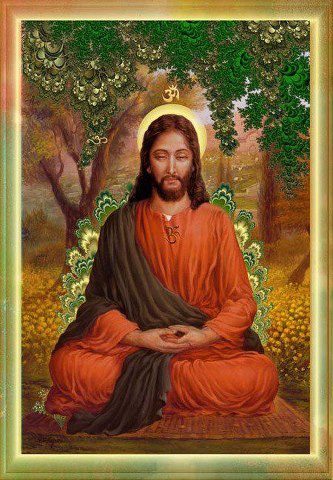
Sorry, never happened.
It appears that every few years someone or another discovers Jesus spent some time in India and or Tibet before beginning his teachings which we find recounted in various Gospel versions. I wrote on this a few years ago. It seems time to repeat. In fact the primary document addressing those “missing years” before that public ministry is a text originally titled Life of Saint Issa, Best of the Sons of Men. The editor/translator was a Russian journalist Nicolas Notovitch.
In fact this book was exposed as a fraud almost immediately by the renowned F. Max Muller. Later, the biblical scholar Edgar Goodspeed wrote up a complete account of the events surrounding the publication of Mr Notovitch’s little book.
While it would be an absolute delight for me to learn that that Jesus studied Buddhism, the fact remains there was nothing in his teachings, as best a cool read of the normative texts give us, that wasn’t already contained within the Judaism of his day. Well, okay, that very late text John does offer a non-traditionally Jewish Jesus, but even that Jesus is easily contained with a rather more boring and obviously already there gnostic influence or reaction.
But we tend to want something more exotic. And who doesn’t love Tibet? And so, as appears to be the case with such things, the expose is quickly forgotten, but the lie lingers…
I reprint Goodspeed’s study below.
THE UNKNOWN LIFE OF JESUS CHRIST
Edgar Goodspeed
In the summer of 1926 the newspapers in this country and abroad announced the discovery in a monastery in Tibet of a lost Life of Saint Issa, Best of the Sons of Men. The supposed discovery had, however, taken place nearly forty years before, and been published all over the world in 1894. The romantic story of its finding ran as follows:
In 1887 a Russian war-correspondent, Nicolas Notovitch, visited India, and proceeding into Tibet, at the Lamassary or Convent of Himis, learned of the Life of Saint Issa, Best of the Sons of Men. His story, with the text of the Life, was published in French in 1894 and passed through several editions that year. It enjoyed the widest publicity. It was translated into German, Spanish, and Italian. Three independent American translations were immediately published, two in New York and one in Chicago. The first (of The Life only) was by F. Marion Crawford, who was something of a Sanskrit scholar and had lived in India in his youth. It was published by Macmillan. Another English translation appeared in London in 1895. The book called forth a vigorous controversy, attracting the attention of no less an authority than Professor F. Max Müller of Oxford. It was discussed at length in the pages of The Nineteenth Century, and then forgotten, until a New York publisher revived it in 1926, with the result described above.
Notovitch’s account of his discovery of the work is that having been laid up by accident with a broken leg at the Convent of Himis, he prevailed upon the Chief Lama, who had told him of the existence of the work, to read to him, through an interpreter, the somewhat detached verses of the Tibetan version of the Life of Issa, which was said to have been translated from the Pali. Notovitch says that he himself afterward grouped the verses “in accordance with the requirements of the narrative.” As published by Notovitch, the work consists of two hundred and forty-four short paragraphs, arranged in fourteen chapters. It begins with an account of Israel in Egypt, and its deliverance by Moses; its neglect of religion, and its conquest by the Romans. Then follows an account of the Incarnation. The divine youth, at thirteen, rather than take a wife, leaves his home to wander with a caravan of merchants to India (Sindh), to study the laws of the great Buddhas.
He is welcomed by the Jains, but leaves them to spend six years among the Brahmins, at Juggernaut, Benares, and other places, studying the Vedas, and teaching all castes alike. The Brahmins oppose him in this, and he denounces them and their sacred books, especially condemning caste and idolatry. When they plan to put him to death, he flees to the Buddhists, and spends six years among them, learning Pali and mastering their religious texts. He goes among the pagans, warning them against idolatry, and teaching a high morality, and then visits Persia and preaches to the Zoroastrians.
At twenty-nine Issa returns to his own country, and begins to preach. He visits Jerusalem, where Pilate is apprehensive about him. The Jewish leaders however find no fault in him, and he continues his work for three years, closely watched by Pilate’s spies. He is finally arrested and put to death, not by Jewish influence, but through the hostility of Pilate. His followers were persecuted, but his disciples carried his message out over the world.
The interest of this little book is evidently to fill in the silent years of Jesus’ youth, from the visit to Jerusalem at twelve to the beginning of his ministry at about thirty. It is interesting at the outset to observe that these two ages are taken for granted by the author of this work, who unconsciously bases his scheme upon them. We know them from the Gospel of Luke alone, and the question arises, Has the author of Issa obtained them from the same source?
It is also noteworthy that the work describes Jesus’ ministry as three years in length, an idea derived from the Gospel of John, and from no other book of the New Testament. Had our author the Gospel of John as well as that of Luke? His emphasis upon the Incarnation shows that he had. Notovitch says that the Life of Issa was written within three or four years after the death of Christ, from the testimonies of eyewitnesses, and is hence more likely to bear the stamp of truth than the canonical gospels, which were written many years later. But the departure of the disciples to evangelize the pagan world, which is described in the last verse of the Life, did not take place within three or four years of Jesus’ death. The idea that it did has probably been gained from the Gospel of Matthew, which, taken without the Acts of the Apostles, might suggest that impression. It looks as though the writer of the Life were acquainted with the Gospel of Matthew. Other touches point to his acquaintance with Acts and Romans, and it. becomes clear that the range of Christian literature reflected in the book makes a date earlier than the second century impossible.
But this is only the beginning. The whole cast of the book is vague and elusive. It presents no difficulties, no problems, whereas any really ancient work newly discovered bristles with novelties and obscurities. The message of Jesus is a pallid and colorless morality, amiable and unobjectionable enough, but devoid of the flashes of insight and touches of genius that mark the early gospels. Historically and morally the book is commonplace. It identifies itself with no recognized type of primitive thought, and it does not strike out one of its own, but shows a superficial acquaintance with the leading New Testament ones, somewhat blurred together. This inaccurate acquaintance with the New Testament also characterizes Notovitch himself, who describes Luke as saying that Jesus “was in the deserts until the day of his showing unto Israel.” This, he says, “conclusively proves that no one knew where the young man had gone, to so suddenly reappear sixteen years later” (p. 162). But it is not of Jesus but of John that Luke says this (1 :80), so that it will hardly yield the conclusive proof Notovitch seeks. At this point in Luke’s narrative, in fact, Jesus has not yet appeared.
On the whole, as an ancient document the Life of Issa is altogether unconvincing. It reads more like a journalistic effort to describe what might have happened if Jesus had visited India and Persia in his youth and what a modern cosmopolite thinks he did and taught in his ministry in Palestine.
The external evidence for the Life is no more impressive. The two large manuscript volumes read to Notovitch by the lama at the Himis Convent were, says Notovitch, “compiled from divers copies written in the Tibetan tongue, translated from rolls belonging to the Lassa library, and brought from India, Nepal, and Maghada two hundred years after Christ. These rolls were placed in a convent standing on Mount Marbour, near Lassa. . . . .” The rolls were written in the Pali tongue. It is evident that the scholar’s desire to see the manuscript of the work, or failing that to see a photograph of it, or a part of it, or at least to have precise directions as to how and where to find it–its place and number in the Himis library–is not in this case to be satisfied. More than this, the Life of Issa does not purport to have been deciphered and translated by a competent scholar. The lama read, the interpreter translated, Notovitch took notes. He could evidently not control either the lama |17 or the interpreter, to make sure of what the Tibetan manuscripts read. And his own notes, taken under these obvious disadvantages, he afterward spent many sleepless nights in classifying, “grouping the verses in conformity with the course of the narrative, and imprinting a character of unity to the entire work.” Of course this is just what a scholar would not have done. He would wish to give the fragments just as the manuscripts had them, unaffected by his own views and tastes.
The Unknown Life attracted the attention of the great Orientalist Friedrich Max Müller, who in The Nineteenth Century pointed out that the Life of Issa did not appear in the catalogue of the Tandjur and the Kandjur, the great collections of Tibetan literature. “If we understand M. Notovitch rightly,” says Professor Max Miiller, “this life of Christ was taken down from the mouths of some Jewish merchants who came to India immediately after the Crucifixion.” He goes on to ask how these Jewish merchants happened, among the uncounted millions of India, to meet “the very people who had known Issa as a casual student of Sanskrit and Pali in India, …. and still more how those who had known Issa as a simple student in India, saw at once that he was the same person who had been put to death under Pontius Pilate.” He goes on to suggest that the Buddhist monks may have deceived Notovitch. “Two things in their account are impossible, or next to impossible. The first, that the Jews from Palestine who came to India in about 35 A.D. should have met the very people who had known Issa when he was a student at Benares; the second, that this Sutra of Issa, composed in the first century of our era, should not have found a place either in the Kandjur or in the Tandjur.”
If the monks did not indulge in duping Notovitch, nothing remained, Max Miiller said, but to accuse M. Notovitch of a disgraceful fraud. And as he was writing his article, there came to him from an Englishwoman visiting Tibet a letter that pointed strongly in the latter direction. It was dated Leh, Ladakh, June 29,1894, and read in part:
Yesterday we were at the great Himis monastery, the largest Buddhist monastery up here,–800 lamas. Did you hear of a Russian who could not gain admittance to the monastery in any way, but at last broke his leg outside and was taken in? His object was to copy a Buddhist life of Christ which is there. He says he got it and has published it since in French. There is not a single word of truth in the whole story! There has been no Russian here. No one has been taken into the Seminary for the past fifty years with a broken leg! There is no life of Christ there at all!
These and other criticisms Notovitch sought to answer in his preface to the London edition. “The truth indeed is,” he remarks, “that the verses of which I give a translation in my book are probably not to be found in any kind of catalogue, either of the Tandjur or of the Kandjur. “They are to be found scattered through more than one book without any title; consequently they could not be found in catalogues of Chinese or Tibetan works.”
With these extraordinary observations the Life of Issa, Best of the Sons of Men, seems to evaporate and vanish away. For if its parts exist only thus scattered, the order and structure of the work are evidently the contribution of Notovitch himself, and the Life as a whole is his creation. This much he has admitted. Even now, a scholar would of course interest himself actively to secure copies and even photographs of the scattered portions which Notovitch says he has assembled. A work which makes such high claims would be well worth an expedition to Tibet, to search out the scattered verses, copy and translate them, and to provide an account of the documents in which they are imbedded.
As it is, Notovitch seems to have taken refuge from his critics in a fog of indefiniteness. In his first preface he speaks of the monastic libraries as “containing a few copies of the manuscript in question,” but now it is of no use to look for the manuscript, he intimates, for there is no manuscript, and he lightly refers serious students of his supposed discovery to “verses scattered through more than one book, without any title.” This is not the method of sober scholarship. And we may observe that Notovitch himself in the thirty-five years that have elapsed since he published the Unknown Life has not taken the obvious and most of us would think the unavoidable steps to substantiate his supposed discovery. As a possible gesture in that direction we may quote his report in his London preface of a conversation with a Roman Catholic Cardinal, to whom he had mentioned the matter. “I may however add to what I have already said in my introduction as to having learnt from him that the Unknown Life of Jesus Christ is no novelty to the Roman Church, this: that the Vatican Library possesses sixty-three complete or incomplete manuscripts in various Oriental languages referring to this matter, which have been brought to Rome by missionaries from India, China, Egypt and Arabia.” It is a thousand pities that the Cardinal, who had evidently counted the manuscripts, was not more explicit as to their titles, so that someone who could read them might have looked them up in that library. Even if Notovitch could not go back to Tibet to confirm his discovery, as he once boldly proposed to do, he might have reached Rome and found ample confirmation there. But in thirty-five years neither he nor his eight translators nor his nine publishers have been sufficiently interested to apply this very simple test. Nor has any independent student of the Vatican manuscripts reported one of the sixty-three manuscripts.
Some people have been harsh enough to say that Notovitch never visited Tibet at all. I am not in a position to say this. It is true that the pictures of Tibetan scenes and costumes that appear in some editions of his work he says are from photographs taken by his friend D’Auvergne, who visited Tibet on another occasion. And I have observed that his accounts of Tibetan buildings and practices bear a striking resemblance to some previously published by English travelers. His account of his journey is not without improbability, and I cannot learn that he is recognized among the serious explorers who have visited Tibet. Yet he may have gone there; it would obviously be difficult to control his statement that he did.
Some light is thrown upon the matter by a communication sent to The Nineteenth Century in June, 1895, by Professor J. Archibald Douglas of Agra, who was at that time a guest in the Himis monastery, enjoying the hospitality of that very chief lama who was supposed to have imparted the Unknown Life to Notovitch. Professor Douglas found the animal life in the Sind Valley much less picturesque than Notovitch had described, and no memory of any foreigner with a broken leg lingered at Leh or Himis. But Professor Douglas’ inquiries did at length elicit the fact that a Russian gentleman named Notovitch had recently been treated for the toothache by the medical officer of Leh Hospital.
To that extent Notovitch’s narrative seems to have been on firm ground.
But no further. The chief lama indignantly repudiated the statements ascribed to him by Notovitch, and declared that no traveler with a broken leg had ever been nursed at the monastery. He stated with emphasis that no such work as the Life of Issa was known in Tibet, and that the statement that he had imparted such a record to a traveler was a pure invention. When Notovitch’s book was read to him he exclaimed with indignation, “Lies, lies, lies, nothing but lies!” The chief lama did not receive from Notovitch the presents Notovitch reports having given him–the watch, the alarm clock, and the thermometer. He did not even know what a thermometer was. In short the chief lama made a clean sweep of the representations of Notovitch, and with the aid of Professor Douglas effected what Max Müller described as his annihilation.
In conclusion Max Müller expressly disclaimed any merit for having shown the Unknown Life to be a mere fiction, as no serious Sanskrit or Pali scholar, and no serious student of Buddhism, was taken in by it.
We may add that students of early Christian literature of course passed it by as of no significance whatever. It made no stir among them. This is not because they are averse to new discoveries. These are of frequent occurrence. But every one of them that is reported must stand the test of literary and textual criticism. To these tests the Life of Saint Issa, Best of the Sons of Men, fails to respond.
But it remains an interesting example of a whole series of modern attempts to impose upon the general public crude fictions under the guise of ancient documents lately discovered, and it is worth while to call attention to it because its recent republication in New York was hailed by the press as a new and important discovery.
Previous Post

August 6, 2014
Love is a Burning Thing
Next Post
August 7, 2014 Burning Rubber: Recalling Alice Huyler Ramsey
Browse Our Archives
Select a Category A Christmas Carol Abolitionist African-American Ahmadiyya Alan Watts Aldous Huxley Allen Ginsberg Amedkar Jayanti American politics American Zen Anaheim Zen Sangha Anglican Annie Besant April Fool Armageddon Art and Religion artificial intellegence Atheist Awakening B R Ambedkar Barlaam & Josaphat Beatnik Between Bhagavad Gita Bible biography birthday bodhisattva Bodhisattva Precepts Book burning Book of Common Prayer Book of Mormon Brahmo Samaj Buddha Buddhism Buddhist Buddhist Lord's Prayer Butterflies Calendars cartoons cat ChatGPT Chicken Tortilla Soup choices Christian atheism Christian mysticism Christian origins Christian Science Christian Zen Christianity Christianity and Buddhism christmas Christmas Truce Christopher Isherwood Church of Later Day Saints Cinco de Mayo circus covenant critical thinking culture D. T. Suzuki Dalit Buddhism Daniel Defoe Desert Fathers and Mothers dharma talk Dogen Donald Trump Dongshan's Five Ranks Dorothy Day dream Duty Easter ecology Edwin Arnold emptiness Empty Moon Zen Network Episcopal Church Eternal Now Ethics evolution existentialism Faith fantasy Fathers Day film film review fire Five Ranks Folk music food Form and emptiness Four Seals Francis of Assisi Francis Xavier Free thinker friendship George MacDonald Gerald Heard Glenn Taylor Webb God Good Friday Gospel of Gospel of Mark Gospel of Thomas grace Graduate Theological Unioin Graduate Theological Union Guanyin H R Blyth Hakuin Ekaku Hanamatsuri Hanukkah Harada Yasutani Zen Heart Sutra Henry David Thoreau Hermann Hesse Hinduism History and Religion history of religion Holy Spirit home Hospitality Icon Ides of March Isaac Newton Islam Islamic mysticism Jack Kerouac James Luther Adams Jiddu Krishnamurti Joan of Arc Johannes Gutenberg John Donne joke Judaism justice karma kensho King James Bible koan Koun Yamada Kyoto School Lewis Carrol Liberal Christianity Liberal Religion Life Plan Community Liminal literature Literature and Religion Liturgy Lord's Prayer Love Mahatma Gandhi Mahayana Martin Luther King Jr Mary Baker Eddy Mary Magdelene Mary Oliver Mayflower Compact Meditation memories memory metaphor money money and religioin Mormons Mother's Day movie review mysticism mythic Neighborhood Unitarian Universalist Church New Thought Nichiren Buddhism Nonduality not knowing Omar Khayyam Pacific School of Religion pagan Palm Sunday Passover peace Pentecost perennialism Phantastes Philip Kapleau philosophy Pilgrimage poetry Poetry and Religion politics Prayer Precepts Printing Press prophecy prophetic spirituality psychology Pure Land Queer religion queering religion Quietism Ram Mohan Roy rebirth recipe Relationships and religion religion religion and history Religious syncretism Resistance Retirement Retreat review Rissho Kosei Kai Ritual Robert Aitken Roshi Robert Ingersoll Rohatsu Romani religion Rosie the Riveter saints samadhi SanboZen Sangha Satyagraha science science and reigion science and religion science fiction seminary sermon Sesshin Sex and Religion Shinran Sikh Sikh tradition silence Social Justice Socially Engaged Buddhism Society and religion Soto Zen soul spiritual community spiritual practice Spirituality Sufism Suicide superstition Taoism Television Teresa of Avila Thanksgiving theological schools Theosophy Thomas Merton Time Transcendentalism Transcendentalist Trinitarian Trinity Uncategorized unitarian Unitarian Christianity Unitarian Universalist Universalism Vajrayana Vedanta Walking war Willa Cather William Ellery Channing wisdom women and religion women in religion World Teacher Writing zazen Zen Zen Center Zen inspired retriement zen meditation Zen Precepts Zen women
Select a Month September 2026 August 2026 July 2026 June 2026 May 2026 April 2026 March 2026 February 2026 January 2026 December 2025 November 2025 October 2025 September 2025 August 2025 July 2025 June 2025 May 2025 April 2025 March 2025 February 2025 January 2025 December 2024 November 2024 October 2024 September 2024 August 2024 July 2024 June 2024 May 2024 April 2024 March 2024 February 2024 January 2024 December 2023 November 2023 October 2023 September 2023 August 2023 July 2023 June 2023 May 2023 April 2023 March 2023 February 2023 January 2023 December 2022 November 2022 October 2022 September 2022 August 2022 July 2022 June 2022 May 2022 April 2022 March 2022 February 2022 January 2022 December 2021 November 2021 October 2021 September 2021 August 2021 July 2021 June 2021 May 2021 April 2021 March 2021 February 2021 January 2021 December 2020 November 2020 October 2020 September 2020 August 2020 July 2020 June 2020 May 2020 April 2020 March 2020 February 2020 January 2020 December 2019 November 2019 October 2019 September 2019 August 2019 July 2019 June 2019 May 2019 April 2019 March 2019 February 2019 January 2019 December 2018 November 2018 October 2018 September 2018 August 2018 July 2018 June 2018 May 2018 April 2018 March 2018 February 2018 January 2018 December 2017 November 2017 October 2017 September 2017 August 2017 July 2017 June 2017 May 2017 April 2017 March 2017 February 2017 January 2017 December 2016 November 2016 October 2016 September 2016 August 2016 July 2016 June 2016 May 2016 April 2016 March 2016 February 2016 January 2016 December 2015 November 2015 October 2015 September 2015 August 2015 July 2015 June 2015 May 2015 April 2015 March 2015 February 2015 January 2015 December 2014 November 2014 October 2014 September 2014 August 2014 July 2014 June 2014 May 2014 April 2014 March 2014 February 2014 January 2014 December 2013 November 2013 October 2013 September 2013 August 2013 July 2013 June 2013 May 2013 April 2013 March 2013 February 2013 January 2013 December 2012 November 2012 October 2012 September 2012 August 2012 July 2012 June 2012 May 2012 April 2012 March 2012 February 2012 January 2012 December 2011 November 2011 October 2011 September 2011 August 2011 July 2011 June 2011 May 2011 April 2011 March 2011 February 2011 January 2011 December 2010 November 2010 October 2010 September 2010 August 2010 July 2010 June 2010 May 2010 April 2010 March 2010 February 2010 January 2010 December 2009 November 2009 October 2009 September 2009 August 2009 July 2009 June 2009 May 2009 April 2009 March 2009 February 2009 January 2009 December 2008 November 2008 October 2008 September 2008 August 2008 July 2008 June 2008 May 2008 April 2008 March 2008 February 2008 January 2008 December 2007 November 2007 October 2007 September 2007 August 2007 July 2007 June 2007 May 2007 April 2007 March 2007 February 2007 January 2007 December 2006 November 2006 October 2006 September 2006
Follow Us!
TAKE THE
Religious Wisdom Quiz
Who became king after David and built the first Temple in Jerusalem?
Select your answer to see how you score.
Adonijah Absalom Solomon Rehoboam
Related posts from Monkey Mind


Which Is the True Qian? A Koan About...


TRENDING AT PATHEOS Buddhist

Methodist Central Hall and Westminster Abbey
Situated on the same square is Methodist Central Hall and Westminster Abbey. ...

57th Dove Awards Honor Dolly Parton, Crown New...
On gospel music’s biggest night, the 57th annual GMA Dove Awards honored...

The First Eucharistic Controversy: Christ’s Real Presence
For Catholics, the Eucharist is the source and summit of the Christian...

What a Stop Sign Can Teach Us About...
How to Make a Decision When You Can't Hear God Main point:...

Archdiocese Hosts Military Marriage Retreat in Germany
RASTATT, Germany — The transient military lifestyle, with its frequent deployments and...

Nearly every morning, I make the drive to Detroit with my high-school-age...
view all Buddhist blogs
Ad-Free & Subscriber Log-In Subscription Support
- About Us
- 2026 Calendar
- Videos
- Podcasts
- Library of World Religions
- Faith In Media Tracker
- Advertise With Us
- Write for Us
- Privacy Policy
- Terms of Service
- Do Not Sell My Data
- Contact Us
- Radiant Digital
- Manage Newsletter Subscriptions
- Unsubscribe From Notifications
- Sitemap
Copyright 2008-2026, Patheos. All rights reserved.
Subscription Support Ad-Free & Subscriber Log-In
Follow Patheos