
BuddhistCatholicContemplativeEvangelicalGeneral ChristianHinduJewishLatter-day SaintMuslimNew VisionsProgressive Christian
Beliefs
- Buddhist
- Catholic
- Contemplative
- Evangelical
- General Christian
- Hindu
- Jewish
- Latter-day Saint
- More Voices
- Muslim
- New Visions
- Pagan
- Progressive Christian
Topics
- Religion News
- Food and Religion
- Sports and Religion
- Religious Art
- Religious Music and Entertainment
- Religious Events
- History and Religion
- Style and Religion
- Politics and Religion
- Women in Religion
- Recreation Outdoors and Religion
- Business Finance and Religion
- Careers Workplace and Religion
- Education and Religion
- Family Parenting and Religion
- Health Fitness and Religion
- Home and Religion
- Relationships and Religion
- Technology and Religion
- Travel and Religion
Columnists
- Buddhist Columnists
- Business Finance and Religion Columnists
- Careers Workplace and Religion Columnists
- Catholic Columnists
- Contemplative Columnists
- Education and Religion Columnists
- Evangelists Columnists
- Family Parenting and Religion Columnists
- General Christian Columnists
- Health Fitness and Religion Columnists
- Hindu Columnists
- History and Religion Columnists
- Home and Religion Columnists
- Jewish Columnists
- More Voices Columnists
- Latter Day Columnists
- Muslim Columnists
- New Visions Columnists
- Nonreligious Columnists
- Pagan Columnists
- Politics and Religion Columnists
- Progressive Columnists
- Recreation Outdoors and Religion Columnists
- Relationships and Religion Columnists
- Religion News Columnists
- Religious Art Columnists
- Religious Events Columnists
- Religious Music and Entertainment Columnists
- Sports and Religion Columnists
- Style and Religion Columnists
- Technology and Religion Columnists
- Travel and Religion Columnists
- Women in Religion Columnists
Resource Library
- 2026 Calendar
- Library of World Religions
- The 100 Most Holy Places on Earth
- Patheos Answers
- Podcasts
- Videos
- Faith Leaders Database
- Anglican Episcopalian
- Bahai
- Baptist
- Buddhism
- Christianity
- Confucianism
- Eastern Orthodoxy
- Hinduism
- Holiness and Pentecostal
- ISKCON
- Islam
- Judaism
- Lutheran
- Methodist
- The Church of Jesus Christ of Latter-day Saints
- New Age
- Paganism
- Presbytarian and Reformed
- Protestantism
- Religion Behind the Scenes
- Roman Catholic
- Scientology
- Shia Islam
- Sikhism
- Sufism
- Sunni Islam
- Taoism
- Zen
- See all religions
Research Tools
 Ad-Free & Subscriber Log-In Subscription Support
Ad-Free & Subscriber Log-In Subscription Support
Follow Patheos 

- Trending:
- Forgiveness
- |
- Marriage
- |
- Consciousness
- |
- Death Penalty
- |
- Election
- |
- Halloween

- Home
- Buddhist
- TO LIGHT ONE CANDLE
TO LIGHT ONE CANDLE
Last updated on: December 1, 2013 at 1:10 pm by James Ford
TO LIGHT ONE CANDLE 2013-12-01T13:10:04-08:00 James Ford
Patheos Explore the world's faith through different perspectives on religion and spirituality! Patheos has the views of the prevalent religions and spiritualities of the world.
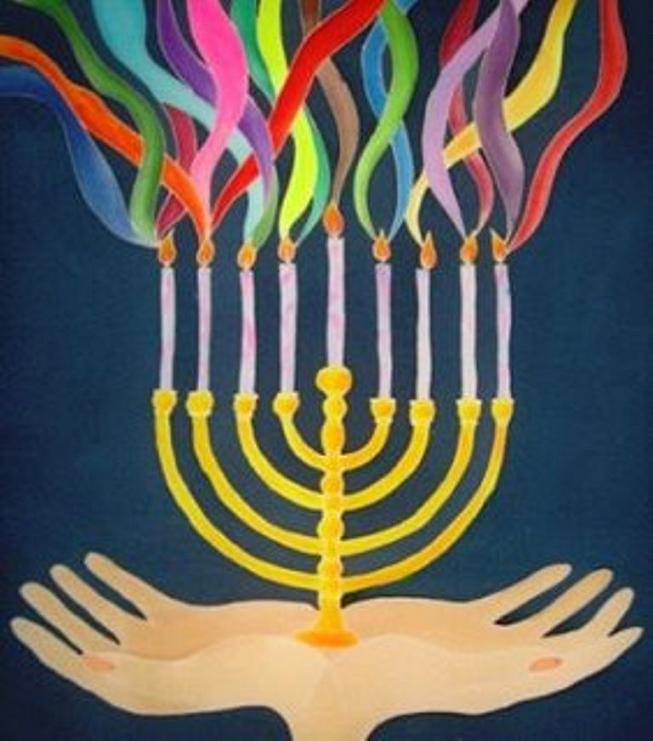
TO LIGHT ONE CANDLE
1 December 2013
James Ishmael Ford
First Unitarian Church
Providence, Rhode Island
Text
Blessed is the match consumed in kindling the flame. Blessed is the flame that burns in the heart’s secret places. Blessed is the heart with strength to stop its beating for honor’s sake. Blessed is the match consumed in kindling the flame.
Hannah Senesh
Three days ago it was a once in seventy thousand year event, the first night of Hanukkah and our American Thanksgiving occurring on the same Thursday evening. I just love it. And, I think, even more than usual, we’re invited into reflecting on the great mess. They both, after all, are such complicated holidays in similar ways, in ways, I suggest, also similar to our human hearts.
First, Hanukkah. There are good reasons it was a minor holiday, made what it is today mainly because of its proximity to Christmas. A few years ago David Brooks, the generally conservative New York Times columnist eloquently enumerated the problems with Hanukkah. “It commemorates,” he wrote, “an event in which the good guys did horrible things, the bad guys did good things and in which everybody is flummoxed by insoluble conflicts that remain with us today.” However, somewhere along the line, what was essentially a fundamentalist revolt against multiculturalism became a song of the small in the face of the great, of the weak standing against the strong, of a light shining against all odds, against the dark.
And then there’s our American Thanksgiving, which is similarly, shaped by clouded antecedents. George Washington proclaimed a day of thanksgiving, but only once. Thomas Jefferson never made a thanksgiving proclamation, at all. For a hundred years it simply was not a national event. Not that there weren’t thanksgiving celebrations. Harvest festivals and days of thanksgiving are pretty close to universal, and so of course there were all sorts of local days of thanksgiving in various American communities in our first hundred years as a nation.
But, it was only with Abraham Lincoln that we got our annual national day of thanksgiving. He and his recent predecessors had for years been petitioned to proclaim a thanksgiving holiday by Sarah Josepha Hale, editor of Godey’s Lady’s Book, a wildly popular magazine in its day. And it was Hale, incidentally also the author of Mary Had a Little Lamb, who pretty much cooked up out of very little information the idea of the pilgrims and the Indians celebrating together as a universal backstory for a day of thanksgiving. It was an idea and a story that, in the depths of the Civil War, looked pretty good to the president.
Of course, that story which symbolized cooperation had a terrible worm at its heart. As American Indian activists, and particularly the Wampanoags who were the actual Indians on site, have been pointing out for decades, the story Hale told has little to do with reality. And most important that near mythic Pilgrim and Indian thanksgiving was a moment in time just ahead of a terrible genocide. And, so, today, we cannot observe our American thanksgiving without also remembering those who have been hurt, terrorized, and decimated on the way to our holiday.
And yet, knowing these things, we continue to celebrate Hanukkah, we continue to celebrate Thanksgiving. There are reasons for this.
Now, some do so by selective attention, thinking only of the good things about Hanukkah, about Thanksgiving. And I’m not completely opposed to the power of denial. There are times. But, for the most part, and certainly at those push come to shove moments when it really matters Pollyanna eyes betray us. And today as we are invited into a reflection on deeper matters, I suggest, we look straight on and see what we see.
Now, as many here know, I have a continuing interest in ethics, or more specifically Buddhist ethics as informed by the Bodhisattva precepts. The core of which are ten precepts, not unlike the Ten Commandments, although I find them a bit more useful in my regular lived life than the biblical set. They’re seen not as God given, but as observed for their ability to bring us to a harmonious life. So, perhaps it isn’t all that unreasonable in the study of them a favorite ploy is to posit situations where, in order to keep one of the precepts it is impossible to avoid breaking another.
For instance, the Korean Zen master Sueng Sahn liked to present a situation where you’re sitting on a log in a glade in the middle of a forest. Suddenly a fox rushes out of the surrounding woods and dashes under the log on which you’re sitting. Moments later a hunter follows, looks around and demands to know where the fox went. So, let’s see. The major precepts involved in this situation are no killing and no lying, or, as some prefer to present the precepts, preserve life and speak truthfully. Those who suggest avoiding the conflict by maintaining a noble silence are pushed. The master would reply, No, the hunter then points his gun at you. Choose the precept you’re going to break.
The Zen teacher Diane Rizzetto ups the ante. When she sets the conundrum, instead of a fox, it’s a rabbit. And behind the hunter there are hungry children, desperately waiting. What are you going to do?
Life is like that, all mixed up. There are unintended consequences to any action. And the origins of pretty much every thing are complex, mired in this and that.
For instance, let’s return to the Zen teacher Diane Rizzetto. She was a High School drop out and a single mother. Right at the cusp between teenager and adult she was desperate. She saw a classified ad for a legal secretary. Diane understood they paid well and being smart and articulate beyond her formal education she lied her way into the job. Within weeks her boss called her into his office and said it was obvious she didn’t have the skills or experience she claimed she had. But instead of firing her, he asked what it was she hoped to get out of life? If she could do anything, what would it be? She was confounded. Possibly she’d not ever actually been asked that question before. With hesitation, and probably a little fear, she answered her secret desire, to return to school, maybe, eventually to become a teacher. Right there he made some phone calls. Within weeks Diane found herself with a slightly different job, and going to college at night. She ended up earning an MA in American Literature at Brown, and, well, following a trajectory set out of that moment, eventually even became a Zen master.
Now we can look at her life as a straight line, and with that at a critical point a lie, a flat out lie gave her the direction that led to a college education and with that the whole rest of her life. But I think our lives are less linear than that telling suggests. We, to very slightly paraphrase Walt Whitman, are large; we contain multitudes. There are rarely single causes or single consequences. And so that Hanukkah story of candles lit against the dark has as part of it, a reckless and in some ways hateful element. And that story of Thanksgiving has as part of it displacement and genocide. Also, just to continue stirring the pot, today is World AIDS day, a reminder of a devastating disease made vastly worse by simple prejudice. It’s all mixed up.
When we look deeply at how we came to be who we are, if we’re honest, there are going to be lots of mixed emotions. There probably is joy and gratitude. I hope there is. And these feelings can include shame. They can include guilt. Now, truthfully, frankly, we don’t need to feel shame. I feel a bit more ambiguous about the value of guilt; it is the great nudge toward correction of behavior. But as one observer of the complexities of our American Thanksgiving wrote, “we do need to feel something.” Today we’re called into our feeling lives as much as anything else. If our goal is wisdom, we need to open our hearts as widely as we can. That large, that wide heart is the secret.
We only have a couple of minutes left. It’s good to focus. And I want to focus on how we can find our wider heart reflecting specifically on Hanukkah. Here again, a complicated tradition within the Jewish religion, pulled out and made something larger because of its proximity to Christmas, clouded by its foundations as a fundamentalist revolt against what can with some honesty be seen as a multicultural and certainly by the standards of the day, a largely tolerant society.
Now, that ancient struggle at the heart of Hanukkah was not only against oppression of an occupying force, but it was just as much a struggle against pervasive corruption. No doubt the leaders were corrupt to the core, and a response was called for. It really is a both, and situation. Many strands of our lives coming together, making what is. And if we want to be spiritual adults, if we want wisdom, if we want to find the larger heart, we’re going to have to take our communal stories as complicated, involving shameful things as well as noble as critical in advancing us toward a larger view, a healing perspective.
And I think that’s what’s at the heart of the enterprise, our wide, our large heart. In this we can find the mysteries we call love, the mystery we sometimes name God. Here, in particular, I think of the story of the lights, which appears to have been how the rabbis squared the circle of the complicated history of the Maccabees with the dream of something better, of hope, of love. It was expressed in a miracle of light.
And I think our task, yours and mine, is to find the light, that one miraculous light that lasts well past any possible reasonable effort; that shines on the just and unjust, and gives us hope. It points to the path of passion, and of heart. And this is our task, as it has been the task of every soul over the many generations. To take what is given, to look deeply into the matter at hand, and to allow ourselves to be transformed and in that transforming to become spiritual adults. To become people who can take on the work that needs to be done.
There is little doubt today that our liberal religious tradition is the minority position. We are the weak in this struggle for hearts and minds. Right now ours is the unpopular voice that is nearly lost in the thunder of public opinion. And the call for us is a struggle, and it is a struggle not only against every oppression from beyond those walls, but to fiercely resist corruption of this spirit, losing to our own complacency, making it all simply a private affair. That is the small light we are called to notice today, the light burning in our hearts, the light that shows the way of love, and of action.
I suggest this story and our working with it calls us, you and me, to resist the dying of the light, to shine forth beyond all reasonable expectations, to become, each and every one of us by our example, by our willingness to not turn away, by our challenging all authority, particularly that voice in the back of our heads that says turn away.
Each of us needs to be that small candle in the great wind; and in doing so become the miracle.
May this turning of the heart, of our becoming the flame of possibility become the Hanukkah candle. May it burn and burn past all reasonable expectations; transforming us and our hearts showing this beautiful suffering world a way.
Amen.
Previous Post

November 29, 2013
Mothers! Don't Let Your Children Play Football
Next Post
December 2, 2013 John Brown's Body
Browse Our Archives
Select a Category A Christmas Carol Abolitionist African-American Ahmadiyya Alan Watts Aldous Huxley Allen Ginsberg Amedkar Jayanti American politics American Zen Anaheim Zen Sangha Anglican Annie Besant April Fool Armageddon Art and Religion artificial intellegence Atheist Awakening B R Ambedkar Barlaam & Josaphat Beatnik Between Bhagavad Gita Bible biography birthday bodhisattva Bodhisattva Precepts Book burning Book of Common Prayer Book of Mormon Brahmo Samaj Buddha Buddhism Buddhist Buddhist Lord's Prayer Butterflies Calendars cartoons cat ChatGPT Chicken Tortilla Soup choices Christian atheism Christian mysticism Christian origins Christian Science Christian Zen Christianity Christianity and Buddhism christmas Christmas Truce Christopher Isherwood Church of Later Day Saints Cinco de Mayo circus covenant critical thinking culture D. T. Suzuki Dalit Buddhism Daniel Defoe Desert Fathers and Mothers dharma talk Dogen Donald Trump Dongshan's Five Ranks Dorothy Day dream Duty Easter ecology Edwin Arnold emptiness Empty Moon Zen Network Episcopal Church Eternal Now Ethics evolution existentialism Faith fantasy Fathers Day film film review fire Five Ranks Folk music food Form and emptiness Four Seals Francis of Assisi Francis Xavier Free thinker friendship George MacDonald Gerald Heard Glenn Taylor Webb God Good Friday Gospel of Gospel of Mark Gospel of Thomas grace Graduate Theological Unioin Graduate Theological Union Guanyin H R Blyth Hakuin Ekaku Hanamatsuri Hanukkah Harada Yasutani Zen Heart Sutra Henry David Thoreau Hermann Hesse Hinduism History and Religion history of religion Holy Spirit home Hospitality Icon Ides of March Isaac Newton Islam Islamic mysticism Jack Kerouac James Luther Adams Jiddu Krishnamurti Joan of Arc Johannes Gutenberg John Donne joke Judaism justice karma kensho King James Bible koan Koun Yamada Kyoto School Lewis Carrol Liberal Christianity Liberal Religion Life Plan Community Liminal literature Literature and Religion Liturgy Lord's Prayer Love Mahatma Gandhi Mahayana Martin Luther King Jr Mary Baker Eddy Mary Magdelene Mary Oliver Mayflower Compact Meditation memories memory metaphor money money and religioin Mormons Mother's Day movie review mysticism mythic Neighborhood Unitarian Universalist Church New Thought Nichiren Buddhism Nonduality not knowing Omar Khayyam Pacific School of Religion pagan Palm Sunday Passover peace Pentecost perennialism Phantastes Philip Kapleau philosophy Pilgrimage poetry Poetry and Religion politics Prayer Precepts Printing Press prophecy prophetic spirituality psychology Pure Land Queer religion queering religion Quietism Ram Mohan Roy rebirth recipe Relationships and religion religion religion and history Religious syncretism Resistance Retirement Retreat review Rissho Kosei Kai Ritual Robert Aitken Roshi Robert Ingersoll Rohatsu Romani religion Rosie the Riveter saints samadhi SanboZen Sangha Satyagraha science science and reigion science and religion science fiction seminary sermon Sesshin Sex and Religion Shinran Sikh Sikh tradition silence Social Justice Socially Engaged Buddhism Society and religion Soto Zen soul spiritual community spiritual practice Spirituality Sufism Suicide superstition Taoism Television Teresa of Avila Thanksgiving theological schools Theosophy Thomas Merton Time Transcendentalism Transcendentalist Trinitarian Trinity Uncategorized unitarian Unitarian Christianity Unitarian Universalist Universalism Vajrayana Vedanta Walking war Willa Cather William Ellery Channing wisdom women and religion women in religion World Teacher Writing zazen Zen Zen Center Zen inspired retriement zen meditation Zen Precepts Zen women
Select a Month September 2026 August 2026 July 2026 June 2026 May 2026 April 2026 March 2026 February 2026 January 2026 December 2025 November 2025 October 2025 September 2025 August 2025 July 2025 June 2025 May 2025 April 2025 March 2025 February 2025 January 2025 December 2024 November 2024 October 2024 September 2024 August 2024 July 2024 June 2024 May 2024 April 2024 March 2024 February 2024 January 2024 December 2023 November 2023 October 2023 September 2023 August 2023 July 2023 June 2023 May 2023 April 2023 March 2023 February 2023 January 2023 December 2022 November 2022 October 2022 September 2022 August 2022 July 2022 June 2022 May 2022 April 2022 March 2022 February 2022 January 2022 December 2021 November 2021 October 2021 September 2021 August 2021 July 2021 June 2021 May 2021 April 2021 March 2021 February 2021 January 2021 December 2020 November 2020 October 2020 September 2020 August 2020 July 2020 June 2020 May 2020 April 2020 March 2020 February 2020 January 2020 December 2019 November 2019 October 2019 September 2019 August 2019 July 2019 June 2019 May 2019 April 2019 March 2019 February 2019 January 2019 December 2018 November 2018 October 2018 September 2018 August 2018 July 2018 June 2018 May 2018 April 2018 March 2018 February 2018 January 2018 December 2017 November 2017 October 2017 September 2017 August 2017 July 2017 June 2017 May 2017 April 2017 March 2017 February 2017 January 2017 December 2016 November 2016 October 2016 September 2016 August 2016 July 2016 June 2016 May 2016 April 2016 March 2016 February 2016 January 2016 December 2015 November 2015 October 2015 September 2015 August 2015 July 2015 June 2015 May 2015 April 2015 March 2015 February 2015 January 2015 December 2014 November 2014 October 2014 September 2014 August 2014 July 2014 June 2014 May 2014 April 2014 March 2014 February 2014 January 2014 December 2013 November 2013 October 2013 September 2013 August 2013 July 2013 June 2013 May 2013 April 2013 March 2013 February 2013 January 2013 December 2012 November 2012 October 2012 September 2012 August 2012 July 2012 June 2012 May 2012 April 2012 March 2012 February 2012 January 2012 December 2011 November 2011 October 2011 September 2011 August 2011 July 2011 June 2011 May 2011 April 2011 March 2011 February 2011 January 2011 December 2010 November 2010 October 2010 September 2010 August 2010 July 2010 June 2010 May 2010 April 2010 March 2010 February 2010 January 2010 December 2009 November 2009 October 2009 September 2009 August 2009 July 2009 June 2009 May 2009 April 2009 March 2009 February 2009 January 2009 December 2008 November 2008 October 2008 September 2008 August 2008 July 2008 June 2008 May 2008 April 2008 March 2008 February 2008 January 2008 December 2007 November 2007 October 2007 September 2007 August 2007 July 2007 June 2007 May 2007 April 2007 March 2007 February 2007 January 2007 December 2006 November 2006 October 2006 September 2006
Follow Us!
TAKE THE
Religious Wisdom Quiz
What did Eve eat in the Garden of Eden?
Select your answer to see how you score.
Bread Fruit from the Tree of Knowledge A vine branch An unclean animal
Related posts from Monkey Mind


Which Is the True Qian? A Koan About...


TRENDING AT PATHEOS Buddhist

Letters on Living the Faith by C.S. Lewis
Most of us met C.S. Lewis as a public intellectual. Mere Christianity....

When Halloween Unmasks Married Hearts
Written by Dr. David K. Ewen from Eternal Truth Bible College Behind...

Aristotle. He’s been called the father of logic, the father of the...

Methodist Central Hall and Westminster Abbey
Situated on the same square is Methodist Central Hall and Westminster Abbey. ...

57th Dove Awards Honor Dolly Parton, Crown New...
On gospel music’s biggest night, the 57th annual GMA Dove Awards honored...

The First Eucharistic Controversy: Christ’s Real Presence
For Catholics, the Eucharist is the source and summit of the Christian...
view all Buddhist blogs
Ad-Free & Subscriber Log-In Subscription Support
- About Us
- 2026 Calendar
- Videos
- Podcasts
- Library of World Religions
- Faith In Media Tracker
- Advertise With Us
- Write for Us
- Privacy Policy
- Terms of Service
- Do Not Sell My Data
- Contact Us
- Radiant Digital
- Manage Newsletter Subscriptions
- Unsubscribe From Notifications
- Sitemap
Copyright 2008-2026, Patheos. All rights reserved.
Subscription Support Ad-Free & Subscriber Log-In
Follow Patheos