
BuddhistCatholicContemplativeEvangelicalGeneral ChristianHinduJewishLatter-day SaintMuslimNew VisionsProgressive Christian
Beliefs
- Buddhist
- Catholic
- Contemplative
- Evangelical
- General Christian
- Hindu
- Jewish
- Latter-day Saint
- More Voices
- Muslim
- New Visions
- Pagan
- Progressive Christian
Topics
- Religion News
- Food and Religion
- Sports and Religion
- Religious Art
- Religious Music and Entertainment
- Religious Events
- History and Religion
- Style and Religion
- Politics and Religion
- Women in Religion
- Recreation Outdoors and Religion
- Business Finance and Religion
- Careers Workplace and Religion
- Education and Religion
- Family Parenting and Religion
- Health Fitness and Religion
- Home and Religion
- Relationships and Religion
- Technology and Religion
- Travel and Religion
Columnists
- Buddhist Columnists
- Business Finance and Religion Columnists
- Careers Workplace and Religion Columnists
- Catholic Columnists
- Contemplative Columnists
- Education and Religion Columnists
- Evangelists Columnists
- Family Parenting and Religion Columnists
- General Christian Columnists
- Health Fitness and Religion Columnists
- Hindu Columnists
- History and Religion Columnists
- Home and Religion Columnists
- Jewish Columnists
- More Voices Columnists
- Latter Day Columnists
- Muslim Columnists
- New Visions Columnists
- Nonreligious Columnists
- Pagan Columnists
- Politics and Religion Columnists
- Progressive Columnists
- Recreation Outdoors and Religion Columnists
- Relationships and Religion Columnists
- Religion News Columnists
- Religious Art Columnists
- Religious Events Columnists
- Religious Music and Entertainment Columnists
- Sports and Religion Columnists
- Style and Religion Columnists
- Technology and Religion Columnists
- Travel and Religion Columnists
- Women in Religion Columnists
Resource Library
- 2026 Calendar
- Library of World Religions
- The 100 Most Holy Places on Earth
- Patheos Answers
- Podcasts
- Videos
- Faith Leaders Database
- Anglican Episcopalian
- Bahai
- Baptist
- Buddhism
- Christianity
- Confucianism
- Eastern Orthodoxy
- Hinduism
- Holiness and Pentecostal
- ISKCON
- Islam
- Judaism
- Lutheran
- Methodist
- The Church of Jesus Christ of Latter-day Saints
- New Age
- Paganism
- Presbytarian and Reformed
- Protestantism
- Religion Behind the Scenes
- Roman Catholic
- Scientology
- Shia Islam
- Sikhism
- Sufism
- Sunni Islam
- Taoism
- Zen
- See all religions
Research Tools
 Ad-Free & Subscriber Log-In Subscription Support
Ad-Free & Subscriber Log-In Subscription Support
Follow Patheos 

- Trending:
- Forgiveness
- |
- Marriage
- |
- Consciousness
- |
- Death Penalty
- |
- Election
- |
- Halloween

- Home
- Buddhist
- ARGUING WITH THE ANCESTORS Or, a Little Walk with the Desert Fathers & Mothers
ARGUING WITH THE ANCESTORS Or, a Little Walk with the Desert Fathers & Mothers
Last updated on: October 31, 2013 at 11:51 am by James Ford
ARGUING WITH THE ANCESTORS Or, a Little Walk with the Desert Fathers & Mothers 2013-10-31T11:51:33-07:00 James Ford
Patheos Explore the world's faith through different perspectives on religion and spirituality! Patheos has the views of the prevalent religions and spiritualities of the world.
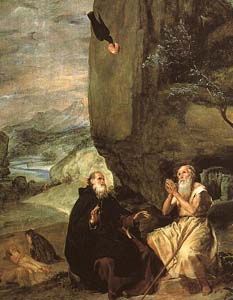
ARGUING WITH THE ANCESTORS
Or, A Little Walk With the Desert Fathers & Mothers
27 October 2013
James Ishmael Ford
First Unitarian Church
Providence, Rhode Island
Text
Once there was a disciple of a Greek philosopher who was commanded by his Master for three years to give money to everyone who insulted him. When this period of trial was over, the Master said to him: Now you can go to Athens and learn wisdom. When the disciple was entering Athens he met a certain wise man who sat at the gate insulting everybody who came and went. He also insulted the disciple who immediately burst out laughing. Why do you laugh when I insult you? said the wise man. Because, said the disciple, for three years I have been paying for this kind of thing and now you give it to me for nothing. Enter the city, said the wise man, it is all yours. Abbot John (the Dwarf) used to tell the above story, saying: This is the door of God by which our fathers (and mothers) rejoicing in many tribulations enter into the City of Heaven.
The Wisdom of the Desert
Thomas Merton, Editor & Translator
The Desert Fathers and Mothers were Christians of various flavors, ranging from gnostic to Orthodox who lived in the deserts of Syria, what we now divide as Palestine and Israel, and most of all in Egypt, throughout the fourth and fifth centuries of our common era. Their actions and sayings have been collected in a couple of books, much of which are now available in English translation, the most famous of which is probably Thomas Merton’s Wisdom of the Desert.
Among the interesting things about them is how so many of the collected anecdotes look so similar to the stories of Zen Buddhist teachers and students in China from a couple of centuries later. Well, they look similar if you squint your eyes just a little, and hold your head titled at just the right angle. But do that, and my goodness! Merton’s particular selection, chosen as it was, by a Christian mystic and social justice activist who had a deep interest in the world’s religions, particularly Zen Buddhism, emphasized and perhaps over emphasized the stories that do look so similar across ages and religions. But, my goodness, they really do.
That’s a bit of background. After we moved here to Rhode Island, I unpacked a box of my books that had not been opened in years, probably decades. In it I found an old copy of the New Directions paperback version of Merton’s little book. It wasn’t in very good shape, the glue was disintegrating and pages were beginning to pop out. What particularly caught my attention, however, was how many of those pages had check marks at particular stories, emphasizing my interest in them, and how a number also had marginal notes – from me, from so long ago I had no memory of writing them.
I realized the comments came from a period in my life where I had, I’m not sure exactly, but certainly more than a decade of hard Zen meditation practice including time in a monastery under my belt, as well as having studied with Sufis and gnostics and even a couple of wise Christians. Those comments showed how my spiritual journey was beginning to find its shape. I could see the contours of who I would become. I was, also, I saw in the reading, a little full of myself. You know how it goes. I was so much smarter then, than I am now.
For example, there’s a story about a young monk who complains that he can’t still his thoughts. The teacher grabs the monk, drags him outside into the desert with its howling wind, and tells him to open his robes and catch the wind. When the young monk stutters that that is impossible, the teacher responds “If you can’t catch the wind, neither can you prevent thoughts from rising in your head.” He concludes, “Your task is instead to say ‘no’ to them.” I appended my own comment, writing in the space to the side of the paragraph, “Almost right. Our job is to watch those thoughts and let them go.” Not bad. But, the advice of the ancient worthy was sufficient. Really, I was just adding frosting to the cake.
Now, at the same time, I think it is important for us, when we encounter things like Merton’s little book of ancient wisdom, if they’re worthy, and I’m certain this book is, to really engage them. We need to argue with the words. So, quibbling can be valuable. And, we need to listen to what they say. Not too quickly impose our own thoughts on top of what is being shared. Do this, and I’ve found good things can follow. We might even open ourselves to the grace of the world, to the rising of the wise heart. And there’s a lot of it in this little book.
So, a visitor to Abbot Theodore wanted to know about the consolations of the spiritual life, the blinding flashes of transforming insight and the deeper calm that infiltrates the heart and infuses the life of someone who has fully given herself, himself to the way of depth. The abbot replied, “you have not yet found your ship, you’ve not put your luggage on board, you’ve not begun the trip across the sea, but you want to talk as if you’ve already arrived.”
This is a common enough trap for the beginner in all spiritual traditions, and a standard pointer from an elder on the way. “Act,” the abbot told the visitor, “Practice the way. And then speak from your own knowledge,” echoing a common theme in the Zen way, to take the cup and drink your own water, and know for your self, whether it is cool or warm.
Also, while these stories are about people who’ve thrown themselves fully into the way, they caution not to be trapped by the forms. One of the most renowned of the women who fled into the desert, Abbess Syncletica, dryly observed to a student how “It is possible to be a person of the way within one’s mind while living in a crowd, and it is (equally) possible for one who wears the robes to live within the crowd of one’s own mind.” Another Desert Mother, the Abbess Matrona drives the point home. “We carry ourselves wherever we go… we cannot escape… through mere flight.” In fact the invitation of these ancient teachers is never an invitation to run away from our lives, rather it is, always, a beckoning home.
The stories are filled with what that means, where we find home. A visitor to one desert community was surprised at how much time the monks devoted to work, tending their gardens and weaving baskets to sell in the town. The visitor had a different vision of what it means to be spiritual, and chastised Abbot Sylvanus, noting, “You work for bread that perishes.”
The visitor then schooled the abbot in their shared tradition, citing the famous story of Martha and Mary, where Martha worked at housekeeping while Mary stayed with Jesus talking. The visitor concluded, “Mary chose the best part.” The abbot had nothing more to offer at the moment so had his attendant show the visitor to a room, telling the attendant to give the visitor a spiritual book to read. The visitor settled in, I imagine he sat comfortably and could look up from his book through a window at that astonishing desert landscape. The hours passed and the light began to fall and he noticed when the dinner hour arrived, but there was no bell and no one came to collect him. After another hour or so he went to the abbot and asked why he hadn’t been called to eat. The abbot replied, “We worked for our living, and then ate. But you who chose the better part, and are so spiritual, well, obviously you don’t need to eat.”
There’s a more charming telling of this lesson when the young man who would become the celebrated Abbot John the Dwarf, decided he was tired of working and wanted to be an angel. He took off his robe and flapping his arms ran into the desert. That evening tired and hungry he went to the hut of his teacher only to find it for the first time since he had arrived barred shut. Knocking on the door saying he was hungry his teacher provided the same lesson, repeated in Zen circles as, “a day of no work is a day of no eating.”
There’s a spiritual lesson.
The heart sings true, we only need to listen.
So, what is that soft song being sung by our hearts? What do we find when we bring our work and our spirit into this place that we are now, when we slow down a little, and just attend? Here these ancient Egyptians offer their own unique take on the universal wisdom. It is something I really think worth listening to.
They touch most of the difficulties in finding a life worth living.
Someone told Abbot Pastor, “I follow the rules of the community. But, my heart isn’t at rest. What else should I do?” The abbot gave some of the clearest advice I’ve ever heard from the wise of any tradition. “Despise no one. Condemn no one. Rebuke no one. And God will give you peace.” This call to surrender into the mysteries of love runs a deep current through the teachings of the Desert, life giving waters in a parched land.
And, always, the call is to the real. So, again, when the young John the Dwarf was still finding his way, he prayed to be delivered from all passions. Feeling God had in fact answered his prayers he went to one of his teachers and declared, “You see before you, one who has transcended temptation, my heart is completely at rest.” The teacher yelled at him. “And you’ve completely missed the point! Go back and pray for the struggle to return. And when it comes, pray not to be delivered from the task, but for strength to persevere.” Similar, I feel, to that Zen story of two monks meeting on the road and walking together until they come to a river. The one proceeds to walk across the river his feet barely touching the water. The one left behind, muttering, “If I’d known he was like that, I’d have given him a swift whack from my staff.”
We’re called to a grounded spirituality, a spirituality that brings heaven and earth into one place, this place. Another of the stories of the Desert repeated by Thomas Merton has a young seeker go to an elder, saying there are two monks. One remains in his cell, praying, fasting five days in the week constantly repenting his sins. The other takes care of the sick. Which is most truly following the way, he asks? Not as a trap, I think, but a real question. The answer is brief. “The one who prays by himself doesn’t even come close the holiness of the one who cares for the sick.”
Finding it all here. Finding it all now. Finding it as much in our hands as in our hearts. There’s something to wrestle with.
An aspirant approached Abbot Pastor and asked, “How do I make my way?” The abbot replied with what is probably the heart of the whole spiritual path, whatever our tradition, Jewish, Christian, Buddhist, earth-centered, humanist. Whatever name we give the way as we walk it. And it is so easy. And it is so hard.
He said, “Constantly ask, ‘Who am I?’ and judge no one.”
My annotation, my midrash on this, not from back when I knew so much more, but from now, from a life where my heart has been broken so many times, from a life that has also constantly been surprised by love. I suggest we reduce that question to the deep curiosity of our hearts, allowing the longing of our human condition to become a deep interest in the matters of life, a constant noticing, looking, watching, listening; allowing all our senses to simply be present.
Then from there, want to see how the rubber hits the road? John the Dwarf, now an abbot himself, accompanies a number of worthies going to visit a very old abbot deep in the desert. The ancient sage offers the weary travelers water to drink. Out of respect and not wanting to impose, all decline, except John. Instead, he says, “yes, thank you,” takes the cup and drinks deeply. Later when he is rebuked for taking water knowing the old man has trouble going to the well, even to get enough water for himself, John replies, “I know that when I offer refreshment, I am happy that people accept it. I saw he wanted to give the gift. Of course, I could only accept.”
Only accept.
Only accept. Words from people who learned there was a time to receive and a time to act, and who schooled hearts into knowing when for each.
The wisdom of the desert.
Worth a little struggle. Worth some argument. Worth trying on for ourselves.
Indeed, may we all be so blessed.
Amen.
Previous Post

October 25, 2013
That Primrose Path to Hell, Example 236
Next Post
October 28, 2013 Who is a Mystic?
Browse Our Archives
Select a Category A Christmas Carol Abolitionist African-American Ahmadiyya Alan Watts Aldous Huxley Allen Ginsberg Amedkar Jayanti American politics American Zen Anaheim Zen Sangha Anglican Annie Besant April Fool Armageddon Art and Religion artificial intellegence Atheist Awakening B R Ambedkar Barlaam & Josaphat Beatnik Between Bhagavad Gita Bible biography birthday bodhisattva Bodhisattva Precepts Book burning Book of Common Prayer Book of Mormon Brahmo Samaj Buddha Buddhism Buddhist Buddhist Lord's Prayer Butterflies Calendars cartoons cat ChatGPT Chicken Tortilla Soup choices Christian atheism Christian mysticism Christian origins Christian Science Christian Zen Christianity Christianity and Buddhism christmas Christmas Truce Christopher Isherwood Church of Later Day Saints Cinco de Mayo circus covenant critical thinking culture D. T. Suzuki Dalit Buddhism Daniel Defoe Desert Fathers and Mothers dharma talk Dogen Donald Trump Dongshan's Five Ranks Dorothy Day dream Duty Easter ecology Edwin Arnold emptiness Empty Moon Zen Network Episcopal Church Eternal Now Ethics evolution existentialism Faith fantasy Fathers Day film film review fire Five Ranks Folk music food Form and emptiness Four Seals Francis of Assisi Francis Xavier Free thinker friendship George MacDonald Gerald Heard Glenn Taylor Webb God Good Friday Gospel of Gospel of Mark Gospel of Thomas grace Graduate Theological Unioin Graduate Theological Union Guanyin H R Blyth Hakuin Ekaku Hanamatsuri Hanukkah Harada Yasutani Zen Heart Sutra Henry David Thoreau Hermann Hesse Hinduism History and Religion history of religion Holy Spirit home Hospitality Icon Ides of March Isaac Newton Islam Islamic mysticism Jack Kerouac James Luther Adams Jiddu Krishnamurti Joan of Arc Johannes Gutenberg John Donne joke Judaism justice karma kensho King James Bible koan Koun Yamada Kyoto School Lewis Carrol Liberal Christianity Liberal Religion Life Plan Community Liminal literature Literature and Religion Liturgy Lord's Prayer Love Mahatma Gandhi Mahayana Martin Luther King Jr Mary Baker Eddy Mary Magdelene Mary Oliver Mayflower Compact Meditation memories memory metaphor money money and religioin Mormons Mother's Day movie review mysticism mythic Neighborhood Unitarian Universalist Church New Thought Nichiren Buddhism Nonduality not knowing Omar Khayyam Pacific School of Religion pagan Palm Sunday Passover peace Pentecost perennialism Phantastes Philip Kapleau philosophy Pilgrimage poetry Poetry and Religion politics Prayer Precepts Printing Press prophecy prophetic spirituality psychology Pure Land Queer religion queering religion Quietism Ram Mohan Roy rebirth recipe Relationships and religion religion religion and history Religious syncretism Resistance Retirement Retreat review Rissho Kosei Kai Ritual Robert Aitken Roshi Robert Ingersoll Rohatsu Romani religion Rosie the Riveter saints samadhi SanboZen Sangha Satyagraha science science and reigion science and religion science fiction seminary sermon Sesshin Sex and Religion Shinran Sikh Sikh tradition silence Social Justice Socially Engaged Buddhism Society and religion Soto Zen soul spiritual community spiritual practice Spirituality Sufism Suicide superstition Taoism Television Teresa of Avila Thanksgiving theological schools Theosophy Thomas Merton Time Transcendentalism Transcendentalist Trinitarian Trinity Uncategorized unitarian Unitarian Christianity Unitarian Universalist Universalism Vajrayana Vedanta Walking war Willa Cather William Ellery Channing wisdom women and religion women in religion World Teacher Writing zazen Zen Zen Center Zen inspired retriement zen meditation Zen Precepts Zen women
Select a Month September 2026 August 2026 July 2026 June 2026 May 2026 April 2026 March 2026 February 2026 January 2026 December 2025 November 2025 October 2025 September 2025 August 2025 July 2025 June 2025 May 2025 April 2025 March 2025 February 2025 January 2025 December 2024 November 2024 October 2024 September 2024 August 2024 July 2024 June 2024 May 2024 April 2024 March 2024 February 2024 January 2024 December 2023 November 2023 October 2023 September 2023 August 2023 July 2023 June 2023 May 2023 April 2023 March 2023 February 2023 January 2023 December 2022 November 2022 October 2022 September 2022 August 2022 July 2022 June 2022 May 2022 April 2022 March 2022 February 2022 January 2022 December 2021 November 2021 October 2021 September 2021 August 2021 July 2021 June 2021 May 2021 April 2021 March 2021 February 2021 January 2021 December 2020 November 2020 October 2020 September 2020 August 2020 July 2020 June 2020 May 2020 April 2020 March 2020 February 2020 January 2020 December 2019 November 2019 October 2019 September 2019 August 2019 July 2019 June 2019 May 2019 April 2019 March 2019 February 2019 January 2019 December 2018 November 2018 October 2018 September 2018 August 2018 July 2018 June 2018 May 2018 April 2018 March 2018 February 2018 January 2018 December 2017 November 2017 October 2017 September 2017 August 2017 July 2017 June 2017 May 2017 April 2017 March 2017 February 2017 January 2017 December 2016 November 2016 October 2016 September 2016 August 2016 July 2016 June 2016 May 2016 April 2016 March 2016 February 2016 January 2016 December 2015 November 2015 October 2015 September 2015 August 2015 July 2015 June 2015 May 2015 April 2015 March 2015 February 2015 January 2015 December 2014 November 2014 October 2014 September 2014 August 2014 July 2014 June 2014 May 2014 April 2014 March 2014 February 2014 January 2014 December 2013 November 2013 October 2013 September 2013 August 2013 July 2013 June 2013 May 2013 April 2013 March 2013 February 2013 January 2013 December 2012 November 2012 October 2012 September 2012 August 2012 July 2012 June 2012 May 2012 April 2012 March 2012 February 2012 January 2012 December 2011 November 2011 October 2011 September 2011 August 2011 July 2011 June 2011 May 2011 April 2011 March 2011 February 2011 January 2011 December 2010 November 2010 October 2010 September 2010 August 2010 July 2010 June 2010 May 2010 April 2010 March 2010 February 2010 January 2010 December 2009 November 2009 October 2009 September 2009 August 2009 July 2009 June 2009 May 2009 April 2009 March 2009 February 2009 January 2009 December 2008 November 2008 October 2008 September 2008 August 2008 July 2008 June 2008 May 2008 April 2008 March 2008 February 2008 January 2008 December 2007 November 2007 October 2007 September 2007 August 2007 July 2007 June 2007 May 2007 April 2007 March 2007 February 2007 January 2007 December 2006 November 2006 October 2006 September 2006
Follow Us!
TAKE THE
Religious Wisdom Quiz
What did God put in the sky as a sign of His promise to Noah?
Select your answer to see how you score.
A star A rainbow A cloud A dove
Related posts from Monkey Mind


Which Is the True Qian? A Koan About...


TRENDING AT PATHEOS Buddhist

In one sense walking into Westminster Abbey is like walking down the...

'Super Scam Me' Exposes AI Jon Bon Jovi...
Leslie Pickett believed she was in a relationship with Jon Bon Jovi....

The Brazilian Remake of Kendricks' 'Flywheel' Opens in...
“Flywheel,” the story that launched the Kendrick Brothers’ filmmaking career is getting...

The Dangers of Gradual Accommodation (Winking at Sin)
Recently, the “law of gradualness” resurfaced during the opening of a weeklong,...

The Iron Gates and the Lion of the...
Yesterday, I didn't finish my report about, well, yesterday. So I'll...

The Image: On the Horror of Capitalism and...
The Image Then went the Pharisees, and took counsel how they might...
view all Buddhist blogs
Ad-Free & Subscriber Log-In Subscription Support
- About Us
- 2026 Calendar
- Videos
- Podcasts
- Library of World Religions
- Faith In Media Tracker
- Advertise With Us
- Write for Us
- Privacy Policy
- Terms of Service
- Do Not Sell My Data
- Contact Us
- Radiant Digital
- Manage Newsletter Subscriptions
- Unsubscribe From Notifications
- Sitemap
Copyright 2008-2026, Patheos. All rights reserved.
Subscription Support Ad-Free & Subscriber Log-In
Follow Patheos