
BuddhistCatholicContemplativeEvangelicalGeneral ChristianHinduJewishLatter-day SaintMuslimNew VisionsProgressive Christian
Beliefs
- Buddhist
- Catholic
- Contemplative
- Evangelical
- General Christian
- Hindu
- Jewish
- Latter-day Saint
- More Voices
- Muslim
- New Visions
- Pagan
- Progressive Christian
Topics
- Religion News
- Food and Religion
- Sports and Religion
- Religious Art
- Religious Music and Entertainment
- Religious Events
- History and Religion
- Style and Religion
- Politics and Religion
- Women in Religion
- Recreation Outdoors and Religion
- Business Finance and Religion
- Careers Workplace and Religion
- Education and Religion
- Family Parenting and Religion
- Health Fitness and Religion
- Home and Religion
- Relationships and Religion
- Technology and Religion
- Travel and Religion
Columnists
- Buddhist Columnists
- Business Finance and Religion Columnists
- Careers Workplace and Religion Columnists
- Catholic Columnists
- Contemplative Columnists
- Education and Religion Columnists
- Evangelists Columnists
- Family Parenting and Religion Columnists
- General Christian Columnists
- Health Fitness and Religion Columnists
- Hindu Columnists
- History and Religion Columnists
- Home and Religion Columnists
- Jewish Columnists
- More Voices Columnists
- Latter Day Columnists
- Muslim Columnists
- New Visions Columnists
- Nonreligious Columnists
- Pagan Columnists
- Politics and Religion Columnists
- Progressive Columnists
- Recreation Outdoors and Religion Columnists
- Relationships and Religion Columnists
- Religion News Columnists
- Religious Art Columnists
- Religious Events Columnists
- Religious Music and Entertainment Columnists
- Sports and Religion Columnists
- Style and Religion Columnists
- Technology and Religion Columnists
- Travel and Religion Columnists
- Women in Religion Columnists
Resource Library
- 2026 Calendar
- Library of World Religions
- The 100 Most Holy Places on Earth
- Patheos Answers
- Podcasts
- Videos
- Faith Leaders Database
- Anglican Episcopalian
- Bahai
- Baptist
- Buddhism
- Christianity
- Confucianism
- Eastern Orthodoxy
- Hinduism
- Holiness and Pentecostal
- ISKCON
- Islam
- Judaism
- Lutheran
- Methodist
- The Church of Jesus Christ of Latter-day Saints
- New Age
- Paganism
- Presbytarian and Reformed
- Protestantism
- Religion Behind the Scenes
- Roman Catholic
- Scientology
- Shia Islam
- Sikhism
- Sufism
- Sunni Islam
- Taoism
- Zen
- See all religions
Research Tools
 Ad-Free & Subscriber Log-In Subscription Support
Follow Patheos 

- Trending:
- Advent
- |
- Forgiveness
- |
- Thanksgiving
- |
- Election
- |
- Seasonal Holidays
- |
- Marriage

- Home
- Buddhist
- A Tale of a Tail: Encountering the Ox as it Passes Through the Window & With that Finding Zen’s Way of Liberation
A Tale of a Tail: Encountering the Ox as it Passes Through the Window & With that Finding Zen’s Way of Liberation
Last updated on: February 8, 2013 at 2:13 pm by James Ford
A Tale of a Tail: Encountering the Ox as it Passes Through the Window & With that Finding Zen’s Way of Liberation 2013-02-08T14:13:24-08:00 James Ford
Patheos Explore the world's faith through different perspectives on religion and spirituality! Patheos has the views of the prevalent religions and spiritualities of the world.
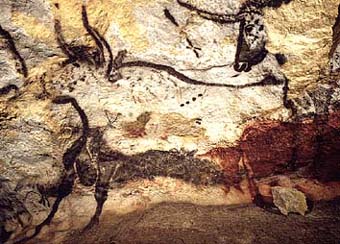
A Tale of a Tail: Encountering the Ox as it Passes Through the Window & With that Finding Zen’s Way of Liberation
James Myoun Ford
I was raised in a Christian fundamentalist family. At my grandmother’s knee I learned the problems of this life all happened because of Adam and Eve, because of original sin. They screwed up, seriously so, they sowed seeds of discontent, and because we’re their descendants, we have inherited, we have harvested the storm of sadness that haunts our lives. I also picked up really quickly, although it was not spoken of directly, or, precisely how, that all this suffering had something to do with sex.
I knew there was something wrong in life. In my small world as I grew older and began to become aware of the world beyond me I saw how alcohol ravaged my family. I remember the yelling and shaming. And I remember how from time to time my father was gone. In my childhood I was told to the hospital, he’d been badly wounded in the war. Later I learned it was sometimes hospital, and it was sometimes jail. We were poor and we lived among other poor people. We also moved a lot. Years later my not quite joke was that I didn’t know people moved during the day until I grew up.
For a while the stories my grandmother told me, and which I heard again in Sunday school and church explained it. And, as I moved toward adolescence, my flesh whispered the hidden part of that original sin, the part we weren’t supposed to talk about. Driven by that thorn in my flesh and the realization that story didn’t work for me, I launched out on the great quest.
That quest included loves and monastery, it included dancing with dervishes, sitting with Zen monks, and all along a deep inquiry into the matter of self and other, of my heart and the nature of the world.
It seems to me there are a small handful of observations that are as old as our humanity, which if engaged, can lead to wisdom. I find myself particularly thinking of two the Unitarian Universalist theologian Forrest Church mentioned a lot. We are alive. Or, more specifically, I am alive. And, we will die. Or, rather more to the point, I will die. Bottom line stuff, this. Among other things from these two observations I suspect pretty much all religion births.
Often the deep feeling that marks the human heart is that something is wrong, terribly wrong. Sometimes our mortality is thought to be some deep part of it. So, I got Adam and Eve who brought death into the world. And sex. Other religions offer different stories to deal with our being alive, and knowing it, and pretty much with that also learning we will at some point die.
Although, I’ve also noticed, most of the great religions that have survived into modernity offer a denial of death as part of their benefits package for signing on. Oh, we die, but its not the real us. There is some magical little bit that is untouched by the hurts of the world, and which will continue on after we shuck off this mortal coil. We go to heaven or hell. Our Western mother religion Judaism is somewhat ambivalent about this life after death thing for people, the idea of people living on in any serious way actually comes late to that gang. But Christians and Muslims, they’ve embraced the idea with a vengeance. These days I notice a significant subset of Christians are less invested in hell, but there’s still heaven, and most want that and assume it theirs by right.
Or, perhaps we transmigrate from body to body, an idea found among some Western pagan philosophers and posed once or twice in Judaism and Christianity. As Hinduism has evolved and given us the most common view, also adapted into much Western New Age thought, that we are spiritually evolving, rebirthing time after time, until, finally, we learn the lessons that need learning, and we return to God.
Buddhism took this on, and offers a delightful conundrum. Gautama Siddhartha stated unequivocally that there is no magic bit, no soul, no essence to pass from this body to another. More, he states that this sense of something separate and permanent in the flow of cause and effect is the great cognitive disorder, what leads to most of human suffering. And then, as best we can tell from the texts that tell his story, and convey his teachings, the Buddha then tells about his previous lives with some detail.
In ensuing years a lot of ink has been spilled over that apparent contradiction, particularly since Buddhism has come west.
I suggest another way of looking at this great mess of birth and death and our individual existences, and of a purpose worth having.
And to approach it, I suggest a koan.
Koans are the unique gift of the Zen school, the way I eventually stumbled upon as the heart of my life. I would find this way enriched for me by the traditions of Western liberal religion, and that comprehensive approach certainly informs my voice. But, Western and rational and liberal by style, the heart of it is Zen. Like that line about the world rests on a turtle resting on a turtle, and so on, turtles all the way down. Zen. Zen all the way down…
And with that, we come to koans. They are stories, fragments, poems, bits and pieces that the masters of this way, the way I’ve found to liberate my heart, noticed make assertions about reality and then invite a person, not any person, but specific people, you, me, to engage, creatively, and intimately with that reality, with reality. And, more than that, because, for koans to become fully alive, we who take them on, must then present our understanding to an elder on the way to check us, to confirm or further challenge us. The real become more so. All the way down.
One of the great collections of koans is an anthology of forty-eight cases gathered in Twelfth century China by the master Wumen Huikai, published as the Wumenguan, the Gateless Gate, or the Gateless Barrier. I dream these koans. And they reciprocate, they dream my life for me. I can’t speak my gratitude for this strangeness. The thirty-eighth case is quite brief, and I suggest to the point.
Wuzu Fayan said, “It is like an Ox that passes through a latticed window. Its head, horns, and four legs all pass through. So, why can’t its tail also pass through?”
That’s it. That’s the koan. Well, Wumen also throws in the briefest of sermons. My profession for a quarter century has been preaching sermons. There are few I’ve spoken or heard as useful to healing the hurt of human hearts as this one. “If you can get upside down with this one, discern it clearly, and give a turning word to it, then you can meet the Four Obligations above and give comfort to the Three Existences below. But if it is not yet clear, pay close attention to this tail and you will resolve it at last.”
Our four obligations are to our family, to our community, to all beings and to the great way. The three existences are past, present and future. So, finding the upside down and penetrating to its deepest core heals the whole world right to the depths of deepest time. And, then, together with that assertion we are invited to pay attention to the tail in this metaphor of an ox escaping through a window.
So, what is the Ox? And what about that tail? Perhaps the greatest of all koan masters, Hakuin Ekaku, ruminating in the Eighteenth century suggested this particular koan was one of the thorniest, one of most difficult of them all. Now, from the inside of koan work, this isn’t strictly true. To give an acceptable response for this case to a teacher of koan Zen is in fact pretty straightforward. And. To understand it down to the bottoms of our feet, all the way down, to find it penetrate through blood, bone and marrow; that is the hard part.
So, what about the easy? And then, what about the difficult?
Let’s start with easy.
The question is put to us by the master Wuzu Fayan. I love him. He’s one of those trickster figures about whom we never know quite enough, but he keeps popping up in our lives. Wuzu means “Fifth Ancestor,” but he isn’t the fifth ancestor, who is Huineng. This Wuzu lived through the last three quarters of the eleventh century, dying just at the beginning of the twelfth.
For me he is particularly interesting because the driving question, the heart koan of his life came out of a conversation with a Sutra master whom he asked about awakening, and was told “it is like drinking water and knowing for oneself whether it is warm or cold.” Wanting to know that taste for himself, he launched into the great way. I’ve used that line over and over as the great invitation of the Zen way – to know for our selves, for your self, for my self, what is and what is not. At least so far as the great matters of the heart are concerned, the questions that tumble out of us and our knowing we are born and we shall die. After Wuzu resolved the question for himself he went on to teach. One of his students was Yuanwu the editor of the Blue Cliff Record, and a few generations later in his line we are given Wumen, the editor of the Gateless Gate.
Clearly in this koan we are given a metaphor. And the metaphor turns on the Ox and the Ox’s tail. It’s fair to suggest this Ox is the same Ox used in that wondrous map of the way of awakening called the Ten Oxherding pictures. According to my teacher’s teacher this Ox “pulls the plow through the mud of the rice fields and enriches them with its manure. Its power and placid disposition give it a place in the Buddhist pantheon with (Manjushri’s) lion and (Samantabhadra’s) elephant.” In the Oxherding pictures it represents our Buddha nature.
Buddha nature. So, what is this Buddha nature we’re supposed to know so intimately it is like having come to sip that water, and knowing for ourselves whether warm or cool? First, there’s what we know with our senses. Here is the flow of cause and effect, where we are woven out of many things, and we ourselves by our actions and intentions add new strands to the great web. It is real. Pinch yourself, and you’ll know it is so.
Here we also can come back to the Buddha’s assertion of no self, no essence, and at the same time telling stories of lifetime after lifetime that certainly looks like something with an essence. What I find in this is how that emptiness that is as much a part of anything as the thing of it is experienced in our lived lives. We experience emptiness as something.
On my way it has had three manifestations.
First, there was that separation. I feel it. I know I’m not you. And neither of us is the wall.
Then, through some miracle a noticing realizing viscerally, deeply, truly, that I am connected to you. And you to me. And both of us to the wall.
And so much more.
That web of intimacy.
Such a lovely thing. So liberating.
But, not a stopping there.
Continuing.
And continuing.
And then another noticing. Here I see that nothing is permanent. Everything is a moment.
There are no nouns.
The world is verbing…
All those lives are this life. Self. Other. One. The Great Empty.
Facets of a jewel…
And with that words collapse…
And in a heartbeat.
Here we are. You. Me. The wall.
So…
There’s this Ox.
It has passed through the latticed window. Horns. Head. Shoulders. Front legs. Body. Back legs.
Everything.
Except that little tail.
Why is that?
There’s an easy answer. It “passes” the koan.
Then there’s the next part.
Taking it out into the world of our lives. Where we are separate. Where we are one. Where we are completely, totally, wildly,
Free.
Previous Post

February 6, 2013
Giovanni Valentino Gentile Dies
Next Post
February 9, 2013 Professor William Green on African American Buddhism
Browse Our Archives
Select a Category A Christmas Carol Abolitionist African-American Ahmadiyya Alan Watts Aldous Huxley Allen Ginsberg Amedkar Jayanti American politics American Zen Anaheim Zen Sangha Anglican Annie Besant April Fool Armageddon Art and Religion artificial intellegence Atheist Awakening B R Ambedkar Barlaam & Josaphat Beatnik Between Bhagavad Gita Bible biography birthday bodhisattva Bodhisattva Precepts Book burning Book of Common Prayer Book of Mormon Brahmo Samaj Buddha Buddhism Buddhist Buddhist Lord's Prayer Butterflies Calendars cartoons cat ChatGPT Chicken Tortilla Soup choices Christian atheism Christian mysticism Christian origins Christian Science Christian Zen Christianity Christianity and Buddhism christmas Christmas Truce Christopher Isherwood Church of Later Day Saints Cinco de Mayo circus covenant critical thinking culture D. T. Suzuki Dalit Buddhism Daniel Defoe Desert Fathers and Mothers dharma talk Dogen Donald Trump Dongshan's Five Ranks Dorothy Day dream Duty Easter ecology Edwin Arnold emptiness Empty Moon Zen Network Episcopal Church Eternal Now Ethics evolution existentialism Faith fantasy Fathers Day film film review fire Five Ranks Folk music food Form and emptiness Four Seals Francis of Assisi Francis Xavier Free thinker friendship George MacDonald Gerald Heard Glenn Taylor Webb God Good Friday Gospel of Gospel of Mark Gospel of Thomas grace Graduate Theological Unioin Graduate Theological Union Guanyin H R Blyth Hakuin Ekaku Hanamatsuri Hanukkah Harada Yasutani Zen Heart Sutra Henry David Thoreau Hermann Hesse Hinduism History and Religion history of religion Holy Spirit home Hospitality Icon Ides of March Isaac Newton Islam Islamic mysticism Jack Kerouac James Luther Adams Jiddu Krishnamurti Joan of Arc Johannes Gutenberg John Donne joke Judaism justice karma kensho King James Bible koan Koun Yamada Kyoto School Lewis Carrol Liberal Christianity Liberal Religion Life Plan Community Liminal literature Literature and Religion Liturgy Lord's Prayer Love Mahatma Gandhi Mahayana Martin Luther King Jr Mary Baker Eddy Mary Magdelene Mary Oliver Mayflower Compact Meditation memories memory metaphor money money and religioin Mormons Mother's Day movie review mysticism mythic Neighborhood Unitarian Universalist Church New Thought Nichiren Buddhism Nonduality not knowing Omar Khayyam Pacific School of Religion pagan Palm Sunday Passover peace Pentecost perennialism Phantastes Philip Kapleau philosophy Pilgrimage poetry Poetry and Religion politics Prayer Precepts Printing Press prophecy prophetic spirituality psychology Pure Land Queer religion queering religion Quietism Ram Mohan Roy rebirth recipe Relationships and religion religion religion and history Religious syncretism Resistance Retirement Retreat review Rissho Kosei Kai Ritual Robert Aitken Roshi Robert Ingersoll Rohatsu Romani religion Rosie the Riveter saints samadhi SanboZen Sangha Satyagraha science science and reigion science and religion science fiction seminary sermon Sesshin Sex and Religion Shinran Sikh Sikh tradition silence Social Justice Socially Engaged Buddhism Society and religion Soto Zen soul spiritual community spiritual practice Spirituality Sufism Suicide superstition Taoism Television Teresa of Avila Thanksgiving theological schools Theosophy Thomas Merton Time Transcendentalism Transcendentalist Trinitarian Trinity Uncategorized unitarian Unitarian Christianity Unitarian Universalist Universalism Vajrayana Vedanta Walking war Willa Cather William Ellery Channing wisdom women and religion women in religion World Teacher Writing zazen Zen Zen Center Zen inspired retriement zen meditation Zen Precepts Zen women
Select a Month November 2026 October 2026 September 2026 August 2026 July 2026 June 2026 May 2026 April 2026 March 2026 February 2026 January 2026 December 2025 November 2025 October 2025 September 2025 August 2025 July 2025 June 2025 May 2025 April 2025 March 2025 February 2025 January 2025 December 2024 November 2024 October 2024 September 2024 August 2024 July 2024 June 2024 May 2024 April 2024 March 2024 February 2024 January 2024 December 2023 November 2023 October 2023 September 2023 August 2023 July 2023 June 2023 May 2023 April 2023 March 2023 February 2023 January 2023 December 2022 November 2022 October 2022 September 2022 August 2022 July 2022 June 2022 May 2022 April 2022 March 2022 February 2022 January 2022 December 2021 November 2021 October 2021 September 2021 August 2021 July 2021 June 2021 May 2021 April 2021 March 2021 February 2021 January 2021 December 2020 November 2020 October 2020 September 2020 August 2020 July 2020 June 2020 May 2020 April 2020 March 2020 February 2020 January 2020 December 2019 November 2019 October 2019 September 2019 August 2019 July 2019 June 2019 May 2019 April 2019 March 2019 February 2019 January 2019 December 2018 November 2018 October 2018 September 2018 August 2018 July 2018 June 2018 May 2018 April 2018 March 2018 February 2018 January 2018 December 2017 November 2017 October 2017 September 2017 August 2017 July 2017 June 2017 May 2017 April 2017 March 2017 February 2017 January 2017 December 2016 November 2016 October 2016 September 2016 August 2016 July 2016 June 2016 May 2016 April 2016 March 2016 February 2016 January 2016 December 2015 November 2015 October 2015 September 2015 August 2015 July 2015 June 2015 May 2015 April 2015 March 2015 February 2015 January 2015 December 2014 November 2014 October 2014 September 2014 August 2014 July 2014 June 2014 May 2014 April 2014 March 2014 February 2014 January 2014 December 2013 November 2013 October 2013 September 2013 August 2013 July 2013 June 2013 May 2013 April 2013 March 2013 February 2013 January 2013 December 2012 November 2012 October 2012 September 2012 August 2012 July 2012 June 2012 May 2012 April 2012 March 2012 February 2012 January 2012 December 2011 November 2011 October 2011 September 2011 August 2011 July 2011 June 2011 May 2011 April 2011 March 2011 February 2011 January 2011 December 2010 November 2010 October 2010 September 2010 August 2010 July 2010 June 2010 May 2010 April 2010 March 2010 February 2010 January 2010 December 2009 November 2009 October 2009 September 2009 August 2009 July 2009 June 2009 May 2009 April 2009 March 2009 February 2009 January 2009 December 2008 November 2008 October 2008 September 2008 August 2008 July 2008 June 2008 May 2008 April 2008 March 2008 February 2008 January 2008 December 2007 November 2007 October 2007 September 2007 August 2007 July 2007 June 2007 May 2007 April 2007 March 2007 February 2007 January 2007 December 2006 November 2006 October 2006 September 2006
Follow Us!
TAKE THE
Religious Wisdom Quiz
What is the key message of Proverbs about how to live?
Select your answer to see how you score.
Pursue wisdom Win battles Seek power Amass riches
Related posts from Monkey Mind
If I Stop Becoming, Will I Disappear?
James Ishmael Ford's books on Zen
Taking Refuge in the (Zen) Sangha
Recalling the Amazing Alexandra David-Neel
TRENDING AT PATHEOS Buddhist

Watch and Pray: On Mark 13:33-37
Jesus said to his disciples: “Be watchful! Be alert! You do not...

Debate on Purgatory & Biblical Evidences for It
This is from a combox on my video channel, Catholic Bible Highlights....

Set the table for the coming King
On Thursday we visited my sister-in-law for Thanksgiving, and throughout the entire...

If I Stop Becoming, Will I Disappear?
(At our most recent half day Zen retreat, Dr Chris Hoff, a...

A Modest Proposal for President Trump
Trump should just quit the loser Republicans who failed him so badly...
Praise and Thanks As Natural as Breathing
This week I had the privilege of sitting down with Deacon Tom...
view all Buddhist blogs
Ad-Free & Subscriber Log-In Subscription Support
- About Us
- 2026 Calendar
- Videos
- Podcasts
- Library of World Religions
- Faith In Media Tracker
- Advertise With Us
- Write for Us
- Privacy Policy
- Terms of Service
- Do Not Sell My Data
- Contact Us
- Radiant Digital
- Manage Newsletter Subscriptions
- Unsubscribe From Notifications
- Sitemap
Copyright 2008-2026, Patheos, part of the Radiant Digital network of media brands. All rights reserved.
Subscription Support Ad-Free & Subscriber Log-In
Follow Patheos