
BuddhistCatholicContemplativeEvangelicalGeneral ChristianHinduJewishLatter-day SaintMuslimNew VisionsProgressive Christian
Beliefs
- Buddhist
- Catholic
- Contemplative
- Evangelical
- General Christian
- Hindu
- Jewish
- Latter-day Saint
- More Voices
- Muslim
- New Visions
- Pagan
- Progressive Christian
Topics
- Religion News
- Food and Religion
- Sports and Religion
- Religious Art
- Religious Music and Entertainment
- Religious Events
- History and Religion
- Style and Religion
- Politics and Religion
- Women in Religion
- Recreation Outdoors and Religion
- Business Finance and Religion
- Careers Workplace and Religion
- Education and Religion
- Family Parenting and Religion
- Health Fitness and Religion
- Home and Religion
- Relationships and Religion
- Technology and Religion
- Travel and Religion
Columnists
- Buddhist Columnists
- Business Finance and Religion Columnists
- Careers Workplace and Religion Columnists
- Catholic Columnists
- Contemplative Columnists
- Education and Religion Columnists
- Evangelists Columnists
- Family Parenting and Religion Columnists
- General Christian Columnists
- Health Fitness and Religion Columnists
- Hindu Columnists
- History and Religion Columnists
- Home and Religion Columnists
- Jewish Columnists
- More Voices Columnists
- Latter Day Columnists
- Muslim Columnists
- New Visions Columnists
- Nonreligious Columnists
- Pagan Columnists
- Politics and Religion Columnists
- Progressive Columnists
- Recreation Outdoors and Religion Columnists
- Relationships and Religion Columnists
- Religion News Columnists
- Religious Art Columnists
- Religious Events Columnists
- Religious Music and Entertainment Columnists
- Sports and Religion Columnists
- Style and Religion Columnists
- Technology and Religion Columnists
- Travel and Religion Columnists
- Women in Religion Columnists
Resource Library
- 2026 Calendar
- Library of World Religions
- The 100 Most Holy Places on Earth
- Patheos Answers
- Podcasts
- Videos
- Faith Leaders Database
- Anglican Episcopalian
- Bahai
- Baptist
- Buddhism
- Christianity
- Confucianism
- Eastern Orthodoxy
- Hinduism
- Holiness and Pentecostal
- ISKCON
- Islam
- Judaism
- Lutheran
- Methodist
- The Church of Jesus Christ of Latter-day Saints
- New Age
- Paganism
- Presbytarian and Reformed
- Protestantism
- Religion Behind the Scenes
- Roman Catholic
- Scientology
- Shia Islam
- Sikhism
- Sufism
- Sunni Islam
- Taoism
- Zen
- See all religions
Research Tools
 Ad-Free & Subscriber Log-In Subscription Support
Ad-Free & Subscriber Log-In Subscription Support
Follow Patheos 

- Trending:
- Forgiveness
- |
- Marriage
- |
- Consciousness
- |
- Death Penalty
- |
- Election
- |
- Halloween

- Home
- Buddhist
- THE HEART OF THE MATTER John Murray & the Gospel of Love
THE HEART OF THE MATTER John Murray & the Gospel of Love
Last updated on: March 4, 2012 at 1:14 pm by James Ford
THE HEART OF THE MATTER John Murray & the Gospel of Love 2012-03-04T13:14:46-08:00 James Ford
Patheos Explore the world's faith through different perspectives on religion and spirituality! Patheos has the views of the prevalent religions and spiritualities of the world.
THE HEART OF THE MATTER
John Murray and the Gospel of Love
James Ishmael Ford
4 March 2012
First Unitarian Church
Providence, Rhode Island
Text
Though I speak with the tongues of people and of angels, and have not love, I am become as sounding brass, or a tinkling cymbal. And though I have the gift of prophecy, and understand all mysteries, and all knowledge; and though I have all faith, so that I could remove mountains, and have not love, I am nothing. And though I bestow all my goods to feed the poor, and though I give my body to be burned, and have not love, it profits me nothing. Love suffers long, and is kind; love envies not; love vaunts not itself, is not puffed up, does not behave itself unseemly, seeks not her own, is not easily provoked, thinks no evil; Rejoices not in iniquity, but delights in the truth; Bears all things, believes all things, hopes all things, endures all things. Love never fails: but whether there be prophecies, they shall fail; whether there be tongues, they shall cease; whether there be knowledge, it shall vanish away. For we know in part, and we prophesy in part. But when that which is perfect is come, then that which is in part shall be done away. When I was a child, I spoke as a child, I understood as a child, I thought as a child: but when I became an adult, I put away childish things. For now we see through a glass, darkly; but then face to face: now I know in part; but then shall I know even as also I am known. And now abides faith, hope, love, these three; but the greatest of these is love.
1 Corinthians 13
Today I want to talk about love. I want to talk about a mysterious current in our human lives. It is, I suggest, the most powerful thing we experience. It is also dangerous. It tears down as well as builds up. It changes things. It is a god. And it is a way of life. Embraced love brings miraculous transformations, allows us to become something better than we would ever otherwise have been. Love brings hope.
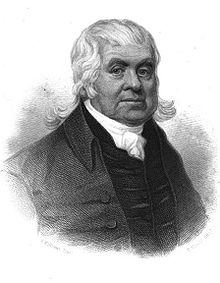
Today I want to tell you a story about how this message of hope is our deep message, is the very heart of our way. Let me tell you the story of John Murray, the founder of American universalism. John Murray was born in 1741, his father an Anglican, his mother a Presbyterian, but both in fact were Methodists from that period before Methodism fully separated from the Anglican church. He was raised in both England and Ireland. From early on Murray became concerned with the fires of hell and seeking assurance that he would be saved from them.
In his young adulthood he joined the separatist Methodism of George Whitfield, found his assurance of salvation and became a leader of his community. Let’s pause a moment. That “assurance,” is where he found love as transformation. But the doctrine, which supported that love proclaimed it only came to a few. I suggest this was hiding a great light under a basket. This story is how Murray removed the basket hiding the light of universal love. But I’m getting just a bit ahead of myself.
In his autobiography Murray recounts leading a delegation of elders to meet with a young woman who had been led astray into universalism, in order to dissuade her from that pernicious doctrine. I love Murray’s account for his own self-awareness, and ultimately his humility and open-heartedness.
The delegation went to the young woman’s home, she welcomed them in, and then without much preamble Murray launched into an assault on the very idea of universalism. The conversation did not go as he expected. Rather he very quickly found himself in deeper waters than he liked. Her sophistication and relentless logic decimated his assertion that Jesus died only to save believers. It’s unclear from his account whether it was her gender, her youth, or her logic that most annoyed him. Clearly none made him happy. He wrote of those moments after realizing he wasn’t going to win the argument.
“Here I was extremely embarrassed, and most devoutly wished myself out of her habitation; I sighed bitterly, expressed deep commiseration for those deluded souls, who had nothing but head-knowledge; drew out my watch, discovered it was late; and, recollecting an engagement, observed it was time to take leave.”
In his memoir, he continued how, “I was extremely mortified; the young lady observed my confusion, but was too generous to pursue her triumph. I arose to depart; the company arose; she urged us to tarry; addressed each of us in the language of kindness… and when we bade her adieu, she enriched us by her good wishes.
“I suspected that my religious brethren saw she had the advantage of me; and I felt, that her remarks were indeed unanswerable…” Outside her house he spoke briefly with his colleagues and indeed they found her points compelling. Murray concludes his remembrance of this encounter. “From this period, I myself carefully avoided every Universalist, and most cordially did I hate them.”
But in fact he continued to think and wonder and began to read about this emergent English universalism, both pamphlets and James Relly’s notorious book Union. He also started visiting the congregation led by Relly. After a time trying to accommodate both communities, Murray finally threw in his lot with universalism.
In the meantime his life was turning from worse to the worst. His only child died. Then his wife died. Broken financially by these events he was briefly thrown into Debtors prison. When released, while Relly urged him to take up preaching, he was heartbroken, and wanted none of it. Instead he decided to disappear into the American wilderness, booked passage to the colonies and left England forever.
When he sailed to America, through a series of misadventures the ship on which he came went first, not to New York, which was his destination, but instead to Philadelphia. Then on the final leg up to New York, the ship grounded on a sandbar off Cranberry Inlet near Good Luck Point on the southern New Jersey coast.
While there he joined part of the crew going ashore to secure provisions while waiting for the winds to shift and to allow them to resume their trip. Here it proved to be very good luck for universalism in America and one of American universalism’s great, few, and perhaps for that reason all the more delightful – miracle stories.
This story has been retold a thousand times. Russell Miller, chronicler of American universalism tells us there even was an epic poem composed about it. I gather it may not be worth tracking down. Now it really is a small story, but, I don’t know, I love it. Perhaps you’ll find something lovely in it as well.
Thomas Potter was the fourth generation of a family that had come to New Jersey from Rhode Island. While illiterate he was hard working and intelligent and had come to create a substantial farm there on the shore. He also had, as if inheriting the Rhode Island spirit, blending Quaker and Baptist sentiments he had come to a universalist stance. He’d also built his own chapel on the farm. And confident God would provide, Potter was waiting for someone who could occupy its pulpit and proclaim that particular universal good news.
The moment he set eyes on Murray across the water on the grounded ship, he knew. How did he know? Well, that’s where the miracle comes in. Miracles: extraordinary events, maybe the intervention of an angel or God, but, whatever its source, a wonder, a marvel. This wasn’t out of character for Potter. As would be true for many universalists particularly in that era, he was given to ecstatic moments. Universal love is an experience.
The bottom line of it was that Potter was right. It was as if a magnet was drawing Murray to that farm. The captain sent Murray with a small crew to see if they could purchase some food at the farm. The party was invited into Potter’s house, but it was as if there were only two people in the room.
In his memoirs Murray quotes Potter describing himself. “I am… unable either to write or read, but I am capable of reflection.” He told how inspired by a sense of overwhelming love he had built that small chapel the party saw as they came to the farmhouse. And Potter continued, he wanted a preacher who understood the connections beneath or behind or above all denominations and who could speak to that universal love. Possibly he didn’t even have the word universalism, but he knew what it meant.
In talking with Murray, he said, “The moment I beheld your vessel on shore, it seemed as if a voice had audibly sounded in my ears, ‘There, Potter, in that vessel cast away on that shore, is the preacher you have been so long expecting. I heard the voice, and I believed the report; and when you came up to my door… the same voice seemed to repeat, ‘Potter, this is the man, this is the person, whom I have sent to preach in your house!’”
At first Murray denied being a preacher, and asked Potter what he saw that convinced him otherwise. Potter replied, “No, sir, it is not what I saw, or see, but what I feel, which produces in my mind a full conviction.” Love can be absurd. Love takes us in new directions. One never knows when one surrenders to love where it will take us.
Potter demanded to know if Murray had ever preached. When Murray said he couldn’t deny that, Potter asked, “’Has not God lifted up the light of his countenance upon you? Has he not shown you his truth?’
Murray responded, “I trust he has.”
Hearing this Potter rebuked him, “’And how dare you hide this truth?’” He went on to declare to the preacher that the wind would not change and allow the ship to depart until Murray climbed into that chapel’s pulpit and proclaimed the good news. “’The wind will never change, sir, until you have delivered to us, in that meeting-house, a message from God.’” Fearing the wind might never change, reluctantly Murray agreed to speak.
He spent much of the night ahead of that service fretting, crying and praying to be delivered from this fate. The next day, somewhat worse for that long night, Murray came to the chapel, climbed into the pulpit and proclaimed the good news, a call to happiness, to joy. There is no hell. God’s love overcomes all evil. All of humanity is blessed through love. The world itself is blessed by love. A wonder. A marvel.
Part of the miracle here is that Murray didn’t come to America to preach universal salvation, to become the founder of the Universalist church, which he ended up doing. He was fleeing sadness. He didn’t realize he was running toward joy, toward love. The miracle is that his fire for a larger hope lit ready tinder, and sparked a conflagration that has continued to burn, and burns today, in this Meeting House and in a thousand others across this nation. Love. Universal love. A wonder. A marvel.
Now Murray’s particular turn on this was simply Calvinism’s election writ large. God’s love is irresistible. There would be variations on how to understand precisely what this mysterious current in our human condition that allows us the certitude of joy in the face of so much suffering. There continue to be.
I read where someone characterized classical universalism as the doctrine “dead people all go to heaven.” It did not seem kindly meant. While there is a bare truth to the summary I think it misses something about the heart of the matter of the universalist stance both originally and absolutely misses the point for today.
As to those earliest understandings, given the context of the world in which Murray was raised and lived, the question of postmortem existence burned with as much heat as the questions for a parent today to make sure her children are fed. And as for today, Murray’s vision provided a fruitful seedbed for an ever-expanding understanding of what universalism can mean, and does.
As we know within this Meeting House our understanding of what God is has expanded. Here we count people for whom God is that loving presence like a parent. And for many of us there is no human projection in the matter. We may discern the grubby roots, as one wise person put it, of our affections, in nature, in our biology. But, that’s looking at the mechanism. Whether found in the story of God as love, or of love as a deep biological urge made god, we discover something about ourselves and about how we can order our lives. Love is a powerful, compelling truth, when found in our own bodies, re-orients our lives from selfishness to openness, and creates currents of hope in a world with far too little.
Love shows us the connections. Love brings hope. And finding this love calls us to action.
And so, our great slogan: love over creed. Love over creed. From John Murray down to this day, we proclaim the universal wisdom: God is love. Love over creed, over every creed.
Open your heart and you will find it.
Open your heart and you will know what to do.
This is our way.
Love. A wonder. A marvel.
Amen.
Previous Post

March 3, 2012
All Is Forgiven: The Arts of Zen Meditation
Next Post
March 5, 2012 James Ishmael Ford: Two Sermons
Browse Our Archives
Select a Category A Christmas Carol Abolitionist African-American Ahmadiyya Alan Watts Aldous Huxley Allen Ginsberg Amedkar Jayanti American politics American Zen Anaheim Zen Sangha Anglican Annie Besant April Fool Armageddon Art and Religion artificial intellegence Atheist Awakening B R Ambedkar Barlaam & Josaphat Beatnik Between Bhagavad Gita Bible biography birthday bodhisattva Bodhisattva Precepts Book burning Book of Common Prayer Book of Mormon Brahmo Samaj Buddha Buddhism Buddhist Buddhist Lord's Prayer Butterflies Calendars cartoons cat ChatGPT Chicken Tortilla Soup choices Christian atheism Christian mysticism Christian origins Christian Science Christian Zen Christianity Christianity and Buddhism christmas Christmas Truce Christopher Isherwood Church of Later Day Saints Cinco de Mayo circus covenant critical thinking culture D. T. Suzuki Dalit Buddhism Daniel Defoe Desert Fathers and Mothers dharma talk Dogen Donald Trump Dongshan's Five Ranks Dorothy Day dream Duty Easter ecology Edwin Arnold emptiness Empty Moon Zen Network Episcopal Church Eternal Now Ethics evolution existentialism Faith fantasy Fathers Day film film review fire Five Ranks Folk music food Form and emptiness Four Seals Francis of Assisi Francis Xavier Free thinker friendship George MacDonald Gerald Heard Glenn Taylor Webb God Good Friday Gospel of Gospel of Mark Gospel of Thomas grace Graduate Theological Unioin Graduate Theological Union Guanyin H R Blyth Hakuin Ekaku Hanamatsuri Hanukkah Harada Yasutani Zen Heart Sutra Henry David Thoreau Hermann Hesse Hinduism History and Religion history of religion Holy Spirit home Hospitality Icon Ides of March Isaac Newton Islam Islamic mysticism Jack Kerouac James Luther Adams Jiddu Krishnamurti Joan of Arc Johannes Gutenberg John Donne joke Judaism justice karma kensho King James Bible koan Koun Yamada Kyoto School Lewis Carrol Liberal Christianity Liberal Religion Life Plan Community Liminal literature Literature and Religion Liturgy Lord's Prayer Love Mahatma Gandhi Mahayana Martin Luther King Jr Mary Baker Eddy Mary Magdelene Mary Oliver Mayflower Compact Meditation memories memory metaphor money money and religioin Mormons Mother's Day movie review mysticism mythic Neighborhood Unitarian Universalist Church New Thought Nichiren Buddhism Nonduality not knowing Omar Khayyam Pacific School of Religion pagan Palm Sunday Passover peace Pentecost perennialism Phantastes Philip Kapleau philosophy Pilgrimage poetry Poetry and Religion politics Prayer Precepts Printing Press prophecy prophetic spirituality psychology Pure Land Queer religion queering religion Quietism Ram Mohan Roy rebirth recipe Relationships and religion religion religion and history Religious syncretism Resistance Retirement Retreat review Rissho Kosei Kai Ritual Robert Aitken Roshi Robert Ingersoll Rohatsu Romani religion Rosie the Riveter saints samadhi SanboZen Sangha Satyagraha science science and reigion science and religion science fiction seminary sermon Sesshin Sex and Religion Shinran Sikh Sikh tradition silence Social Justice Socially Engaged Buddhism Society and religion Soto Zen soul spiritual community spiritual practice Spirituality Sufism Suicide superstition Taoism Television Teresa of Avila Thanksgiving theological schools Theosophy Thomas Merton Time Transcendentalism Transcendentalist Trinitarian Trinity Uncategorized unitarian Unitarian Christianity Unitarian Universalist Universalism Vajrayana Vedanta Walking war Willa Cather William Ellery Channing wisdom women and religion women in religion World Teacher Writing zazen Zen Zen Center Zen inspired retriement zen meditation Zen Precepts Zen women
Select a Month September 2026 August 2026 July 2026 June 2026 May 2026 April 2026 March 2026 February 2026 January 2026 December 2025 November 2025 October 2025 September 2025 August 2025 July 2025 June 2025 May 2025 April 2025 March 2025 February 2025 January 2025 December 2024 November 2024 October 2024 September 2024 August 2024 July 2024 June 2024 May 2024 April 2024 March 2024 February 2024 January 2024 December 2023 November 2023 October 2023 September 2023 August 2023 July 2023 June 2023 May 2023 April 2023 March 2023 February 2023 January 2023 December 2022 November 2022 October 2022 September 2022 August 2022 July 2022 June 2022 May 2022 April 2022 March 2022 February 2022 January 2022 December 2021 November 2021 October 2021 September 2021 August 2021 July 2021 June 2021 May 2021 April 2021 March 2021 February 2021 January 2021 December 2020 November 2020 October 2020 September 2020 August 2020 July 2020 June 2020 May 2020 April 2020 March 2020 February 2020 January 2020 December 2019 November 2019 October 2019 September 2019 August 2019 July 2019 June 2019 May 2019 April 2019 March 2019 February 2019 January 2019 December 2018 November 2018 October 2018 September 2018 August 2018 July 2018 June 2018 May 2018 April 2018 March 2018 February 2018 January 2018 December 2017 November 2017 October 2017 September 2017 August 2017 July 2017 June 2017 May 2017 April 2017 March 2017 February 2017 January 2017 December 2016 November 2016 October 2016 September 2016 August 2016 July 2016 June 2016 May 2016 April 2016 March 2016 February 2016 January 2016 December 2015 November 2015 October 2015 September 2015 August 2015 July 2015 June 2015 May 2015 April 2015 March 2015 February 2015 January 2015 December 2014 November 2014 October 2014 September 2014 August 2014 July 2014 June 2014 May 2014 April 2014 March 2014 February 2014 January 2014 December 2013 November 2013 October 2013 September 2013 August 2013 July 2013 June 2013 May 2013 April 2013 March 2013 February 2013 January 2013 December 2012 November 2012 October 2012 September 2012 August 2012 July 2012 June 2012 May 2012 April 2012 March 2012 February 2012 January 2012 December 2011 November 2011 October 2011 September 2011 August 2011 July 2011 June 2011 May 2011 April 2011 March 2011 February 2011 January 2011 December 2010 November 2010 October 2010 September 2010 August 2010 July 2010 June 2010 May 2010 April 2010 March 2010 February 2010 January 2010 December 2009 November 2009 October 2009 September 2009 August 2009 July 2009 June 2009 May 2009 April 2009 March 2009 February 2009 January 2009 December 2008 November 2008 October 2008 September 2008 August 2008 July 2008 June 2008 May 2008 April 2008 March 2008 February 2008 January 2008 December 2007 November 2007 October 2007 September 2007 August 2007 July 2007 June 2007 May 2007 April 2007 March 2007 February 2007 January 2007 December 2006 November 2006 October 2006 September 2006
Follow Us!
TAKE THE
Religious Wisdom Quiz
How many animals did Moses take on the Ark?
Select your answer to see how you score.
Two of each One of each Seven of each None
Related posts from Monkey Mind


Which Is the True Qian? A Koan About...


TRENDING AT PATHEOS Buddhist

Looking at the Largest Orthodox Cathedral on Earth
There is often a considerable amount of anger and, shall we...

The Problem with False Prophets
Miller’s Station UMC| 10/18/26| Anchor Verse: Jeremiah 23: 1, 9-23 I...

Emotion in Early Christianity by Andrew Crislip
Andrew Crislip’s Emotion in Early Christianity examines an often overlooked dimension of...

16 Spiritual Touchstones for a More Grounded Life
After decades of spiritual study, here are 16 principles I try...

Catholic Evangelization: Sharing Your Faith Every Day
Welcome back to the Graceful Awakening mini-series called, “From Faith to Mission.” ...

The Pillar of the Boatmen: the Ancient Monument...
The Pillar of the Boatmen is a Romano-Gaulish sculpture that dates from...
view all Buddhist blogs
Ad-Free & Subscriber Log-In Subscription Support
- About Us
- 2026 Calendar
- Videos
- Podcasts
- Library of World Religions
- Faith In Media Tracker
- Advertise With Us
- Write for Us
- Privacy Policy
- Terms of Service
- Do Not Sell My Data
- Contact Us
- Radiant Digital
- Manage Newsletter Subscriptions
- Unsubscribe From Notifications
- Sitemap
Copyright 2008-2026, Patheos. All rights reserved.
Subscription Support Ad-Free & Subscriber Log-In
Follow Patheos