
BuddhistCatholicContemplativeEvangelicalGeneral ChristianHinduJewishLatter-day SaintMuslimNew VisionsProgressive Christian
Beliefs
- Buddhist
- Catholic
- Contemplative
- Evangelical
- General Christian
- Hindu
- Jewish
- Latter-day Saint
- More Voices
- Muslim
- New Visions
- Pagan
- Progressive Christian
Topics
- Religion News
- Food and Religion
- Sports and Religion
- Religious Art
- Religious Music and Entertainment
- Religious Events
- History and Religion
- Style and Religion
- Politics and Religion
- Women in Religion
- Recreation Outdoors and Religion
- Business Finance and Religion
- Careers Workplace and Religion
- Education and Religion
- Family Parenting and Religion
- Health Fitness and Religion
- Home and Religion
- Relationships and Religion
- Technology and Religion
- Travel and Religion
Columnists
- Buddhist Columnists
- Business Finance and Religion Columnists
- Careers Workplace and Religion Columnists
- Catholic Columnists
- Contemplative Columnists
- Education and Religion Columnists
- Evangelists Columnists
- Family Parenting and Religion Columnists
- General Christian Columnists
- Health Fitness and Religion Columnists
- Hindu Columnists
- History and Religion Columnists
- Home and Religion Columnists
- Jewish Columnists
- More Voices Columnists
- Latter Day Columnists
- Muslim Columnists
- New Visions Columnists
- Nonreligious Columnists
- Pagan Columnists
- Politics and Religion Columnists
- Progressive Columnists
- Recreation Outdoors and Religion Columnists
- Relationships and Religion Columnists
- Religion News Columnists
- Religious Art Columnists
- Religious Events Columnists
- Religious Music and Entertainment Columnists
- Sports and Religion Columnists
- Style and Religion Columnists
- Technology and Religion Columnists
- Travel and Religion Columnists
- Women in Religion Columnists
Resource Library
- 2026 Calendar
- Library of World Religions
- The 100 Most Holy Places on Earth
- Patheos Answers
- Podcasts
- Videos
- Faith Leaders Database
- Anglican Episcopalian
- Bahai
- Baptist
- Buddhism
- Christianity
- Confucianism
- Eastern Orthodoxy
- Hinduism
- Holiness and Pentecostal
- ISKCON
- Islam
- Judaism
- Lutheran
- Methodist
- The Church of Jesus Christ of Latter-day Saints
- New Age
- Paganism
- Presbytarian and Reformed
- Protestantism
- Religion Behind the Scenes
- Roman Catholic
- Scientology
- Shia Islam
- Sikhism
- Sufism
- Sunni Islam
- Taoism
- Zen
- See all religions
Research Tools
 Ad-Free & Subscriber Log-In Subscription Support
Follow Patheos 

- Trending:
- Advent
- |
- Forgiveness
- |
- Thanksgiving
- |
- Election
- |
- Seasonal Holidays
- |
- Marriage

- Home
- Buddhist
- Some Thoughts About Race, Class, Unitarian Universalist Churches and Zen Buddhist Sanghas
Some Thoughts About Race, Class, Unitarian Universalist Churches and Zen Buddhist Sanghas
Last updated on: March 20, 2012 at 6:29 pm by James Ford
Some Thoughts About Race, Class, Unitarian Universalist Churches and Zen Buddhist Sanghas 2012-03-20T18:29:52-07:00 James Ford
Patheos Explore the world's faith through different perspectives on religion and spirituality! Patheos has the views of the prevalent religions and spiritualities of the world.
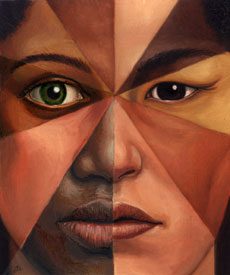 Some Thoughts About Race, Class, Unitarian Universalism and Zen Buddhist Sanghas
James Ishmael Ford
When I was thirteen my father went to prison.
It wasn’t the first time he saw the inside of a jail, but the first time I knew about it. It was just for a year. He’d been the manager of a liquor store. A friend of his said, “I just need to borrow the money ‘till Monday.” As I said, he went away for a year.
I took to bed. My mother fretted and finally sent me up to Oakland to live with my grandmother and auntie. They sent me to the local school. I was probably the only white kid there. At least I don’t recall seeing any other white kids. What I remember was being beaten up that first day. And the second. The third day I learned how to hide, to make myself invisible.
It was a hard year. The only thing that saved me from imprinting some pretty awful things was my grandmother. She was poor and not well educated and had no idea there might be alternatives to my going to that school. But, what she knew was that while there were mean kids and bad kids, their race had nothing to do with it. So, we prayed together. A lot. We prayed for my father who I was just learning to hate. We prayed for my mother who was having a hard time supporting herself and my brother. We prayed for each other. And we prayed for those kids at school.
Prayer is a good thing. Whatever I believed at the time, these days I don’t believe in a deity somewhere in the sky who takes messages and fixes things. But those prayers pried open spots in my heart, or, rather, took the holes already there, and pushed and prodded them bigger. Leonard Cohen sings to us how there is “a crack in everything, that’s how the light gets in.” Well, prayers push that crack bigger allowing more light.
I don’t claim I don’t carry wounds. But it’s been decades since I’ve seen a black person and felt afraid. And out of this, all of it, I find myself thinking about race and about class about what it means to be in the minority and what it means to not have resources. A lot. Over the years, I’ve considered these things a lot.
And now I am a Unitarian Universalist minister and a Zen Buddhist priest. I think a lot about race and class and the painful fact that my two spiritual are so heavily represented by people of European descent and who are mostly or at least mostly come from the middle classes. I’ve reflected and spoken with people, reflected and read into this, and I’ve reflected some more. And I’ve come to some conclusions, at least working hypotheses.
Each of us walks into a church or a Zen center for our own reasons. Why we stay or go are also going to be deeply marked by our own journey in life. But some things we share in greater or lesser degree.
One is that we’re all wounded. And the call of the Zen sangha in particular is toward healing, toward liberation. It is true for the liberal churches, as well, although this truth is sometimes lost in our identification with freedom and reluctance to share our liberal good news about hurt.
I have a strong opinion here. The good news to be found in these communities should be shared. We have ways that heal. We have genuine good news. We should be throwing our doors as wide open as possible, and inviting everyone who is hurt to come in and to find their way toward healing.
But why are we not?
I think we need to start by remember these are human gatherings. And some of our issues are just people issues. I like one kind of music. You like another. No fault. Although with music and with other things we might ask how can we maximize our inclusiveness while honoring our tastes.
Related to this is that even if we are genuinely looking for freedom or liberation that doesn’t mean our fall back position isn’t comfort. It’s easier to be with people who we think are more like us. Race is one of those “like us” things. Class is another.
I suspect this lies near the heart of the self-segregation that happens in many spiritual communities, why as Dr Martin Luther King Jr said, Sunday during worship is the most segregated hour of the week. Those who study churches suggest there may not even be such a thing as an integrated church. There is no stasis point. Churches are integrating or segregating. It’s all dynamic.
I want to be part of integrating communities.
There also seems to be a twenty percent rule in churches dealing with race. Whoever the dominant group is, they tend to be open to those of other groups, right up to around twenty percent. White churches want black members right up to about twenty percent. Then you hear the words “they’re trying to take over.” It appears to be true in black churches attracting white members. It appears to be true for other ethnic groupings and their willingness to welcome outsiders.
I want there to be no twenty percent barriers.
Perhaps you do, as well. Sadly, it isn’t going to be easy. If it were, well, I think it would long since have been done. But, if we see value in being with people we see as different in some ways we need to work at it, at being genuinely welcoming. And if it is going to happen anywhere, shouldn’t it be in our communities of faith, of healing, of liberation?
As I said we are all on our own paths. And we all need to read our hearts, and assess our true goals.
And, I’m mainly concerned with the issues of the majority white and majority middle class religious communities, specifically, as I said, UUs and Zen Buddhists. My people. Here is where I’ve taken my hurt, here is where I’ve found healing. And I’m grateful for the people I’ve found here. White and middle class as they are, or, more properly, largely white and middle class. I’ll come back to that in a bit. Now, there are a number of historic reasons for this to be so in these two communities in particular. So, I wouldn’t put a lot of blame on the fact that this is where we start.
The question is do we want to stop here? Or, is there something about what we’ve found that would be of help in healing and restoration for everyone, if only they were given the opportunity, the invitation? I want to reach out. I think most of us on these paths do, as well.
To open our communities to others is to notice how we’re defining self and other. Not a bad thing to reflect on for people who profess to be all about liberation. That said this looking can be hard. Being white and middle class can feel normal. White is without color. Middle class is just what people are. Unless you’re not.
The only people I’ve ever met who say they don’t see race are white people. I suspect there’s a message in that, and not a particularly sweet one. While I have no doubt race is a construct, the objective differences in peoples are too small to count for anything serious, nonetheless we make serious out of it. And the ones on the inside are the ones who are considered or consider themselves white. The problem with this is that it puts a lot of people on the outside. And outside is a big part of the problem.
Being white and middle class comes with many privileges. Being male adds to that list. People reading this shouldn’t feel this observation as condemnatory. It’s just something that is. (And should it be addressed? Yes. But, I’m focusing on a more specific issue here.) The problems arise when we think being white or middle class is somehow right, or normal, or that we got this (white and or middle class, and maybe even male) because we earned it. We may well have worked hard, many have, most have worked hard all their, our lives. But, don’t let anyone tell you the poor don’t work hard, too. Often much harder than anyone doing a job that earns a middle class income. Justice has very little to do with these things. If they did, schoolteachers would earn more than investment bankers.
And here’s a hard one if you’re white. Everyone who is white got a little head start. And all along the way there were little nods and legs up that didn’t go quite so quickly to those not considered white. This is true whether you ended up successful in life or not. White comes with privileges. I have no doubt that what differentiated me out from other poor people was my skin color. I got a little bit more attention. And sometimes that’s all it takes.
Similarly the single most important predictor of whether anyone is going to be middle class is that their parents were middle class.
That’s why it’s called privilege.
If we want to welcome people who do not fit the white and middle class description we need to acknowledge these issues. We don’t have to lead with them, we don’t have to talk about them in every conversation. But we have to know they’re there and they’re true, and they make people who don’t fall into the categories uncomfortable.
So, what to do? What to do?
Now, while I currently serve a church that is just a little more diverse than others generally are in our Association, not a whole lot more. And my Zen sangha fits the white middle class stereotype even more closely.
But not entirely.
And I think right after acknowledging there is a problem, and that problem at least so far as a white and middle class person has to do with it, has to do with the myopia of being white and middle class. So, it is critical to notice those who do not fit those bills and genuinely welcoming them in.
We all want to be seen.
Don’t say we’re all white, when there is someone sitting there who is not. Don’t assume we’re all middle class. We’re probably not.
See people.
That hardly seems too much to ask.
And, yes, there can be too much. I’ve been in UU churches where a black family walks in and they’re inundated with too much friendliness. Often, sadly, salted with ignorant if well meaning comments. Assumptions, for instance about class.
It seems the second rule of thumb is to pay attention without making too many assumptions.
Be friendly.
Care.
Be willing to make mistakes.
But make them from generosity.
Is this enough?
No.
But it is getting started…
And that is critical.
What we’re about is too important not to throw our everything into it.
Everything.
Leaving no one behind.
My prayer…
Previous Post

March 20, 2012
Zen Teacher Alan Senauke on Race and Buddhism
Next Post
March 21, 2012 Daddy Was a Preacher
Browse Our Archives
Select a Category A Christmas Carol Abolitionist African-American Ahmadiyya Alan Watts Aldous Huxley Allen Ginsberg Amedkar Jayanti American politics American Zen Anaheim Zen Sangha Anglican Annie Besant April Fool Armageddon Art and Religion artificial intellegence Atheist Awakening B R Ambedkar Barlaam & Josaphat Beatnik Between Bhagavad Gita Bible biography birthday bodhisattva Bodhisattva Precepts Book burning Book of Common Prayer Book of Mormon Brahmo Samaj Buddha Buddhism Buddhist Buddhist Lord's Prayer Butterflies Calendars cartoons cat ChatGPT Chicken Tortilla Soup choices Christian atheism Christian mysticism Christian origins Christian Science Christian Zen Christianity Christianity and Buddhism christmas Christmas Truce Christopher Isherwood Church of Later Day Saints Cinco de Mayo circus covenant critical thinking culture D. T. Suzuki Dalit Buddhism Daniel Defoe Desert Fathers and Mothers dharma talk Dogen Donald Trump Dongshan's Five Ranks Dorothy Day dream Duty Easter ecology Edwin Arnold emptiness Empty Moon Zen Network Episcopal Church Eternal Now Ethics evolution existentialism Faith fantasy Fathers Day film film review fire Five Ranks Folk music food Form and emptiness Four Seals Francis of Assisi Francis Xavier Free thinker friendship George MacDonald Gerald Heard Glenn Taylor Webb God Good Friday Gospel of Gospel of Mark Gospel of Thomas grace Graduate Theological Unioin Graduate Theological Union Guanyin H R Blyth Hakuin Ekaku Hanamatsuri Hanukkah Harada Yasutani Zen Heart Sutra Henry David Thoreau Hermann Hesse Hinduism History and Religion history of religion Holy Spirit home Hospitality Icon Ides of March Isaac Newton Islam Islamic mysticism Jack Kerouac James Luther Adams Jiddu Krishnamurti Joan of Arc Johannes Gutenberg John Donne joke Judaism justice karma kensho King James Bible koan Koun Yamada Kyoto School Lewis Carrol Liberal Christianity Liberal Religion Life Plan Community Liminal literature Literature and Religion Liturgy Lord's Prayer Love Mahatma Gandhi Mahayana Martin Luther King Jr Mary Baker Eddy Mary Magdelene Mary Oliver Mayflower Compact Meditation memories memory metaphor money money and religioin Mormons Mother's Day movie review mysticism mythic Neighborhood Unitarian Universalist Church New Thought Nichiren Buddhism Nonduality not knowing Omar Khayyam Pacific School of Religion pagan Palm Sunday Passover peace Pentecost perennialism Phantastes Philip Kapleau philosophy Pilgrimage poetry Poetry and Religion politics Prayer Precepts Printing Press prophecy prophetic spirituality psychology Pure Land Queer religion queering religion Quietism Ram Mohan Roy rebirth recipe Relationships and religion religion religion and history Religious syncretism Resistance Retirement Retreat review Rissho Kosei Kai Ritual Robert Aitken Roshi Robert Ingersoll Rohatsu Romani religion Rosie the Riveter saints samadhi SanboZen Sangha Satyagraha science science and reigion science and religion science fiction seminary sermon Sesshin Sex and Religion Shinran Sikh Sikh tradition silence Social Justice Socially Engaged Buddhism Society and religion Soto Zen soul spiritual community spiritual practice Spirituality Sufism Suicide superstition Taoism Television Teresa of Avila Thanksgiving theological schools Theosophy Thomas Merton Time Transcendentalism Transcendentalist Trinitarian Trinity Uncategorized unitarian Unitarian Christianity Unitarian Universalist Universalism Vajrayana Vedanta Walking war Willa Cather William Ellery Channing wisdom women and religion women in religion World Teacher Writing zazen Zen Zen Center Zen inspired retriement zen meditation Zen Precepts Zen women
Select a Month October 2026 September 2026 August 2026 July 2026 June 2026 May 2026 April 2026 March 2026 February 2026 January 2026 December 2025 November 2025 October 2025 September 2025 August 2025 July 2025 June 2025 May 2025 April 2025 March 2025 February 2025 January 2025 December 2024 November 2024 October 2024 September 2024 August 2024 July 2024 June 2024 May 2024 April 2024 March 2024 February 2024 January 2024 December 2023 November 2023 October 2023 September 2023 August 2023 July 2023 June 2023 May 2023 April 2023 March 2023 February 2023 January 2023 December 2022 November 2022 October 2022 September 2022 August 2022 July 2022 June 2022 May 2022 April 2022 March 2022 February 2022 January 2022 December 2021 November 2021 October 2021 September 2021 August 2021 July 2021 June 2021 May 2021 April 2021 March 2021 February 2021 January 2021 December 2020 November 2020 October 2020 September 2020 August 2020 July 2020 June 2020 May 2020 April 2020 March 2020 February 2020 January 2020 December 2019 November 2019 October 2019 September 2019 August 2019 July 2019 June 2019 May 2019 April 2019 March 2019 February 2019 January 2019 December 2018 November 2018 October 2018 September 2018 August 2018 July 2018 June 2018 May 2018 April 2018 March 2018 February 2018 January 2018 December 2017 November 2017 October 2017 September 2017 August 2017 July 2017 June 2017 May 2017 April 2017 March 2017 February 2017 January 2017 December 2016 November 2016 October 2016 September 2016 August 2016 July 2016 June 2016 May 2016 April 2016 March 2016 February 2016 January 2016 December 2015 November 2015 October 2015 September 2015 August 2015 July 2015 June 2015 May 2015 April 2015 March 2015 February 2015 January 2015 December 2014 November 2014 October 2014 September 2014 August 2014 July 2014 June 2014 May 2014 April 2014 March 2014 February 2014 January 2014 December 2013 November 2013 October 2013 September 2013 August 2013 July 2013 June 2013 May 2013 April 2013 March 2013 February 2013 January 2013 December 2012 November 2012 October 2012 September 2012 August 2012 July 2012 June 2012 May 2012 April 2012 March 2012 February 2012 January 2012 December 2011 November 2011 October 2011 September 2011 August 2011 July 2011 June 2011 May 2011 April 2011 March 2011 February 2011 January 2011 December 2010 November 2010 October 2010 September 2010 August 2010 July 2010 June 2010 May 2010 April 2010 March 2010 February 2010 January 2010 December 2009 November 2009 October 2009 September 2009 August 2009 July 2009 June 2009 May 2009 April 2009 March 2009 February 2009 January 2009 December 2008 November 2008 October 2008 September 2008 August 2008 July 2008 June 2008 May 2008 April 2008 March 2008 February 2008 January 2008 December 2007 November 2007 October 2007 September 2007 August 2007 July 2007 June 2007 May 2007 April 2007 March 2007 February 2007 January 2007 December 2006 November 2006 October 2006 September 2006
Follow Us!
TAKE THE
Religious Wisdom Quiz
What does "Immanuel" mean, as in Isaiah's prophecy?
Select your answer to see how you score.
God reigns Prince of peace God will save God with us
Related posts from Monkey Mind
Taking Refuge in the (Zen) Sangha
Recalling the Amazing Alexandra David-Neel
The Great Matter: Walking the Zen Way
TRENDING AT PATHEOS Buddhist

Smart people saying smart things (11.24.26)
Please take time to listen to Perry Bacon, Sarah Posner, Adam Serwer,...

The Contingency of Our Technology
Last week we were hit with a raft of massive technology outages....

In 1939, President Franklin D. Roosevelt moved Thanksgiving from November 30 to...

Reasons for Restraint: Ricardo Gonzalez, Florida and Dec...
The Morning of January 3 I begin with the dead. On the...

I published this column for Thanksgiving 2012 in the Deseret News....

For many years, Catholicism has been caught up in division over the...
view all Buddhist blogs
Ad-Free & Subscriber Log-In Subscription Support
- About Us
- 2026 Calendar
- Videos
- Podcasts
- Library of World Religions
- Faith In Media Tracker
- Advertise With Us
- Write for Us
- Privacy Policy
- Terms of Service
- Do Not Sell My Data
- Contact Us
- Radiant Digital
- Manage Newsletter Subscriptions
- Unsubscribe From Notifications
- Sitemap
Copyright 2008-2026, Patheos, part of the Radiant Digital network of media brands. All rights reserved.
Subscription Support Ad-Free & Subscriber Log-In
Follow Patheos