
BuddhistCatholicContemplativeEvangelicalGeneral ChristianHinduJewishLatter-day SaintMuslimNew VisionsProgressive Christian
Beliefs
- Buddhist
- Catholic
- Contemplative
- Evangelical
- General Christian
- Hindu
- Jewish
- Latter-day Saint
- More Voices
- Muslim
- New Visions
- Pagan
- Progressive Christian
Topics
- Religion News
- Food and Religion
- Sports and Religion
- Religious Art
- Religious Music and Entertainment
- Religious Events
- History and Religion
- Style and Religion
- Politics and Religion
- Women in Religion
- Recreation Outdoors and Religion
- Business Finance and Religion
- Careers Workplace and Religion
- Education and Religion
- Family Parenting and Religion
- Health Fitness and Religion
- Home and Religion
- Relationships and Religion
- Technology and Religion
- Travel and Religion
Columnists
- Buddhist Columnists
- Business Finance and Religion Columnists
- Careers Workplace and Religion Columnists
- Catholic Columnists
- Contemplative Columnists
- Education and Religion Columnists
- Evangelists Columnists
- Family Parenting and Religion Columnists
- General Christian Columnists
- Health Fitness and Religion Columnists
- Hindu Columnists
- History and Religion Columnists
- Home and Religion Columnists
- Jewish Columnists
- More Voices Columnists
- Latter Day Columnists
- Muslim Columnists
- New Visions Columnists
- Nonreligious Columnists
- Pagan Columnists
- Politics and Religion Columnists
- Progressive Columnists
- Recreation Outdoors and Religion Columnists
- Relationships and Religion Columnists
- Religion News Columnists
- Religious Art Columnists
- Religious Events Columnists
- Religious Music and Entertainment Columnists
- Sports and Religion Columnists
- Style and Religion Columnists
- Technology and Religion Columnists
- Travel and Religion Columnists
- Women in Religion Columnists
Resource Library
- 2026 Calendar
- Library of World Religions
- The 100 Most Holy Places on Earth
- Patheos Answers
- Podcasts
- Videos
- Faith Leaders Database
- Anglican Episcopalian
- Bahai
- Baptist
- Buddhism
- Christianity
- Confucianism
- Eastern Orthodoxy
- Hinduism
- Holiness and Pentecostal
- ISKCON
- Islam
- Judaism
- Lutheran
- Methodist
- The Church of Jesus Christ of Latter-day Saints
- New Age
- Paganism
- Presbytarian and Reformed
- Protestantism
- Religion Behind the Scenes
- Roman Catholic
- Scientology
- Shia Islam
- Sikhism
- Sufism
- Sunni Islam
- Taoism
- Zen
- See all religions
Research Tools
 Ad-Free & Subscriber Log-In Subscription Support
Ad-Free & Subscriber Log-In Subscription Support
Follow Patheos 

- Trending:
- Forgiveness
- |
- Marriage
- |
- Consciousness
- |
- Death Penalty
- |
- Election
- |
- Halloween

- Home
- Buddhist
- EXODUS FOR NONBELIEVERS
EXODUS FOR NONBELIEVERS
Last updated on: March 25, 2012 at 9:17 pm by James Ford
EXODUS FOR NONBELIEVERS 2012-03-25T21:17:54-07:00 James Ford
Patheos Explore the world's faith through different perspectives on religion and spirituality! Patheos has the views of the prevalent religions and spiritualities of the world.
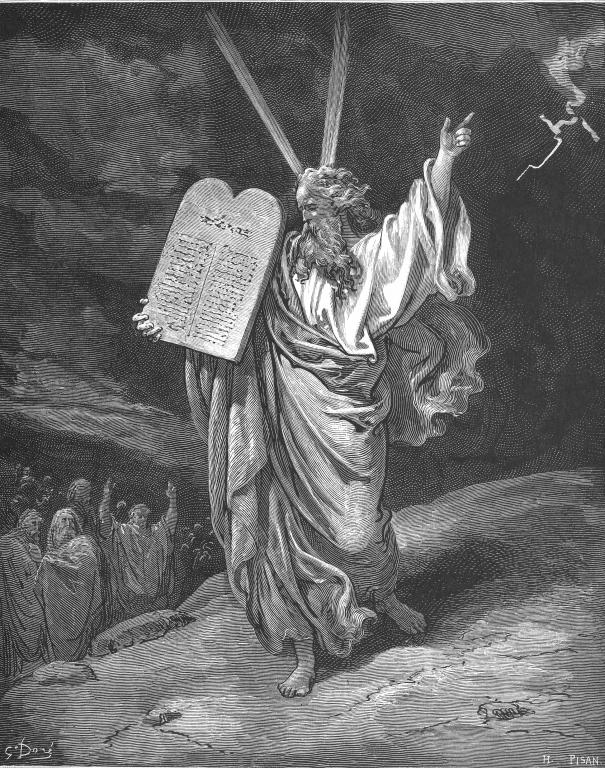 EXODUS FOR NONBELIEVERS
23 March 2012
James Ishmael Ford
First Unitarian Church
Providence, Rhode Island
Text
And Moses looked and witnessed the bush burned with fire, but was not consumed. Moses thought to himself, “I will turn aside and watch this miracle.” And then a voice called out from the flames and said, “Moses, Moses.” And Moses replied, “Here I am.” And the voice said, “Take off your shoes, for you are standing on holy ground.” And then the divine unveiled, “I am the God of your parents.” And Moses was afraid and hid his face. But the divine said, “I have seen the hurt of my people, and I know their sorrows. And I will deliver them out of the hand of the Egyptians and bring them to a land flowing with milk and honey.”
Exodus 3, excerpt & adapted
Let me sing you a song of grace. Grace, elegance, beauty, hope and joy.
Once upon a time a very long time ago the wise Joseph, known as the man with the coat of many colors, was sold into slavery and carried off to Egypt. After many adventures and hardships he rose to leadership in the great empire. Later his family followed him, moving from their home in the foothills of what we would call Israel and Palestine to also settle on the shores of the Nile. At first the family was well received and they and their descendants prospered. Generations passed. But over time the Egyptians began to resent the success of the foreigners and fear they might become a fifth column for other alien interests. Eventually, following ever more restrictions on the family now grown into a community, the Egyptians enslaved Joseph’s descendants.
Even that didn’t prove enough. And at some point the Pharaoh ordered the murder of all newborn Hebrew children. Out of desperation one mother took her baby to the Nile hiding in the rushes, and waited until Pharaoh’s wife and her retinue went, as was their habit to sit at the side of the river, placed her baby into a basket and pushed the basket toward the women. They saw the baby, rescued him and decide to keep him as their own. The baby’s mother then presented herself to the royal retinue saying she was looking for work as a nanny.
Moses was raised in the royal court as an Egyptian noble. But eventually his nursemaid whispered his true identity to him. Knowing this and haunted by it, when he witnessed a slave-master whipping a Hebrew slave he was enraged and killed the man. Feeling all lost he fled into the desert.
He wandered, he married, he prospered, but also he remembered. Finally, in the desert, in the heart of it all, where suffering and joy collapse, God appeared to him in the form of a burning bush. He was graced with a vision of the divine. Speaking with tongues of fire the divine told Moses what his destiny was: to lead his people to freedom, to the Promised Land. Grace.
Moses returned to Egypt and informed the Pharaoh of God’s intentions for the Hebrew people. A series of horrific events followed, nightmares that haunt everyone who reads of them a thousand generations later, so terrible that they force even Pharaoh the most powerful of men to submit. And so he let the Hebrew people go. Immediately after they left Pharaoh regretted his moment of weakness, gathered his army and pursued the fleeing people, only to meet a terrible fate where he and the army are lost in the crashing of waves.
After that the Hebrew people wandered in the desert for forty years, changing, preparing, and finally arriving at the Promised Land. Moses was allowed to see that dream land, the land of milk and honey; but for his sins not to cross over the river. Instead he died. As a last testimony to what Moses stood for, and the good he did, God himself buried him, where exactly, no one knows.
I know that story down to my bones. I wrote it without having to reference the text. In my childhood it informed my life. It was the dream promise that things did not have to be the way they were. This I knew as a child, from hearing that story over and over again: God wants something more for me. It was, it is an invitation toward a journey, a journey to a Promised Land. Even to this day Moses is part of my dreams, along with his sister Miriam and his brother Aaron. All of them, that great crowd of characters in this story, they live in my heart. As grace, elegance, beauty, hope and joy.
Of course, then I had to take off on my own journey. My life would take its own peculiar unique shape with all those different turns, and twists that make us who we are. Now, while still a part of who I am, that story and others that populate the scriptures of our Western tradition live further back in my mind and heart. Then, after my time in the Buddhist monastery, after my own experiences of desert and life giving waters and new possibilities, by the strange twists and turns of life, I came to seminary.
As it turns out very few academic Biblical scholars believe what we were taught in Sunday school. There are few more dramatic examples than their views of the early history of the Jewish people. When I arrived at seminary I knew Biblical scholarship challenged miracles like the parting of the Red Sea; you know it was actually the reed sea and was shallow. Or, a bit later when Joshua’s army marched around Jericho blasting those horns and God causing the city’s walls to collapse; well, really just luck with a timely earthquake. That sort of thing.
I had no idea.
In fact the scholarly community has a rather more radical consensus. Right at the beginning, there is no Abraham. There’s a near consensus that the stories of Abraham were not independent oral traditions based on some historical person brought together into a final document, the Bible; but rather the flat out invention of writers somewhere between the sixth and fifth centuries BCE.
But, and here’s where it gets harder: also, no Moses, and with no Moses no Passover, no Exodus, no invasion of the Promised Land. Looked at hard, the textual evidence is riddled with inconsistencies, and is not supported by any historical accounts outside the scriptures themselves. And this is harder yet. There is absolutely no supportive archaeological evidence for the existence of an oppressed Jewish community in Egypt. And, adding insult to injury there’s an uncomfortable similarity in the Moses story to pre-existing Canaanite origin stories.
Rather more likely small bands of what for lack of a better term can be called Semitic people, for various reasons came to live in the hilly country of what is now Israel and Palestine. At some point they began to develop stories, some likely influenced by people who had escaped slavery in Egypt as individuals and small bands and had become part of their communities. And these stories were woven together as the founding stories of this coalescing community. Maybe, just barely maybe these stories were hung on the life of a Bronze Age leader, but with no more historical accuracy than the Arthurian legends.
These stories would have several currents until Babylon conquered the area and carried away the community’s intelligentsia, who while in that captivity further refined the stories developing what we now call the Pentateuch. All of which taken together, the Babylonian, not Egyptian captivity and the book they began to put together during that captivity, this more or less created the Jewish identity we know.
Actually you find this sort of thing with every ancient religion’s founding stories. Everyone who has a religious agenda that collapses a “sacred history” into history is living in a glass house. I recall in my adolescence reading a science fiction story in which someone invented a device that could look into the past. One consequences was the death of every religion but Buddhism, and it was seriously, seriously reformed. It turns out scholars of religion have a rough version of that time scope, have had it for some years. And, yet, for various reasons their findings don’t tend to make it into the cultural mainstream.
So, if not historically true, what is the value of this story, of these stories? I believe pretty much everything. I find as we look at the Exodus story, we see how it isn’t like other stories, it isn’t about Santa come visiting, it isn’t about ghosts haunting, it’s about the matter of our heart’s longing, and it points us on our way. It is a map written into the sky by our ancestor’s telling us how we can find our own way.
There is astonishing power in that story of Exodus, of great truths: of our being held in bondage, of a proclamation of a true liberation, and following that, of a journey, of a journey from slavery to freedom. Grace, elegance, beauty, hope and joy.
This story has sustained the Jewish people for three thousand years. This story sustained those Africans who were captured and transported to this land and their children, and their children. It was a beacon of hope, and a road map to that journey for all who suffer. It is a story that told me I, if I would take a step, could begin a journey that would take me home, to a Promised Land. Not, the literal promised land of the story, we need to get over that, but to something rather more important, much more important.
I began a journey that took me home. And, so can you. And the Exodus story outlines how. It can be just as true as true for us, for you and me today, if we allow it. So, are you tired of the burdens of life? Do you feel incomplete? Do you feel lost? Do you feel bound by currents and powers beyond you?
Here’s the good news. Your bondage is not the will of God. Whatever that bondage might be. Addiction? Longing for something that seems always beyond your grasp? Are you burdened by fear, or resentment, are the injustices you’ve experienced or witnessed eating your heart? Does the world you were told you live in, the world you believe is supposed to be, crumbling, like a child’s sand castle as the tide washes it away?
Your bondage to these things is not necessary. There is a land of milk and honey, of freedom, where we can see the world as it really is, and discover it to be our home. Finding our home is an experience of grace.
Grace happens. We are trapped, all seems los, and in an instant we notice. That noticing is the magic, is the wonder, is grace. After that noticing the trap, a path opens. But we have to do our part. We have to leave the world we were living in, that world where we are ravaged by our grasping and our hatred and our certainties, and move into the great way, the journey. It can be hard. It is through a desert, after all. But the Exodus story tells us what it will look like. It gives us a map.
And that way lies open for us, always. We need only take the first step. And, yes, the second step, and the third. Walking as long as it takes, through that desert, through the brambles and snares, journeying on, walking on: following the burning light that beckons.
And, what, my friends, is that burning light, really? It is our surrender into a life of curiosity, of not knowing, but questing, of not settling, but of ever greater opening to the world we encounter.
We’re called to walk out into the desert, where we cling to no thing, but following that burning light, our constant looking and listening and sitting with, being with this world as it presents.
Do this and we open our hearts to the movement of grace, every moment a moment of grace. Even when we don’t believe it.
Do this, get up and follow that burning light, that dazzling darkness, which is the curious heart, the open heart, and grace becomes our home. Grace becomes our possibility. Grace becomes who we are.
That is the Promised Land.
That is the home our ancestors sang to us in this old, old story.
Grace, elegance, beauty, hope and joy.
What we were born for.
Amen.
Previous Post

March 24, 2012
Thomas Merton's Kensho
Next Post
March 28, 2012 Time to End the Payday Scam in Rhode Island
Browse Our Archives
Select a Category A Christmas Carol Abolitionist African-American Ahmadiyya Alan Watts Aldous Huxley Allen Ginsberg Amedkar Jayanti American politics American Zen Anaheim Zen Sangha Anglican Annie Besant April Fool Armageddon Art and Religion artificial intellegence Atheist Awakening B R Ambedkar Barlaam & Josaphat Beatnik Between Bhagavad Gita Bible biography birthday bodhisattva Bodhisattva Precepts Book burning Book of Common Prayer Book of Mormon Brahmo Samaj Buddha Buddhism Buddhist Buddhist Lord's Prayer Butterflies Calendars cartoons cat ChatGPT Chicken Tortilla Soup choices Christian atheism Christian mysticism Christian origins Christian Science Christian Zen Christianity Christianity and Buddhism christmas Christmas Truce Christopher Isherwood Church of Later Day Saints Cinco de Mayo circus covenant critical thinking culture D. T. Suzuki Dalit Buddhism Daniel Defoe Desert Fathers and Mothers dharma talk Dogen Donald Trump Dongshan's Five Ranks Dorothy Day dream Duty Easter ecology Edwin Arnold emptiness Empty Moon Zen Network Episcopal Church Eternal Now Ethics evolution existentialism Faith fantasy Fathers Day film film review fire Five Ranks Folk music food Form and emptiness Four Seals Francis of Assisi Francis Xavier Free thinker friendship George MacDonald Gerald Heard Glenn Taylor Webb God Good Friday Gospel of Gospel of Mark Gospel of Thomas grace Graduate Theological Unioin Graduate Theological Union Guanyin H R Blyth Hakuin Ekaku Hanamatsuri Hanukkah Harada Yasutani Zen Heart Sutra Henry David Thoreau Hermann Hesse Hinduism History and Religion history of religion Holy Spirit home Hospitality Icon Ides of March Isaac Newton Islam Islamic mysticism Jack Kerouac James Luther Adams Jiddu Krishnamurti Joan of Arc Johannes Gutenberg John Donne joke Judaism justice karma kensho King James Bible koan Koun Yamada Kyoto School Lewis Carrol Liberal Christianity Liberal Religion Life Plan Community Liminal literature Literature and Religion Liturgy Lord's Prayer Love Mahatma Gandhi Mahayana Martin Luther King Jr Mary Baker Eddy Mary Magdelene Mary Oliver Mayflower Compact Meditation memories memory metaphor money money and religioin Mormons Mother's Day movie review mysticism mythic Neighborhood Unitarian Universalist Church New Thought Nichiren Buddhism Nonduality not knowing Omar Khayyam Pacific School of Religion pagan Palm Sunday Passover peace Pentecost perennialism Phantastes Philip Kapleau philosophy Pilgrimage poetry Poetry and Religion politics Prayer Precepts Printing Press prophecy prophetic spirituality psychology Pure Land Queer religion queering religion Quietism Ram Mohan Roy rebirth recipe Relationships and religion religion religion and history Religious syncretism Resistance Retirement Retreat review Rissho Kosei Kai Ritual Robert Aitken Roshi Robert Ingersoll Rohatsu Romani religion Rosie the Riveter saints samadhi SanboZen Sangha Satyagraha science science and reigion science and religion science fiction seminary sermon Sesshin Sex and Religion Shinran Sikh Sikh tradition silence Social Justice Socially Engaged Buddhism Society and religion Soto Zen soul spiritual community spiritual practice Spirituality Sufism Suicide superstition Taoism Television Teresa of Avila Thanksgiving theological schools Theosophy Thomas Merton Time Transcendentalism Transcendentalist Trinitarian Trinity Uncategorized unitarian Unitarian Christianity Unitarian Universalist Universalism Vajrayana Vedanta Walking war Willa Cather William Ellery Channing wisdom women and religion women in religion World Teacher Writing zazen Zen Zen Center Zen inspired retriement zen meditation Zen Precepts Zen women
Select a Month September 2026 August 2026 July 2026 June 2026 May 2026 April 2026 March 2026 February 2026 January 2026 December 2025 November 2025 October 2025 September 2025 August 2025 July 2025 June 2025 May 2025 April 2025 March 2025 February 2025 January 2025 December 2024 November 2024 October 2024 September 2024 August 2024 July 2024 June 2024 May 2024 April 2024 March 2024 February 2024 January 2024 December 2023 November 2023 October 2023 September 2023 August 2023 July 2023 June 2023 May 2023 April 2023 March 2023 February 2023 January 2023 December 2022 November 2022 October 2022 September 2022 August 2022 July 2022 June 2022 May 2022 April 2022 March 2022 February 2022 January 2022 December 2021 November 2021 October 2021 September 2021 August 2021 July 2021 June 2021 May 2021 April 2021 March 2021 February 2021 January 2021 December 2020 November 2020 October 2020 September 2020 August 2020 July 2020 June 2020 May 2020 April 2020 March 2020 February 2020 January 2020 December 2019 November 2019 October 2019 September 2019 August 2019 July 2019 June 2019 May 2019 April 2019 March 2019 February 2019 January 2019 December 2018 November 2018 October 2018 September 2018 August 2018 July 2018 June 2018 May 2018 April 2018 March 2018 February 2018 January 2018 December 2017 November 2017 October 2017 September 2017 August 2017 July 2017 June 2017 May 2017 April 2017 March 2017 February 2017 January 2017 December 2016 November 2016 October 2016 September 2016 August 2016 July 2016 June 2016 May 2016 April 2016 March 2016 February 2016 January 2016 December 2015 November 2015 October 2015 September 2015 August 2015 July 2015 June 2015 May 2015 April 2015 March 2015 February 2015 January 2015 December 2014 November 2014 October 2014 September 2014 August 2014 July 2014 June 2014 May 2014 April 2014 March 2014 February 2014 January 2014 December 2013 November 2013 October 2013 September 2013 August 2013 July 2013 June 2013 May 2013 April 2013 March 2013 February 2013 January 2013 December 2012 November 2012 October 2012 September 2012 August 2012 July 2012 June 2012 May 2012 April 2012 March 2012 February 2012 January 2012 December 2011 November 2011 October 2011 September 2011 August 2011 July 2011 June 2011 May 2011 April 2011 March 2011 February 2011 January 2011 December 2010 November 2010 October 2010 September 2010 August 2010 July 2010 June 2010 May 2010 April 2010 March 2010 February 2010 January 2010 December 2009 November 2009 October 2009 September 2009 August 2009 July 2009 June 2009 May 2009 April 2009 March 2009 February 2009 January 2009 December 2008 November 2008 October 2008 September 2008 August 2008 July 2008 June 2008 May 2008 April 2008 March 2008 February 2008 January 2008 December 2007 November 2007 October 2007 September 2007 August 2007 July 2007 June 2007 May 2007 April 2007 March 2007 February 2007 January 2007 December 2006 November 2006 October 2006 September 2006
Follow Us!
TAKE THE
Religious Wisdom Quiz
Who said, "The just shall live by faith"?
Select your answer to see how you score.
Paul John Jesus Peter
Related posts from Monkey Mind


Which Is the True Qian? A Koan About...


TRENDING AT PATHEOS Buddhist

Methodist Central Hall and Westminster Abbey
Situated on the same square is Methodist Central Hall and Westminster Abbey. ...

57th Dove Awards Honor Dolly Parton, Crown New...
On gospel music’s biggest night, the 57th annual GMA Dove Awards honored...

The First Eucharistic Controversy: Christ’s Real Presence
For Catholics, the Eucharist is the source and summit of the Christian...

What a Stop Sign Can Teach Us About...
How to Make a Decision When You Can't Hear God Main point:...

Archdiocese Hosts Military Marriage Retreat in Germany
RASTATT, Germany — The transient military lifestyle, with its frequent deployments and...

Nearly every morning, I make the drive to Detroit with my high-school-age...
view all Buddhist blogs
Ad-Free & Subscriber Log-In Subscription Support
- About Us
- 2026 Calendar
- Videos
- Podcasts
- Library of World Religions
- Faith In Media Tracker
- Advertise With Us
- Write for Us
- Privacy Policy
- Terms of Service
- Do Not Sell My Data
- Contact Us
- Radiant Digital
- Manage Newsletter Subscriptions
- Unsubscribe From Notifications
- Sitemap
Copyright 2008-2026, Patheos. All rights reserved.
Subscription Support Ad-Free & Subscriber Log-In
Follow Patheos