
BuddhistCatholicContemplativeEvangelicalGeneral ChristianHinduJewishLatter-day SaintMuslimNew VisionsProgressive Christian
Beliefs
- Buddhist
- Catholic
- Contemplative
- Evangelical
- General Christian
- Hindu
- Jewish
- Latter-day Saint
- More Voices
- Muslim
- New Visions
- Pagan
- Progressive Christian
Topics
- Religion News
- Food and Religion
- Sports and Religion
- Religious Art
- Religious Music and Entertainment
- Religious Events
- History and Religion
- Style and Religion
- Politics and Religion
- Women in Religion
- Recreation Outdoors and Religion
- Business Finance and Religion
- Careers Workplace and Religion
- Education and Religion
- Family Parenting and Religion
- Health Fitness and Religion
- Home and Religion
- Relationships and Religion
- Technology and Religion
- Travel and Religion
Columnists
- Buddhist Columnists
- Business Finance and Religion Columnists
- Careers Workplace and Religion Columnists
- Catholic Columnists
- Contemplative Columnists
- Education and Religion Columnists
- Evangelists Columnists
- Family Parenting and Religion Columnists
- General Christian Columnists
- Health Fitness and Religion Columnists
- Hindu Columnists
- History and Religion Columnists
- Home and Religion Columnists
- Jewish Columnists
- More Voices Columnists
- Latter Day Columnists
- Muslim Columnists
- New Visions Columnists
- Nonreligious Columnists
- Pagan Columnists
- Politics and Religion Columnists
- Progressive Columnists
- Recreation Outdoors and Religion Columnists
- Relationships and Religion Columnists
- Religion News Columnists
- Religious Art Columnists
- Religious Events Columnists
- Religious Music and Entertainment Columnists
- Sports and Religion Columnists
- Style and Religion Columnists
- Technology and Religion Columnists
- Travel and Religion Columnists
- Women in Religion Columnists
Resource Library
- 2026 Calendar
- Library of World Religions
- The 100 Most Holy Places on Earth
- Patheos Answers
- Podcasts
- Videos
- Faith Leaders Database
- Anglican Episcopalian
- Bahai
- Baptist
- Buddhism
- Christianity
- Confucianism
- Eastern Orthodoxy
- Hinduism
- Holiness and Pentecostal
- ISKCON
- Islam
- Judaism
- Lutheran
- Methodist
- The Church of Jesus Christ of Latter-day Saints
- New Age
- Paganism
- Presbytarian and Reformed
- Protestantism
- Religion Behind the Scenes
- Roman Catholic
- Scientology
- Shia Islam
- Sikhism
- Sufism
- Sunni Islam
- Taoism
- Zen
- See all religions
Research Tools
 Ad-Free & Subscriber Log-In Subscription Support
Ad-Free & Subscriber Log-In Subscription Support
Follow Patheos 

- Trending:
- Forgiveness
- |
- Marriage
- |
- Consciousness
- |
- Death Penalty
- |
- Election
- |
- Halloween

- Home
- Buddhist
- A Modest Call for A Reformation of Ordained Zen Leadership in the West
A Modest Call for A Reformation of Ordained Zen Leadership in the West
Last updated on: November 1, 2011 at 3:05 pm by James Ford
A Modest Call for A Reformation of Ordained Zen Leadership in the West 2011-11-01T15:05:15-07:00 James Ford
Patheos Explore the world's faith through different perspectives on religion and spirituality! Patheos has the views of the prevalent religions and spiritualities of the world.
A Modest Call for A Reformation of Ordained Zen Leadership in the West
James Ishmael Ford
The Vinaya, the Buddhist monastic code can be traced to its founder, Gautama Siddhartha. It is a strict code of behavior monitoring most every action and even thought of those who embrace it. It remains the normative form of Buddhist leadership throughout most of the world to this day.
Over the years, however, there have been various attempts at reformation of this model. This has been most significant in Japan, where in the thirteenth century the monk Shinran Shonin explicitly repudiated clerical celibacy and married without renouncing clerical status. In the West many are familiar with Buddhist ministers of the Buddhist Churches of America, who are ordained in this lineage established by Shinran.
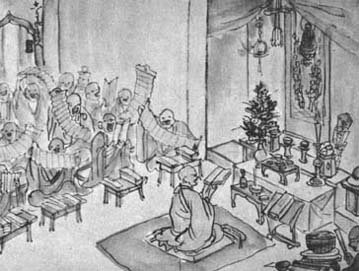
More Westerners are likely to be familiar with Zen priests most of whom following in lineages that derive from Japan. As an institution, while coming along later than Shinran’s Shin Buddhism, over a period of evolution brought to its full form as a result of Meiji era reforms, Japanese Zen Buddhist priests are also non-celibate, or at least the large majority are, and there is no assumption of celibacy. Today in Japan Zen clerical leadership is roughly more analogous to Anglican parish ministry than to the monasticism of any tradition, where clerics are responsible for the rites of the community, particularly funerals and related memorials.
Here in the West this Japanese trend toward ordination meaning ministry rather than monasticism has continued and expanded.
There have been bumps along the Western road. Most especially I’ve observed problems that arise out of a romance on the part of priests with their monastic origins. Japanese Buddhist terms for their clergy are all monastic. We see this commonly in the West where ordained Zen religious leaders call themselves and are often called monks (and less commonly nuns), while in fact married or even living in more informal cohabitation with another person. So, right at the beginning there are confusions, for those who encounter these clerics, and, often, for the clerics themselves.
To my mind continuing to use monastic terminology is a mistake and one that would wisely be dropped by ordained Zen leaders. Even more important would be dropping many of the attendant attitudes about what it means to be a serious Zen practitioner, which are obscured by a continuing romancing of a monastic model.
Zen has been in the West for nearly a century, for over half a century it has had serious practitioners, and for the last quarter of a century increasing numbers of clergy, as well as formally sanctioned lay leaders, something largely unique to the West.
During this time we have seen a reformation of what Zen practice can be. It is a substantive shift from what we inherited from our Asian teachers. And with endless bows of gratitude for their gift to us of the Zen dharma, I think it well past time for us to look at what we have come to be and to formally embrace this Western vision of Zen as a viable alternative, a new strand of Zen practice. We find this when we step away from the blinders of monastic terminology and monastic assumptions.
The monastic and later quasi-monastic and occasionally pseudo-monastic Zen practitioners in varying degree all see practice as belonging within the cloister. Most notably Zen teachers have seen the training period of three months a necessary gateway to leadership; and not one of these training periods, but many. And there are all sorts of assumptions buried within this continuation of a monastic rhythm to practice. I know Zen priests who think one cannot really practice Zen without these intensive aspects of practice. While I haven’t polled them, based upon many informal conversations over many years, I strongly suspect, most.
Similarly, there is a belief that one’s best training happens in close proximity to a teacher, living together, practicing together. That is when the teacher doesn’t think it is the only way. Again, this follows the monastic model, or rather a particular version of it. Best I can tell in earlier aspects of Chinese practice, a student would meet her or his teacher infrequently, often not even practicing in the same monastic institution.
Among those who closely identify with this model we often hear of two tracks, lay and monastic. And while rhetorically these “tracks” are said to be equally valid, the truth lies elsewhere. Those committed to the “monastic” model too often believe what they have embraced is the real way to practice. Again, based in my observation of many Zen teachers over many years. Frankly, their disdain of lay practitioners as dilettantes should be pretty obvious to any observer who has not already drunk the cool aid.
And they claim this superiority even though they have actually condemned themselves to marginal lives where there is no true monastic community. They get the hierarchy where everyone has a place, in several meanings of that word, if for a time. But they rarely get a community that actually supports them, particularly as they age. I look at several institutions that have tried to make this deal, a life of practice for a life of support; but as they begin to age with too few new practitioners coming in to support the older ones, I worry about what will happen. It doesn’t look good.
But, frankly, that is a personal choice.
However, too often they bring along a spouse to this lifestyle, and not infrequently children. They create families who are condemned to live at the edge of society to my mind to no obvious purpose. And that’s not the only problem. It has been my observation how the seriously cloistered life, rather than opening us, tends to shut us down. Following the flow of rule with strict hierarchies of relationship, people are less likely to mature in their interpersonal relationships. This may be a worthy price for those whose goal is that deeper insight often associated with the single-mindedness of rule. But, too often people spending too many years under close supervision just do not flower into fully functioning human beings. And for those with families, I worry…
Now, I’m not condemning the monastic lifestyle writ large. I think it has a place, even with the costs involved. But it is not for those who also live in substantial ways in the world, specifically with spouse or partner, and with children. Frankly, it seems to me non-celibate “monastic” practitioners tend to have the worst of both worlds. As do their loved ones.
Now, I’m not calling these people to lives of fame and gain, but I am challenging the ordained practitioners of Zen to look at what they’re doing and to what the consequences there are in assuming a monastic identity when one is not in fact becoming a renunciant.
And there’s a more important point, some good news.
Actually, two things.
First about practice in lay communities. Yes, there are many dilettantes, people passing through, people who don’t dig deep. I’ve known hundreds, maybe over the years I’ve been involved in practice thousands. It’s easy to hide within lay practice, to show up when it is convenient, and not when not. I’m not selling lay practice as a panacea.
Still, when people do throw themselves into the practice, it turns out do just fine. It works. Living at home, alone or with a partner, practicing daily and participating in one, three, five and seven-day retreats as one can is enough.
Lives are transformed, people grow deep and wise.
And the many beings are saved.
My direct observation is with koan practitioners. Those of us who use the koan introspection discipline developed by Hakuin Ekaku and his disciples have observed there is no obvious difference in the advancement through the curriculum between cloistered and non-cloistered, except as regards the actual amount of time one gets in the formal interview where one may pass from one case to the next.
The eye opens just as easily for those who do not entry monasteries as for those who do.
And, I see no reason one cannot assume the practices of a “pure” shikantaza found in the Soto schools that have not embraced the Harada-Yasutani Soto adaptation of koan introspection practice, should not have the same experience. After all the practice of just sitting needs to lead to just standing, just walking, just working, just raising our children. It must. Or, it becomes a quaint artifact, and an obstacle to real life…
And those who clearly are living in the “world,” gather the wealth of experiences that more incline them to psychological maturity, to become more rounded human beings. All the while supporting themselves and their families, no mean thing all by itself.
No guarantees here, of course. But, increases the odds, I think…
And, so, to that second point.
This good news about non-monastic practice I suggest this should inform our clerical leadership, people who are neither lay nor monastic.
What I suggest for us in the West, is that unless one feels a call to an actual cloistered life and wishes to become a monastic in the traditional celibate sense, if one feels called to ordination, one’s ordination path should be seen as an adjunct to practice, rather than as some special or more intense form of practice.
There is no deeper practice than practice. Water does not get wetter.
Through off the monastic terminology. And more importantly, throw off the monastic mindset. And see what can happen. It is already happening, in spite of the obstacles thrown up by tradition, or myopic following of tradition.
Here in the West, most of us are going to be called to bring that practice into the world.
Let monks and nuns do the work of monks and nuns.
And the rest of us, let us embrace our life as our life.
And let our priests become ministers, where ordination is about a calling to service. Heaven knows, we need such ministers, such priests.
Acknowledging this we can shift the focus of training beyond the primary disciplines of Zen meditation, which we all share, from the cycle of monastic liturgy to professional pastoral training. Let us look to the Western seminary tradition and see what we can learn. Let our priests in training learn a little about pastoral counseling. Let’s require clinical pastoral education units of our clerics in training. Let clerical aspirants learn how to organize a spiritual community and a religious education program for our children. Let them learn how to read a financial statement.
There are people more than willing to help. I think of our sisters and brothers within the Unitarian Universalist Association who are getting many of us (including me) who were looking for some basic pastoral services, like religious education for our children, but who could not find them within the Zen sanghas.
Let our Zen clergy do some of the many things that might actually help as Zen takes root here in the West.
And out of all this let these priests go into the world establishing sitting groups while also working in the fields of need.
Could do a world of good.

Next Post

June 22, 2010 A Small Footnote to My Modest Call Regarding Buddhist Ordination
Browse Our Archives
Select a Category A Christmas Carol Abolitionist African-American Ahmadiyya Alan Watts Aldous Huxley Allen Ginsberg Amedkar Jayanti American politics American Zen Anaheim Zen Sangha Anglican Annie Besant April Fool Armageddon Art and Religion artificial intellegence Atheist Awakening B R Ambedkar Barlaam & Josaphat Beatnik Between Bhagavad Gita Bible biography birthday bodhisattva Bodhisattva Precepts Book burning Book of Common Prayer Book of Mormon Brahmo Samaj Buddha Buddhism Buddhist Buddhist Lord's Prayer Butterflies Calendars cartoons cat ChatGPT Chicken Tortilla Soup choices Christian atheism Christian mysticism Christian origins Christian Science Christian Zen Christianity Christianity and Buddhism christmas Christmas Truce Christopher Isherwood Church of Later Day Saints Cinco de Mayo circus covenant critical thinking culture D. T. Suzuki Dalit Buddhism Daniel Defoe Desert Fathers and Mothers dharma talk Dogen Donald Trump Dongshan's Five Ranks Dorothy Day dream Duty Easter ecology Edwin Arnold emptiness Empty Moon Zen Network Episcopal Church Eternal Now Ethics evolution existentialism Faith fantasy Fathers Day film film review fire Five Ranks Folk music food Form and emptiness Four Seals Francis of Assisi Francis Xavier Free thinker friendship George MacDonald Gerald Heard Glenn Taylor Webb God Good Friday Gospel of Gospel of Mark Gospel of Thomas grace Graduate Theological Unioin Graduate Theological Union Guanyin H R Blyth Hakuin Ekaku Hanamatsuri Hanukkah Harada Yasutani Zen Heart Sutra Henry David Thoreau Hermann Hesse Hinduism History and Religion history of religion Holy Spirit home Hospitality Icon Ides of March Isaac Newton Islam Islamic mysticism Jack Kerouac James Luther Adams Jiddu Krishnamurti Joan of Arc Johannes Gutenberg John Donne joke Judaism justice karma kensho King James Bible koan Koun Yamada Kyoto School Lewis Carrol Liberal Christianity Liberal Religion Life Plan Community Liminal literature Literature and Religion Liturgy Lord's Prayer Love Mahatma Gandhi Mahayana Martin Luther King Jr Mary Baker Eddy Mary Magdelene Mary Oliver Mayflower Compact Meditation memories memory metaphor money money and religioin Mormons Mother's Day movie review mysticism mythic Neighborhood Unitarian Universalist Church New Thought Nichiren Buddhism Nonduality not knowing Omar Khayyam Pacific School of Religion pagan Palm Sunday Passover peace Pentecost perennialism Phantastes Philip Kapleau philosophy Pilgrimage poetry Poetry and Religion politics Prayer Precepts Printing Press prophecy prophetic spirituality psychology Pure Land Queer religion queering religion Quietism Ram Mohan Roy rebirth recipe Relationships and religion religion religion and history Religious syncretism Resistance Retirement Retreat review Rissho Kosei Kai Ritual Robert Aitken Roshi Robert Ingersoll Rohatsu Romani religion Rosie the Riveter saints samadhi SanboZen Sangha Satyagraha science science and reigion science and religion science fiction seminary sermon Sesshin Sex and Religion Shinran Sikh Sikh tradition silence Social Justice Socially Engaged Buddhism Society and religion Soto Zen soul spiritual community spiritual practice Spirituality Sufism Suicide superstition Taoism Television Teresa of Avila Thanksgiving theological schools Theosophy Thomas Merton Time Transcendentalism Transcendentalist Trinitarian Trinity Uncategorized unitarian Unitarian Christianity Unitarian Universalist Universalism Vajrayana Vedanta Walking war Willa Cather William Ellery Channing wisdom women and religion women in religion World Teacher Writing zazen Zen Zen Center Zen inspired retriement zen meditation Zen Precepts Zen women
Select a Month September 2026 August 2026 July 2026 June 2026 May 2026 April 2026 March 2026 February 2026 January 2026 December 2025 November 2025 October 2025 September 2025 August 2025 July 2025 June 2025 May 2025 April 2025 March 2025 February 2025 January 2025 December 2024 November 2024 October 2024 September 2024 August 2024 July 2024 June 2024 May 2024 April 2024 March 2024 February 2024 January 2024 December 2023 November 2023 October 2023 September 2023 August 2023 July 2023 June 2023 May 2023 April 2023 March 2023 February 2023 January 2023 December 2022 November 2022 October 2022 September 2022 August 2022 July 2022 June 2022 May 2022 April 2022 March 2022 February 2022 January 2022 December 2021 November 2021 October 2021 September 2021 August 2021 July 2021 June 2021 May 2021 April 2021 March 2021 February 2021 January 2021 December 2020 November 2020 October 2020 September 2020 August 2020 July 2020 June 2020 May 2020 April 2020 March 2020 February 2020 January 2020 December 2019 November 2019 October 2019 September 2019 August 2019 July 2019 June 2019 May 2019 April 2019 March 2019 February 2019 January 2019 December 2018 November 2018 October 2018 September 2018 August 2018 July 2018 June 2018 May 2018 April 2018 March 2018 February 2018 January 2018 December 2017 November 2017 October 2017 September 2017 August 2017 July 2017 June 2017 May 2017 April 2017 March 2017 February 2017 January 2017 December 2016 November 2016 October 2016 September 2016 August 2016 July 2016 June 2016 May 2016 April 2016 March 2016 February 2016 January 2016 December 2015 November 2015 October 2015 September 2015 August 2015 July 2015 June 2015 May 2015 April 2015 March 2015 February 2015 January 2015 December 2014 November 2014 October 2014 September 2014 August 2014 July 2014 June 2014 May 2014 April 2014 March 2014 February 2014 January 2014 December 2013 November 2013 October 2013 September 2013 August 2013 July 2013 June 2013 May 2013 April 2013 March 2013 February 2013 January 2013 December 2012 November 2012 October 2012 September 2012 August 2012 July 2012 June 2012 May 2012 April 2012 March 2012 February 2012 January 2012 December 2011 November 2011 October 2011 September 2011 August 2011 July 2011 June 2011 May 2011 April 2011 March 2011 February 2011 January 2011 December 2010 November 2010 October 2010 September 2010 August 2010 July 2010 June 2010 May 2010 April 2010 March 2010 February 2010 January 2010 December 2009 November 2009 October 2009 September 2009 August 2009 July 2009 June 2009 May 2009 April 2009 March 2009 February 2009 January 2009 December 2008 November 2008 October 2008 September 2008 August 2008 July 2008 June 2008 May 2008 April 2008 March 2008 February 2008 January 2008 December 2007 November 2007 October 2007 September 2007 August 2007 July 2007 June 2007 May 2007 April 2007 March 2007 February 2007 January 2007 December 2006 November 2006 October 2006 September 2006
Follow Us!
TAKE THE
Religious Wisdom Quiz
What city is the headquarters of the Roman Catholic Church?
Select your answer to see how you score.
Florence Vatican City Rome Jerusalem
Related posts from Monkey Mind


Which Is the True Qian? A Koan About...


TRENDING AT PATHEOS Buddhist

Catholic Evangelization: Sharing Your Faith Every Day
Welcome back to the Graceful Awakening mini-series called, “From Faith to Mission.” ...

The Pillar of the Boatmen: the Ancient Monument...
The Pillar of the Boatmen is a Romano-Gaulish sculpture that dates from...

In one sense walking into Westminster Abbey is like walking down the...

'Super Scam Me' Exposes AI Jon Bon Jovi...
Leslie Pickett believed she was in a relationship with Jon Bon Jovi....

The Brazilian Remake of Kendricks' 'Flywheel' Opens in...
“Flywheel,” the story that launched the Kendrick Brothers’ filmmaking career is getting...

The Dangers of Gradual Accommodation (Winking at Sin)
Recently, the “law of gradualness” resurfaced during the opening of a weeklong,...
view all Buddhist blogs
Ad-Free & Subscriber Log-In Subscription Support
- About Us
- 2026 Calendar
- Videos
- Podcasts
- Library of World Religions
- Faith In Media Tracker
- Advertise With Us
- Write for Us
- Privacy Policy
- Terms of Service
- Do Not Sell My Data
- Contact Us
- Radiant Digital
- Manage Newsletter Subscriptions
- Unsubscribe From Notifications
- Sitemap
Copyright 2008-2026, Patheos. All rights reserved.
Subscription Support Ad-Free & Subscriber Log-In
Follow Patheos