
BuddhistCatholicContemplativeEvangelicalGeneral ChristianHinduJewishLatter-day SaintMuslimNew VisionsProgressive Christian
Beliefs
- Buddhist
- Catholic
- Contemplative
- Evangelical
- General Christian
- Hindu
- Jewish
- Latter-day Saint
- More Voices
- Muslim
- New Visions
- Pagan
- Progressive Christian
Topics
- Religion News
- Food and Religion
- Sports and Religion
- Religious Art
- Religious Music and Entertainment
- Religious Events
- History and Religion
- Style and Religion
- Politics and Religion
- Women in Religion
- Recreation Outdoors and Religion
- Business Finance and Religion
- Careers Workplace and Religion
- Education and Religion
- Family Parenting and Religion
- Health Fitness and Religion
- Home and Religion
- Relationships and Religion
- Technology and Religion
- Travel and Religion
Columnists
- Buddhist Columnists
- Business Finance and Religion Columnists
- Careers Workplace and Religion Columnists
- Catholic Columnists
- Contemplative Columnists
- Education and Religion Columnists
- Evangelists Columnists
- Family Parenting and Religion Columnists
- General Christian Columnists
- Health Fitness and Religion Columnists
- Hindu Columnists
- History and Religion Columnists
- Home and Religion Columnists
- Jewish Columnists
- More Voices Columnists
- Latter Day Columnists
- Muslim Columnists
- New Visions Columnists
- Nonreligious Columnists
- Pagan Columnists
- Politics and Religion Columnists
- Progressive Columnists
- Recreation Outdoors and Religion Columnists
- Relationships and Religion Columnists
- Religion News Columnists
- Religious Art Columnists
- Religious Events Columnists
- Religious Music and Entertainment Columnists
- Sports and Religion Columnists
- Style and Religion Columnists
- Technology and Religion Columnists
- Travel and Religion Columnists
- Women in Religion Columnists
Resource Library
- 2026 Calendar
- Library of World Religions
- The 100 Most Holy Places on Earth
- Patheos Answers
- Podcasts
- Videos
- Faith Leaders Database
- Anglican Episcopalian
- Bahai
- Baptist
- Buddhism
- Christianity
- Confucianism
- Eastern Orthodoxy
- Hinduism
- Holiness and Pentecostal
- ISKCON
- Islam
- Judaism
- Lutheran
- Methodist
- The Church of Jesus Christ of Latter-day Saints
- New Age
- Paganism
- Presbytarian and Reformed
- Protestantism
- Religion Behind the Scenes
- Roman Catholic
- Scientology
- Shia Islam
- Sikhism
- Sufism
- Sunni Islam
- Taoism
- Zen
- See all religions
Research Tools
 Ad-Free & Subscriber Log-In Subscription Support
Follow Patheos 

- Trending:
- Advent
- |
- Forgiveness
- |
- Thanksgiving
- |
- Election
- |
- Seasonal Holidays
- |
- Marriage

- Home
- Buddhist
- BEGINNING AGAIN: Reflecting on Second Chances
BEGINNING AGAIN: Reflecting on Second Chances
Last updated on: November 1, 2011 at 3:12 pm by James Ford
BEGINNING AGAIN: Reflecting on Second Chances 2011-11-01T15:12:14-07:00 James Ford
Patheos Explore the world's faith through different perspectives on religion and spirituality! Patheos has the views of the prevalent religions and spiritualities of the world.
Reflecting on
Second Chances
A Sermon by
James
Ishmael
Ford
28 September 2008
First Unitarian Church
Providence,
Rhode Island
Text
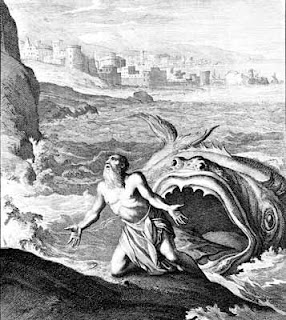
Now God said to Jonah, “Arise, go to Nineveh, that great city, and cry against their wickedness.” But instead Jonah rose up to flee to Tarshish and went and found a ship. God sent out a great wind into the sea, and there was a mighty tempest, so that the ship was about to be broken. The mariners were afraid, and cried every one unto their god, and cast forth the wares that were in the ship into the sea, to lighten it. But Jonah was down into the sides of the ship; and he lay, and was fast asleep. The shipmaster came to him, and said, “O sleeper, arise, call upon thy God that we perish not.” When he saw what was happening Jonah admitted that he was the cause of the storm. So they took up Jonah, and cast him forth into the sea: and the sea ceased from her raging. Then God prepared a great fish to swallow up Jonah. And Jonah was in the belly of the fish three days and three nights when Jonah prayed from within the fish’s belly, repenting his sins and his flight from his task. And so God caused the fish to vomit Jonah upon the dry land. And for the second time said, “Arise, go unto Nineveh, that great city, and preach unto it the preaching that I bid thee. So Jonah arose, and went unto Nineveh. And Jonah entered the city and he cried, and said to them, “Yet forty days, and Nineveh shall be overthrown.” And the people of Nineveh believed and proclaimed a fast, and put on sackcloth, from the greatest of them even to the least of them.” And God saw their work and that they had turned from their evil ways; and God forgave them. But this displeased Jonah exceedingly, and he was very angry. And he prayed to God, and said, “I beseech thee, take my life from me; for it is better for me to die than to live.” So Jonah went out of the city and sat in the dust. And God prepared a vine, and made it to come up over Jonah, that it might shelter his head from the heat.
The Book of Jonah (adapted from the King James Version)
I grew up in a form of Baptist Christianity, which believes the Jews are the chosen people. What that in fact means is complicated and not entirely a good thing. For short hand, think Jews for Jesus, although I’m talking way before they emerged. And not that this meant we knew much about Judaism. Frankly what little of Jewish ways we discerned came mostly from reading the Scriptures, not without value, but hardly a snapshot of a living faith. My grandmother, the spiritual center of our family avoided shellfish, which we thought a Jewish thing, although coincidently didn’t feature strongly in her Missouri-bred diet, anyway. And, also, we had no problem eating various parts of the pig, another very Missouri thing. I guess the bottom line was we liked Jews, or we figured we would if we ever met one.
I often mention how pretty much all the Yiddish in my vocabulary was learned as a young adult living in a Buddhist monastery. What this means is my first encounters with real Jewish folk were actually with “JuBus,” Buddhist-identified Jews. Talk about an eccentric perspective. But that was I got, and, you know, it’s an attractive approach to religion. Read Sylvia Boorstein sometime.
Now, and for many years, I’ve been a Unitarian Universalist. You’ve heard the old joke, I presume. How the guys were sitting in the coffee shop reading the morning paper when Joe looked up from the obituary page and said “Oh, my. Fred died. He was just buried from the Unitarian church. To which Sam replied, “I had no idea Fred was Jewish.”
For many reasons even though our roots run firmly through Protestant Christianity and even our liturgy is rather obviously derived from the Protestant tradition, we have a close affinity with a few significant Jewish perspectives. We are deeply informed by the unity of experience, an observation, which derives, I believe, ultimately from the Jewish intuition of divine unity. And, probably most important we are all about covenant; something I really believe derives from ancient Jewish traditions. In some ways you could say if there are Jews for Jesus, Unitarians could be thought of as Christians for Moses. Sort of, kind of, at least, if you squint and hold your head at just the right angle.
In any case Judaism is quite important to most UUs. In a majority of Unitarian Universalist congregations we mark a couple of traditional Jewish holidays as part of our informal but important to us religious calendar. It’s a rare UU congregation that doesn’t usually take up Hanukkah themes somewhere in December. And, in my experience in congregations across the continent, the themes of Rosh Hashanah and Yom Kippur are explored every year on a Sunday pretty close to where they pop in the lunar calendar.
How we do this and to what purpose is worth reflecting on. I think about the various ways I’ve thought of Judaism and its spiritual teachings over the years. My engagement, I hope we see “our” engagement is of necessity informed by history, by biases, and hopefully, through a desire to be a little wiser in living. It’s good to know about our neighbors, but the real task for us, as followers of a Universalist path is to allow ourselves to be informed by the ways people have encountered life and faced death.
I’m a person on a spiritual quest, a pilgrim on the way of heart and depth. Which I believe is our common purpose. So, as I consider something like Rosh Hashanah, my hope is as best I can to let the wisdom of our spiritual cousins whom I adore to allow their teachings to wash over me, to challenge me, to push me in new directions.
Now, out of that sense and aspiration, today, as I hope to continue to explore those themes I’ve been working with this month, of a deep not knowing, of how important our actions are, and now particularly of our intentions and second chances; I feel I couldn’t be more fortunate than to have an opportunity to stop and consider all this within the context of Rosh Hashanah. I won’t stop there, can’t; but I do believe it helpful, for me, and maybe for you, to pause and to reflect.
While I’m suggesting we need to embrace a deep not knowing, that doesn’t mean ignoring what is knowable. Rosh Hashanah means “head of the year.” And as you probably know this is the Jewish New Year. So, tomorrow, Monday will mark the year 5768 in the traditional Jewish calendar. And if anyone hasn’t yet done so, let me be the first to wish you a happy New Year! Happy 5768!
In a UU Liturgy for Rosh Hashanah and Yom Kippur we learn. “The spirit of (this) time is woven about two books: the Torah and the legendary Book of Life. According to legend on Rosh Hashanah, the New Year, the Angel of Life writes each of our destinies for the year to come. During the ten days following, the Days of Awe, the Book of Life is kept open. If we then merely try to understand how to take the Torah’s insights with us into the everyday world, the Angel of Life must reconsider what has been written. By taking thought, we have made changes that will alter the future. At the last sound of the Shofar on the day of Yom Kippur, says the legend, the Book of Life for the year to come is sealed. All is (then) written.”
Liturgically we find this holy day is all about an assessment of our lives. It is a time for reflection and, it is unlikely we will have lived up to our deepest hopes, desires and expectations, I certainly know this is so in my case. So, it becomes a time for repentance. Not a bad way to begin a new year, I think. Or, at the starting moment of any enterprise, say, like the beginning of our UU church year, which is scant weeks on.
There are any number of ways we can enter into this time of reflection and repentance. One text closely associated with this time is the biblical story of Jonah. In fact the entire text is usually read aloud during this season. We’re UUs, so for our text today while trying to keep the heart of the matter I also cut the story by about half. The Readers Digest version, if you will. Hopefully I accomplished my editing and spot rewrites without doing too much damage to the story. Accurate enough, because I believe it provides some important lessons as we look forward to the next year of our lives.
Over the years I’ve thought a lot about the story of Jonah. I really like how it starts with that rushing off for Tarshish. To the writer, that meant Jonah got his divine commission, and takes off in the exact opposite direction. He was heading for the very ends of the earth. So, we have a first class shirker being picked by God for his important job. What’s not to love here? Sounds like my story. And yours? What task are you not living up to? What calling from the depth of your being are you avoiding? I bet there’s something.
And this running away leads to some hard time in the belly of the beast. Again, what consequences have you found in your life out of avoiding your deeper responsibilities. I suggest, within this context, we’re mostly talking about relationships, how we deal with others, how the more fortunate deal with the less fortunate.
By the bye, this belly of the fish thing was a favorite point for mocking by the other religious current in my young life, my Robert Ingersoll influenced father; who counted the fish story along with pillars and four corners to the earth as evidence these stories were myths. And for my dad “myth” meant lie.
I, I hope you have picked up, have a different take on myth, on the value of story as a way into our human hearts. Found if we don’t cling to the stories as literal truth. I don’t try to take this old story as history, it isn’t. But rather as our spiritual ancestors attempting to address something important about human lives, which it is. I suspect the rabbis who chose to reflect on this story during Rosh Hashanah often had a similar desire.
I mean what a story. When Jonah finally, finally repents and goes and does the prophesying, and the people in their turn repent, he’s royally annoyed that they did and didn’t get their divine punishment. He wanted fire and brimstone. He got repentance. In fact he’s so angry he wishes he were dead. So, Jonah starts as a jerk and ends as a jerk. Along the way he does a couple of good things. There’s an amazing poem sung from the belly of the fish, but I’ll save reflecting on it for another year. But, most important, we find in doing those couple of good things, Jonah redeems himself.
What captures me here is the theme of second chances. Here the divine strews second chances before Jonah like a child throwing fistfuls of rose peddles during a wedding processional. Great globs of second chances picked up in a chubby hand and thrown indiscriminately in our path. I believe the greatest gift of our humanity is that we get these second chances. And, here’s another important point. We don’t all get them. A child born into a decade long drought in the third world isn’t going to see many second chances. And there’s a discrepancy in who gets them right here in Providence, as well. I believe if we are all really connected, as I’ve said before, and will again, then those of us who have these second chances, owe something, have an enormous responsibility to take them, to grab them, and to allow the changes in our lives they hold out. The lives of those children may be in the hands of us, you and me, embraced within our willingness to look beyond our comfort zone. The question of second chances, of turning hearts, and moving in new directions is that important.
On this way our intentions are critical. We need to notice and intend to change. That’s the gate. We may not succeed the first time, or the second. Frankly it strikes me Jonah never completely comes to terms with the gift of his life. But along the way he intends to do the right thing. And that’s very important. But even that’s not quite enough. It’s a gate into the garden, but not the garden. Hence that notion of the road to hell being paved with good intentions. You can’t just intend good things. We need something more.
Frankly, what that more is, is a small distinction, easily missed. But, it makes all the difference. And, that’s where I think about the vine. Jonah does the job, people repent, and filled with anger that they did and didn’t get fire and brimstone, he goes out of the city and sits in the dust, sulking. As we’ve observed, a world class jerk. And then in that lovely coda to the story God causes a vine to grow up and shade, as I imagine it, his old balding head that had been burning red in the harsh Near Eastern sun.
Now in the fuller version of this story the vine is created and destroyed and a relatively obvious moral is drawn out of the event. But I’ve found the most value for me in just contemplating that vine and that shade provided even for foolish, shirking, vindictive Jonah. What that suggests to me, what that sings to me is that I’m not doing this alone. Never have been. The problem only comes when I think I’m responsible all by myself and must make it happen, must, as one wise person described it, push the river. Can’t be done. The intention that fails us is the one that tries to control things. The intention that leads to the good is surrender.
For me Jonah points the way. I’ve found it in those moments when, as Jonah-like as I am, I’ve resisted, I’ve complained, I’ve done my best to avoid, and nonetheless, at some point, reluctantly, usually late, never fully aboard, but somehow still stepped up to the plate and filled with ingratitude and insincerity, and absolutely not knowing where it will go, still have acted in service of the good. We need to let our intentions be surrender, it needs to be an opening of our hearts. But in that, in that precious moment I’ve found it is all revealed. God’s vine has sprung up, and its shade has covered me.
Lovely, strange, and powerful. I suggest if we just open our hearts without expecting something in particular, without trying to push the river, without trying to be God’s agent, and simply commit to taking the second chance and reaching out a hand; with that all will be well. Here’s my counsel. Repent of whatever you have done to cut yourself off from the world and just reach out your hand. If we can do this, at the end of the season the angel will record our names, yours and mine in the book of life, along with Jonah and all the reluctant who have nonetheless heard the stirrings from the depths, the call of the great covenant, the way of intimacy, and however hesitantly changed the direction of their lives and in doing so helped to heal the world.
Amen.

Previous Post

September 26, 2008
The Soul I Understand
Next Post
September 29, 2008 When I feed the poor
Browse Our Archives
Select a Category A Christmas Carol Abolitionist African-American Ahmadiyya Alan Watts Aldous Huxley Allen Ginsberg Amedkar Jayanti American politics American Zen Anaheim Zen Sangha Anglican Annie Besant April Fool Armageddon Art and Religion artificial intellegence Atheist Awakening B R Ambedkar Barlaam & Josaphat Beatnik Between Bhagavad Gita Bible biography birthday bodhisattva Bodhisattva Precepts Book burning Book of Common Prayer Book of Mormon Brahmo Samaj Buddha Buddhism Buddhist Buddhist Lord's Prayer Butterflies Calendars cartoons cat ChatGPT Chicken Tortilla Soup choices Christian atheism Christian mysticism Christian origins Christian Science Christian Zen Christianity Christianity and Buddhism christmas Christmas Truce Christopher Isherwood Church of Later Day Saints Cinco de Mayo circus covenant critical thinking culture D. T. Suzuki Dalit Buddhism Daniel Defoe Desert Fathers and Mothers dharma talk Dogen Donald Trump Dongshan's Five Ranks Dorothy Day dream Duty Easter ecology Edwin Arnold emptiness Empty Moon Zen Network Episcopal Church Eternal Now Ethics evolution existentialism Faith fantasy Fathers Day film film review fire Five Ranks Folk music food Form and emptiness Four Seals Francis of Assisi Francis Xavier Free thinker friendship George MacDonald Gerald Heard Glenn Taylor Webb God Good Friday Gospel of Gospel of Mark Gospel of Thomas grace Graduate Theological Unioin Graduate Theological Union Guanyin H R Blyth Hakuin Ekaku Hanamatsuri Hanukkah Harada Yasutani Zen Heart Sutra Henry David Thoreau Hermann Hesse Hinduism History and Religion history of religion Holy Spirit home Hospitality Icon Ides of March Isaac Newton Islam Islamic mysticism Jack Kerouac James Luther Adams Jiddu Krishnamurti Joan of Arc Johannes Gutenberg John Donne joke Judaism justice karma kensho King James Bible koan Koun Yamada Kyoto School Lewis Carrol Liberal Christianity Liberal Religion Life Plan Community Liminal literature Literature and Religion Liturgy Lord's Prayer Love Mahatma Gandhi Mahayana Martin Luther King Jr Mary Baker Eddy Mary Magdelene Mary Oliver Mayflower Compact Meditation memories memory metaphor money money and religioin Mormons Mother's Day movie review mysticism mythic Neighborhood Unitarian Universalist Church New Thought Nichiren Buddhism Nonduality not knowing Omar Khayyam Pacific School of Religion pagan Palm Sunday Passover peace Pentecost perennialism Phantastes Philip Kapleau philosophy Pilgrimage poetry Poetry and Religion politics Prayer Precepts Printing Press prophecy prophetic spirituality psychology Pure Land Queer religion queering religion Quietism Ram Mohan Roy rebirth recipe Relationships and religion religion religion and history Religious syncretism Resistance Retirement Retreat review Rissho Kosei Kai Ritual Robert Aitken Roshi Robert Ingersoll Rohatsu Romani religion Rosie the Riveter saints samadhi SanboZen Sangha Satyagraha science science and reigion science and religion science fiction seminary sermon Sesshin Sex and Religion Shinran Sikh Sikh tradition silence Social Justice Socially Engaged Buddhism Society and religion Soto Zen soul spiritual community spiritual practice Spirituality Sufism Suicide superstition Taoism Television Teresa of Avila Thanksgiving theological schools Theosophy Thomas Merton Time Transcendentalism Transcendentalist Trinitarian Trinity Uncategorized unitarian Unitarian Christianity Unitarian Universalist Universalism Vajrayana Vedanta Walking war Willa Cather William Ellery Channing wisdom women and religion women in religion World Teacher Writing zazen Zen Zen Center Zen inspired retriement zen meditation Zen Precepts Zen women
Select a Month November 2026 October 2026 September 2026 August 2026 July 2026 June 2026 May 2026 April 2026 March 2026 February 2026 January 2026 December 2025 November 2025 October 2025 September 2025 August 2025 July 2025 June 2025 May 2025 April 2025 March 2025 February 2025 January 2025 December 2024 November 2024 October 2024 September 2024 August 2024 July 2024 June 2024 May 2024 April 2024 March 2024 February 2024 January 2024 December 2023 November 2023 October 2023 September 2023 August 2023 July 2023 June 2023 May 2023 April 2023 March 2023 February 2023 January 2023 December 2022 November 2022 October 2022 September 2022 August 2022 July 2022 June 2022 May 2022 April 2022 March 2022 February 2022 January 2022 December 2021 November 2021 October 2021 September 2021 August 2021 July 2021 June 2021 May 2021 April 2021 March 2021 February 2021 January 2021 December 2020 November 2020 October 2020 September 2020 August 2020 July 2020 June 2020 May 2020 April 2020 March 2020 February 2020 January 2020 December 2019 November 2019 October 2019 September 2019 August 2019 July 2019 June 2019 May 2019 April 2019 March 2019 February 2019 January 2019 December 2018 November 2018 October 2018 September 2018 August 2018 July 2018 June 2018 May 2018 April 2018 March 2018 February 2018 January 2018 December 2017 November 2017 October 2017 September 2017 August 2017 July 2017 June 2017 May 2017 April 2017 March 2017 February 2017 January 2017 December 2016 November 2016 October 2016 September 2016 August 2016 July 2016 June 2016 May 2016 April 2016 March 2016 February 2016 January 2016 December 2015 November 2015 October 2015 September 2015 August 2015 July 2015 June 2015 May 2015 April 2015 March 2015 February 2015 January 2015 December 2014 November 2014 October 2014 September 2014 August 2014 July 2014 June 2014 May 2014 April 2014 March 2014 February 2014 January 2014 December 2013 November 2013 October 2013 September 2013 August 2013 July 2013 June 2013 May 2013 April 2013 March 2013 February 2013 January 2013 December 2012 November 2012 October 2012 September 2012 August 2012 July 2012 June 2012 May 2012 April 2012 March 2012 February 2012 January 2012 December 2011 November 2011 October 2011 September 2011 August 2011 July 2011 June 2011 May 2011 April 2011 March 2011 February 2011 January 2011 December 2010 November 2010 October 2010 September 2010 August 2010 July 2010 June 2010 May 2010 April 2010 March 2010 February 2010 January 2010 December 2009 November 2009 October 2009 September 2009 August 2009 July 2009 June 2009 May 2009 April 2009 March 2009 February 2009 January 2009 December 2008 November 2008 October 2008 September 2008 August 2008 July 2008 June 2008 May 2008 April 2008 March 2008 February 2008 January 2008 December 2007 November 2007 October 2007 September 2007 August 2007 July 2007 June 2007 May 2007 April 2007 March 2007 February 2007 January 2007 December 2006 November 2006 October 2006 September 2006
Follow Us!
TAKE THE
Religious Wisdom Quiz
What are the names of the two witnesses in Revelation who prophesy for 1,260 days?
Select your answer to see how you score.
Moses and Elijah Enoch and Elijah Peter and Paul They are not named
Related posts from Monkey Mind
If I Stop Becoming, Will I Disappear?
James Ishmael Ford's books on Zen
Taking Refuge in the (Zen) Sangha
Recalling the Amazing Alexandra David-Neel
TRENDING AT PATHEOS Buddhist

As was predicted many years ago, the Interpreter Foundation's website is...

"Why Do Churches Talk So Much About Money?"
If you were inclined to do so, you could probably find any...

Watch and Pray: On Mark 13:33-37
Jesus said to his disciples: “Be watchful! Be alert! You do not...

Debate on Purgatory & Biblical Evidences for It
This is from a combox on my video channel, Catholic Bible Highlights....

Set the table for the coming King
On Thursday we visited my sister-in-law for Thanksgiving, and throughout the entire...

If I Stop Becoming, Will I Disappear?
(At our most recent half day Zen retreat, Dr Chris Hoff, a...
view all Buddhist blogs
Ad-Free & Subscriber Log-In Subscription Support
- About Us
- 2026 Calendar
- Videos
- Podcasts
- Library of World Religions
- Faith In Media Tracker
- Advertise With Us
- Write for Us
- Privacy Policy
- Terms of Service
- Do Not Sell My Data
- Contact Us
- Radiant Digital
- Manage Newsletter Subscriptions
- Unsubscribe From Notifications
- Sitemap
Copyright 2008-2026, Patheos, part of the Radiant Digital network of media brands. All rights reserved.
Subscription Support Ad-Free & Subscriber Log-In
Follow Patheos