
BuddhistCatholicContemplativeEvangelicalGeneral ChristianHinduJewishLatter-day SaintMuslimNew VisionsProgressive Christian
Beliefs
- Buddhist
- Catholic
- Contemplative
- Evangelical
- General Christian
- Hindu
- Jewish
- Latter-day Saint
- More Voices
- Muslim
- New Visions
- Pagan
- Progressive Christian
Topics
- Religion News
- Food and Religion
- Sports and Religion
- Religious Art
- Religious Music and Entertainment
- Religious Events
- History and Religion
- Style and Religion
- Politics and Religion
- Women in Religion
- Recreation Outdoors and Religion
- Business Finance and Religion
- Careers Workplace and Religion
- Education and Religion
- Family Parenting and Religion
- Health Fitness and Religion
- Home and Religion
- Relationships and Religion
- Technology and Religion
- Travel and Religion
Columnists
- Buddhist Columnists
- Business Finance and Religion Columnists
- Careers Workplace and Religion Columnists
- Catholic Columnists
- Contemplative Columnists
- Education and Religion Columnists
- Evangelists Columnists
- Family Parenting and Religion Columnists
- General Christian Columnists
- Health Fitness and Religion Columnists
- Hindu Columnists
- History and Religion Columnists
- Home and Religion Columnists
- Jewish Columnists
- More Voices Columnists
- Latter Day Columnists
- Muslim Columnists
- New Visions Columnists
- Nonreligious Columnists
- Pagan Columnists
- Politics and Religion Columnists
- Progressive Columnists
- Recreation Outdoors and Religion Columnists
- Relationships and Religion Columnists
- Religion News Columnists
- Religious Art Columnists
- Religious Events Columnists
- Religious Music and Entertainment Columnists
- Sports and Religion Columnists
- Style and Religion Columnists
- Technology and Religion Columnists
- Travel and Religion Columnists
- Women in Religion Columnists
Resource Library
- 2026 Calendar
- Library of World Religions
- The 100 Most Holy Places on Earth
- Patheos Answers
- Podcasts
- Videos
- Faith Leaders Database
- Anglican Episcopalian
- Bahai
- Baptist
- Buddhism
- Christianity
- Confucianism
- Eastern Orthodoxy
- Hinduism
- Holiness and Pentecostal
- ISKCON
- Islam
- Judaism
- Lutheran
- Methodist
- The Church of Jesus Christ of Latter-day Saints
- New Age
- Paganism
- Presbytarian and Reformed
- Protestantism
- Religion Behind the Scenes
- Roman Catholic
- Scientology
- Shia Islam
- Sikhism
- Sufism
- Sunni Islam
- Taoism
- Zen
- See all religions
Research Tools
 Ad-Free & Subscriber Log-In Subscription Support
Ad-Free & Subscriber Log-In Subscription Support
Follow Patheos 

- Trending:
- Forgiveness
- |
- Marriage
- |
- Consciousness
- |
- Death Penalty
- |
- Election
- |
- Halloween
 Monique Ocampo Writes
- Home
- Catholic
- Little Sins Mean A Lot: A Book Review
Little Sins Mean A Lot: A Book Review
Last updated on: June 15, 2016 at 2:17 pm by Monique Ocampo
Little Sins Mean A Lot: A Book Review 2016-06-15T14:17:20-05:00 Monique Ocampo
Patheos Explore the world's faith through different perspectives on religion and spirituality! Patheos has the views of the prevalent religions and spiritualities of the world.
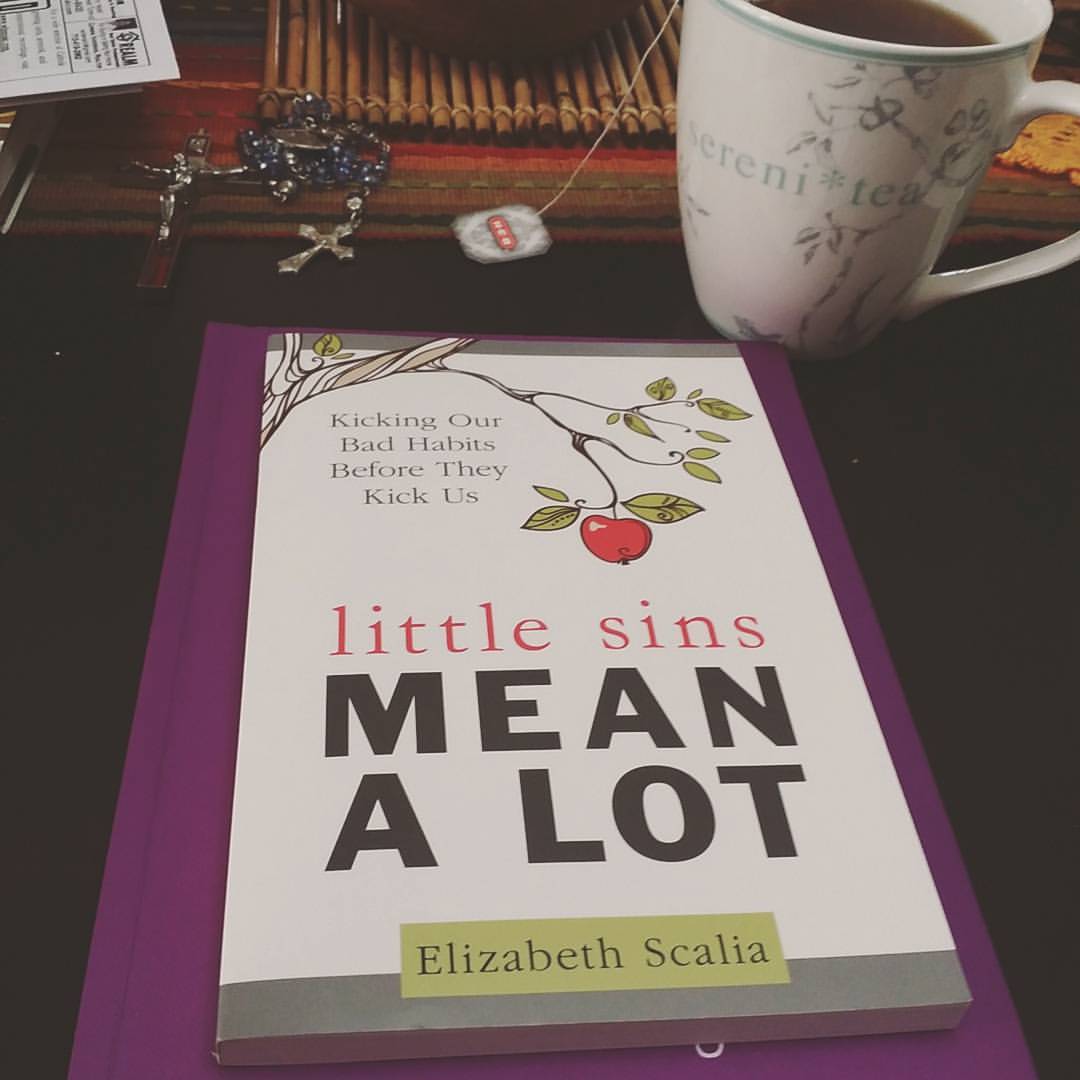
Little Sins Mean A Lot is a book about the bad habits we have, our venial sins, which can add up to a lot of damage if we’re not careful. I read through this book in one day, finding bits of myself in most of the chapters. Each chapter starts off with a story or several stories that relate to the topic of the chapter. There are quotes from the saints, the Catechism, and Bible verses to show what Catholicism has to say about these little sins. The third part of the chapter looks into how we can break those bad habits. The book isn’t too long, but each chapter packs up a whole lot in a relatively short amount of pages.
I like that the book gives a lot of starting points in terms of identifying and breaking the bad habits. My favorite chapters are the ones that center on procrastination, small indulgences, and “clinging to our narratives beyond their usefulness.” I’ll go into detail on these so that you can get a sneak preview of why I like this book so much.
Procrastination: Like a lot of other writers, I struggle with procrastination. I am way too easily distracted by the latest hashtag or whatever notifications go off on my phone and I tend to dedicate more time to my “short time wasters” than I should. In true Dante-esque fashion, Elizabeth Scalia counters this bad habit with an example from Mary: The Annunciation. Since I consecrated myself on the feast of the Annunciation, I found myself wanting to imitate Mary’s example. There are several root causes to why we procrastinate and Elizabeth tackles every single one of them.
Small Indulgences: Ask those who know me best and they will tell you that I always love to treat myself whenever I get the opportunity. Usually, it comes in the form of food. It’s okay when it happens once in a while, but too much indulging will lead to cravings for more of whatever you indulge in. In other words, small indulgences can be an addiction if we’re not careful. I particularly like how she suggests asking the saints and our guardian angels for help. One example I can give (and trust me, I never get tired of telling this story) is when I wanted to indulge myself at a convention by having the actor I was gonna meet take a picture with him pretending to bite me, vampire style. However, my guardian angel suggested otherwise, leading to a more heroic picture that’s still one of my favorites to this day!
Clinging To Our Narratives Beyond Their Usefulness: An alternative title I have for this chapter is “Selling Ourselves Short.” As a writer, this chapter felt particularly personal for me because I practically worship the idea of “the narrative.” I always see my life as a huge, neverending story. Except I also know that way too many people cling onto their “victim narratives” in order to justify why they act a certain way. One friend told me that she thought that I hid behind my writing. I don’t think that I use my writing as a shield, but I’ve been defining myself by this narrative that I created for a very long time. The chapter calls for detachment, to let God write our story instead. The only other thing I would add is a suggestion about what true humility looks like. As CS Lewis said: “True humility is not thinking less of yourself; it is thinking of yourself less.” As in thinking of yourself less often than you normally do.
I think the biggest lesson that can be learned from this book is that it completely and totally destroys the lie that “as long as you’re not doing harm to anyone, you’re a good person.” These little habits can harm ourselves and others in a big way if they are taken too far. We all have times when we procrastinate, indulge a little too much, and sell ourselves short. We can swing from being too full of ourselves to outright hating ourselves. The trick to all this is finding balance. I highly recommend this book to everyone, especially to 12-step programs.
Previous Post

June 13, 2016
History is Happening in Manhattan: The Beauty of the Tony Awards
Next Post
June 21, 2016 A New Way To Walk
Browse Our Archives
Select a Category A Night at the Movies Apologetics Asperger's Syndrome autism Being Catholic Books Buffy the Vampire Slayer Faith Fandoms Heart of Mary Women's Fellowship Interviews Lent Music Personal Life Poetry Prayer Radiance and Grace Reflections Relationships Religion Saints Seven Quick Takes Social Media Taylor Swift Television The Soapbox True Love Tuesday Uncategorized Women of Christ Wednesday writing Young Adult Issues
Select a Month February 2017 January 2017 December 2016 October 2016 September 2016 August 2016 July 2016 June 2016 May 2016 April 2016 March 2016 February 2016 January 2016 December 2015 November 2015 October 2015 September 2015 August 2015 July 2015 June 2015 May 2015 April 2015 March 2015 February 2015 January 2015 December 2014 November 2014 October 2014 September 2014 August 2014 July 2014 June 2014 May 2014 April 2014 March 2014 February 2014 January 2014 December 2013
Follow Us!
TAKE THE
Religious Wisdom Quiz
True or False: The Sermon on the Mount includes the Lord's Prayer.
Select your answer to see how you score.
FALSE TRUE
Related posts from Monique Ocampo Writes


What St. Margaret of Cortona Can Teach to...

Epic Rap Battles of (Catholic) History: Nicholas vs...
TRENDING AT PATHEOS Catholic

Creation, Preservation, and Teleology in Catholic Theology
As I write this, it is very early Monday morning. Like millions...

The Parable Of The Sower And The Word...
One of Christ’s most famous parables is that of the sower who...

Rejecting Doom: Christian Hope And Human Action
Christianity is a religion of hope. We are to have hope and...

Why I Choose the Eucharist Over the Sermon
Choose the Eucharist, Not the Sermon What are we supposed to get...

5 Design Elements Found in Spiritually Rooted Homes
Putting Spirituality Into Home Decor Our homes are more than our living...

Credo: A Story of God Told with the...
About 10 years ago, I began to imagine a personal "Credo" that...
view all Catholic blogs
Ad-Free & Subscriber Log-In Subscription Support
- About Us
- 2026 Calendar
- Videos
- Podcasts
- Library of World Religions
- Faith In Media Tracker
- Advertise With Us
- Write for Us
- Privacy Policy
- Terms of Service
- Do Not Sell My Data
- Contact Us
- Radiant Digital
- Manage Newsletter Subscriptions
- Unsubscribe From Notifications
- Sitemap
Copyright 2008-2026, Patheos. All rights reserved.
Subscription Support Ad-Free & Subscriber Log-In
Follow Patheos