
BuddhistCatholicContemplativeEvangelicalGeneral ChristianHinduJewishLatter-day SaintMuslimNew VisionsProgressive Christian
Beliefs
- Buddhist
- Catholic
- Contemplative
- Evangelical
- General Christian
- Hindu
- Jewish
- Latter-day Saint
- More Voices
- Muslim
- New Visions
- Pagan
- Progressive Christian
Topics
- Religion News
- Food and Religion
- Sports and Religion
- Religious Art
- Religious Music and Entertainment
- Religious Events
- History and Religion
- Style and Religion
- Politics and Religion
- Women in Religion
- Recreation Outdoors and Religion
- Business Finance and Religion
- Careers Workplace and Religion
- Education and Religion
- Family Parenting and Religion
- Health Fitness and Religion
- Home and Religion
- Relationships and Religion
- Technology and Religion
- Travel and Religion
Columnists
- Buddhist Columnists
- Business Finance and Religion Columnists
- Careers Workplace and Religion Columnists
- Catholic Columnists
- Contemplative Columnists
- Education and Religion Columnists
- Evangelists Columnists
- Family Parenting and Religion Columnists
- General Christian Columnists
- Health Fitness and Religion Columnists
- Hindu Columnists
- History and Religion Columnists
- Home and Religion Columnists
- Jewish Columnists
- More Voices Columnists
- Latter Day Columnists
- Muslim Columnists
- New Visions Columnists
- Nonreligious Columnists
- Pagan Columnists
- Politics and Religion Columnists
- Progressive Columnists
- Recreation Outdoors and Religion Columnists
- Relationships and Religion Columnists
- Religion News Columnists
- Religious Art Columnists
- Religious Events Columnists
- Religious Music and Entertainment Columnists
- Sports and Religion Columnists
- Style and Religion Columnists
- Technology and Religion Columnists
- Travel and Religion Columnists
- Women in Religion Columnists
Resource Library
- 2026 Calendar
- Library of World Religions
- The 100 Most Holy Places on Earth
- Patheos Answers
- Podcasts
- Videos
- Faith Leaders Database
- Anglican Episcopalian
- Bahai
- Baptist
- Buddhism
- Christianity
- Confucianism
- Eastern Orthodoxy
- Hinduism
- Holiness and Pentecostal
- ISKCON
- Islam
- Judaism
- Lutheran
- Methodist
- The Church of Jesus Christ of Latter-day Saints
- New Age
- Paganism
- Presbytarian and Reformed
- Protestantism
- Religion Behind the Scenes
- Roman Catholic
- Scientology
- Shia Islam
- Sikhism
- Sufism
- Sunni Islam
- Taoism
- Zen
- See all religions
Research Tools
 Ad-Free & Subscriber Log-In Subscription Support
Ad-Free & Subscriber Log-In Subscription Support
Follow Patheos 

- Trending:
- Forgiveness
- |
- Marriage
- |
- Consciousness
- |
- Death Penalty
- |
- Election
- |
- Halloween
 Monique Ocampo Writes
- Home
- Catholic
- Laudato Si, Chapter 1, Part 1: The Throwaway Culture
Laudato Si, Chapter 1, Part 1: The Throwaway Culture
Last updated on: June 23, 2015 at 10:46 am by Monique Ocampo
Laudato Si, Chapter 1, Part 1: The Throwaway Culture 2015-06-23T10:46:54-05:00 Monique Ocampo
Patheos Explore the world's faith through different perspectives on religion and spirituality! Patheos has the views of the prevalent religions and spiritualities of the world.
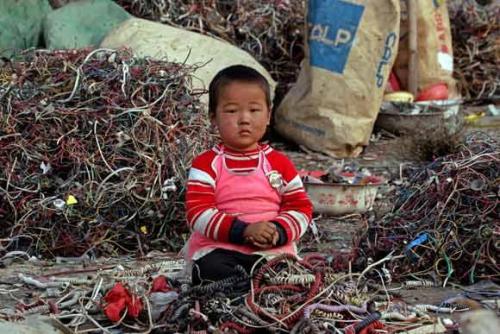
The first part of Chapter 1 of Laudato Si talks about the everyday pollution we deal with as well as the more unhealthy stuff that can be found everywhere. “The earth, our home, is beginning to look more and more like an immense pile of filth.” (Paragraph 21)
Pope Francis links this to what he calls a throwaway culture. starting with something as simple as throwing away paper instead of recycling it. This entire chapter then goes into detail about how the throwaway culture extends beyond merely not recycling paper. “The climate is a common good, belonging to all and meant for all.” (Paragraph 23) However, this chapter shows that at the moment, people aren’t treating the Earth like it should be treated.
Most of this chapter feels like something out of a college-level environmental class, with Pope Francis explaining the environmental damage that is going on in our world. He also says that climate change especially affects those who live in poor areas. The problem, according to him, is that those with the resources to change things would rather mask the problem and conceal symptoms. He suggests investing that money towards things that can consume less energy and constructing and renovating in ways that increase energy efficiency.
There’s an entire section in this chapter that focuses on the issue of water. Paragraph 28 explains why having fresh drinking water is an important issue and points out that many areas are especially affected by lack of access to safe drinking water. Paragraph 29 explains the dangers of not having safe drinking water. Paragraph 30 admonishes making water a commodity.
Part 3 of Chapter 1 is entitled “Loss of Biodiversity.” He spends about eleven paragraphs explaining how human activity affects various ecosystems. He also stresses the importance of protecting ecosystems such as the rainforest. (Cue Captain Planet theme. And yes, I did grow up watching that show.) Two paragraphs focus on ocean environments. Again, this entire section feels very much like a textbook. Too bad nobody likes to study.
It’s no surprise, then, that I like Part 4 of this chapter the most because it finally brings in the human factor. He points out how artificial things are. It brings to mind, at least for me, the contrast between the ostentatious and meticulously maintained estate of Rosings and Mr. Darcy’s wild and vast estate of Pemberley in Jane Austen’s Pride and Prejudice. He also looks into the social impact the environment has. Paragraph 47 particularly stabs at my heart because it looks into the pros and cons of being a world immersed in technology.
I’ll look into the second half of Chapter 1 tomorrow. For now, I’m going to share some parts of Chapter 1 that particularly stood out for me.
Standout quotes
Paragraph 30
Even as the quality of available water is constantly diminishing, in some places there is a growing tendency, despite its scarcity, to privatize this resource, turning it into a commodity subject to the laws of the market. Yet access to safe drinkable water is a basic and universal human right, since it is essential to human survival and, as such, is a condition for the exercise of other human rights. Our world has a grave social debt towards the poor who lack access to drinking water, because they are denied the right to a life consistent with their inalienable dignity. This debt can be paid partly by an increase in funding to provide clean water and sanitary services among the poor. But water continues to be wasted, not only in the developed world but also in developing countries which possess it in abundance. This shows that the problem of water is partly an educational and cultural issue, since there is little awareness of the seriousness of such behaviour within a context of great inequality.
From Paragraph 34:
We must be grateful for the praiseworthy efforts being made by scientists and engineers dedicated to finding solutions to man-made problems. But a sober look at our world shows that the degree of human intervention, often in the service of business interests and consumerism, is actually making our earth less rich and beautiful, ever more limited and grey, even as technological advances and consumer goods continue to abound limitlessly. We seem to think that we can substitute an irreplaceable and irretrievable beauty with something which we have created ourselves.
From Paragraph 42
Because all creatures are connected, each must be cherished with love and respect, for all of us as living creatures are dependent on one another.
From Paragraph 43
Human beings too are creatures of this world, enjoying a right to life and happiness, and endowed with unique dignity. So we cannot fail to consider the effects on people’s lives of environmental deterioration, current models of development and the throwaway culture.
Previous Post

June 22, 2015
Things Adults Can Learn from Vacation Bible School
Next Post

June 24, 2015 Laudato Si, Chapter 1, Part 2: Pro-Earth = Pro-Life
Browse Our Archives
Select a Category A Night at the Movies Apologetics Asperger's Syndrome autism Being Catholic Books Buffy the Vampire Slayer Faith Fandoms Heart of Mary Women's Fellowship Interviews Lent Music Personal Life Poetry Prayer Radiance and Grace Reflections Relationships Religion Saints Seven Quick Takes Social Media Taylor Swift Television The Soapbox True Love Tuesday Uncategorized Women of Christ Wednesday writing Young Adult Issues
Select a Month February 2017 January 2017 December 2016 October 2016 September 2016 August 2016 July 2016 June 2016 May 2016 April 2016 March 2016 February 2016 January 2016 December 2015 November 2015 October 2015 September 2015 August 2015 July 2015 June 2015 May 2015 April 2015 March 2015 February 2015 January 2015 December 2014 November 2014 October 2014 September 2014 August 2014 July 2014 June 2014 May 2014 April 2014 March 2014 February 2014 January 2014 December 2013
Follow Us!
TAKE THE
Religious Wisdom Quiz
Who said, "Lord, to whom shall we go? You have the words of eternal life"?
Select your answer to see how you score.
James John Peter Judas
Related posts from Monique Ocampo Writes

Dating and Other Things Catholic: Men of Christ...

Catholic Brotherhood Then and Now

Why Seeing Red Is The Worst Episode of...

Those Three Words (A Series of Haikus)
TRENDING AT PATHEOS Catholic

Creation, Preservation, and Teleology in Catholic Theology
As I write this, it is very early Monday morning. Like millions...

The Parable Of The Sower And The Word...
One of Christ’s most famous parables is that of the sower who...

Rejecting Doom: Christian Hope And Human Action
Christianity is a religion of hope. We are to have hope and...

Why I Choose the Eucharist Over the Sermon
Choose the Eucharist, Not the Sermon What are we supposed to get...

5 Design Elements Found in Spiritually Rooted Homes
Putting Spirituality Into Home Decor Our homes are more than our living...

Credo: A Story of God Told with the...
About 10 years ago, I began to imagine a personal "Credo" that...
view all Catholic blogs
Ad-Free & Subscriber Log-In Subscription Support
- About Us
- 2026 Calendar
- Videos
- Podcasts
- Library of World Religions
- Faith In Media Tracker
- Advertise With Us
- Write for Us
- Privacy Policy
- Terms of Service
- Do Not Sell My Data
- Contact Us
- Radiant Digital
- Manage Newsletter Subscriptions
- Unsubscribe From Notifications
- Sitemap
Copyright 2008-2026, Patheos. All rights reserved.
Subscription Support Ad-Free & Subscriber Log-In
Follow Patheos