
BuddhistCatholicContemplativeEvangelicalGeneral ChristianHinduJewishLatter-day SaintMuslimNew VisionsProgressive Christian
Beliefs
- Buddhist
- Catholic
- Contemplative
- Evangelical
- General Christian
- Hindu
- Jewish
- Latter-day Saint
- More Voices
- Muslim
- New Visions
- Pagan
- Progressive Christian
Topics
- Religion News
- Food and Religion
- Sports and Religion
- Religious Art
- Religious Music and Entertainment
- Religious Events
- History and Religion
- Style and Religion
- Politics and Religion
- Women in Religion
- Recreation Outdoors and Religion
- Business Finance and Religion
- Careers Workplace and Religion
- Education and Religion
- Family Parenting and Religion
- Health Fitness and Religion
- Home and Religion
- Relationships and Religion
- Technology and Religion
- Travel and Religion
Columnists
- Buddhist Columnists
- Business Finance and Religion Columnists
- Careers Workplace and Religion Columnists
- Catholic Columnists
- Contemplative Columnists
- Education and Religion Columnists
- Evangelists Columnists
- Family Parenting and Religion Columnists
- General Christian Columnists
- Health Fitness and Religion Columnists
- Hindu Columnists
- History and Religion Columnists
- Home and Religion Columnists
- Jewish Columnists
- More Voices Columnists
- Latter Day Columnists
- Muslim Columnists
- New Visions Columnists
- Nonreligious Columnists
- Pagan Columnists
- Politics and Religion Columnists
- Progressive Columnists
- Recreation Outdoors and Religion Columnists
- Relationships and Religion Columnists
- Religion News Columnists
- Religious Art Columnists
- Religious Events Columnists
- Religious Music and Entertainment Columnists
- Sports and Religion Columnists
- Style and Religion Columnists
- Technology and Religion Columnists
- Travel and Religion Columnists
- Women in Religion Columnists
Resource Library
- 2026 Calendar
- Library of World Religions
- The 100 Most Holy Places on Earth
- Patheos Answers
- Podcasts
- Videos
- Faith Leaders Database
- Anglican Episcopalian
- Bahai
- Baptist
- Buddhism
- Christianity
- Confucianism
- Eastern Orthodoxy
- Hinduism
- Holiness and Pentecostal
- ISKCON
- Islam
- Judaism
- Lutheran
- Methodist
- The Church of Jesus Christ of Latter-day Saints
- New Age
- Paganism
- Presbytarian and Reformed
- Protestantism
- Religion Behind the Scenes
- Roman Catholic
- Scientology
- Shia Islam
- Sikhism
- Sufism
- Sunni Islam
- Taoism
- Zen
- See all religions
Research Tools
 Ad-Free & Subscriber Log-In Subscription Support
Ad-Free & Subscriber Log-In Subscription Support
Follow Patheos 

- Trending:
- Forgiveness
- |
- Marriage
- |
- Consciousness
- |
- Death Penalty
- |
- Election
- |
- Halloween
 Monique Ocampo Writes
- Home
- Catholic
- Looking Into Laudato Si Part 1: Charity Begins at Home
Looking Into Laudato Si Part 1: Charity Begins at Home
Last updated on: June 22, 2015 at 11:35 am by Monique Ocampo
Looking Into Laudato Si Part 1: Charity Begins at Home 2015-06-22T11:35:44-05:00 Monique Ocampo
Patheos Explore the world's faith through different perspectives on religion and spirituality! Patheos has the views of the prevalent religions and spiritualities of the world.
One of my friends from college asked me this question recently in regards to Pope Francis’s latest encyclical Laudato Si.
“No liberal, democrat millennial is going to read the encyclical so why in the world did he highlight the saving the environment (even though Catholics take care of it most) and not something else? There are so many lax Catholics and young Catholics who are missing something: The teachings of the Catholic Church. Why couldn’t he highlight that? Why aren’t things like that coming out from reading the encyclical instead of the environment?”
I’ll be honest when I say that I don’t have an answer for that right now. Pope Francis has never been one to go with expectations. And I’m not even halfway through finishing this encyclical!
From what I read so far, I’ve gotten two things. First of all, it reminds me of something my mother always said: “Charity begins at home.” Even though we were created for Heaven, the Earth is our home. A temporary home, yes, but still our home. So if we’re gonna start changing ourselves, we have to start by taking care of our home first.
I also felt major Josemaria Escriva vibes from this encyclical. Yes, Pope Francis is channeling major Franciscan spirituality, but there’s also the challenging tone that only St. Josemaria Escriva can bring to the table. The encyclical is direct and challenging, forcing us outside of our comfort zones, forcing us to think outside of ourselves. It could also be the Jesuit spirituality as well, given that St. Ignatius has a military background.
Tom McDonald of God and the Machine has been live-tweeting the encyclical, which has inspired me to do something similar here. I’ll be going through a chapter of the encyclical (or as much as I can, depending on how long the chapters are). Today, I will start with the introduction.
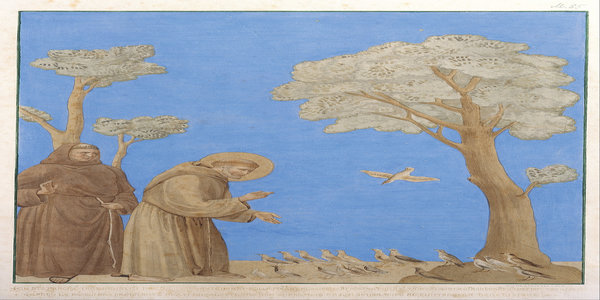
The encyclical opens with where the title of the encyclical came from: St. Francis’s Canticle of the Sun. He refers Earth as a sister, which makes sense because ontologically, we are related to the Earth by the fact that both the Earth and us are created by us. He also reminds us that we are created from the Earth and we depend on her to sustain ourselves.
Paragraphs 3-6 cite his predecessors’ viewpoints on the importance of taking care of the Earth. He starts with Pope Saint John XXIII and ends with Benedict, showing that this issue isn’t just a hot-button trend, but something that previous popes have brought up before. The ones that stand out the most to me are, of course, the paragraphs where he refers to St. John Paul II and Benedict XVI.
Standout quotes from Paragraph 5:
The destruction of the human environment is extremely serious, not only because God has entrusted the world to us men and women, but because human life itself is a gift which must be defended from various forms of debasement.” “Authentic human development has a moral character. It presumes full respect for the human person, but it must also be concerned for the world around us and ‘take into account the nature of each being and of its mutual connection to an ordered system.’
Being pro-environment is being pro-life.
Standout quote from Paragraph 6:
Pope Benedict asked us to recognize that the natural environment has been gravely damaged by our irresponsible behavior. The social environment has also suffered damage. Both are ultimately due to the same evil: the notion that there are no indisputable truths to guide our lives, and hence human freedom is limitless. We have forgotten that “man is not only a freedom which he creates for himself. Man does not create himself. He is spirit and will, but also nature.
Have I ever mentioned how I hate existentialism?
Paragraphs 7-9 emphasize the universality of this issue by citing Patriarch Bartholomew’s views on the issue. The Patriarch’s opinions support Francis’s views on the connection between the fallen state of humanity and the fallen state of the world as a whole.
Paragraphs 10-12 brings up Pope Francis’s namesake, St. Francis of Assisi, and how exactly the saint inspired this encyclical. His love for nature isn’t “naive romanticism” or flower child delusions, but comes out of a genuine awe and wonder. And the lifestyle St. Francis chose to lead wasn’t done for show, but from “a refusal to turn reality into an object simply to be used and controlled.” (Again, take that, existentialism!) I also liked that Pope Francis brings up Scripture a few times in this introduction.
The last four paragraphs of the introduction focus on Pope Francis’s appeal. He knows that the world is not beyond saving and he knows that “young people demand change.” He calls for a new dialogue about how to make the world better and for cooperation. He also says that there won’t be any easy answers to the questions that my friend asked me, but layers.
I look forward to continuing my commentary, but before I do, I have some snarking that I’ve been saving since last weekend.
Dear pundits and politicians, I really hope that you actually read this thing and aren’t just citing the party line script. I don’t care if you’re liberal or conservative, but the fact of the matter is that this encyclical is challenging you. So if you’re gonna go on your cable news program and talk about how you know more about economics and the environment than a man who actually lived in a country that had constant economic struggles and studied about the environment as part of his science degree, then do us all a favor and keep your mouth shut. Your logic is not compatible with our earth logic.
Previous Post

June 18, 2015
In The Body of Christ, We Are Never Alone
Next Post

June 22, 2015 Things Adults Can Learn from Vacation Bible School
Browse Our Archives
Select a Category A Night at the Movies Apologetics Asperger's Syndrome autism Being Catholic Books Buffy the Vampire Slayer Faith Fandoms Heart of Mary Women's Fellowship Interviews Lent Music Personal Life Poetry Prayer Radiance and Grace Reflections Relationships Religion Saints Seven Quick Takes Social Media Taylor Swift Television The Soapbox True Love Tuesday Uncategorized Women of Christ Wednesday writing Young Adult Issues
Select a Month February 2017 January 2017 December 2016 October 2016 September 2016 August 2016 July 2016 June 2016 May 2016 April 2016 March 2016 February 2016 January 2016 December 2015 November 2015 October 2015 September 2015 August 2015 July 2015 June 2015 May 2015 April 2015 March 2015 February 2015 January 2015 December 2014 November 2014 October 2014 September 2014 August 2014 July 2014 June 2014 May 2014 April 2014 March 2014 February 2014 January 2014 December 2013
Follow Us!
TAKE THE
Religious Wisdom Quiz
Which letter contains a hymn about Christ emptying Himself and being exalted?
Select your answer to see how you score.
Romans Ephesians Titus Philippians
Related posts from Monique Ocampo Writes


Welcome to Earth: A Supergirl Recap

In Defense of the "Strong Independent Woman"

TRENDING AT PATHEOS Catholic

Creation, Preservation, and Teleology in Catholic Theology
As I write this, it is very early Monday morning. Like millions...

The Parable Of The Sower And The Word...
One of Christ’s most famous parables is that of the sower who...

Rejecting Doom: Christian Hope And Human Action
Christianity is a religion of hope. We are to have hope and...

Why I Choose the Eucharist Over the Sermon
Choose the Eucharist, Not the Sermon What are we supposed to get...

5 Design Elements Found in Spiritually Rooted Homes
Putting Spirituality Into Home Decor Our homes are more than our living...

Credo: A Story of God Told with the...
About 10 years ago, I began to imagine a personal "Credo" that...
view all Catholic blogs
Ad-Free & Subscriber Log-In Subscription Support
- About Us
- 2026 Calendar
- Videos
- Podcasts
- Library of World Religions
- Faith In Media Tracker
- Advertise With Us
- Write for Us
- Privacy Policy
- Terms of Service
- Do Not Sell My Data
- Contact Us
- Radiant Digital
- Manage Newsletter Subscriptions
- Unsubscribe From Notifications
- Sitemap
Copyright 2008-2026, Patheos. All rights reserved.
Subscription Support Ad-Free & Subscriber Log-In
Follow Patheos