
BuddhistCatholicContemplativeEvangelicalGeneral ChristianHinduJewishLatter-day SaintMuslimNew VisionsProgressive Christian
Beliefs
- Buddhist
- Catholic
- Contemplative
- Evangelical
- General Christian
- Hindu
- Jewish
- Latter-day Saint
- More Voices
- Muslim
- New Visions
- Pagan
- Progressive Christian
Topics
- Religion News
- Food and Religion
- Sports and Religion
- Religious Art
- Religious Music and Entertainment
- Religious Events
- History and Religion
- Style and Religion
- Politics and Religion
- Women in Religion
- Recreation Outdoors and Religion
- Business Finance and Religion
- Careers Workplace and Religion
- Education and Religion
- Family Parenting and Religion
- Health Fitness and Religion
- Home and Religion
- Relationships and Religion
- Technology and Religion
- Travel and Religion
Columnists
- Buddhist Columnists
- Business Finance and Religion Columnists
- Careers Workplace and Religion Columnists
- Catholic Columnists
- Contemplative Columnists
- Education and Religion Columnists
- Evangelists Columnists
- Family Parenting and Religion Columnists
- General Christian Columnists
- Health Fitness and Religion Columnists
- Hindu Columnists
- History and Religion Columnists
- Home and Religion Columnists
- Jewish Columnists
- More Voices Columnists
- Latter Day Columnists
- Muslim Columnists
- New Visions Columnists
- Nonreligious Columnists
- Pagan Columnists
- Politics and Religion Columnists
- Progressive Columnists
- Recreation Outdoors and Religion Columnists
- Relationships and Religion Columnists
- Religion News Columnists
- Religious Art Columnists
- Religious Events Columnists
- Religious Music and Entertainment Columnists
- Sports and Religion Columnists
- Style and Religion Columnists
- Technology and Religion Columnists
- Travel and Religion Columnists
- Women in Religion Columnists
Resource Library
- 2026 Calendar
- Library of World Religions
- The 100 Most Holy Places on Earth
- Patheos Answers
- Podcasts
- Videos
- Faith Leaders Database
- Anglican Episcopalian
- Bahai
- Baptist
- Buddhism
- Christianity
- Confucianism
- Eastern Orthodoxy
- Hinduism
- Holiness and Pentecostal
- ISKCON
- Islam
- Judaism
- Lutheran
- Methodist
- The Church of Jesus Christ of Latter-day Saints
- New Age
- Paganism
- Presbytarian and Reformed
- Protestantism
- Religion Behind the Scenes
- Roman Catholic
- Scientology
- Shia Islam
- Sikhism
- Sufism
- Sunni Islam
- Taoism
- Zen
- See all religions
Research Tools
 Ad-Free & Subscriber Log-In Subscription Support
Ad-Free & Subscriber Log-In Subscription Support
Follow Patheos 

- Trending:
- Forgiveness
- |
- Marriage
- |
- Consciousness
- |
- Death Penalty
- |
- Election
- |
- Halloween
 Monique Ocampo Writes
- Home
- Catholic
- Women of Christ Wednesday: Leah Libresco
Women of Christ Wednesday: Leah Libresco
Last updated on: June 3, 2015 at 12:31 pm by Monique Ocampo
Women of Christ Wednesday: Leah Libresco 2015-06-03T12:31:23-05:00 Monique Ocampo
Patheos Explore the world's faith through different perspectives on religion and spirituality! Patheos has the views of the prevalent religions and spiritualities of the world.
![DSC_2863_sm-1[1]](https://wp-media.patheos.com/blogs/sites/518/2015/06/DSC_2863_sm-11.jpg)
Leah Libresco grew up as an atheist in New York. When she went to college, she picked fights with the most interesting wrong people that she met, who happened to be the campus Catholics. After a long series of coffees, late night conversations, and book swaps, she would up changing her mind and leaving her deontological beliefs behind to be recieved into the Catholic Church in 2012. She blogs about religion at Unequally Yoked and her first book, Arriving at Amen: Seven Catholic Prayers that Even I Can Offer explains how she learned to pray to God, instead of just argue about Him.
When I was browsing around the Patheos site in my college days, I used to see Leah Libresco on the atheist channel. When I saw her blog on the Patheos channel a few years later, I was like “Oh, she converted. Good for her.”
She delves a lot more about what life is like for her as a Catholic in her book Arriving at Amen. I’ll be posting a review on that later this week. For now, I wanted to ask Leah some questions relating to her book and about apologetics in general.
1) Where did the inspiration for Arriving at Amen come from?
Becoming Catholic wasn’t as simple as just changing my mind about God. I needed to learn how to have a spiritual life at all, and I couldn’t avoid prayers that were hard for me — that would have meant skipping all of them!
I wound up finding my way into prayer by relying a lot on analogies and examples from things I loved in the secular world (so, the repetition of ballroom dance helped tutor me in how to approach the Rosary, and some of what I’d learned about the Sunk Cost Fallacy helped me prepare for Confession). I hope that the book can be helpful both to anyone who is stymied by one of the seven prayer practices I discuss or someone who’s a little more comfortable but would like to see a prayer from a new angle.
2) What do you tell atheists when they ask you why you became Catholic?
Well, when I want to tell the whole argument, it usually takes about three hours and starts “There are three major schools of ethical reasoning: utilitarianism, deontology, and virtue ethics…” I can’t promise the short version is satisfying, but the gist is that the thing I was most certain of was that morality was real (something we discover, not something we construct) and that we were able to percieve it (albeit imperfectly). Holding on to this idea created a lot of confusion about how we wind up having access to a transcendent kind of truth, and, in the end, I was more sure of this than I was that God didn’t exist.
3) How do you balance working in news with apologetics?
Most of the time, there’s no balancing act at all — I don’t write apologetics at work; I cover statistics-heavy facets of the day’s news. The biggest way that my faith impacts my writing is that I try to reflect on the effect my pieces will have on my readers. I try to avoid writing anything that leaves the reader with a feeling of contempt or hatred, even if I’m discussing a tragedy that’s being treated callously. I want to follow the Campsite Rule and leave my reader better than I found them, and not just in terms of new facts discovered!
4) You’re obviously not one who shies against politics and religion. What are some tips for having a good civil debate?
A good debate is one that you and your opponent expect won’t be solved in a single conversation. It’s pretty hard for someone to find out that they’re wrong in a single argument (and it’s prudent to go home and reflect on what you heard before conceding completely). So, in general, you should be playing a long game. That often means I put less of my energy and attention into arguments I can’t stick with (drive by commenters, etc). Starting a fight means starting a relationship — I can only take on so many!
If you’re trying to lay the foundation for future conversations, you need to make it as pleasant as possible for your opponent to fight with you — after all, you want them to invite you over again for a second round. I try to do this by asking a lot of questions about whatever I’m genuinely curious about, making sure I really understand my opponent, rather than trying to box them in our first discussion. I try to be honest about which parts of my argument I think are weaker, so my opponent can trust me to be truthful and so that it’s clear it’s worth their time to ask questions of me.
5) With the recent news about the decline in Christianity, what are some reasons for staying Catholic?
I think there’s really only one — because I think it’s true. It would be silly to stay Catholic just for community or to not disappoint someone or because you haven’t made up your mind what you’re leaving for. Catholicism shapes my life in a way I wouldn’t want it to if I didn’t think it was rooted in truth.
6) Who are your go-to saints?
My confirmation saint is Augustine. I wanted a saint who had experience with some of my temptations (gnosticism, Manichaeism, and others) who I could turn to in faith that he knew the troubles I was having. I also really love St. Maximilian Kolbe, whose love cast out hatred when he volunteered to die for another prisoner in a concentration camp. I think about St. Catherine of Siena, but mostly in the context of how intimidating I find her, rather than in prayer! And I love the Breastplate of St. Patrick.
7) What advice would you give to young adults who don’t identify with any particular religion, fallen-away Catholics, and those just struggling with their faith in general?
Unfortunately, I don’t have any good advice in general. I think advice in this domain tends to be best when more specific and tailored to the particular person. If someone came to me and said that they were struggling with their faith, I’d wind up asking a lot of questions before I had any ideas on how to be helpful (including “What information or experiences do you think would give you peace on this topic?”). If the person were interested, I might recommend Fr. Thomas Green’s Weeds Among the Wheat, which is a book on Ignatian discernment, but, if I were going to summarize it in a single idea, I’d say this: make choices from a place of consolation, not desolation. If you’re not sure where you belong and feel conflicted/torn/lousy, try to think about what will lead you to a good choice, but also, just take care of yourself and be patient — don’t rush into anything without a feeling of peace and settledness about your choice. If you keep pursuing truth faithfully, that sense of being welcomed will come.
Previous Post

June 2, 2015
It's An Honor To Be Nominated!
Next Post

June 4, 2015 Arriving at Amen: A Review With Prayer Perspectives
Browse Our Archives
Select a Category A Night at the Movies Apologetics Asperger's Syndrome autism Being Catholic Books Buffy the Vampire Slayer Faith Fandoms Heart of Mary Women's Fellowship Interviews Lent Music Personal Life Poetry Prayer Radiance and Grace Reflections Relationships Religion Saints Seven Quick Takes Social Media Taylor Swift Television The Soapbox True Love Tuesday Uncategorized Women of Christ Wednesday writing Young Adult Issues
Select a Month February 2017 January 2017 December 2016 October 2016 September 2016 August 2016 July 2016 June 2016 May 2016 April 2016 March 2016 February 2016 January 2016 December 2015 November 2015 October 2015 September 2015 August 2015 July 2015 June 2015 May 2015 April 2015 March 2015 February 2015 January 2015 December 2014 November 2014 October 2014 September 2014 August 2014 July 2014 June 2014 May 2014 April 2014 March 2014 February 2014 January 2014 December 2013
Follow Us!
TAKE THE
Religious Wisdom Quiz
How many days was Jesus dead before the resurrection?
Select your answer to see how you score.
One Three Seven Ten
Related posts from Monique Ocampo Writes
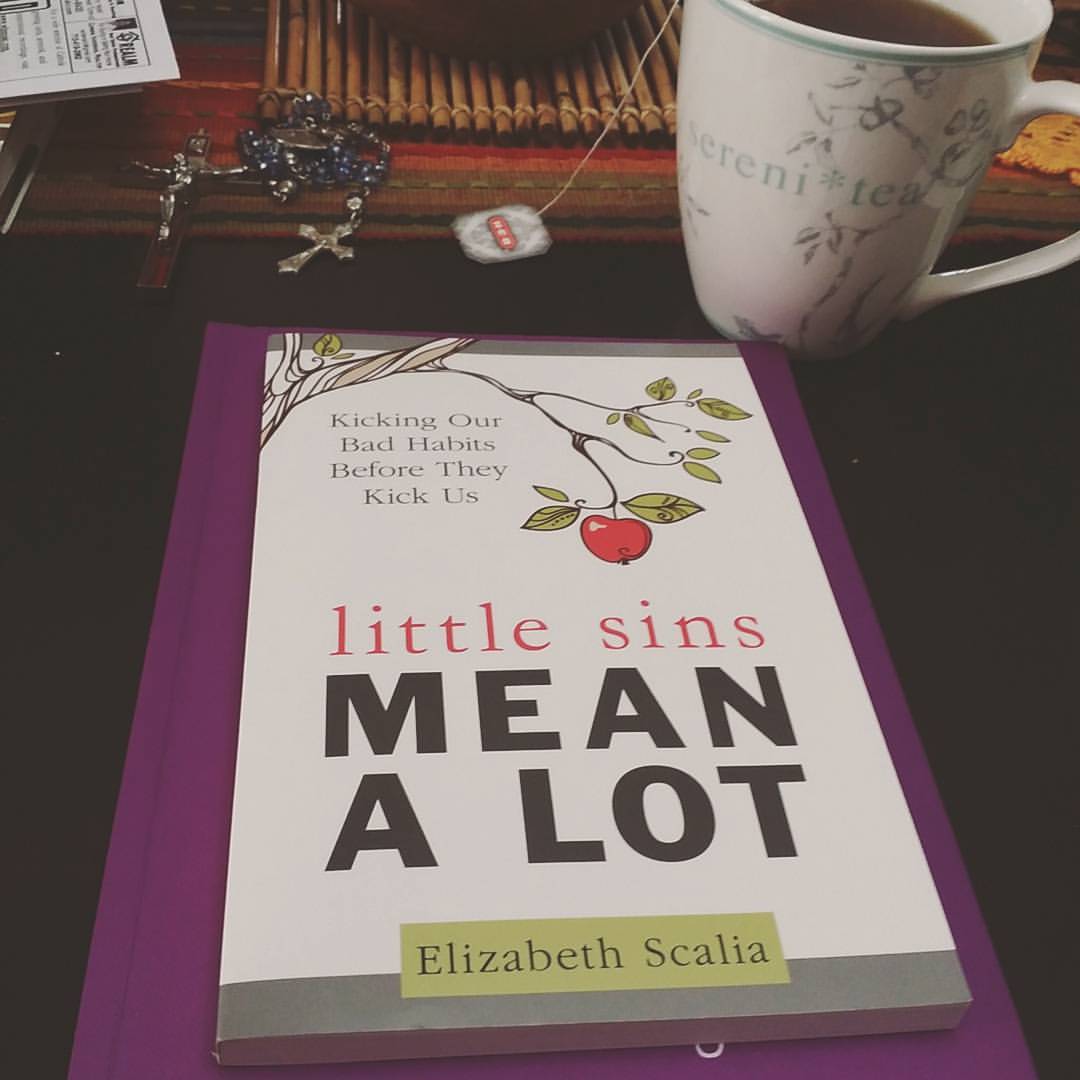
Little Sins Mean A Lot: A Book Review

Saint Gemma Galgani: Women of Christ Wednesday
My Vampiric Spirit, Confession, and Conversion

Women of Christ Wednesday: Mother Teresa, a Saint...
TRENDING AT PATHEOS Catholic

Creation, Preservation, and Teleology in Catholic Theology
As I write this, it is very early Monday morning. Like millions...

The Parable Of The Sower And The Word...
One of Christ’s most famous parables is that of the sower who...

Rejecting Doom: Christian Hope And Human Action
Christianity is a religion of hope. We are to have hope and...

Why I Choose the Eucharist Over the Sermon
Choose the Eucharist, Not the Sermon What are we supposed to get...

5 Design Elements Found in Spiritually Rooted Homes
Putting Spirituality Into Home Decor Our homes are more than our living...

Credo: A Story of God Told with the...
About 10 years ago, I began to imagine a personal "Credo" that...
view all Catholic blogs
Ad-Free & Subscriber Log-In Subscription Support
- About Us
- 2026 Calendar
- Videos
- Podcasts
- Library of World Religions
- Faith In Media Tracker
- Advertise With Us
- Write for Us
- Privacy Policy
- Terms of Service
- Do Not Sell My Data
- Contact Us
- Radiant Digital
- Manage Newsletter Subscriptions
- Unsubscribe From Notifications
- Sitemap
Copyright 2008-2026, Patheos. All rights reserved.
Subscription Support Ad-Free & Subscriber Log-In
Follow Patheos