
BuddhistCatholicContemplativeEvangelicalGeneral ChristianHinduJewishLatter-day SaintMuslimNew VisionsProgressive Christian
Beliefs
- Buddhist
- Catholic
- Contemplative
- Evangelical
- General Christian
- Hindu
- Jewish
- Latter-day Saint
- More Voices
- Muslim
- New Visions
- Pagan
- Progressive Christian
Topics
- Religion News
- Food and Religion
- Sports and Religion
- Religious Art
- Religious Music and Entertainment
- Religious Events
- History and Religion
- Style and Religion
- Politics and Religion
- Women in Religion
- Recreation Outdoors and Religion
- Business Finance and Religion
- Careers Workplace and Religion
- Education and Religion
- Family Parenting and Religion
- Health Fitness and Religion
- Home and Religion
- Relationships and Religion
- Technology and Religion
- Travel and Religion
Columnists
- Buddhist Columnists
- Business Finance and Religion Columnists
- Careers Workplace and Religion Columnists
- Catholic Columnists
- Contemplative Columnists
- Education and Religion Columnists
- Evangelists Columnists
- Family Parenting and Religion Columnists
- General Christian Columnists
- Health Fitness and Religion Columnists
- Hindu Columnists
- History and Religion Columnists
- Home and Religion Columnists
- Jewish Columnists
- More Voices Columnists
- Latter Day Columnists
- Muslim Columnists
- New Visions Columnists
- Nonreligious Columnists
- Pagan Columnists
- Politics and Religion Columnists
- Progressive Columnists
- Recreation Outdoors and Religion Columnists
- Relationships and Religion Columnists
- Religion News Columnists
- Religious Art Columnists
- Religious Events Columnists
- Religious Music and Entertainment Columnists
- Sports and Religion Columnists
- Style and Religion Columnists
- Technology and Religion Columnists
- Travel and Religion Columnists
- Women in Religion Columnists
Resource Library
- 2026 Calendar
- Library of World Religions
- The 100 Most Holy Places on Earth
- Patheos Answers
- Podcasts
- Videos
- Faith Leaders Database
- Anglican Episcopalian
- Bahai
- Baptist
- Buddhism
- Christianity
- Confucianism
- Eastern Orthodoxy
- Hinduism
- Holiness and Pentecostal
- ISKCON
- Islam
- Judaism
- Lutheran
- Methodist
- The Church of Jesus Christ of Latter-day Saints
- New Age
- Paganism
- Presbytarian and Reformed
- Protestantism
- Religion Behind the Scenes
- Roman Catholic
- Scientology
- Shia Islam
- Sikhism
- Sufism
- Sunni Islam
- Taoism
- Zen
- See all religions
Research Tools
 Ad-Free & Subscriber Log-In Subscription Support
Ad-Free & Subscriber Log-In Subscription Support
Follow Patheos 

- Trending:
- Forgiveness
- |
- Marriage
- |
- Consciousness
- |
- Death Penalty
- |
- Election
- |
- Halloween
 Modern Kinship
- Home
- Progressive Christian
- Don’t Let LGBTQ Protections Divide Us
Don’t Let LGBTQ Protections Divide Us
Last updated on: February 2, 2017 at 8:15 am by David and Constantino Khalaf
Don’t Let LGBTQ Protections Divide Us 2017-02-02T08:15:15-07:00 David and Constantino Khalaf
Patheos Explore the world's faith through different perspectives on religion and spirituality! Patheos has the views of the prevalent religions and spiritualities of the world.
After a series of divisive executive orders from the White House that have left progressives feeling rattled and afraid, many were relieved to hear the president’s announcement that he will, for now, keep in tact federal protections for LGBTQ workers. Don’t be fooled. This bright spot in an otherwise dark week is not a glimmer of hope—it’s a wedge meant to further divide the American people by placating select demographics.
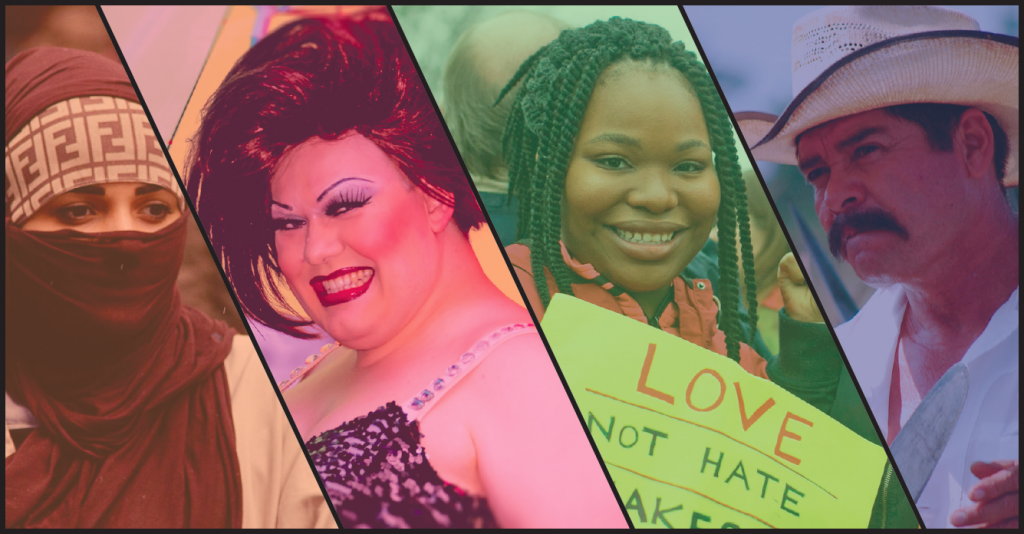
Rumors spread early in the week that President Trump would rescind President Obama’s directive prohibiting discrimination based on sexual orientation and gender identity in the federal workforce and by federal contractors. When Trump himself dispelled the rumor and said he wouldn’t touch the protections for now, it was a comforting reversal of events for the LGBTQ community. Of course, “for now” doesn’t mean forever. For the time being, the declaration is significant because the federal government contracts with 24,000 companies that together employ about 28 million workers. That’s about twenty percent of the U.S. workforce.
Rescinding President Obama’s directive would certainly satisfy the president’s base, especially the religious conservatives who back him. So why would Trump stay his own hand when he has been otherwise so bold? The president and his inner circle have never presented themselves as particularly interested in LGBTQ issues one way or the other. In fact, Milo Yiannopoulos, a senior editor at Breitbart and a fervent supporter of Trump and the alt-right, is unabashedly gay. Issues around LGB protections appear to be a low priority, although many are still pushing for discriminatory laws against trans people. But even if Vice President Mike Pence has a strong anti-LGBTQ agenda, he doesn’t appear to have much sway with the innermost circle that is steering the ship.
We wonder if preserving Obama’s protections has a more nefarious objective. The LGBTQ community has been a source of well-funded, well-organized activism for years. By placating LGBTQ activists, it gives them incentive to sit on the sidelines, to take a breather while the administration goes after Mexicans, Muslims, women, and the environment. But the moment we fail to stand up for others who are hurting is the moment we lose. If your cause is only self-serving, then your cause is you. But if you truly care for others you see suffering and struggling, then your cause transcends self. And it also transcends religion, race, nationality and, yes, party line.
The preservation of LGBTQ protections may not be the only divisive tactic by the administration. Historian Heather Richardson has called the executive order concerning immigration and refugees a “shock event,” an action meant to cause anger and chaos, and ultimately meant to sow division along partisan lines. The only way to deflect a shock event, she writes, is to refuse to allow it to divide us as Americans. As a critical first step, we must stand up for other populations we see being marginalized—with our voices, our petitions, and our votes. But that’s only the start. We must also engage the communities with which we disagree rather than vilify them. Let us quell our righteous ridicule for pro-Trump constituencies and instead save our discontent for those creating policy.
Those of us who are LGBTQ Christians find ourselves in a unique position to bridge the gap between the most divided sectors of the country. Long before the November election, David wrote about the idea of relational activism, the concept of changing hearts and minds by engaging, with kindness and empathy, those in our own lives who oppose us. This matters now more than ever. Let us not demonize those who disagree with us; that merely plays into the hands of those whose intention it is to divide us. Let us instead attempt to understand the motives behind people’s beliefs, however objectionable we may find them. We can acknowledge the fear for personal safety that prompts people to support outlandish immigration laws. We can recognize the fear of being unable to support one’s family that causes people to rally for insane border walls and destructively lax environmental laws. We can identify the fear of losing what is comfortable and familiar that encourages people to back anti-LGBTQ legislation. The resulting actions may be horrific, but the fears are all too human. They are all, too, human.
Let us never forget we are all made in God’s image. As Christians, we have a responsibility to speak out for the disenfranchised and the persecuted, but it is equally our responsibility to remember the humanity of those we oppose. If we are to look beyond our own interests, it needs to include not only those we agree with, but those we vehemently oppose. We are all Americans. Let us not be divided, or the Divider-in-Chief wins.
Like our Facebook page and follow us on Twitter for more.
Photo illustration by David Khalaf, using images from Flickr Creative Commons from Chris Beckett, Tjook, ResistFromDay1, and Celso Flores.
Previous Post

January 27, 2017
What Trump's Orders Mean For LGBTQ Refugees
Next Post
February 4, 2017 When You Can't Avoid Politics
Browse Our Archives
Select a Category Academia Church Dating Faith Family LGBT LGBTQ Marriage Politics Relationship Relationship Advice Relationships Uncategorized
Select a Month January 2018 October 2017 August 2017 July 2017 June 2017 April 2017 March 2017 February 2017 January 2017 December 2016 November 2016 October 2016
Follow Us!
TAKE THE
Religious Wisdom Quiz
By questioning Moses' authority this person became leperous?
Select your answer to see how you score.
Ithamar Miriam Aaron Caleb
Related posts from Modern Kinship
The Gay Christian Network Becomes Q Christian Fellowship
The Dehumanization of People With HIV
A Clenched Fist When We Need Open Hands

Dear Eugene Peterson, We Will Read Your Books
TRENDING AT PATHEOS Progressive Christian

What Being a Modern-Day Apostle Means to Me
In my last column, I discussed the ins and outs of modern-day...

Did Ancient China Once Worship the God of...
Across human history, a common thread weaves through the origins of the...

Love Your Neighbor – Including Earth-Kin: Lev. 19,...
God’s command to love your neighbor means acting in an ethical and...

Lead a Church Study of “Jesus and Lao...
Guest writer Jack Thomas (The Irreverent Reverend) reflects on leading his church...

Pastoral Wisdom for Responding to Sermon Pushback
Getting sermon pushback on your social justice sermon? Learn practical, Proverbs-based strategies...

Principles for Understanding the Apostolic Ministry Today
Whenever people discover that my formal ministry title is "apostle," as in...
view all Progressive Christian blogs
Ad-Free & Subscriber Log-In Subscription Support
- About Us
- 2026 Calendar
- Videos
- Podcasts
- Library of World Religions
- Faith In Media Tracker
- Advertise With Us
- Write for Us
- Privacy Policy
- Terms of Service
- Do Not Sell My Data
- Contact Us
- Radiant Digital
- Manage Newsletter Subscriptions
- Unsubscribe From Notifications
- Sitemap
Copyright 2008-2026, Patheos. All rights reserved.
Subscription Support Ad-Free & Subscriber Log-In
Follow Patheos