
BuddhistCatholicContemplativeEvangelicalGeneral ChristianHinduJewishLatter-day SaintMuslimNew VisionsProgressive Christian
Beliefs
- Buddhist
- Catholic
- Contemplative
- Evangelical
- General Christian
- Hindu
- Jewish
- Latter-day Saint
- More Voices
- Muslim
- New Visions
- Pagan
- Progressive Christian
Topics
- Religion News
- Food and Religion
- Sports and Religion
- Religious Art
- Religious Music and Entertainment
- Religious Events
- History and Religion
- Style and Religion
- Politics and Religion
- Women in Religion
- Recreation Outdoors and Religion
- Business Finance and Religion
- Careers Workplace and Religion
- Education and Religion
- Family Parenting and Religion
- Health Fitness and Religion
- Home and Religion
- Relationships and Religion
- Technology and Religion
- Travel and Religion
Columnists
- Buddhist Columnists
- Business Finance and Religion Columnists
- Careers Workplace and Religion Columnists
- Catholic Columnists
- Contemplative Columnists
- Education and Religion Columnists
- Evangelists Columnists
- Family Parenting and Religion Columnists
- General Christian Columnists
- Health Fitness and Religion Columnists
- Hindu Columnists
- History and Religion Columnists
- Home and Religion Columnists
- Jewish Columnists
- More Voices Columnists
- Latter Day Columnists
- Muslim Columnists
- New Visions Columnists
- Nonreligious Columnists
- Pagan Columnists
- Politics and Religion Columnists
- Progressive Columnists
- Recreation Outdoors and Religion Columnists
- Relationships and Religion Columnists
- Religion News Columnists
- Religious Art Columnists
- Religious Events Columnists
- Religious Music and Entertainment Columnists
- Sports and Religion Columnists
- Style and Religion Columnists
- Technology and Religion Columnists
- Travel and Religion Columnists
- Women in Religion Columnists
Resource Library
- 2026 Calendar
- Library of World Religions
- The 100 Most Holy Places on Earth
- Patheos Answers
- Podcasts
- Videos
- Faith Leaders Database
- Anglican Episcopalian
- Bahai
- Baptist
- Buddhism
- Christianity
- Confucianism
- Eastern Orthodoxy
- Hinduism
- Holiness and Pentecostal
- ISKCON
- Islam
- Judaism
- Lutheran
- Methodist
- The Church of Jesus Christ of Latter-day Saints
- New Age
- Paganism
- Presbytarian and Reformed
- Protestantism
- Religion Behind the Scenes
- Roman Catholic
- Scientology
- Shia Islam
- Sikhism
- Sufism
- Sunni Islam
- Taoism
- Zen
- See all religions
Research Tools
 Ad-Free & Subscriber Log-In Subscription Support
Ad-Free & Subscriber Log-In Subscription Support
Follow Patheos 

- Trending:
- Forgiveness
- |
- Marriage
- |
- Consciousness
- |
- Death Penalty
- |
- Election
- |
- Halloween
 Muslimah Media Watch
- Home
- Muslim
- Religion News
- #PrayforParis, Muslim Women and Third World Violence
#PrayforParis, Muslim Women and Third World Violence
Last updated on: November 26, 2015 at 9:23 am by eren
#PrayforParis, Muslim Women and Third World Violence 2015-11-26T09:23:20-04:00 eren
Patheos Explore the world's faith through different perspectives on religion and spirituality! Patheos has the views of the prevalent religions and spiritualities of the world.
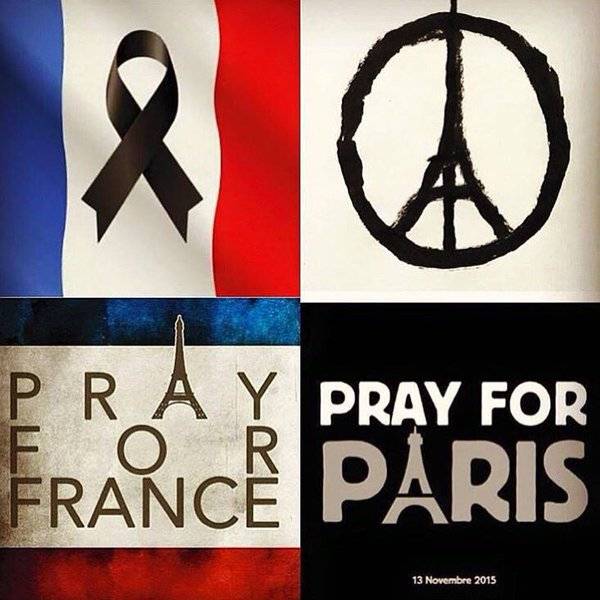
Upon learning about the Paris attacks and the #PrayforParis hashtag that emerged, I felt many things – but I was not shocked. Violence does not shock me. As a woman of colour and as an immigrant, it is part of my surroundings.
I have become desensitized to violence. If you are like me and grew up in a Third World country that has experienced violence during your lifetime, chances are you understand.
Growing up in Latin America in the 90’s in 2000’s I witnessed hundreds of missing and murdered women in northern Mexico, the rising of the Zapatist Army and the violence targeting Indigenous communities by the Mexican government, the Acteal Massacre, the Guatemalan genocide, the violence in Colombia, the numerous terrorist attacks in Peru and the following brutality of the Fujimori regime, and many other so-called “low intensity conflicts,” including police brutality against black communities in Brazil. I also vividly remember the occupations of Iraq and Afghanistan and the multiple attacks against Palestine. All of these have had visible and horrible effects on women, particularly because rape and torture as weapons of war have been common.
Since moving to Canada, I have personally experienced racism, stereotyping and Islamophobia after my conversion to Islam. What is more, I have gotten to interact with women who have been particularly marginalized in a country built on settler colonialism. I have heard the voices of the families of missing and murdered aboriginal women. I have heard the stories of immigrant women of colour who face barriers to accessing services, experience racism and are simply not welcome in the country. And I have seen Islamophobia not only in the streets but at the highest levels of government and the political sphere.
So, I am desensitized. Violence does not surprise me. I have come to accept that it is part of life, my life as an immigrant woman of colour and as a Muslim.
In the wake of the Paris attacks, I learned about the attackers and those they killed, and I learned Syria would continue to be bombed, now by France.
But I couldn’t separate that violence from what is too often dismissed as the violence suffered by the inhabitants of the “third world”, and those marginalized in the West. These are just some of the experiences of violence that have been important and relevant to me:
- Mexico has 43 missing students and 15 currently arrested at the hands of the Mexican government. There are also thousands of missing and murdered women as a result of the rampant violence and more than 150,000 innocent killed in the so-called War on Drugs.
- Canada has thousands of missing and murdered aboriginal women, dozens of targeted Muslim women (some examples here, here and here) and a mosque was just set on fire in Peterborough, Ontario.
- The U.S. has also a rampant issue of violence against Indigenous women and transgender Latina women, not to mention high levels of Islamophobia that have tangible effects in the lives of Muslim women.
- We all followed #bringbackourgirls only to later forget about the women and girls affected and remain silent on 2000 lives lost to Boko Haram.
- Kenya lost 147 students last April to an Al-Shabaab attack and dozens more since then.
- Lebanon lost 40 civilians in the last ISIL attack not to mention the spill-over effects of the Syrian conflict and the refugee crisis.
- A suicide bomber recently killed 19 people at a funeral, but for the past few years Iraq has born the burden of extremist violence in addition to an occupation that left more than 1 million dead.
And this list does not even begin to cover the rampant violence that the Third World and people of colour experience on a daily basis.
***
All of this however, does not mean that I cannot empathize. I felt deeply concerned about my fellow writers and friends who have family and friends in Paris. Fear and worry are something we experienced together as we also silently prepared for the wave of Islamophobia, across the Western world, that we know will follow.
We were not the only ones thinking about Paris. Many Muslims reacted by engaging with the #IamAMuslim hashtag and condemned ISIL. Canadian Fariha Naqvi-Mohamed explained why ISIL does not represent Muslims, while Hasnaa Mokhtar described why she will “#PrayforParis but won’t apologize.” However, I kept feeling uncomfortable.
Why wasn’t the media talking about Lebanon or Iraq?
Not only did Facebook create a Paris profile flag and a safety feature for those in Paris (a critique is available here), actively neglecting the situations in Lebanon and Iraq, but Twitter was flooded with messages about Paris and prayers for Paris and solidarity for Paris. Even among Muslims much of the reactions focused on the attacks against the western country.
Why?
Chris Graham writes about the “selective outrage” that followed the attacks against these three countries, making a case to why people should identify with all the victims of terrorist attacks. Something that he mentions in passing is, however, essential to the reactions around the world. The white-Western standard prevails.
Even as Muslims, and often as people of colour, we feel we owe the West an explanation whether it is in the form of solidarity, apologies, prayers, etc. I see angry messages from Muslims and people of colour floating around about why we should care about Lebanon and Iraq, but I have yet to see a collective effort from Western Muslims to apologize or express solidarity to the victims and survivors of the attacks in Beirut and Baghdad.
Unfortunately, this is not a rare attitude and it goes beyond Muslim communities. Mexican activists involved in the search and advocacy for the 43 missing students, which I have been personally involved with, were outraged with the #PrayersforParis hashtag after fighting for over a year for a few drops of media attention and Western solidarity. The hashtag was a reminder, to many of us activists of faith and colour, that our lives are dispensable against the Western standard.
Of course it is right that people express concern and support for France, after all innocent lives were lost and many more will be attacked because of this display of terrorism. Muslims will likely be the first to feel the wrath of the West retaliating in France and across Europe. But we also need to wonder why is it that we, even as people of colour and of faith, continue to prioritize and neglect the struggles of people in the Third world, of Indigenous peoples, of Muslims in non-Western countries and of black peoples everywhere? Why is it that we still rush to explain to the French that this is “not real Islam” or that this is “not our Islam” while leaving everyone else behind?
In the Canadian case, I particularly worry about my fellow Muslim sisters because Muslim women in Canada have consistently faced sexism, racism and Islamophobia. We have seen the attacks against Muslim women across provinces and the targeting of our mosques. However, I think it is important to remind ourselves that these oppressions are part of a broader system that affects other women as well, but in different ways. We cannot continue to consider non-white lives dispensable and we should not continue to normalize violence against people of colour because that is a feature of white supremacy… the same white supremacy that has led many of us to apologize and explain our Islam to France while neglecting to talk the violence affecting the lives of people in the Third World and people of colour in the West.
Previous Post

November 25, 2015
Sisterhood from Struggle
Browse Our Archives
Select a Category Advertisements Art/Theater Books/Magazines Cinema Comics/Cartoons Culture/Society Events Fashion Film Friday Links Merchandise/Commodities MMW Announcements MMW Highlights Music/Radio News Photography Politics Profile Ramadan 2012 Ramadan 2013 Ramadan 2014 Ramadan 2015 Roundtable Satire Social Media Sports Technology/Science Television Uncategorized Video Web
Select a Month November 2015 October 2015 September 2015 August 2015 July 2015 June 2015 May 2015 April 2015 March 2015 January 2015 December 2014 November 2014 October 2014 September 2014 July 2014 June 2014 May 2014 April 2014 March 2014 February 2014 January 2014 December 2013 November 2013 October 2013 September 2013 August 2013 July 2013 June 2013 May 2013 April 2013 March 2013 February 2013 January 2013 December 2012 November 2012 October 2012 September 2012 August 2012 July 2012 June 2012 May 2012 April 2012 March 2012 February 2012 January 2012 December 2011 November 2011 September 2011 August 2011 July 2011 June 2011 May 2011 April 2011 March 2011 February 2011 January 2011 December 2010 November 2010 October 2010 September 2010 August 2010 July 2010 June 2010 May 2010 April 2010 March 2010 February 2010 January 2010 December 2009 November 2009 October 2009 September 2009 August 2009 July 2009 June 2009 May 2009 April 2009 March 2009 February 2009 January 2009 December 2008 November 2008 October 2008 September 2008 August 2008 July 2008 June 2008 May 2008 April 2008 March 2008 February 2008 January 2008 December 2007 November 2007 October 2007 September 2007 August 2007
Follow Us!
TAKE THE
Religious Wisdom Quiz
Who was called by God to leave his home and go to a land God would show him?
Select your answer to see how you score.
Abram Moses Jacob Noah
Related posts from Muslimah Media Watch


Hate Crimes and Mother Tongues

Interview with Comedian Eman El Husseini

TRENDING AT PATHEOS Muslim

25 Years Later: How Much Has Changed for...
As we approach the 25th anniversary of September 11th, I’ve found myself...

Podcast: Third Spaces & The Rise of Yemeni...
In the latest episode of The Artistic Foodies Podcast, hosts Abbas...

HalalFest Picks: Best 60 Halal Spots for Super...
Back in 2016, I came up with a list of 29...

Unity Is America’s Strength — Division Is Its...
by Hidayatullah Ahsan When Valentina Gomez, a Republican candidate for Congress in...

Zohran Mamdani and New York’s Fight Against Islamophobia
This past June, against all odds, Zohran Mamdani won the Democratic primary...

What the Fourth of July Means to a...
As we mark another Fourth of July, millions of Americans will celebrate...
view all Muslim blogs
Ad-Free & Subscriber Log-In Subscription Support
- About Us
- 2026 Calendar
- Videos
- Podcasts
- Library of World Religions
- Faith In Media Tracker
- Advertise With Us
- Write for Us
- Privacy Policy
- Terms of Service
- Do Not Sell My Data
- Contact Us
- Radiant Digital
- Manage Newsletter Subscriptions
- Unsubscribe From Notifications
- Sitemap
Copyright 2008-2026, Patheos. All rights reserved.
Subscription Support Ad-Free & Subscriber Log-In
Follow Patheos