
BuddhistCatholicContemplativeEvangelicalGeneral ChristianHinduJewishLatter-day SaintMuslimNew VisionsProgressive Christian
Beliefs
- Buddhist
- Catholic
- Contemplative
- Evangelical
- General Christian
- Hindu
- Jewish
- Latter-day Saint
- More Voices
- Muslim
- New Visions
- Pagan
- Progressive Christian
Topics
- Religion News
- Food and Religion
- Sports and Religion
- Religious Art
- Religious Music and Entertainment
- Religious Events
- History and Religion
- Style and Religion
- Politics and Religion
- Women in Religion
- Recreation Outdoors and Religion
- Business Finance and Religion
- Careers Workplace and Religion
- Education and Religion
- Family Parenting and Religion
- Health Fitness and Religion
- Home and Religion
- Relationships and Religion
- Technology and Religion
- Travel and Religion
Columnists
- Buddhist Columnists
- Business Finance and Religion Columnists
- Careers Workplace and Religion Columnists
- Catholic Columnists
- Contemplative Columnists
- Education and Religion Columnists
- Evangelists Columnists
- Family Parenting and Religion Columnists
- General Christian Columnists
- Health Fitness and Religion Columnists
- Hindu Columnists
- History and Religion Columnists
- Home and Religion Columnists
- Jewish Columnists
- More Voices Columnists
- Latter Day Columnists
- Muslim Columnists
- New Visions Columnists
- Nonreligious Columnists
- Pagan Columnists
- Politics and Religion Columnists
- Progressive Columnists
- Recreation Outdoors and Religion Columnists
- Relationships and Religion Columnists
- Religion News Columnists
- Religious Art Columnists
- Religious Events Columnists
- Religious Music and Entertainment Columnists
- Sports and Religion Columnists
- Style and Religion Columnists
- Technology and Religion Columnists
- Travel and Religion Columnists
- Women in Religion Columnists
Resource Library
- 2026 Calendar
- Library of World Religions
- The 100 Most Holy Places on Earth
- Patheos Answers
- Podcasts
- Videos
- Faith Leaders Database
- Anglican Episcopalian
- Bahai
- Baptist
- Buddhism
- Christianity
- Confucianism
- Eastern Orthodoxy
- Hinduism
- Holiness and Pentecostal
- ISKCON
- Islam
- Judaism
- Lutheran
- Methodist
- The Church of Jesus Christ of Latter-day Saints
- New Age
- Paganism
- Presbytarian and Reformed
- Protestantism
- Religion Behind the Scenes
- Roman Catholic
- Scientology
- Shia Islam
- Sikhism
- Sufism
- Sunni Islam
- Taoism
- Zen
- See all religions
Research Tools
 Ad-Free & Subscriber Log-In Subscription Support
Ad-Free & Subscriber Log-In Subscription Support
Follow Patheos 

- Trending:
- Forgiveness
- |
- Marriage
- |
- Consciousness
- |
- Death Penalty
- |
- Election
- |
- Halloween
 Muslimah Media Watch
- Home
- Muslim
- Religion News
- Making Sense of “the Other”: A Review of Without Shame by Katherine Russell
Making Sense of “the Other”: A Review of Without Shame by Katherine Russell
Last updated on: September 28, 2015 at 12:44 pm by eren
Making Sense of “the Other”: A Review of Without Shame by Katherine Russell 2015-09-28T12:44:14-04:00 eren
Patheos Explore the world's faith through different perspectives on religion and spirituality! Patheos has the views of the prevalent religions and spiritualities of the world.
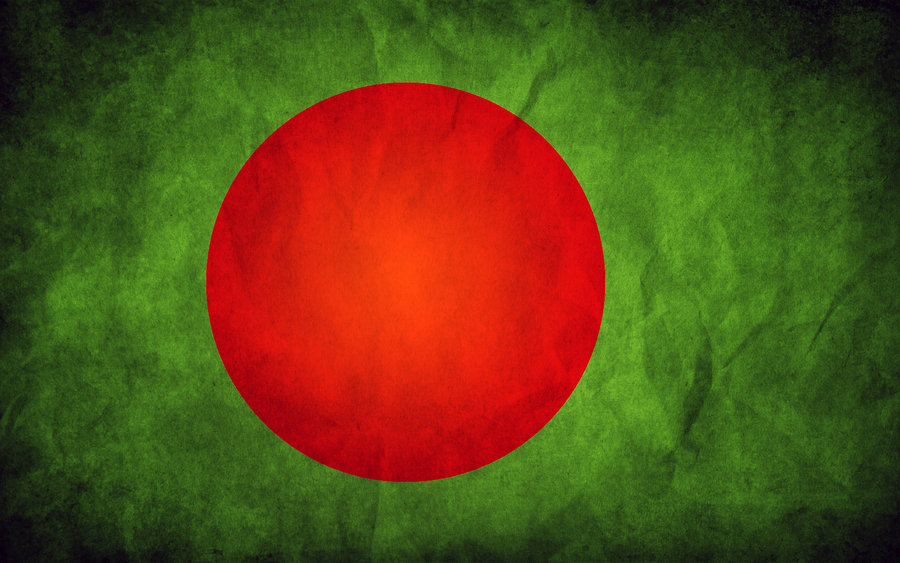
I am not going to lie, I started reading Without Shame with some skepticism – and I have to confess that skepticism stemmed at least in part from the author’s background and previous writing. Katherine Russell is a non-Muslim, white Western writer with a background in poetry and love stories. In 2006 she published a book on stories of people living with cystic fibrosis (endorsed by Celine Dion), but it was only recently that she started writing about “the other.” You can find her reflections on her trip to Turkey, her analysis of food-sharing American vs. Ethiopian style and an interview on her story “Crustacean,” set in Nepal, on her site. Without Shame is her latest attempt to make sense of “the other.”
Of course, just as you shouldn’t judge a book by its cover, you definitely shouldn’t judge it by the author’s background.
Some reviewers have seen the book as a sweet story with a pleasantly surprising ending. Others see some complexity in the themes addressed and a way to understand Islam (whatever that means). For some, this was a book about identity. The author herself, Katherine Russell, sees her book as a way to encourage religious tolerance. Given the varied responses to the book, I think it is important to recognize our own biases and backgrounds as reviewers, so readers can pin point our blind spots. For those who know my writing, you will know that I have a Latin American background, and that I identify as Indigenous and Muslim. I am from “the Third World” a term that, following the thoughts of decolonial authors, means a space and time that have been invented by the West. These days I find myself working extensively with decolonial approaches and critical race theories. I have been writing for years about depictions of Muslim women in media, art and literature, and I would like to think that my analyses have become more complex with the years. It is with this background that I come to Without Shame – like I said, I was unfairly skeptical from the start, but unfortunately the book itself gave me plenty of reason to support my initial reaction.
The novel’s protagonist is Sariyah, a girl who is said to have no shame because she is “disobedient” and does not behave according to her village’s notion of femininity. Sariyah’s life is changed at a young age when, as a child, she jumps from the roof of her house to the river, only to fracture her pelvis. After visits from traditional healers she recovers and is able to walk again, but not without a limp. The rest of her story is marked by her disability and people’s perception of her shamelessness.
The story is set in the late 1960s and 70s, during Bangladesh’s struggle for independence from Pakistan. This colonial history is often mentioned but with little analysis, and although some characters like Penelope, a white Western feminist, allude to some Western imperialist practices, these are never truly explored in depth.
Sariyah eventually starts working as a maid at Martin House, an American compound that brings American volunteers to teach the village people about agriculture, home economics, history, English and hygiene. There, she meets Rodney, a clueless, entitled, privileged (my opinion) teacher, who goes to teach in an attempt to avoid being drafted into the army. Needless to say, they develop a romantic relationship (non-sexual) that does not get fulfilled, because Rodney goes back home.
Even though I think I was supposed to see a story about a strong female character, I saw the story as that of clashing patriarchies. Sariyah’s dad is the stereotype of “brown patriarchy.” He is poor, ignorant, aggressive, and violent. He abides by traditional understandings of Sunni Islam within the context of his village. Rodney on the other hand is the Protestant, secular, Westerner (his race is never mentioned, but he is depicted in the way the white-male-saviour is shown in other books), who comes to save and civilize the village. He thinks that things need to change in Eastern Pakistan and he thinks he knows how change should occur. He wants to bring “development” about.
At some points, the story felt like the eastern version of Pocahontas, you know… the beautiful native informant who is not fully appreciated by her own people, and who falls in love with the white Western saviour that fully sees her for what she is. Sariyah is “discoverable land” and religion is the outlet through which the discovery happens. Rodney questions her choice to wear hijab, her belief in God, her belief in spirits and the alike, only to agree with her views without being fully convinced. Sariyah remains enigmatic yet “conquerable” in some ways. Towards the middle of the book , Rodney describes his feelings for Sariyah like this: “If he were speaking the whole truth, he would have admitted how he found Sariyah attractive and mysterious, dangerously different. He wanted to unfold her, read the secrets of her life history, see what he was missing” (p. 104).
Rodney learns a thing or two, but overall his saviour complex does not drastically change. Besides, even though some learning happens through Sariyah, he has most of his epiphanies with Sajib, Sariyah’s maternal uncle. Sajib is the third archetype of patriarchy. He is the revolutionary; he is well-educated, but religious; traditional in some ways, but respectful of women. Furthermore, he has a vision for Bangladesh and an undying loyalty to his Bengali heritage. In my opinion, Sajib is the most interesting character perhaps because he is the most nuanced.
Sariyah’s role is not really that of a main character, in my view, but that of a “negotiator.” She is the commentary on how Sunni Islam can be blindly violent and patriarchal (as represented by her father), but other “sects” such as the Sufis (as represented by her maternal line) seem to be less so. She is also the archetype of the nation… a familiar trope in novels about the “Third World.” She has the chance to experience the West through Rodney, but at the end, she fulfills the destiny for which Sajib has prepared her, as a revolutionary… a woman without shame.
Despite the fact that the book is extremely easy to read, I sometimes found myself screaming at the pages. In between the frustration about the depictions of “the other” and the whole idea of writing this book as a way to promote tolerance, I had to put it down several times.
This book is written for the privileged. It is written for an audience that does not know the Third World, that has not known war other than from the perspective of the invader/colonizer, that does not know Muslims, that does not know poverty, that isn’t acquainted with anything but second-wave feminism and that is in search for a “short cut” to make sense of the South Asian “other” or the Muslim “other.”
Reading books like this just remind me that white Western privilege is well and alive and that the rest of us continue to be subjects of “discovery,” “development” and of “saving.” Can we get over that now?
Previous Post
September 23, 2015
Eid Mubarak!
Next Post

October 1, 2015 Niqab as an #Elxn42 Issue? Ridiculous
Browse Our Archives
Select a Category Advertisements Art/Theater Books/Magazines Cinema Comics/Cartoons Culture/Society Events Fashion Film Friday Links Merchandise/Commodities MMW Announcements MMW Highlights Music/Radio News Photography Politics Profile Ramadan 2012 Ramadan 2013 Ramadan 2014 Ramadan 2015 Roundtable Satire Social Media Sports Technology/Science Television Uncategorized Video Web
Select a Month November 2015 October 2015 September 2015 August 2015 July 2015 June 2015 May 2015 April 2015 March 2015 January 2015 December 2014 November 2014 October 2014 September 2014 July 2014 June 2014 May 2014 April 2014 March 2014 February 2014 January 2014 December 2013 November 2013 October 2013 September 2013 August 2013 July 2013 June 2013 May 2013 April 2013 March 2013 February 2013 January 2013 December 2012 November 2012 October 2012 September 2012 August 2012 July 2012 June 2012 May 2012 April 2012 March 2012 February 2012 January 2012 December 2011 November 2011 September 2011 August 2011 July 2011 June 2011 May 2011 April 2011 March 2011 February 2011 January 2011 December 2010 November 2010 October 2010 September 2010 August 2010 July 2010 June 2010 May 2010 April 2010 March 2010 February 2010 January 2010 December 2009 November 2009 October 2009 September 2009 August 2009 July 2009 June 2009 May 2009 April 2009 March 2009 February 2009 January 2009 December 2008 November 2008 October 2008 September 2008 August 2008 July 2008 June 2008 May 2008 April 2008 March 2008 February 2008 January 2008 December 2007 November 2007 October 2007 September 2007 August 2007
Follow Us!
TAKE THE
Religious Wisdom Quiz
Who said, "But I tell you, love your enemies and pray for those who persecute you"?
Select your answer to see how you score.
Peter Paul John Jesus
Related posts from Muslimah Media Watch

Book review: Jewels of Allah by Nina Ansary
Bangladeshi Women, Media and the “Helpers of Allah”

Book Review: Faïza Zerouala's Voices Behind the Veil

TRENDING AT PATHEOS Muslim

25 Years Later: How Much Has Changed for...
As we approach the 25th anniversary of September 11th, I’ve found myself...

Podcast: Third Spaces & The Rise of Yemeni...
In the latest episode of The Artistic Foodies Podcast, hosts Abbas...

HalalFest Picks: Best 60 Halal Spots for Super...
Back in 2016, I came up with a list of 29...

Unity Is America’s Strength — Division Is Its...
by Hidayatullah Ahsan When Valentina Gomez, a Republican candidate for Congress in...

Zohran Mamdani and New York’s Fight Against Islamophobia
This past June, against all odds, Zohran Mamdani won the Democratic primary...

What the Fourth of July Means to a...
As we mark another Fourth of July, millions of Americans will celebrate...
view all Muslim blogs
Ad-Free & Subscriber Log-In Subscription Support
- About Us
- 2026 Calendar
- Videos
- Podcasts
- Library of World Religions
- Faith In Media Tracker
- Advertise With Us
- Write for Us
- Privacy Policy
- Terms of Service
- Do Not Sell My Data
- Contact Us
- Radiant Digital
- Manage Newsletter Subscriptions
- Unsubscribe From Notifications
- Sitemap
Copyright 2008-2026, Patheos. All rights reserved.
Subscription Support Ad-Free & Subscriber Log-In
Follow Patheos