
BuddhistCatholicContemplativeEvangelicalGeneral ChristianHinduJewishLatter-day SaintMuslimNew VisionsProgressive Christian
Beliefs
- Buddhist
- Catholic
- Contemplative
- Evangelical
- General Christian
- Hindu
- Jewish
- Latter-day Saint
- More Voices
- Muslim
- New Visions
- Pagan
- Progressive Christian
Topics
- Religion News
- Food and Religion
- Sports and Religion
- Religious Art
- Religious Music and Entertainment
- Religious Events
- History and Religion
- Style and Religion
- Politics and Religion
- Women in Religion
- Recreation Outdoors and Religion
- Business Finance and Religion
- Careers Workplace and Religion
- Education and Religion
- Family Parenting and Religion
- Health Fitness and Religion
- Home and Religion
- Relationships and Religion
- Technology and Religion
- Travel and Religion
Columnists
- Buddhist Columnists
- Business Finance and Religion Columnists
- Careers Workplace and Religion Columnists
- Catholic Columnists
- Contemplative Columnists
- Education and Religion Columnists
- Evangelists Columnists
- Family Parenting and Religion Columnists
- General Christian Columnists
- Health Fitness and Religion Columnists
- Hindu Columnists
- History and Religion Columnists
- Home and Religion Columnists
- Jewish Columnists
- More Voices Columnists
- Latter Day Columnists
- Muslim Columnists
- New Visions Columnists
- Nonreligious Columnists
- Pagan Columnists
- Politics and Religion Columnists
- Progressive Columnists
- Recreation Outdoors and Religion Columnists
- Relationships and Religion Columnists
- Religion News Columnists
- Religious Art Columnists
- Religious Events Columnists
- Religious Music and Entertainment Columnists
- Sports and Religion Columnists
- Style and Religion Columnists
- Technology and Religion Columnists
- Travel and Religion Columnists
- Women in Religion Columnists
Resource Library
- 2026 Calendar
- Library of World Religions
- The 100 Most Holy Places on Earth
- Patheos Answers
- Podcasts
- Videos
- Faith Leaders Database
- Anglican Episcopalian
- Bahai
- Baptist
- Buddhism
- Christianity
- Confucianism
- Eastern Orthodoxy
- Hinduism
- Holiness and Pentecostal
- ISKCON
- Islam
- Judaism
- Lutheran
- Methodist
- The Church of Jesus Christ of Latter-day Saints
- New Age
- Paganism
- Presbytarian and Reformed
- Protestantism
- Religion Behind the Scenes
- Roman Catholic
- Scientology
- Shia Islam
- Sikhism
- Sufism
- Sunni Islam
- Taoism
- Zen
- See all religions
Research Tools
 Ad-Free & Subscriber Log-In Subscription Support
Ad-Free & Subscriber Log-In Subscription Support
Follow Patheos 

- Trending:
- Forgiveness
- |
- Marriage
- |
- Consciousness
- |
- Death Penalty
- |
- Election
- |
- Halloween
 Muslimah Media Watch
- Home
- Muslim
- Religion News
- Death, Grief and Womanhood
Death, Grief and Womanhood
Last updated on: December 16, 2014 at 6:00 am by eren
Death, Grief and Womanhood 2014-12-15T10:44:36-04:00 eren
Patheos Explore the world's faith through different perspectives on religion and spirituality! Patheos has the views of the prevalent religions and spiritualities of the world.
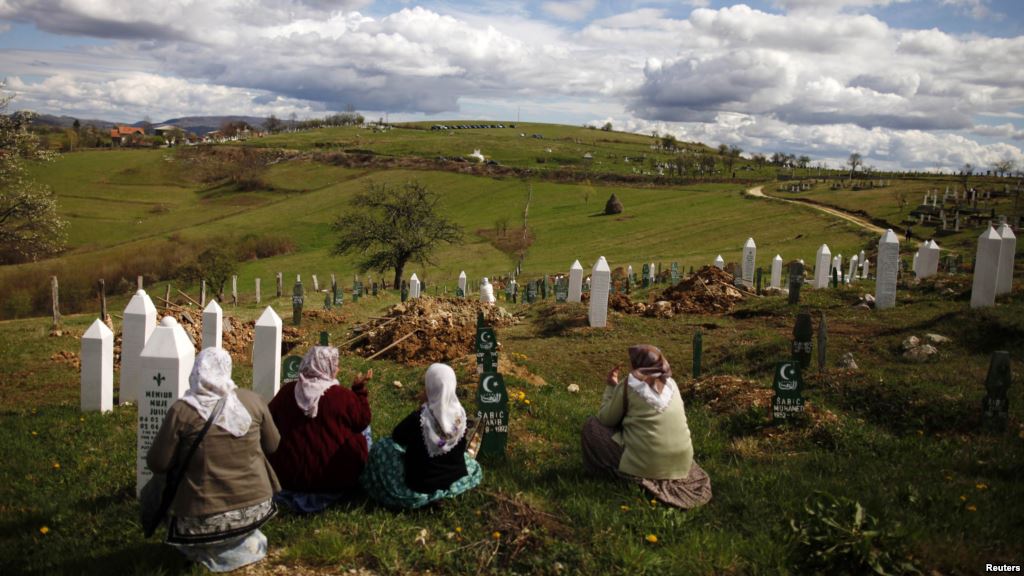
Picture 1: Muslim women in the town of Vlasenica- Via Radio Free Europe Radio Free Liberty
I must admit, I can’t wait until the year is over. I have had a difficult year first dealing with my partner’s passing, and then trying to figure out what follows the grieving process. Right after Saad’s passing, I found that my Muslim community had a rather complex and unexplored relationship with death. Many of my fellow Muslims did not only tell me that I should have gotten over Saad’s death after three days, as some traditions mandate; but some felt so uncomfortable having a young, “single” woman in a grieving state within the community, that they made an effort to look for potential spouses for me three days after his passing… The first imam who suggested it told me, “You have to wait for a little while, but you need to start looking now. There are plenty of brothers looking for young wives.”
In my culture, these reactions are not only unacceptable, but they speak of a community that has neglected to explore death, grief and what their role is.
During this time, I felt compelled to turn to the Internet in search of some kind of community that may be talking about death and grief. But instead I found that numerous sites and “Islamic advice blogs” are preachy in nature, and instead of promoting healing, empathy and community building, they focus on the legalities of grief. For example, we are called to keep our composure, and avoid violent and emotional reactions. The debate on whether or not praying for the deceased is a form of intercession, is often addressed, but at the end, we are told to stay on the safe side and avoid shirk. Likewise, some argue that keeping pictures of the deceased and looking at them is shirk. Memorials, for some Muslims, are out of the question, but disagreements prevail and tensions among religious interpretations are fleshed out.
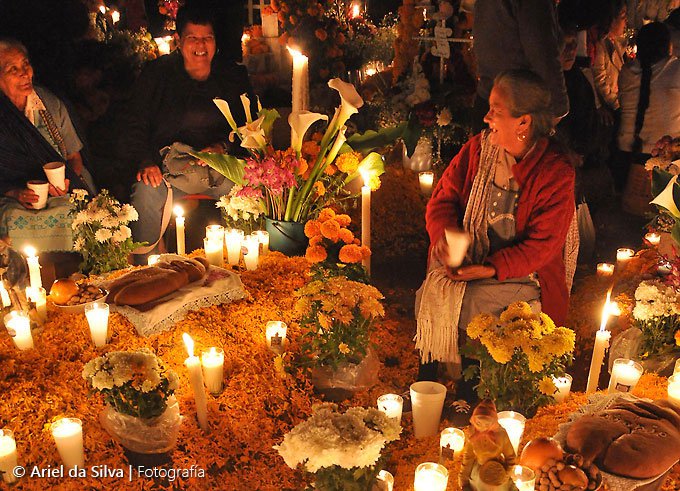
Picture 2: Women celebrating the Day of the Dead in Mexico- Via CLTRA Colectiva
One of the first articles I came across on dealing with death and grief was from the Deen Show (which, I have critiqued before for their approach to “encouraging” women to wear hijab). They dedicate five sections to explaining the importance of suffering as part of being good Muslims. The article concludes:
“When some calamity strikes us in this life, we should remember that God will recompense us, but we must show patience; the ultimate recompense will not even be in this life, but in the next one, and in this, we should take comfort.”
Whereas there may be nothing wrong with the particular interpretation of suffering and looking forward to the afterlife, I wondered, why is it that we fail to address the needs of those who are grieving here and now? In my culture, we assume that the deceased is in a “better” place, and that all the rituals and processes that take place are for those who stay behind. Thus, the emphasis is in facilitating grief and avoiding preachy attitudes that may make it harder for those who have lost someone.
Not surprisingly, there is also gender aspect to it. When looking at how dead, grief and womanhood interact, we are told that rulings are different for women than they are for men according to orthodox and conservative understandings. To start with, we shall remember that a woman is said not to be able to remarry before four months and ten days after her husband’s passing (some even attempt to justify the time frames). A grieving woman is not to wear jewellery or attractive clothing. And if possible, she should not leave the house. The way in which these sites talk about death and grief portray an image that, as a Muslim woman, may make you feel like your life is over because your life was dependent on that of your husband, partner or family member.
Sadly, in some communities this is also the approach. For example, after Saad’s passing I was uninvited from a Somali wedding because, as a grieving woman, I was considered to be “bad luck” for the newlyweds. And whereas the process of exploring what the grieving process is as a Muslim woman led me to write a personal blog post about what four months and ten days look like, I have since then found that my experience is not at all uncommon.
Stories of Muslim women losing husbands and losing connections to the community appear in blogs and sites. But a broader set of posts also show how many Muslim women use writing as a way to explore grief and help others, in similar situations, find their way. Although not always about partners, some stories talk about the loss of children and family members. In Love and Hurt a writer describes wondering what happens after death since the loss of her father. Stories of loss and grief also have a niche in the famous Love Inshallahblog, where some share poems and others share memoirs.
And it is these individual writers that make it all better and more soothing… For instance, in a piece by Sabina Khan-Ibarra, she states about the loss of her child,
“I am not ungrateful for all that I have been given. But I also realize that I am forever altered and cannot pretend that Ibrahim did not exist.”
Such portrayals of humanity among the legalistic language of death and grieve in Muslim communities is what gets many of us out of bed every morning. And it is the only support system that we can find when some Muslim communities refuse to explore more broadly, what their role in supporting grieving Muslims is. Thus, as much as I am disappointed with a number of sites and resources out there that tell me to “be patient and get over it in order to be rewarded,” I am thankful for the stories, and the little figments of Muslim womanhood that are floating around in the Internet. Let’s be honest… if it was not for them… I would not even have the strength to share my own story.
Next Post

December 17, 2014 Erotica by Muslim Women for Muslim Women
Browse Our Archives
Select a Category Advertisements Art/Theater Books/Magazines Cinema Comics/Cartoons Culture/Society Events Fashion Film Friday Links Merchandise/Commodities MMW Announcements MMW Highlights Music/Radio News Photography Politics Profile Ramadan 2012 Ramadan 2013 Ramadan 2014 Ramadan 2015 Roundtable Satire Social Media Sports Technology/Science Television Uncategorized Video Web
Select a Month November 2015 October 2015 September 2015 August 2015 July 2015 June 2015 May 2015 April 2015 March 2015 January 2015 December 2014 November 2014 October 2014 September 2014 July 2014 June 2014 May 2014 April 2014 March 2014 February 2014 January 2014 December 2013 November 2013 October 2013 September 2013 August 2013 July 2013 June 2013 May 2013 April 2013 March 2013 February 2013 January 2013 December 2012 November 2012 October 2012 September 2012 August 2012 July 2012 June 2012 May 2012 April 2012 March 2012 February 2012 January 2012 December 2011 November 2011 September 2011 August 2011 July 2011 June 2011 May 2011 April 2011 March 2011 February 2011 January 2011 December 2010 November 2010 October 2010 September 2010 August 2010 July 2010 June 2010 May 2010 April 2010 March 2010 February 2010 January 2010 December 2009 November 2009 October 2009 September 2009 August 2009 July 2009 June 2009 May 2009 April 2009 March 2009 February 2009 January 2009 December 2008 November 2008 October 2008 September 2008 August 2008 July 2008 June 2008 May 2008 April 2008 March 2008 February 2008 January 2008 December 2007 November 2007 October 2007 September 2007 August 2007
Follow Us!
TAKE THE
Religious Wisdom Quiz
What does "Apocalypse" mean in Greek?
Select your answer to see how you score.
Judgment Revelation Victory Destruction
Related posts from Muslimah Media Watch

#PrayforParis, Muslim Women and Third World Violence


Hate Crimes and Mother Tongues

Interview with Comedian Eman El Husseini
TRENDING AT PATHEOS Muslim

25 Years Later: How Much Has Changed for...
As we approach the 25th anniversary of September 11th, I’ve found myself...

Podcast: Third Spaces & The Rise of Yemeni...
In the latest episode of The Artistic Foodies Podcast, hosts Abbas...

HalalFest Picks: Best 60 Halal Spots for Super...
Back in 2016, I came up with a list of 29...

Unity Is America’s Strength — Division Is Its...
by Hidayatullah Ahsan When Valentina Gomez, a Republican candidate for Congress in...

Zohran Mamdani and New York’s Fight Against Islamophobia
This past June, against all odds, Zohran Mamdani won the Democratic primary...

What the Fourth of July Means to a...
As we mark another Fourth of July, millions of Americans will celebrate...
view all Muslim blogs
Ad-Free & Subscriber Log-In Subscription Support
- About Us
- 2026 Calendar
- Videos
- Podcasts
- Library of World Religions
- Faith In Media Tracker
- Advertise With Us
- Write for Us
- Privacy Policy
- Terms of Service
- Do Not Sell My Data
- Contact Us
- Radiant Digital
- Manage Newsletter Subscriptions
- Unsubscribe From Notifications
- Sitemap
Copyright 2008-2026, Patheos. All rights reserved.
Subscription Support Ad-Free & Subscriber Log-In
Follow Patheos