
BuddhistCatholicContemplativeEvangelicalGeneral ChristianHinduJewishLatter-day SaintMuslimNew VisionsProgressive Christian
Beliefs
- Buddhist
- Catholic
- Contemplative
- Evangelical
- General Christian
- Hindu
- Jewish
- Latter-day Saint
- More Voices
- Muslim
- New Visions
- Pagan
- Progressive Christian
Topics
- Religion News
- Food and Religion
- Sports and Religion
- Religious Art
- Religious Music and Entertainment
- Religious Events
- History and Religion
- Style and Religion
- Politics and Religion
- Women in Religion
- Recreation Outdoors and Religion
- Business Finance and Religion
- Careers Workplace and Religion
- Education and Religion
- Family Parenting and Religion
- Health Fitness and Religion
- Home and Religion
- Relationships and Religion
- Technology and Religion
- Travel and Religion
Columnists
- Buddhist Columnists
- Business Finance and Religion Columnists
- Careers Workplace and Religion Columnists
- Catholic Columnists
- Contemplative Columnists
- Education and Religion Columnists
- Evangelists Columnists
- Family Parenting and Religion Columnists
- General Christian Columnists
- Health Fitness and Religion Columnists
- Hindu Columnists
- History and Religion Columnists
- Home and Religion Columnists
- Jewish Columnists
- More Voices Columnists
- Latter Day Columnists
- Muslim Columnists
- New Visions Columnists
- Nonreligious Columnists
- Pagan Columnists
- Politics and Religion Columnists
- Progressive Columnists
- Recreation Outdoors and Religion Columnists
- Relationships and Religion Columnists
- Religion News Columnists
- Religious Art Columnists
- Religious Events Columnists
- Religious Music and Entertainment Columnists
- Sports and Religion Columnists
- Style and Religion Columnists
- Technology and Religion Columnists
- Travel and Religion Columnists
- Women in Religion Columnists
Resource Library
- 2026 Calendar
- Library of World Religions
- The 100 Most Holy Places on Earth
- Patheos Answers
- Podcasts
- Videos
- Faith Leaders Database
- Anglican Episcopalian
- Bahai
- Baptist
- Buddhism
- Christianity
- Confucianism
- Eastern Orthodoxy
- Hinduism
- Holiness and Pentecostal
- ISKCON
- Islam
- Judaism
- Lutheran
- Methodist
- The Church of Jesus Christ of Latter-day Saints
- New Age
- Paganism
- Presbytarian and Reformed
- Protestantism
- Religion Behind the Scenes
- Roman Catholic
- Scientology
- Shia Islam
- Sikhism
- Sufism
- Sunni Islam
- Taoism
- Zen
- See all religions
Research Tools
 Ad-Free & Subscriber Log-In Subscription Support
Ad-Free & Subscriber Log-In Subscription Support
Follow Patheos 

- Trending:
- Forgiveness
- |
- Marriage
- |
- Consciousness
- |
- Death Penalty
- |
- Election
- |
- Halloween
 Muslimah Media Watch
- Home
- Muslim
- Religion News
- Stability and Sustainability: Interview with Dr Hawa Abdi
Stability and Sustainability: Interview with Dr Hawa Abdi
Last updated on: November 18, 2014 at 6:00 am by syahirah
Stability and Sustainability: Interview with Dr Hawa Abdi 2014-11-16T12:34:40-04:00 syahirah
Patheos Explore the world's faith through different perspectives on religion and spirituality! Patheos has the views of the prevalent religions and spiritualities of the world.
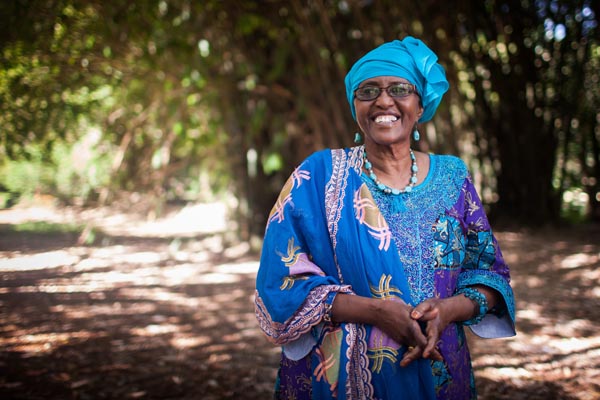
It is a calm and cool afternoon in Nairobi, Kenya, when I catch up with Dr Hawa Abdi over Skype. After working hard in Mogadishu’s difficult circumstances with her two physician daughters Deqo and Amina Mohamed, she sometimes comes to Nairobi to rest and relax. Speaking over a passable internet connection, our conversation is peppered with silences, as our words travel between Kenya and Singapore.
68 year-old Dr Abdi, affectionately known by Somalis as Mama Hawa, is more than Somalia’s first gynaecologist. From 1964 to 1971, Dr Abdi specialised in obstetrics and gynaecology in Kiev, and later came back to work in one of the biggest hospitals in Somalia. It was during this period that she saw to many women from prison, who were handcuffed or chained to the hospital beds as they waited for treatment. This sight spurred her to continue her education in Somalia, this time earning a law degree in 1979.
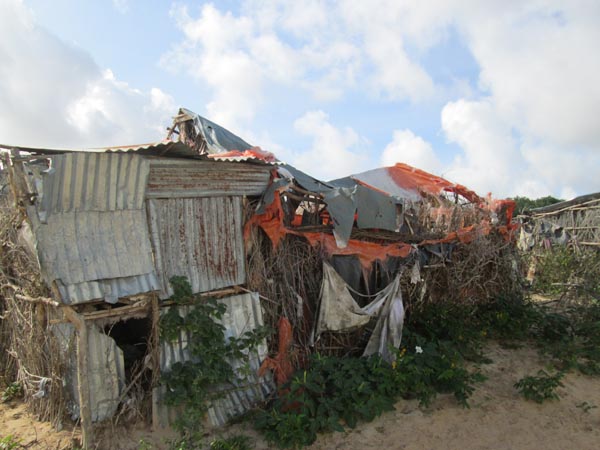
To help provide maternal care to rural women, Dr Abdi started a free rural clinic in 1983 on some family-owned land, which quickly grew into a 400-bed two-storey hospital. When Somalia broke out into civil war in 1991, her hospital started to take in refugees. The surrounding land quickly expanded into a refugee camp that housed 90,000 internally displaced people. This haven however, became the target for several attacks by militants over the last few years.
Today, the camp houses 5,000 internally displaced people in six sections, each with their own committee, water tank and farmland. The camp’s primary school, Waqaf-Dhiblawe, teaches an equal ratio of boys and girls. As of 2012, the hospital has a capacity of 400 beds, maternal mortality rates of 1 per cent, and infant mortality rates of 4.3 per cent, well below national averages.
Why did you choose to study medicine and then law?
I chose medicine because my mother died in a delivery complication when I was still young. I have seen how she was suffering and could not help her. After the death of my mother, I felt such deep pain, which I want to avoid for other people. Many children of my age at that time also had mothers who died from delivery complications. I decided to become a doctor and specialise in obstetrics and gynaecology.
I spent seven years in the [former] Soviet Union until 1971. When I came back I was working in one of biggest hospitals in Somalia at that time and saw many women from jail coming to the hospital. They were chained with some kind of iron to the bed.
Why?
Because they were from prison. The policeman did not want them to escape! And I feel that for these women, I feel that there is no justice. So after I finished my [medical] studies in 1971, I began my law studies from 1972 to 1979.
What does your average day in Mogadishu look like?
There are so many things to do! Now my daughter came to Mogadishu just on Friday, and she was seeing 100 women and children – this is the most vulnerable group. Different people are coming every day, some are coming because they are hungry, some are facing different diseases. You have to talk to them and give them whatever you have.
You give nutrition lessons in your camp. What are these lessons like?
In our country Somalia, and in [many parts of] Africa, children are dying because of malnutrition. We also have many cases of malaria. Economic development cannot avoid [the issue of] children’s food. But we have no possibility to give children the food they need because our country is now 23 years with no government, no jobs, and no stability. Because of the destruction and killing, people have no stability to farm or rear animals.
So our children are dying now, the 18% child mortality rate [for children under 5] is one of the highest in the world. This is mostly due to malnutrition and some curable diseases like malaria and anaemia, some of which are also based in malnutrition.
So even though there are nutrition plans, families cannot afford to feed their children?
[International organisations] give us nutrition lessons, and we try to feed the children. When they come to us, we admit them to the hospital and feed them. Within a week, the child recovers. But you have to send him home because you cannot care for all the children in hospital. Afterwards, he will come back with even worse malnutrition because the family has nothing to give him.
This problem is economic as the society is not developed. Without peace we can do nothing. We cannot grow anything, we cannot educate children, we cannot give nutritious food.
What is your philosophy towards maternal care?
Families need to be economically sufficient. Most of the maternal mortality is due to anaemia. There is also a need to develop healthcare in our country. Not all women have the possibility to reach health centres because of transportation or because they live in faraway rural areas. We need moving doctors – there are some but not enough.
Security and stability is also very important. Sometimes when women are in labour, transportation can be difficult. Sometimes when there is fighting on the roads and no one can use the road, a woman can die because she cannot get help.
I believe the world is one because we are all human beings. All our needs are one.
How do the fishing and agricultural projects in your camp interact with the work of your hospital?
We are fighting poverty, malnutrition, and illiteracy. Fishing is very important to fight protein deficiency. We also grow some maize, beans, vegetables and fruits. We also try to rear some sheep, goats and cows.
In 2013, at least we have a government, even though it is still very weak, but it wants to begin [the ] process of development and not merely relief – we were surviving on relief for 22 years. But we have our farm and our tractors. Now we want to stand on our own two feet and we are searching for investment.
I hope that we can find people who will work with us, people who can invest and help us. Then we will go [ahead] by ourselves. I welcome private investors. We have a large farming area of 400 hectares where we can grow anything. Just before the civil war, we grew bananas and exported them. We have the big Indian ocean for fishing and tourism. If we have investors, we can create so many jobs.
Does religion in general play a special role in your camp?
We have simple rules. Before, there was fighting and people were killing each other because of tribal divisions. We made a simple rule: whoever enters this camp, we will give free land, water, healthcare and food, but that person or family cannot identify [by] their tribes. If they do that they have to go out. We hosted 90,000 people here before from different tribes and we succeeded in making them one Somalia.
After collapse of the government, domestic violence went up. A man would begin to beat his wife because he was desperate. Children cry because their mother was beaten. So another rule is if you want to stay, no man can beat his wife.
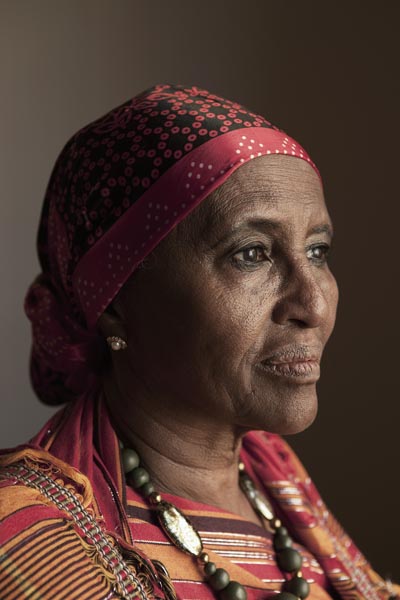
Photo Credit Pieter Hugo. Source,
What do you think will be the future of Somalia?
We still have to suffer, there was no justice in 21 years under the Siad Barre regime, then we had the civil war for 22 years. Some of our community were protected, some other people were destroyed. Now there are also other groups who take and destroy what they want, raping women, without law and order. This means a total of 43 years without law and order.
Poor, honest, hardworking people need justice and help. They need protection, but it will be very difficult. There are extremist people now still inside the government. They are generals and they are doing whatever they want. In the short term we will still suffer without a big helping hand from the international community.
In the long term, those who grew up in my camp will be Somalia’s future because they did not learn any bad things. 30 percent of our camp are youth who will never participate in fighting or killing by tribes. They are honest, we have taught them to help each other, to love each other and to defend each other. Peace itself will come. Many young people who are studying in universities in Arab countries, in Somalia, they are the future leaders of Somalia. My only hope are those who grow in my camp.
What is your message to our readers?
I want the international community to know that we are in a dangerous situation now. We need food which we can grow ourselves, but we need help. I am appealing to you to support us to be sustainable. We need fishing tools, farming tools, health instruments for the hospital, medicine, equipment. Whatever the international community can give us, to save thousands of lives from suffering.
I believe the world is one because we are all human beings. All our needs are one.
If you would like to support DHAF on a regular basis, you can register for automatic monthly donations here. Stay updated with their ongoing work on their website, newsletter, Facebook, or Twitter.
Previous Post

November 17, 2014
Dear Muslim Leaders: I am a Convert not an “Extremist”
Next Post
November 21, 2014 Friday Links | November 21, 2014
Browse Our Archives
Select a Category Advertisements Art/Theater Books/Magazines Cinema Comics/Cartoons Culture/Society Events Fashion Film Friday Links Merchandise/Commodities MMW Announcements MMW Highlights Music/Radio News Photography Politics Profile Ramadan 2012 Ramadan 2013 Ramadan 2014 Ramadan 2015 Roundtable Satire Social Media Sports Technology/Science Television Uncategorized Video Web
Select a Month November 2015 October 2015 September 2015 August 2015 July 2015 June 2015 May 2015 April 2015 March 2015 January 2015 December 2014 November 2014 October 2014 September 2014 July 2014 June 2014 May 2014 April 2014 March 2014 February 2014 January 2014 December 2013 November 2013 October 2013 September 2013 August 2013 July 2013 June 2013 May 2013 April 2013 March 2013 February 2013 January 2013 December 2012 November 2012 October 2012 September 2012 August 2012 July 2012 June 2012 May 2012 April 2012 March 2012 February 2012 January 2012 December 2011 November 2011 September 2011 August 2011 July 2011 June 2011 May 2011 April 2011 March 2011 February 2011 January 2011 December 2010 November 2010 October 2010 September 2010 August 2010 July 2010 June 2010 May 2010 April 2010 March 2010 February 2010 January 2010 December 2009 November 2009 October 2009 September 2009 August 2009 July 2009 June 2009 May 2009 April 2009 March 2009 February 2009 January 2009 December 2008 November 2008 October 2008 September 2008 August 2008 July 2008 June 2008 May 2008 April 2008 March 2008 February 2008 January 2008 December 2007 November 2007 October 2007 September 2007 August 2007
Follow Us!
TAKE THE
Religious Wisdom Quiz
What was Barnabas' original name?
Select your answer to see how you score.
Mark Timothy Joseph Silas
Related posts from Muslimah Media Watch

#PrayforParis, Muslim Women and Third World Violence


Hate Crimes and Mother Tongues

Friday Links - American flag hijabs, hate crimes,...
TRENDING AT PATHEOS Muslim

25 Years Later: How Much Has Changed for...
As we approach the 25th anniversary of September 11th, I’ve found myself...

Podcast: Third Spaces & The Rise of Yemeni...
In the latest episode of The Artistic Foodies Podcast, hosts Abbas...

HalalFest Picks: Best 60 Halal Spots for Super...
Back in 2016, I came up with a list of 29...

Unity Is America’s Strength — Division Is Its...
by Hidayatullah Ahsan When Valentina Gomez, a Republican candidate for Congress in...

Zohran Mamdani and New York’s Fight Against Islamophobia
This past June, against all odds, Zohran Mamdani won the Democratic primary...

What the Fourth of July Means to a...
As we mark another Fourth of July, millions of Americans will celebrate...
view all Muslim blogs
Ad-Free & Subscriber Log-In Subscription Support
- About Us
- 2026 Calendar
- Videos
- Podcasts
- Library of World Religions
- Faith In Media Tracker
- Advertise With Us
- Write for Us
- Privacy Policy
- Terms of Service
- Do Not Sell My Data
- Contact Us
- Radiant Digital
- Manage Newsletter Subscriptions
- Unsubscribe From Notifications
- Sitemap
Copyright 2008-2026, Patheos. All rights reserved.
Subscription Support Ad-Free & Subscriber Log-In
Follow Patheos