
BuddhistCatholicContemplativeEvangelicalGeneral ChristianHinduJewishLatter-day SaintMuslimNew VisionsProgressive Christian
Beliefs
- Buddhist
- Catholic
- Contemplative
- Evangelical
- General Christian
- Hindu
- Jewish
- Latter-day Saint
- More Voices
- Muslim
- New Visions
- Pagan
- Progressive Christian
Topics
- Religion News
- Food and Religion
- Sports and Religion
- Religious Art
- Religious Music and Entertainment
- Religious Events
- History and Religion
- Style and Religion
- Politics and Religion
- Women in Religion
- Recreation Outdoors and Religion
- Business Finance and Religion
- Careers Workplace and Religion
- Education and Religion
- Family Parenting and Religion
- Health Fitness and Religion
- Home and Religion
- Relationships and Religion
- Technology and Religion
- Travel and Religion
Columnists
- Buddhist Columnists
- Business Finance and Religion Columnists
- Careers Workplace and Religion Columnists
- Catholic Columnists
- Contemplative Columnists
- Education and Religion Columnists
- Evangelists Columnists
- Family Parenting and Religion Columnists
- General Christian Columnists
- Health Fitness and Religion Columnists
- Hindu Columnists
- History and Religion Columnists
- Home and Religion Columnists
- Jewish Columnists
- More Voices Columnists
- Latter Day Columnists
- Muslim Columnists
- New Visions Columnists
- Nonreligious Columnists
- Pagan Columnists
- Politics and Religion Columnists
- Progressive Columnists
- Recreation Outdoors and Religion Columnists
- Relationships and Religion Columnists
- Religion News Columnists
- Religious Art Columnists
- Religious Events Columnists
- Religious Music and Entertainment Columnists
- Sports and Religion Columnists
- Style and Religion Columnists
- Technology and Religion Columnists
- Travel and Religion Columnists
- Women in Religion Columnists
Resource Library
- 2026 Calendar
- Library of World Religions
- The 100 Most Holy Places on Earth
- Patheos Answers
- Podcasts
- Videos
- Faith Leaders Database
- Anglican Episcopalian
- Bahai
- Baptist
- Buddhism
- Christianity
- Confucianism
- Eastern Orthodoxy
- Hinduism
- Holiness and Pentecostal
- ISKCON
- Islam
- Judaism
- Lutheran
- Methodist
- The Church of Jesus Christ of Latter-day Saints
- New Age
- Paganism
- Presbytarian and Reformed
- Protestantism
- Religion Behind the Scenes
- Roman Catholic
- Scientology
- Shia Islam
- Sikhism
- Sufism
- Sunni Islam
- Taoism
- Zen
- See all religions
Research Tools
 Ad-Free & Subscriber Log-In Subscription Support
Follow Patheos 

- Trending:
- Advent
- |
- Forgiveness
- |
- Thanksgiving
- |
- Election
- |
- Seasonal Holidays
- |
- Marriage
 Muslimah Media Watch
- Home
- Muslim
- Religion News
- Syrian Series “Bab Al Hara” and the Need to Combat Traditional Images of Women
Syrian Series “Bab Al Hara” and the Need to Combat Traditional Images of Women
Last updated on: September 9, 2014 at 2:00 am by samya
Syrian Series “Bab Al Hara” and the Need to Combat Traditional Images of Women 2014-09-07T23:45:49-04:00 samya
Patheos Explore the world's faith through different perspectives on religion and spirituality! Patheos has the views of the prevalent religions and spiritualities of the world.
Every year, the holy month of Ramadan brings lots of spiritual moments, as well as hours of continuous entertainment in the form of shows and soap operas. Every Ramadan, I pick a number of soap operas to watch and write about. This year, there was a large number of television series that discussed issues faced by women in Arab societies. Some issues included women in prisons, such as Egyptian series Sijn Al Nesa, and women in wars and revolution, such as Syrian series Halawet Al Rouh.

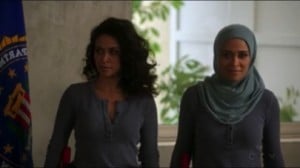
Image from Bab Al Hara, via mbc.net.
On the other hand, there were other series that couldn’t seem to get enough of images of women as followers of their male counterparts. One good example is Syrian soap opera Bab Al Hara, which came this year in its sixth season. A lot has been written about Bab Al Hara in terms of its weak script, lost plot, over-acting, and chaotic representation of real events happening in Syria. In addition to all that, the show sticks to very traditional images of women, making them look like broken, lost, indecisive housewives.
If you never heard about Bab Al Hara, here is what it is. It’s a Syrian series that was started about 12 years ago, in 2006. At that time, it was a renewed approach to bringing back an idealized past of Syrian communities, where everything was supposedly simple. Men represented the strong side of their communities, while women were the beauties and the supporters of their men.
Building on the success of the first season, the production company decided to make another season, this time introducing new characters. One of them was a Christian woman who was supporting the revolutionaries at that time. The character of Em Joseph, the Christian lady, received lots of praise, because of her unprecedented approach to changing the traditional image of women in such soap operas.
In later seasons, Em Joseph disappeared, and the female roles in the series went back to its traditional approach until the year 2011. During that year, the Syrian uprising began, and people working in the drama business found themselves forced to talk about the revolution. That included the team of Bab Al Hara.
The Syrian regime and security forces have been known for several decades for their brutal treatment of civilians, especially the opposition. Given that reputation, it was not easy for most of the people to stand up against the regime and ask for freedom; otherwise, the consequence of that would be disappearing forever in the dark cells of the intelligence, or the Mokhabarat. For the team of Bab Al Hara, nothing has changed in the story or the plot. Members of the Syrian series likely feared talking about any issue related to the uprising, because the consequences are known to them: shutting down the shooting locations, or imprisoning members of the team, especially if the shooting locations are inside Syria.
In other words, the events in the show were no reflection of what was happening in reality as the uprising began. Syrians were facing death on daily basis, while characters in Bab Al Hara were busy dealing with daily events such as should a man marry three or four women, and should he divorce his wife after she was talking in a bad way to his mother. The audience at that time, including myself, felt naïve, for watching such “silly” events. It was unfair to the images of people dying every day for their freedom to be accompanied at the same time with images of men busy with unnecessary details (or was it a way of making us forget about freedom fighters, and focus on such images instead?)
This year, season six was shown on television, and nothing seems to have changed. Women are still the followers of their fathers, brothers, husbands, even sometimes their neighbors. Their opinions are not heard, and even if they are allowed to express their opinions, the opinions are not important. The series conveys a number of outdated ideas: the man taking decisions on behalf of his family, as if the other members don’t exist, and women having no choice but to obey what they are told, and stay home to finish the house chores.
It’s sad to witness such representation of women in our age. Syrian history has given us great examples of women who fought with men in the front line. In his book The Resistance of People and A History of Existence, Syrian historian Jamil Elwani writes:
“We should only be very proud of all Syria women who fought the colonial enemy at all levels. There were women who were part of the revolution in Damascus, Hama, and Aleppo. Some died in battles, others died in strikes, such as the one held in 1936, and we remember very well the death of Ra’eefa Bint Haj Khalil Al Tahhan in Hama.”
There are women in Syria to this day who are calling for freedom, and fighting for it. It does not have to be through carrying weapons of guns. It could be with a word, an opinion piece, or participating in a protest.
The other day, I was browsing through my Facebook timeline, and I found a video of this very brave lady challenging all enemies if Syria. She inspired me to write this piece, and will always give me hope that women can make the change societies need. She is called “The Woman in Pants.” This brave woman used to go out every day holding a sign in the middle of Al Riqqa, a Syrian city, and calling members of the Islamic State of Iraq and Levant to leave town. People around her were too scared to salute her for what she is doing, fearing they might be seen by the ISIL militants. In pants, she used to express her thoughts and opinion with no fear. Watching such women in real life standing against injustice creates examples for producers of television dramas to follow. These women are the inspiration we need in our lives, in order to show that wars and battles for freedom are not only fought by men, but there are also women standing hand in hand with them.
Previous Post

September 8, 2014
When Bridging Between Cultures Doesn’t Help
Next Post
September 10, 2014 Paying Tribute to American Muslim Trailblazer, Tayyibah Taylor
Browse Our Archives
Select a Category Advertisements Art/Theater Books/Magazines Cinema Comics/Cartoons Culture/Society Events Fashion Film Friday Links Merchandise/Commodities MMW Announcements MMW Highlights Music/Radio News Photography Politics Profile Ramadan 2012 Ramadan 2013 Ramadan 2014 Ramadan 2015 Roundtable Satire Social Media Sports Technology/Science Television Uncategorized Video Web
Select a Month November 2015 October 2015 September 2015 August 2015 July 2015 June 2015 May 2015 April 2015 March 2015 January 2015 December 2014 November 2014 October 2014 September 2014 July 2014 June 2014 May 2014 April 2014 March 2014 February 2014 January 2014 December 2013 November 2013 October 2013 September 2013 August 2013 July 2013 June 2013 May 2013 April 2013 March 2013 February 2013 January 2013 December 2012 November 2012 October 2012 September 2012 August 2012 July 2012 June 2012 May 2012 April 2012 March 2012 February 2012 January 2012 December 2011 November 2011 September 2011 August 2011 July 2011 June 2011 May 2011 April 2011 March 2011 February 2011 January 2011 December 2010 November 2010 October 2010 September 2010 August 2010 July 2010 June 2010 May 2010 April 2010 March 2010 February 2010 January 2010 December 2009 November 2009 October 2009 September 2009 August 2009 July 2009 June 2009 May 2009 April 2009 March 2009 February 2009 January 2009 December 2008 November 2008 October 2008 September 2008 August 2008 July 2008 June 2008 May 2008 April 2008 March 2008 February 2008 January 2008 December 2007 November 2007 October 2007 September 2007 August 2007
Follow Us!
TAKE THE
Religious Wisdom Quiz
What did Jesus say to the storm on the Sea of Galilee?
Select your answer to see how you score.
"Let there be light!" "Peace, be still!" "Depart from me!" "Be gone!"
Related posts from Muslimah Media Watch

Friday Links - American flag hijabs, hate crimes,...

TRENDING AT PATHEOS Muslim

25 Years Later: How Much Has Changed for...
As we approach the 25th anniversary of September 11th, I’ve found myself...

Podcast: Third Spaces & The Rise of Yemeni...
In the latest episode of The Artistic Foodies Podcast, hosts Abbas...

HalalFest Picks: Best 60 Halal Spots for Super...
Back in 2016, I came up with a list of 29...
Unity Is America’s Strength — Division Is Its...
by Hidayatullah Ahsan When Valentina Gomez, a Republican candidate for Congress in...

Zohran Mamdani and New York’s Fight Against Islamophobia
This past June, against all odds, Zohran Mamdani won the Democratic primary...

What the Fourth of July Means to a...
As we mark another Fourth of July, millions of Americans will celebrate...
view all Muslim blogs
Ad-Free & Subscriber Log-In Subscription Support
- About Us
- 2026 Calendar
- Videos
- Podcasts
- Library of World Religions
- Faith In Media Tracker
- Advertise With Us
- Write for Us
- Privacy Policy
- Terms of Service
- Do Not Sell My Data
- Contact Us
- Radiant Digital
- Manage Newsletter Subscriptions
- Unsubscribe From Notifications
- Sitemap
Copyright 2008-2026, Patheos, part of the Radiant Digital network of media brands. All rights reserved.
Subscription Support Ad-Free & Subscriber Log-In
Follow Patheos