
BuddhistCatholicContemplativeEvangelicalGeneral ChristianHinduJewishLatter-day SaintMuslimNew VisionsProgressive Christian
Beliefs
- Buddhist
- Catholic
- Contemplative
- Evangelical
- General Christian
- Hindu
- Jewish
- Latter-day Saint
- More Voices
- Muslim
- New Visions
- Pagan
- Progressive Christian
Topics
- Religion News
- Food and Religion
- Sports and Religion
- Religious Art
- Religious Music and Entertainment
- Religious Events
- History and Religion
- Style and Religion
- Politics and Religion
- Women in Religion
- Recreation Outdoors and Religion
- Business Finance and Religion
- Careers Workplace and Religion
- Education and Religion
- Family Parenting and Religion
- Health Fitness and Religion
- Home and Religion
- Relationships and Religion
- Technology and Religion
- Travel and Religion
Columnists
- Buddhist Columnists
- Business Finance and Religion Columnists
- Careers Workplace and Religion Columnists
- Catholic Columnists
- Contemplative Columnists
- Education and Religion Columnists
- Evangelists Columnists
- Family Parenting and Religion Columnists
- General Christian Columnists
- Health Fitness and Religion Columnists
- Hindu Columnists
- History and Religion Columnists
- Home and Religion Columnists
- Jewish Columnists
- More Voices Columnists
- Latter Day Columnists
- Muslim Columnists
- New Visions Columnists
- Nonreligious Columnists
- Pagan Columnists
- Politics and Religion Columnists
- Progressive Columnists
- Recreation Outdoors and Religion Columnists
- Relationships and Religion Columnists
- Religion News Columnists
- Religious Art Columnists
- Religious Events Columnists
- Religious Music and Entertainment Columnists
- Sports and Religion Columnists
- Style and Religion Columnists
- Technology and Religion Columnists
- Travel and Religion Columnists
- Women in Religion Columnists
Resource Library
- 2026 Calendar
- Library of World Religions
- The 100 Most Holy Places on Earth
- Patheos Answers
- Podcasts
- Videos
- Faith Leaders Database
- Anglican Episcopalian
- Bahai
- Baptist
- Buddhism
- Christianity
- Confucianism
- Eastern Orthodoxy
- Hinduism
- Holiness and Pentecostal
- ISKCON
- Islam
- Judaism
- Lutheran
- Methodist
- The Church of Jesus Christ of Latter-day Saints
- New Age
- Paganism
- Presbytarian and Reformed
- Protestantism
- Religion Behind the Scenes
- Roman Catholic
- Scientology
- Shia Islam
- Sikhism
- Sufism
- Sunni Islam
- Taoism
- Zen
- See all religions
Research Tools
 Ad-Free & Subscriber Log-In Subscription Support
Ad-Free & Subscriber Log-In Subscription Support
Follow Patheos 

- Trending:
- Forgiveness
- |
- Marriage
- |
- Consciousness
- |
- Death Penalty
- |
- Election
- |
- Halloween
 Muslimah Media Watch
- Home
- Muslim
- Religion News
- My Subversive Little Girl in Blue
My Subversive Little Girl in Blue
Last updated on: September 11, 2014 at 2:00 am by syahirah
My Subversive Little Girl in Blue 2014-09-10T16:38:24-04:00 syahirah
Patheos Explore the world's faith through different perspectives on religion and spirituality! Patheos has the views of the prevalent religions and spiritualities of the world.
I’ve always been fascinated by how certain symbols function as gender markers in the societies I’ve known. Little hijabs for little girls is one example, while a non-Muslim friend of mine dresses her also sparsely coiffed infant in frilly pink dresses because people keep thinking she’s a little boy. It can be so uncomfortable for parents to see their little girl babies be still bald for years that a little hijab or flower headpiece seems truly essential.
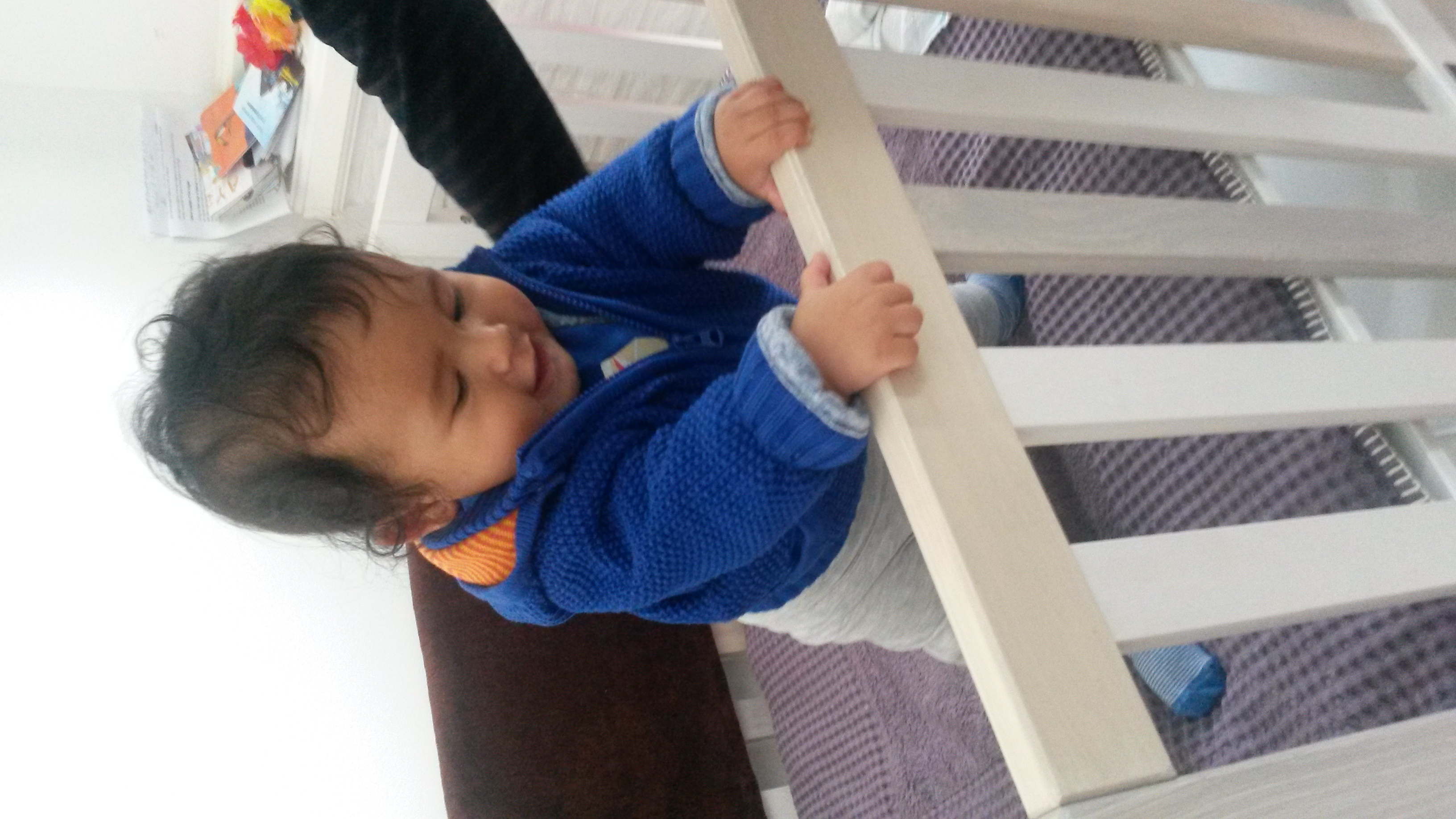
Photo provided by the author.
I’m not too bothered by what people think my son is. My first inklings of the gendering to come was when people would mistake his name for a girl’s name (it sounds like a popular Dutch name for girls) and then use the gender-appropriate pronouns. Some of my family members like to dress him in only blue (because he’s a boy, duh, and don’t you know boys wear only blue?) while I enjoy dressing him in cute purple kimono tops.
So I was quite surprised when – despite being bathed in blue – people still thought my son was a girl. Maybe it’s a Dutch thing of not falling for obvious stereotypes – at least those about gender (being a free-tolerant-egalitarian society and all that jazz).
Until I realised why they thought he was a girl: his curls. With nicknames like “curlyhead” (though I really prefer this to “darkie” or “half-blood”, but that’s another post for another day), it seems that long or curly hair makes a baby look feminine. (Though this does not explain the prevalence of curly mops among Dutch men.)
That brought me to thinking about how hijab serves as a marker of femininity. I believe that this is at the root of European anxieties over the niqab (or burka as they like to call it) and the calls to ban it. The fear is that a man could pass for a woman, because the identity of the person couldn’t be seen. The fact that the traditional white dress, the haik, was used in Algeria under occupation to hide “bombs and machine guns” does nothing to calm contemporary worries.
However, this all depends on socialisation and context. I once had a friend from Belgium visiting, and I’m pretty sure I was the first Muslim friend she had ever had. I brought her to attend a Malay wedding and I was surprised when she pointed to someone and asked, “Wow, so Muslim men also wear the hijab?” I looked over and realised it was a tall, dark women with a slight moustache – but still definitely a women. Feeling a mixture of embarrassment and indignation, I only managed a weak “That’s a woman”.
Cultural markers are very specific. Where I grew up, the hijab was 100% a marker of a woman. While in another social context like in Tuareg culture, veiling the face is for men who have reached puberty.
There are also many transgender women in Indonesia who start wearing hijab when transitioning. While for a cisgender woman in that context, hijab can signify a greater commitment to Islam, for a transgender women it takes on a double meaning: to be accepted as a woman, and a Muslim with serious faith. In this case, I feel it does help them not only gain legitimacy in their society (passing for a woman), but also avoid social stigma (the Muslim part).
As for my son, I wonder how things will be when he is older. Will I balk if he wants to wear pink shoes? Skirts? A sparkly tiara? I wouldn’t have a care in the world if my son was a little subversive girl in blue, but boys acting in feminine ways just isn’t as acceptable.
As I learn more, I’m constantly questioning my own assumptions as well. I wouldn’t know for sure how I would react if or until a situation came up that challenges gender norms for boys. All I know for sure is that no matter who he is and what he wants to wear, I think I could always find it in my heart to love him – in blue or pink.
Previous Post

September 10, 2014
Paying Tribute to American Muslim Trailblazer, Tayyibah Taylor
Next Post
September 12, 2014 Friday Links | September 12, 2014
Browse Our Archives
Select a Category Advertisements Art/Theater Books/Magazines Cinema Comics/Cartoons Culture/Society Events Fashion Film Friday Links Merchandise/Commodities MMW Announcements MMW Highlights Music/Radio News Photography Politics Profile Ramadan 2012 Ramadan 2013 Ramadan 2014 Ramadan 2015 Roundtable Satire Social Media Sports Technology/Science Television Uncategorized Video Web
Select a Month November 2015 October 2015 September 2015 August 2015 July 2015 June 2015 May 2015 April 2015 March 2015 January 2015 December 2014 November 2014 October 2014 September 2014 July 2014 June 2014 May 2014 April 2014 March 2014 February 2014 January 2014 December 2013 November 2013 October 2013 September 2013 August 2013 July 2013 June 2013 May 2013 April 2013 March 2013 February 2013 January 2013 December 2012 November 2012 October 2012 September 2012 August 2012 July 2012 June 2012 May 2012 April 2012 March 2012 February 2012 January 2012 December 2011 November 2011 September 2011 August 2011 July 2011 June 2011 May 2011 April 2011 March 2011 February 2011 January 2011 December 2010 November 2010 October 2010 September 2010 August 2010 July 2010 June 2010 May 2010 April 2010 March 2010 February 2010 January 2010 December 2009 November 2009 October 2009 September 2009 August 2009 July 2009 June 2009 May 2009 April 2009 March 2009 February 2009 January 2009 December 2008 November 2008 October 2008 September 2008 August 2008 July 2008 June 2008 May 2008 April 2008 March 2008 February 2008 January 2008 December 2007 November 2007 October 2007 September 2007 August 2007
Follow Us!
TAKE THE
Religious Wisdom Quiz
What language was most of the Old Testament originally written in?
Select your answer to see how you score.
Latin Aramaic Hebrew Greek
Related posts from Muslimah Media Watch

#PrayforParis, Muslim Women and Third World Violence


Hate Crimes and Mother Tongues

Friday Links - American flag hijabs, hate crimes,...
TRENDING AT PATHEOS Muslim

25 Years Later: How Much Has Changed for...
As we approach the 25th anniversary of September 11th, I’ve found myself...

Podcast: Third Spaces & The Rise of Yemeni...
In the latest episode of The Artistic Foodies Podcast, hosts Abbas...

HalalFest Picks: Best 60 Halal Spots for Super...
Back in 2016, I came up with a list of 29...

Unity Is America’s Strength — Division Is Its...
by Hidayatullah Ahsan When Valentina Gomez, a Republican candidate for Congress in...

Zohran Mamdani and New York’s Fight Against Islamophobia
This past June, against all odds, Zohran Mamdani won the Democratic primary...

What the Fourth of July Means to a...
As we mark another Fourth of July, millions of Americans will celebrate...
view all Muslim blogs
Ad-Free & Subscriber Log-In Subscription Support
- About Us
- 2026 Calendar
- Videos
- Podcasts
- Library of World Religions
- Faith In Media Tracker
- Advertise With Us
- Write for Us
- Privacy Policy
- Terms of Service
- Do Not Sell My Data
- Contact Us
- Radiant Digital
- Manage Newsletter Subscriptions
- Unsubscribe From Notifications
- Sitemap
Copyright 2008-2026, Patheos. All rights reserved.
Subscription Support Ad-Free & Subscriber Log-In
Follow Patheos