
BuddhistCatholicContemplativeEvangelicalGeneral ChristianHinduJewishLatter-day SaintMuslimNew VisionsProgressive Christian
Beliefs
- Buddhist
- Catholic
- Contemplative
- Evangelical
- General Christian
- Hindu
- Jewish
- Latter-day Saint
- More Voices
- Muslim
- New Visions
- Pagan
- Progressive Christian
Topics
- Religion News
- Food and Religion
- Sports and Religion
- Religious Art
- Religious Music and Entertainment
- Religious Events
- History and Religion
- Style and Religion
- Politics and Religion
- Women in Religion
- Recreation Outdoors and Religion
- Business Finance and Religion
- Careers Workplace and Religion
- Education and Religion
- Family Parenting and Religion
- Health Fitness and Religion
- Home and Religion
- Relationships and Religion
- Technology and Religion
- Travel and Religion
Columnists
- Buddhist Columnists
- Business Finance and Religion Columnists
- Careers Workplace and Religion Columnists
- Catholic Columnists
- Contemplative Columnists
- Education and Religion Columnists
- Evangelists Columnists
- Family Parenting and Religion Columnists
- General Christian Columnists
- Health Fitness and Religion Columnists
- Hindu Columnists
- History and Religion Columnists
- Home and Religion Columnists
- Jewish Columnists
- More Voices Columnists
- Latter Day Columnists
- Muslim Columnists
- New Visions Columnists
- Nonreligious Columnists
- Pagan Columnists
- Politics and Religion Columnists
- Progressive Columnists
- Recreation Outdoors and Religion Columnists
- Relationships and Religion Columnists
- Religion News Columnists
- Religious Art Columnists
- Religious Events Columnists
- Religious Music and Entertainment Columnists
- Sports and Religion Columnists
- Style and Religion Columnists
- Technology and Religion Columnists
- Travel and Religion Columnists
- Women in Religion Columnists
Resource Library
- 2026 Calendar
- Library of World Religions
- The 100 Most Holy Places on Earth
- Patheos Answers
- Podcasts
- Videos
- Faith Leaders Database
- Anglican Episcopalian
- Bahai
- Baptist
- Buddhism
- Christianity
- Confucianism
- Eastern Orthodoxy
- Hinduism
- Holiness and Pentecostal
- ISKCON
- Islam
- Judaism
- Lutheran
- Methodist
- The Church of Jesus Christ of Latter-day Saints
- New Age
- Paganism
- Presbytarian and Reformed
- Protestantism
- Religion Behind the Scenes
- Roman Catholic
- Scientology
- Shia Islam
- Sikhism
- Sufism
- Sunni Islam
- Taoism
- Zen
- See all religions
Research Tools
 Ad-Free & Subscriber Log-In Subscription Support
Ad-Free & Subscriber Log-In Subscription Support
Follow Patheos 

- Trending:
- Forgiveness
- |
- Marriage
- |
- Consciousness
- |
- Death Penalty
- |
- Election
- |
- Halloween
 Muslimah Media Watch
- Home
- Muslim
- Religion News
- What Do We Make of the “Indian” Converts to Islam
What Do We Make of the “Indian” Converts to Islam
Last updated on: April 10, 2014 at 11:29 am by eren
What Do We Make of the “Indian” Converts to Islam 2014-04-10T11:29:43-04:00 eren
Patheos Explore the world's faith through different perspectives on religion and spirituality! Patheos has the views of the prevalent religions and spiritualities of the world.
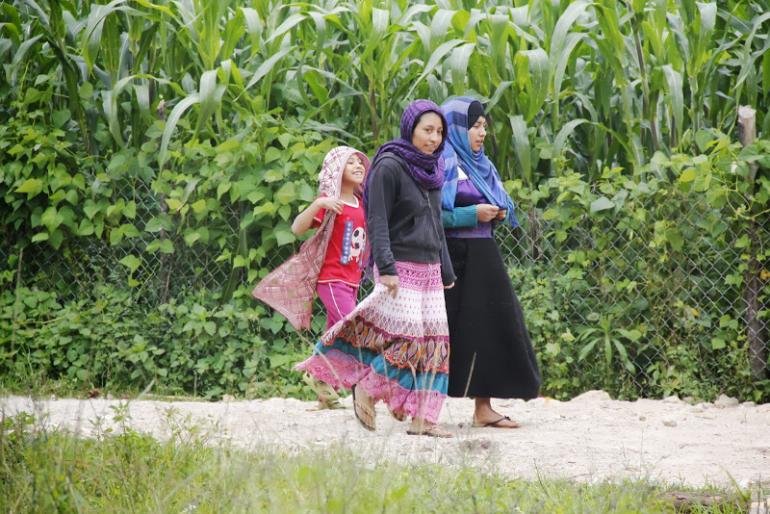
There is a lot of talk recently about “Latin” and Spanish-speaking converts to Islam, particularly women, which I have discussed in previous posts (here and here). Female converts to Islam, in general, give us a lot to talk about; thus, my question in a previous post on “Are converts news?” Some converts are treated as “cool” and progressive members willing to speak to the media. Others are used to represent media obsessions with wild-girls-gone-Muslim stories, which many Muslims and non-Muslims love. Some others are depicted as desperate wives-to-be who are under the spell of patriarchal Muslim men. Readers of Muslimah Media Watch know that we have seen it all in terms of how converts are discussed.
Nonetheless, there are some conversion stories that are not frequently discussed, those of racial minorities in precarious conditions. In my personal experience, white converts tend to experience different challenges, but are rarely discriminated against racially (within or outside Muslim communities). Racial complexities are not solely related to one’s skin colour, but rather to an overall look and sense of identity. As a convert I have been attributed numerous “colour-schemes” as if my community had to make sense of my looks. I have been told I “could be” Chinese, Indonesian, Korean, Afghani, Malaysian, or even a “darker white person.” And when I happen to mention I was born in Mexico, people (not only Muslims) tell me that I do not look like Mexican. My immediate question is, how are Mexicans supposed to look like?
The racial issue became more evident to me last year when I visited Mexico. I had heard that there were visible signs of Muslim immigration to the country (such as women wearing veils), but they were rare. However, during my last trip I encountered a group of young Indigenous women who were veiled and identified as Muslims. Islam is not new to Mexico, in fact there is an important Lebanese community that is not only Christian but also Muslim. Stories of Indigenous peoples becoming Muslim (or radical Muslims) are starting to flourish, although they by no means receive the same media attention as those of white or privileged converts (here, here and here). However, the encounter of Islam and Indigenous peoples in general has yet to be studied. Indigenous peoples conversion to Islam is a complex issue not only because of societal norms, but also because of the nature of many Indigenous people’s racial, economic and social status in their countries.
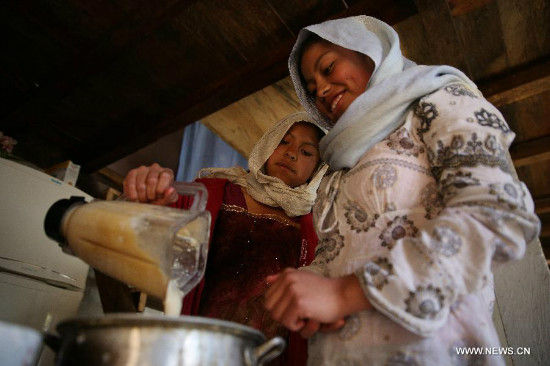
Women cooking iftar – Via Sina English.
One of the most salient Indigenous-Muslim communities in Mexico is located in the southern state of Chiapas. Since the early 2000s Mexican media outlets have reported on the existence of a small Tzotzil-Muslim community in the state. For those not familiar with the history of that part of Mexico, it is a region that has been plagued by conflict and some of the most aggravated human rights abuses in the history of post-colonial Mexico. Chiapas is home to the Zapatista movement rising up against state abuses, whose supporters were victims of the Acteal massacre in 1997.
In the past decades the south of Mexico has experienced an influx of missionaries, particularly Mormon missions. At the same time, Muslim communities have sprung and have attracted the attention of Al-Jazeera, Muslim Village and the International Business Times. Coverage of the conversion stories make me uneasy, as these sources describe the Indigenous experience as that of the “mud-hut mosque” Muslims, who in the middle of conflict, and after several conversions to different branches of Christianity, saw the light through some foreigner who could recite Qur’an.
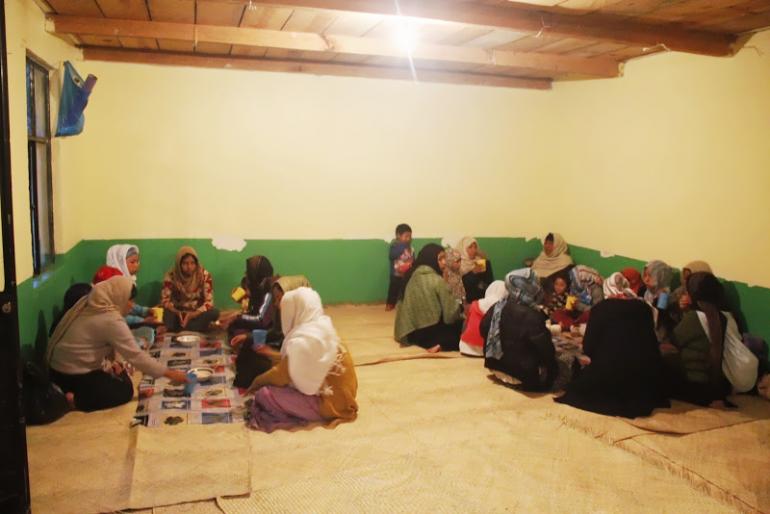
Women eating Iftar – Via International Business Times.
Although I cannot attribute my discomfort entirely to media coverage, the ascription of conversion to missionary work has always been a challenging concept for me. Whether it is missionary work, spreading the word or performing dawah, I grew up with missionaries (of different religions) providing services conditionally upon conversion or dividing communities by preaching values that clashed with traditions or practices. Whereas some Muslims would cringe at the idea of “non-Orthodox” Islam, in Mexico, and I am sure many other countries, religious syncretism has been the norm. I, personally, see religious syncretism as a way to make the best out of an ugly colonial history. Yet, as a convert of Indigenous background I am completely aware of the complexities of identity and the acceptance of a religious identity (something I recently wrote about). On the one hand, we accept something that is “not ours;” but on the other, it makes sense to us.
So, what is the broader picture of Indigenous converts to Islam? As I mentioned before, there is little information about what the Indigenous-convert experience is like. Nonetheless, before going off to brag about how Islam is attracting new members and deciding to share a million pictures of Indigenous women in hijabs, we need to contextualize conversions. Will the broader Muslim context eventually require them to pick one identity over the other (Muslim vs. Indigenous)? Or would we, as Muslims, learn to make space for other needs? Including those of Indigenous peoples, fighting a non-ending war against colonialism, neoliberalism and the modern expressions of racial oppression.
Previous Post

April 9, 2014
The Bee and the Butterfly
Next Post

April 11, 2014 Friday Links | April 11, 2014
Browse Our Archives
Select a Category Advertisements Art/Theater Books/Magazines Cinema Comics/Cartoons Culture/Society Events Fashion Film Friday Links Merchandise/Commodities MMW Announcements MMW Highlights Music/Radio News Photography Politics Profile Ramadan 2012 Ramadan 2013 Ramadan 2014 Ramadan 2015 Roundtable Satire Social Media Sports Technology/Science Television Uncategorized Video Web
Select a Month November 2015 October 2015 September 2015 August 2015 July 2015 June 2015 May 2015 April 2015 March 2015 January 2015 December 2014 November 2014 October 2014 September 2014 July 2014 June 2014 May 2014 April 2014 March 2014 February 2014 January 2014 December 2013 November 2013 October 2013 September 2013 August 2013 July 2013 June 2013 May 2013 April 2013 March 2013 February 2013 January 2013 December 2012 November 2012 October 2012 September 2012 August 2012 July 2012 June 2012 May 2012 April 2012 March 2012 February 2012 January 2012 December 2011 November 2011 September 2011 August 2011 July 2011 June 2011 May 2011 April 2011 March 2011 February 2011 January 2011 December 2010 November 2010 October 2010 September 2010 August 2010 July 2010 June 2010 May 2010 April 2010 March 2010 February 2010 January 2010 December 2009 November 2009 October 2009 September 2009 August 2009 July 2009 June 2009 May 2009 April 2009 March 2009 February 2009 January 2009 December 2008 November 2008 October 2008 September 2008 August 2008 July 2008 June 2008 May 2008 April 2008 March 2008 February 2008 January 2008 December 2007 November 2007 October 2007 September 2007 August 2007
Follow Us!
TAKE THE
Religious Wisdom Quiz
How many books are in the New Testament?
Select your answer to see how you score.
30 21 27 13
Related posts from Muslimah Media Watch

#PrayforParis, Muslim Women and Third World Violence


Hate Crimes and Mother Tongues

Friday Links - American flag hijabs, hate crimes,...
TRENDING AT PATHEOS Muslim

25 Years Later: How Much Has Changed for...
As we approach the 25th anniversary of September 11th, I’ve found myself...

Podcast: Third Spaces & The Rise of Yemeni...
In the latest episode of The Artistic Foodies Podcast, hosts Abbas...

HalalFest Picks: Best 60 Halal Spots for Super...
Back in 2016, I came up with a list of 29...

Unity Is America’s Strength — Division Is Its...
by Hidayatullah Ahsan When Valentina Gomez, a Republican candidate for Congress in...

Zohran Mamdani and New York’s Fight Against Islamophobia
This past June, against all odds, Zohran Mamdani won the Democratic primary...

What the Fourth of July Means to a...
As we mark another Fourth of July, millions of Americans will celebrate...
view all Muslim blogs
Ad-Free & Subscriber Log-In Subscription Support
- About Us
- 2026 Calendar
- Videos
- Podcasts
- Library of World Religions
- Faith In Media Tracker
- Advertise With Us
- Write for Us
- Privacy Policy
- Terms of Service
- Do Not Sell My Data
- Contact Us
- Radiant Digital
- Manage Newsletter Subscriptions
- Unsubscribe From Notifications
- Sitemap
Copyright 2008-2026, Patheos. All rights reserved.
Subscription Support Ad-Free & Subscriber Log-In
Follow Patheos