
BuddhistCatholicContemplativeEvangelicalGeneral ChristianHinduJewishLatter-day SaintMuslimNew VisionsProgressive Christian
Beliefs
- Buddhist
- Catholic
- Contemplative
- Evangelical
- General Christian
- Hindu
- Jewish
- Latter-day Saint
- More Voices
- Muslim
- New Visions
- Pagan
- Progressive Christian
Topics
- Religion News
- Food and Religion
- Sports and Religion
- Religious Art
- Religious Music and Entertainment
- Religious Events
- History and Religion
- Style and Religion
- Politics and Religion
- Women in Religion
- Recreation Outdoors and Religion
- Business Finance and Religion
- Careers Workplace and Religion
- Education and Religion
- Family Parenting and Religion
- Health Fitness and Religion
- Home and Religion
- Relationships and Religion
- Technology and Religion
- Travel and Religion
Columnists
- Buddhist Columnists
- Business Finance and Religion Columnists
- Careers Workplace and Religion Columnists
- Catholic Columnists
- Contemplative Columnists
- Education and Religion Columnists
- Evangelists Columnists
- Family Parenting and Religion Columnists
- General Christian Columnists
- Health Fitness and Religion Columnists
- Hindu Columnists
- History and Religion Columnists
- Home and Religion Columnists
- Jewish Columnists
- More Voices Columnists
- Latter Day Columnists
- Muslim Columnists
- New Visions Columnists
- Nonreligious Columnists
- Pagan Columnists
- Politics and Religion Columnists
- Progressive Columnists
- Recreation Outdoors and Religion Columnists
- Relationships and Religion Columnists
- Religion News Columnists
- Religious Art Columnists
- Religious Events Columnists
- Religious Music and Entertainment Columnists
- Sports and Religion Columnists
- Style and Religion Columnists
- Technology and Religion Columnists
- Travel and Religion Columnists
- Women in Religion Columnists
Resource Library
- 2026 Calendar
- Library of World Religions
- The 100 Most Holy Places on Earth
- Patheos Answers
- Podcasts
- Videos
- Faith Leaders Database
- Anglican Episcopalian
- Bahai
- Baptist
- Buddhism
- Christianity
- Confucianism
- Eastern Orthodoxy
- Hinduism
- Holiness and Pentecostal
- ISKCON
- Islam
- Judaism
- Lutheran
- Methodist
- The Church of Jesus Christ of Latter-day Saints
- New Age
- Paganism
- Presbytarian and Reformed
- Protestantism
- Religion Behind the Scenes
- Roman Catholic
- Scientology
- Shia Islam
- Sikhism
- Sufism
- Sunni Islam
- Taoism
- Zen
- See all religions
Research Tools
 Ad-Free & Subscriber Log-In Subscription Support
Ad-Free & Subscriber Log-In Subscription Support
Follow Patheos 

- Trending:
- Forgiveness
- |
- Marriage
- |
- Consciousness
- |
- Death Penalty
- |
- Election
- |
- Halloween
 Muslimah Media Watch
- Home
- Muslim
- Religion News
- How “Do Muslim Women Need Saving?” Saved Me
How “Do Muslim Women Need Saving?” Saved Me
Last updated on: March 4, 2014 at 2:00 am by shireen
How “Do Muslim Women Need Saving?” Saved Me 2014-03-04T00:43:40-04:00 shireen
Patheos Explore the world's faith through different perspectives on religion and spirituality! Patheos has the views of the prevalent religions and spiritualities of the world.
“This book is about what lies behind such deceptively simple responses to problems we think we already understand or believe that we should act on even before we understand.” – Lila Abu-Lughod
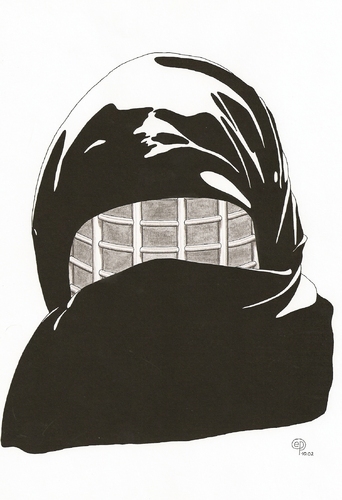
[Source].
When Muslimah Media Watch started out in 2007, one of the goals was to be able to create a platform for self-identified Muslim women to be able to critique portrayals and stories about us and our communities in mainstream media. Comment and speaking for ourselves was a novel concept. There continue to be countless Orientalist academic works, investigative reports and documentaries, heartwrenching movies, art and books (whose jackets covered with pictures of women in niqab with desperate eyes heavily lined with Kohl) on the oppression of Muslim women and countless harrowing tales of our oppression. Let’s not forget the appropriation of our veils and their symbolism.
After reading and facing criticism for our work and writing from men and women of all faiths, I try to find mentors and women to whom to look for encouragement as we waged this form of jihad on stupidity and ignorance.
I blog often and try to smash assumptions, but am often tired by incessantly proving I do not need “saving” in any aspect of my life.
Within the online community, I have been blessed to find colleagues and friends – including MMW and countless others – who think, challenge stereotypes, and critique in intelligent and mannered ways. (Truth be told, there is always the acceptable rage and rant that we also allow ourselves. Obviously.)
Last year, when I saw a wonderful tweet (thanks @kawrage!) and some beautiful rumours about Professor Lila Abu-Lughod’s upcoming book Do Muslim Women Need Saving?, my heart started to beat faster.
In a New York Times video interview, Abu-Lughod’s lovely, composed and smiling face describes the concept of her book. When she states that she knows and recognizes that there is no such monolith as “The Muslim Woman” it gave me butterflies in my stomach.
Many of my friends shared our excitement as our parcels arrived and we jumped into reading her work.
MMW has already published two reviews of this book: an overview of the topics covered by Tasnim and a more personal reflection by Eren; more recent reviews elsewhere include a piece by Dr.Naaz Rashid from LSE and another by Emily Villano at Feministing. My contribution to this series of reviews is more of an account of the emotional impact of being able to read and apply her work.
When I received my copy, I read it feverishly and quickly. I felt I had to stop myself at times and just exhale. I was drinking her powerful and measured words in too quickly. I let myself devour it and then I just sat back. My kids ate pizza for three days and the laundry went unwashed. (Not terribly uncommon, actually.)
It wasn’t simply an intellectual experience of reading a solid piece of work that criticized and called out the disingenuity of a “global industry” that felt the need to save women. It was also a very psycho-emotional experience.
Throughout the book, I found myself nodding vigorously as the author brilliantly poked and prodded at those heavy in their disdain and disregard for accepting Muslim women as individuals as opposed to being a one big sad and repressed group that needs to be spoken for and about.
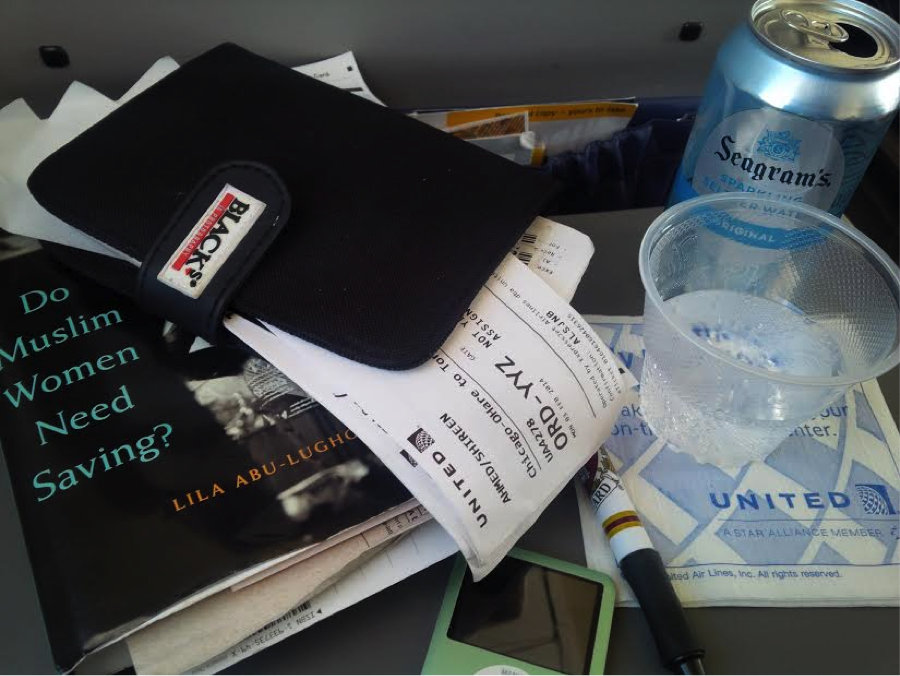
I even took it on vacation.
When I read the book a second time for the purposes of writing about it, I used sticky-flags, highlighted and wrote in the margins so often I felt I might as well take a neon highlighter and just mark THE ENTIRE BOOK.
I had moments of intensity where I was clutching the book tightly because it resonated so deeply. Prof. Abu-Lughod was acknowledging her privilege by admitting her tenured position as a North American scholar, yet articulating so precisely what many Muslim women felt and what was reality. That humility and honesty was critical in being able to further relate to the author.
A friend of mine confessed that she sometimes slept with the book.
It might seem easy to laugh and dismiss these reactions, but this book has provided a source of comfort and relatability for many women. Far too often, I have felt exhausted when I see and read books and articles laced with Islamophobia and with Orientalist themes. I have ranted about letting Muslim women define their struggles and themselves. To read an entire academic book dedicated to this topic was a cathartic experience.
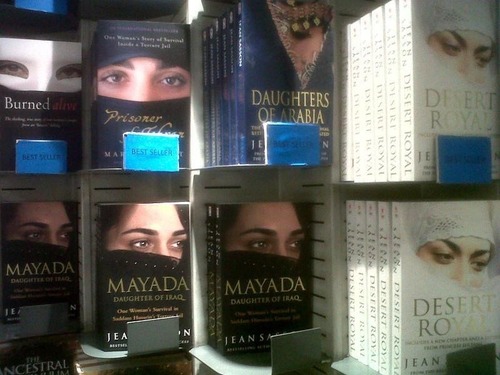
[Source].
I almost felt giddy as I read Abu-Lughod’s flawless critiques of white-saviour mentality through historic missionary campaigns that showcased the difficulties of women in specific regions: “Some girls were criticized for making choices that went outside the rescuers’ scripts for them. In short, the story behind the news was complicated. It did not not fit the story of Muslim women oppressed by their culture.” (14)
Abu-Lughod’s challenges and gentle ridiculing of those who fetishize veiling were a breath of fresh air: “It seems that it is better to leave veils and vocations of saving others behind. Instead we should be training our sights on ways to make the world a more just place” (49).
One of the most important pieces for me when reading was how Abu-Lughod discusses the politicization of using Muslim women as an excuse to conduct military campaigns. Abu-Lughod has stated that the inspiration for this book came from when she questioned the US military invasion of Afghanistan, which called for freedom of the societally-imprisoned, burqa-clad women. When speaking of RAWA (a prominent women’s rights organization in Afghanistan) she writes: “[RAWA] did not see Afghan women’s salvation in military violence that only increased hardship and loss” (50). She continues to explain how the voices of actual Afghan women were not heard: “Unfortunately, only their messages about the excesses of the Taliban were heard, even though their criticisms of those in power in Afghanistan had included previous regimes.”
These salient points are seldom – if ever – presented in mainstream media; yet women’s rights were used to sell this invasion to an eager public, a public whose heartstrings were pulled and whose heads shook as they saw the depressing images of covered women in war zones.
Of the media, Abu-Lughod writes: “They presume that people, once they know, will not stand by, silent and apathetic” (58).
The reaction of the public can be to sign various petitions, financially support or watch different televised series and enable those whom Abu-Lughod defines as “Rescuers,” such as journalists-turned-saviours Nick Kristof and Sheryl Wudunn from ‘Half the Sky’ movement. These same Rescuers laud their own perseverance and power to save: “the overriding message of Half the Sky, like the other popular books discussed here, is that Westerners are the ones who must change the world” (63).
In the past, I have stressed the need for understanding the agency of Muslim women and their voices in telling what they need for support, instead of bossy, privileged strangers projecting *what* and *how* society feels they should receive. Lila Abu-Lughod persuasively argues that using a stereotypical theme of weak women in need of liberation from patriarchal and draconian societies is reductive. Problems that Muslim women face are not unlike those faced by women all over the world. They all have different contexts and different variables.
Abu-Lughod examines the folly of those who wish to politicize and unfairly manipulate the issues of Muslim women in order to further their own agendas:
“Clucking about ancient tribal honor codes will not get us to the heart of problems in Karachi or Bradford, or be met with sympathy even by women there. Asking women like Zaynab or ‘Aysha in Egypt, or my Palestinian aunt in Jordan, to renounce their faith, their identities as Muslims, or their deep sense of belonging to their families or communities shows a lack of respect” (226).
Prof. Abu-Lughod presents ideas that make us think: about how the world needs to help Muslim women gain access to support, opportunity and justice. And she also outlines the way in which to do so.
I recently wrote an open letter in response to a journalist who ignorantly used the metaphor of Muslim women and burqas as an example of those who are oppressed. I strongly suggested she read Do Muslim Women Need Saving? to educate and enlighten herself. I thought she could save herself from writing such pathetic articles in future.
I would strongly suggest this book for any person who identifies with any element of feminism.
I would strongly suggest this book to anyone who can read. Maybe to save themselves from overreaching and overstepping their attempts to be a saviour.
And save Muslim women from being saved.
In a way, Lila Abu-Lughod might have saved us all.
Previous Post

March 3, 2014
Unintended Consequences: Minority Rights and Policy Making in the West
Next Post
March 7, 2014 Friday Links | March 7, 2014
Browse Our Archives
Select a Category Advertisements Art/Theater Books/Magazines Cinema Comics/Cartoons Culture/Society Events Fashion Film Friday Links Merchandise/Commodities MMW Announcements MMW Highlights Music/Radio News Photography Politics Profile Ramadan 2012 Ramadan 2013 Ramadan 2014 Ramadan 2015 Roundtable Satire Social Media Sports Technology/Science Television Uncategorized Video Web
Select a Month November 2015 October 2015 September 2015 August 2015 July 2015 June 2015 May 2015 April 2015 March 2015 January 2015 December 2014 November 2014 October 2014 September 2014 July 2014 June 2014 May 2014 April 2014 March 2014 February 2014 January 2014 December 2013 November 2013 October 2013 September 2013 August 2013 July 2013 June 2013 May 2013 April 2013 March 2013 February 2013 January 2013 December 2012 November 2012 October 2012 September 2012 August 2012 July 2012 June 2012 May 2012 April 2012 March 2012 February 2012 January 2012 December 2011 November 2011 September 2011 August 2011 July 2011 June 2011 May 2011 April 2011 March 2011 February 2011 January 2011 December 2010 November 2010 October 2010 September 2010 August 2010 July 2010 June 2010 May 2010 April 2010 March 2010 February 2010 January 2010 December 2009 November 2009 October 2009 September 2009 August 2009 July 2009 June 2009 May 2009 April 2009 March 2009 February 2009 January 2009 December 2008 November 2008 October 2008 September 2008 August 2008 July 2008 June 2008 May 2008 April 2008 March 2008 February 2008 January 2008 December 2007 November 2007 October 2007 September 2007 August 2007
Follow Us!
TAKE THE
Religious Wisdom Quiz
Who prepared spices for Jesus' burial?
Select your answer to see how you score.
Mary Mary Magdalene Salome Martha
Related posts from Muslimah Media Watch

Book review: Jewels of Allah by Nina Ansary



Why British MP’s statements defending Muslim women do...
TRENDING AT PATHEOS Muslim

25 Years Later: How Much Has Changed for...
As we approach the 25th anniversary of September 11th, I’ve found myself...

Podcast: Third Spaces & The Rise of Yemeni...
In the latest episode of The Artistic Foodies Podcast, hosts Abbas...

HalalFest Picks: Best 60 Halal Spots for Super...
Back in 2016, I came up with a list of 29...

Unity Is America’s Strength — Division Is Its...
by Hidayatullah Ahsan When Valentina Gomez, a Republican candidate for Congress in...

Zohran Mamdani and New York’s Fight Against Islamophobia
This past June, against all odds, Zohran Mamdani won the Democratic primary...

What the Fourth of July Means to a...
As we mark another Fourth of July, millions of Americans will celebrate...
view all Muslim blogs
Ad-Free & Subscriber Log-In Subscription Support
- About Us
- 2026 Calendar
- Videos
- Podcasts
- Library of World Religions
- Faith In Media Tracker
- Advertise With Us
- Write for Us
- Privacy Policy
- Terms of Service
- Do Not Sell My Data
- Contact Us
- Radiant Digital
- Manage Newsletter Subscriptions
- Unsubscribe From Notifications
- Sitemap
Copyright 2008-2026, Patheos. All rights reserved.
Subscription Support Ad-Free & Subscriber Log-In
Follow Patheos