
BuddhistCatholicContemplativeEvangelicalGeneral ChristianHinduJewishLatter-day SaintMuslimNew VisionsProgressive Christian
Beliefs
- Buddhist
- Catholic
- Contemplative
- Evangelical
- General Christian
- Hindu
- Jewish
- Latter-day Saint
- More Voices
- Muslim
- New Visions
- Pagan
- Progressive Christian
Topics
- Religion News
- Food and Religion
- Sports and Religion
- Religious Art
- Religious Music and Entertainment
- Religious Events
- History and Religion
- Style and Religion
- Politics and Religion
- Women in Religion
- Recreation Outdoors and Religion
- Business Finance and Religion
- Careers Workplace and Religion
- Education and Religion
- Family Parenting and Religion
- Health Fitness and Religion
- Home and Religion
- Relationships and Religion
- Technology and Religion
- Travel and Religion
Columnists
- Buddhist Columnists
- Business Finance and Religion Columnists
- Careers Workplace and Religion Columnists
- Catholic Columnists
- Contemplative Columnists
- Education and Religion Columnists
- Evangelists Columnists
- Family Parenting and Religion Columnists
- General Christian Columnists
- Health Fitness and Religion Columnists
- Hindu Columnists
- History and Religion Columnists
- Home and Religion Columnists
- Jewish Columnists
- More Voices Columnists
- Latter Day Columnists
- Muslim Columnists
- New Visions Columnists
- Nonreligious Columnists
- Pagan Columnists
- Politics and Religion Columnists
- Progressive Columnists
- Recreation Outdoors and Religion Columnists
- Relationships and Religion Columnists
- Religion News Columnists
- Religious Art Columnists
- Religious Events Columnists
- Religious Music and Entertainment Columnists
- Sports and Religion Columnists
- Style and Religion Columnists
- Technology and Religion Columnists
- Travel and Religion Columnists
- Women in Religion Columnists
Resource Library
- 2026 Calendar
- Library of World Religions
- The 100 Most Holy Places on Earth
- Patheos Answers
- Podcasts
- Videos
- Faith Leaders Database
- Anglican Episcopalian
- Bahai
- Baptist
- Buddhism
- Christianity
- Confucianism
- Eastern Orthodoxy
- Hinduism
- Holiness and Pentecostal
- ISKCON
- Islam
- Judaism
- Lutheran
- Methodist
- The Church of Jesus Christ of Latter-day Saints
- New Age
- Paganism
- Presbytarian and Reformed
- Protestantism
- Religion Behind the Scenes
- Roman Catholic
- Scientology
- Shia Islam
- Sikhism
- Sufism
- Sunni Islam
- Taoism
- Zen
- See all religions
Research Tools
 Ad-Free & Subscriber Log-In Subscription Support
Ad-Free & Subscriber Log-In Subscription Support
Follow Patheos 

- Trending:
- Forgiveness
- |
- Marriage
- |
- Consciousness
- |
- Death Penalty
- |
- Election
- |
- Halloween
 Muslimah Media Watch
- Home
- Muslim
- Religion News
- “Torn”: A Tale of Tolerance and Doubt
“Torn”: A Tale of Tolerance and Doubt
Last updated on: October 14, 2013 at 2:00 am by samya
“Torn”: A Tale of Tolerance and Doubt 2013-10-13T10:42:00-04:00 samya
Patheos Explore the world's faith through different perspectives on religion and spirituality! Patheos has the views of the prevalent religions and spiritualities of the world.
After reading the synopsis of Torn , a film written by Michael Richter and directed by Jeremiah Birnbaum, I thought: Oooh, this might be yet another film on the post 9/11 era, blaming the Muslim community for all evil things that happened, and echoing all sorts of stereotypes that have defined America’s perceptions of Muslims around the world.
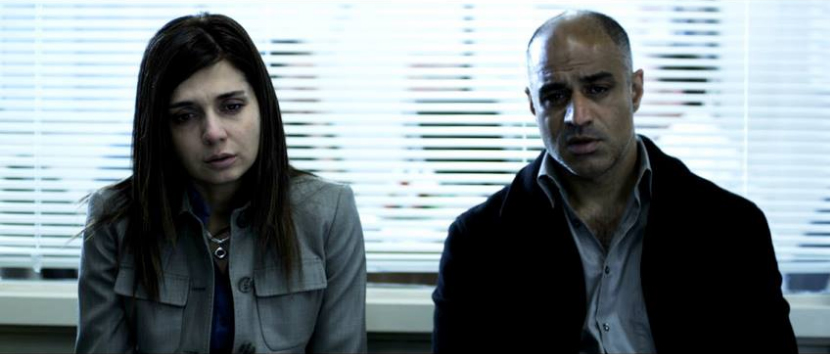
Miriam and Ali in a scene from Torn. Via tornthefilm.com
But Richter and Birnbaum proved me wrong. After watching Torn, I believe cinema can still surprise us with bold ideas and out-of-the-box unorthodoxy. I see this film as a liberating experience that would certainly make me re-think the very notion of stereotyping as it applies to Arabs and Muslims in American fiction films.
Torn tells the story of two American families whose sons are killed in a terrorist mall bombing. The two mothers, one of whom is a Muslim, find comfort in each other. Developments in the storyline show that the 16-year old Muslim boy is suspected to have played a role in the bombing, leading to a turbulent relationship between the two women.
The film provides some interesting thoughts on how cinema could change our perception of other cultures and nations. Miriam, the Muslim women of Pakistani origins, does not look like a stranger in the community where she has lived in for her entire life. She is a realtor who dresses like many other middle-class American women. She and her husband share a very intimate relationship, as the early scenes of the film suggest.
“Portraying Miriam this way is something we have agreed upon from the beginning,” says Torn screenwriter Michael Richter, when I interviewed him about the film. “Anyone who will go to watch the film will have this preconceived notion of who did it. I wanted Miriam to look like everyone else, and be a rational person. When people look at her, I want them to say they don’t believe this person did it… She is like everyone else.”
The director of the film, Jeremiah Birnbaum, concurs on the same thought:
“We were interested in a uniquely American story, and she is really someone who follows American culture. It seems to fit the story and speaks to us in a better way. That is why we all know such a film depends on how great the actors are. We spent a lot of time casting, looking for actors who go deep in this role.”
The film delivers a message of tolerance and acceptance, so it seems natural to see Lea, the other woman, finding comfort in talking to Miriam, and lending her a hand to go through this crisis together. The two women come from different cultural and religious backgrounds, as the film shows, but both are mothers who lost their sons in one terrible incident. Their shared agony seems to have eroded their cultural differences as they grieved over lost sons.
Richter and Birnbaum told me their aim was to take the audience on their own journeys, and then come out and question their own beliefs and prejudices.
In view of her chaotic past, Lea looks more disoriented and desperate. While she is furious at Walter, Miriam’s son, for being a suspect in the bombing incident, she still defends him in front of the FBI. Maybe that is her way of passing a message to us, saying: “you might have your suspicions inside of you, but it would be wrong to express them in public, especially when you don’t have the whole story of what really happened.”
The two women in the film seem to possess a sort of ambivalence towards what happened. While they are confident of how well they raised their sons, the two mothers were still uncertain about society’s new perceptions of their two boys. Miriam, for example, looks highly defiant as she defends her son when neighbors turn more hostile towards her family after Walter is held up by the FBI as suspect. In the meantime, she herself questions her son’s behavior when she learns about his suspiciously frequent visits to the mosque without her knowing about it.
“I think characters become more interesting when they are internally conflicting. This conflict shows the difference between personal and societal levels,” says Richter.
Nevertheless, the film puts so much emphasis on the idea of Walter being suspected for the explosion – through the conversations the FBI agents have with both women, the newspapers articles on Walter, and then Miriam discovering her son visiting the mosque very often recently – that it becomes repetitive at times and takes away from other elements of the plot.
When I talked to Richter about this, he said: “I think it was important to add this piece of information to the film, as it helps the plot, and building the characters.”
Reflecting on what is really happening in America, Torn provides a real example of real stories that have taken place through the last 12 years. According to Muslim Advocates, an American organization that works to guarantee freedom and justice for Americans of all faiths, hate crimes against Muslims in America jumped by 50% in 2010. Twenty-two percent of respondents to a USA Today/Gallup poll revealed that “they would not want Muslims as neighbors.”
“The two women in the film deal with so many things happening in the world around them. We tried to show what families go through in such situation, and the fact that they are not allowed to deal with their own grief after what happened to their sons,” says the film director.
“There are so many negative stories out there. We wanted to tell a story that could be a counterpoint to that, and add a very positive message,” adds Birnbaum.
Overall, Torn is a powerful work that aims at rethinking the way we deal with our surrounding. It passes a message of acceptance of the other, but most importantly, hopes its audience will come out thinking about its story, and reflecting it on their own lives.
Previous Post

October 11, 2013
Friday Links | October 11, 2013
Next Post
October 15, 2013 Eid Mubarak!
Browse Our Archives
Select a Category Advertisements Art/Theater Books/Magazines Cinema Comics/Cartoons Culture/Society Events Fashion Film Friday Links Merchandise/Commodities MMW Announcements MMW Highlights Music/Radio News Photography Politics Profile Ramadan 2012 Ramadan 2013 Ramadan 2014 Ramadan 2015 Roundtable Satire Social Media Sports Technology/Science Television Uncategorized Video Web
Select a Month November 2015 October 2015 September 2015 August 2015 July 2015 June 2015 May 2015 April 2015 March 2015 January 2015 December 2014 November 2014 October 2014 September 2014 July 2014 June 2014 May 2014 April 2014 March 2014 February 2014 January 2014 December 2013 November 2013 October 2013 September 2013 August 2013 July 2013 June 2013 May 2013 April 2013 March 2013 February 2013 January 2013 December 2012 November 2012 October 2012 September 2012 August 2012 July 2012 June 2012 May 2012 April 2012 March 2012 February 2012 January 2012 December 2011 November 2011 September 2011 August 2011 July 2011 June 2011 May 2011 April 2011 March 2011 February 2011 January 2011 December 2010 November 2010 October 2010 September 2010 August 2010 July 2010 June 2010 May 2010 April 2010 March 2010 February 2010 January 2010 December 2009 November 2009 October 2009 September 2009 August 2009 July 2009 June 2009 May 2009 April 2009 March 2009 February 2009 January 2009 December 2008 November 2008 October 2008 September 2008 August 2008 July 2008 June 2008 May 2008 April 2008 March 2008 February 2008 January 2008 December 2007 November 2007 October 2007 September 2007 August 2007
Follow Us!
TAKE THE
Religious Wisdom Quiz
What does "Jericho" mean in Hebrew?
Select your answer to see how you score.
Place of fragrance Mount of olives Place of salt Dry ground
Related posts from Muslimah Media Watch

#PrayforParis, Muslim Women and Third World Violence


Has Quantico got positive female Muslim roles covered?

TRENDING AT PATHEOS Muslim

25 Years Later: How Much Has Changed for...
As we approach the 25th anniversary of September 11th, I’ve found myself...

Podcast: Third Spaces & The Rise of Yemeni...
In the latest episode of The Artistic Foodies Podcast, hosts Abbas...

HalalFest Picks: Best 60 Halal Spots for Super...
Back in 2016, I came up with a list of 29...

Unity Is America’s Strength — Division Is Its...
by Hidayatullah Ahsan When Valentina Gomez, a Republican candidate for Congress in...

Zohran Mamdani and New York’s Fight Against Islamophobia
This past June, against all odds, Zohran Mamdani won the Democratic primary...

What the Fourth of July Means to a...
As we mark another Fourth of July, millions of Americans will celebrate...
view all Muslim blogs
Ad-Free & Subscriber Log-In Subscription Support
- About Us
- 2026 Calendar
- Videos
- Podcasts
- Library of World Religions
- Faith In Media Tracker
- Advertise With Us
- Write for Us
- Privacy Policy
- Terms of Service
- Do Not Sell My Data
- Contact Us
- Radiant Digital
- Manage Newsletter Subscriptions
- Unsubscribe From Notifications
- Sitemap
Copyright 2008-2026, Patheos. All rights reserved.
Subscription Support Ad-Free & Subscriber Log-In
Follow Patheos