
BuddhistCatholicContemplativeEvangelicalGeneral ChristianHinduJewishLatter-day SaintMuslimNew VisionsProgressive Christian
Beliefs
- Buddhist
- Catholic
- Contemplative
- Evangelical
- General Christian
- Hindu
- Jewish
- Latter-day Saint
- More Voices
- Muslim
- New Visions
- Pagan
- Progressive Christian
Topics
- Religion News
- Food and Religion
- Sports and Religion
- Religious Art
- Religious Music and Entertainment
- Religious Events
- History and Religion
- Style and Religion
- Politics and Religion
- Women in Religion
- Recreation Outdoors and Religion
- Business Finance and Religion
- Careers Workplace and Religion
- Education and Religion
- Family Parenting and Religion
- Health Fitness and Religion
- Home and Religion
- Relationships and Religion
- Technology and Religion
- Travel and Religion
Columnists
- Buddhist Columnists
- Business Finance and Religion Columnists
- Careers Workplace and Religion Columnists
- Catholic Columnists
- Contemplative Columnists
- Education and Religion Columnists
- Evangelists Columnists
- Family Parenting and Religion Columnists
- General Christian Columnists
- Health Fitness and Religion Columnists
- Hindu Columnists
- History and Religion Columnists
- Home and Religion Columnists
- Jewish Columnists
- More Voices Columnists
- Latter Day Columnists
- Muslim Columnists
- New Visions Columnists
- Nonreligious Columnists
- Pagan Columnists
- Politics and Religion Columnists
- Progressive Columnists
- Recreation Outdoors and Religion Columnists
- Relationships and Religion Columnists
- Religion News Columnists
- Religious Art Columnists
- Religious Events Columnists
- Religious Music and Entertainment Columnists
- Sports and Religion Columnists
- Style and Religion Columnists
- Technology and Religion Columnists
- Travel and Religion Columnists
- Women in Religion Columnists
Resource Library
- 2026 Calendar
- Library of World Religions
- The 100 Most Holy Places on Earth
- Patheos Answers
- Podcasts
- Videos
- Faith Leaders Database
- Anglican Episcopalian
- Bahai
- Baptist
- Buddhism
- Christianity
- Confucianism
- Eastern Orthodoxy
- Hinduism
- Holiness and Pentecostal
- ISKCON
- Islam
- Judaism
- Lutheran
- Methodist
- The Church of Jesus Christ of Latter-day Saints
- New Age
- Paganism
- Presbytarian and Reformed
- Protestantism
- Religion Behind the Scenes
- Roman Catholic
- Scientology
- Shia Islam
- Sikhism
- Sufism
- Sunni Islam
- Taoism
- Zen
- See all religions
Research Tools
 Ad-Free & Subscriber Log-In Subscription Support
Ad-Free & Subscriber Log-In Subscription Support
Follow Patheos 

- Trending:
- Forgiveness
- |
- Marriage
- |
- Consciousness
- |
- Death Penalty
- |
- Election
- |
- Halloween
 Muslimah Media Watch
- Home
- Muslim
- Religion News
- From Gaga to Malala: Muslim Women as Stereotypes and Exceptions
From Gaga to Malala: Muslim Women as Stereotypes and Exceptions
Last updated on: October 21, 2013 at 2:00 am by amina
From Gaga to Malala: Muslim Women as Stereotypes and Exceptions 2013-10-20T23:05:32-04:00 amina
Patheos Explore the world's faith through different perspectives on religion and spirituality! Patheos has the views of the prevalent religions and spiritualities of the world.
Editor’s note: Malala Yousafzai has been extensively covered in media lately, and several MMW writers wanted to weigh in on the way she is being portrayed. Today’s post is by Amina; stay tuned for reflections from Nicole and Eren later this week.
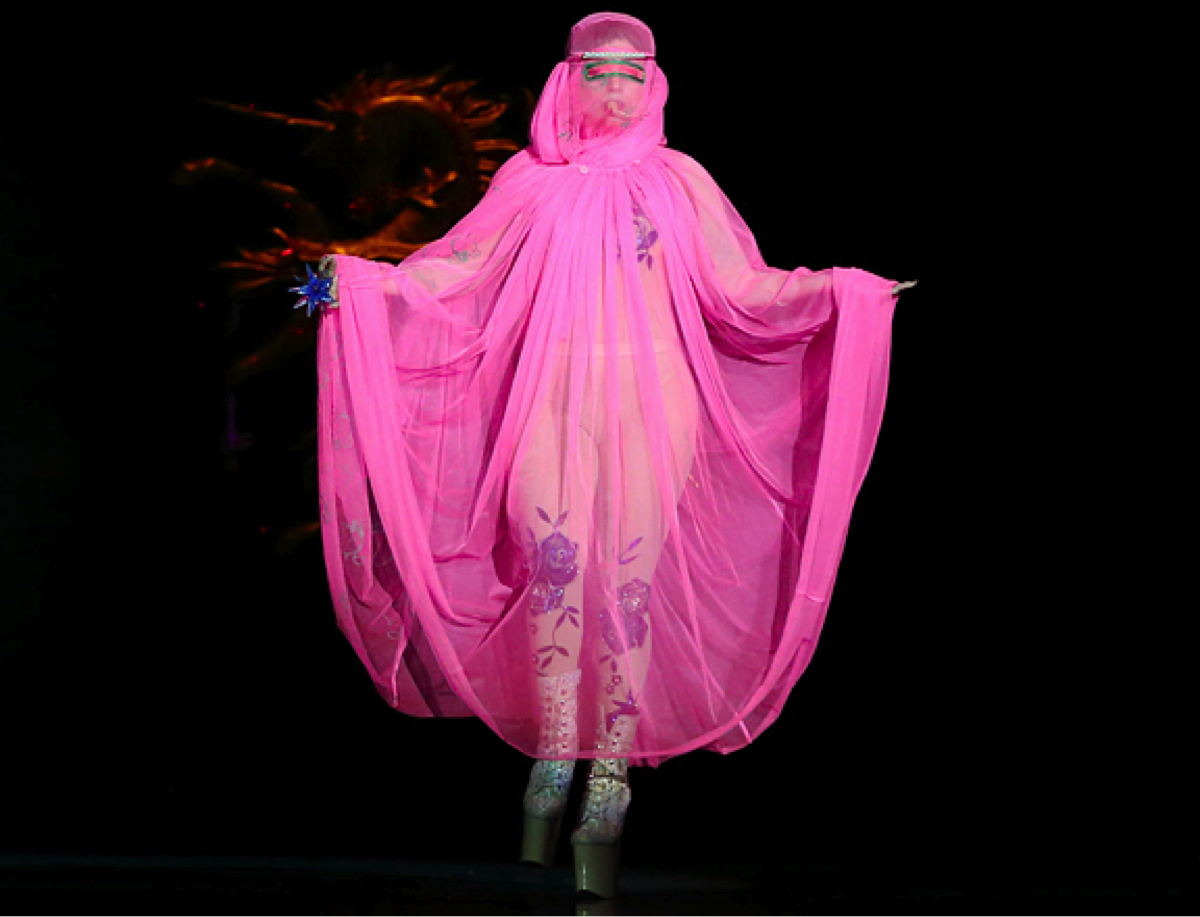
Lady Gaga’s pink burqa. [Source].
Just a couple of months ago, Lady Gaga wore a ridiculous, sheer pink burqa. While I didn’t buy her reasons for it, she allegedly did it as some vague, old attempt at empowering Muslim women by trashing a form of hijab.(Read Eren’s take on “Pink Burqas, Gagas and Madonnas” here.) Mariam Elbaprovided a great analysis of Gaga’s “Bura/Aura” lyrics for PolicyMic; the lyrics include “I’m not a wandering slave, I’m a woman of choice … My veil is protection for the gorgeousness of my face.” All of that, as Elba, points out, sounds okay, maybe even promising. And then, the chorus dives into stereotyping and hypersexualizing with “Do you want to see me naked, lover? Do you want to peek underneath the cover? Do you want to see the girl who lives behind the aura? … Do you wanna touch me? Let’s make love.”
As Elba writes:
“The heavily erotic images ultimately dehumanize and degrade burqa-wearing women and turn them into animalistic beings. In a society that automatically associates the burqa with Muslim women and Middle Eastern culture, a song like this only adds onto the monolithic image of the Muslim woman being quiet, sheltered, and owned by a man.”
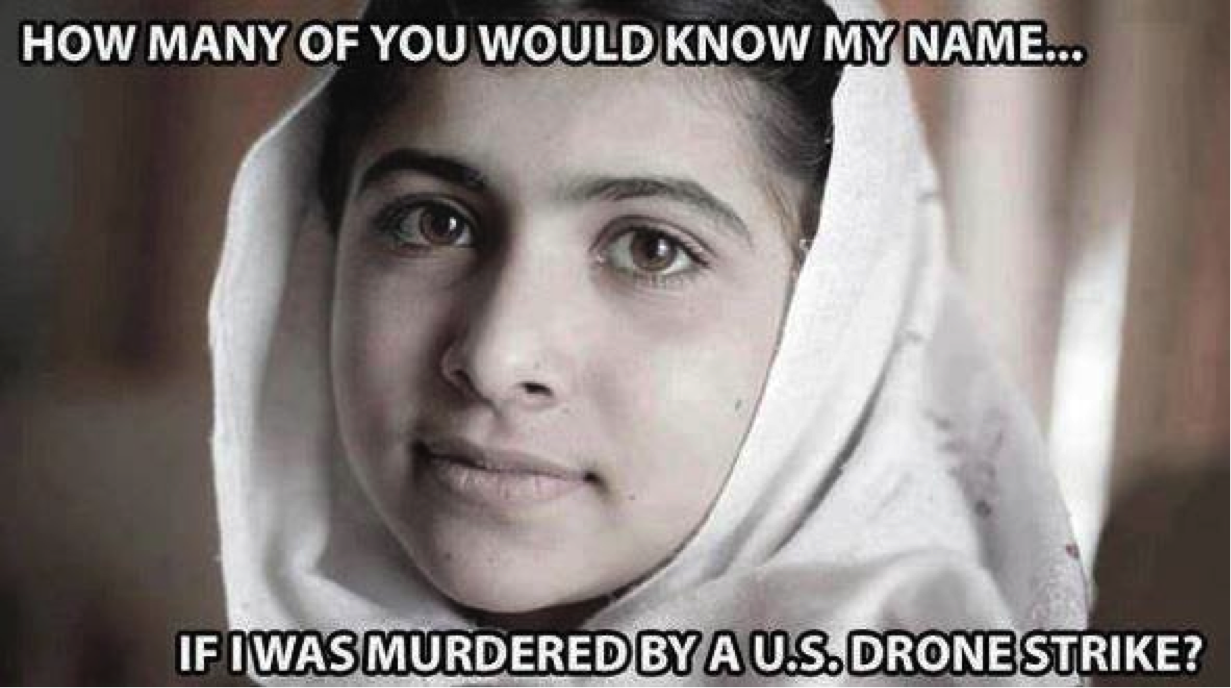
With her recent American tour, internet campaign to award her the Nobel Peace Prize, and alright media bonanza, stories about Malala embed a similar rhetoric. The mainstream media has largely personified her an exception, rather than the rule; as if with her courage, bluntness, and conviction, she is unlike most Muslim women. Omid Safi’s post, “How to Keep Malala from Being Appropriated” makes a great case for the need to avoid an “exceptionalizing narrative.”
Don’t get me wrong. Malala is indeed incredible. But the media discourse about Malala often insinuates that her commitments to women’s education are derived from Western influences and values juxtaposed, again, against the backdrop of stereotypes that characterize Muslim women as downtrodden and dreaming to be saved by the white knight in shining armour.
Her boldness seems acceptable largely because of that narrative. The reactions to other “brazen” Muslim women aren’t nearly as warm. When the Boston bombing suspects were named, Zubeidat Tsarnaeva, the mother of the suspects, came immediately and fiercely to their defence. Zubeidat was rarely grieving, somber or apologetic in the media glare. Instead, she remained consistently defiant and insistent of her sons’ innocence. The media reactions to Zubeidat were almost instantly vicious, labelling her a terrorist and questioning the “extreme” nature of her religious views. If she were less outspoken, more apologetic, and weakly sobbing behind a microphone, Zubeidat would have better fit social expectations of a grieving mother and of Muslim women, in general.
Then, there are the stories that rarely make a ripple on the Western media circuit – like the “Speed Sisters,” a group of female Palestinian street racers that draw crowds along the roads of Ramallah. And the Saudi women who embrace regular acts of civil disobedience and challenge their social status quo by driving. And the Sudanese women who recently staged a silent protest demanding female detainees be released. I’m grateful for Anneke’s weekly Friday Links because her posts generally host links to healthy counternarratives of Muslim women, in contrast to the typical stuff we read about in the mainstream media.
[Source].

There’s something immensely telling about the stories mainstream Western media decides to promote and those that get swept under the rug. The stories that are told and ways in which they are told say as much about the storytellers as those that are the actual subjects of discussion. Mainstream media actively homogenizes Muslim women into meek, weak beings who lack the audacity and know-how to challenge patriarchal systems. That narrative – one that denies a Muslimah’s autonomy – makes it difficult, if not downright impossible, to engage with Muslim women on the basis of solidarity. Instead, the West just sells itself as the ultimate saviour, bound by a superficial chivalrous oath to protect Muslim women from those evil, evil Muslim men who must ALL be pledged to the Taliban.
As I establish my professional career, I’m cognizant that I stand on the shoulders of giants, that my values, passions, and drives come from brilliant, fierce Muslim women: my unapologetic Nani, my strong-as-steel mother, countless activists, and brilliant academics. Yes, I am a Canadian woman. But my opinions on education, independence, empowerment, and self-sufficiency are heavily borne from my cultural and religious influences as a Muslim woman and the two aren’t mutually exclusive. While the Muslimahs I know are exceptional, they are by no means the exception. If the mainstream, Western media ever intends to genuinely engage with Muslim women, then it’s seriously time to acknowledge the depth and breadth inherent to Muslimahs.
Previous Post

October 18, 2013
Friday Links | October 18, 2013
Next Post
October 22, 2013 Is Pakistan Really Neverland?: Malala, the Perpetual Child Activist
Browse Our Archives
Select a Category Advertisements Art/Theater Books/Magazines Cinema Comics/Cartoons Culture/Society Events Fashion Film Friday Links Merchandise/Commodities MMW Announcements MMW Highlights Music/Radio News Photography Politics Profile Ramadan 2012 Ramadan 2013 Ramadan 2014 Ramadan 2015 Roundtable Satire Social Media Sports Technology/Science Television Uncategorized Video Web
Select a Month November 2015 October 2015 September 2015 August 2015 July 2015 June 2015 May 2015 April 2015 March 2015 January 2015 December 2014 November 2014 October 2014 September 2014 July 2014 June 2014 May 2014 April 2014 March 2014 February 2014 January 2014 December 2013 November 2013 October 2013 September 2013 August 2013 July 2013 June 2013 May 2013 April 2013 March 2013 February 2013 January 2013 December 2012 November 2012 October 2012 September 2012 August 2012 July 2012 June 2012 May 2012 April 2012 March 2012 February 2012 January 2012 December 2011 November 2011 September 2011 August 2011 July 2011 June 2011 May 2011 April 2011 March 2011 February 2011 January 2011 December 2010 November 2010 October 2010 September 2010 August 2010 July 2010 June 2010 May 2010 April 2010 March 2010 February 2010 January 2010 December 2009 November 2009 October 2009 September 2009 August 2009 July 2009 June 2009 May 2009 April 2009 March 2009 February 2009 January 2009 December 2008 November 2008 October 2008 September 2008 August 2008 July 2008 June 2008 May 2008 April 2008 March 2008 February 2008 January 2008 December 2007 November 2007 October 2007 September 2007 August 2007
Follow Us!
TAKE THE
Religious Wisdom Quiz
Comfort, comfort my people! Prepare the way in the wilderness for the Lord. Whose voice cries out this message?
Select your answer to see how you score.
John the Baptist Isaiah Jeremiah Jesus
Related posts from Muslimah Media Watch

#PrayforParis, Muslim Women and Third World Violence


Hate Crimes and Mother Tongues

Interview with Comedian Eman El Husseini
TRENDING AT PATHEOS Muslim

25 Years Later: How Much Has Changed for...
As we approach the 25th anniversary of September 11th, I’ve found myself...

Podcast: Third Spaces & The Rise of Yemeni...
In the latest episode of The Artistic Foodies Podcast, hosts Abbas...

HalalFest Picks: Best 60 Halal Spots for Super...
Back in 2016, I came up with a list of 29...

Unity Is America’s Strength — Division Is Its...
by Hidayatullah Ahsan When Valentina Gomez, a Republican candidate for Congress in...

Zohran Mamdani and New York’s Fight Against Islamophobia
This past June, against all odds, Zohran Mamdani won the Democratic primary...

What the Fourth of July Means to a...
As we mark another Fourth of July, millions of Americans will celebrate...
view all Muslim blogs
Ad-Free & Subscriber Log-In Subscription Support
- About Us
- 2026 Calendar
- Videos
- Podcasts
- Library of World Religions
- Faith In Media Tracker
- Advertise With Us
- Write for Us
- Privacy Policy
- Terms of Service
- Do Not Sell My Data
- Contact Us
- Radiant Digital
- Manage Newsletter Subscriptions
- Unsubscribe From Notifications
- Sitemap
Copyright 2008-2026, Patheos. All rights reserved.
Subscription Support Ad-Free & Subscriber Log-In
Follow Patheos