
BuddhistCatholicContemplativeEvangelicalGeneral ChristianHinduJewishLatter-day SaintMuslimNew VisionsProgressive Christian
Beliefs
- Buddhist
- Catholic
- Contemplative
- Evangelical
- General Christian
- Hindu
- Jewish
- Latter-day Saint
- More Voices
- Muslim
- New Visions
- Pagan
- Progressive Christian
Topics
- Religion News
- Food and Religion
- Sports and Religion
- Religious Art
- Religious Music and Entertainment
- Religious Events
- History and Religion
- Style and Religion
- Politics and Religion
- Women in Religion
- Recreation Outdoors and Religion
- Business Finance and Religion
- Careers Workplace and Religion
- Education and Religion
- Family Parenting and Religion
- Health Fitness and Religion
- Home and Religion
- Relationships and Religion
- Technology and Religion
- Travel and Religion
Columnists
- Buddhist Columnists
- Business Finance and Religion Columnists
- Careers Workplace and Religion Columnists
- Catholic Columnists
- Contemplative Columnists
- Education and Religion Columnists
- Evangelists Columnists
- Family Parenting and Religion Columnists
- General Christian Columnists
- Health Fitness and Religion Columnists
- Hindu Columnists
- History and Religion Columnists
- Home and Religion Columnists
- Jewish Columnists
- More Voices Columnists
- Latter Day Columnists
- Muslim Columnists
- New Visions Columnists
- Nonreligious Columnists
- Pagan Columnists
- Politics and Religion Columnists
- Progressive Columnists
- Recreation Outdoors and Religion Columnists
- Relationships and Religion Columnists
- Religion News Columnists
- Religious Art Columnists
- Religious Events Columnists
- Religious Music and Entertainment Columnists
- Sports and Religion Columnists
- Style and Religion Columnists
- Technology and Religion Columnists
- Travel and Religion Columnists
- Women in Religion Columnists
Resource Library
- 2026 Calendar
- Library of World Religions
- The 100 Most Holy Places on Earth
- Patheos Answers
- Podcasts
- Videos
- Faith Leaders Database
- Anglican Episcopalian
- Bahai
- Baptist
- Buddhism
- Christianity
- Confucianism
- Eastern Orthodoxy
- Hinduism
- Holiness and Pentecostal
- ISKCON
- Islam
- Judaism
- Lutheran
- Methodist
- The Church of Jesus Christ of Latter-day Saints
- New Age
- Paganism
- Presbytarian and Reformed
- Protestantism
- Religion Behind the Scenes
- Roman Catholic
- Scientology
- Shia Islam
- Sikhism
- Sufism
- Sunni Islam
- Taoism
- Zen
- See all religions
Research Tools
 Ad-Free & Subscriber Log-In Subscription Support
Ad-Free & Subscriber Log-In Subscription Support
Follow Patheos 

- Trending:
- Forgiveness
- |
- Marriage
- |
- Consciousness
- |
- Death Penalty
- |
- Election
- |
- Halloween
 Muslimah Media Watch
- Home
- Muslim
- Religion News
- The #ChildNotBride Debacle in Nigeria
The #ChildNotBride Debacle in Nigeria
Last updated on: September 19, 2013 at 2:00 am by anike
The #ChildNotBride Debacle in Nigeria 2013-09-16T17:11:42-04:00 anike
Patheos Explore the world's faith through different perspectives on religion and spirituality! Patheos has the views of the prevalent religions and spiritualities of the world.
During Ramadan, a great uproar took place in Nigeria over actions by the government that were interpreted as trying to legalise child marriage. During a constitutional review, Senator Ahmed Sani Yerima argued that a subsection of Nigeria’s 1999 constitution should not be removed as it affects the rights of Muslim women. Section 29 of the Nigerian constitution allows Nigerian citizens aged 18 and above to give up their citizenship. Section 29, 4(b) goes on further to elaborate that any married woman is deemed an adult regardless of her age, and should thus be allowed to forsake her citizenship as well. A large number of the lawmakers reviewing this section wanted to delete this clause; had subsection 4(b) been removed, it would be taken to mean that girls who are married before they are 18 years old are no longer deemed adults according to the Nigerian constitution while they are underage.
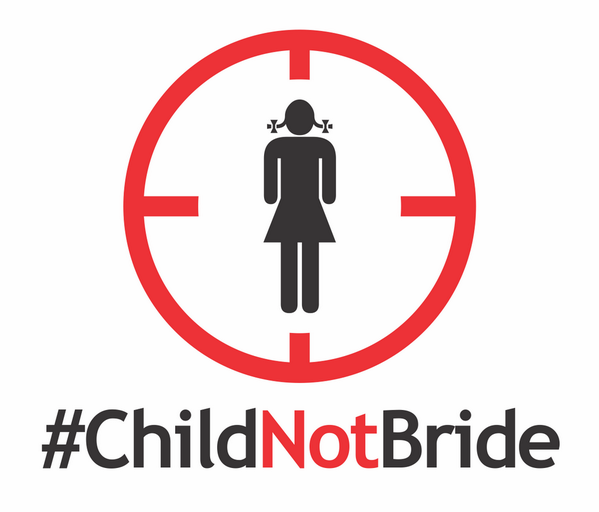
An image from the #ChildNotBride campaign. Via The Stream.
Senator Yerima objected to the removal of this section, claiming not only that it was un-Islamic but also that removal of this subsection would affect the rights of Muslim women. Three years ago, Senator Yerima married a 13-year-old Egyptian girl as his fourth wife, causing uproar among Nigerians, so we know that he has no problem with child marriages. His actions, and those of the senators who backed him up, came to be read as supporting child marriage and attempting to legalise it through the Nigerian constitution. This lead to massive uproar among Nigerians online: the hashtag #ChildNotBride was trending on Nigerian Twitter at that time; open letters and press statements were written; and there were petitions organised offline.
Regardless of whether the larger issue was about the citizenship rights of Nigerian women, the senator’s appeal, using Islam and Muslim women’s rights, became problematic in a country that is religiously and ethnically polarised. You would not know that child marriage does not uniquely affect Muslim girls and women in Nigeria from the way Nigerians have reacted to Senator Yerima. According to UNICEF, early marriage for girls is particularly common in Northern Nigeria, and in Nigeria as a whole the median age at marriage for women was 17 years old in 2005. Child marriages continue to be an issue in Nigeria, even though the country adopted the Child Rights Act in 2003; this act prohibits marriage under the age of 18 and was passed at the federal level.
It was relatively easy to find Muslim organisations that defended Senator Yerima’s views; for example, this Huffington Post write-up on the issue following recent events mentions a nongovernmental organisation whose director states that Islam does not place an age requirement on marriage. In Northern Nigerian states such as Zamfara, child marriages are apparently normalised and accepted, and no “grassroots Muslim activists based in the North wanted to go on record about child marriage” as that would make them unpopular. The most vocal voices against Senator Yerima seem to be coming from non-Muslims. One of the most vocal voices to emerge opposite Yerima has been that of Stella Damasus, a Nigerian actress and celebrity who released a video that went on to make rounds online, in which she spoke passionately on the issue of under-aged marriage. Both Stella Damasus and Senator Yerima were invited to Al Jazeera’s The Stream where they debated on child marriage.
Going through the media reporting on this issue, it felt like the voices been given a platform were not those of Muslim women or girls. Here is a Muslim man proudly dictating that his interpretations of Islamic law are mainstream and fashioning himself as someone who cares about the rights of Muslim women, but there is apparently no Muslim woman willing to speak out against child marriage as it is too risky and may make them unpopular. The only Muslim woman whose opinion on this affair was frequently cited was Maryam Uwais, lawyer and human rights advocate based in Kano. In a well-written essay that has also been republished and shared widely online, Uwais challenges Yerima’s view within the backdrop of her knowledge of Sharia law and Northern Nigeria. She points out that where there is silence in the texts or lack of unanimity, society should determine what is in its best interests and that the conditions child brides find themselves in are not compatible with Sharia law. Uwais’s tone is not as passionate or as challenging as that of Damasus’s, but her voice of reason was readily embraced by those who read her response to Senator Yerima and his brand of Islam.
Yet Uwais is far from being the only Muslim woman from Northern Nigeria who has written out against child marriage following the constitutional review; others include Hannatu Musawa, who labels child marriages as “thoughtless, unfair and scandalous,” and Zainab Shinkafi-Bagudu, who brings up the concept of maturity in Islamic law. These opinions challenge Yerima’s and suggest that there are activists in Northern Nigeria who are ready to go against the grain, even though they may not attract a large audience. Rather than focusing on Yerima who is really just speaking on his own behalf, or Damasus who as someone who is not Muslim cannot speak on behalf of the needs of Muslim women or girls, the mainstream media could have used the chance to place the voices of Muslim women and girls from Northern Nigeria in the spotlight.

Next Post

September 20, 2013 Friday Links | September 20, 2013
Browse Our Archives
Select a Category Advertisements Art/Theater Books/Magazines Cinema Comics/Cartoons Culture/Society Events Fashion Film Friday Links Merchandise/Commodities MMW Announcements MMW Highlights Music/Radio News Photography Politics Profile Ramadan 2012 Ramadan 2013 Ramadan 2014 Ramadan 2015 Roundtable Satire Social Media Sports Technology/Science Television Uncategorized Video Web
Select a Month November 2015 October 2015 September 2015 August 2015 July 2015 June 2015 May 2015 April 2015 March 2015 January 2015 December 2014 November 2014 October 2014 September 2014 July 2014 June 2014 May 2014 April 2014 March 2014 February 2014 January 2014 December 2013 November 2013 October 2013 September 2013 August 2013 July 2013 June 2013 May 2013 April 2013 March 2013 February 2013 January 2013 December 2012 November 2012 October 2012 September 2012 August 2012 July 2012 June 2012 May 2012 April 2012 March 2012 February 2012 January 2012 December 2011 November 2011 September 2011 August 2011 July 2011 June 2011 May 2011 April 2011 March 2011 February 2011 January 2011 December 2010 November 2010 October 2010 September 2010 August 2010 July 2010 June 2010 May 2010 April 2010 March 2010 February 2010 January 2010 December 2009 November 2009 October 2009 September 2009 August 2009 July 2009 June 2009 May 2009 April 2009 March 2009 February 2009 January 2009 December 2008 November 2008 October 2008 September 2008 August 2008 July 2008 June 2008 May 2008 April 2008 March 2008 February 2008 January 2008 December 2007 November 2007 October 2007 September 2007 August 2007
Follow Us!
TAKE THE
Religious Wisdom Quiz
In which garden did Jesus pray before His arrest?
Select your answer to see how you score.
Paradise Eden Golgotha Gethsemane
Related posts from Muslimah Media Watch

#PrayforParis, Muslim Women and Third World Violence


Hate Crimes and Mother Tongues

Interview with Comedian Eman El Husseini
TRENDING AT PATHEOS Muslim

25 Years Later: How Much Has Changed for...
As we approach the 25th anniversary of September 11th, I’ve found myself...

Podcast: Third Spaces & The Rise of Yemeni...
In the latest episode of The Artistic Foodies Podcast, hosts Abbas...

HalalFest Picks: Best 60 Halal Spots for Super...
Back in 2016, I came up with a list of 29...

Unity Is America’s Strength — Division Is Its...
by Hidayatullah Ahsan When Valentina Gomez, a Republican candidate for Congress in...

Zohran Mamdani and New York’s Fight Against Islamophobia
This past June, against all odds, Zohran Mamdani won the Democratic primary...

What the Fourth of July Means to a...
As we mark another Fourth of July, millions of Americans will celebrate...
view all Muslim blogs
Ad-Free & Subscriber Log-In Subscription Support
- About Us
- 2026 Calendar
- Videos
- Podcasts
- Library of World Religions
- Faith In Media Tracker
- Advertise With Us
- Write for Us
- Privacy Policy
- Terms of Service
- Do Not Sell My Data
- Contact Us
- Radiant Digital
- Manage Newsletter Subscriptions
- Unsubscribe From Notifications
- Sitemap
Copyright 2008-2026, Patheos. All rights reserved.
Subscription Support Ad-Free & Subscriber Log-In
Follow Patheos