
BuddhistCatholicContemplativeEvangelicalGeneral ChristianHinduJewishLatter-day SaintMuslimNew VisionsProgressive Christian
Beliefs
- Buddhist
- Catholic
- Contemplative
- Evangelical
- General Christian
- Hindu
- Jewish
- Latter-day Saint
- More Voices
- Muslim
- New Visions
- Pagan
- Progressive Christian
Topics
- Religion News
- Food and Religion
- Sports and Religion
- Religious Art
- Religious Music and Entertainment
- Religious Events
- History and Religion
- Style and Religion
- Politics and Religion
- Women in Religion
- Recreation Outdoors and Religion
- Business Finance and Religion
- Careers Workplace and Religion
- Education and Religion
- Family Parenting and Religion
- Health Fitness and Religion
- Home and Religion
- Relationships and Religion
- Technology and Religion
- Travel and Religion
Columnists
- Buddhist Columnists
- Business Finance and Religion Columnists
- Careers Workplace and Religion Columnists
- Catholic Columnists
- Contemplative Columnists
- Education and Religion Columnists
- Evangelists Columnists
- Family Parenting and Religion Columnists
- General Christian Columnists
- Health Fitness and Religion Columnists
- Hindu Columnists
- History and Religion Columnists
- Home and Religion Columnists
- Jewish Columnists
- More Voices Columnists
- Latter Day Columnists
- Muslim Columnists
- New Visions Columnists
- Nonreligious Columnists
- Pagan Columnists
- Politics and Religion Columnists
- Progressive Columnists
- Recreation Outdoors and Religion Columnists
- Relationships and Religion Columnists
- Religion News Columnists
- Religious Art Columnists
- Religious Events Columnists
- Religious Music and Entertainment Columnists
- Sports and Religion Columnists
- Style and Religion Columnists
- Technology and Religion Columnists
- Travel and Religion Columnists
- Women in Religion Columnists
Resource Library
- 2026 Calendar
- Library of World Religions
- The 100 Most Holy Places on Earth
- Patheos Answers
- Podcasts
- Videos
- Faith Leaders Database
- Anglican Episcopalian
- Bahai
- Baptist
- Buddhism
- Christianity
- Confucianism
- Eastern Orthodoxy
- Hinduism
- Holiness and Pentecostal
- ISKCON
- Islam
- Judaism
- Lutheran
- Methodist
- The Church of Jesus Christ of Latter-day Saints
- New Age
- Paganism
- Presbytarian and Reformed
- Protestantism
- Religion Behind the Scenes
- Roman Catholic
- Scientology
- Shia Islam
- Sikhism
- Sufism
- Sunni Islam
- Taoism
- Zen
- See all religions
Research Tools
 Ad-Free & Subscriber Log-In Subscription Support
Ad-Free & Subscriber Log-In Subscription Support
Follow Patheos 

- Trending:
- Forgiveness
- |
- Marriage
- |
- Consciousness
- |
- Death Penalty
- |
- Election
- |
- Halloween
 Muslimah Media Watch
- Home
- Muslim
- Religion News
- Book Review: And the Mountains Echoed by Khaled Hosseini
Book Review: And the Mountains Echoed by Khaled Hosseini
Last updated on: September 3, 2013 at 2:00 am by tasnim
Book Review: And the Mountains Echoed by Khaled Hosseini 2013-09-02T23:22:42-04:00 tasnim
Patheos Explore the world's faith through different perspectives on religion and spirituality! Patheos has the views of the prevalent religions and spiritualities of the world.
Like Khaled Hosseini’s two earlier novels, The Kite Runner (2003) and A Thousand Splendid Suns (2007), which spent a combined total of 171 weeks on the bestseller list, his latest novel, And the Mountains Echoed has received wide acclaim, and has been described as “heartbreaking,” “emotionally resonant,” and the writer’s “most ambitious work yet.”
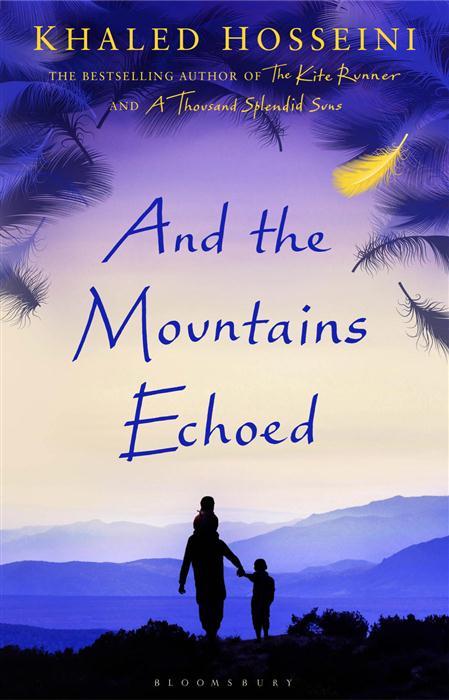
Cover of And the Mountains Echoed. [Source].
The novel begins with a folk tale about a div, a giant of Afghan folklore, who steals the youngest son of an impoverished family in a village blighted by droughts. When the father sets out to find the child, the div shows him that the child is living happily in a palace, playing with other children. The father then has to decide whether to turn back and leave his son where he is or take him back to a difficult life in the village. This allegorical tale is told by a father to his children, Abdullah and Pari, the day before they take a long and difficult journey from their village to Kabul, where the father leaves one of them with a rich childless couple in the hope that it will save his family from the coming harsh winter. The separation of the two siblings is at the heart of this sprawling, sweeping tale, which reads like a series of intertwined short stories, told from various perspectives by a large cast of characters, in first person and third person, some chapters written in the form of a letter, one taking the form of a Q&A interview.
While reading, I often felt that I wanted the novel to have a smaller cast, only because some of the characters struck me as so much more interesting than others: for example, the story of the children’s stepmother Parwana and her disabled twin sister Massoma, or the Afghan-American cousins Idris and Timur who return to visit war-ravaged Kabul, where the used car salesman Timur makes deals while the doctor Idris finds it difficult to cope with the burden of guilt he feels at the sight of suffering he has been spared from. I wanted to read more about them – and less about some of the others. The chapter narrated by the Greek doctor Markos in a long flashback, which tells of his friendship with Thalia, a girl disfigured after being bitten by a dog, seems to be inserted solely to explain why Markos chose to be a plastic surgeon and make his way to Afghanistan. It’s a well-written section of the book, but seems to be included for not entirely justifiable reasons, simply adding further complexity to the already complex, multi-stranded plot.
This part of the novel unfolds on the Greek island of Tinos, while other parts of the novel are set in Paris and San Francisco, ranging far beyond the small village of Shadbagh, where the novel opens. Hosseini himself has described the novel as more global and “less Afghan centric“ than his previous books. Although the characters are all impacted by the events in Afghanistan, the history of the country is less central to this novel, which is more about family, love between siblings, and childhood. The title of the novel is an indication of this, a twist on a line from a William Blake poem, called “Nurse’s Song (Innocence).” Hosseini describes being inspired by the line “And all the hills echoed,” after listening to Allen Ginsberg singing the poem.
But despite this book being less “Afghan-centric” than his previous works, one of the focuses of the reviews has been “what it means to be an Afghan woman.” The novel does feature a number of Afghan women characters from Parwana and Masooma, to the two women named Pari, and most particularly, Nila Wahdati, a complicated character seen in one review as one of the writer’s “most compelling creations,” and a character Hosseini describes as arising from the memories he has of the parties his parents threw in the Kabul of the 70s:
“There would be really striking women in short skirts. Beautiful, very outspoken, temperamental, endlessly – in my young mind – interesting. Drinking freely, smoking. Nila is a creation from my memory of that kind of woman from that time and that place.”
For many reviewers, there seems to be a disjuncture between this image of a woman who belongs a particular time and place (the Westernizing middle class in Kabul in the 70s) and the words “Afghan woman.” The disjuncture is for me no more apparent than in this article, which has an image of women visiting a record store in Kabul in the 1950s or early 60’s but goes on to connect the French-Afghan middle-class-privileged Nila Wahdati to the folk literature of the landai, two-line folk poems that are often cast in the voice of women. The writer of the article does strive valiantly to connect the two by referring to “the centuries-long, ongoing struggle of Afghanistan’s female poets, who have enjoyed eras of flourishing freedom of expression and endured eras of forced secrecy.” But thiscomes off more as an attempt to find some “authenticity,” some real Afghan roots for this “modern” character who doesn’t fit the set parameters of “Afghan woman.”
As Andrea Mitchell, interviewing the writer, noted of the character:
“She’s very surprising to people who have a conception of Afghan women and how…repressed they’ve been legally, and politically and physically because she is such a modern woman.”
Earlier in the interview, Mitchell speaks of the fragility of the legal rights women have won in Afghanistan, and Hosseini is careful to point out that “things for women in Afghanistan have improved in pockets,” and that there are many rural areas where very little has changed since the days of the Taliban government, although in the urban centres there have been strides in the direction of women’s equality. The differences of urbanization and class distinctions that Hosseini hints at, however, are flattened by Mitchell’s rather remarkable final question: “if you had been a girl of your generation would you have had the education and the opportunities?”
Underlying the question is the assumption that that there can only be one possible life for an Afghan woman of a particular generation, a statement that sweepingly negates all distinctions of class, ethnicity, profession, geography.
Unlike many of the reviewers of this novel, I enjoyed reading And the Mountains Echoed far more than The Kite Runner. I found it less contrived, more compelling, and full of a sense of warmth and understanding for many of the characters, especially the morally ambiguous, very flawed ones. This is a novel that some (not me) may find a little too saccharine and sentimental in places, but that does “move people,” as Hosseini says he wanted it to. I suspect it won’t, however (despite the “modern” Nila Wahdati), do much to move people’s preconceptions about what an “Afghan woman” is or can be. But perhaps that is too much to ask of a novel.
Previous Post

September 2, 2013
From Bride to Wife: The Women of Patriarchal Muslim Men
Next Post

September 4, 2013 Burka Avenger: Lady in Black
Browse Our Archives
Select a Category Advertisements Art/Theater Books/Magazines Cinema Comics/Cartoons Culture/Society Events Fashion Film Friday Links Merchandise/Commodities MMW Announcements MMW Highlights Music/Radio News Photography Politics Profile Ramadan 2012 Ramadan 2013 Ramadan 2014 Ramadan 2015 Roundtable Satire Social Media Sports Technology/Science Television Uncategorized Video Web
Select a Month November 2015 October 2015 September 2015 August 2015 July 2015 June 2015 May 2015 April 2015 March 2015 January 2015 December 2014 November 2014 October 2014 September 2014 July 2014 June 2014 May 2014 April 2014 March 2014 February 2014 January 2014 December 2013 November 2013 October 2013 September 2013 August 2013 July 2013 June 2013 May 2013 April 2013 March 2013 February 2013 January 2013 December 2012 November 2012 October 2012 September 2012 August 2012 July 2012 June 2012 May 2012 April 2012 March 2012 February 2012 January 2012 December 2011 November 2011 September 2011 August 2011 July 2011 June 2011 May 2011 April 2011 March 2011 February 2011 January 2011 December 2010 November 2010 October 2010 September 2010 August 2010 July 2010 June 2010 May 2010 April 2010 March 2010 February 2010 January 2010 December 2009 November 2009 October 2009 September 2009 August 2009 July 2009 June 2009 May 2009 April 2009 March 2009 February 2009 January 2009 December 2008 November 2008 October 2008 September 2008 August 2008 July 2008 June 2008 May 2008 April 2008 March 2008 February 2008 January 2008 December 2007 November 2007 October 2007 September 2007 August 2007
Follow Us!
TAKE THE
Religious Wisdom Quiz
By questioning Moses' authority this person became leperous?
Select your answer to see how you score.
Aaron Ithamar Miriam Caleb
Related posts from Muslimah Media Watch

Book review: Jewels of Allah by Nina Ansary


Book Review: Faïza Zerouala's Voices Behind the Veil
TRENDING AT PATHEOS Muslim

25 Years Later: How Much Has Changed for...
As we approach the 25th anniversary of September 11th, I’ve found myself...

Podcast: Third Spaces & The Rise of Yemeni...
In the latest episode of The Artistic Foodies Podcast, hosts Abbas...

HalalFest Picks: Best 60 Halal Spots for Super...
Back in 2016, I came up with a list of 29...

Unity Is America’s Strength — Division Is Its...
by Hidayatullah Ahsan When Valentina Gomez, a Republican candidate for Congress in...

Zohran Mamdani and New York’s Fight Against Islamophobia
This past June, against all odds, Zohran Mamdani won the Democratic primary...

What the Fourth of July Means to a...
As we mark another Fourth of July, millions of Americans will celebrate...
view all Muslim blogs
Ad-Free & Subscriber Log-In Subscription Support
- About Us
- 2026 Calendar
- Videos
- Podcasts
- Library of World Religions
- Faith In Media Tracker
- Advertise With Us
- Write for Us
- Privacy Policy
- Terms of Service
- Do Not Sell My Data
- Contact Us
- Radiant Digital
- Manage Newsletter Subscriptions
- Unsubscribe From Notifications
- Sitemap
Copyright 2008-2026, Patheos. All rights reserved.
Subscription Support Ad-Free & Subscriber Log-In
Follow Patheos