
BuddhistCatholicContemplativeEvangelicalGeneral ChristianHinduJewishLatter-day SaintMuslimNew VisionsProgressive Christian
Beliefs
- Buddhist
- Catholic
- Contemplative
- Evangelical
- General Christian
- Hindu
- Jewish
- Latter-day Saint
- More Voices
- Muslim
- New Visions
- Pagan
- Progressive Christian
Topics
- Religion News
- Food and Religion
- Sports and Religion
- Religious Art
- Religious Music and Entertainment
- Religious Events
- History and Religion
- Style and Religion
- Politics and Religion
- Women in Religion
- Recreation Outdoors and Religion
- Business Finance and Religion
- Careers Workplace and Religion
- Education and Religion
- Family Parenting and Religion
- Health Fitness and Religion
- Home and Religion
- Relationships and Religion
- Technology and Religion
- Travel and Religion
Columnists
- Buddhist Columnists
- Business Finance and Religion Columnists
- Careers Workplace and Religion Columnists
- Catholic Columnists
- Contemplative Columnists
- Education and Religion Columnists
- Evangelists Columnists
- Family Parenting and Religion Columnists
- General Christian Columnists
- Health Fitness and Religion Columnists
- Hindu Columnists
- History and Religion Columnists
- Home and Religion Columnists
- Jewish Columnists
- More Voices Columnists
- Latter Day Columnists
- Muslim Columnists
- New Visions Columnists
- Nonreligious Columnists
- Pagan Columnists
- Politics and Religion Columnists
- Progressive Columnists
- Recreation Outdoors and Religion Columnists
- Relationships and Religion Columnists
- Religion News Columnists
- Religious Art Columnists
- Religious Events Columnists
- Religious Music and Entertainment Columnists
- Sports and Religion Columnists
- Style and Religion Columnists
- Technology and Religion Columnists
- Travel and Religion Columnists
- Women in Religion Columnists
Resource Library
- 2026 Calendar
- Library of World Religions
- The 100 Most Holy Places on Earth
- Patheos Answers
- Podcasts
- Videos
- Faith Leaders Database
- Anglican Episcopalian
- Bahai
- Baptist
- Buddhism
- Christianity
- Confucianism
- Eastern Orthodoxy
- Hinduism
- Holiness and Pentecostal
- ISKCON
- Islam
- Judaism
- Lutheran
- Methodist
- The Church of Jesus Christ of Latter-day Saints
- New Age
- Paganism
- Presbytarian and Reformed
- Protestantism
- Religion Behind the Scenes
- Roman Catholic
- Scientology
- Shia Islam
- Sikhism
- Sufism
- Sunni Islam
- Taoism
- Zen
- See all religions
Research Tools
 Ad-Free & Subscriber Log-In Subscription Support
Ad-Free & Subscriber Log-In Subscription Support
Follow Patheos 

- Trending:
- Forgiveness
- |
- Marriage
- |
- Consciousness
- |
- Death Penalty
- |
- Election
- |
- Halloween
 Muslimah Media Watch
- Home
- Muslim
- Religion News
- Book Review: The Honey Thief
Book Review: The Honey Thief
Last updated on: June 3, 2013 at 2:00 am by merium
Book Review: The Honey Thief 2013-05-29T07:09:50-04:00 merium
Patheos Explore the world's faith through different perspectives on religion and spirituality! Patheos has the views of the prevalent religions and spiritualities of the world.
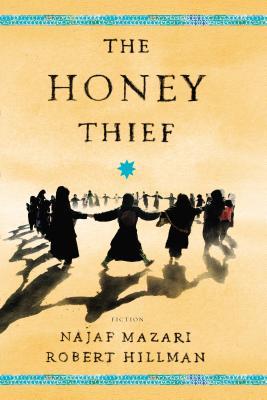
“When I sleep, I dream like a Hazara” (The Honey Thief, p. 6).
The Honey Thief is a successful collaboration between authors Najaf Mazari and Robert Hillman, featuring a host of interesting characters and places from Mazari’s native Afghanistan. Winner of the 2005 Australian National Biography Award, Hillman came on board initially to co-author Mazari’s personal story in The Rug Maker of Mazar-e-Sharif. Their first collaboration together describes Mazari’s escape from imminent persecution at the hands of the Taliban and the journey that would take him to Woodmere Asylum Center in Australia and eventual freedom. The Honey Thief relays a captivating collection of stories which have their roots in the oral storytelling tradition that is still prevalent in parts of Afghanistan. On the whole, this book reads as an ode to the author’s Hazarajat (the land of the Hazara in Afghanistan) and to a way of life Mazari left behind and particularly to the fantastical stories he had grown up with as a child.
One of the first things that strikes you about The Honey Thief is Mazari’s obvious longing for Hazarajat and its people:
“The sight of my native land on the television set fascinated me, but I must confess that it doesn’t fill me with pride. . . No, because my loyalty is not to this land in the middle of the world, but to the small part of it in which my people, the Hazara, have toiled for their bread for eight hundred years.” (p. 2)
This “longing” and the intensity with which Hillman is able to convey Mazari’s reminiscing appears to supersede even the geographical boundaries that encompass the nation of the Hazara, i.e. Afghanistan. Although Hazaras can be found in Iran and Pakistan, the Hazarajat is a regional name for the territory inhabited by the Hazara people located in the central highlands of Afghanistan. Historically, this predominantly Shia ethnic group has suffered severe political, social and economic repression and now constitute approximately 9 percent of the Afghan population. The situation appears to have improved little for Afghan-Hazaras and even less so for its diaspora in Pakistan (settled mostly in Quetta, Balochistan) who are experiencing one of the worst incidences of violence against their communities.
“The history of the Hazaras are told in the fields, in our tents, in our houses.” (p. 4)
This book employs an interesting writing process that also pays homage to the oral tradition of storytelling in Afghanistan. Simply put, “Najaf talks and Robert fashions what he says into the sentences that become the stories.” What becomes apparent as you delve into this collection is the ease with which fictional elements of storytelling mesh with historical events. Part of the enjoyment for the reader will be figuring out what is real and what is obviously a superb handle on language to convey the tales of folklore and mythology of the region. Stories range from “The Honey Thief” (which gives the book its title), a coming of age story of a young, boy who becomes an apprentice bee-keeper, to the “The Music School” where the discovery of music sets the tone for a witty account of a mute boy who finds his calling amidst the musical notes of the tula.

Nothing, however, can quite prepare you for the chapter about a teenage boy who kills the reigning monarch. Scenes in “The Death of Abdul Khaliq” unfold slowly, like watching from behind a cloudy window pane, knowing fully well how events transpire but trusting the author(s) to carry you safely through the dark narrative. Much of this can be attributed to Hillman’s writing style which has the ability to turn even the most sordid of stories into something akin to magical. Also don’t be surprised when one story leads into another – it’s impressive how much restrain Hillman employs in fleshing out two different plots without confusing either. This is perhaps best exemplified in “The Music School” where the narrative shifts seamlessly between the story of the mute boy and his learning of a musical instrument to one about an old persian king, his wife and an attractive tula master.
The question Mazari asks himself as he’s revising each chapter is this: “If these words were now translated into Dari, would my family in Afghanistan nod their heads and say, ‘This is our country. This is true’?” In my view, this collaborative process actually gives new meaning to the phrase “lost in translation”! Overall however, Hillman’s soft, lyrical style perfectly compliments his co-author’s stories of love, courage and adventure that find inspiration in his country’s culture and history.
Women play largely supporting roles in this collection of stories – they are sisters, mothers, wives. They represent all-encompassing love. This is rare for a book set in Afghanistan, considering how much our exposure to this country is driven by coverage on terrorism and sectarian violence, coupled with the constant scrutiny on the status of women’s rights (and particularly how Islam impacts their lives). It is therefore not uncommon to have such images color our perceptions of a country and its people. Female characters in The Honey Thief do not come across as suppressed or fickle. “The Behsudi Dowry,” for instance, introduces us to Hameed, who is able to win over a scornful beauty by reading to her from The Adventures of Huckleberry Finn. My interpretation of the character of Nadia (Hameed’s scornful beauty), however, suggests she was not intentionally expressing disdain for her suitors but instead being selective about her husband-to-be – and really, why shouldn’t she? There’s nothing more attractive to a woman than a man who enjoys a good book!
Finally, one of my very favorite chapters has to do with one my favorite activities in the world: reading about food and the various styles of cooking. The tone used in the final chapters with the recipes and notes on growing food and eating sustainably had me smiling wide in parts – there’s humor to the writing that suggests the author(s) are probably quite comfortable in a kitchen setting. The recipes for lamb qorma and sabzi gosht are exceedingly similar to their counterparts in South Asia but others (like aash and kotfta nakhod) have definite Persian influences. I genuinely hope Mazari and Hillman try their hand at a cookbook down the line.


On the whole, the book is an enjoyable foray into a world often associated with war and deprivation. While the focus is on the culture of the Hazaras, it does not take away from the experience of embroiling oneself into a world far removed from one’s own. Each story is rich in detail and shifts easily between the more magical elements of storytelling and real life – the fun is in figuring out which is which.
Previous Post

May 31, 2013
Friday Links | May 31, 2013
Next Post

June 5, 2013 Beard Memes and the Proper Hijab Narrative
Browse Our Archives
Select a Category Advertisements Art/Theater Books/Magazines Cinema Comics/Cartoons Culture/Society Events Fashion Film Friday Links Merchandise/Commodities MMW Announcements MMW Highlights Music/Radio News Photography Politics Profile Ramadan 2012 Ramadan 2013 Ramadan 2014 Ramadan 2015 Roundtable Satire Social Media Sports Technology/Science Television Uncategorized Video Web
Select a Month November 2015 October 2015 September 2015 August 2015 July 2015 June 2015 May 2015 April 2015 March 2015 January 2015 December 2014 November 2014 October 2014 September 2014 July 2014 June 2014 May 2014 April 2014 March 2014 February 2014 January 2014 December 2013 November 2013 October 2013 September 2013 August 2013 July 2013 June 2013 May 2013 April 2013 March 2013 February 2013 January 2013 December 2012 November 2012 October 2012 September 2012 August 2012 July 2012 June 2012 May 2012 April 2012 March 2012 February 2012 January 2012 December 2011 November 2011 September 2011 August 2011 July 2011 June 2011 May 2011 April 2011 March 2011 February 2011 January 2011 December 2010 November 2010 October 2010 September 2010 August 2010 July 2010 June 2010 May 2010 April 2010 March 2010 February 2010 January 2010 December 2009 November 2009 October 2009 September 2009 August 2009 July 2009 June 2009 May 2009 April 2009 March 2009 February 2009 January 2009 December 2008 November 2008 October 2008 September 2008 August 2008 July 2008 June 2008 May 2008 April 2008 March 2008 February 2008 January 2008 December 2007 November 2007 October 2007 September 2007 August 2007
Follow Us!
TAKE THE
Religious Wisdom Quiz
How long did Persian empire rule?
Select your answer to see how you score.
180 years 150 years 200 years 250 years
Related posts from Muslimah Media Watch

Book review: Jewels of Allah by Nina Ansary



Book Review: Faïza Zerouala's Voices Behind the Veil
TRENDING AT PATHEOS Muslim

25 Years Later: How Much Has Changed for...
As we approach the 25th anniversary of September 11th, I’ve found myself...

Podcast: Third Spaces & The Rise of Yemeni...
In the latest episode of The Artistic Foodies Podcast, hosts Abbas...

HalalFest Picks: Best 60 Halal Spots for Super...
Back in 2016, I came up with a list of 29...

Unity Is America’s Strength — Division Is Its...
by Hidayatullah Ahsan When Valentina Gomez, a Republican candidate for Congress in...

Zohran Mamdani and New York’s Fight Against Islamophobia
This past June, against all odds, Zohran Mamdani won the Democratic primary...

What the Fourth of July Means to a...
As we mark another Fourth of July, millions of Americans will celebrate...
view all Muslim blogs
Ad-Free & Subscriber Log-In Subscription Support
- About Us
- 2026 Calendar
- Videos
- Podcasts
- Library of World Religions
- Faith In Media Tracker
- Advertise With Us
- Write for Us
- Privacy Policy
- Terms of Service
- Do Not Sell My Data
- Contact Us
- Radiant Digital
- Manage Newsletter Subscriptions
- Unsubscribe From Notifications
- Sitemap
Copyright 2008-2026, Patheos. All rights reserved.
Subscription Support Ad-Free & Subscriber Log-In
Follow Patheos